
Unlocking Metabolic Potential: A Deep Dive into 5-Amino-1-MQ Research
The quest for deeper understanding into cellular metabolism and energy regulation continues to drive scientific inquiry, leading to the discovery and investigation of fascinating compounds. Among these, 5-amino-1-mq has emerged as a subject of significant interest in the scientific community. This small molecule compound offers a unique approach to influencing metabolic pathways by selectively targeting a key enzyme. As researchers delve deeper into its mechanisms and potential applications, understanding the intricate science behind 5-amino-1-mq becomes crucial for anyone exploring advanced metabolic research. In this comprehensive article, we will dissect the current understanding of 5-amino-1-mq, its role in inhibiting NNMT, and the implications of this inhibition for cellular energy and metabolic health, always focusing on the rigorous scientific research that underpins its study in 2026.
Key Takeaways
- 5-Amino-1-MQ as an NNMT Inhibitor: This compound selectively inhibits nicotinamide N-methyltransferase (NNMT), an enzyme crucial for regulating cellular metabolism and energy.
- Impact on NAD+ Levels: By inhibiting NNMT, 5-amino-1-mq can influence the availability of NAD+, a coenzyme vital for numerous metabolic processes and mitochondrial function.
- Preclinical Metabolic Benefits: Animal studies suggest that 5-amino-1-mq may contribute to increased energy expenditure, reduced fat mass, and improved insulin sensitivity.
- Research Chemical Status: Currently, 5-amino-1-mq is marketed as a research chemical, and it is not approved by regulatory bodies like the FDA for human use or medical treatment.
- Ongoing Scientific Exploration: While promising, extensive human clinical trials are needed to fully establish its safety profile, optimal dosing, and long-term effects.
The Scientific Foundation of 5-Amino-1-MQ: Mechanism of Action and Cellular Impact
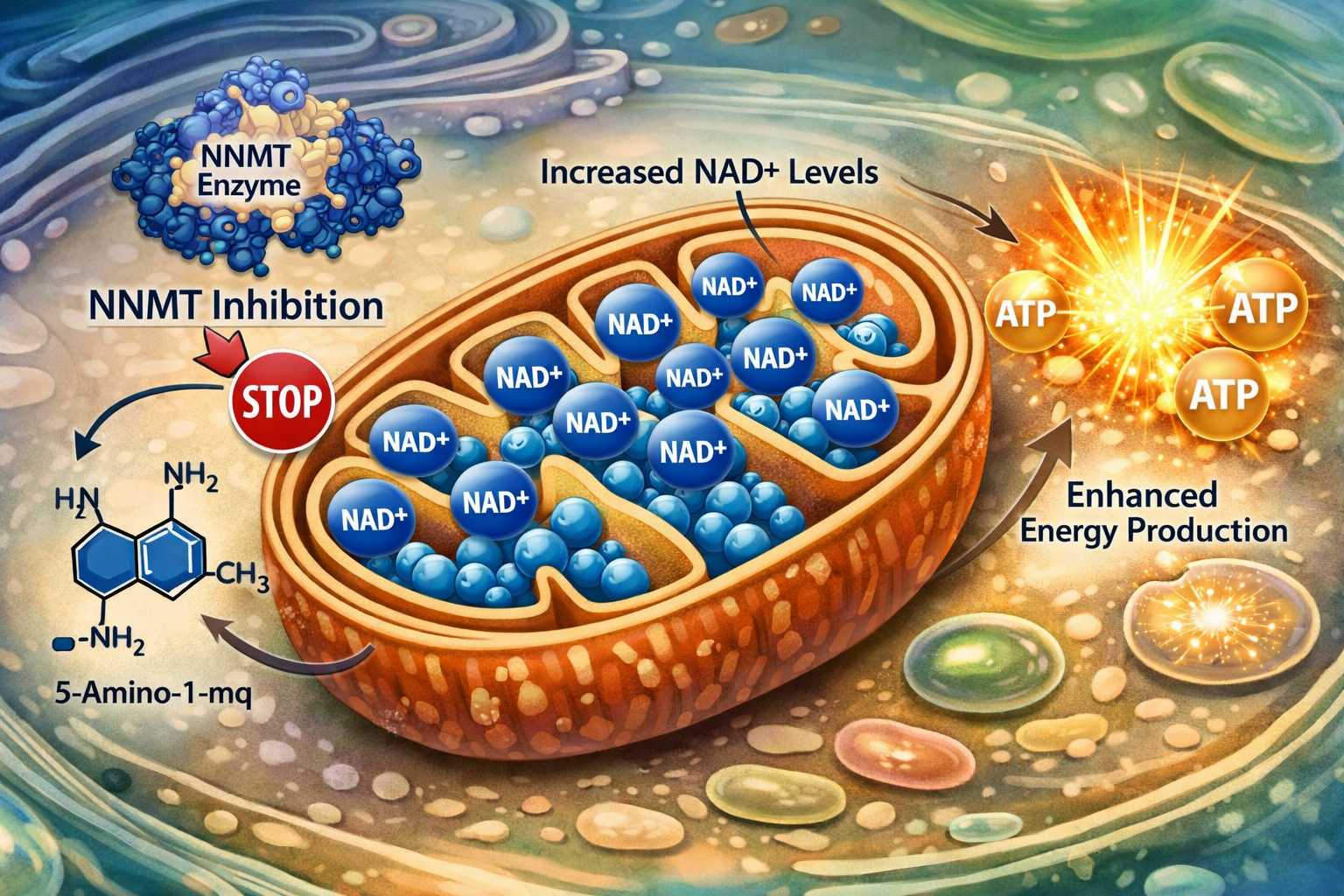
The story of 5-amino-1-mq begins at the cellular level, specifically with its interaction with an enzyme called nicotinamide N-methyltransferase, or NNMT. To truly grasp the significance of 5-amino-1-mq, it is essential to understand NNMT's role in the intricate dance of cellular metabolism.
NNMT is an enzyme found in various tissues throughout the body, playing a pivotal role in the methylation of nicotinamide, which is a form of vitamin B3. This process uses S-adenosylmethionine (SAM) as a methyl donor, converting nicotinamide into 1-methylnicotinamide (1-MNA) and S-adenosylhomocysteine (SAH). While this might sound like complex biochemistry, its implications are profound.
NNMT's Role in Metabolism and Disease
Research has consistently shown that NNMT activity is often upregulated, or increased, in a variety of metabolic disorders. Conditions such as obesity, type 2 diabetes, and even certain types of cancer have been linked to elevated NNMT levels. This upregulation suggests that NNMT is not just a passive participant in cellular processes but an active player whose dysregulation can contribute to disease progression. For instance, in adipose tissue (fat tissue), increased NNMT activity has been observed to correlate with fat accumulation and metabolic dysfunction.
When NNMT is highly active, it consumes nicotinamide, which is a precursor to nicotinamide adenine dinucleotide (NAD+). NAD+ is a fundamental coenzyme found in every cell of the body, crucial for hundreds of enzymatic reactions. It plays a critical role in energy production, DNA repair, cell signaling, and maintaining mitochondrial health. By diverting nicotinamide away from NAD+ synthesis, elevated NNMT activity can potentially lead to lower intracellular NAD+ levels. This reduction can impair mitochondrial function, slow down energy metabolism, and generally disrupt cellular homeostasis. Understanding this critical link helps researchers explore how compounds like 5-amino-1-mq might offer a novel approach to addressing metabolic imbalances.
How 5-Amino-1-MQ Modulates Cellular Pathways
This is where 5-amino-1-mq steps in. This small molecule compound is designed to be a selective inhibitor of NNMT. By inhibiting NNMT, 5-amino-1-mq essentially puts a brake on the enzyme's activity. The primary theoretical benefit of this inhibition is an increase in the availability of nicotinamide within the cell. With more nicotinamide available, the cell can potentially synthesize more NAD+.
The implications of increased NAD+ availability are far-reaching. Elevated NAD+ levels are associated with:
- Enhanced Mitochondrial Function: Mitochondria are often called the "powerhouses of the cell." NAD+ is a key player in the electron transport chain, a crucial process within mitochondria that generates cellular energy (ATP). By increasing NAD+ levels, 5-amino-1-mq may promote more efficient mitochondrial operation, leading to improved energy production.
- Improved Cellular Energy Metabolism: Beyond the mitochondria, NAD+ is vital for various metabolic pathways, including glycolysis and the citric acid cycle. Greater NAD+ availability can optimize these pathways, contributing to overall better cellular energy metabolism. This makes exploring 5-amino-1-mq a compelling area of study for researchers interested in metabolic health.
- Support for Methylation Capacity: While NNMT consumes SAM (a universal methyl donor), inhibiting NNMT could indirectly free up SAM for other vital methylation reactions throughout the body. This intricate balance underscores the complexity of cellular biochemistry and the potential ripple effects of targeting a single enzyme.
The focus on NAD+ as a key player also aligns with broader research into compounds like NMN + 5 amino 1-mq, which explore synergistic effects to optimize NAD+ levels for potential metabolic benefits. Researchers often look to explore combinations to enhance outcomes, and the interplay between different pathways is a rich area of study.
The Significance for Research in 2026
In 2026, the scientific community continues to prioritize research into metabolic health, aging, and the prevention of chronic diseases. The precise and selective nature of 5-amino-1-mq as an NNMT inhibitor makes it an invaluable tool for laboratory studies. It allows researchers to:
- Isolate the effects of NNMT inhibition: By using a specific inhibitor, scientists can better understand the direct and indirect consequences of NNMT activity on various cellular processes and disease models.
- Explore therapeutic targets: Given NNMT's upregulation in metabolic disorders, 5-amino-1-mq offers a fascinating avenue for developing new strategies to combat obesity, type 2 diabetes, and other related conditions.
- Investigate age-related metabolic decline: As we age, mitochondrial function can decline, and NAD+ levels may decrease. Research into NNMT inhibition with 5-amino-1-mq could shed light on methods to support mitochondrial function and mitigate age-related metabolic changes. The pursuit of adaptive capacity and peptide mapping often involves understanding these fundamental cellular processes.
The ongoing research with 5-amino-1-mq helps expand our understanding of how fine-tuning enzymatic activity can have widespread effects on metabolic health. For researchers looking to acquire this compound for their studies, various forms are available, including 5-amino-1mq peptides for sale through specialized vendors. This allows for rigorous experimentation and further exploration of its complex biochemical interactions.
Preclinical Research and Emerging Findings for 5-Amino-1-MQ
The excitement surrounding 5-amino-1-mq largely stems from a growing body of preclinical research, primarily conducted in animal models. These studies have provided valuable insights into its potential effects on metabolic parameters and have fueled further investigation into its mechanisms. It is crucial to remember that these findings, while promising, are from controlled laboratory settings and do not directly translate to human applications or medical treatments, as 5-amino-1-mq has not been approved by regulatory bodies like the FDA for such purposes.
Effects on Energy Expenditure and Fat Mass
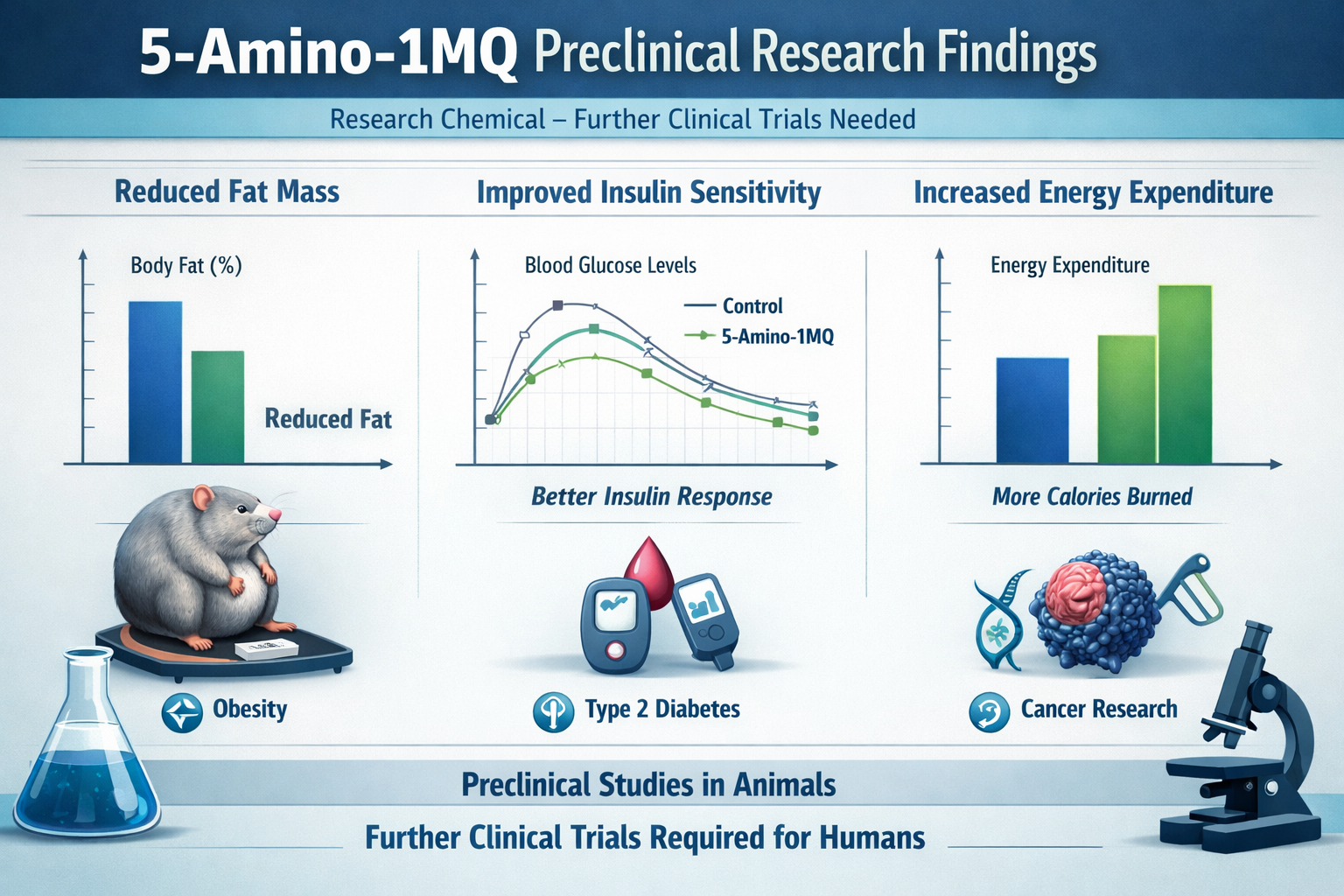
One of the most compelling findings from preclinical animal studies involving 5-amino-1-mq is its association with increased energy expenditure. In simple terms, this means that treated animals appeared to burn more calories. This observation is significant because enhanced energy expenditure is a key factor in weight management and can help combat fat accumulation.
Furthermore, these studies have reported a reduction in fat mass in animals administered 5-amino-1-mq, often without significant changes in their food intake. This suggests a potential shift in metabolic programming, where the body becomes more efficient at utilizing or burning stored fat rather than simply reducing caloric consumption. The mechanism behind this likely relates to the enhanced mitochondrial function and increased NAD+ availability discussed earlier, leading to more efficient cellular respiration and fat oxidation.
Researchers exploring specific dosages for their studies often investigate 5 amino 1 mq dosing information to ensure accurate and reproducible results. The compound's ability to influence these metabolic parameters makes it a prime candidate for further investigation into obesity and related metabolic syndromes.
Improvements in Insulin Sensitivity
Another critical area where 5-amino-1-mq has shown promise in preclinical models is improved insulin sensitivity. Insulin resistance is a hallmark of type 2 diabetes and a precursor to many metabolic complications. It occurs when the body's cells don't respond effectively to insulin, leading to high blood sugar levels.
Animal studies have indicated that inhibition of NNMT by 5-amino-1-mq can lead to better glucose utilization and improved responsiveness to insulin. This could be due to several factors, including:
- Enhanced cellular energy metabolism: More efficient mitochondria and higher NAD+ levels can improve the overall metabolic health of cells, making them more receptive to insulin's signals.
- Reduced inflammation: Chronic low-grade inflammation is often associated with insulin resistance. While not a primary mechanism, improvements in metabolic health could indirectly mitigate inflammatory processes.
These findings open avenues for research into therapeutic strategies for managing or preventing type 2 diabetes and other conditions characterized by insulin resistance. Laboratories looking to study this compound can often find 5 amino 1 mq online from reputable suppliers.
Administration Methods and Formulations in Research
In research contexts, 5-amino-1-mq has been administered through various methods, primarily subcutaneous injection and oral supplementation. The choice of administration often depends on the specific research question, the animal model being used, and the desired pharmacokinetic profile.
- Subcutaneous Injection: This method allows for precise dosing and controlled absorption, which is often preferred in initial research phases to establish efficacy and dose-response relationships.
- Oral Supplementation: The availability of 5 amino 1 mq capsules offers a less invasive method of administration, making it suitable for studies requiring longer treatment durations or ease of application. However, oral bioavailability and stability can be factors that researchers need to consider.
It's important to note that optimal dosing protocols for human applications have not been established through clinical trials. Research into 5 amino 1 mq dosage is still in its early stages, and current data are specific to preclinical models. Therefore, any information found, such as discussions on forums like "5 amino 1 mq reddit," should be approached with extreme caution and understood within the context of speculative, anecdotal discussions rather than scientific evidence.
Broader Research Implications: Stacks and Synergies
The research into 5-amino-1-mq also extends to its potential synergies with other compounds. For example, the concept of a "mots c stack" or "mots-c stack" is gaining traction in research circles. MOTS-c is a mitochondrial-derived peptide known for its roles in metabolism and exercise capacity. Researchers are exploring whether combining 5-amino-1-mq with MOTS-c could lead to enhanced metabolic benefits, given their distinct yet complementary mechanisms of action.
Similarly, discussions around "retatrutide mots c stack" or "mots c and retatrutide stack" highlight the ongoing quest to optimize peptide combinations for specific research outcomes. Retatrutide is another peptide being investigated for its metabolic effects, primarily related to weight management. Questions like "can you stack mots c with retatrutide" or "mots c retatrutide stack" reflect the innovative thinking in peptide research, where scientists aim to uncover powerful synergistic effects. This layered approach to research underscores the complexity and potential of peptide science. For more comprehensive information on various peptide combinations, researchers may consult resources on peptide blends research.
The "Research Chemical" Status and Future Outlook
As of 2026, 5-amino-1-mq remains a research chemical. This designation is critical. It means the compound has not undergone the rigorous testing required by regulatory bodies like the FDA for approval as a drug or dietary supplement for human use. Consequently, comprehensive data on its safety profile in humans, long-term effects, potential side effects, and drug interactions are largely unknown.
Despite the promising preclinical data, a significant gap exists between animal research and human clinical application. The scientific community is keenly aware of this and continues to emphasize the need for robust clinical trials before any definitive statements can be made about its utility in humans. The availability of 5-amino-1-mq buy options for laboratories facilitates this essential research.
The legal status of 5-amino-1-mq also varies by jurisdiction, but it is generally sold for laboratory research purposes only and not for human consumption. While it has garnered attention in biohacking and anti-aging communities as a potential weight loss and metabolic enhancement agent, these uses are not supported by FDA approval or extensive human clinical data. Researchers must adhere to ethical guidelines and regulatory requirements when working with such compounds.
The continued investigation into 5-amino-1-mq and its interaction with NNMT holds significant promise for advancing our understanding of metabolic regulation. Its role in potentially influencing NAD+ levels and mitochondrial function positions it as a key compound in the ongoing scientific effort to develop novel strategies for metabolic health challenges. Pure Tested Peptides, for example, offers 5-amino-1-mq for research purposes, underscoring its availability for scientific study.
Safety Profile, Regulatory Landscape, and Responsible Research of 5-Amino-1-MQ
When discussing a compound like 5-amino-1-mq, especially one with potential metabolic implications, the topic of safety and the regulatory environment is paramount. While preclinical studies have shown encouraging results regarding efficacy, the safety profile of 5-amino-1-mq in humans is still largely uncharted territory. This section delves into these crucial aspects, emphasizing the importance of responsible research practices in 2026.
The Unknowns of Human Safety
The most significant caveat regarding 5-amino-1-mq is the lack of comprehensive human clinical trials. As a result, detailed information on its safety, potential side effects, and long-term consequences in humans simply does not exist. While animal studies can provide initial clues, physiological differences between species mean that findings do not always translate directly to humans.
Specifically, the scientific community lacks data on:
- Optimal Human Dosing: Although there's ongoing research into 5 amino 1 mq dosing in animal models, a safe and effective dosage for humans has not been established. Misinformation or speculative advice on platforms like "5 amino 1 mq reddit" should be disregarded due to its unverified nature.
- Potential Side Effects: While animal studies have generally reported a good tolerance profile within the tested parameters, unforeseen side effects could emerge in humans, particularly with long-term use or in individuals with pre-existing conditions.
- Drug Interactions: The way 5-amino-1-mq interacts with other medications, supplements, or pre-existing health conditions is unknown. This is a critical area of concern, as unexpected interactions could lead to adverse health outcomes.
- Long-Term Effects: The full impact of chronic NNMT inhibition over months or years in humans has not been evaluated. Some animal studies have suggested potential concerns regarding the accumulation of methylated nicotinamide metabolites and possible effects on methylation processes throughout the body. These are complex biochemical pathways, and sustained perturbation could have wide-ranging, unstudied effects.
Researchers exploring various peptides often consult best practices for handling and storage, which applies equally to best practices for storing research peptides like 5-amino-1-mq.
Regulatory Status and Research Guidelines
As of 2026, 5-amino-1-mq is largely categorized and sold as a research chemical. This designation carries significant implications:
- Not for Human Consumption: This is the most critical distinction. Research chemicals are explicitly not intended for human consumption, medical treatment, or use in food or dietary supplements.
- Limited Regulatory Oversight: Unlike pharmaceutical drugs, research chemicals do not undergo the stringent regulatory review processes by agencies like the FDA in the United States, the European Medicines Agency (EMA) in Europe, or similar bodies worldwide. This means there are no official guidelines for human use, dosage, or safety.
- Varying Legal Status: The legal status of research chemicals can vary by country and region. Researchers must be aware of and comply with all local, national, and international regulations regarding the acquisition, handling, and experimentation with 5-amino-1-mq.
- Ethical Research Conduct: For institutions and individual scientists, the use of 5-amino-1-mq in research must strictly adhere to ethical guidelines for animal research (if applicable) and basic science laboratory protocols. This includes proper handling, disposal, and data integrity.
Companies like Pure Tested Peptides provide 5-amino-1mq specifically for research purposes, often with explicit disclaimers regarding its intended use. This is a common practice among reputable suppliers who prioritize scientific integrity and regulatory compliance.
Addressing Speculation and Misinformation
The rise of interest in compounds like 5-amino-1-mq within "biohacking" and "anti-aging" communities highlights a critical challenge: the spread of misinformation. Discussions on public forums or social media, such as those related to "5 amino 1 mq peptide" or "5 amino 1 mq capsules," often feature anecdotal experiences or unsubstantiated claims. It is essential for individuals to understand that:
- Anecdotal Evidence is Not Scientific Proof: Personal experiences, while compelling, do not constitute scientific evidence. They are not controlled, are subject to numerous biases, and cannot be generalized.
- Lack of Clinical Data: Without robust, peer-reviewed human clinical trials, any claims about efficacy, safety, or appropriate dosage for human use are purely speculative.
- Health Risks: Using research chemicals outside of a controlled laboratory setting, and without expert medical supervision, carries significant and unknown health risks.
Researchers should always refer to peer-reviewed scientific literature and reputable sources for information. This applies not only to 5-amino-1-mq but also to other research peptides, such as those discussed in topics like the synergy of LL-37 and MOTS-c.
The Path Forward: Responsible Research
In 2026, the scientific community recognizes the immense potential of compounds like 5-amino-1-mq for advancing our understanding of metabolic health. However, this potential can only be fully realized through responsible, rigorous, and ethical research. Key areas for future research include:
- In-depth Mechanistic Studies: Further detailed studies are needed to fully elucidate the exact molecular pathways influenced by NNMT inhibition in various tissues and disease states.
- Longitudinal Animal Studies: Longer-term animal studies could provide more insights into the sustained effects and potential chronic toxicities or benefits.
- Exploration of Specific Formulations: Research into different formulations, such as 5 amino 1 mq capsules or other delivery methods, could optimize research protocols.
- Future Human Clinical Trials (if warranted): Should preclinical data continue to be overwhelmingly positive and suggest a favorable safety margin, well-designed, placebo-controlled human clinical trials would be the next crucial step. These trials would be essential to determine safety, efficacy, and optimal dosing in humans.
- Monitoring Methylated Metabolites: Continued research into the accumulation of methylated nicotinamide metabolites and their systemic impact remains an important area of investigation.
The scientific journey with 5-amino-1-mq is still very much in its early stages. While its potential as a tool for metabolic research is exciting, the emphasis must remain on rigorous scientific inquiry, adherence to ethical guidelines, and a clear understanding of its status as a research chemical. Only through this disciplined approach can the true value and safety profile of 5-amino-1-mq be fully understood. Researchers interested in sourcing this compound for their studies can buy 5-amino-1-mq from specialized suppliers focused on research-grade materials.
Conclusion
The scientific exploration of 5-amino-1-mq represents a fascinating frontier in metabolic research. As a selective inhibitor of nicotinamide N-methyltransferase (NNMT), this small molecule compound offers a unique lens through which to understand and potentially modulate cellular energy regulation. Preclinical studies conducted in animal models have revealed promising associations with increased energy expenditure, reduced fat mass, and improved insulin sensitivity, pointing towards its potential utility in addressing metabolic dysfunctions such as obesity and type 2 diabetes. The core mechanism, involving the theoretical increase in NAD+ availability and enhancement of mitochondrial function, underscores its profound cellular impact.
However, it is paramount to reiterate that as of 2026, 5-amino-1-mq remains strictly a research chemical. Its compelling preclinical results do not translate to approved medical treatments or human applications, and comprehensive data on its safety, optimal dosing, long-term effects, and potential interactions in humans are currently absent. The scientific community is committed to the rigorous and ethical pursuit of knowledge, emphasizing that any information regarding "5 amino 1 mq dosing" or "5 amino 1 mq peptide" from unofficial sources should be treated with extreme caution and skepticism.
The ongoing research into NNMT inhibition with 5-amino-1-mq, and its potential synergies within a mots c stack or even a retatrutide mots c stack, highlights the dynamic nature of peptide science and metabolic research. These investigations are crucial for advancing our understanding of fundamental biological processes and for identifying potential new therapeutic targets.
Actionable Next Steps for Researchers:
- Prioritize Peer-Reviewed Literature: Always consult reputable scientific journals and databases for the most accurate and up-to-date research on 5-amino-1-mq and NNMT inhibition.
- Adhere to Research Chemical Guidelines: If conducting studies with 5-amino-1-mq, ensure strict adherence to all ethical guidelines, regulatory requirements, and safety protocols for handling research chemicals.
- Focus on Foundational Research: Contribute to the growing body of knowledge by performing well-designed, controlled studies that further elucidate the mechanisms of action, pharmacokinetics, and long-term effects of 5-amino-1-mq in appropriate models.
- Consider Quality Sourcing: When sourcing 5-amino-1-mq for laboratory use, opt for reputable suppliers like Pure Tested Peptides that provide research-grade compounds with detailed specifications. You can find options to buy 5-amino-1-mq from trusted vendors.
- Exercise Caution with Speculative Claims: Be critical of unsubstantiated claims from unofficial channels, such as forums like "5 amino 1 mq reddit," and always rely on scientific evidence.
The journey to fully understanding 5-amino-1-mq and its potential impact on metabolic health is an exciting and ongoing endeavor. Through diligent and responsible scientific inquiry, we can continue to unravel the complexities of cellular metabolism and pave the way for future advancements.
SEO Meta Title: 5-Amino-1-MQ: Metabolic Research Insights for 2026
SEO Meta Description: Explore 5-amino-1-mq, an NNMT inhibitor, and its role in metabolic research for 2026. Learn about its impact on NAD+ levels, preclinical findings, and the importance of responsible study.