Exploring the Science of 5-Amino-1MQ Peptide in Metabolic Research
The landscape of metabolic research is continuously evolving, with scientists diligently working to uncover novel pathways and compounds that could potentially address the complexities of energy regulation and metabolic health. Among the many fascinating molecules under investigation, 5-amino-1MQ peptide has emerged as a subject of significant interest. While often discussed in the context of peptides, it's crucial to clarify that 5-amino-1MQ is technically a small molecule compound. Nevertheless, its profound impact on metabolic processes, particularly its role as a selective inhibitor of nicotinamide N-methyltransferase (NNMT), positions it at the forefront of discussions surrounding metabolic intervention and research. This comprehensive article delves into the scientific understanding of 5-amino-1MQ, exploring its mechanisms, research findings, and current status in the scientific community as of 2026.
Key Takeaways
- 5-Amino-1MQ is a small molecule inhibitor of NNMT: It targets nicotinamide N-methyltransferase, an enzyme crucial in cellular metabolism.
- Increases NAD+ Levels: By inhibiting NNMT, 5-amino-1MQ boosts cellular nicotinamide adenine dinucleotide (NAD+) levels, which are vital for energy production.
- Promising Preclinical Results: Animal studies suggest it can reduce body fat, improve insulin sensitivity, and enhance glucose metabolism without affecting food intake.
- Research-Only Status: Currently, 5-amino-1MQ is not approved for human use by the FDA and is strictly for laboratory research purposes.
- Potential Beyond Metabolism: Research is exploring its implications in cancer due to elevated NNMT expression in various malignancies.
[[IMAGE_PLACEHOLDER]]
Unpacking the Mechanism: How 5-Amino-1MQ Peptide Influences Metabolism
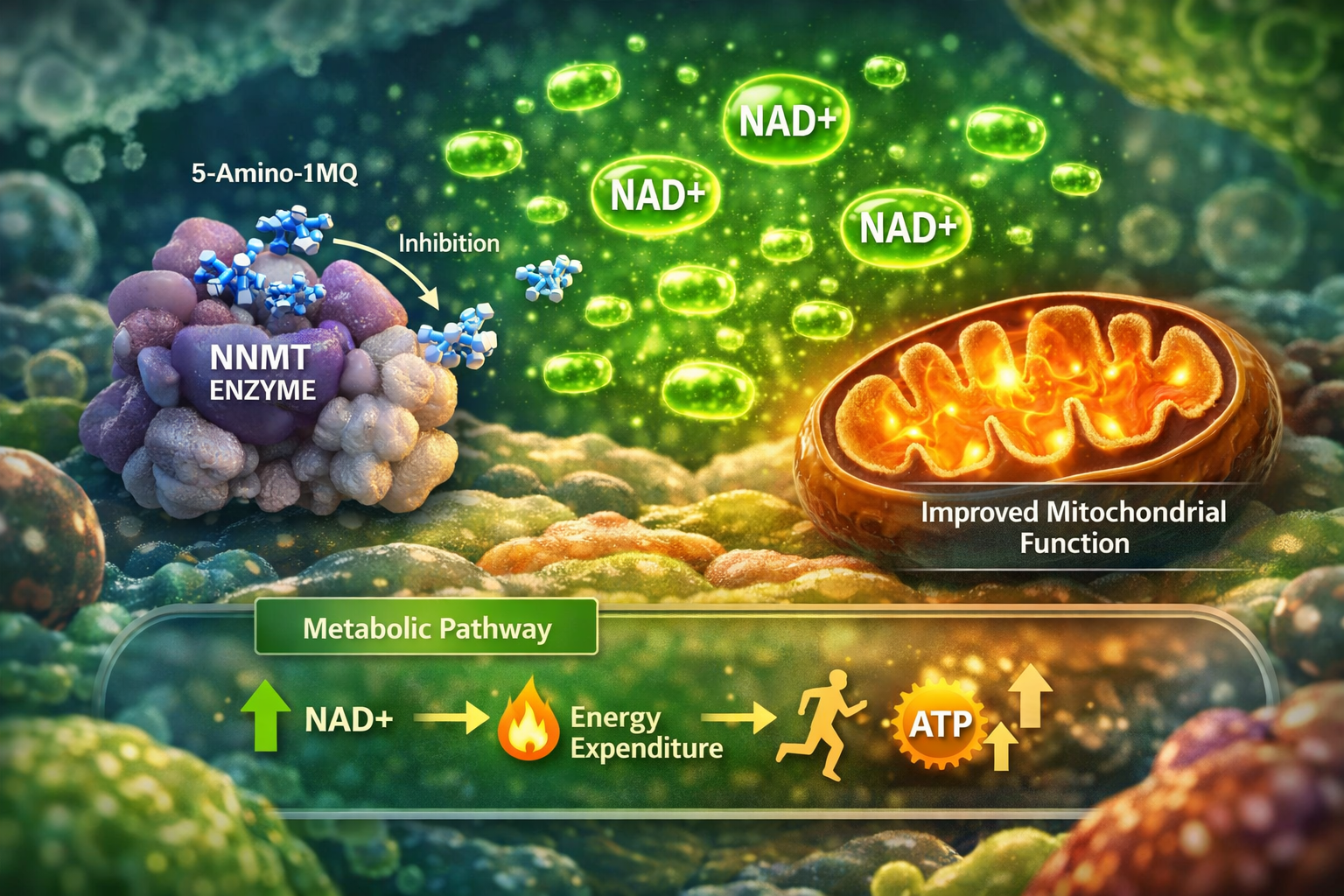
The scientific community’s fascination with 5-amino-1MQ peptide stems primarily from its unique mechanism of action. At its core, 5-amino-1MQ functions as a selective inhibitor of an enzyme known as nicotinamide N-methyltransferase, or NNMT. To understand the significance of this inhibition, one must first grasp the role of NNMT in cellular metabolism.
The Role of Nicotinamide N-Methyltransferase (NNMT)
NNMT is an enzyme found in various tissues throughout the body, with particularly high expression in the liver, kidney, and adipose (fat) tissue. Its primary function is to catalyze the methylation of nicotinamide, a form of vitamin B3, into 1-methylnicotinamide (1-MNA). This methylation process effectively removes nicotinamide from the cellular pool, making it unavailable for other critical metabolic pathways.
Why is this important? Nicotinamide is a crucial precursor for the synthesis of nicotinamide adenine dinucleotide (NAD+). NAD+ is a coenzyme central to nearly all cellular metabolic processes, playing a vital role in energy production, DNA repair, and maintaining mitochondrial function. Think of NAD+ as the cellular currency for energy transactions; its levels directly impact how efficiently our cells can generate energy and perform essential functions. When NNMT is highly active, it "shunts" nicotinamide away, potentially leading to lower NAD+ levels.
The Impact of 5-Amino-1MQ Inhibition on NAD+ Levels
This is where 5-amino-1MQ comes into play. By selectively inhibiting NNMT, 5-amino-1MQ prevents the methylation of nicotinamide. This action frees up more nicotinamide, making it available for the salvage pathway, which is the primary route for NAD+ biosynthesis in many cells. Consequently, research has demonstrated that 5-amino-1MQ treatment can lead to a significant increase in cellular NAD+ levels. This elevation in NAD+ is believed to be the driving force behind many of the metabolic changes observed in preclinical studies.
An increase in NAD+ levels can have several cascading effects on cellular metabolism:
- Enhanced Mitochondrial Function: Mitochondria, often referred to as the powerhouses of the cell, rely heavily on NAD+ for their energy-generating processes. Higher NAD+ levels can lead to improved mitochondrial efficiency and increased ATP (adenosine triphosphate) production, which is the cell's main energy currency.
- Increased Energy Expenditure: With more efficient mitochondria and higher NAD+, cells may exhibit increased metabolic activity. This can translate to higher energy expenditure, meaning the body burns more calories.
- Improved Insulin Sensitivity: Studies suggest that higher NAD+ levels can positively influence insulin signaling pathways, potentially leading to better glucose uptake by cells and improved insulin sensitivity, especially in conditions of metabolic dysfunction.
The intricate dance between NNMT, nicotinamide, and NAD+ underscores the potential therapeutic relevance of compounds like 5-amino-1MQ. Its ability to fine-tune these fundamental metabolic pathways makes it a compelling target for further research. For researchers interested in exploring related compounds and their metabolic effects, a wide array of options can be found at Pure Tested Peptides.
Research Findings on 5-Amino-1MQ Peptide and Metabolic Health
Preclinical studies, primarily conducted in animal models, have provided compelling evidence regarding the metabolic benefits of 5-amino-1MQ. These findings have fueled the interest in this compound as a potential avenue for addressing various metabolic disorders.
Weight and Fat Mass Reduction
One of the most notable findings is the impact of 5-amino-1MQ peptide on body weight and fat mass. Research published in peer-reviewed journals has demonstrated that treatment with 5-amino-1MQ in obese animal models resulted in significant reductions in body weight and, more specifically, fat mass. Intriguingly, these reductions were observed without affecting the animals' food intake, suggesting a mechanism independent of appetite suppression. This implies that the compound might be promoting energy expenditure rather than simply curbing hunger. The reduction was particularly evident in white adipose tissue, which is the primary site of fat storage and often implicated in metabolic dysfunction.
Improved Glucose Metabolism and Insulin Sensitivity
Beyond weight reduction, studies also indicate that 5-amino-1MQ may play a role in improving glucose metabolism and insulin sensitivity. In obese animal models, treatment with this compound has been linked to:
- Lowered Blood Glucose Levels: Animals treated with 5-amino-1MQ showed improved regulation of blood sugar.
- Enhanced Insulin Sensitivity: The cells of treated animals appeared to respond more effectively to insulin, which is critical for managing blood glucose.
These findings suggest that 5-amino-1MQ could hold promise for managing conditions like metabolic syndrome and type 2 diabetes, where insulin resistance and impaired glucose metabolism are central features. The precise mechanisms behind these improvements are still being elucidated, but they are thought to be related to the increased NAD+ levels and subsequent enhancements in mitochondrial function and cellular energy expenditure.
Synergistic Effects and Stacks
The concept of stacking research compounds to amplify their effects is gaining traction in the scientific community. For instance, researchers often investigate the combined effects of 5-amino-1MQ peptide with other metabolic modulators. The combination of NMN (Nicotinamide Mononucleotide), another NAD+ precursor, with 5-amino-1MQ is a particularly interesting area of study. NMN directly provides a building block for NAD+ synthesis, while 5-amino-1MQ prevents the breakdown of nicotinamide, thus indirectly boosting NAD+ levels. The hypothesis is that combining these two might create a synergistic effect, leading to even greater increases in NAD+ and potentially more pronounced metabolic benefits. Research on the optimal ratios and effects of such combinations, including considerations for nmn + 5 amino 1-mq, is ongoing.
Another area of active exploration involves stacking 5-amino-1MQ with other peptides known for their metabolic effects, such as MOTS-c. MOTS-c is a mitochondrial-derived peptide involved in regulating metabolism and cellular energy. The idea of a mots c stack or a mots c peptide stack with 5-amino-1MQ is to investigate whether these compounds can complement each other, targeting different aspects of metabolic regulation to achieve more comprehensive effects. For example, some researchers are exploring a retatrutide mots c stack or investigating if can you stack mots c with retatrutide effectively, and how 5-amino-1MQ might integrate into such complex research protocols to further enhance metabolic studies.
The detailed investigations into such stacks are part of a broader effort to understand the intricate network of metabolic pathways and how different compounds can modulate them. Researchers are advised to explore various peptide options, including those designed for advanced metabolic research, which can be found at Pure Tested Peptides' peptide blends research section.
Typical Research Protocols and Dosing
In animal studies, typical research protocols for 5-amino-1MQ peptide have involved doses ranging from 50-100 mg/kg body weight. These doses have been shown to elicit significant metabolic improvements without apparent severe adverse effects in the animal models studied. However, it is paramount to emphasize that direct translation of these doses to human dosing is highly uncertain and should not be attempted. The pharmacokinetics (how the body processes the compound) and pharmacodynamics (the effects of the compound on the body) can vary significantly between species. Researchers seeking to purchase this compound for their studies can find reliable sources offering 5 amino 1 mq capsules or raw powder for laboratory use. More information on obtaining this specific research chemical can be found at 5 amino 1 mq buy 5amino1mq online research and data.
The Current Status and Future Directions of 5-Amino-1MQ Peptide Research

Despite the promising preclinical findings, it is crucial to understand the current regulatory and research status of 5-amino-1MQ peptide. This compound is still firmly within the realm of scientific research and is not approved for human use.
[[IMAGE_PLACEHOLDER]]
Regulatory Status and Safety Concerns
As of 2026, 5-amino-1MQ is not approved by the FDA (U.S. Food and Drug Administration) or any other major regulatory body for human consumption or therapeutic use. Most of the evidence surrounding its effects comes from animal studies and in vitro (test-tube) experiments, rather than human clinical trials. This distinction is critical. Animal models, while invaluable for initial discovery, do not always perfectly predict outcomes in humans.
A significant concern revolves around the limited safety data for 5-amino-1MQ in humans. There have been no large-scale clinical trials published that assess its safety, efficacy, optimal dosing (5 amino 1 mq dosing), or potential long-term side effects in human subjects. Without this crucial data, the full spectrum of risks associated with human use remains unknown. This lack of data is why 5-amino-1MQ is exclusively sold by research chemical suppliers and peptide vendors for laboratory research purposes only, often accompanied by explicit disclaimers that it is not intended for human consumption. Researchers are encouraged to adhere strictly to these guidelines and always prioritize safety and ethical research practices. You can learn more about finding quality research peptides at Pure Tested Peptides.
NNMT and Cancer Research
The enzyme NNMT, which 5-amino-1MQ peptide inhibits, is not only implicated in metabolic disorders but also in various cancers. Elevated NNMT expression has been observed in several types of malignancies, including kidney, liver, colon, and prostate cancers. This observation has led researchers to investigate NNMT inhibitors like 5-amino-1MQ as potential cancer therapeutics. The hypothesis is that by inhibiting NNMT, one might disrupt cancer cell metabolism, slow tumor growth, or enhance the efficacy of existing cancer treatments. This dual role of NNMT in both metabolic disease and cancer makes 5-amino-1MQ a compound of broad scientific interest, extending its research scope beyond just weight loss and diabetes.
Understanding Dosing and Administration in a Research Context
For researchers working with 5 amino 1 mq, understanding appropriate dosing and administration in preclinical settings is vital for reproducible and meaningful results. As mentioned, animal studies typically use doses of 50-100 mg/kg body weight. These doses are carefully calculated based on the animal's weight and the specific research objectives. Different research objectives may require varying concentrations or durations of administration. For instance, studies focusing on acute metabolic responses might use a single, higher dose, while chronic studies investigating long-term effects on fat mass would involve daily administration over several weeks.
It is also important for researchers to consider the formulation. While the term "5 amino 1 mq peptide" is often used colloquially, it is a small molecule. Therefore, its stability, solubility, and bioavailability characteristics might differ from true peptides. Researchers often need to dissolve it in appropriate solvents for administration in animal models, and considerations for stability during storage are paramount. Products like 5-Amino-1MQ 5mg are sold in specific formulations to aid laboratory research. Proper storage practices are essential for maintaining the integrity of research chemicals, and guidelines can be found on resources such as best practices for storing research peptides.
The Broader Research Chemical Community
5-amino-1MQ has gained significant attention within the broader research chemical and peptide communities. Online forums and discussions platforms, often including keywords like "5 amino 1 mq reddit," reflect a keen interest in its potential. However, it is crucial to reiterate that information found on such platforms should always be viewed with a critical eye and should not replace rigorous scientific study or professional medical advice. The availability of information, coupled with the unregulated nature of some research chemical markets, underscores the importance of sourcing compounds from reputable suppliers who provide verified purity and adhere to strict laboratory-only sales policies. For reliable sources of research compounds, researchers often turn to platforms like Pure Tested Peptides.
Future Research Directions
The future of 5-amino-1MQ peptide research appears promising, with several key areas poised for further exploration:
- Elucidating Full Mechanism: While the role of NNMT inhibition and NAD+ increase is understood, researchers are still working to fully map out all downstream signaling pathways and molecular targets affected by 5-amino-1MQ.
- Human Clinical Trials: The ultimate goal for any compound showing therapeutic promise is to move to human clinical trials. This will involve extensive safety testing, dose-finding studies, and efficacy trials in human subjects. These trials are essential to determine if the observed benefits in animals translate to humans and if the compound is safe for human use.
- Combinatorial Therapies: Further investigation into stacking strategies, such as combining 5-amino-1MQ with NMN or other metabolic peptides like MOTS-c, will be critical. Understanding if a mots c and retatrutide stack can be enhanced with 5-amino-1MQ, or the optimal way to integrate 5-amino-1MQ into a broader mots c peptide stack, could unlock more potent and targeted metabolic interventions.
- Specific Disease Models: Research will likely expand into more specific models of metabolic disease, such as non-alcoholic fatty liver disease (NAFLD) or specific types of obesity, to understand its targeted effects.
- Cancer Applications: The role of 5-amino-1MQ in cancer prevention or treatment, either alone or in combination with other anti-cancer agents, will continue to be a significant area of focus.
The journey from a promising research chemical to an approved therapeutic is long and arduous, requiring extensive investment in rigorous scientific investigation. For now, 5-amino-1MQ remains a valuable tool for scientific inquiry, offering a window into the complex mechanisms of metabolic regulation.
Conclusion
The 5-amino-1MQ peptide, though technically a small molecule, stands as a compelling subject in the ongoing saga of metabolic research. Its ability to selectively inhibit NNMT and subsequently elevate NAD+ levels presents a fascinating mechanism for modulating cellular energy and metabolism. Preclinical studies have painted a promising picture, suggesting its potential in reducing body fat, improving glucose metabolism, and enhancing insulin sensitivity—all without affecting food intake. These findings position 5-amino-1MQ as a significant research tool in the quest to understand and address complex metabolic disorders.
As of 2026, it is imperative to remember that 5-amino-1MQ remains strictly a research chemical. It has not been approved for human use by regulatory bodies like the FDA, and comprehensive human safety and efficacy data are still lacking. Researchers exploring the potential of this compound are advised to adhere to ethical guidelines, source their materials from reputable suppliers like Pure Tested Peptides, and conduct their studies with the utmost scientific rigor. The future holds promise for deeper understanding through continued preclinical work, and potentially, well-designed human clinical trials that could unlock the full therapeutic potential of this intriguing molecule.
Actionable Next Steps for Researchers
- Stay Informed: Continuously monitor peer-reviewed scientific literature for new studies on 5-amino-1MQ, NNMT inhibition, and NAD+ metabolism.
- Source Responsibly: When conducting laboratory research, procure 5 amino 1 mq and other research chemicals from established, reputable vendors who provide certificates of analysis and clear disclaimers for research-use-only products, such as those available on Pure Tested Peptides.
- Adhere to Protocols: Always follow strict laboratory protocols and safety guidelines when handling research chemicals.
- Consider Synergistic Research: Explore the scientific rationale for investigating 5-amino-1MQ in combination with other metabolic compounds or peptides, such as in mots c stack research or experiments involving NMN. Learn more about advanced peptide research at Pure Tested Peptides.
- Contribute to Knowledge: Share your research findings responsibly within the scientific community to advance our collective understanding of metabolic regulation and potential therapeutic targets.
Images