Description
SS-31 Research Peptides – Mitochondrial Membrane Targeting Tools for the Lab
Important notice: All SS-31 materials described on this page are supplied strictly for in vitro or other laboratory research purposes only. Human consumption is strictly prohibited. No medical, therapeutic, or dosing guidance is provided here; all content is for qualified researchers designing and interpreting bench-top experiments.
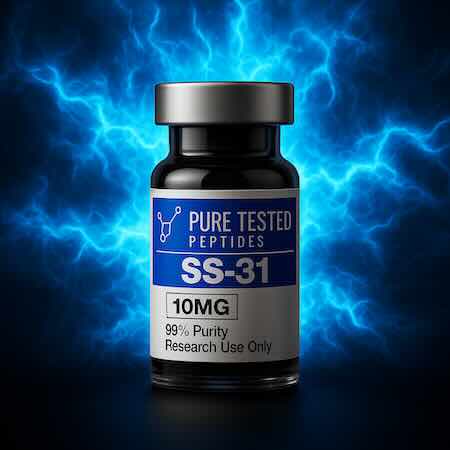
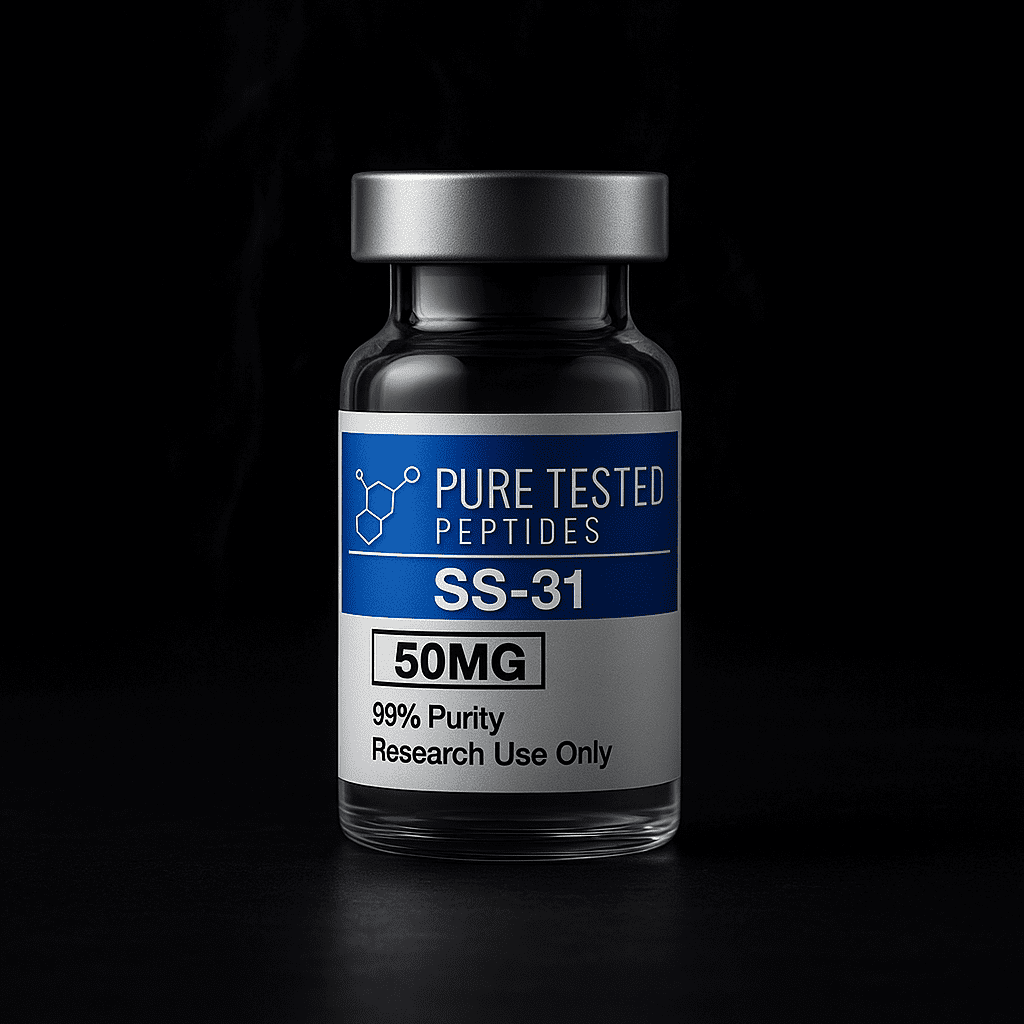
Within the mitochondrial research category at Pure Tested Peptides, SS-31 is positioned as a key mitochondria-targeting micropeptide used in preclinical models to study bioenergetics, oxidative stress, and tissue resilience under controlled conditions. The catalog includes a dedicated SS-31 10 mg, a higher-quantity SS-31 50 mg, and several research articles summarizing mechanistic themes, kidney and muscle data, and broader longevity-oriented bench work around this compound. :contentReference[oaicite:0]{index=0}

What Is SS-31 in the Context of Mitochondrial Research?
SS-31 (also known as elamipretide and formerly MTP-131 or Bendavia) is a synthetic tetrapeptide that selectively targets the inner mitochondrial membrane. In preclinical literature, it is described as binding to cardiolipin, a signature phospholipid that helps maintain cristae architecture and supports efficient electron transport. By stabilizing this lipid–protein environment, SS-31 has been reported to improve mitochondrial resilience under stress in cellular and animal models. :contentReference[oaicite:2]{index=2}
Bench studies have explored how SS-31 may reduce excess reactive oxygen species production, support ATP generation, and preserve mitochondrial structure in tissues such as skeletal muscle, myocardium, kidney, and nervous system proxies. These findings have made SS-31 a staple tool in experiments that investigate aging, cardiometabolic stress, renal function, and recovery after ischemia or toxin exposure, always within properly controlled, non-clinical settings. :contentReference[oaicite:3]{index=3}
Researchers value this compound because it allows them to modulate mitochondrial membrane dynamics in a relatively targeted way, rather than relying exclusively on global antioxidants or indirect metabolic interventions. In vitro work can pair SS-31 with fluorescent imaging, oxygen consumption assays, and transcriptomic profiling to map how mitochondrial signaling cascades respond under different load conditions.
Catalog Positioning: SS-31 in the Pure Tested Peptides Lineup
On the Pure Tested Peptides website, SS-31 sits within a defined “Mitochondrial” category alongside related tools such as MOTS-c, NAD+-focused products, and GLP-pathway research peptides. Navigation menus, product tags like SS-31 peptides, and dedicated SS31 peptide for sale tag pages help researchers quickly locate the relevant vials and related educational content. :contentReference[oaicite:4]{index=4}
The homepage and category descriptions emphasize that all peptides, including SS-31, are synthesized and tested to greater than 99% purity, with HPLC and mass spectrometry verification documented via Certificates of Analysis (COAs). This focus on purity and analytical transparency underpins the brand’s claim to be one of America’s most trusted online suppliers of research-only peptides and is especially important for experiments where small deviations can significantly change mitochondrial readouts. :contentReference[oaicite:5]{index=5}

Mechanistic Themes: Mitochondrial Membrane Dynamics & Oxidative Stress
The core mechanistic theme in SS-31 research is mitochondrial membrane targeting. By binding cardiolipin, SS-31 appears to support cristae curvature and organization, which in turn can promote smoother electron flow through the respiratory chain in preclinical models. Stabilizing this architecture may lessen electron leak and the associated generation of excess oxidative radicals, particularly under conditions of ischemia–reperfusion, high workload, or age-related decline. :contentReference[oaicite:7]{index=7}
Animal studies and ex vivo preparations have highlighted potential benefits in skeletal muscle fatigue resistance, cardiac diastolic function, kidney filtration structures, and even certain neuronal models. These observations have attracted interest from researchers mapping how mitochondrial dysfunction underlies a wide range of organ-level changes in aging, metabolic disease, and recovery paradigms. However, all such work remains at the preclinical or mechanistic stage and does not translate into approved therapeutic or wellness guidance. :contentReference[oaicite:8]{index=8}
Because of this wide applicability, SS-31 often appears in content clusters alongside other longevity and mitochondrial peptides—such as MOTS-c, LL-37/SS31 blends, and GLP-pathway tools—forming a broader ecosystem of reagents for labs that focus on bioenergetics, redox balance, and tissue resilience, rather than any direct clinical applications. :contentReference[oaicite:9]{index=9}
Strict Research-Only Status & Compliance
Pure Tested Peptides is explicit that SS-31 and all catalog items are sold for laboratory, analytical, or in vitro research purposes only and are not for human consumption under any circumstances. Site-wide disclaimers state that the company is a chemical supplier, not a compounding pharmacy or medical practice, and that none of the peptides offered are approved as drugs, dietary supplements, or cosmetics. :contentReference[oaicite:10]{index=10}
For clarity: SS-31 vials from this supplier are not intended to be injected, ingested, inhaled, applied to the skin, or used in any way that involves human consumption. Their appropriate setting is in vitro assay work, ex vivo tissue models, and regulated in vivo animal studies overseen by institutional committees where applicable. Human consumption is strictly prohibited and contradicts the stated terms of sale.
This research-only status should be mirrored in every lab’s internal documentation, from inventory systems to experimental protocols. Labeling should clearly indicate that a vial is for in vitro or research purposes only, and handling should be limited to trained personnel operating under relevant safety and regulatory frameworks.
Designing Experiments with SS-31 Research Vials
In practical lab setups, SS-31 is usually incorporated into carefully structured protocols designed around specific endpoints: mitochondrial respiration, membrane potential, lipid peroxidation markers, calcium handling, or structural metrics in tissues such as muscle and kidney. The reagent may be used in cell culture, organoid models, isolated mitochondria, or in vivo animal paradigms, depending on the study design and ethical approvals.
Researchers typically document the exact lot number, storage conditions, and reconstitution steps used for each vial, making sure to align with any guidelines provided in the product listing or COA. Because mitochondrial assays can be highly sensitive to contaminants and variations in concentration, the ability to trace experimental outcomes back to specific batches and preparation procedures is vital for reproducibility and peer review.
Beyond standalone use, SS-31 often appears in combination studies where it is evaluated alongside GLP3-R, SLU-PP-332, MOTS-c, or recovery-focused compounds like BPC-157/TB-500 blends. Internal linking between product pages—such as the Synergy of LL37 and SS31 listing, the main SS-31 research themes article, and the all-peptides-for-sale catalog—helps researchers move fluidly among these related tools when architecting multitarget protocols. :contentReference[oaicite:12]{index=12}
Internal Links: Building an SS-31 Cluster from the Sitemap
The Pure Tested Peptides sitemap supports a cluster strategy by exposing product URLs, tag archives, and blog posts related to SS-31 and its mitochondrial peers. From a technical SEO standpoint, an SS-31 overview page like this should link back to the primary 10 mg product page, the higher-quantity 50 mg listing, and topic-specific articles such as SS-31 – Mitochondrial Membrane Targeting Research Themes. :contentReference[oaicite:13]{index=13}
Reciprocally, those product and blog pages should include contextual links back to a core SS-31 educational hub, as well as outward links to related mitochondrial tools (MOTS-c, NAD+, GLP3-R) and to general catalog pages like All peptides for sale. This interlinking strategy helps both search engines and human readers understand the logical connections among mitochondrial support compounds while reinforcing the brand’s emphasis on research-only use. :contentReference[oaicite:14]{index=14}
Integrating SS-31 into broader “Longevity Peptide Research” series pages, kidney-specific research write-ups, and comparison articles on where to buy SS-31 and epithalon online further strengthens topical authority while continuously reiterating the research-only status mandated across the site. :contentReference[oaicite:15]{index=15}
Common Search Phrases Researchers Use
Some lab teams explicitly reference the vial size by noting that they are working with SS-31 10MG peptide when logging materials into inventory systems or planning small pilot experiments.
In educational overviews and mechanistic summaries, writers often use the phrase SS-31 peptide to keep explanations concise while still pointing to this specific mitochondrial membrane–targeting compound.
Within internal procurement notes or spreadsheet tags, a shorter label such as SS31 peptide may show up to distinguish it from other, non-mitochondrial peptides in multi-line orders.
When labs are scaling up studies or budgeting for larger sample sizes, they may look specifically for SS-31 50MG peptide for sale to ensure there is enough material to cover all time points and replicates in a multi-phase design.
In multi-site collaborations, a central coordinator might specify SS-31 10MG peptide as the standardized unit for participating labs so that everyone uses the same vial format and documentation.
Protocol guides and internal SOP documents sometimes adopt the phrase SS-31 peptide when describing high-level steps, while leaving the exact vial size to be specified in a separate materials table.
SEO specialists tasked with organizing educational blog posts for researchers frequently include keywords like SS31 peptide in meta descriptions and headings so that technically inclined readers can find the relevant material more easily.
Bulk purchasing pages or seasonal promotion banners may highlight SS-31 50MG peptide for sale to draw attention to higher-quantity options aimed at labs planning longer or more complex mitochondrial studies.
Some content marketers working within the research niche craft Q&A-style paragraphs that incorporate a phrase such as SS-31 10MG peptide to capture search queries related to vial size plus compound name while still emphasizing research-only use.
Informational sections designed for scientists rather than the general public might mention SS-31 peptide alongside other mitochondrial tools like MOTS-c or NAD+ when explaining how different reagents complement one another in exploratory protocols.
On product tag archives and category pages where brevity is essential, the compact naming convention SS31 peptide sometimes appears in headings or filter options, grouping all SS-31–related listings into a single clickable area.
Finally, long-form buying guides and catalog overviews often use the phrase SS-31 50MG peptide for sale in passing to describe where and how researchers can source higher-volume SS-31 vials, while still reminding readers that these materials are reserved strictly for in vitro and laboratory research work, with human consumption strictly prohibited.
Summing Up: SS-31 as a Precision Tool for Mitochondrial Research
SS-31 occupies a unique position in the Pure Tested Peptides ecosystem as a mitochondria-targeted tetrapeptide used to probe membrane dynamics, oxidative stress, and organ-level resilience in carefully designed preclinical models. By focusing on cardiolipin stabilization and inner-membrane structure, this compound provides a more direct handle on mitochondrial function than many broad-spectrum redox tools, which is why it appears so frequently in longevity, kidney, muscle, and fitness-research content clusters.
At the same time, the boundaries around its usage are crystal clear: vials are sold for in vitro and other laboratory research purposes only, and any form of human consumption is strictly prohibited. For labs that respect these boundaries and prioritize purity, documentation, and reproducibility, SS-31 can serve as a valuable part of a broader toolkit for understanding how mitochondria influence healthspan-related pathways in controlled experimental systems.
1. Mitochondrial Protection & Bioenergetics
SS-31 binds to the mitochondrial lipid cardiolipin, stabilizing cristae structure and enhancing oxidative phosphorylation, while dampening intrinsic apoptosis through inhibition of BAX activation.
PubMed 34022923
2. Reduced Oxidative Stress & Age-Related Decline
SS-31 reverses age-related redox imbalance and restores mitochondrial quality in aged skeletal muscle—boosting endurance without increasing mitochondrial biogenesis.
PMC 6588449
In aged mice, it also restores cardiac diastolic function and reduces hypertrophy and ROS levels.
eLife 55513
3. Renal & Glomerular Health
In aged mice, SS-31 improves mitochondrial morphology, reduces glomerulosclerosis and cellular senescence, and preserves podocyte and endothelial integrity.
PubMed 28063595
It also shows promise in ameliorating acute kidney injury (AKI) and chronic renal disease by attenuating mitochondrial ROS and permeability transition.
PubMed 35707274
4. Neurovascular & Neuroprotective Effects
In aged mice, SS-31 restores neurovascular coupling by improving NO-mediated dilation, leading to enhanced memory and motor coordination.
PubMed 29405550
It also protects microglial cells from LPS-induced mitochondrial damage by suppressing Fis1-mediated mitochondrial fission.
PubMed 31582222
5. Musculoskeletal & Tendon Repair
SS-31 shows potential to enhance mitochondrial function in degenerative tendons, promoting repair in tendinopathy models.
PubMed 35862638
It also counters CANC-associated muscle wasting by preserving mitochondrial ATP levels and fiber integrity.
PubMed 33670497
6. Pain & Headache Relief via Mitochondrial Restoration
In a mouse headache model, SS-31 restored mitochondrial health in trigeminal neurons and reduced pain behaviors via activation of the SIRT3/PGC-1α pathway.
PubMed 37271805
References
- PubMed 34022923
- PubMed 32554501
- PMC 6588449
- eLife 55513
- PubMed 28063595
- PubMed 35707274
- PubMed 29405550
- PubMed 31582222
- PubMed 35862638
- PubMed 33670497
- PubMed 37271805
PLEASE NOTE THAT ALL PRODUCTS FEATURED HERE ARE INTENDED EXCLUSIVELY FOR RESEARCH AND DEVELOPMENT PURPOSES. THEY ARE NOT DESIGNED FOR ANY FORM OF HUMAN CONSUMPTION. THESE PRODUCTS HAVE NOT UNDERGONE EVALUATION BY THE U.S. FOOD AND DRUG ADMINISTRATION.
Taken together, these studies show SS‑31’s potential to mitigate neuroinflammation‑driven cognitive deficits and to restore mitochondrial redox homeostasis, thereby enhancing both brain function and physical endurance in preclinical models.