
Mots-c: The Hottest Mitochondrial Peptide in Research for 2025

The intricate world of cellular biology continues to unveil astonishing discoveries, and at the forefront of this scientific frontier stands Motsc, a mitochondrial-derived peptide that has rapidly captured the attention of researchers globally. In 2025, the scientific community is buzzing with excitement over Motsc's multifaceted roles in metabolism, cellular energy, and overall physiological regulation. From its initial identification to the burgeoning number of studies exploring its potential, Motsc (often referred to as mots-c) has emerged as a cornerstone in understanding mitochondrial health and its far-reaching implications. This comprehensive article delves into the fascinating science behind Motsc, exploring its mechanisms of action, current research findings, and future directions. For those looking to delve into this exciting area, information on how to buy Motsc and purchase Motsc in various formulations, such as Motsc 10mg and Motsc 50mg, is becoming increasingly valuable for laboratory studies.
Key Takeaways
- Motsc (mots-c) is a 16-amino acid mitochondrial-derived peptide. It plays a crucial role in regulating metabolic homeostasis and cellular energy.
- Primary Mechanism: Glucose Uptake. Motsc has been shown to enhance insulin sensitivity and glucose utilization, particularly in muscle cells, making it a focus for metabolic disorder research.
- Widespread Research Applications: Studies are exploring its involvement in obesity, diabetes, inflammation, and even exercise capacity.
- Available for Research: Researchers can buy Motsc from reputable suppliers, with common formulations including Motsc 10mg and Motsc 50mg for diverse experimental needs.
- Ongoing Discovery: The full scope of Motsc's physiological impact is still being unraveled, promising exciting new avenues in molecular biology.
Understanding Motsc (mots-c): A Mitochondrial Marvel
Mitochondria, often dubbed the "powerhouses of the cell," are far more than mere energy producers. They are dynamic organelles involved in a myriad of cellular processes, including signaling, differentiation, and apoptosis. The discovery of mitochondrial-derived peptides (MDPs) like Motsc has revolutionized our understanding of these organelles' broader influence. Motsc, a 16-amino acid peptide, is encoded by the mitochondrial genome, specifically from a small open reading frame (sORF) within the 12S rRNA gene. This unique origin sets it apart from peptides derived from nuclear DNA, positioning it as a direct communicator of mitochondrial status to the rest of the cell.
The initial identification of Motsc in 2015 marked a significant milestone, opening new avenues for research into metabolic regulation. Early studies quickly established its role in maintaining metabolic homeostasis, particularly its impact on glucose metabolism. Unlike many hormones or growth factors, Motsc appears to act as a 'mitochondrial signal' that communicates the energetic state of the cell to broader systemic pathways. This makes it an incredibly appealing subject for laboratories focused on metabolic disorders. Researchers looking to explore these fundamental mechanisms can easily purchase Motsc from specialized suppliers to integrate into their experimental designs.
The peptide's structure and genetic origin are fascinating. Being encoded within the mitochondrial DNA, Motsc’s production is directly tied to mitochondrial activity and health. This suggests a feedback loop where mitochondrial function influences Motsc levels, which in turn modulate systemic metabolism. This intricate interplay is a key focus of current research, aiming to elucidate how this small peptide exerts such profound effects. Understanding these foundational aspects is crucial for any researcher considering how to buy Motsc and incorporate it into their studies.
The Role of Mitochondria in Cellular Health
Before diving deeper into Motsc, it's essential to appreciate the critical role of mitochondria. These organelles are not just involved in ATP production through oxidative phosphorylation; they also regulate calcium signaling, heme synthesis, iron-sulfur cluster formation, and play a pivotal role in immune responses and inflammation. Dysfunctional mitochondria are implicated in a wide array of diseases, including neurodegenerative disorders, cardiovascular disease, cancer, and metabolic syndromes like type 2 diabetes and obesity.
The emergence of MDPs like Motsc underscores a previously underestimated communication network originating from these organelles. These peptides act as inter-organelle and inter-tissue messengers, coordinating cellular responses to metabolic stress and environmental cues. This broad influence is why Motsc is considered such a "hottest mitochondrial peptide in research." Researchers exploring cellular maintenance and adaptive capacity often integrate these insights into their work, highlighting the significance of peptides in maintaining biological equilibrium. Learn more about cellular maintenance with peptide tools and adaptive capacity and peptide mapping.
Mechanisms of Action: How Motsc Influences Metabolism and Energy
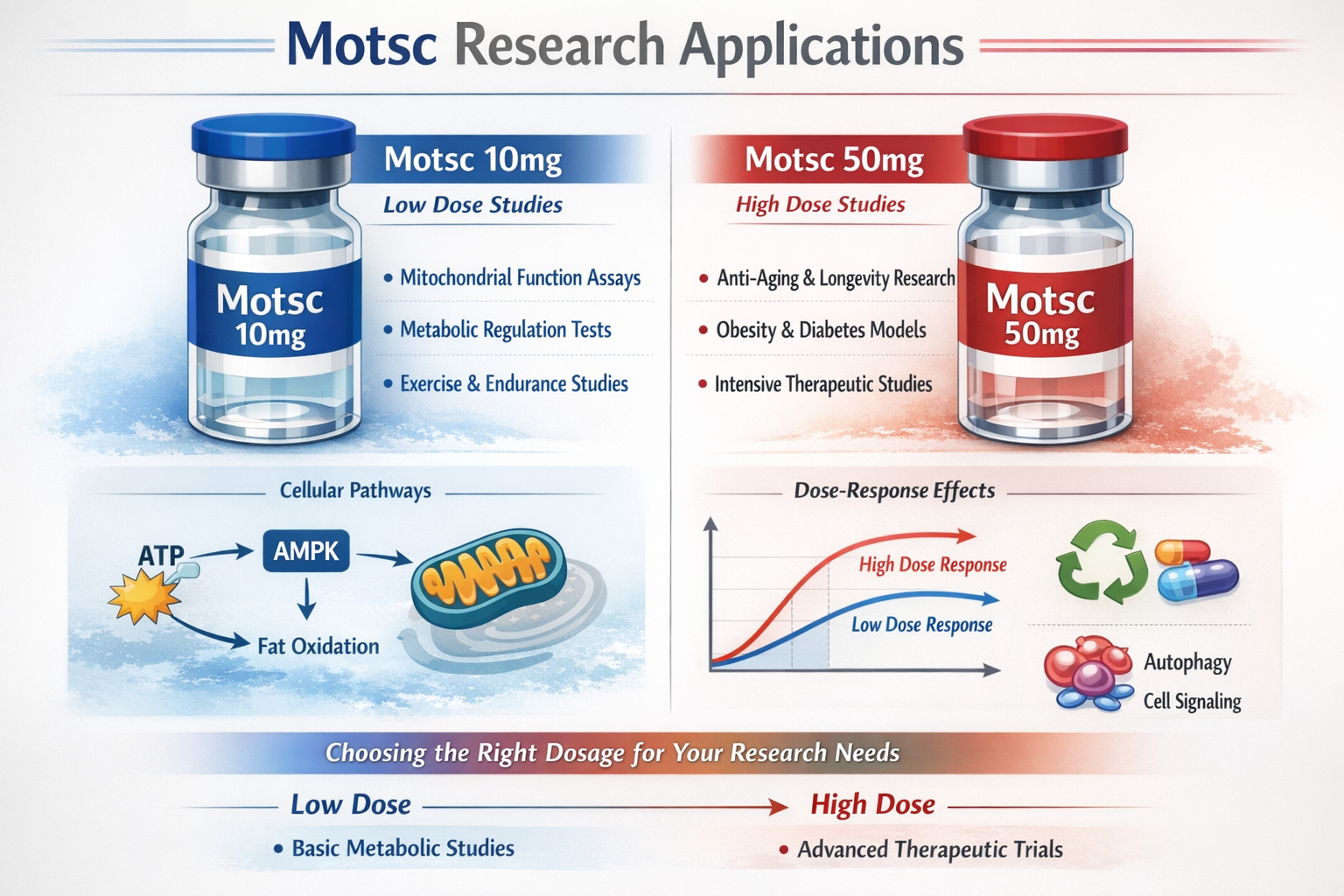
The primary mechanism through which Motsc exerts its effects is by influencing glucose uptake and utilization. Studies have shown that Motsc can enhance insulin sensitivity and promote glucose metabolism in skeletal muscle cells, a key tissue for glucose disposal. This action is distinct from insulin's direct effects and suggests a novel pathway for metabolic regulation.
One of the most compelling aspects of Motsc's mechanism involves its ability to activate the AMP-activated protein kinase (AMPK) pathway. AMPK is a master regulator of cellular energy homeostasis. When activated, AMPK promotes catabolic processes that produce ATP (e.g., glucose uptake, fatty acid oxidation) and inhibits anabolic processes that consume ATP (e.g., protein synthesis, lipid synthesis). By activating AMPK, Motsc essentially tells the cell to "burn fuel" more efficiently and to switch towards a more energy-conservative state.
Here's a breakdown of Motsc's key mechanisms:
- Enhanced Glucose Uptake: Motsc promotes the translocation of glucose transporter 4 (GLUT4) to the cell membrane, especially in muscle cells, leading to increased glucose uptake from the bloodstream. This is a critical mechanism for reducing blood glucose levels.
- Improved Insulin Sensitivity: By acting on pathways downstream of insulin signaling, Motsc can improve the cell's responsiveness to insulin, thereby counteracting insulin resistance, a hallmark of type 2 diabetes.
- AMPK Activation: As mentioned, Motsc activates AMPK, leading to a cascade of metabolic adaptations that improve energy efficiency and mitochondrial biogenesis. This activation is central to its metabolic benefits.
- Fatty Acid Oxidation: Through AMPK, Motsc can also stimulate fatty acid oxidation, meaning cells burn more fat for energy. This has implications for managing obesity and associated metabolic dysfunctions.
- Mitochondrial Biogenesis: Some research suggests Motsc may also play a role in promoting the formation of new mitochondria, further enhancing the cell's energy-producing capacity and overall metabolic health.
These mechanisms highlight why Motsc is such a captivating peptide for researchers. Its ability to directly influence fundamental metabolic pathways positions it as a powerful tool for investigating metabolic disorders. Laboratories often buy Motsc to study these precise cellular and molecular interactions.
Motsc and Metabolic Health Research
Given its profound impact on glucose metabolism and energy homeostasis, a significant portion of Motsc research focuses on its potential implications for metabolic diseases. Studies in animal models have demonstrated that Motsc can mitigate aspects of diet-induced obesity, improve glucose tolerance, and reduce insulin resistance. These findings underscore its therapeutic potential, though it's crucial to remember that these are laboratory research findings and not direct health claims.
The excitement surrounding Motsc is palpable in the research community. As we move into 2025, more in-depth studies are expected to refine our understanding of its dose-dependent effects and long-term impacts. This is where the availability of various concentrations, such as Motsc 10mg and Motsc 50mg, becomes particularly important for researchers to tailor their experiments.
Table: Key Research Areas for Motsc (mots-c)
| Research Area | Primary Focus | Expected Outcome/Observation |
|---|---|---|
| Type 2 Diabetes | Improving insulin sensitivity and glucose uptake | Reduction in blood glucose, improved glucose tolerance |
| Obesity | Enhancing fatty acid oxidation, reducing fat accumulation | Weight management, improved metabolic markers |
| Metabolic Syndrome | Addressing multiple metabolic dysfunctions (e.g., dyslipidemia, hypertension) | Comprehensive metabolic improvement |
| Exercise Performance | Modulating muscle energy metabolism, mitochondrial biogenesis | Enhanced endurance, improved recovery |
| Aging & Longevity | Counteracting age-related metabolic decline, cellular resilience | Markers of healthy aging, improved cellular function |
| Inflammation | Modulating inflammatory pathways associated with metabolic stress | Reduction in systemic inflammatory markers |
This diverse range of research applications illustrates why Motsc is such a prominent peptide in current scientific discourse.
Experimental Design and Formulations: How to Buy Motsc (mots-c) for Research

For laboratories engaged in cutting-edge research, sourcing high-quality peptides is paramount. When considering how to buy Motsc or purchase Motsc, purity, potency, and reliable synthesis are crucial factors. Reputable suppliers, like Pure Tested Peptides, provide research-grade Motsc, ensuring that experimental results are accurate and reproducible.
Motsc is typically available in lyophilized powder form, requiring reconstitution with bacteriostatic water before use in in vitro or in vivo studies. Researchers have options for different concentrations, depending on the scale and nature of their experiments.
Motsc 10mg vs. Motsc 50mg: Choosing the Right Formulation
The decision to buy Motsc 10mg or buy Motsc 50mg often depends on the specific requirements of a research project:
- Motsc 10mg: This smaller quantity is often suitable for pilot studies, initial dose-response experiments, or researchers with limited budget or who are working with smaller animal models or cell cultures that require lower overall peptide volumes. It allows for cost-effective exploration of Motsc's effects before committing to larger quantities.
- Motsc 50mg: For more extensive studies, long-term experiments, or those involving larger cohorts or repeated administrations, purchasing Motsc 50mg offers better value and ensures an ample supply of the peptide. This quantity is ideal for scaling up experiments after initial promising results have been obtained with smaller amounts.
Regardless of the quantity, the principles of peptide handling remain the same: proper storage (refrigerated, away from light), sterile reconstitution, and accurate dosing are essential for the integrity of the research. Researchers can find more information about best practices for storing research peptides to ensure optimal peptide stability.
Considerations for Researchers
When planning experiments with Motsc, researchers should also consider:
- Purity: Always ensure the peptide comes with a Certificate of Analysis (CoA) demonstrating high purity, typically ≥98%, to avoid confounding variables from impurities.
- Solubility: Motsc is generally water-soluble, but specific protocols for reconstitution should be followed to ensure proper dissolution.
- Experimental Models: Motsc has been studied in various models, including cell lines (e.g., L6 myotubes), rodents (mice, rats), and even some preliminary human observational studies. The choice of model will dictate the appropriate dose range and administration route.
- Combination Studies: Researchers are increasingly exploring the synergy of peptides. For instance, studies might look at Motsc in combination with other metabolic regulators or mitochondrial health compounds. Understanding how different peptides interact is key to advanced peptide research. Exploring comparing single peptides and multi-peptide blends in the lab can offer valuable insights.
Access to reliable sources to buy Motsc is fundamental for advancing our understanding of this exciting peptide. Companies like Pure Tested Peptides are dedicated to supplying high-quality research chemicals to the scientific community.
Future Directions and Research Horizons for Motsc (mots-c)

As we look forward to 2025 and beyond, the research landscape for Motsc (mots-c) is ripe with potential. The foundational work has established its critical role in metabolic regulation, but many questions remain to be answered. The scientific community is particularly keen on exploring several key areas:
Deeper Elucidation of Signaling Pathways
While AMPK activation is a prominent mechanism, Motsc likely interacts with a broader network of signaling pathways. Future research will aim to map these interactions comprehensively, identifying novel targets and downstream effectors. Understanding these intricate pathways could reveal additional therapeutic avenues and provide a more complete picture of Motsc's systemic effects. This includes exploring its crosstalk with other mitochondrial-derived peptides and traditional hormone systems.
Motsc in Specific Disease Models
Beyond general metabolic syndrome, researchers are beginning to investigate Motsc's role in more specific conditions. For example:
- Neurodegenerative Diseases: Given the strong link between mitochondrial dysfunction and neurodegeneration (e.g., Alzheimer's, Parkinson's), Motsc's ability to enhance mitochondrial health could be a significant area of future study.
- Cardiovascular Health: Motsc's impact on lipid metabolism and inflammation suggests potential benefits for cardiovascular diseases. Research could focus on its effects on endothelial function, atherosclerosis progression, and myocardial energetics.
- Cancer Metabolism: Cancer cells often exhibit altered metabolism. Exploring whether Motsc can modulate these metabolic reprogramming events could offer new insights into cancer therapy.
- Inflammatory and Autoimmune Conditions: The interplay between metabolism and inflammation is well-established. Future studies might investigate Motsc's immunomodulatory properties and its potential to mitigate chronic inflammation.
Development of Analogs and Delivery Methods
As the understanding of Motsc grows, efforts might shift towards developing more potent or stable analogs of the peptide. Researchers might also investigate various delivery methods to optimize its bioavailability and tissue-specific targeting for experimental purposes. This includes exploring oral formulations or sustained-release mechanisms for long-term studies. Learn more about the best oral peptides in general research.
Human Translational Research
While the current understanding of Motsc is primarily based on in vitro and animal studies, the long-term goal for many researchers is to translate these findings into human applications. This involves careful, ethically sound clinical trials to assess safety, efficacy, and optimal dosing in human subjects, particularly in the context of metabolic disorders. However, it's crucial to reiterate that Motsc remains a research chemical, and any such translational efforts are years away and would be subject to rigorous regulatory approval.
The continued availability of high-quality Motsc, whether researchers need to buy Motsc 10mg for pilot studies or purchase Motsc 50mg for larger experiments, will be critical for driving these future discoveries. The enthusiasm surrounding this mitochondrial peptide ensures that it will remain a "hottest mitochondrial peptide in research" for years to come.
Conclusion
Motsc (mots-c) represents a groundbreaking discovery in the field of mitochondrial biology and metabolic research. This 16-amino acid peptide, directly encoded by the mitochondrial genome, acts as a crucial regulator of glucose metabolism, insulin sensitivity, and cellular energy homeostasis through mechanisms involving AMPK activation. Its profound impact on these fundamental biological processes has positioned it as a central focus in the scientific community's efforts to understand and potentially address a range of metabolic disorders, from type 2 diabetes and obesity to more complex conditions involving mitochondrial dysfunction.
As we move through 2025, the body of evidence supporting Motsc's multifaceted roles continues to grow, promising exciting new avenues for investigation. Researchers around the globe are actively exploring its intricate signaling pathways, potential applications in various disease models, and the development of new experimental approaches.
For those dedicated to pushing the boundaries of scientific knowledge, the ability to reliably buy Motsc is indispensable. Whether your research demands Motsc 10mg for initial exploratory studies or you need to purchase Motsc 50mg for more comprehensive, long-term experiments, ensuring a high-purity, research-grade peptide is paramount. Reputable suppliers like Pure Tested Peptides play a vital role in enabling this crucial research by providing access to validated products. The journey of discovery with Motsc is just beginning, and its continued exploration holds immense promise for advancing our understanding of cellular health and metabolic regulation.
Meta Title: Buy Motsc (mots-c) for 2025 Research | Mitochondrial Peptide Insights
Meta Description: Explore Motsc (mots-c) research for 2025. Discover its role in metabolism, energy, and where to buy Motsc 10mg or 50mg for lab studies.