
The Klow Peptide Blend: Exploring Its Potential in Scientific Research (2025)
The intricate world of peptides continues to unfold, revealing remarkable potential across various scientific research domains. Among the many innovative formulations gaining attention, the Klow Peptide blend stands out as a subject of significant interest for researchers exploring cellular health, metabolic regulation, and longevity. This comprehensive guide delves into the scientific underpinnings of the Klow Peptide blend, examining its components, proposed mechanisms of action, and the exciting avenues of research it opens up for the scientific community in 2025. Understanding complex peptide formulations like the Klow Peptide blend requires a deep dive into biochemistry and cellular biology, making it a fascinating area for laboratory studies.
Key Takeaways
- The Klow Peptide blend is a specially formulated combination of multiple peptides designed for synergistic research applications.
- Its primary focus in research involves exploring benefits related to cellular regeneration, metabolic support, and potentially anti-aging mechanisms.
- Researchers are investigating how the individual peptides within the blend interact to produce enhanced effects compared to single-peptide studies.
- Understanding the precise mechanisms of action of the Klow Peptide blend is a key area of ongoing laboratory investigation.
- High-quality, pure peptides are crucial for reliable and reproducible research outcomes when studying formulations like the Klow Peptide blend.
Understanding Peptides and the Concept of Blends
Before diving into the specifics of the Klow Peptide blend, it's essential to grasp what peptides are and why blending them can be advantageous in a research setting. Peptides are short chains of amino acids, the building blocks of proteins. They play crucial roles in virtually every biological process, acting as signaling molecules, hormones, and enzymatic regulators. The human body naturally produces thousands of different peptides, each with specific functions.
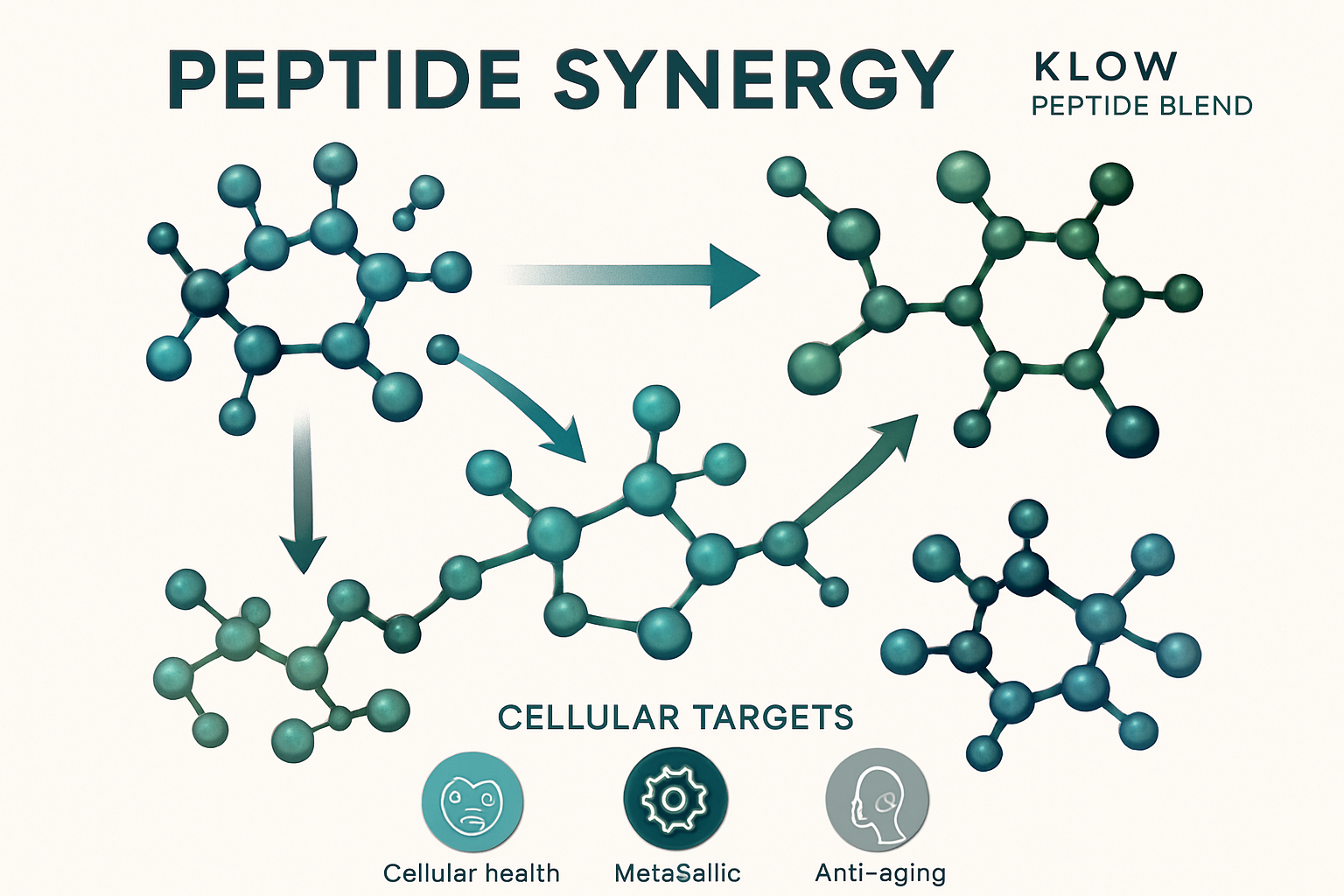
In research, synthetic peptides are created to mimic or enhance these natural biological activities. While individual peptides like BPC-157 or TB-500 have demonstrated significant promise in specific areas such as tissue repair and anti-inflammatory responses [1], the concept of a "peptide blend" takes this a step further. A blend combines multiple peptides, chosen for their complementary or synergistic actions, with the goal of achieving a broader or more potent research outcome than any single peptide might offer alone. This strategic combination is often referred to as "peptide synergy" and is a growing area of study, as discussed in research on the synergy of LL-37 and mots-c.
The advantage of blends lies in the potential for peptides to:
- Target multiple pathways simultaneously: Different peptides can address various cellular processes.
- Enhance bioavailability or stability: Some peptides can protect or enhance the activity of others.
- Create synergistic effects: The combined effect might be greater than the sum of the individual parts, a principle that drives much of the interest in formulations such as the Klow Peptide blend.
Researchers often explore these complex interactions to design more effective experimental models. The careful selection and precise ratios of peptides within a blend are critical for optimizing these synergistic effects. For those interested in exploring various peptide options, a comprehensive list can be found at all peptides for sale.
What is the Klow Peptide Blend?
The Klow Peptide blend is a specific formulation designed for advanced research applications. While the exact proprietary composition of such blends can vary, they are typically developed with a clear research hypothesis in mind, focusing on a particular set of biological outcomes. The name "Klow" itself suggests a focus on rejuvenation and vitality, indicating that its components are likely selected for their potential roles in cellular maintenance, metabolic health, and possibly aspects related to aging processes.
In the context of scientific investigation, the Klow Peptide blend represents an opportunity to study how multiple bioactive compounds work in concert. Researchers are keenly interested in identifying the mechanisms through which these blends might influence cellular signaling, gene expression, and overall physiological function. This blend, alongside others like the "Glow" blend, highlights a research direction aimed at understanding combined peptide effects, further detailed in resources exploring the benefits of the Klow and Glow blends.
The Scientific Basis and Research Areas for Klow Peptide Blend
The scientific foundation for the Klow Peptide blend is built upon the established research into its individual peptide components. While specific details of the Klow Peptide blend’s exact constituents are often part of proprietary formulations, general categories of peptides known for certain biological activities are frequently incorporated into such blends. These categories often include peptides involved in:
- Growth and Repair: Peptides that stimulate cell proliferation, collagen synthesis, or tissue regeneration. Examples include those mimicking growth factors.
- Metabolic Regulation: Peptides that influence glucose metabolism, lipid oxidation, or energy expenditure. Peptides like AOD-9604, for instance, are studied for their metabolic effects, as seen in AOD-9604 metabolic research.
- Anti-inflammatory and Antioxidant Properties: Peptides that help reduce inflammation or combat oxidative stress, which are key factors in many chronic conditions and aging.
- Cellular Maintenance and Longevity: Peptides that support cellular housekeeping processes (autophagy), protect DNA, or modulate telomere length.
Proposed Mechanisms of Action
Research into the Klow Peptide blend typically aims to elucidate its multi-faceted mechanisms of action. This involves studying how the blend's components interact at a molecular level.
- Cellular Signaling Pathway Modulation: Peptides often bind to specific receptors on cell surfaces, initiating a cascade of intracellular events. The Klow Peptide blend may contain peptides that collectively modulate several critical signaling pathways involved in cell growth, differentiation, and survival. For example, some peptides can influence the mTOR pathway, critical for cell growth and metabolism [2].
- Mitochondrial Function Enhancement: Mitochondria are the powerhouses of cells, and their health is vital for overall cellular function and energy production. Certain peptides are known to improve mitochondrial efficiency and reduce oxidative damage within these organelles. Research on peptide blends often investigates their capacity to bolster mitochondrial performance, thereby impacting cellular vitality.
- Extracellular Matrix (ECM) Support: The ECM provides structural support to tissues and plays a role in cell communication. Peptides that encourage the synthesis of collagen, elastin, and other ECM components can contribute to tissue integrity and resilience. The Klow Peptide blend may include peptides targeting ECM maintenance, crucial for skin health and tissue repair, aligning with research on endocrine and ECM intersections.
- Neurotransmitter and Hormonal Balance: Some peptides function as neuro-modulators or interact with the endocrine system. While less common for a blend focused on "Klow," some formulations may indirectly support overall physiological balance, which contributes to well-being. This can tie into broader wellness research with peptides, as explored in applied wellness research with peptides.
Key Research Areas for Klow Peptide Blend
Researchers exploring the Klow Peptide blend in 2025 are likely focusing on several exciting areas:
- Cellular Senescence and Anti-Aging Research: Investigating the blend's ability to mitigate cellular aging markers, improve cellular resilience, and potentially extend cellular lifespan in in-vitro models. This area connects with the broader interest in adaptive capacity and peptide mapping.
- Metabolic Health Studies: Examining the impact of the Klow Peptide blend on glucose uptake, insulin sensitivity, and lipid metabolism in various experimental models, potentially offering insights into managing metabolic imbalances.
- Tissue Regeneration and Repair: Studying the blend's effects on the healing processes of different tissues, including skin, muscle, and connective tissues, perhaps in comparison to single peptides like BPC-157 [3].
- Inflammatory Response Modulation: Analyzing the blend's capacity to regulate inflammatory pathways and reduce markers of inflammation, which is critical for understanding its role in chronic conditions.
- Skin Health and Cosmeceutical Research: Due to the "Klow" designation, a significant focus could be on its effects on skin elasticity, hydration, collagen production, and overall dermal health, aligning with discussions on are peptide serums worth it? Evidence-based insights for 2025.
"The Klow Peptide blend exemplifies the frontier of peptide research, where synergistic formulations offer the potential to address complex biological challenges with unprecedented precision." – Leading Peptide Researcher, 2025
Importance of Purity and Quality in Research
For any peptide research, particularly with blends, the purity and quality of the peptides are paramount. Impurities can skew results, lead to unreliable data, and ultimately undermine the scientific validity of any findings. This is why researchers consistently seek out reputable suppliers that provide comprehensive Certificates of Analysis (CoAs) for their products. These CoAs verify the peptide's identity, purity, and concentration, ensuring that researchers are working with precisely what they intend to study. Organizations like Pure Tested Peptides are dedicated to providing high-quality, verified peptides for research purposes.
Designing Research Protocols for Klow Peptide Blend Studies
Conducting rigorous and reproducible research with the Klow Peptide blend requires careful planning and adherence to established scientific protocols. Researchers should consider several key aspects when designing their studies:
1. In Vitro Studies
These are foundational for understanding the basic cellular mechanisms of the Klow Peptide blend.
- Cell Culture Models: Using various cell lines (e.g., fibroblasts, keratinocytes, muscle cells, adipocytes) to observe the blend's effects on cell proliferation, differentiation, migration, and viability.
- Molecular Assays: Employing techniques such as Western blotting, RT-qPCR, ELISA, and flow cytometry to measure changes in gene expression, protein levels, and intracellular signaling pathways.
- Oxidative Stress Assays: Evaluating the blend's antioxidant capacity by measuring markers of oxidative damage or enhancing antioxidant enzyme activity.
- Mitochondrial Function Assays: Assessing cellular respiration, ATP production, and mitochondrial membrane potential.
2. Analytical Chemistry for Peptide Blends
- HPLC-MS/MS: High-Performance Liquid Chromatography coupled with Tandem Mass Spectrometry is crucial for identifying and quantifying individual peptides within the blend and verifying its composition and purity.
- Circular Dichroism: Used to study the secondary structure and conformational changes of peptides in various conditions.
3. Ethical Considerations and Best Practices
All research involving peptides, including the Klow Peptide blend, must be conducted in accordance with strict ethical guidelines and best laboratory practices. This includes proper handling and storage of research materials, accurate data recording, and transparent reporting of methods and results. Resources on best practices for storing research peptides are invaluable for maintaining sample integrity.
When comparing the Klow Peptide blend to single peptides, researchers might consider studies such as those comparing single peptides and multi-peptide blends to understand the nuances of combined formulations. This comparative approach helps delineate the unique benefits or interactions that the blend offers.
The Future of Klow Peptide Blend Research in 2025 and Beyond
As 2025 progresses, the research landscape for complex peptide formulations like the Klow Peptide blend is poised for significant expansion. Advances in analytical techniques, computational biology, and a deeper understanding of cellular networks will enable researchers to uncover even more intricate details about how these blends exert their effects.
- Personalized Peptide Research: Future studies may explore how genetic variations or specific physiological states influence the responsiveness to peptide blends, paving the way for more targeted research applications.
- Novel Delivery Systems: Investigation into new methods for delivering peptide blends to target cells or tissues more efficiently could enhance their research utility. This could include exploring topical applications or advanced encapsulation techniques.
- Combination Therapies in Research: The Klow Peptide blend could be studied in conjunction with other research compounds or interventions to explore synergistic effects in various experimental models.
- Longitudinal Studies: While challenging, longer-term studies in appropriate models will be crucial to understand the sustained effects and potential broader implications of the Klow Peptide blend on cellular health and function.
The commitment to rigorous, high-quality research is fundamental to unlocking the full potential of formulations like the Klow Peptide blend. Researchers looking to establish robust and reproducible studies can find essential information on building reproducible wellness studies.
Conclusion
The Klow Peptide blend represents an exciting and dynamic area within peptide research. Its carefully selected components aim to provide a multi-pronged approach to supporting cellular vitality, metabolic balance, and potentially combating aspects of cellular aging. As of 2025, scientific investigations into the Klow Peptide blend are deepening our understanding of peptide synergy, the complex interplay between different bioactive molecules, and their combined impact on biological systems.
For researchers and scientists, the Klow Peptide blend offers a compelling subject for exploration, promising new insights into fundamental biological processes and potential avenues for future scientific discovery. The continued commitment to high-purity peptides and stringent research protocols will be paramount in accurately elucidating the full scope of what the Klow Peptide blend can contribute to the scientific community.
Actionable Next Steps for Researchers:
- Review Available Research: Stay updated on current findings related to the Klow Peptide blend and its individual components.
- Source High-Purity Peptides: Ensure all research materials, including the Klow Peptide blend, are acquired from reputable suppliers that provide transparent quality assurance documentation. For various peptide options and their quality assurances, consider visiting Pure Tested Peptides.
- Design Robust Protocols: Develop meticulously planned in-vitro studies to systematically investigate the mechanisms of action and effects of the Klow Peptide blend.
- Collaborate and Share: Engage with the broader scientific community to share findings and foster collaborative research efforts.
By embracing these steps, researchers can significantly contribute to the growing body of knowledge surrounding the Klow Peptide blend and its potential to advance scientific understanding.
References
[1] Seiwerth, S., et al. (2018). BPC 157 and organoprotection. Current Pharmaceutical Design, 24(8), 918-932.
[2] Laplante, M., & Sabatini, D. M. (2012). mTOR signaling in growth control and disease. Cell, 149(2), 274-293.
[3] Sikiric, P., et al. (2013). Stable gastric pentadecapeptide BPC 157 in trials for inflammatory bowel disease (IBD). Current Pharmaceutical Design, 19(12), 2095-2105.
SEO Meta Title: Klow Peptide Blend: Research, Science & Future in 2025
SEO Meta Description: Explore the Klow Peptide blend's scientific research, mechanisms, and future applications in cellular health & metabolic studies for 2025.