
Unlocking Potential: Understanding Klow Peptide Synergy for Advanced Research in 2025

In the intricate world of biochemical research, the concept of "synergy" is a powerful one, suggesting that the combined effect of multiple components can be greater than the sum of their individual parts. This principle finds a compelling application in peptide science, particularly with the innovative approach seen in Klow peptide synergy. As we navigate 2025, researchers are increasingly turning their attention to advanced peptide blends that promise enhanced outcomes in various laboratory settings. This article delves deep into what Klow peptide synergy entails, exploring its mechanisms, potential applications, and the rigorous scientific inquiry that underpins its growing importance in the research community.
Key Takeaways
- Definition of Synergy: Klow peptide synergy refers to the enhanced, combined effect observed when specific peptides are used together, leading to outcomes superior to those achieved by individual peptides.
- Mechanistic Understanding: This synergy often arises from peptides targeting different, yet interconnected, pathways or by modulating each other's activity to optimize cellular responses.
- Research Applications: Klow peptide synergy holds promise for research into areas like metabolic regulation, cellular rejuvenation, and systemic balance.
- Focus on Blends: The development of peptide blends like Klow represents a significant advancement, moving beyond single-peptide investigations to explore complex biological interactions.
- Scientific Rigor: Understanding and utilizing Klow peptide synergy requires meticulous research, careful formulation, and a commitment to data-driven insights.
The Foundation of Klow Peptide Synergy: More Than Just the Sum of Its Parts
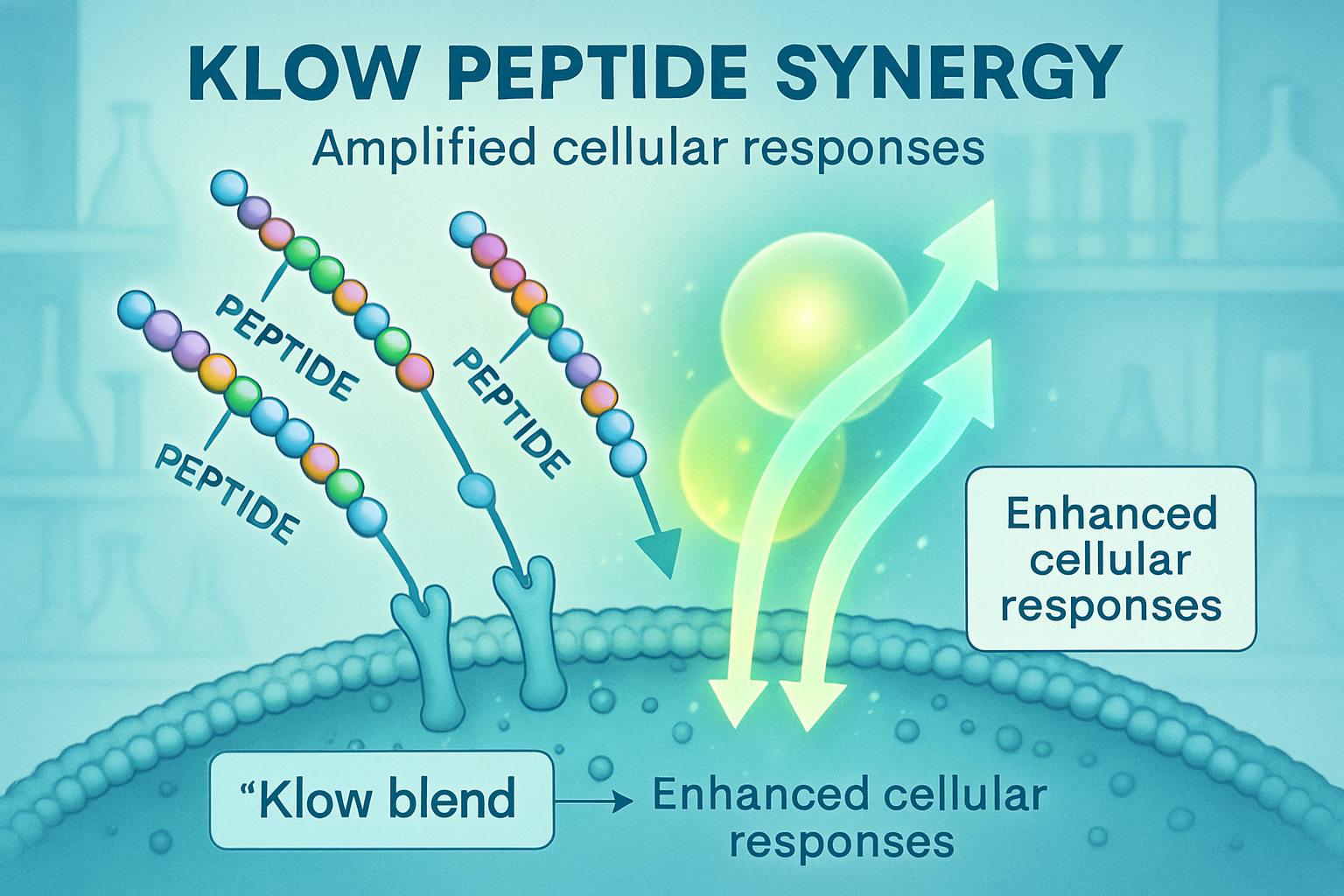
The term "synergy" comes from the Greek word "synergos," meaning "working together." In a biological context, it describes a phenomenon where two or more substances interact to produce an effect greater than the mere addition of their separate effects. For Klow peptide synergy, this means that the specific peptides within the Klow blend are not just coexisting; they are actively enhancing each other's actions, leading to a more profound and comprehensive biological response. This coordinated action is what makes peptide blends an exciting frontier in scientific research as we progress through 2025.
Peptides themselves are short chains of amino acids, the building blocks of proteins. They act as signaling molecules in the body, influencing a vast array of physiological processes, from hormone regulation and immune function to cellular repair and metabolic activity. The individual efficacy of many peptides is well-documented in scientific literature, but the true innovation lies in understanding how different peptides can interact constructively.
Why Peptide Blends? The Rationale Behind Klow
Historically, much peptide research focused on isolating and studying individual peptide effects. While invaluable, this approach sometimes overlooked the complex, interconnected nature of biological systems. The human body is a symphony of interacting pathways, and influencing one pathway can often have ripple effects on others. This understanding led to the development of sophisticated peptide blends, designed to address multiple pathways simultaneously or to amplify specific desired effects.
The Klow blend, for instance, is formulated with this synergistic principle in mind. By combining precisely selected peptides, researchers aim to achieve:
- Amplified Efficacy: Certain peptides might open cellular receptors, making them more receptive to another peptide's signaling.
- Broader Impact: A blend can target different aspects of a biological process, leading to a more holistic effect.
- Modulated Responses: One peptide might enhance the stability or bioavailability of another, or even mitigate potential undesirable side effects.
The design of such blends requires an in-depth understanding of peptide pharmacology, biochemistry, and the specific biological pathways involved. It’s not simply about mixing peptides; it's about intelligent formulation based on extensive scientific data. Pure Tested Peptides, for example, offers various peptide blends for research designed to explore these complex interactions.
Pull Quote: "The future of peptide research lies not just in discovering new molecules, but in intelligently combining existing ones to unlock unprecedented synergistic potential."
Decoding the Mechanisms: How Klow Peptide Synergy Works
Understanding the "how" behind Klow peptide synergy is crucial for researchers. The mechanisms can be multifaceted and often involve intricate molecular interactions. Let's explore some of the key ways peptides within a blend can work together:
1. Complementary Pathway Activation
Many biological processes are regulated by multiple, interdependent pathways. For example, maintaining metabolic balance involves hormonal signaling, glucose regulation, fat metabolism, and energy expenditure. A single peptide might primarily influence one aspect, but a synergistic blend like Klow can potentially activate or modulate several complementary pathways, leading to a more robust and balanced outcome.
Consider peptides involved in metabolic health. While a peptide like AOD-9604 is known for its fat-reducing properties [1], other peptides might focus on insulin sensitivity or energy production. A blend could potentially address multiple facets of metabolic dysfunction, leading to a more comprehensive research model. Researchers can delve deeper into AOD9604 metabolic research to understand its individual contributions.
2. Receptor Upregulation and Sensitization
Some peptides may act indirectly by preparing the cellular environment for others. For instance, one peptide might upregulate the expression of specific receptors on cell surfaces, making those cells more sensitive and responsive to the signaling of another peptide within the blend. This "priming" effect can significantly enhance the overall biological activity.
Table 1: Potential Mechanisms of Peptide Synergy
| Mechanism | Description | Example (Conceptual) |
|---|---|---|
| Complementary Action | Peptides target different but related pathways, leading to a broader, more complete effect. | Peptide A stimulates muscle repair; Peptide B reduces inflammation. Together, faster, less painful recovery. |
| Receptor Modulation | One peptide alters receptor availability or sensitivity, enhancing the effect of another. | Peptide X increases growth hormone receptor density, making cells more responsive to a GHRH-analogue like CJC-1295. |
| Enzyme Inhibition/Activation | A peptide might inhibit an enzyme that degrades another peptide, prolonging its half-life and activity. | Peptide Y protects Peptide Z from enzymatic breakdown, leading to sustained activity. |
| Cooperative Binding | Multiple peptides bind cooperatively to a target, leading to a stronger or more stable interaction. | Two peptides bind to different sites on a protein, inducing a conformational change that one peptide alone could not achieve. |
| Cascade Amplification | One peptide initiates a signaling cascade that is then amplified or further directed by another peptide. | Peptide Q triggers a mild cellular response, which Peptide R then amplifies into a robust downstream effect. |
3. Inhibition of Degradation Pathways
The stability and half-life of peptides in biological systems are critical factors determining their efficacy. Some peptides are quickly broken down by enzymes. A synergistic blend might include a peptide that acts as an enzyme inhibitor, protecting another peptide from degradation and thereby extending its activity. This ensures that the active components remain available to exert their effects for a longer duration, leading to sustained research observations.
4. Direct Molecular Interaction and Complex Formation
In some cases, peptides might physically interact with each other to form more complex structures or to bind cooperatively to a target molecule. This direct interaction can lead to a novel function or an enhanced affinity for their biological targets. The complexity of these interactions underscores the importance of advanced analytical techniques in peptide research.
5. Balanced Homeostasis and Adaptive Capacity
The body strives for homeostasis – a state of balance. Peptides in a synergistic blend might work to restore or maintain this balance by gently nudging multiple systems towards optimal function. This multi-pronged approach can support the body's natural adaptive capacity. Further research into adaptive capacity and peptide mapping can provide deeper insights into how these blends contribute to systemic regulation. The concept of Klow peptide synergy leans heavily into this holistic view, aiming for a more harmonized biological outcome rather than a single, isolated effect.
Research Applications and Potential of Klow Peptide Synergy in 2025
The exploration of Klow peptide synergy opens doors to numerous research avenues. While it’s crucial to emphasize that peptides are for research purposes only and not for human consumption, the insights gained from studies on synergistic blends can pave the way for future medical advancements.
Metabolic Research
One of the most promising areas for Klow peptide synergy research is metabolic regulation. Conditions like insulin resistance, obesity, and dyslipidemia are complex, involving multiple physiological imbalances. A synergistic blend could potentially influence:
- Glucose Homeostasis: By modulating insulin sensitivity and glucose uptake.
- Lipid Metabolism: By affecting fat oxidation and storage.
- Appetite Regulation: By interacting with satiety signals.
This multi-faceted approach could provide a more comprehensive understanding of metabolic disorders. Researchers might consider exploring the benefits of the Klow and Glow blends to see how they might contribute to different aspects of metabolic and aesthetic research.
Cellular Health and Anti-Aging Research
The quest for understanding cellular longevity and mitigating age-related decline is a major focus in scientific research. Klow peptide synergy could be investigated for its potential role in:
- Cellular Repair and Regeneration: By supporting the natural repair mechanisms of cells and tissues.
- Antioxidant Defense: By enhancing the body's ability to combat oxidative stress, a key factor in aging.
- Mitochondrial Function: By promoting the health and efficiency of mitochondria, the powerhouses of cells.
Exploring cellular maintenance with peptide tools provides a broader context for how Klow peptide synergy might fit into this exciting field.
Enhanced Recovery and Performance Studies
In fields like sports science and physical therapy research, understanding how to accelerate recovery and optimize physical performance is paramount. Klow peptide synergy could be researched for its potential to:
- Reduce Inflammation: A common barrier to rapid recovery.
- Promote Tissue Healing: Such as muscle, tendon, and ligament repair.
- Improve Energy Production: Supporting stamina and endurance.
Peptides like BPC-157 and TB-500 are individually known for their regenerative properties. A blend incorporating these or similar peptides in a synergistic fashion might offer enhanced recovery outcomes in research settings. Delving into topics like the best peptide for joint muscle pain and recovery can illuminate the specific research questions that Klow synergy might address.
Neurological and Cognitive Research
The brain is a complex organ, and its health is vital for overall well-being. Klow peptide synergy could be an area of interest for research into:
- Neuroprotection: Protecting brain cells from damage.
- Neurogenesis: Supporting the growth of new neurons.
- Cognitive Function: Potentially influencing memory, focus, and learning.
The intersection of cognition and sleep in wellness studies offers a fascinating area where synergistic peptide approaches might yield new insights.
Immunomodulation Research
The immune system is a sophisticated network that defends the body against pathogens and maintains internal balance. Research into Klow peptide synergy could explore its potential to:
- Modulate Immune Responses: Balancing inflammatory and anti-inflammatory pathways.
- Enhance Immune Surveillance: Supporting the body's ability to identify and neutralize threats.
Understanding the synergy of LL-37 and mots-c provides a precedent for exploring how different peptides can cooperatively influence immune function.
The Future of Peptide Research: Precision and Purity in 2025
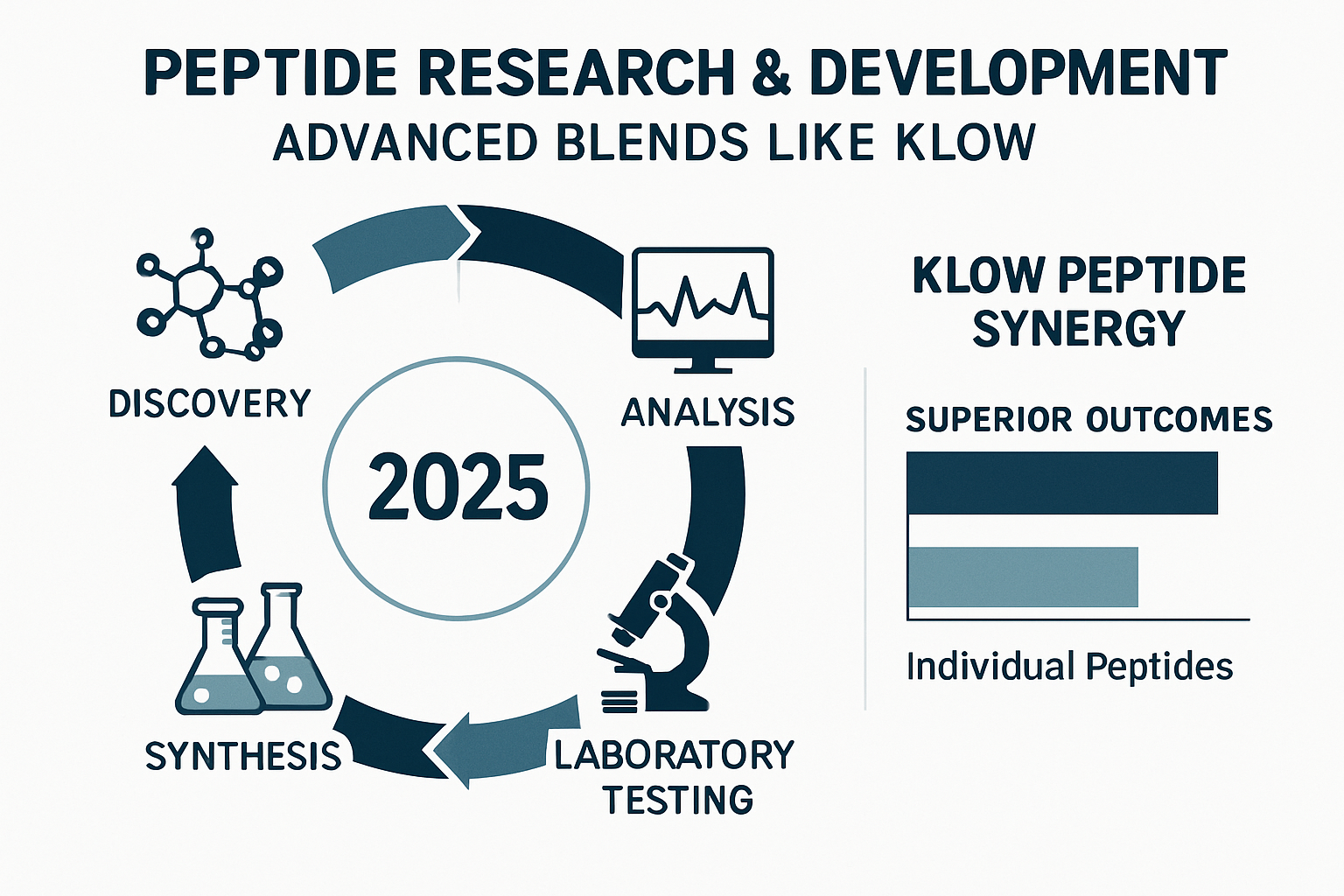
As we move deeper into 2025, the demand for high-quality, research-grade peptides is greater than ever. The efficacy and safety of any peptide research, especially involving complex blends like those utilizing Klow peptide synergy, depend heavily on the purity and accurate composition of the materials used.
Researchers must ensure they source peptides from reputable suppliers who provide comprehensive Certificates of Analysis (CoA) and adhere to strict quality control standards. This ensures that the results obtained in the lab are reliable and reproducible. Organizations like Pure Tested Peptides are dedicated to providing such high-quality products for research purposes.
The trend in peptide research is clearly moving towards more sophisticated, data-driven approaches. This includes:
- Personalized Research Models: Tailoring peptide combinations to specific research objectives and biological models.
- Advanced Delivery Systems: Exploring novel ways to deliver peptides for optimal absorption and cellular targeting.
- In-depth Mechanistic Studies: Utilizing cutting-edge analytical tools to fully understand the molecular interactions underpinning synergistic effects.
The development of new peptide blends and the ongoing investigation into their synergistic potential represents an exciting chapter in biochemical science. Understanding how peptides work together to create more powerful and targeted effects could revolutionize many areas of research, from fundamental biology to applied wellness studies.
Best Practices for Klow Peptide Synergy Research
Conducting research with peptide blends requires meticulous planning and execution. Here are some best practices for scientists working with Klow peptide synergy:
- Understand Each Component: Before studying the blend, thoroughly research the individual peptides within Klow. Understand their known mechanisms of action, optimal concentrations, and stability.
- Pilot Studies: Begin with small-scale pilot studies to determine optimal ratios and concentrations of peptides within the blend. This can help prevent resource waste and provide preliminary data.
- Controlled Experiments: Always include control groups that receive individual peptides or a placebo to accurately assess the synergistic effect. This is critical for demonstrating true synergy.
- Reproducibility: Document all experimental parameters meticulously to ensure that studies can be replicated by other researchers. This includes sourcing, storage, and preparation methods.
- Quality Sourcing: As mentioned, procure peptides from trusted suppliers who provide detailed COAs. This guarantees the purity and identity of the research materials. Learn more about building a diverse peptide library for comprehensive research.
- Ethical Considerations: Adhere to all ethical guidelines and regulations governing research with biological materials.
By following these best practices, researchers can unlock the full potential of Klow peptide synergy and contribute meaningfully to the scientific community.
Conclusion: The Horizon of Klow Peptide Synergy in Research
The concept of Klow peptide synergy represents a sophisticated evolution in peptide science. Moving beyond single-molecule investigations, researchers in 2025 are increasingly exploring the profound advantages of intelligently formulated peptide blends. By leveraging the combined strengths of multiple peptides, the Klow blend aims to achieve enhanced, holistic biological responses that surpass what individual components could deliver alone.
From metabolic regulation and cellular health to recovery and cognitive function, the potential research applications of Klow peptide synergy are vast and exciting. However, unlocking this potential requires unwavering commitment to scientific rigor, meticulous experimental design, and the use of the highest quality research-grade peptides.
As the scientific community continues to unravel the complexities of peptide interactions, Klow peptide synergy stands as a testament to the power of cooperation in biochemistry. Researchers are encouraged to explore these innovative blends with a critical eye, contributing to a deeper understanding that may one day translate into significant advancements for various fields. For those ready to explore this frontier, sourcing from reputable providers is the first crucial step in ensuring impactful and reliable research outcomes.
References
[1] Heffernan, M., Thorburn, A. W., Loughnan, M. L., et al. (2001). Effects of an oral B-cell tropin peptide (AOD9604) on fat-reducing and plasma lipid levels in obese mice. Journal of Endocrinology, 171(1), 1-8.
SEO Meta
Meta Title
Klow Peptide Synergy: Advanced Research in 2025
Meta Description
Explore Klow peptide synergy and its advanced research applications in 2025. Discover how peptide blends enhance biological responses for groundbreaking scientific studies.