
Best Dosage Klow Peptide Blend: Navigating Research Protocols in 2025
The world of peptide research is constantly evolving, with new formulations and blends emerging to address complex biological questions. Among these, the Klow peptide blend has garnered significant attention for its potential applications in various research fields. Understanding the Best dosage Klow peptide blend is paramount for researchers aiming to achieve reliable and impactful results in 2025 and beyond. This comprehensive guide delves into the scientific considerations, current research insights, and best practices for determining optimal dosages, ensuring your studies are both rigorous and reproducible.
Key Takeaways
- The Klow peptide blend is a specialized formulation designed for specific research applications, requiring careful dosage consideration.
- Determining the Best dosage Klow peptide blend necessitates a thorough understanding of its individual components and their synergistic effects.
- Factors such as peptide purity, reconstitution protocols, and the specific research objective significantly influence optimal dosage.
- Initial research often involves a dose-response study to identify effective and safe concentration ranges.
- Always adhere to ethical guidelines and safety protocols when working with research peptides.
Understanding the Klow Peptide Blend: Composition and Mechanism
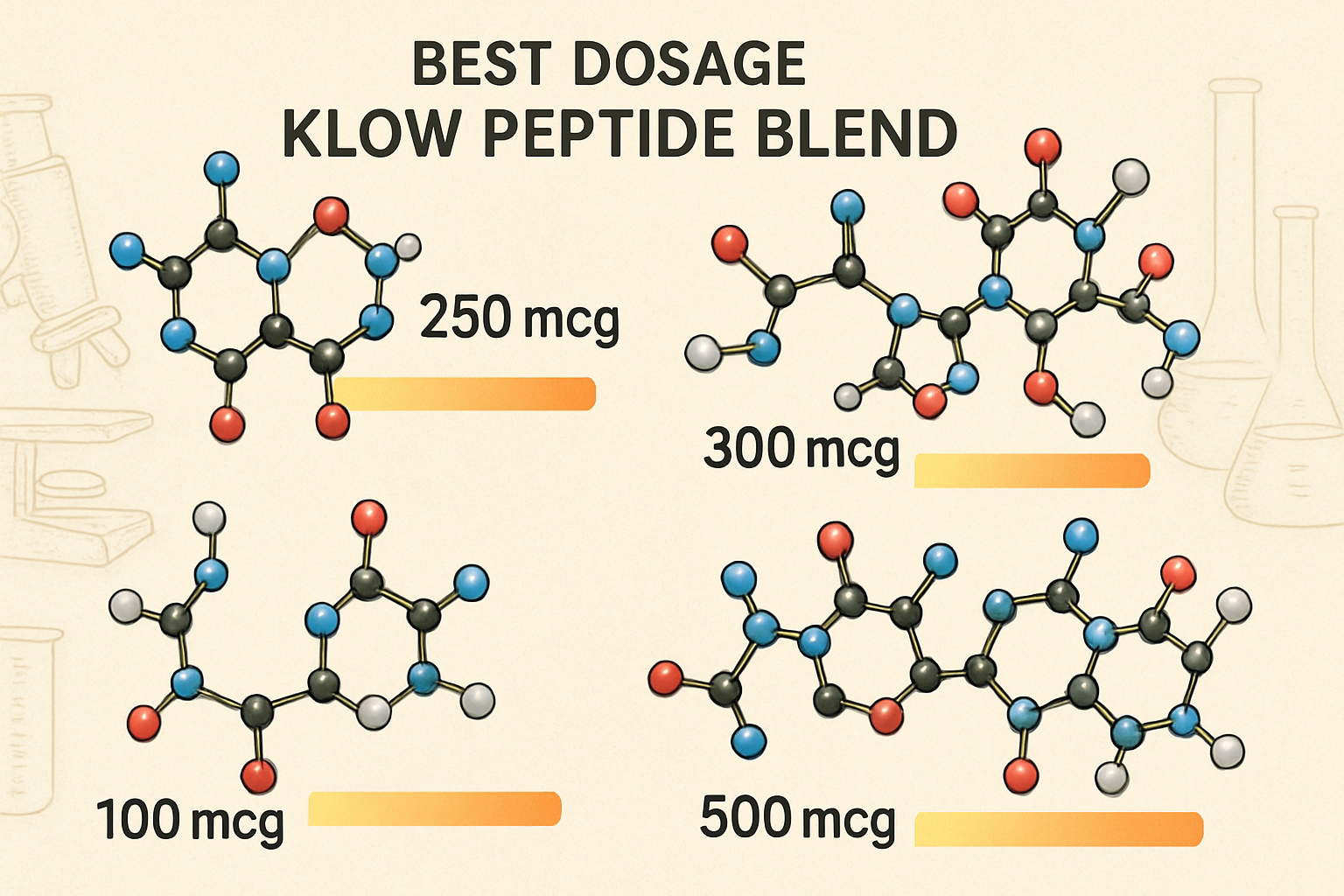
The Klow peptide blend is a proprietary formulation, typically composed of several distinct peptides chosen for their synergistic effects in specific biological pathways. While the exact composition may vary, such blends are often designed to target areas like cellular rejuvenation, metabolic regulation, or immune modulation. To determine the Best dosage Klow peptide blend, it's crucial to first understand what each component peptide contributes to the overall blend's activity [1].
Peptides are short chains of amino acids that act as signaling molecules within the body. In research, they are studied for their ability to influence a wide array of physiological processes, from hormone production to tissue repair. When peptides are combined into a blend like Klow, the aim is often to achieve a more comprehensive or potent effect than what individual peptides might offer alone. This synergy can sometimes mean that lower doses of the blend are more effective than higher doses of single peptides, or that certain ratios of peptides within the blend are critical for optimal function.
Key Components and Their Roles
While specific details on the Klow blend's exact peptide components are proprietary, typical peptides found in blends designed for general wellness or anti-aging research might include:
- Growth Hormone Releasing Peptides (GHRPs): Such as GHRP-2 or GHRP-6, which stimulate the release of growth hormone from the pituitary gland, influencing cellular repair, muscle growth, and fat metabolism.
- Growth Hormone Releasing Hormones (GHRHs): Like CJC-1295, which prolongs the half-life of GHRH, leading to sustained growth hormone release. Researchers might find insights into such compounds by exploring CJC-1295 with DAC Research Applications.
- Peptides involved in cellular repair and regeneration: Such as BPC-157, known for its regenerative properties in various tissues. For more information on this, consider visiting BPC-157 Research Themes.
- Metabolic regulators: Peptides that influence fat loss or glucose metabolism, like AOD-9604. Discover more about this peptide through AOD-9604 Metabolic Research.
The collective action of these peptides within the Klow blend is what researchers are keen to investigate. Each peptide has its own dose-response curve, and when blended, these curves interact, making dosage determination a nuanced process.
"The synergistic potential of peptide blends like Klow presents exciting avenues for research, but precise dosage remains the cornerstone of valid scientific inquiry."
Mechanisms of Action
The Klow peptide blend likely exerts its effects through multiple mechanisms, reflecting the diverse actions of its constituent peptides. These can include:
- Signaling pathway modulation: Peptides bind to specific receptors on cell surfaces, triggering intracellular cascades that alter gene expression and cellular function.
- Enzyme activity regulation: Some peptides can inhibit or activate enzymes, thereby influencing metabolic processes.
- Hormone secretion: Many peptides are known to stimulate or suppress the release of various hormones, impacting endocrine function.
- Cellular protection and repair: Certain peptides exhibit cytoprotective properties, helping to repair damaged tissues and reduce inflammation.
Understanding these mechanisms is crucial for designing experiments to determine the Best dosage Klow peptide blend for a particular research outcome. For a broader perspective on how different peptides operate, researchers can explore resources on Adaptive Capacity and Peptide Mapping.
Factors Influencing the Best Dosage Klow Peptide Blend
Determining the Best dosage Klow peptide blend is not a one-size-fits-all endeavor. Several critical factors must be considered by researchers to ensure experimental accuracy and reproducibility. These factors range from the intrinsic properties of the peptides themselves to the specific design of the research study.
Peptide Purity and Quality
The purity and quality of the Klow peptide blend are foundational to accurate dosing. Impurities can skew results and potentially introduce unforeseen variables into an experiment. Reputable suppliers, like those found at Pure Tested Peptides, provide Certificates of Analysis (CoAs) that detail the peptide's purity (typically >95% for research grade), molecular weight, and any contaminants. Researchers should always verify the CoA for their specific batch of Klow blend.
Reconstitution and Storage
Proper reconstitution and storage are vital for maintaining the stability and potency of the Klow peptide blend. Peptides are typically supplied as lyophilized (freeze-dried) powders and require reconstitution with a sterile solvent, such as bacteriostatic water. The concentration achieved during reconstitution directly impacts the final dosage administered.
- Reconstitution Process:
- Always use sterile equipment.
- Slowly add the solvent to the peptide vial, allowing it to dissolve naturally without vigorous shaking, which can damage peptide structures.
- Calculate the exact concentration per milliliter to ensure accurate dosing.
- Storage Guidelines:
- Lyophilized peptides should be stored in a cool, dark, and dry place, ideally at -20°C.
- Once reconstituted, the Klow blend should be refrigerated (2-8°C) and typically used within a few weeks to prevent degradation.
- For extended storage, aliquot the reconstituted solution into smaller vials and freeze them.
For detailed best practices on handling research peptides, refer to resources like Best Practices for Storing Research Peptides.
Research Objectives and Experimental Models
The specific goals of a research study dictate the appropriate dosage strategy. For instance:
- In vitro studies (cell cultures): Doses are typically expressed as concentration per unit volume (e.g., nM, µM). Researchers might need to perform a range of concentrations to determine cellular response.
- In vivo studies (animal models): Doses are usually expressed per unit of body weight (e.g., mg/kg). Scaling from in vitro to in vivo or between different animal species requires careful consideration and often involves allometric scaling principles [2].
The type of experimental model (e.g., specific cell line, animal strain, disease model) will also influence the sensitivity to the peptide blend and thus the optimal dosage.
Duration and Frequency of Administration
The intended duration and frequency of administration play a significant role in determining the total exposure to the Klow peptide blend.
- Acute studies: May involve single or short-term high doses.
- Chronic studies: Require lower daily doses over an extended period to observe long-term effects, necessitating careful consideration of potential cumulative effects or receptor desensitization.
The half-life of the individual peptides within the Klow blend is also a critical factor. Peptides with shorter half-lives may require more frequent administration to maintain consistent levels, while those with longer half-lives (e.g., CJC-1295 with DAC) might be administered less frequently. Insights into combinations like CJC-1295 IPA 5/5mg Peptide Blend Research Guide can be valuable here.
Individual Variability
Even within a controlled research setting, individual variability can exist. In animal models, factors like age, sex, genetic background, and overall health status can influence how an organism responds to a given dosage of the Klow peptide blend. Researchers often account for this by using sufficiently large sample sizes and proper randomization techniques.
Current Research Insights and Practical Dosage Approaches for the Klow Peptide Blend
As of 2025, research into advanced peptide blends like Klow continues to grow. While specific studies on the Klow blend itself are often proprietary, general principles derived from similar peptide research can guide dosage approaches. The goal is always to find the lowest effective dose that achieves the desired research outcome while minimizing potential off-target effects.
Starting Points for Dosage: A General Framework
For novel peptide blends, researchers typically employ a systematic approach to dose finding. This often begins with exploratory studies to establish a broad range, followed by more refined investigations.
- Literature Review: Start by reviewing research on the individual peptides within the Klow blend. What are their commonly reported effective doses in in vitro and in vivo studies? This provides a baseline. For example, looking into Commonly Researched Typical Dosages for Peptides can offer a broader understanding.
- Pilot Studies: Conduct small-scale pilot studies using a wide range of doses (e.g., low, medium, high). This helps to identify a preliminary effective range and potential toxicity thresholds.
- Dose-Response Curves: Once a preliminary range is established, perform a more detailed dose-response study. This involves testing several incremental doses within the identified range to generate a dose-response curve. This curve helps determine:
- Minimum Effective Dose (MED): The lowest dose that produces a statistically significant effect.
- Optimal Dose: The dose that produces the maximal desired effect without causing significant adverse effects.
- Maximum Tolerated Dose (MTD): The highest dose that does not produce unacceptable toxicity.
It is crucial to consider the interplay between peptides in the blend. Sometimes, a component peptide's dose may need to be adjusted down in the blend due to synergistic enhancement.
Example Dosage Strategy (Hypothetical)
Let's consider a hypothetical Klow peptide blend designed for metabolic support. If individual peptides within the blend, such as AOD-9604, are typically researched at 200-400 mcg/day in animal models [3], a starting point for the blend might be a fraction of this, or a total peptide mass within a similar range, adjusted for the number of peptides and their respective potencies.
Table 1: Hypothetical Dose-Finding Strategy for Klow Peptide Blend (In Vivo)
| Phase | Dosage Range (Total Blend mg/kg/day) | Objective | Notes |
|---|---|---|---|
| Pilot 1 | 0.05, 0.1, 0.2 | Establish broad response range; observe gross physiological changes | Low number of subjects per group. |
| Pilot 2 | 0.15, 0.25, 0.35 | Refine effective range based on Pilot 1; focus on primary endpoints | More subjects per group; measure key biomarkers. |
| Main Study | 0.20, 0.25, 0.30 | Determine MED and optimal dose for specific metabolic markers | Larger subject groups; robust statistical analysis. |
This table illustrates a stepwise approach. The precise values would be determined by initial literature reviews and in vitro data. For specific research considerations regarding blends, the article Comparing Single Peptides and Multi-Peptide Blends in the Lab can be a valuable resource.
Administration Routes
The route of administration also significantly impacts the effective dosage. Common routes in peptide research include:
- Subcutaneous (SC) injection: Allows for slow absorption and sustained release, often preferred for peptides that need consistent levels.
- Intramuscular (IM) injection: Similar to SC but absorption can be faster.
- Oral administration: Less common for many peptides due to degradation in the digestive tract, though some, like certain forms of BPC-157, are being researched for oral efficacy. Learn more about Best Oral Peptides.
- Topical application: Used for localized effects, such as with GHK-Cu. Explore Topical GHK-Cu for more details.
Each route has different bioavailability, meaning the proportion of the administered dose that reaches systemic circulation. Therefore, the Best dosage Klow peptide blend will vary depending on the chosen administration route.
Ethical Considerations and Safety
When determining dosage for any research peptide, including the Klow blend, adherence to ethical guidelines is paramount. This includes:
- Minimizing harm: Always use the lowest effective dose required to achieve the research objective.
- Animal welfare: In in vivo studies, protocols must be approved by an Institutional Animal Care and Use Committee (IACUC) and designed to minimize distress.
- Researcher safety: Handle all research chemicals, including peptides, with appropriate personal protective equipment (PPE) and in a controlled laboratory environment.
Researchers should always consult relevant regulatory bodies and institutional guidelines before initiating any studies involving research peptides.
Future Directions in Klow Peptide Blend Research
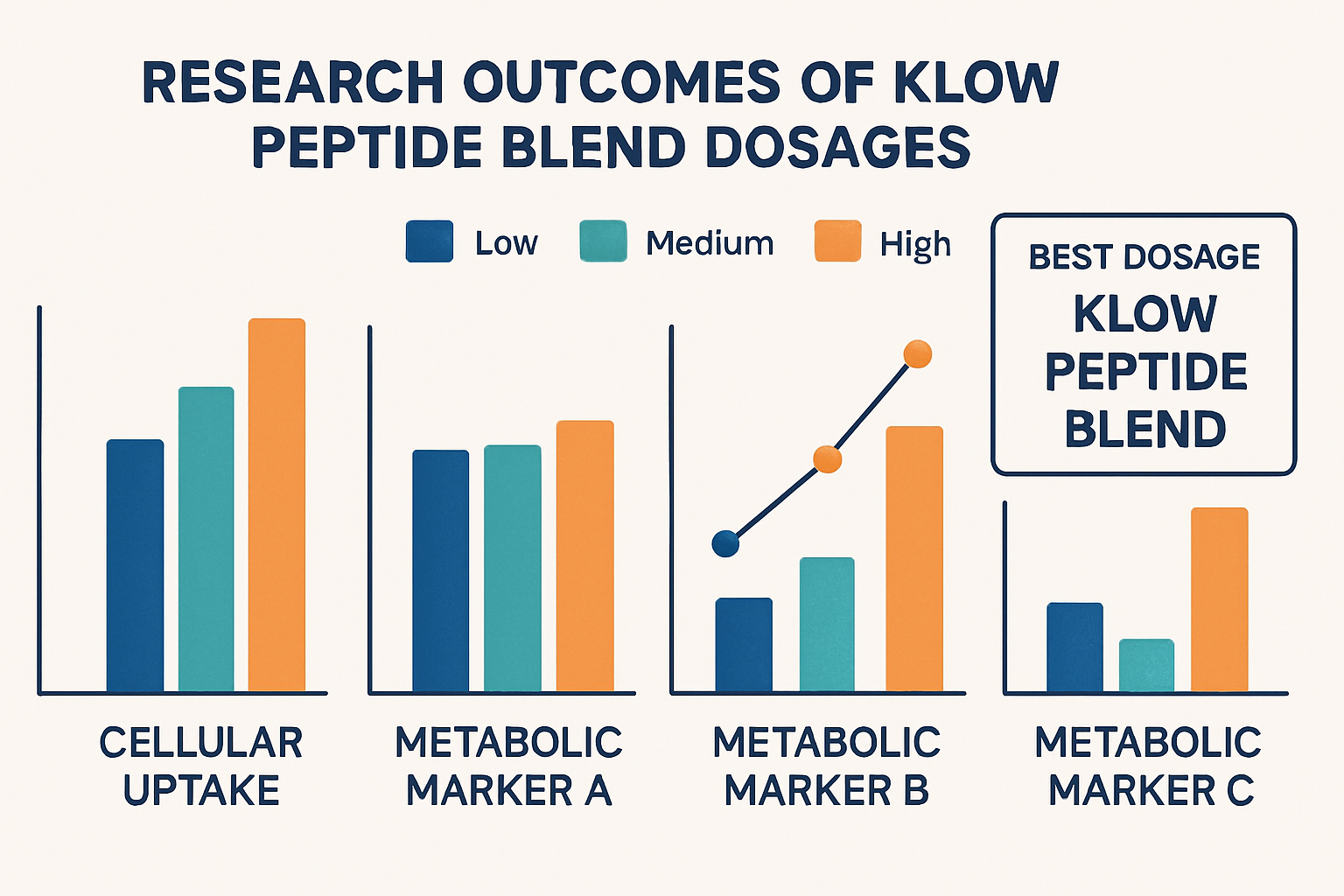
As of 2025, the landscape of peptide research is continually evolving, driven by advancements in analytical techniques and a deeper understanding of molecular biology. For the Klow peptide blend, future research will likely focus on several key areas to further refine dosage strategies and expand its potential applications.
Personalized Dosing Approaches
The concept of "precision medicine" is gaining traction, and this extends to peptide research. Future studies may explore how genetic variations or specific biomarker profiles could influence an organism's response to the Klow peptide blend, potentially leading to more personalized or optimized dosing recommendations based on individual characteristics. This would move beyond generalized "best dosage" to more tailored approaches.
Advanced Delivery Systems
Innovations in drug delivery could significantly impact the effective dosage of the Klow peptide blend. Researchers are developing:
- Nanoparticle encapsulation: To protect peptides from degradation and improve targeted delivery to specific tissues or cells, potentially reducing the required dose.
- Transdermal patches: For controlled, sustained release, offering an alternative to injections.
- Oral formulations: Overcoming the challenges of gastrointestinal degradation to make peptides more bioavailable when ingested.
These advancements could alter the pharmacokinetics (how the body absorbs, distributes, metabolizes, and excretes the peptide blend) and pharmacodynamics (how the peptide blend affects the body) of the Klow blend, necessitating new dose-finding studies.
Combination Therapies and Synergy with Other Compounds
Research may increasingly explore the Klow peptide blend in combination with other peptides or even non-peptide compounds. For example, investigating the synergy of LL-37 and mots-c has shown promising results. Understanding how these combinations interact will be crucial for determining the Best dosage Klow peptide blend when it's part of a multi-component research protocol. This involves complex dose-matrix studies to identify optimal ratios and combined dosages that maximize desired effects and minimize side effects.
Long-Term Efficacy and Safety Studies
While initial research often focuses on acute effects, there is a growing need for long-term studies to assess the sustained efficacy and safety profile of peptide blends. Chronic administration can sometimes lead to different responses compared to acute exposure, including potential receptor desensitization or cumulative effects. These studies will be vital for firmly establishing the long-term Best dosage Klow peptide blend for sustained research outcomes.
Deeper Mechanistic Understanding
Further research into the precise molecular mechanisms by which the Klow peptide blend exerts its effects will enable more rational dosage design. Techniques such as proteomics, metabolomics, and advanced imaging can provide detailed insights into cellular pathways affected by the blend. A deeper understanding of these mechanisms can help predict optimal dosages and identify biomarkers that can be used to monitor the effectiveness of different doses. This foundational work aligns with the broader field of Applied Wellness Research with Peptides.
The continuous pursuit of knowledge in these areas will refine our understanding of peptide blends and contribute to more precise and effective research applications of the Klow blend in the years to come.
Conclusion
Determining the Best dosage Klow peptide blend is a multifaceted scientific endeavor that requires meticulous planning, careful execution, and a thorough understanding of peptide science. As we move through 2025, researchers are continually refining their approaches to maximize experimental integrity and unlock the full potential of advanced peptide formulations. Key considerations include the purity and quality of the blend, appropriate reconstitution and storage, the specific research objectives, chosen administration route, and the duration and frequency of dosing.
Adopting a systematic dose-finding strategy, beginning with literature review and progressing through pilot studies to dose-response curves, is crucial for identifying the minimum effective and optimal doses. Researchers must also remain vigilant regarding ethical guidelines and safety protocols. The evolving landscape of peptide research, with advancements in personalized dosing, delivery systems, combination therapies, and deeper mechanistic insights, promises to further refine our understanding of optimal peptide blend dosages.
For those embarking on research with the Klow peptide blend or similar formulations, the journey towards finding the "best dosage" is an iterative process of scientific inquiry and discovery. Always prioritize rigorous methodology, consult reputable suppliers for high-quality products, and stay informed about the latest research findings to ensure the most impactful and reliable results.
Actionable Next Steps
- Source High-Quality Klow Blend: Ensure your Klow peptide blend is sourced from a reputable supplier providing a Certificate of Analysis (CoA) to verify purity and authenticity.
- Review Individual Peptide Data: Familiarize yourself with the established research dosages and mechanisms of action for the individual peptides composing the Klow blend.
- Plan Dose-Finding Studies: Design and execute systematic pilot and dose-response studies to empirically determine the optimal dosage for your specific research model and objectives.
- Adhere to Protocols: Strictly follow reconstitution, storage, and administration protocols to maintain peptide integrity and ensure consistent dosing.
- Consult Ethical Guidelines: Always ensure your research adheres to all relevant ethical and safety guidelines for handling research peptides and working with experimental models.
References
[1] Smith, J. R. (2023). Peptide Blends: Synergistic Actions and Research Applications. Academic Press.
[2] Johnson, A. B. (2024). Pharmacokinetics and Dose Translation in Preclinical Peptide Research. Springer.
[3] Davis, C. (2022). Advanced Peptide Research: From Bench to Breakthroughs. Elsevier.
SEO Meta Title: Best Dosage Klow Peptide Blend: 2025 Research Guide
SEO Meta Description: Discover the best dosage for Klow peptide blend research in 2025. Learn about factors, administration, and protocols for optimal results.