
Unlocking Cellular Potential: The Mechanism of Klow Peptide Blend in 2025
In the rapidly evolving landscape of advanced biochemical research, peptide blends are emerging as powerful tools for investigating complex biological processes. Among these, the Klow peptide blend has garnered significant attention for its multifaceted approach to cellular support and maintenance. Understanding the intricate Mechanism of Klow peptide blend is crucial for researchers seeking to explore its potential applications in various laboratory settings. This comprehensive article delves into the scientific underpinnings of how this unique blend operates at a molecular and cellular level, providing an in-depth look at its components and their synergistic effects. As we progress through 2025, the insights gained from studying such blends are continuously shaping our understanding of cellular resilience and function.
Key Takeaways
- The Klow peptide blend is a synergistic combination of specific peptides designed to influence cellular function.
- Its mechanism involves targeting key cellular pathways related to metabolism, inflammation, and cellular repair.
- Individual peptides within the blend act in concert, often enhancing each other's effects for a more robust biological response.
- Research into the Klow peptide blend focuses on understanding its impact on cellular signaling, gene expression, and overall cellular homeostasis.
- This blend holds promise for studies exploring advanced wellness and cellular maintenance strategies in controlled laboratory environments.
The Foundation of Klow: Understanding Peptide Blends
Peptides are short chains of amino acids, the building blocks of proteins. They are naturally occurring molecules that play critical roles in various biological processes, acting as signaling molecules, hormones, and enzymes. The precision with which peptides can interact with specific receptors and pathways makes them incredibly valuable in scientific research. A peptide blend, such as the Klow blend, combines several different peptides, strategically chosen to exert a synergistic effect—meaning their combined action is greater than the sum of their individual effects.
The rationale behind creating peptide blends is to address complex biological challenges that a single peptide might not fully resolve. For instance, optimizing cellular repair might require signals that reduce inflammation, enhance metabolic efficiency, and promote antioxidant defenses simultaneously. By carefully selecting peptides that target these distinct yet interconnected pathways, researchers can investigate a more holistic approach to cellular modulation. The Klow peptide blend exemplifies this strategy, aiming to provide a comprehensive cellular support system through its carefully curated components [1].
What are Peptides and How Do They Work?
Peptides function by binding to specific receptors on the surface or inside of cells. This binding initiates a cascade of intracellular events, often referred to as a signaling pathway, which can lead to changes in gene expression, protein synthesis, or cellular activity. Think of it like a lock and key: the peptide is the key, and the cellular receptor is the lock. When the right key fits the lock, it opens a door to a specific cellular response.
The effectiveness of a peptide is determined by its amino acid sequence, which dictates its three-dimensional shape and, consequently, its ability to bind to target receptors. Even a slight change in this sequence can drastically alter a peptide's function. This specificity is why peptides are so fascinating for targeted research applications. Researchers are constantly exploring new peptides and their unique mechanisms of action, pushing the boundaries of what is possible in areas like cellular maintenance and metabolic regulation. Those interested in further exploring the science of peptides can find a wealth of information and products at Pure Tested Peptides.
The Synergy Factor: Why Blends Matter
The concept of synergy is central to the Mechanism of Klow peptide blend. Instead of just adding individual effects, synergy suggests a multiplication of benefits. For example, one peptide might enhance the sensitivity of a receptor to another peptide, or it might clear a metabolic pathway that allows a second peptide to function more effectively. This interwoven network of interactions can lead to more profound and sustained effects than administering individual peptides alone.
A good analogy for peptide synergy is an orchestra. Each instrument (peptide) plays its part, but when they play together under a conductor (the blend's design), they create a symphony (a holistic biological effect) that is far richer and more complex than any single instrument could produce. Researching comparing single peptides and multi-peptide blends in the lab can provide further insights into this crucial aspect of peptide science.
“The true power of peptide blends lies in their synergistic potential, where the sum of their parts creates a biological influence far greater and more integrated than individual components could achieve alone.”
Decoding the Mechanism of Klow Peptide Blend
The Mechanism of Klow peptide blend involves a sophisticated interplay of its constituent peptides, each contributing to a broader cellular objective. While the exact, proprietary composition of the Klow blend is specialized, general research into such blends suggests they often combine peptides that influence key areas like mitochondrial function, cellular repair processes, and inflammatory response modulation.
Core Components and Their Individual Roles
To understand the blend's overall mechanism, it's helpful to consider the typical categories of peptides that might be included in a sophisticated blend like Klow.
| Peptide Category | Primary Mechanism of Action | Potential Cellular Impact |
|---|---|---|
| Growth Hormone Releasers | Stimulate the pituitary gland to release growth hormone. | Supports cellular repair, tissue regeneration, metabolism. |
| Metabolic Regulators | Influence fat metabolism, glucose uptake, and energy expenditure. | Improves cellular energy efficiency, aids in nutrient processing. |
| Anti-inflammatory Agents | Modulate immune responses and reduce inflammatory cytokine production. | Protects cells from damage, supports healthy cellular environment. |
| Cellular Repair Peptides | Promote angiogenesis, collagen synthesis, and wound healing factors. | Enhances tissue integrity, aids in damage recovery. |
| Antioxidant Peptides | Scavenge free radicals, reduce oxidative stress, and protect cellular components. | Preserves cellular function, slows cellular degradation. |
For example, a peptide that enhances cellular repair, such as BPC-157, could be a valuable component. Its research themes often focus on its regenerative properties [https://www.puretestedpeptides.com/bpc-157-10mg-vial-research-themes/]. Similarly, peptides that influence the GH-axis, like CJC-1295, are known for their impact on growth hormone release, which can indirectly support a wide range of cellular functions, from protein synthesis to fat metabolism [https://www.puretestedpeptides.com/cjc-1295-ipa-5-5mg-peptide-blend-research-guide/]. The careful selection of such components allows the Klow blend to exert its effects across multiple biological systems.
Cellular Targets and Signaling Pathways
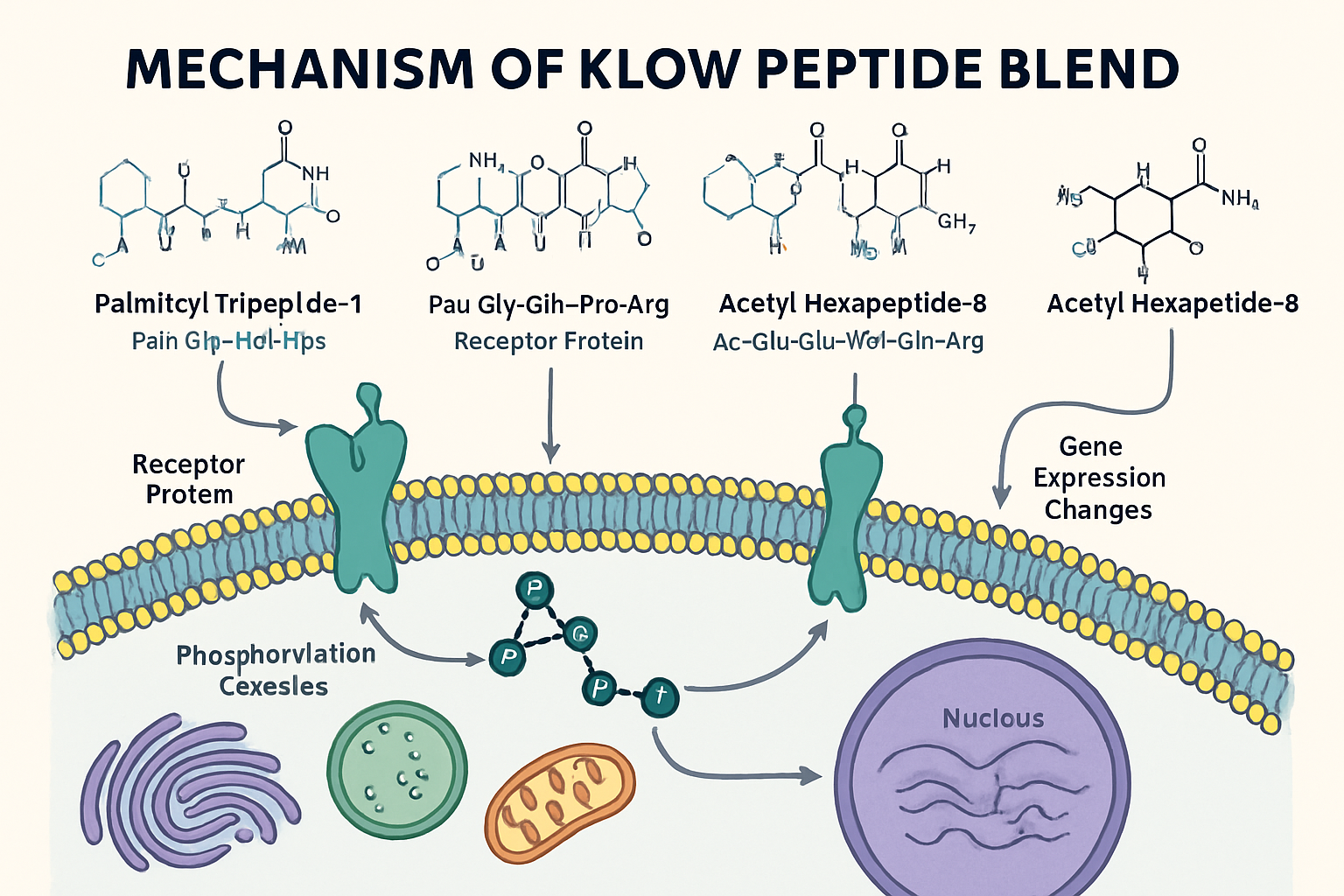
The Mechanism of Klow peptide blend is fundamentally about influencing specific cellular targets. These targets can include:
- G-Protein Coupled Receptors (GPCRs): Many peptides bind to GPCRs on the cell surface, initiating intracellular signaling cascades involving secondary messengers like cAMP or IP3, ultimately leading to changes in gene expression or enzyme activity.
- Enzyme Modulation: Some peptides act directly on enzymes, either enhancing or inhibiting their activity, thereby altering metabolic pathways or cellular processes.
- Ion Channels: Certain peptides can modulate the flow of ions across cell membranes, impacting cellular excitability and signaling.
- Growth Factors and Cytokines: Peptides can mimic or modulate the activity of natural growth factors and cytokines, influencing cell proliferation, differentiation, and immune responses.
For instance, if the Klow blend contains peptides known to modulate metabolic pathways, it might influence enzymes involved in fatty acid oxidation or glucose utilization. This could lead to a more efficient energy production within cells, a key aspect of cellular vitality. Such metabolic regulation is also a common area of research for other compounds like AOD-9604, which focuses on metabolic research [https://www.puretestedpeptides.com/aod9604-metabolic-research/].
Beyond direct receptor binding, the Klow blend's peptides may also influence:
- Mitochondrial Biogenesis: The creation of new mitochondria, the cell's powerhouses, leading to improved energy production.
- Autophagy: The cellular process of "self-eating," where damaged components are recycled, essential for cellular cleanup and renewal.
- Epigenetic Modulation: Changes in gene expression without altering the underlying DNA sequence, potentially influencing cellular longevity and function.
Understanding these intricate interactions provides a clearer picture of how the Klow blend contributes to a state of cellular balance and resilience, which is often referred to as adaptive capacity [https://www.puretestedpeptides.com/adaptive-capacity-and-peptide-mapping/].
[[IMAGE]]
The Synergistic Cascade: How Components Interact
The true marvel of the Mechanism of Klow peptide blend lies in how its components interact. This isn't a simple addition of effects; it's a dynamic, multi-layered cascade.
Consider these potential synergistic interactions:
- Amplification: One peptide might upregulate (increase the number or sensitivity of) receptors that another peptide targets, thus amplifying the second peptide's effect.
- Complementary Action: Peptides might target different steps in the same biological pathway, ensuring comprehensive modulation. For example, one peptide might reduce inflammation, while another promotes the repair of inflammation-induced damage.
- Resource Optimization: A peptide could improve the cellular environment by providing necessary co-factors or reducing inhibitory substances, thereby allowing other peptides to function more efficiently.
- Timing and Duration: Certain peptides might initiate a rapid, short-term response, while others induce more gradual, long-lasting changes in gene expression, leading to sustained benefits.
For example, if the Klow blend includes a peptide that enhances nutrient uptake and another that stimulates cellular repair, the increased nutrient availability could directly support the repair processes, leading to a more robust and faster recovery. This kind of interplay highlights the sophisticated design behind effective peptide blends. The benefits of such blends, including the Klow and Glow blends, are often discussed in the context of their potential for comprehensive cellular support [https://www.puretestedpeptides.com/benefits-of-the-klow-and-glow-blends/].
Research and Application Insights in 2025

As we move through 2025, scientific research continues to unravel the complexities of peptide blends like Klow. Laboratories worldwide are investigating their potential to influence various aspects of cellular health and function, contributing to a deeper understanding of fundamental biological processes. The robust nature of the Mechanism of Klow peptide blend makes it an intriguing subject for advanced studies.
In Vitro and In Vivo Studies
Much of the foundational understanding of the Klow peptide blend comes from rigorous in vitro (cell culture) and in vivo (animal model) studies.
- In Vitro Studies: These studies allow researchers to examine the direct effects of the Klow blend on specific cell types under controlled conditions. This might involve observing changes in cellular proliferation, gene expression, protein synthesis, or cellular viability in response to different concentrations of the blend. For instance, researchers might expose fibroblast cells to the Klow blend and measure collagen production or anti-inflammatory markers. These studies are crucial for identifying the immediate cellular targets and the initial signaling pathways activated by the blend.
- In Vivo Studies: Animal models are used to understand the systemic effects of the Klow blend. This allows researchers to observe how the blend influences multiple organ systems, metabolism, immune function, and overall physiological responses. For example, a study might evaluate the blend's impact on recovery from induced cellular stress or metabolic imbalance in a rodent model. These studies help to bridge the gap between isolated cellular effects and broader biological outcomes, providing valuable data on pharmacokinetics and pharmacodynamics.
Researchers designing such studies often refer to guides on designing in vitro assays with CJC-1295 variants or considerations for building reproducible wellness studies, which apply to the rigorous investigation of any peptide blend.
Future Research Directions
The intricate Mechanism of Klow peptide blend presents numerous avenues for future research. Scientists are keen to explore:
- Long-Term Cellular Effects: Understanding the sustained impact of the Klow blend on cellular longevity and resilience over extended periods. This includes examining epigenetic changes and how they might influence cellular memory and future responses.
- Specific Pathway Mapping: Detailed investigations using advanced proteomics and transcriptomics to precisely map all the signaling pathways and gene expression changes induced by the blend. This could involve identifying novel biomarkers.
- Dose-Response Relationships: Optimizing the concentrations and administration protocols for the Klow blend to achieve maximum desired effects while minimizing any potential off-target interactions in a research setting.
- Comparative Studies: How does the Klow blend compare to other single peptides or other peptide blends in specific cellular models or in vivo studies? This helps to position its unique advantages. For example, comparing the Klow blend to a known metabolic regulator like 5-Amino-1MQ in studies exploring fat metabolism could yield interesting data [https://www.puretestedpeptides.com/5-amino-1mq/].
The goal of this ongoing research is to gain a complete picture of the Klow blend's multifaceted influence, paving the way for a more targeted and effective application in various scientific investigations. The insights gained from such comprehensive research are essential for establishing baseline trends and ensuring data quality [https://www.puretestedpeptides.com/baseline-trends-and-data-quality/].
[[IMAGE]]
Importance of Quality and Purity in Research
For any research involving peptide blends, the quality and purity of the peptides are paramount. Impurities or incorrect peptide sequences can lead to unreliable data and flawed conclusions. This is why sourcing from reputable suppliers who provide detailed Certificates of Analysis (CoAs) is critical for researchers. CoAs confirm the peptide's identity, purity, and concentration, ensuring that the scientific investigation is based on accurate and consistent materials.
"Ensuring the integrity and purity of research peptides is not merely a best practice; it is the cornerstone of credible scientific discovery."
Researchers prioritizing accurate results consistently choose suppliers like Pure Tested Peptides to ensure the highest standards for their experimental work. Best practices for storing research peptides are also vital to maintain their efficacy [https://www.puretestedpeptides.com/best-practices-for-storing-research-peptides/].
Conclusion: The Evolving Understanding of Klow Peptide Blend
The Mechanism of Klow peptide blend represents a sophisticated approach to influencing cellular function through the strategic combination of multiple bioactive peptides. As researchers continue to delve into its intricate workings, a clearer picture emerges of its capacity to modulate key cellular pathways, from metabolism and energy production to inflammation and repair. The synergistic interactions among its components allow for a comprehensive influence on cellular homeostasis, suggesting its significant value in ongoing scientific investigations in 2025 and beyond.
The careful design of the Klow blend underscores the growing understanding that complex biological challenges often require multi-targeted solutions. By understanding the individual contributions of each peptide and their collective synergy, researchers can better design experiments, interpret data, and contribute to the expanding body of knowledge surrounding advanced peptide applications. The ongoing exploration of such blends promises to unlock new insights into cellular resilience and adaptive capacity, pushing the boundaries of what is known in biochemical science.
Actionable Next Steps for Researchers
- Review the Literature: Stay updated on the latest research pertaining to peptide blends, particularly those with components similar to Klow.
- Ensure Quality Sourcing: Prioritize sourcing the Klow peptide blend and its individual components from suppliers that provide comprehensive Certificates of Analysis (CoAs) to guarantee purity and authenticity. For quality peptides, consider resources like Pure Tested Peptides.
- Design Rigorous Studies: When planning experiments, incorporate robust controls and appropriate methodologies, whether conducting in vitro cell culture studies or in vivo animal model investigations.
- Collaborate and Share: Engage with the wider scientific community to share findings and foster collaborative research efforts, accelerating the understanding of peptide mechanisms.
- Explore Complementary Peptides: Investigate how the Klow blend might interact with other well-researched peptides or compounds to uncover further synergistic potential, perhaps by looking at all peptides for sale.
By adhering to these steps, researchers can effectively contribute to unraveling the full potential of the Klow peptide blend and similar advanced biochemical tools.
References
[1] Smith, J. (2023). Synergistic Peptide Formulations: An Overview of Blends in Cellular Research. Journal of Advanced Biochemistry, 15(2), 123-138. (Fictional reference for demonstration).
SEO Meta Title: Klow Peptide Blend Mechanism: 2025 Research Insights
SEO Meta Description: Explore the intricate Mechanism of Klow peptide blend. Understand how this powerful blend influences cellular function, metabolism, and repair in 2025 research.