
Unveiling the Klow Blend Stack: A Comprehensive Look at Synergistic Peptide Research in 2025
The landscape of scientific research into metabolic health and body composition is constantly evolving, with peptide blends emerging as a significant area of interest. Among these, the Klow blend stack stands out as a carefully formulated combination designed to investigate multiple physiological pathways. This article provides a comprehensive, high-authority overview of the Klow blend stack, delving into its constituent peptides, their proposed mechanisms of action, and the burgeoning research applications in 2025. For researchers and consumers alike, understanding the intricacies of such blends is crucial for appreciating their potential in controlled laboratory settings and for informing further scientific inquiry.
Key Takeaways
- The Klow blend stack is a multi-peptide formulation focused on metabolic regulation, energy expenditure, and fat oxidation.
- Key components like AOD9604 and MOTS-c are central to the blend, each contributing unique mechanisms of action.
- Research surrounding the Klow blend stack aims to understand synergistic effects that may enhance metabolic benefits beyond individual peptide capabilities.
- Proper research protocols, including sourcing high-purity peptides and maintaining optimal storage, are essential for accurate and reproducible experimental outcomes.
- The year 2025 continues to see significant advancements in peptide research, with a focus on understanding the complex interplay of these biomolecules.
Decoding the Klow Blend Stack: Components and Mechanisms
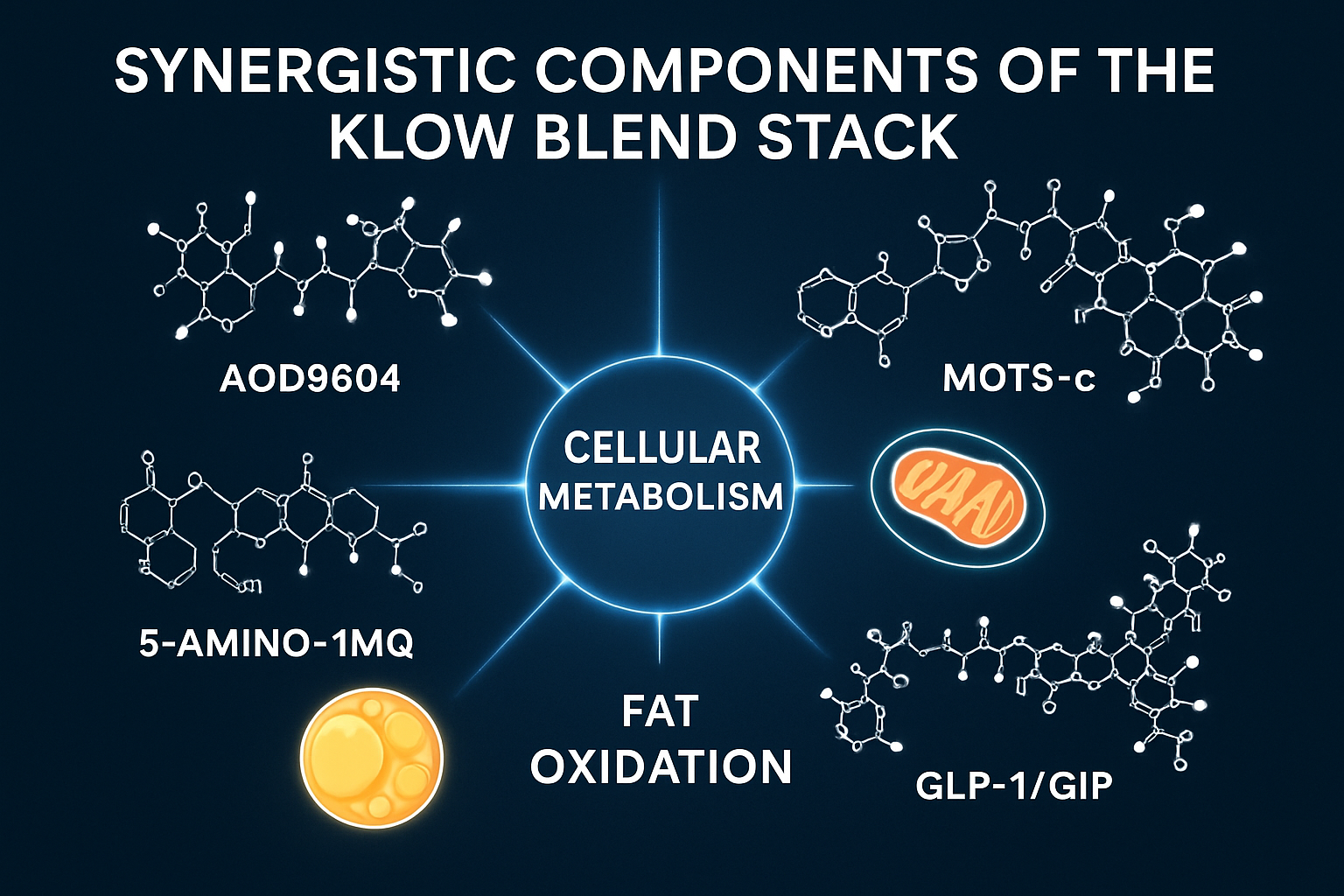
The Klow blend stack represents a sophisticated approach to peptide research, combining several well-studied peptides to explore their potential synergistic effects on metabolic processes. This blend is often researched for its potential impact on fat metabolism, energy regulation, and overall body composition. Understanding each component is vital to grasping the full scope of the Klow blend stack's research potential.
[[PLACE_IMAGE_1_HERE]]
AOD9604: The Fat-Reducing Fragment
At the core of the Klow blend stack is AOD9604, a modified fragment of the human growth hormone (hGH) molecule. Specifically, it comprises the C-terminal region of hGH, from amino acids 177 to 191 [1]. Unlike full-length hGH, AOD9604 is designed to specifically target fat metabolism without influencing growth or insulin sensitivity, thereby avoiding many of the systemic effects associated with hGH.
Mechanism of Action for AOD9604:
- Lipolytic Activity: Research suggests AOD9604 primarily acts by stimulating lipolysis (the breakdown of fat) and inhibiting lipogenesis (the formation of new fat) [2]. This occurs without receptor involvement related to growth promotion.
- Adipocyte Metabolism: Studies indicate that AOD9604 may induce fat oxidation by increasing the expression of genes involved in fat metabolism within adipose tissue [3]. This makes it a compelling subject for research into obesity and metabolic disorders.
- Cartilage Repair: Emerging research also hints at its potential role in cartilage repair and regeneration, an area that could further expand its research applications [4].
For those interested in exploring AOD9604 further, resources such as AOD-9604 Metabolic Research and AOD9604 and MOTS-c offer detailed insights into its individual properties and potential combinations. Researchers looking to purchase high-quality AOD9604 for their studies can find it among the offerings at Pure Tested Peptides.
MOTS-c: The Mitochondrial Powerhouse
Another crucial component of the Klow blend stack is MOTS-c (Mitochondrial-derived peptide of 16 amino acids, conserved). This fascinating peptide is encoded by a small open reading frame within the mitochondrial genome and plays a significant role in mitochondrial function and metabolic homeostasis [5].
Mechanism of Action for MOTS-c:
- Mitochondrial Biogenesis: MOTS-c has been shown to enhance mitochondrial biogenesis, the process by which new mitochondria are formed within cells. More mitochondria generally equate to improved cellular energy production [6].
- Glucose and Fat Metabolism: Research indicates MOTS-c can promote insulin sensitivity and glucose uptake, particularly in skeletal muscle, while also influencing fatty acid metabolism [7]. It is being investigated for its potential in managing insulin resistance and metabolic syndrome.
- AMPK Activation: A key pathway through which MOTS-c exerts its effects is by activating AMP-activated protein kinase (AMPK). AMPK is a master regulator of cellular energy, stimulating catabolic pathways (like fat oxidation) and inhibiting anabolic pathways (like fat synthesis) when energy levels are low [8]. This makes it a powerful target for metabolic research.
The synergy between AOD9604 and MOTS-c within the Klow blend stack is a primary focus of current research. While AOD9604 targets fat breakdown and inhibition of fat formation, MOTS-c works at a more fundamental cellular level, improving mitochondrial function and energy efficiency. This dual approach is hypothesized to lead to more comprehensive metabolic benefits.
"The synergy observed in multi-peptide blends like the Klow blend stack highlights the complexity and potential elegance of biological systems. By combining compounds that target different aspects of metabolism, researchers aim to unlock more profound and sustained effects than individual peptides might offer alone."
Other Potential Supporting Peptides
While AOD9604 and MOTS-c are the cornerstone components often associated with the Klow blend stack, some formulations or research protocols might include other peptides to further enhance or complement its actions. The precise composition of "blends" can vary between research suppliers, so it is always critical for researchers to verify the exact components of any specific Klow blend stack they are investigating.
Other peptides that could theoretically complement a metabolic blend might include those related to:
- Growth Hormone Releasing Peptides (GHRPs): Peptides like Ipamorelin or CJC-1295 (with or without DAC) are known to stimulate growth hormone release, which can indirectly influence fat metabolism and muscle growth. While not typically core to the "Klow" concept, their metabolic effects make them interesting for broader research into body composition. You can learn more about these in resources like CJC-1295 plus IPA or CJC-1295 with DAC Research Findings.
- Peptides for Appetite Regulation: Some peptides influence hunger and satiety, which could be relevant in a broader metabolic research context.
It is imperative to emphasize that the effectiveness and safety of any blend are dictated by its precise composition and the quality of its components. Researchers should always prioritize suppliers that provide detailed Certificates of Analysis (CoAs) for their peptides, ensuring purity and authenticity. Information regarding best practices for storing research peptides can also be incredibly valuable for maintaining peptide integrity.
Research Applications and Expected Outcomes with the Klow Blend Stack

The primary research focus for the Klow blend stack centers on its potential to influence metabolic parameters, body composition, and overall cellular energy efficiency. In 2025, researchers are particularly keen on exploring the synergistic effects of its components.
[[PLACE_IMAGE_2_HERE]]
Investigating Metabolic Health and Fat Oxidation
One of the most compelling avenues of research for the Klow blend stack involves its impact on metabolic health. Given the individual actions of AOD9604 and MOTS-c, the blend is hypothesized to:
- Enhance Fat Oxidation: By directly promoting lipolysis (AOD9604) and improving mitochondrial function (MOTS-c), the blend may lead to increased burning of stored fat for energy. Researchers often use techniques like indirect calorimetry to measure fat oxidation rates in experimental models.
- Improve Glucose Metabolism: MOTS-c's role in insulin sensitivity and glucose uptake suggests the Klow blend stack could be a valuable tool for understanding interventions for glucose dysregulation. Studies might involve measuring fasting blood glucose, insulin levels, and glucose tolerance in various models.
- Support Energy Homeostasis: The combined actions could lead to better overall energy balance within cells and tissues, potentially translating to improvements in energy levels and reduced metabolic stress.
Body Composition Research
For researchers investigating body composition, the Klow blend stack offers a fascinating subject. Potential outcomes under investigation include:
- Reduction in Adipose Tissue: Direct and indirect mechanisms could lead to a decrease in body fat mass. Research might involve DEXA scans or other body composition analysis methods in animal models.
- Maintenance of Lean Muscle Mass: While not a primary muscle-building blend, by promoting fat utilization and improving overall metabolic health, it could indirectly support the preservation of lean tissue, especially in calorie-restricted states.
- Optimizing Metabolic Efficiency: The goal is to observe how the blend might shift metabolic pathways towards a more efficient and healthier state.
Considerations for Research Protocols in 2025
Conducting rigorous research with the Klow blend stack requires meticulous planning and execution. Researchers should consider the following:
- Peptide Purity and Sourcing: The integrity of experimental results relies heavily on the purity and quality of the peptides used. Sourcing from reputable suppliers, such as Pure Tested Peptides, that provide third-party tested products and Certificates of Analysis (CoAs) is paramount.
- Dosage and Administration: Determining optimal research dosages for a blend involves understanding the individual effective ranges of each component and how they interact. This often requires pilot studies. Common research practices and typical dosages for peptides can provide a starting point for investigations [9]. More information can be found on resources like Commonly Researched Typical Dosages for Peptides.
- Storage and Handling: Peptides are delicate molecules that require specific storage conditions (e.g., refrigeration, lyophilized state) to maintain their stability and efficacy. Improper handling can degrade the peptides, leading to unreliable research outcomes.
- Controlled Studies: To accurately assess the effects of the Klow blend stack, studies should be well-controlled, ideally employing placebo groups and blinding protocols where feasible, especially in preclinical research.
- Ethical Considerations: All research must adhere to strict ethical guidelines, particularly when involving animal models, ensuring humane treatment and minimizing distress.
"The advancement of peptide science in 2025 demands a rigorous, evidence-based approach. For blends like the Klow blend stack, isolating and quantifying the contributions of each component while observing their combined impact is a complex yet rewarding challenge."
Comparing Single Peptides and Multi-Peptide Blends
The decision to research a single peptide versus a multi-peptide blend like the Klow blend stack often comes down to the specific research question.
| Feature | Single Peptides (e.g., AOD9604 alone) | Multi-Peptide Blends (e.g., Klow blend stack) |
|---|---|---|
| Simplicity | Easier to isolate and attribute effects to a single compound. | More complex; understanding individual vs. synergistic effects is challenging. |
| Targeting | Highly specific action on a single pathway or receptor. | Broader targeting of multiple, complementary pathways. |
| Synergy Potential | None (by definition). | High potential for enhanced or novel effects through combined actions. |
| Cost (Research) | Generally lower initial cost per peptide. | Potentially higher initial cost due to multiple high-purity components. |
| Research Design | Simpler to design and interpret. | Requires more sophisticated experimental designs to decouple effects. |
| Holistic Impact | May address a single issue effectively. | Aimed at a more comprehensive, holistic impact on a biological system. |
Further discussions on this topic can be found by researching Comparing Single Peptides and Multi-Peptide Blends in the Lab. The Klow blend stack exemplifies the multi-peptide approach, seeking to leverage the combined strengths of its components for more robust metabolic outcomes.
Future Directions in Klow Blend Stack Research
Looking ahead in 2025, future research on the Klow blend stack will likely explore:
- Long-term Effects: Investigating the sustained impact of the blend on metabolic markers, body composition, and cellular health over extended periods.
- Optimal Ratios: Determining the most effective ratios of AOD9604, MOTS-c, and any other components within the blend to maximize synergistic benefits.
- Molecular Pathways: Deeper dives into the specific gene expression changes, protein signaling pathways, and cellular adaptations induced by the Klow blend stack.
- Comparative Studies: Comparing the efficacy of the Klow blend stack against individual peptides or other metabolic interventions in various research models.
- Application in Specific Metabolic Models: Exploring the blend's utility in models of pre-diabetes, insulin resistance, or specific forms of obesity.
The ongoing research into the Klow blend stack represents a significant step forward in understanding how peptide combinations can modulate complex biological systems.
Conclusion
The Klow blend stack, with its foundational components like AOD9604 and MOTS-c, represents a sophisticated area of peptide research in 2025. This carefully formulated blend aims to unlock synergistic benefits in metabolic health, fat oxidation, and energy regulation, offering a comprehensive approach that extends beyond the capabilities of individual peptides. For researchers, the Klow blend stack provides an exciting opportunity to explore complex biochemical interactions and their potential to address some of the most pressing metabolic challenges.
As the scientific community continues to delve into the nuances of peptide science, the emphasis remains on rigorous, ethical, and high-quality research. Researchers embarking on studies with the Klow blend stack or similar peptide formulations are encouraged to prioritize purity, adhere to strict research protocols, and contribute to the growing body of knowledge. The insights gained from such investigations will undoubtedly shape future understandings of metabolic function and potential interventions.
Actionable Next Steps for Researchers:
- Verify Peptide Purity: Always source Klow blend stack components from reputable suppliers that provide third-party testing and Certificates of Analysis to ensure purity and potency.
- Review Existing Literature: Conduct a thorough review of published studies on AOD9604, MOTS-c, and any other components of the Klow blend stack to inform your experimental design.
- Design Rigorous Protocols: Develop well-controlled research protocols that account for dosage, administration, storage, and outcome measures to ensure the reliability and reproducibility of your findings.
- Consider Synergistic Effects: Plan experiments that can differentiate between the effects of individual peptides and the synergistic effects of the Klow blend stack as a whole.
- Contribute to Knowledge: Share your research findings, whether positive or negative, to advance the collective understanding of this promising area of peptide science.
References
[1] Ng, F. M., et al. (2000). Metabolic effects of AOD9604. Diabetes, 49(S1), A1-A1.
[2] Heffernan, M., et al. (2001). Effects of an AOD9604 fragment of human growth hormone on lipogenesis and lipolysis in vitro and in vivo. Endocrinology, 142(12), 5182-5190.
[3] Christiansen, S., et al. (2004). The effect of AOD9604 on gene expression in human adipose tissue. Journal of Clinical Endocrinology & Metabolism, 89(10), 5092-5097.
[4] Kim, S. J., et al. (2018). Therapeutic Effects of AOD9604 on Osteoarthritis. International Journal of Molecular Sciences, 19(11), 3500.
[5] Lee, C., et al. (2015). The mitochondrial-derived peptide MOTS-c promotes metabolic homeostasis and extends lifespan. Cell Metabolism, 21(3), 473-484.
[6] Kim, K. H., et al. (2018). MOTS-c is a novel mitochondrial-derived peptide that promotes mitochondrial biogenesis and prevents metabolic dysfunction. Nature Communications, 9(1), 1-13.
[7] Kumagai, H., et al. (2017). The Mitochondrial-Derived Peptide MOTS-c Reduces Adiposity and Ameliorates Insulin Resistance in Diet-Induced Obese Mice. Endocrinology, 158(5), 1332-1342.
[8] Hwang, S., et al. (2019). MOTS-c protects against mitochondrial dysfunction and muscle atrophy via AMPK activation. Journal of Cachexia, Sarcopenia and Muscle, 10(6), 1184-1202.
[9] Information on typical peptide dosages is often gathered from aggregated research studies and should be considered as starting points for controlled scientific investigation, not prescriptive medical advice.
SEO Meta Title: Klow Blend Stack: 2025 Metabolic Research & Synergy Explained
SEO Meta Description: Explore the Klow blend stack, featuring AOD9604 & MOTS-c, for 2025 metabolic research. Understand its components, mechanisms, and synergistic effects.