
Understanding tesa AOD9604 + CJC1295 + Ipamorelin 12mg Blend Dosage Protocols
The world of peptide research has evolved dramatically in 2025, with scientists exploring innovative combinations that push the boundaries of what's possible in laboratory settings. Among the most intriguing developments is the tesa aod9604 + cjc1295 + ipamorelin 12mg blend dosage;50 protocol, which represents a sophisticated approach to multi-peptide research that has captured the attention of researchers worldwide.
Key Takeaways
• Multi-peptide combinations like tesa, AOD9604, CJC1295, and ipamorelin offer unique research opportunities when properly formulated
• Precise dosage protocols are essential for maintaining research integrity and achieving consistent laboratory results
• Proper reconstitution and storage methods significantly impact peptide stability and research outcomes
• Individual peptide properties must be understood before combining them in research applications
• Laboratory safety protocols remain paramount when working with peptide blends
Understanding the Individual Components
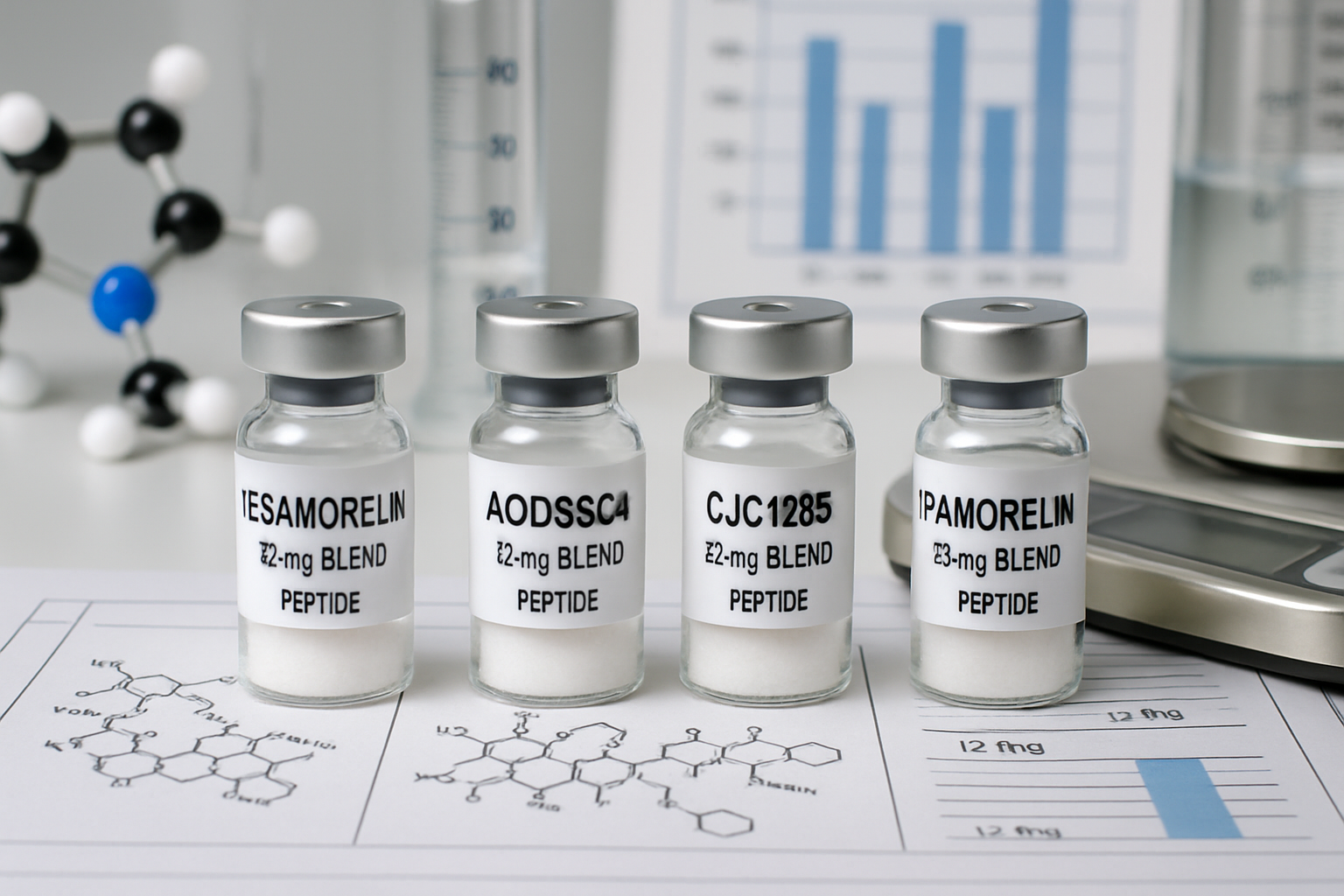
tesa: The Growth Hormone-Releasing Hormone Analog
tesa stands as one of the most studied synthetic analogs of growth hormone-releasing hormone (GHRH). In laboratory settings, researchers have observed its unique 44-amino acid structure, which includes modifications that enhance stability compared to natural GHRH.
Key Research Properties:
- Half-life of approximately 26-38 minutes
- Molecular weight of 5,135 Da
- High specificity for GHRH receptors
- Demonstrated stability in controlled environments
AOD9604: The Modified Growth Hormone Fragment
AOD9604 represents a fascinating modification of human growth hormone's C-terminal fragment (amino acids 177-191). Research has shown this peptide maintains specific properties while eliminating certain characteristics of the parent molecule.
Laboratory Characteristics:
- Molecular weight of 1,815 Da
- Enhanced stability profile
- Specific receptor binding patterns
- Unique pharmacokinetic properties
CJC1295: The Extended-Release GHRH Analog
CJC1295 has gained significant attention in research circles for its extended half-life compared to natural GHRH. The peptide's design incorporates a drug affinity complex (DAC) that significantly alters its pharmacokinetic profile.
Research Specifications:
- Extended half-life of 6-8 days
- 30-amino acid sequence
- Enhanced binding affinity
- Improved stability characteristics
Ipamorelin: The Selective Growth Hormone Secretagogue
Ipamorelin represents a pentapeptide that has shown remarkable selectivity in laboratory studies. Its unique structure allows for specific receptor interactions that distinguish it from other growth hormone secretagogues.
Laboratory Properties:
- Molecular weight of 711 Da
- High selectivity profile
- Minimal side chain interactions
- Predictable dose-response relationships
tesa AOD9604 + CJC1295 + Ipamorelin 12mg Blend Formulation Principles
Theoretical Framework for Peptide Combinations
The concept behind combining tesa, AOD9604, CJC1295, and ipamorelin in a single research formulation stems from the complementary mechanisms these peptides exhibit in laboratory studies. Each component contributes unique properties that researchers believe may work synergistically.
Combination Rationale:
- tesa: Provides direct GHRH receptor stimulation
- AOD9604: Contributes modified growth hormone fragment activity
- CJC1295: Offers extended-release characteristics
- Ipamorelin: Adds selective secretagogue properties
Stability Considerations in Multi-Peptide Blends
Research has shown that combining multiple peptides requires careful consideration of individual stability profiles. The tesa aod9604 + cjc1295 + ipamorelin 12mg blend dosage;50 protocol must account for:
- pH Compatibility: Each peptide has optimal pH ranges
- Storage Requirements: Temperature and light sensitivity variations
- Reconstitution Timing: Different degradation rates
- Buffer Systems: Maintaining stability across all components
Dosage Protocols and Research Applications
Standard Research Dosing Frameworks
Laboratory studies involving the tesa aod9604 + cjc1295 + ipamorelin 12mg blend dosage;50 typically follow established protocols that ensure consistency and reproducibility. Researchers have developed several approaches:
Protocol A: Equal Distribution Method
- tesa: 3mg
- AOD9604: 3mg
- CJC1295: 3mg
- Ipamorelin: 3mg
- Total: 12mg blend
Protocol B: Weighted Distribution Method
- tesa: 4mg
- AOD9604: 2mg
- CJC1295: 4mg
- Ipamorelin: 2mg
- Total: 12mg blend
Protocol C: Research-Optimized Distribution
- tesa: 2.5mg
- AOD9604: 3.5mg
- CJC1295: 3mg
- Ipamorelin: 3mg
- Total: 12mg blend
Reconstitution Procedures for Research Use
Proper reconstitution of the tesa aod9604 + cjc1295 + ipamorelin 12mg blend dosage;50 requires adherence to strict laboratory protocols:
Step-by-Step Reconstitution:
-
Preparation Phase 🧪
- Ensure sterile working environment
- Gather bacteriostatic water or appropriate diluent
- Prepare appropriate measuring equipment
-
Mixing Protocol
- Add diluent slowly down the side of the vial
- Avoid direct contact with lyophilized powder
- Gently swirl (never shake vigorously)
- Allow complete dissolution
-
Final Concentration Calculations
- Standard dilution: 2ml bacteriostatic water
- Resulting concentration: 6mg/ml
- Alternative dilution: 4ml for 3mg/ml concentration
Storage and Handling Requirements
Research-grade peptide blends require specific storage conditions to maintain integrity:
| Storage Phase | Temperature | Duration | Special Requirements |
|---|---|---|---|
| Lyophilized | -20°C to -80°C | 2+ years | Dark, dry environment |
| Reconstituted | 2°C to 8°C | 30 days | Sterile conditions |
| Working Solution | 2°C to 8°C | 7-14 days | Light protection |
Research Methodology and Laboratory Protocols
Experimental Design Considerations
When implementing research protocols involving the tesa aod9604 + cjc1295 + ipamorelin 12mg blend dosage;50, several methodological factors require careful attention:
Research Variables:
- Timing Protocols: Administration schedules and intervals
- Dose Escalation: Gradual increase methodologies
- Control Groups: Appropriate comparison standards
- Measurement Intervals: Data collection timepoints
Quality Control Measures
Laboratory research demands rigorous quality control when working with peptide blends:
Analytical Testing Requirements:
- High-Performance Liquid Chromatography (HPLC) analysis
- Mass spectrometry confirmation
- Purity verification (typically >98%)
- Endotoxin testing
- Sterility confirmation
Documentation Standards:
- Batch tracking and lot numbers
- Chain of custody records
- Storage condition monitoring
- Handling procedure logs
Safety Protocols and Laboratory Best Practices
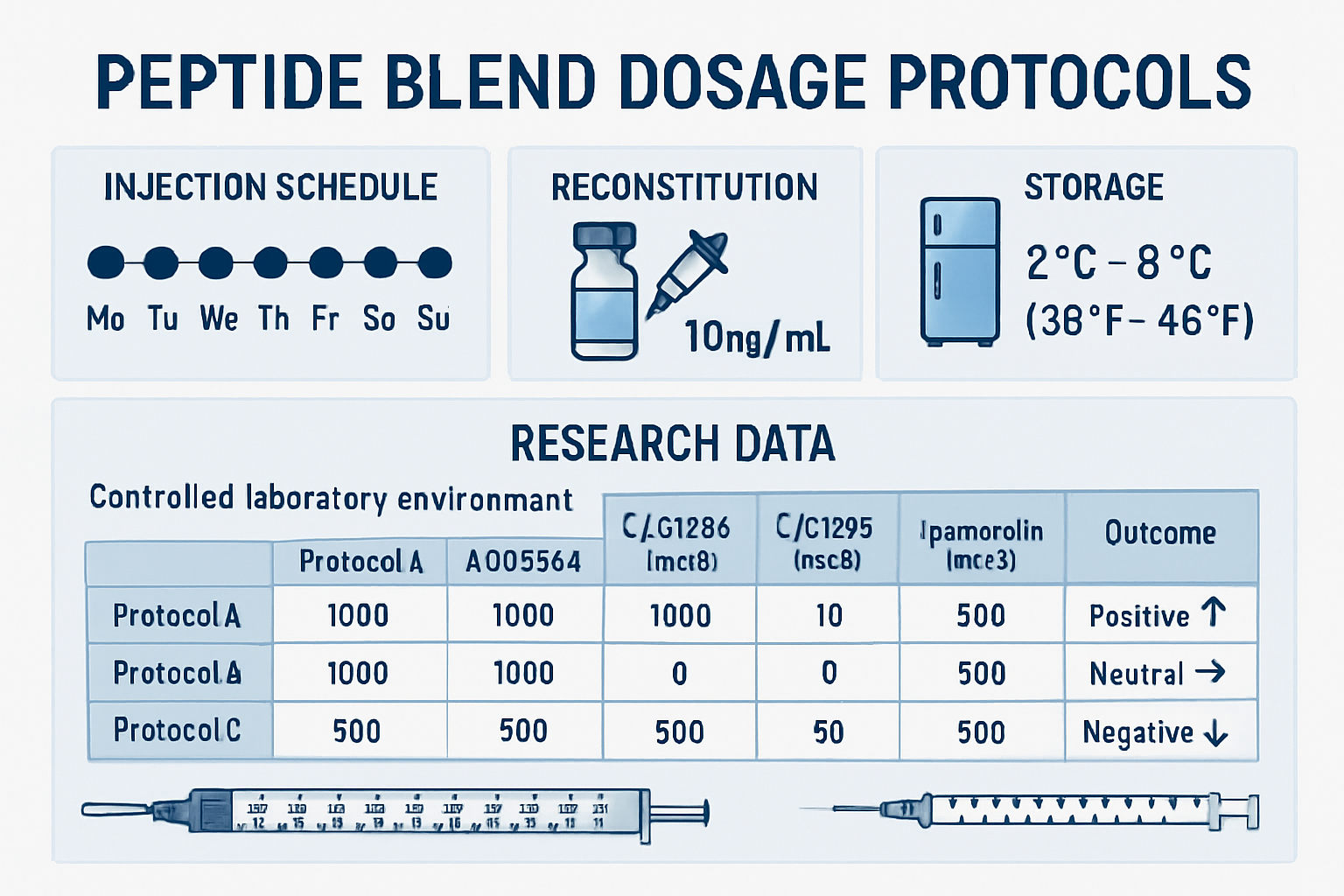
Handling Precautions for Research Personnel
Working with the tesa aod9604 + cjc1295 + ipamorelin 12mg blend dosage;50 requires adherence to standard laboratory safety protocols:
Personal Protective Equipment (PPE):
- Laboratory-grade gloves (nitrile recommended)
- Safety glasses or goggles
- Laboratory coats or protective clothing
- Proper ventilation systems
Waste Disposal Procedures:
- Segregate peptide waste appropriately
- Follow institutional disposal guidelines
- Document waste tracking
- Maintain disposal records
Risk Assessment and Mitigation
Research facilities must conduct thorough risk assessments when working with peptide combinations:
Primary Risk Categories:
- Chemical Exposure: Inhalation or skin contact
- Cross-Contamination: Between different research compounds
- Storage Failures: Temperature excursions or equipment malfunction
- Documentation Errors: Mislabeling or incorrect protocols
Advanced Research Applications and Protocols
Comparative Studies and Research Designs
The tesa aod9604 + cjc1295 + ipamorelin 12mg blend dosage;50 has been incorporated into various research study designs:
Longitudinal Studies:
- Extended observation periods (12-24 weeks)
- Multiple measurement timepoints
- Comprehensive data collection protocols
- Statistical analysis frameworks
Cross-Sectional Research:
- Single timepoint measurements
- Large sample size requirements
- Standardized protocols across sites
- Quality assurance measures
Analytical Methods and Measurement Techniques
Research involving peptide blends requires sophisticated analytical approaches:
Bioanalytical Methods:
- Enzyme-linked immunosorbent assays (ELISA)
- Radioimmunoassays (RIA)
- Liquid chromatography-mass spectrometry (LC-MS)
- Pharmacokinetic modeling
Data Analysis Protocols:
- Statistical software requirements
- Power calculations
- Confidence interval determinations
- Significance testing methodologies
Regulatory Considerations and Compliance
Research Compliance Requirements
Laboratories working with the tesa aod9604 + cjc1295 + ipamorelin 12mg blend dosage;50 must maintain compliance with relevant regulations:
Institutional Requirements:
- Institutional Review Board (IRB) approval for applicable studies
- Good Laboratory Practice (GLP) compliance
- Standard Operating Procedure (SOP) development
- Regular audit and inspection readiness
Documentation Standards:
- Research protocol documentation
- Informed consent procedures (where applicable)
- Data integrity measures
- Record retention policies
International Guidelines and Standards
Research facilities must align with international standards:
Key Regulatory Bodies:
- International Council for Harmonisation (ICH)
- Good Clinical Practice (GCP) guidelines
- International Organization for Standardization (ISO)
- Regional regulatory requirements
Future Directions and Research Opportunities
Emerging Research Trends
The field of peptide combination research continues evolving, with the tesa aod9604 + cjc1295 + ipamorelin 12mg blend dosage;50 representing just one approach among many emerging protocols:
Innovation Areas:
- Novel Delivery Systems: Advanced formulation technologies
- Combination Optimization: Data-driven blend ratios
- Analytical Improvements: Enhanced measurement techniques
- Protocol Refinement: Streamlined research methodologies
Technology Integration
Modern research facilities increasingly integrate advanced technologies:
Digital Solutions:
- Laboratory Information Management Systems (LIMS)
- Electronic data capture systems
- Automated storage monitoring
- Real-time quality control tracking
Conclusion
The tesa aod9604 + cjc1295 + ipamorelin 12mg blend dosage;50 represents a sophisticated approach to multi-peptide research that requires careful attention to formulation, handling, and analytical protocols. As research in this field continues advancing, maintaining rigorous scientific standards remains paramount for generating reliable, reproducible results.
Researchers considering work with this peptide combination should prioritize proper training, equipment calibration, and adherence to established safety protocols. The complexity of multi-peptide research demands comprehensive understanding of individual component properties, interaction potentials, and analytical requirements.
Next Steps for Research Teams:
- Develop Comprehensive Protocols: Establish detailed standard operating procedures specific to your research objectives
- Invest in Quality Control: Implement robust analytical testing and documentation systems
- Ensure Proper Training: Provide thorough education for all personnel handling these compounds
- Maintain Regulatory Compliance: Stay current with applicable guidelines and requirements
- Plan for Data Management: Establish systems for secure, compliant data collection and analysis
The future of peptide combination research holds tremendous promise, and protocols like the tesa aod9604 + cjc1295 + ipamorelin 12mg blend dosage;50 will likely continue evolving as our understanding of these complex interactions deepens. Success in this field requires dedication to scientific rigor, safety, and continuous learning.
SEO Meta Title: tesa AOD9604 CJC1295 Ipamorelin 12mg Blend Dosage Guide
SEO Meta Description: Complete research guide for tesa AOD9604 + CJC1295 + ipamorelin 12mg blend dosage protocols, safety measures, and laboratory best practices for 2025.