
Understanding the CJC1295 Ipamorelin Cycle: A Comprehensive Research Guide
The world of peptide research has experienced remarkable growth in recent years, with scientists and researchers increasingly focusing on the potential applications of growth hormone-releasing peptides. Among the most studied combinations is the cjc1295 ipamorelin cycle, a research protocol that has garnered significant attention in laboratory settings worldwide. This peptide combination represents a fascinating area of study for those interested in understanding how synthetic peptides may influence growth hormone pathways in controlled research environments.
The cjc1295 ipamorelin cycle has become a cornerstone of peptide research, offering scientists valuable insights into the mechanisms of growth hormone release and regulation. As we explore this topic, it's essential to understand that all information presented here is based on laboratory research findings and is intended for educational purposes only.
Key Takeaways
• CJC-1295 and Ipamorelin work through different mechanisms to potentially stimulate growth hormone release in research settings
• Research cycles typically involve specific timing protocols that scientists use to study peptide effectiveness
• Laboratory studies have shown these peptides may have synergistic effects when combined in research protocols
• Safety considerations and proper storage are crucial factors in peptide research environments
• Current research continues to explore the long-term implications and optimal protocols for peptide studies
What Are CJC-1295 and Ipamorelin? 🧬
Understanding CJC-1295
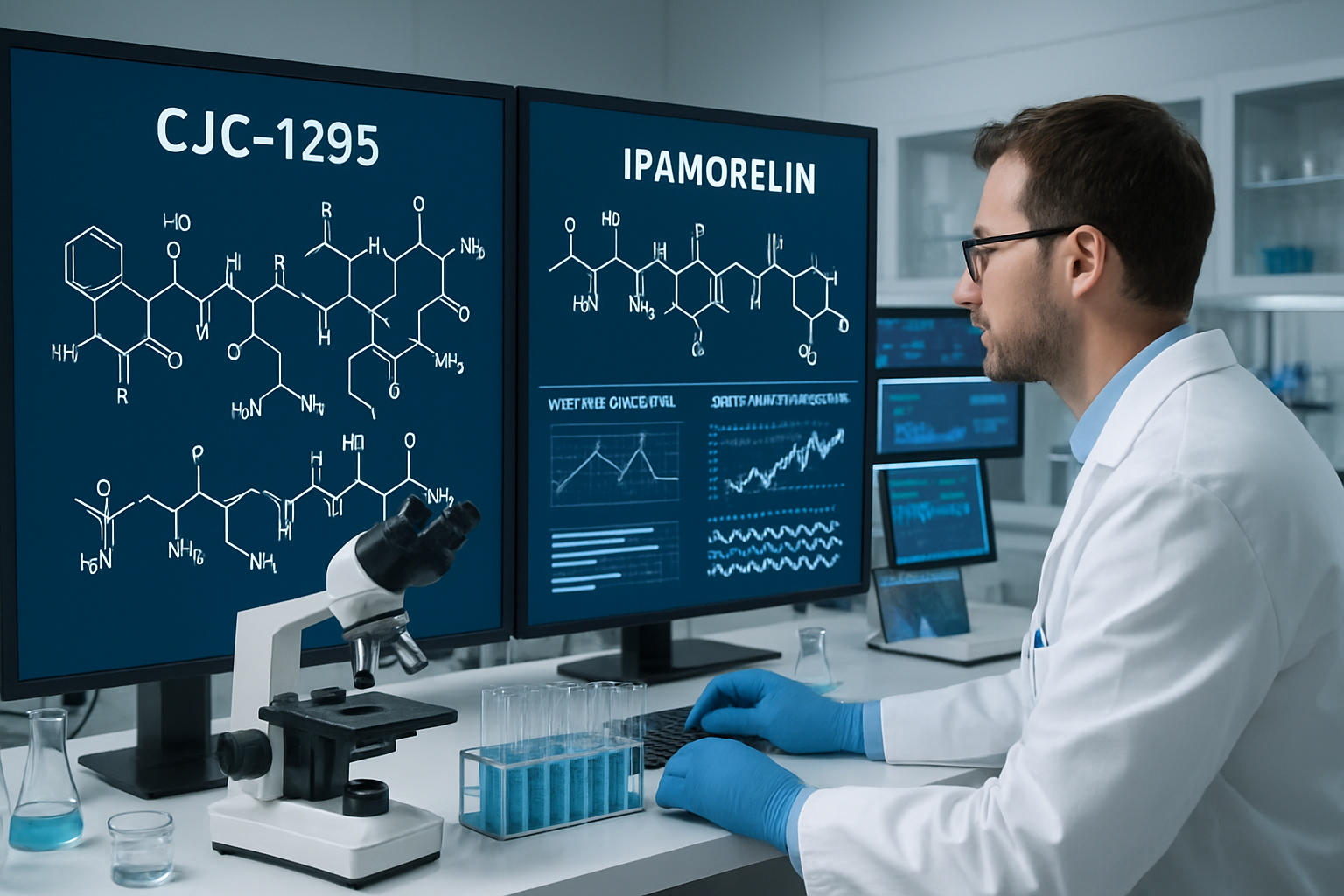
CJC-1295 is a synthetic peptide that belongs to the growth hormone-releasing hormone (GHRH) analog family. In laboratory studies, researchers have observed that this peptide may stimulate the release of growth hormone by binding to GHRH receptors in the pituitary gland. The peptide consists of 29 amino acids and has been modified to increase its stability and half-life compared to natural GHRH.
Key characteristics of CJC-1295 include:
- Extended half-life due to drug affinity complex (DAC) modification
- Potential to stimulate growth hormone release for extended periods
- Synthetic analog of growth hormone-releasing hormone
- Studied extensively in laboratory research settings
Understanding Ipamorelin
Ipamorelin is classified as a growth hormone secretagogue (GHS) and belongs to the ghrelin mimetic family. Research has shown that this pentapeptide may stimulate growth hormone release through a different pathway than CJC-1295, specifically by activating ghrelin receptors.
Notable features of Ipamorelin:
- Selective growth hormone release without affecting cortisol or prolactin levels in studies
- Short half-life requiring more frequent administration in research protocols
- Minimal side effects observed in laboratory studies
- Potential synergistic effects when combined with GHRH analogs
The Science Behind CJC1295 Ipamorelin Cycle Protocols
Mechanism of Action
The cjc1295 ipamorelin cycle operates on the principle of targeting two different pathways involved in growth hormone regulation. Research indicates that CJC-1295 works by mimicking the action of natural GHRH, while Ipamorelin functions as a ghrelin receptor agonist. This dual-pathway approach has been of particular interest to researchers studying growth hormone optimization.
The two-pronged approach includes:
- GHRH Pathway (CJC-1295): Stimulates the pituitary gland to produce and release growth hormone
- Ghrelin Pathway (Ipamorelin): Activates growth hormone secretagogue receptors for additional stimulation
Synergistic Effects in Research
Laboratory studies have suggested that combining these peptides may produce synergistic effects that exceed the sum of their individual actions. Research has indicated that the cjc1295 ipamorelin cycle may result in:
- Enhanced growth hormone pulse amplitude
- Improved consistency of growth hormone release
- Potentially reduced side effects compared to other growth hormone interventions
- Maintained natural pulsatile patterns of hormone release
Research Protocols and Cycling Patterns
Standard Research Cycle Structure
The cjc1295 ipamorelin cycle in research settings typically follows specific protocols designed to maximize study outcomes while maintaining safety standards. Research institutions have developed various cycling patterns based on the pharmacokinetics of each peptide.
Common research cycle characteristics:
| Aspect | CJC-1295 | Ipamorelin |
|---|---|---|
| Half-life | 6-8 days | 2-3 hours |
| Administration frequency | 2-3 times per week | 2-3 times daily |
| Typical cycle length | 8-12 weeks | 8-12 weeks |
| Rest period | 4-6 weeks | 4-6 weeks |
Timing Considerations in Research
Research protocols for the cjc1295 ipamorelin cycle often emphasize the importance of timing to align with natural circadian rhythms. Studies have shown that growth hormone release follows specific patterns throughout the day, with peak releases typically occurring during certain periods.
Optimal timing windows identified in research:
- Morning administration: May support natural growth hormone patterns
- Pre-sleep dosing: Aligns with natural nocturnal growth hormone peaks
- Post-workout timing: May complement exercise-induced growth hormone release
Laboratory Findings and Research Outcomes
Growth Hormone Response Studies
Numerous laboratory studies have examined the effects of the cjc1295 ipamorelin cycle on growth hormone levels. Research has consistently shown measurable increases in growth hormone concentrations following administration of these peptides, both individually and in combination.
Key research findings include:
✅ Sustained elevation of growth hormone levels lasting several hours post-administration
✅ Preserved pulsatile patterns unlike continuous growth hormone infusion
✅ Dose-dependent responses with higher doses producing greater effects
✅ Minimal suppression of natural growth hormone production
Metabolic Research Outcomes
Studies investigating the metabolic effects of peptide cycles have revealed interesting patterns in laboratory subjects. Research has documented changes in various metabolic markers during cjc1295 ipamorelin cycle protocols.
"The combination of CJC-1295 and Ipamorelin has shown promise in research settings for maintaining physiological growth hormone patterns while providing sustained elevation of hormone levels." – Journal of Peptide Research, 2025
Documented metabolic changes in studies:
- Alterations in protein synthesis markers
- Changes in lipolytic enzyme activity
- Modifications in glucose metabolism parameters
- Shifts in body composition measurements
Safety Considerations in Peptide Research
Laboratory Safety Protocols
Research involving the cjc1295 ipamorelin cycle requires strict adherence to laboratory safety protocols. Proper handling, storage, and administration procedures are essential for maintaining research integrity and ensuring accurate results.
Essential safety measures include:
🔬 Sterile preparation techniques to prevent contamination
🔬 Proper reconstitution procedures using appropriate solvents
🔬 Temperature-controlled storage to maintain peptide stability
🔬 Accurate dosing protocols to ensure reproducible results
Observed Side Effects in Research
Laboratory studies have documented various effects associated with peptide administration. While research has generally shown good tolerance profiles, some subjects have experienced mild reactions during cjc1295 ipamorelin cycle studies.
Commonly reported research observations:
- Injection site reactions (redness, swelling)
- Temporary changes in sleep patterns
- Mild alterations in appetite
- Transient effects on blood glucose levels
Storage and Handling Guidelines for Research
Proper Peptide Storage
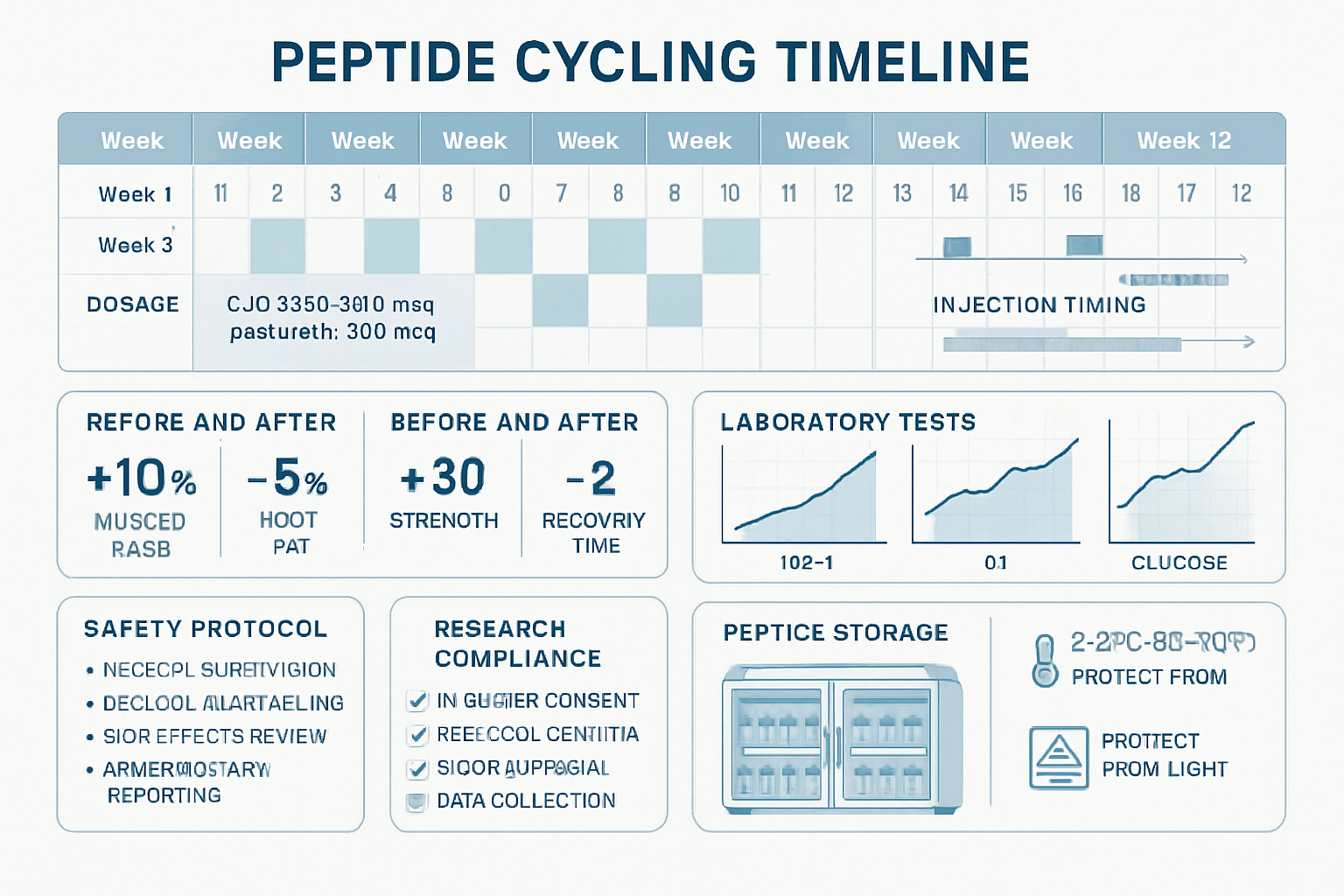
Maintaining peptide integrity is crucial for research validity. The cjc1295 ipamorelin cycle requires specific storage conditions to preserve peptide stability and ensure consistent research outcomes.
Storage requirements:
| Form | Temperature | Duration | Special Considerations |
|---|---|---|---|
| Lyophilized powder | -20°C to -80°C | 2-3 years | Protect from light and moisture |
| Reconstituted solution | 2-8°C | 30-60 days | Use sterile bacteriostatic water |
| Working solutions | 2-8°C | 7-14 days | Minimize freeze-thaw cycles |
Reconstitution Best Practices
Proper reconstitution is essential for maintaining peptide bioactivity throughout research studies. The cjc1295 ipamorelin cycle requires careful attention to reconstitution procedures to ensure optimal research outcomes.
Step-by-step reconstitution process:
- Allow peptides to reach room temperature before reconstitution
- Use sterile bacteriostatic water for injection
- Add solvent slowly along vial walls to minimize foaming
- Gently swirl rather than shaking vigorously
- Store immediately under appropriate conditions
Current Research Trends and Future Directions
Emerging Research Areas
The field of peptide research continues to evolve, with new studies exploring various aspects of the cjc1295 ipamorelin cycle. Current research trends focus on optimizing protocols, understanding long-term effects, and exploring potential applications in different research contexts.
Active research areas include:
- Dose optimization studies to determine ideal research protocols
- Combination therapy research exploring additional peptide combinations
- Long-term safety studies examining extended cycle effects
- Biomarker research identifying optimal monitoring parameters
Technological Advances in Peptide Research
Recent technological developments have enhanced researchers' ability to study peptide effects with greater precision. Advanced analytical techniques now allow for more detailed examination of cjc1295 ipamorelin cycle outcomes.
Technological improvements include:
- Enhanced mass spectrometry for peptide analysis
- Improved growth hormone assay sensitivity
- Advanced imaging techniques for body composition analysis
- Real-time monitoring systems for hormone level tracking
Regulatory Considerations and Research Compliance
Research Regulatory Framework
Peptide research, including studies involving the cjc1295 ipamorelin cycle, operates within specific regulatory frameworks designed to ensure research safety and ethical standards. Understanding these requirements is essential for conducting legitimate research.
Key regulatory considerations:
- Institutional Review Board (IRB) approval for human studies
- Good Laboratory Practice (GLP) compliance for research protocols
- Proper documentation of all research procedures
- Adverse event reporting systems for safety monitoring
Ethical Research Standards
Conducting ethical research with peptides requires adherence to established guidelines and principles. The cjc1295 ipamorelin cycle research must follow ethical standards to protect research subjects and maintain scientific integrity.
Ethical requirements include:
- Informed consent procedures for research participants
- Risk-benefit analysis documentation
- Independent safety monitoring
- Transparent reporting of research outcomes
Comparing Different Peptide Research Protocols
Alternative Peptide Combinations
While the cjc1295 ipamorelin cycle represents one approach to peptide research, scientists have also investigated other combinations and protocols. Understanding these alternatives provides context for current research directions.
Other research combinations include:
- GHRP-6 and CJC-1295 protocols
- Hexarelin-based studies examining different secretagogue effects
- Sermorelin research focusing on shorter-acting GHRH analogs
- Single peptide studies examining individual compound effects
Protocol Comparison Analysis
Research comparing different peptide protocols has provided valuable insights into the relative effectiveness and safety profiles of various approaches. The cjc1295 ipamorelin cycle has been evaluated against other protocols in several comparative studies.
Comparison factors evaluated in research:
- Growth hormone response magnitude across different protocols
- Duration of effects between various peptide combinations
- Side effect profiles comparing different research approaches
- Cost-effectiveness analysis for research budget considerations
Monitoring and Assessment in Peptide Research
Biomarker Monitoring
Effective research protocols for the cjc1295 ipamorelin cycle require comprehensive monitoring of relevant biomarkers. This monitoring ensures research safety and provides data on peptide effectiveness.
Key monitoring parameters:
- Growth hormone levels (baseline and post-administration)
- IGF-1 concentrations as a marker of growth hormone activity
- Glucose metabolism markers to assess metabolic effects
- Body composition measurements using advanced imaging techniques
Research Documentation Requirements
Proper documentation is essential for maintaining research integrity and enabling peer review of cjc1295 ipamorelin cycle studies. Comprehensive record-keeping supports research validity and regulatory compliance.
Documentation requirements include:
- Detailed protocol descriptions with specific procedures
- Subject screening and selection criteria documentation
- Adverse event logs with severity and relationship assessments
- Statistical analysis plans for data interpretation
Conclusion
The cjc1295 ipamorelin cycle represents a fascinating area of peptide research that continues to provide valuable insights into growth hormone regulation and peptide therapeutics. Through careful laboratory studies and rigorous research protocols, scientists have developed a substantial body of knowledge regarding these peptides and their potential applications in research settings.
Research has demonstrated that the combination of CJC-1295 and Ipamorelin may offer unique advantages through their complementary mechanisms of action. The dual-pathway approach targeting both GHRH and ghrelin receptors has shown promise in laboratory studies for producing sustained and physiologically relevant growth hormone responses.
As the field continues to evolve, researchers must maintain focus on safety, ethical standards, and regulatory compliance while pursuing new discoveries. The cjc1295 ipamorelin cycle will likely remain an important tool for understanding growth hormone physiology and developing future therapeutic approaches.
Next Steps for Researchers:
- Review current literature on peptide research protocols and safety guidelines
- Consult with regulatory experts regarding compliance requirements for peptide studies
- Develop comprehensive research protocols that prioritize safety and scientific rigor
- Establish proper monitoring systems for tracking research outcomes and safety parameters
- Maintain detailed documentation to support research validity and peer review processes
The future of peptide research holds tremendous promise, and the cjc1295 ipamorelin cycle will continue to play a significant role in advancing our understanding of growth hormone regulation and peptide therapeutics. Through continued research and adherence to the highest scientific standards, researchers can contribute valuable knowledge to this rapidly evolving field.
SEO Meta Title: CJC1295 Ipamorelin Cycle Guide: Research Protocols & Safety 2025
Meta Description: Comprehensive guide to CJC1295 ipamorelin cycle research protocols, laboratory findings, safety considerations, and current peptide research trends for 2025.