
NAD+ Peptide Dosage Per Day: Your Complete Guide to Safe and Effective Use
Imagine unlocking your body's natural ability to repair cells, boost energy, and potentially slow aging with a single supplement. NAD+ peptides have emerged as one of the most promising anti-aging compounds of 2025, but determining the right nad+ peptide dosage per day can be confusing for newcomers and experienced users alike.
Key Takeaways
• Standard daily dosages typically range from 250-1000mg depending on individual factors and goals
• Timing matters – splitting doses throughout the day maximizes absorption and effectiveness
• Start low and gradually increase to assess tolerance and minimize potential side effects
• Quality sourcing from reputable suppliers ensures purity and potency for optimal results
• Professional guidance is recommended for personalized dosing protocols and safety monitoring
Understanding NAD+ Peptides and Their Role in Cellular Health

NAD+ (Nicotinamide Adenine Dinucleotide) peptides represent a breakthrough in cellular energy research. These compounds work by boosting levels of NAD+, a crucial coenzyme found in every living cell that plays a vital role in energy metabolism, DNA repair, and cellular regeneration.
As we age, natural NAD+ levels decline significantly – dropping by approximately 50% every 20 years after age 40. This decline contributes to reduced energy, slower recovery, and accelerated aging processes. NAD+ peptides offer a promising solution by helping restore these essential cellular functions.
The science behind NAD+ peptides involves complex biochemical pathways that support:
- Mitochondrial function and energy production
- DNA repair mechanisms that protect against cellular damage
- Sirtuin activation linked to longevity and metabolic health
- Cellular stress resistance and improved recovery
When considering research peptides for cellular studies, understanding these fundamental mechanisms helps researchers make informed decisions about dosing protocols.
Factors That Influence Your Optimal NAD+ Peptide Dosage Per Day
Determining the right nad+ peptide dosage per day isn't a one-size-fits-all approach. Several key factors influence optimal dosing:
Age and Baseline NAD+ Levels 🧬
Younger individuals typically require lower doses since their natural NAD+ production remains relatively robust. Adults over 40 may benefit from higher doses to compensate for age-related decline.
Age-based starting recommendations:
- 20-30 years: 250-500mg daily
- 30-45 years: 500-750mg daily
- 45+ years: 750-1000mg daily
Body Weight and Composition
Larger individuals generally require higher doses to achieve similar blood concentrations. A common calculation method uses 10-15mg per kilogram of body weight as a starting point.
Health Goals and Objectives
Different goals may warrant different dosing strategies:
- General wellness: 250-500mg daily
- Athletic performance: 500-750mg daily
- Anti-aging focus: 750-1000mg daily
- Recovery support: 500-1000mg daily
Individual Tolerance and Response
Some people are naturally more sensitive to NAD+ supplementation. Starting with lower doses allows you to assess tolerance and adjust accordingly.
For those interested in high-quality NAD+ peptides, beginning with a conservative approach ensures both safety and effectiveness.
Standard NAD+ Peptide Dosage Guidelines for Different Goals
Beginner Protocol: Building Your Foundation
For newcomers to NAD+ supplementation, a conservative approach minimizes risks while allowing assessment of individual response:
Week 1-2: 250mg daily (single dose)
Week 3-4: 500mg daily (split into two 250mg doses)
Week 5+: Adjust based on response and goals
Intermediate Protocol: Optimizing Benefits
Once tolerance is established, intermediate users can explore higher doses for enhanced benefits:
Daily dosage: 500-750mg
Timing: Split into 2-3 doses throughout the day
Duration: 8-12 week cycles with 2-4 week breaks
Advanced Protocol: Maximum Therapeutic Potential
Experienced users seeking maximum benefits may utilize higher doses under appropriate guidance:
Daily dosage: 750-1000mg
Timing: 3-4 divided doses
Monitoring: Regular assessment of biomarkers and response
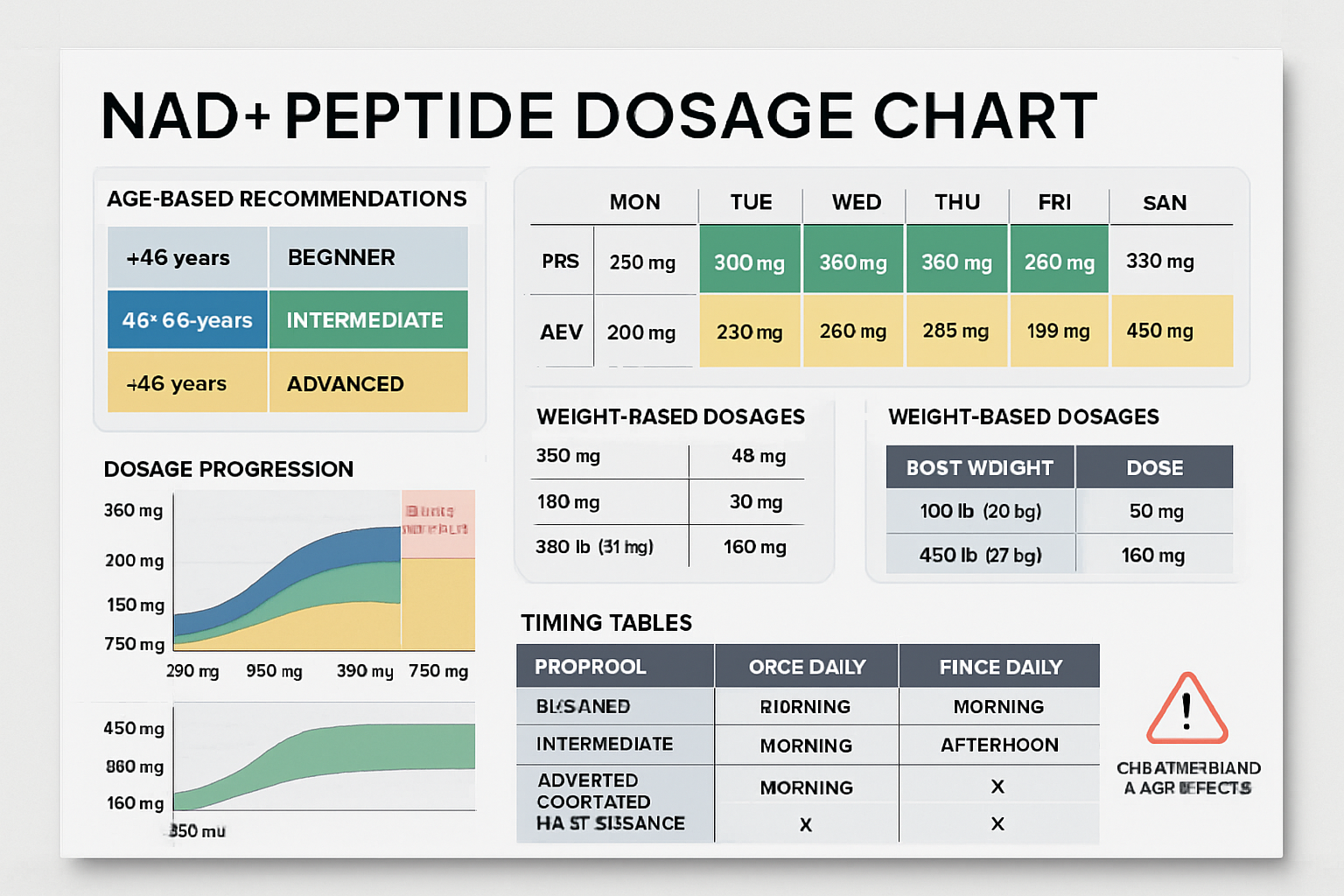
| Experience Level | Daily Dose | Frequency | Cycle Length |
|---|---|---|---|
| Beginner | 250-500mg | 1-2 times | 4-6 weeks |
| Intermediate | 500-750mg | 2-3 times | 8-12 weeks |
| Advanced | 750-1000mg | 3-4 times | 12-16 weeks |
Understanding commonly researched dosing protocols helps establish safe and effective supplementation strategies.
Timing and Administration: Maximizing Your NAD+ Peptide Dosage Per Day
The when of NAD+ supplementation can be just as important as the how much. Proper timing optimizes absorption, minimizes side effects, and aligns with natural circadian rhythms.
Optimal Timing Strategies
Morning Administration (Primary Dose)
Taking 40-50% of your daily dose in the morning supports natural energy production and aligns with peak metabolic activity. This timing helps:
- Boost morning energy levels
- Support daytime cognitive function
- Align with natural NAD+ production cycles
Afternoon Boost (Secondary Dose)
A smaller afternoon dose (25-30% of daily total) can help maintain energy levels throughout the day without interfering with sleep.
Pre-Workout Timing
For athletic goals, taking NAD+ peptides 30-45 minutes before exercise may enhance:
- Energy production during workouts
- Recovery processes post-exercise
- Cellular repair mechanisms
Absorption and Bioavailability Considerations
Empty Stomach vs. With Food
Research suggests NAD+ peptides absorb best on an empty stomach, but some individuals experience better tolerance with light food. Experiment to find your optimal approach.
Hydration Importance 💧
Adequate hydration supports peptide absorption and cellular uptake. Aim for 16-20 ounces of water with each dose.
Cycling Protocols
Many users benefit from cycling NAD+ supplementation:
- 5 days on, 2 days off weekly pattern
- 4-6 weeks on, 1-2 weeks off monthly cycles
- 3 months on, 1 month off quarterly approach
Those exploring peptide research protocols often find that systematic cycling prevents tolerance while maintaining benefits.
Safety Considerations and Potential Side Effects
While NAD+ peptides show excellent safety profiles in research, understanding potential side effects ensures responsible use.
Common Mild Side Effects
Most side effects are mild and temporary, especially when starting with appropriate doses:
- Mild nausea (usually subsides within 1-2 weeks)
- Temporary fatigue as cellular processes adjust
- Slight headaches often related to hydration needs
- Digestive changes typically resolve with continued use
Minimizing Side Effects
Start Low, Go Slow
Beginning with 250mg daily allows your system to adapt gradually. Increase doses by 250mg increments every 1-2 weeks.
Proper Hydration
Maintaining adequate fluid intake supports peptide metabolism and reduces side effect risk.
Quality Matters
Using high-purity peptides from reputable sources minimizes contamination-related issues.
When to Consult Healthcare Providers
Certain situations warrant professional guidance:
- Pre-existing medical conditions
- Current medication use
- Pregnancy or breastfeeding
- Unusual or persistent side effects
- Doses above 1000mg daily
Contraindications and Precautions ⚠️
Avoid NAD+ peptides if you have:
- Active cancer (consult oncologist first)
- Severe liver or kidney disease
- Known allergies to peptide compounds
- Autoimmune conditions (without medical supervision)
Understanding best practices for peptide storage ensures product integrity and safety throughout your supplementation journey.
Monitoring Progress and Adjusting Your NAD+ Peptide Dosage
Successful NAD+ supplementation requires ongoing assessment and adjustment based on individual response and goals.
Tracking Key Biomarkers
Subjective Measures:
- Energy levels throughout the day
- Sleep quality and recovery
- Cognitive clarity and focus
- Exercise performance and recovery
- Overall sense of wellbeing
Objective Measures:
- Blood NAD+ levels (if available)
- Inflammatory markers (CRP, IL-6)
- Metabolic indicators (glucose, lipids)
- Physical performance metrics
Signs Your Dosage May Need Adjustment
Dosage Too Low Indicators:
- Minimal energy improvements after 4-6 weeks
- No noticeable cognitive benefits
- Lack of recovery enhancement
- Persistent fatigue despite adequate sleep
Dosage Too High Indicators:
- Persistent nausea or digestive issues
- Sleep disturbances or restlessness
- Anxiety or jitteriness
- Headaches that don't resolve
Creating Your Personal Protocol
Week 1-4: Assessment Phase
Start with conservative dosing while monitoring response:
- Begin with 250mg daily
- Track energy, sleep, and wellbeing
- Note any side effects
- Gradually increase if well-tolerated
Week 5-8: Optimization Phase
Adjust dosing based on initial response:
- Increase to target dose range
- Fine-tune timing and frequency
- Monitor for optimal benefits
- Establish sustainable routine
Week 9+: Maintenance Phase
Maintain effective protocol while staying alert to changes:
- Continue successful dosing strategy
- Periodic assessment of benefits
- Adjust for life changes or goals
- Consider cycling protocols
For those interested in comprehensive approaches, exploring peptide blend research can provide insights into synergistic effects with other compounds.
Quality and Sourcing: Ensuring Effective NAD+ Peptide Dosage Per Day
The effectiveness of any nad+ peptide dosage per day depends heavily on product quality and purity. Poor-quality peptides can lead to inconsistent results and potential safety concerns.
What to Look for in Quality NAD+ Peptides
Third-Party Testing
Reputable suppliers provide comprehensive testing for:
- Purity levels (typically 98%+ for research-grade peptides)
- Heavy metal contamination screening
- Bacterial and endotoxin testing
- Molecular weight confirmation
Proper Storage and Handling
Quality peptides require specific storage conditions:
- Lyophilized (freeze-dried) powder form
- Stored at appropriate temperatures
- Protected from light and moisture
- Sealed in sterile vials
Certificate of Analysis (COA)
Each batch should include detailed testing results showing exact composition and purity levels.
Red Flags to Avoid
Warning Signs of Poor Quality:
- Unusually low prices compared to market standards
- Lack of testing documentation
- Vague product descriptions
- No proper storage requirements listed
- Unrealistic marketing claims
Regulatory Compliance
Ensure suppliers follow appropriate guidelines for research peptide distribution and maintain proper documentation.
When sourcing NAD+ peptides for research, prioritizing quality ensures consistent results and optimal safety profiles.
Storage and Handling Best Practices
Before Reconstitution:
- Store lyophilized powder at -20°C (freezer)
- Protect from light and moisture
- Use within manufacturer's expiration date
- Handle with clean, dry utensils
After Reconstitution:
- Store in refrigerator (2-8°C)
- Use within 30 days for optimal potency
- Avoid freeze-thaw cycles
- Use sterile technique for handling
Combining NAD+ Peptides with Other Supplements
Many users explore combining NAD+ peptides with complementary compounds to enhance overall benefits. Understanding potential synergies and interactions helps optimize your supplementation strategy.
Synergistic Compounds
Resveratrol
This polyphenol works synergistically with NAD+ by:
- Activating sirtuins that require NAD+
- Providing additional antioxidant protection
- Supporting cardiovascular health
- Enhancing longevity pathways
NMN (Nicotinamide Mononucleotide)
Combining NAD+ peptides with NMN may provide:
- Multiple pathways for NAD+ enhancement
- Sustained elevation of cellular NAD+ levels
- Complementary absorption mechanisms
Pterostilbene
Similar to resveratrol but with better bioavailability:
- Enhanced sirtuin activation
- Improved cognitive function support
- Better cellular uptake characteristics
Timing Combinations
Morning Stack:
- NAD+ peptides (primary dose)
- Resveratrol (250-500mg)
- B-complex vitamins
Evening Support:
- Smaller NAD+ dose (if using split dosing)
- Magnesium for sleep support
- Omega-3 fatty acids
Potential Interactions to Monitor
Medications:
- Blood thinners (monitor with resveratrol combinations)
- Diabetes medications (NAD+ may affect glucose metabolism)
- Blood pressure medications (potential synergistic effects)
Other Supplements:
- High-dose niacin (may compete for similar pathways)
- Stimulants (monitor for overstimulation)
- Sleep aids (timing considerations important)
Those interested in comprehensive research approaches might explore applied wellness research protocols for systematic combination strategies.
Long-term Considerations for NAD+ Peptide Use
Sustainable NAD+ supplementation requires thoughtful planning for long-term use, including cycling strategies, tolerance prevention, and ongoing optimization.
Cycling Strategies for Sustained Benefits
Short-term Cycling (Weekly)
- 5 days on, 2 days off
- Prevents rapid tolerance development
- Maintains sensitivity to NAD+ effects
- Allows cellular reset periods
Medium-term Cycling (Monthly)
- 3 weeks on, 1 week off
- Deeper cellular adaptation periods
- Opportunity for biomarker assessment
- Prevents long-term tolerance
Long-term Cycling (Quarterly)
- 2-3 months on, 3-4 weeks off
- Comprehensive system reset
- Evaluation of baseline changes
- Planning for protocol adjustments
Tolerance Prevention Strategies
Dose Rotation
Varying doses within your effective range can help maintain sensitivity:
- Alternate between 75% and 100% of target dose
- Use higher doses for specific goals (training, stress)
- Lower doses during rest periods
Pathway Variation
Occasionally incorporating different NAD+ precursors:
- Rotate between NAD+ peptides and NMN
- Include natural NAD+ boosters periodically
- Allow different cellular pathways to predominate
Age-Related Dosage Adjustments
Progressive Needs
As natural NAD+ production continues declining with age, dosage requirements may gradually increase:
- Annual assessment of effectiveness
- Biomarker tracking when possible
- Gradual dose adjustments (50-100mg increases)
Maintenance vs. Therapeutic Dosing
- Maintenance: Lower doses for general health support
- Therapeutic: Higher doses for specific health goals
- Recovery: Temporary dose increases during illness or stress
For those building long-term research protocols, understanding diverse peptide applications provides valuable context for comprehensive wellness strategies.
Future Developments in NAD+ Peptide Research
The field of NAD+ research continues evolving rapidly, with new findings potentially influencing future dosing recommendations and applications.
Emerging Research Areas
Personalized Dosing
Future developments may include:
- Genetic testing for NAD+ metabolism variants
- Personalized dosing algorithms
- Real-time biomarker monitoring
- AI-assisted protocol optimization
Enhanced Delivery Methods
Research into improved bioavailability:
- Liposomal encapsulation technologies
- Targeted delivery systems
- Extended-release formulations
- Transdermal application methods
Combination Therapies
Systematic research into synergistic compounds:
- Optimal ratios for combination supplements
- Timing protocols for multiple compounds
- Interaction mapping for safety
- Enhanced efficacy through strategic combinations
Regulatory Landscape Evolution
Quality Standards
Anticipated improvements in:
- Standardized testing protocols
- Enhanced purity requirements
- Better labeling standards
- Improved safety monitoring
Research Guidelines
Development of:
- Standardized research protocols
- Safety monitoring frameworks
- Efficacy assessment criteria
- Long-term study designs
The evolving landscape of peptide research continues to provide new insights into optimal supplementation strategies and safety protocols.
Conclusion
Determining the optimal nad+ peptide dosage per day requires careful consideration of individual factors, goals, and tolerance levels. Starting with conservative doses of 250-500mg daily and gradually adjusting based on response provides the safest and most effective approach for most users.
Key principles for successful NAD+ supplementation include:
✅ Start conservatively with 250mg daily and increase gradually
✅ Split doses throughout the day for optimal absorption
✅ Monitor response through both subjective and objective measures
✅ Prioritize quality by choosing reputable suppliers with proper testing
✅ Consider cycling to prevent tolerance and maintain long-term benefits
✅ Stay informed about emerging research and best practices
Remember that individual responses vary significantly, and what works optimally for one person may need adjustment for another. The goal is finding your personal sweet spot that maximizes benefits while minimizing any potential side effects.
Next Steps:
- Assess your starting point – Consider age, health goals, and experience level
- Choose quality products from reputable suppliers with proper testing
- Start with conservative dosing and track your response carefully
- Gradually optimize your protocol based on results and tolerance
- Consider professional guidance for personalized recommendations
- Stay updated on emerging research and protocol refinements
By following these evidence-based guidelines and maintaining a thoughtful approach to supplementation, you can harness the potential benefits of NAD+ peptides safely and effectively as part of your long-term wellness strategy.
SEO Meta Information
Meta Title: NAD+ Peptide Dosage Per Day: Complete 2025 Safety Guide
Meta Description: Discover optimal NAD+ peptide dosage per day with our comprehensive guide. Learn safe dosing, timing, and protocols for maximum benefits in 2025.