
TB-500 vs BPC-157: Complete Research Comparison Guide for 2025
When researchers explore peptide therapies for tissue repair and healing, two compounds consistently emerge at the forefront of scientific discussion. The tb500 vs bpc 157 comparison represents one of the most significant debates in modern peptide research, with each compound offering unique mechanisms and applications that have captured the attention of laboratories worldwide.
Key Takeaways
• TB-500 is a 43-amino acid synthetic version of Thymosin Beta-4 that promotes systemic healing through actin cell building proteins
• BPC-157 is a 15-amino acid peptide derived from gastric juice compounds, specializing in localized tissue repair and angiogenesis
• Dosing differs significantly: TB-500 typically requires 2-3 weekly administrations while BPC-157 is often used daily
• Mechanisms vary: TB-500 works systemically through cell migration and proliferation, while BPC-157 focuses on local vascular and tissue repair
• Neither peptide is FDA-approved for human use and both remain classified as research compounds
Understanding TB-500: The Systemic Healer
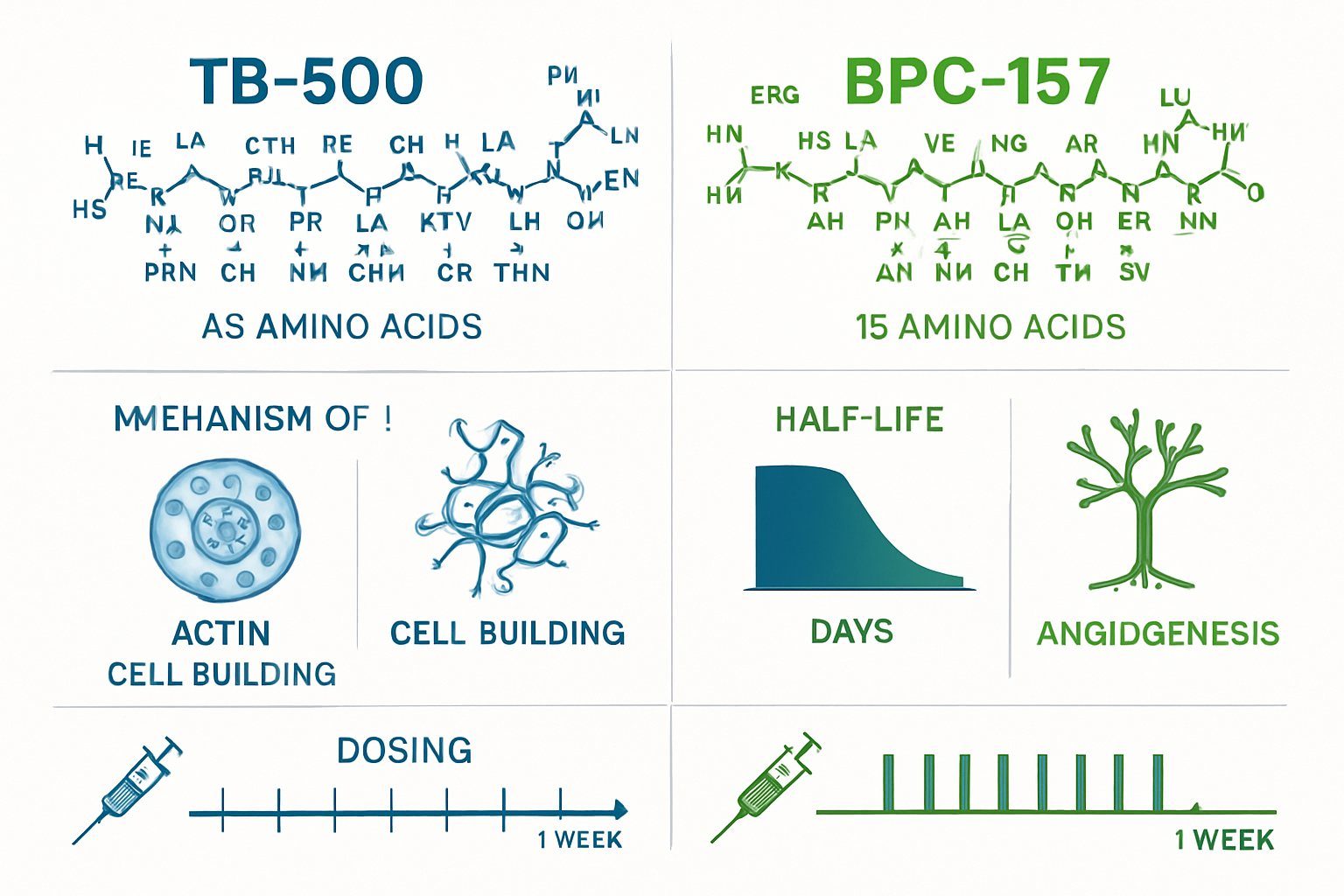
TB-500 stands as a synthetic analog of Thymosin Beta-4, a naturally occurring peptide found throughout the human body. This 43-amino acid compound has garnered significant attention in research settings due to its unique ability to promote cellular repair through actin regulation [1].
Mechanism of Action
TB-500 primarily functions by promoting actin cell building proteins, which serve as the backbone for cellular structure and movement. These proteins are essential for:
- Cell migration to injury sites
- Cellular proliferation and differentiation
- Tissue remodeling and repair
- Reduction of inflammatory responses
The peptide's systemic approach means it can potentially benefit multiple tissue types simultaneously, making it particularly valuable for researchers studying comprehensive healing protocols.
Research Applications
Laboratory studies have demonstrated TB-500's effectiveness in several key areas:
🔬 Tendon and Ligament Repair
Research indicates that TB-500 shows particular efficacy in treating connective tissue injuries by promoting cell migration to damaged areas and reducing local inflammation [2].
💪 Muscle Tissue Recovery
Studies suggest the peptide may accelerate muscle fiber repair and reduce recovery times following tissue damage.
🧬 Cellular Migration Enhancement
TB-500's ability to promote cell movement makes it valuable for studying wound healing and tissue regeneration processes.
For researchers interested in exploring TB-500 applications, Pure Tested Peptides offers comprehensive research-grade options with detailed documentation.
BPC-157: The Localized Repair Specialist
BPC-157 represents a fascinating synthetic peptide derived from body protection compounds naturally found in gastric juice. This 15-amino acid sequence has demonstrated remarkable versatility in research applications, particularly for localized tissue repair [3].
Unique Mechanisms
BPC-157 operates through several distinct pathways that differentiate it from other research peptides:
🩸 Angiogenesis Promotion
The peptide accelerates the formation of new blood vessels, crucial for delivering nutrients to healing tissues.
📈 Growth Factor Enhancement
Research shows BPC-157 increases production of VEGF (vascular endothelial growth factor) and other essential growth factors.
🧪 Nitric Oxide Pathway Modulation
The compound influences nitric oxide production, affecting blood flow and cellular communication.
Research Advantages
BPC-157's unique properties offer several research benefits:
- Gastroprotective effects for studying digestive system healing
- Neuroprotective properties in brain and nerve tissue research
- Local tissue repair with concentrated effects at application sites
- Oral bioavailability allowing for diverse administration protocols
Researchers can explore BPC-157 research applications to understand optimal study designs and protocols.
TB-500 vs BPC-157: Direct Comparison
Understanding the tb500 vs bpc 157 differences requires examining multiple factors that influence research outcomes and applications.
<!DOCTYPE html>
<html lang="en">
<head>
    <meta charset="UTF-8">
    <meta name="viewport" content="width=device-width, initial-scale=1.0">
    <title>TB-500 vs BPC-157 Comparison Tool</title>
    <style>
        .cg-element-container {
            max-width: 1000px;
            margin: 20px auto;
            font-family: Arial, sans-serif;
            background: #f8f9fa;
            border-radius: 10px;
            padding: 20px;
            box-shadow: 0 4px 6px rgba(0,0,0,0.1);
        }
        .cg-element-header {
            text-align: center;
            margin-bottom: 30px;
            color: #2c3e50;
        }
        .cg-element-selector {
            display: flex;
            justify-content: center;
            margin-bottom: 30px;
            gap: 10px;
            flex-wrap: wrap;
        }
        .cg-element-btn {
            padding: 12px 24px;
            background: #3498db;
            color: white;
            border: none;
            border-radius: 25px;
            cursor: pointer;
            transition: all 0.3s ease;
            font-weight: bold;
        }
        .cg-element-btn:hover {
            background: #2980b9;
            transform: translateY(-2px);
        }
        .cg-element-btn.active {
            background: #e74c3c;
        }
        .cg-element-comparison {
            display: grid;
            grid-template-columns: 1fr 1fr;
            gap: 20px;
            margin-top: 20px;
        }
        .cg-element-card {
            background: white;
            border-radius: 8px;
            padding: 20px;
            box-shadow: 0 2px 4px rgba(0,0,0,0.1);
            border-left: 4px solid #3498db;
        }
        .cg-element-card.bpc157 {
            border-left-color: #e74c3c;
        }
        .cg-element-card h3 {
            margin-top: 0;
            color: #2c3e50;
        }
        .cg-element-property {
            margin: 15px 0;
            padding: 10px;
            background: #ecf0f1;
            border-radius: 5px;
        }
        .cg-element-property strong {
            color: #34495e;
        }
        .cg-element-hidden {
            display: none;
        }
        @media (max-width: 768px) {
            .cg-element-comparison {
                grid-template-columns: 1fr;
            }
            .cg-element-selector {
                flex-direction: column;
                align-items: center;
            }
        }
    </style>
</head>
<body>
    <div class="cg-element-container">
        <div class="cg-element-header">
            <h2>TB-500 vs BPC-157 Interactive Comparison</h2>
            <p>Select comparison categories to explore key differences</p>
        </div>

        <div class="cg-element-selector">
            <button class="cg-element-btn active" data-category="basic">Basic Properties</button>
            <button class="cg-element-btn" data-category="mechanism">Mechanisms</button>
            <button class="cg-element-btn" data-category="dosing">Dosing Protocols</button>
            <button class="cg-element-btn" data-category="applications">Research Applications</button>
        </div>

        <div class="cg-element-comparison">
            <div class="cg-element-card">
                <h3>🧬 TB-500</h3>
                <div class="cg-element-content" data-category="basic">
                    <div class="cg-element-property">
                        <strong>Amino Acids:</strong> 43 amino acid sequence
                    </div>
                    <div class="cg-element-property">
                        <strong>Origin:</strong> Synthetic version of Thymosin Beta-4
                    </div>
                    <div class="cg-element-property">
                        <strong>Half-life:</strong> Longer (less frequent dosing)
                    </div>
                    <div class="cg-element-property">
                        <strong>Scope:</strong> Systemic effects throughout body
                    </div>
                </div>
                <div class="cg-element-content cg-element-hidden" data-category="mechanism">
                    <div class="cg-element-property">
                        <strong>Primary Action:</strong> Promotes actin cell building proteins
                    </div>
                    <div class="cg-element-property">
                        <strong>Cell Effects:</strong> Migration, proliferation, differentiation
                    </div>
                    <div class="cg-element-property">
                        <strong>Anti-inflammatory:</strong> Downregulates cytokines systemically
                    </div>
                    <div class="cg-element-property">
                        <strong>Focus:</strong> Comprehensive tissue repair
                    </div>
                </div>
                <div class="cg-element-content cg-element-hidden" data-category="dosing">
                    <div class="cg-element-property">
                        <strong>Frequency:</strong> 2-3 times per week
                    </div>
                    <div class="cg-element-property">
                        <strong>Research Range:</strong> 2-10mg per week
                    </div>
                    <div class="cg-element-property">
                        <strong>Administration:</strong> Primarily injection
                    </div>
                    <div class="cg-element-property">
                        <strong>Protocol:</strong> Split into multiple doses
                    </div>
                </div>
                <div class="cg-element-content cg-element-hidden" data-category="applications">
                    <div class="cg-element-property">
                        <strong>Tendons/Ligaments:</strong> Excellent for connective tissue
                    </div>
                    <div class="cg-element-property">
                        <strong>Muscle Recovery:</strong> Accelerated healing times
                    </div>
                    <div class="cg-element-property">
                        <strong>Secondary Effects:</strong> May promote hair growth, skin elasticity
                    </div>
                    <div class="cg-element-property">
                        <strong>Best For:</strong> Systemic repair protocols
                    </div>
                </div>
            </div>

            <div class="cg-element-card bpc157">
                <h3>🛡️ BPC-157</h3>
                <div class="cg-element-content" data-category="basic">
                    <div class="cg-element-property">
                        <strong>Amino Acids:</strong> 15 amino acid sequence
                    </div>
                    <div class="cg-element-property">
                        <strong>Origin:</strong> Derived from gastric juice compounds
                    </div>
                    <div class="cg-element-property">
                        <strong>Half-life:</strong> Shorter (more frequent dosing)
                    </div>
                    <div class="cg-element-property">
                        <strong>Scope:</strong> Localized effects at injury sites
                    </div>
                </div>
                <div class="cg-element-content cg-element-hidden" data-category="mechanism">
                    <div class="cg-element-property">
                        <strong>Primary Action:</strong> Accelerates angiogenesis
                    </div>
                    <div class="cg-element-property">
                        <strong>Growth Factors:</strong> Increases VEGF production
                    </div>
                    <div class="cg-element-property">
                        <strong>Anti-inflammatory:</strong> Stabilizes cellular junctions locally
                    </div>
                    <div class="cg-element-property">
                        <strong>Focus:</strong> Targeted tissue repair
                    </div>
                </div>
                <div class="cg-element-content cg-element-hidden" data-category="dosing">
                    <div class="cg-element-property">
                        <strong>Frequency:</strong> Daily administration
                    </div>
                    <div class="cg-element-property">
                        <strong>Research Range:</strong> 200-500mcg daily
                    </div>
                    <div class="cg-element-property">
                        <strong>Administration:</strong> Injection or oral
                    </div>
                    <div class="cg-element-property">
                        <strong>Protocol:</strong> Consistent daily dosing
                    </div>
                </div>
                <div class="cg-element-content cg-element-hidden" data-category="applications">
                    <div class="cg-element-property">
                        <strong>Gastrointestinal:</strong> Excellent gastroprotective effects
                    </div>
                    <div class="cg-element-property">
                        <strong>Neuroprotection:</strong> Brain injury and nerve regeneration
                    </div>
                    <div class="cg-element-property">
                        <strong>Oral Bioavailability:</strong> Effective when taken orally
                    </div>
                    <div class="cg-element-property">
                        <strong>Best For:</strong> Targeted, localized repair
                    </div>
                </div>
            </div>
        </div>
    </div>

    <script>
        document.addEventListener('DOMContentLoaded', function() {
            const buttons = document.querySelectorAll('.cg-element-btn');
            const contents = document.querySelectorAll('.cg-element-content');

            function showCategory(category) {
                // Hide all content
                contents.forEach(content => {
                    content.classList.add('cg-element-hidden');
                });

                // Show selected category
                const selectedContents = document.querySelectorAll(`[data-category="${category}"]`);
                selectedContents.forEach(content => {
                    content.classList.remove('cg-element-hidden');
                });

                // Update button states
                buttons.forEach(btn => {
                    btn.classList.remove('active');
                });
                document.querySelector(`[data-category="${category}"]`).closest('.cg-element-btn')?.classList.add('active') ||
                document.querySelector(`button[data-category="${category}"]`).classList.add('active');
            }

            buttons.forEach(button => {
                button.addEventListener('click', function() {
                    const category = this.getAttribute('data-category');
                    showCategory(category);
                });
            });

            // Initialize with basic properties
            showCategory('basic');
        });
    </script>
</body>
</html>
Structural Differences
| Aspect | TB-500 | BPC-157 |
|---|---|---|
| Amino Acid Length | 43 amino acids | 15 amino acids |
| Molecular Weight | ~4,963 Da | ~1,419 Da |
| Half-life | Longer duration | Shorter duration |
| Bioavailability | Injection preferred | Oral and injection effective |
Mechanism Comparison
The tb500 vs bpc 157 mechanism differences represent the core distinction between these peptides:
TB-500 Mechanisms:
- 🔄 Actin regulation for cellular structure and movement
- 🌐 Systemic distribution throughout multiple tissue types
- 📉 Cytokine downregulation for broad anti-inflammatory effects
- 🚀 Cell migration enhancement to injury sites
BPC-157 Mechanisms:
- 🩸 Angiogenesis acceleration for improved blood supply
- 🎯 Localized action concentrated at application sites
- 🧬 Growth factor stimulation including VEGF production
- 🛡️ Cellular junction stabilization for tissue integrity
Research Applications and Protocols
TB-500 Research Protocols
Research institutions studying TB-500 typically employ protocols that leverage its systemic properties. The best practices for storing research peptides become particularly important given TB-500's longer half-life and less frequent dosing requirements.
Common Research Parameters:
- Dosing frequency: 2-3 times per weekly
- Typical research range: 2-10mg per week
- Administration method: Subcutaneous or intramuscular injection
- Study duration: 4-8 week protocols common
BPC-157 Research Applications
BPC-157's versatility in research settings stems from its unique oral bioavailability and localized effects. Researchers often appreciate the BPC-157 research applications that allow for diverse study designs.
Research Advantages:
- Daily dosing protocols for consistent tissue exposure
- Oral administration options for gastrointestinal studies
- Localized application for targeted tissue research
- Gastroprotective studies for digestive system research
Combining TB-500 and BPC-157 in Research
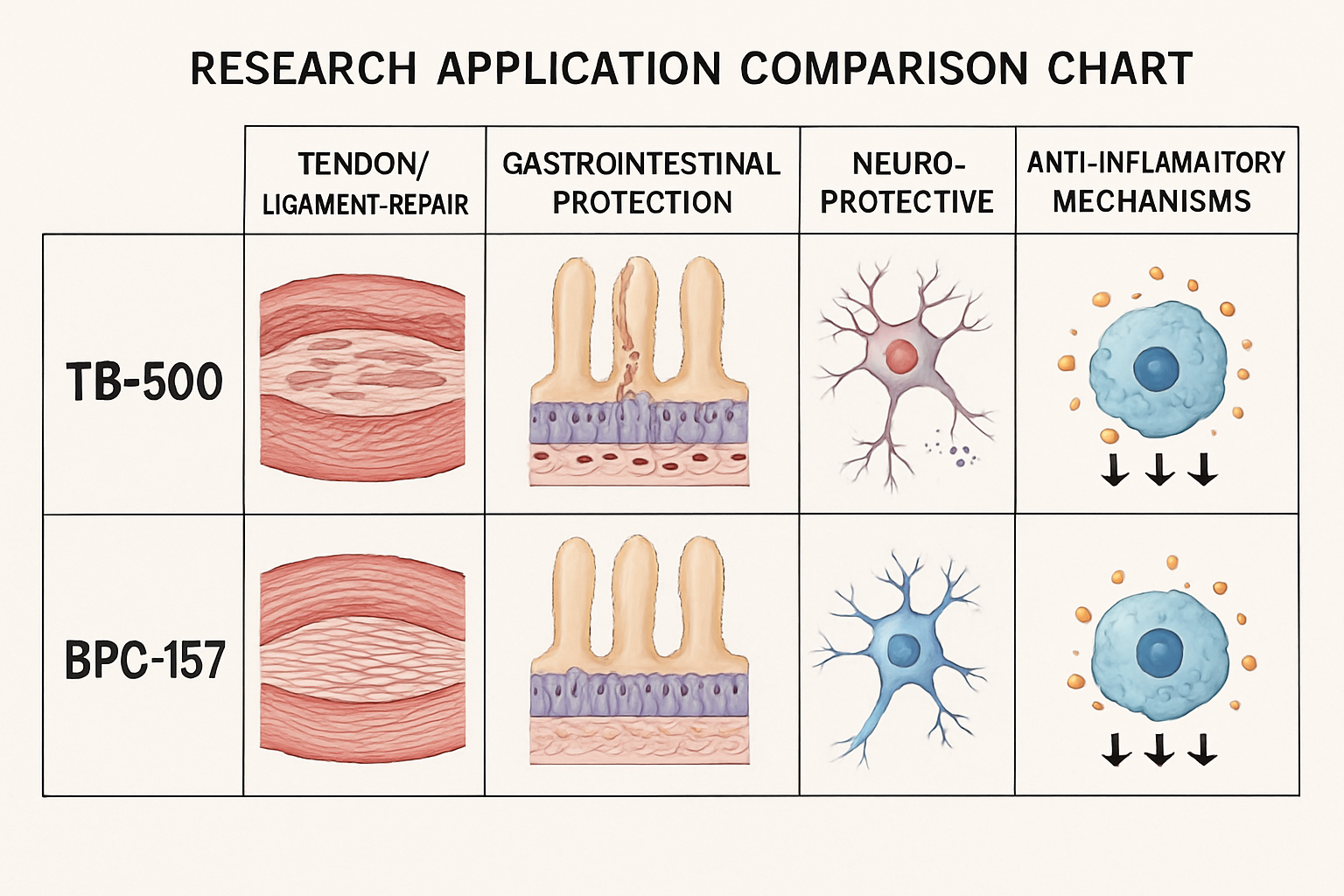
Many research protocols explore the tb500 vs bpc 157 question by investigating synergistic effects when both peptides are used together. This combination approach leverages the systemic benefits of TB-500 with the localized repair mechanisms of BPC-157.
Synergistic Research Benefits
🔬 Comprehensive Tissue Repair
Combining both peptides may provide broader coverage of healing mechanisms, addressing both systemic and localized repair needs.
⚡ Enhanced Recovery Protocols
Research suggests that the different mechanisms may complement each other, potentially accelerating overall tissue repair timelines.
📊 Multi-target Approach
Using both peptides allows researchers to study multiple healing pathways simultaneously, providing more comprehensive data on tissue repair mechanisms.
For researchers interested in combination protocols, peptide blend research offers valuable insights into multi-peptide study designs.
Safety Considerations and Research Standards
Regulatory Status
Both TB-500 and BPC-157 remain research compounds not approved for human therapeutic use by the FDA. The World Anti-Doping Agency (WADA) prohibits both substances in competitive sports, emphasizing their classification as investigational compounds [4].
Research Safety Protocols
Laboratory Standards:
- Proper storage conditions (typically refrigerated)
- Sterile handling procedures
- Accurate dosing measurements
- Documentation of all protocols and observations
Quality Assurance:
Research institutions should prioritize high-quality peptide sources with proper certificates of analysis and third-party testing verification.
Future Research Directions
Emerging Applications
The tb500 vs bpc 157 research landscape continues evolving as scientists explore new applications:
🧠 Neurological Research
BPC-157's neuroprotective properties are gaining attention for traumatic brain injury and neurodegenerative disease research.
🏃♂️ Sports Medicine Studies
TB-500's systemic effects make it valuable for studying comprehensive recovery protocols in athletic performance research.
🔬 Cellular Biology
Both peptides offer unique windows into understanding cellular repair mechanisms and tissue regeneration processes.
Research Methodology Advances
Modern research approaches increasingly focus on:
- Biomarker analysis to track healing progression
- Imaging studies to visualize tissue repair in real-time
- Combination protocols to optimize therapeutic outcomes
- Personalized approaches based on individual tissue repair needs
Researchers can explore comprehensive peptide research approaches to develop more sophisticated study designs.
Conclusion
The tb500 vs bpc 157 comparison reveals two distinct but complementary approaches to tissue repair research. TB-500 offers systemic healing through actin regulation and cell migration enhancement, making it ideal for comprehensive tissue repair studies. BPC-157 provides targeted, localized effects through angiogenesis and growth factor modulation, particularly valuable for specific tissue research applications.
Key Decision Factors for Researchers:
✅ Choose TB-500 for systemic healing studies, tendon/ligament research, and protocols requiring less frequent dosing
✅ Choose BPC-157 for gastrointestinal research, localized tissue repair studies, and protocols benefiting from oral administration
✅ Consider combination protocols for comprehensive tissue repair research requiring both systemic and localized mechanisms
Next Steps for Research Teams:
- Define research objectives clearly to determine which peptide best suits study goals
- Review current literature on both peptides for relevant study designs
- Establish proper protocols for storage, handling, and administration
- Source high-quality peptides from reputable research suppliers with proper documentation
- Design comprehensive monitoring systems to track research outcomes effectively
The future of peptide research lies in understanding how these powerful compounds can be optimized for specific applications, making the tb500 vs bpc 157 comparison an essential foundation for advancing tissue repair science.
References
[1] Goldstein, A.L., et al. "Thymosin β4: a multi-functional regenerative peptide." Expert Opinion on Biological Therapy, 2012.
[2] Bock-Marquette, I., et al. "Thymosin β4 activates integrin-linked kinase and promotes cardiac cell migration, survival and cardiac repair." Nature, 2004.
[3] Sikiric, P., et al. "Stable gastric pentadecapeptide BPC 157: novel therapy in gastrointestinal tract." Current Pharmaceutical Design, 2011.
[4] World Anti-Doping Agency. "Prohibited List 2025." WADA, 2025.
SEO Meta Information:
Meta Title: TB-500 vs BPC-157: Complete Research Comparison Guide 2025
Meta Description: Comprehensive comparison of TB-500 vs BPC-157 peptides for research. Compare mechanisms, dosing, applications, and protocols in our detailed guide.