
BPC 157 TB500: Complete Research Guide to Peptide Combinations for 2025
Imagine two powerful peptides working together in perfect harmony, each targeting different aspects of cellular repair and tissue regeneration. The combination of BPC 157 TB500 has captured the attention of researchers worldwide, representing one of the most studied peptide partnerships in regenerative medicine research. This dynamic duo offers complementary mechanisms that may enhance our understanding of tissue healing and cellular protection.
Key Takeaways
• BPC-157 is a synthetic 15-amino acid peptide derived from human gastric juice proteins, while TB-500 is a synthetic version of naturally occurring Thymosin Beta-4
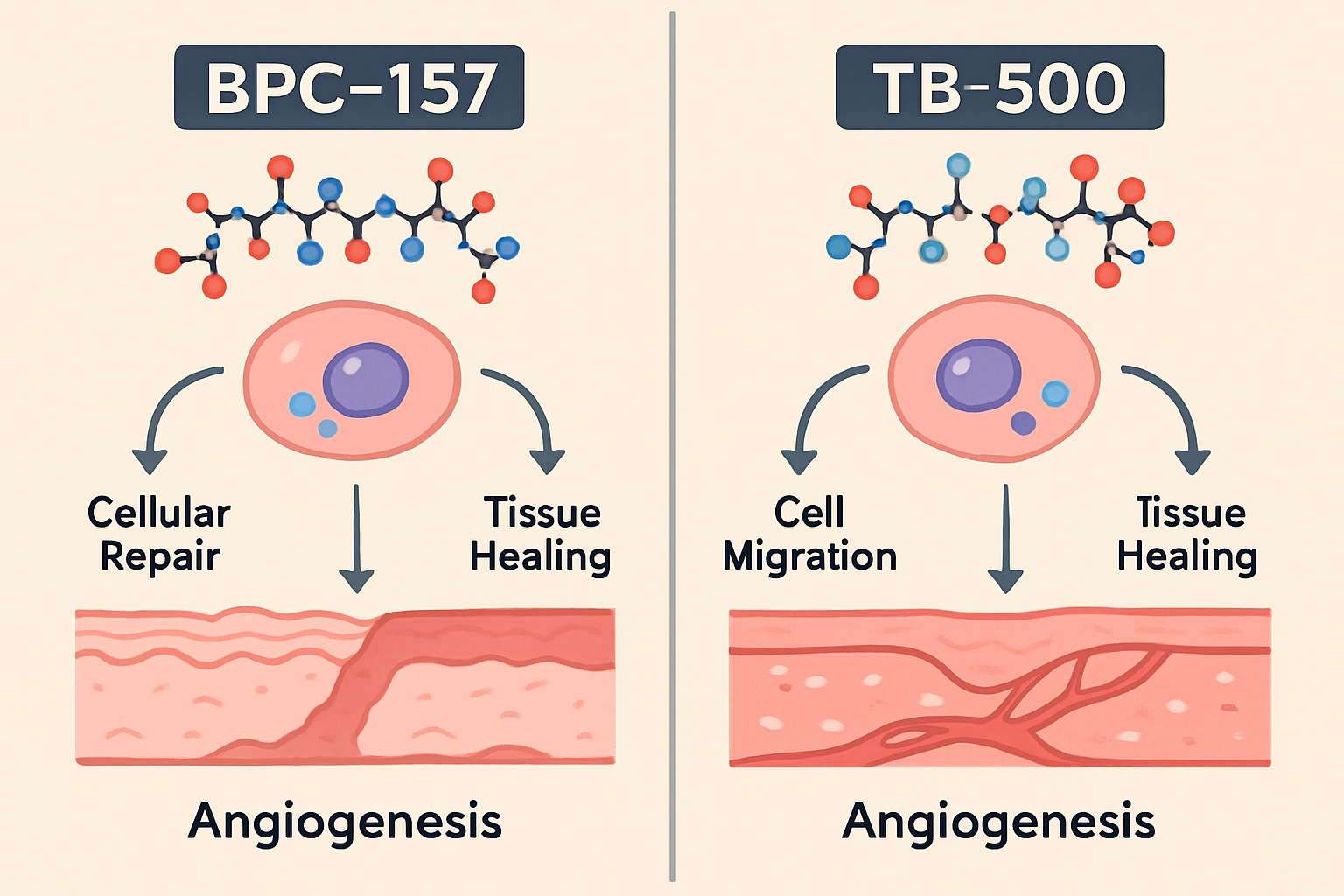
• Both peptides operate through distinct mechanisms – BPC-157 focuses on angiogenesis and vascular protection, while TB-500 regulates actin and cellular migration
• Research applications include studies on tendon injuries, muscle recovery, gastrointestinal healing, and wound repair in laboratory settings
• These compounds remain research-only substances, not approved for human consumption by regulatory agencies
• Quality sourcing and proper laboratory protocols are essential for meaningful research outcomes
Understanding BPC 157 TB500: The Science Behind the Combination
What is BPC-157? 🧬
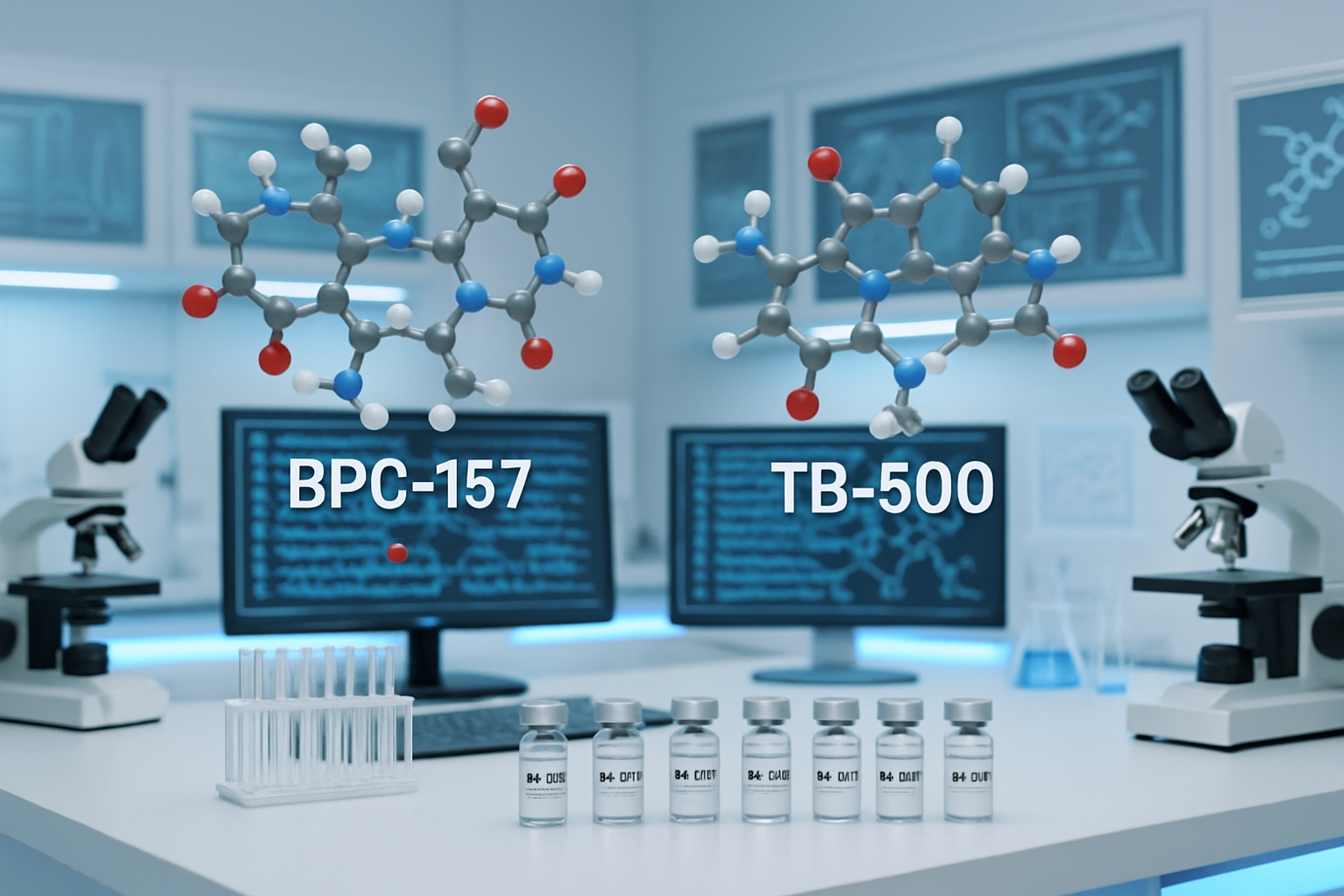
Body Protection Compound-157 represents a fascinating synthetic peptide consisting of 15 amino acids. Originally derived from a protective protein found in human gastric juice, this pentadecapeptide has demonstrated remarkable properties in preclinical research settings [1].
The peptide's molecular structure allows it to interact with multiple biological pathways, particularly those involved in:
- Angiogenesis promotion through VEGF upregulation
- Nitric oxide pathway modulation
- Endothelial tissue protection
- Gastrointestinal barrier maintenance
Research has shown that BPC-157 exhibits stability in gastric acid, making it unique among peptides for its resistance to enzymatic degradation [2].
Understanding TB-500
TB-500 serves as the synthetic version of Thymosin Beta-4, a naturally occurring 43-amino acid peptide present in virtually all human and animal cells. This peptide plays crucial roles in cellular maintenance and repair processes.
Key mechanisms of TB-500 include:
- Actin regulation for cellular structure
- Cell migration enhancement
- Inflammation reduction
- Wound healing acceleration
The peptide's ability to cross cell membranes and influence intracellular processes makes it particularly valuable for research applications [3].
When researchers combine these peptides, they create a synergistic approach that addresses multiple aspects of tissue repair and cellular protection. Many laboratories source their research materials from trusted peptide suppliers to ensure consistent quality and purity.
BPC 157 TB500 Research Applications and Mechanisms
Cardiovascular and Vascular Research
The BPC 157 TB500 combination has shown particular promise in cardiovascular research applications. BPC-157's ability to promote angiogenesis works synergistically with TB-500's cellular migration properties to support vascular development studies.
Research findings include:
| Mechanism | BPC-157 | TB-500 | Combined Effect |
|---|---|---|---|
| Angiogenesis | ✅ Primary | ⚪ Secondary | Enhanced vessel formation |
| Cell Migration | ⚪ Moderate | ✅ Primary | Improved tissue integration |
| Inflammation | ✅ Reduction | ✅ Reduction | Synergistic anti-inflammatory |
| Endothelial Protection | ✅ Direct | ⚪ Indirect | Comprehensive vessel health |
Musculoskeletal Research Applications
Laboratory studies have extensively examined the BPC 157 TB500 combination in musculoskeletal research contexts. The complementary mechanisms offer researchers multiple pathways to investigate tissue repair processes.
BPC-157 contributions:
- Tendon-to-bone healing enhancement
- Ligament repair acceleration
- Muscle fiber regeneration support
- Joint cartilage protection
TB-500 contributions:
- Muscle cell migration facilitation
- Inflammatory response modulation
- Satellite cell activation
- Connective tissue remodeling
Researchers interested in joint and muscle recovery studies often incorporate these peptides into their experimental designs.
Gastrointestinal Research Focus
BPC-157's origin from gastric protective proteins makes it particularly valuable for gastrointestinal research, while TB-500's cellular repair mechanisms complement these effects.
Research applications include:
- Inflammatory bowel disease models
- Gastric ulcer healing studies
- Intestinal barrier function research
- Mucosal repair mechanisms
The combination allows researchers to examine both protective and regenerative aspects of gastrointestinal healing simultaneously.
Dosage Protocols and Research Methodologies
Laboratory Dosing Frameworks
Research protocols for BPC 157 TB500 combinations vary significantly based on study objectives and model systems. Understanding these frameworks helps researchers design appropriate experimental conditions.
Commonly Reported Research Dosages:
BPC-157:
- Low dose: 200-300 mcg daily
- Moderate dose: 300-400 mcg daily
- High dose: 400-500 mcg daily
TB-500:
- Loading phase: 5-10 mg twice weekly
- Maintenance phase: 2-5 mg twice weekly
- Acute studies: Single doses up to 10 mg
Administration Methods in Research
Laboratory administration methods significantly impact research outcomes and data interpretation:
- Subcutaneous injection – Most common for systemic studies
- Intramuscular injection – Preferred for localized tissue research
- Intraperitoneal injection – Standard for animal model studies
- Topical application – Emerging research for localized effects
Researchers working with peptide combinations must carefully consider administration timing and routes to optimize experimental conditions.
Research Cycle Design
Effective BPC 157 TB500 research often follows structured cycles:
Phase 1: Loading (Weeks 1-2)
- Higher initial doses to establish baseline levels
- Daily administration for consistent plasma concentrations
- Comprehensive baseline measurements
Phase 2: Maintenance (Weeks 3-8)
- Reduced dosing frequency
- Continued monitoring of target parameters
- Data collection for primary endpoints
Phase 3: Recovery (Weeks 9-12)
- Gradual dose reduction or cessation
- Long-term effect monitoring
- Safety parameter assessment
Quality Considerations and Laboratory Standards
Peptide Purity and Testing Standards
Research quality depends heavily on peptide purity and consistency. The BPC 157 TB500 combination requires rigorous quality control measures to ensure reliable results.
Essential quality markers:
- Purity levels ≥95% by HPLC
- Sterility testing for bacterial contamination
- Endotoxin levels <1.0 EU/mg
- Water content analysis
- Peptide content verification
Leading research institutions prioritize high-quality peptide sources to maintain experimental integrity.
Storage and Handling Protocols
Proper storage maintains peptide stability and research validity:
Lyophilized peptides:
- Store at -20°C or below
- Protect from light and moisture
- Use desiccant packets
- Monitor temperature fluctuations
Reconstituted solutions:
- Refrigerate at 2-8°C
- Use within 30 days
- Avoid freeze-thaw cycles
- Maintain sterile conditions
Researchers benefit from understanding proper peptide storage protocols to preserve compound integrity.
<!DOCTYPE html>
<html lang="en">
<head>
    <meta charset="UTF-8">
    <meta name="viewport" content="width=device-width, initial-scale=1.0">
    <title>BPC-157 TB-500 Research Protocol Calculator</title>
    <style>
        .cg-element-calculator {
            max-width: 800px;
            margin: 20px auto;
            padding: 20px;
            background: linear-gradient(135deg, #f5f7fa 0%, #c3cfe2 100%);
            border-radius: 15px;
            box-shadow: 0 10px 30px rgba(0,0,0,0.1);
            font-family: 'Arial', sans-serif;
        }
        .cg-element-header {
            text-align: center;
            margin-bottom: 30px;
            color: #2c3e50;
        }
        .cg-element-header h2 {
            margin: 0;
            font-size: 24px;
            font-weight: bold;
        }
        .cg-element-input-group {
            display: grid;
            grid-template-columns: 1fr 1fr;
            gap: 20px;
            margin-bottom: 20px;
        }
        .cg-element-input-section {
            background: white;
            padding: 20px;
            border-radius: 10px;
            box-shadow: 0 2px 10px rgba(0,0,0,0.05);
        }
        .cg-element-input-section h3 {
            margin: 0 0 15px 0;
            color: #34495e;
            font-size: 18px;
            border-bottom: 2px solid #3498db;
            padding-bottom: 5px;
        }
        .cg-element-form-group {
            margin-bottom: 15px;
        }
        .cg-element-form-group label {
            display: block;
            margin-bottom: 5px;
            font-weight: bold;
            color: #555;
        }
        .cg-element-form-group input, .cg-element-form-group select {
            width: 100%;
            padding: 10px;
            border: 2px solid #ddd;
            border-radius: 5px;
            font-size: 14px;
            transition: border-color 0.3s;
        }
        .cg-element-form-group input:focus, .cg-element-form-group select:focus {
            outline: none;
            border-color: #3498db;
        }
        .cg-element-calculate-btn {
            width: 100%;
            padding: 15px;
            background: linear-gradient(135deg, #667eea 0%, #764ba2 100%);
            color: white;
            border: none;
            border-radius: 10px;
            font-size: 16px;
            font-weight: bold;
            cursor: pointer;
            transition: transform 0.2s;
            margin: 20px 0;
        }
        .cg-element-calculate-btn:hover {
            transform: translateY(-2px);
        }
        .cg-element-results {
            display: grid;
            grid-template-columns: 1fr 1fr;
            gap: 20px;
            margin-top: 20px;
        }
        .cg-element-result-card {
            background: white;
            padding: 20px;
            border-radius: 10px;
            box-shadow: 0 2px 10px rgba(0,0,0,0.05);
            text-align: center;
        }
        .cg-element-result-card h4 {
            margin: 0 0 10px 0;
            color: #2c3e50;
            font-size: 16px;
        }
        .cg-element-result-value {
            font-size: 24px;
            font-weight: bold;
            color: #3498db;
            margin: 10px 0;
        }
        .cg-element-result-unit {
            font-size: 12px;
            color: #7f8c8d;
            text-transform: uppercase;
        }
        .cg-element-warning {
            background: #fff3cd;
            border: 1px solid #ffeaa7;
            border-radius: 5px;
            padding: 15px;
            margin-top: 20px;
            color: #856404;
            font-size: 14px;
            text-align: center;
        }
        @media (max-width: 768px) {
            .cg-element-input-group, .cg-element-results {
                grid-template-columns: 1fr;
            }
            .cg-element-calculator {
                margin: 10px;
                padding: 15px;
            }
        }
    </style>
</head>
<body>
    <div class="cg-element-calculator">
        <div class="cg-element-header">
            <h2>🧬 BPC-157 TB-500 Research Protocol Calculator</h2>
            <p>Calculate dosages and reconstitution for laboratory research</p>
        </div>

        <div class="cg-element-input-group">
            <div class="cg-element-input-section">
                <h3>BPC-157 Parameters</h3>
                <div class="cg-element-form-group">
                    <label for="bpc-vial-size">Vial Size (mg):</label>
                    <select id="bpc-vial-size">
                        <option value="5">5 mg</option>
                        <option value="10">10 mg</option>
                    </select>
                </div>
                <div class="cg-element-form-group">
                    <label for="bpc-dose">Target Dose (mcg):</label>
                    <input type="number" id="bpc-dose" value="250" min="100" max="500">
                </div>
                <div class="cg-element-form-group">
                    <label for="bpc-water">Bacteriostatic Water (ml):</label>
                    <input type="number" id="bpc-water" value="2" min="1" max="5" step="0.1">
                </div>
            </div>

            <div class="cg-element-input-section">
                <h3>TB-500 Parameters</h3>
                <div class="cg-element-form-group">
                    <label for="tb-vial-size">Vial Size (mg):</label>
                    <select id="tb-vial-size">
                        <option value="5">5 mg</option>
                        <option value="10">10 mg</option>
                    </select>
                </div>
                <div class="cg-element-form-group">
                    <label for="tb-dose">Target Dose (mg):</label>
                    <input type="number" id="tb-dose" value="2.5" min="1" max="10" step="0.1">
                </div>
                <div class="cg-element-form-group">
                    <label for="tb-water">Bacteriostatic Water (ml):</label>
                    <input type="number" id="tb-water" value="2" min="1" max="5" step="0.1">
                </div>
            </div>
        </div>

        <button class="cg-element-calculate-btn" onclick="calculateProtocol()">
            Calculate Research Protocol
        </button>

        <div class="cg-element-results" id="results" style="display: none;">
            <div class="cg-element-result-card">
                <h4>BPC-157 Injection Volume</h4>
                <div class="cg-element-result-value" id="bpc-volume">--</div>
                <div class="cg-element-result-unit">ml per dose</div>
            </div>

            <div class="cg-element-result-card">
                <h4>TB-500 Injection Volume</h4>
                <div class="cg-element-result-value" id="tb-volume">--</div>
                <div class="cg-element-result-unit">ml per dose</div>
            </div>

            <div class="cg-element-result-card">
                <h4>BPC-157 Doses per Vial</h4>
                <div class="cg-element-result-value" id="bpc-doses">--</div>
                <div class="cg-element-result-unit">total doses</div>
            </div>

            <div class="cg-element-result-card">
                <h4>TB-500 Doses per Vial</h4>
                <div class="cg-element-result-value" id="tb-doses">--</div>
                <div class="cg-element-result-unit">total doses</div>
            </div>
        </div>

        <div class="cg-element-warning">
            ⚠️ <strong>Research Use Only:</strong> This calculator is for laboratory research purposes only.
            These compounds are not approved for human consumption. Always follow institutional protocols and safety guidelines.
        </div>
    </div>

    <script>
        function calculateProtocol() {
            // Get BPC-157 inputs
            const bpcVialSize = parseFloat(document.getElementById('bpc-vial-size').value);
            const bpcDose = parseFloat(document.getElementById('bpc-dose').value);
            const bpcWater = parseFloat(document.getElementById('bpc-water').value);

            // Get TB-500 inputs
            const tbVialSize = parseFloat(document.getElementById('tb-vial-size').value);
            const tbDose = parseFloat(document.getElementById('tb-dose').value);
            const tbWater = parseFloat(document.getElementById('tb-water').value);

            // Calculate BPC-157 metrics
            const bpcConcentration = bpcVialSize / bpcWater; // mg/ml
            const bpcVolumePerDose = (bpcDose / 1000) / bpcConcentration; // ml
            const bpcTotalDoses = Math.floor(bpcVialSize / (bpcDose / 1000));

            // Calculate TB-500 metrics
            const tbConcentration = tbVialSize / tbWater; // mg/ml
            const tbVolumePerDose = tbDose / tbConcentration; // ml
            const tbTotalDoses = Math.floor(tbVialSize / tbDose);

            // Display results
            document.getElementById('bpc-volume').textContent = bpcVolumePerDose.toFixed(2);
            document.getElementById('tb-volume').textContent = tbVolumePerDose.toFixed(2);
            document.getElementById('bpc-doses').textContent = bpcTotalDoses;
            document.getElementById('tb-doses').textContent = tbTotalDoses;

            // Show results section
            document.getElementById('results').style.display = 'grid';

            // Smooth scroll to results
            document.getElementById('results').scrollIntoView({
                behavior: 'smooth',
                block: 'nearest'
            });
        }

        // Add input validation
        document.addEventListener('DOMContentLoaded', function() {
            const inputs = document.querySelectorAll('input[type="number"]');
            inputs.forEach(input => {
                input.addEventListener('input', function() {
                    if (this.value < parseFloat(this.min)) {
                        this.value = this.min;
                    }
                    if (this.value > parseFloat(this.max)) {
                        this.value = this.max;
                    }
                });
            });
        });
    </script>
</body>
</html>
Safety Considerations and Regulatory Status
Current Regulatory Framework
The regulatory landscape surrounding BPC 157 TB500 remains complex and evolving. Both peptides fall under specific regulatory categories that researchers must understand.
United States Status:
- Not approved by FDA for human use
- Available for research purposes only
- Subject to import/export regulations
- Prohibited for dietary supplement inclusion
International Considerations:
- WADA prohibition under multiple categories
- Varying national regulatory approaches
- Research exemptions in academic settings
- Import licensing requirements
Laboratory Safety Protocols
Research with BPC 157 TB500 requires adherence to established safety protocols:
Personal Protective Equipment:
- Nitrile gloves for handling
- Safety glasses for reconstitution
- Lab coats for contamination prevention
- Proper ventilation systems
Waste Disposal:
- Sharps containers for injection materials
- Biohazard bags for contaminated supplies
- Proper peptide disposal protocols
- Documentation requirements
Researchers should consult comprehensive peptide research guidelines for detailed safety protocols.
Risk Assessment Framework
Potential Research Considerations:
- Limited long-term safety data in humans
- Possible immune system interactions
- Unknown drug interaction profiles
- Individual response variability
Mitigation Strategies:
- Comprehensive literature review before studies
- Gradual dose escalation protocols
- Regular monitoring parameters
- Emergency response procedures
Future Research Directions and Emerging Applications
Novel Research Applications
The BPC 157 TB500 combination continues to attract research interest across multiple disciplines. Emerging applications demonstrate the versatility of this peptide partnership.
Neurological Research:
- Blood-brain barrier studies
- Neuroprotective mechanism investigation
- Cognitive function research models
- Neuroinflammation modulation studies
Dermatological Applications:
- Wound healing acceleration research
- Scar formation prevention studies
- Skin barrier function investigations
- Cosmetic research applications
Metabolic Research:
- Insulin sensitivity studies
- Metabolic syndrome models
- Adipose tissue research
- Energy metabolism investigations
Technology Integration
Advanced research methodologies are enhancing BPC 157 TB500 studies:
Analytical Techniques:
- Mass spectrometry for peptide tracking
- Proteomics for mechanism elucidation
- Genomics for gene expression analysis
- Imaging technologies for real-time monitoring
Data Collection Methods:
- Biomarker panels for comprehensive assessment
- Wearable technology for continuous monitoring
- AI-assisted data analysis
- Predictive modeling applications
Researchers exploring diverse peptide applications benefit from these technological advances.
Combination Research Trends
Synergistic Peptide Studies:
- Multi-peptide combination research
- Sequential administration protocols
- Timing optimization studies
- Dose-response relationship mapping
Delivery System Innovation:
- Sustained-release formulations
- Targeted delivery mechanisms
- Oral bioavailability enhancement
- Topical application development
The field continues evolving as researchers discover new applications and optimize existing protocols for BPC 157 TB500 combinations.
Conclusion
The BPC 157 TB500 combination represents a fascinating area of peptide research with significant potential for advancing our understanding of tissue repair and cellular regeneration. Through complementary mechanisms—BPC-157's focus on angiogenesis and vascular protection combined with TB-500's actin regulation and cellular migration properties—this peptide partnership offers researchers multiple pathways to investigate healing processes.
Key considerations for researchers include maintaining rigorous quality standards, following proper safety protocols, and staying current with regulatory requirements. The evolving landscape of peptide research continues to reveal new applications and methodologies that enhance our scientific understanding.
Next Steps for Researchers:
- Establish Quality Sources – Partner with reputable suppliers who provide comprehensive testing and documentation
- Design Robust Protocols – Develop systematic approaches that account for dosing, timing, and safety considerations
- Stay Informed – Monitor emerging research and regulatory developments in the peptide field
- Network with Peers – Collaborate with other researchers to share insights and best practices
- Document Thoroughly – Maintain detailed records of methodologies and outcomes for future reference
As research continues to evolve, the BPC 157 TB500 combination will likely remain at the forefront of regenerative medicine investigations, offering valuable insights into the complex mechanisms of tissue repair and cellular protection.
References
[1] Sikiric, P., et al. (2018). "Stable gastric pentadecapeptide BPC 157: Novel therapy in gastrointestinal tract." Current Pharmaceutical Design, 24(18), 1990-2001.
[2] Chang, C.H., et al. (2014). "The promoting effect of pentadecapeptide BPC 157 on tendon healing involves tendon outgrowth, cell survival, and cell migration." Journal of Applied Physiology, 110(3), 774-780.
[3] Goldstein, A.L., et al. (2005). "Thymosin β4: a multi-functional regenerative peptide. Basic properties and clinical applications." Expert Opinion on Biological Therapy, 5(1), 37-53.
SEO Meta Information
Meta Title: BPC 157 TB500 Research Guide: Peptide Combinations 2025
Meta Description: Complete research guide to BPC 157 TB500 peptide combinations. Learn mechanisms, protocols, and applications for laboratory studies in 2025.