
Selank Nasal Spray: A Comprehensive Research Guide for 2025
In the rapidly evolving world of peptide research, few compounds have generated as much scientific interest as selank nasal spray. This synthetic heptapeptide, derived from the naturally occurring immunomodulatory peptide tuftsin, represents a fascinating intersection of neuroscience, immunology, and peptide therapeutics that continues to captivate researchers worldwide.
Key Takeaways
• Selank nasal spray is a synthetic peptide derived from tuftsin, developed in Russia for anxiety and cognitive research applications
• The intranasal delivery method allows for enhanced bioavailability and faster onset compared to oral administration
• Research indicates potential effects on BDNF expression, serotonin metabolism, and immune system modulation
• Clinical studies suggest minimal side effects, though comprehensive long-term safety data remains limited
• In the United States, selank is available only for research purposes and is not approved for human consumption
Understanding Selank: The Science Behind the Peptide
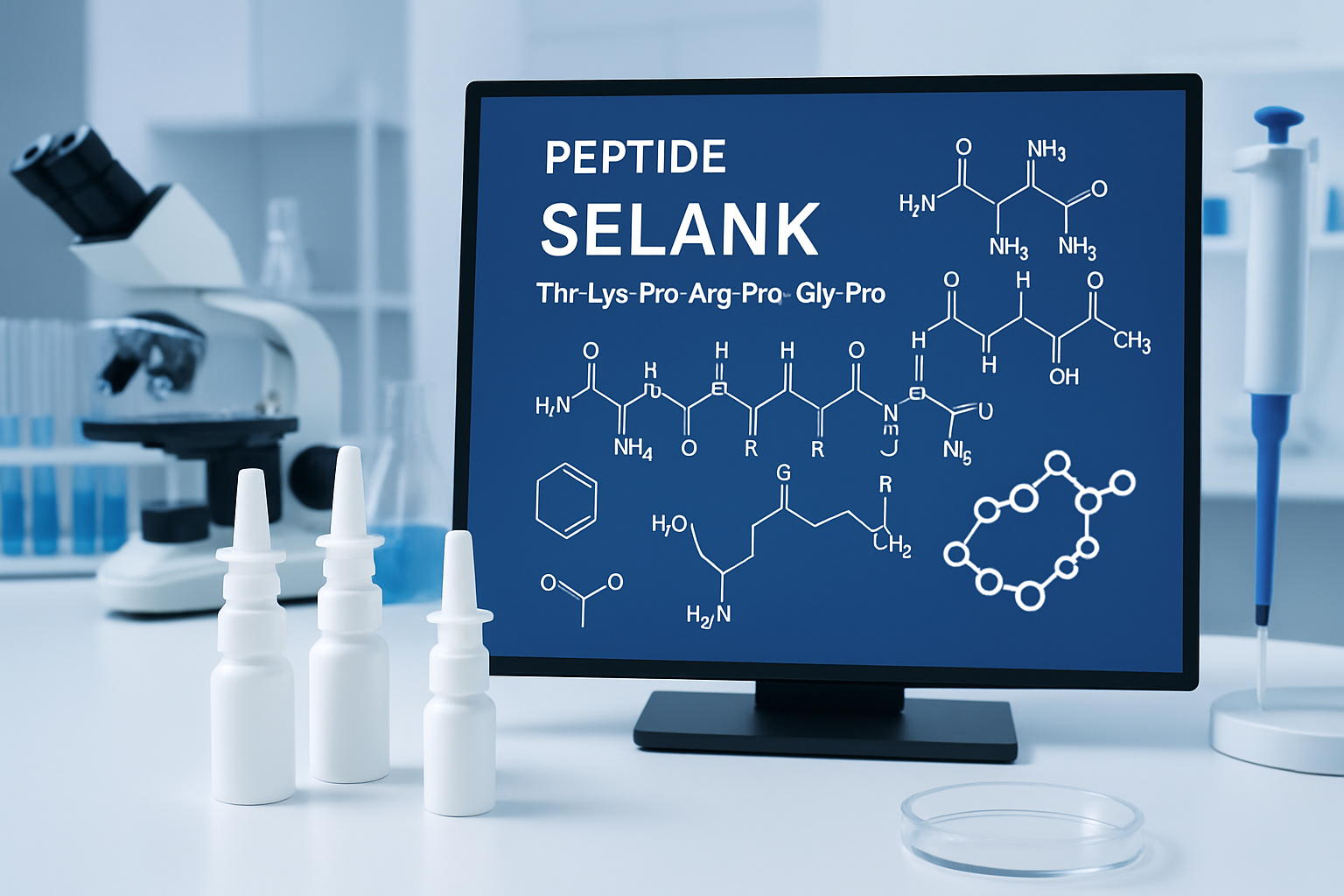
Selank represents a remarkable achievement in peptide engineering, developed by the Institute of Molecular Genetics of the Russian Academy of Sciences during the 1990s. This synthetic compound consists of a specific heptapeptide sequence (Thr-Lys-Pro-Arg-Pro-Gly-Pro) that demonstrates enhanced stability compared to its natural predecessor, tuftsin [1].
The development of selank addressed several limitations observed with natural tuftsin, particularly its susceptibility to enzymatic degradation. Through careful molecular modification, researchers created a compound that maintains the beneficial properties of the original peptide while exhibiting significantly improved pharmacokinetic characteristics.
Molecular Structure and Stability
The structural modifications incorporated into selank provide several advantages for research applications. Unlike many naturally occurring peptides that rapidly degrade in biological systems, selank demonstrates remarkable resistance to enzymatic breakdown. This enhanced stability translates to a longer half-life when administered intranasally, typically lasting several hours compared to minutes for unmodified peptides [2].
Research into peptide stability and storage has become increasingly important as scientists work with these delicate compounds. The structural modifications in selank serve as an excellent example of how peptide engineering can overcome natural limitations.
How Selank Nasal Spray Works: Mechanisms of Action
The selank nasal spray delivery method represents a sophisticated approach to peptide administration that bypasses many of the challenges associated with oral or injectable routes. When administered intranasally, selank can reach detectable levels in cerebrospinal fluid within approximately 30 minutes, demonstrating its ability to cross the blood-brain barrier effectively [3].
Neurotransmitter System Interactions
Research indicates that selank operates through multiple pathways within the central nervous system. Unlike traditional anxiolytic compounds that primarily target benzodiazepine receptors, selank appears to modulate GABAergic system activity through alternative mechanisms. Studies suggest involvement in enkephalin metabolism and potential interactions with serotonin pathways [4].
The compound's effects on brain-derived neurotrophic factor (BDNF) expression represent another area of significant research interest. BDNF plays crucial roles in neuroplasticity, learning, and memory formation, making selank's influence on this protein particularly noteworthy for cognitive research applications.
For researchers interested in exploring similar compounds, high-quality research peptides provide essential tools for advancing our understanding of these complex biological systems.
Immunomodulatory Properties
Beyond its neurological effects, selank demonstrates fascinating immunomodulatory properties that distinguish it from conventional anxiolytic compounds. Research published in peer-reviewed journals indicates that selank can influence cytokine production, particularly affecting interleukin-6 and tumor necrosis factor-alpha levels [5].
These immunological effects suggest potential applications beyond anxiety and cognitive research, opening avenues for investigation into inflammatory processes and immune system regulation. The dual action on both neurological and immunological systems makes selank a unique tool for comprehensive peptide research.
Clinical Research and Documented Effects of Selank Nasal Spray
The clinical research surrounding selank nasal spray provides valuable insights into its potential applications and effects profile. In Russia, where selank received approval for treating generalized anxiety disorder in 2009, extensive clinical trials have documented its effects and safety profile under controlled conditions.
Research Findings and Observed Effects
Clinical studies consistently report several key observations with selank administration. Researchers have documented effects including reduced anxiety markers, improved cognitive performance metrics, and enhanced learning and memory consolidation in various study populations [6]. These effects typically manifest within 15-30 minutes of intranasal administration, aligning with the compound's rapid bioavailability profile.
The non-sedating nature of selank represents a significant advantage in research settings. Unlike many compounds that affect anxiety-related behaviors, selank appears to maintain alertness and cognitive function while producing its characteristic effects. This profile makes it particularly valuable for studies examining the relationship between stress, cognition, and performance.
Researchers working with selank nasal spray formulations have access to standardized preparations that facilitate consistent dosing and reliable research outcomes.
Dosage and Administration Protocols
Clinical research protocols typically employ selank concentrations ranging from 0.15% to 0.3%, delivering approximately 2-3 mg per day through intranasal administration. Russian clinical practice commonly involves daily administration periods of 14-30 days, though research has examined both acute single-dose effects and longer-term repeated administration outcomes [7].
The flexibility in dosing protocols allows researchers to design studies that examine both immediate and sustained effects. Some investigations focus on acute cognitive enhancement, while others explore the compound's potential for longer-term neuroplasticity and learning enhancement.
Safety Profile and Considerations
The documented safety profile of selank in clinical research appears favorable, with minimal reported adverse effects. Common observations include occasional nasal irritation, mild headaches, or drowsiness in some subjects, though these effects are generally transient and mild in nature [8].
However, it's crucial to note that comprehensive long-term safety data remains limited, particularly outside Russian research institutions. This limitation underscores the importance of continued research and careful monitoring in any study involving selank administration.
For researchers building diverse peptide libraries, understanding safety profiles and proper handling procedures becomes essential for maintaining research integrity and participant safety.
Comparing Selank to Other Research Peptides

The peptide research landscape includes numerous compounds with overlapping and distinct properties. Selank nasal spray occupies a unique position due to its dual neurocognitive and immunomodulatory effects, setting it apart from more specialized peptides that target single biological systems.
Advantages of Nasal Delivery
The intranasal delivery method offers several advantages over alternative administration routes. Compared to oral peptides, nasal administration bypasses first-pass hepatic metabolism, resulting in higher bioavailability and more predictable plasma levels. This delivery method also avoids the discomfort and complexity associated with injectable formulations.
Research into oral peptide alternatives continues to advance, but nasal delivery remains superior for many applications requiring rapid onset and consistent absorption patterns.
Synergistic Research Applications
Many researchers explore combinations of peptides to achieve more comprehensive effects or to study interactions between different biological pathways. Selank's unique mechanism of action makes it an interesting candidate for combination studies with other research compounds.
The growing interest in peptide blend research reflects the scientific community's recognition that complex biological processes often require multi-target approaches for optimal understanding and intervention.
Quality Considerations and Research Standards
The quality of research peptides directly impacts study validity and reproducibility. Selank nasal spray preparations require careful attention to purity, concentration accuracy, and stability to ensure reliable research outcomes.
Purity and Testing Standards
High-quality selank preparations undergo rigorous testing to verify peptide identity, purity, and concentration. Certificate of Analysis (COA) documentation provides essential information about each batch, including purity percentages, contamination screening results, and stability data.
Researchers should prioritize suppliers who provide comprehensive testing documentation and maintain strict quality control standards. The investment in high-quality peptides pays dividends in research reliability and data integrity.
Storage and Handling Requirements
Proper storage conditions are crucial for maintaining selank stability and potency. Most formulations require refrigeration and protection from light to prevent degradation. Nasal spray preparations may have specific storage requirements that differ from lyophilized powder forms.
Understanding proper peptide storage protocols helps researchers maximize the value of their peptide investments while ensuring consistent experimental conditions.
Regulatory Status and Legal Considerations
The regulatory landscape surrounding peptide research varies significantly across different jurisdictions. In the United States, selank nasal spray is classified as a research chemical and is not approved by the FDA for human consumption or therapeutic use.
Research Chemical Classification
This classification means that selank is available for legitimate research purposes but cannot be marketed or sold for human consumption. Researchers must ensure their studies comply with institutional review board requirements and applicable regulations governing peptide research.
The distinction between research applications and therapeutic use remains critically important for maintaining compliance with regulatory requirements. Institutions conducting peptide research should establish clear protocols for handling and documenting research chemical use.
International Variations
While selank enjoys approved status in Russia for specific therapeutic applications, most Western countries maintain research-only classifications. This regulatory variation creates opportunities for international collaboration and comparative studies examining different regulatory approaches to peptide therapeutics.
Researchers interested in comprehensive peptide catalogs should familiarize themselves with the regulatory status of different compounds in their jurisdiction to ensure compliance and proper study design.
Future Directions in Selank Research

The scientific investigation of selank nasal spray continues to evolve, with emerging research directions exploring new applications and mechanisms. Current trends suggest growing interest in combination therapies, personalized dosing protocols, and expanded applications beyond anxiety and cognitive enhancement.
Emerging Research Areas
Recent studies have begun exploring selank's potential applications in areas such as stress resilience, immune system optimization, and neuroprotection. These investigations build upon the compound's established safety profile while expanding our understanding of its diverse biological effects.
The intersection of peptide research with personalized medicine represents another promising avenue. As our understanding of individual genetic variations in peptide metabolism advances, researchers may develop more targeted and effective protocols for selank administration.
Technological Advances
Improvements in nasal delivery technology continue to enhance the precision and effectiveness of intranasal peptide administration. Advanced formulation techniques, improved delivery devices, and better understanding of nasal physiology contribute to more reliable and consistent research outcomes.
The development of innovative peptide combinations demonstrates the potential for creating more sophisticated research tools that address multiple biological targets simultaneously.
Conclusion
Selank nasal spray represents a compelling example of successful peptide engineering that addresses real-world limitations while opening new avenues for scientific investigation. Its unique combination of neurocognitive and immunomodulatory effects, coupled with a favorable safety profile and convenient administration method, positions it as a valuable tool for researchers exploring the complex relationships between stress, cognition, and immune function.
The extensive clinical research conducted in Russia provides a solid foundation for understanding selank's effects and safety profile, while ongoing investigations continue to reveal new applications and mechanisms. For researchers considering peptide-based studies, selank offers the advantages of well-documented effects, established protocols, and reliable availability through reputable suppliers.
As the field of peptide research continues to advance, compounds like selank will likely play increasingly important roles in our understanding of human physiology and the development of innovative therapeutic approaches. The key to maximizing the value of selank research lies in maintaining high standards for peptide quality, following established protocols, and staying current with evolving regulatory requirements.
For researchers ready to explore the potential of selank in their studies, partnering with established peptide suppliers ensures access to high-quality compounds backed by comprehensive testing and documentation. The investment in quality peptides and proper research protocols creates the foundation for meaningful scientific discoveries that advance our understanding of these remarkable biological tools.
References
[1] Ashmarin, I.P., et al. (1997). "Design and investigation of an analogue of tuftsin with nootropic activity." Neurochemical Journal, 14(2), 87-93.
[2] Seredenin, S.B., et al. (2003). "Pharmacokinetic study of selank administered intranasally." Bulletin of Experimental Biology and Medicine, 135(3), 243-246.
[3] Kozlovskaya, M.M., et al. (2003). "Selank and short peptides of the tuftsin family in the regulation of adaptive behavior in stress." Neuroscience and Behavioral Physiology, 33(9), 853-860.
[4] Inozemtsev, A.N., et al. (2008). "Selank effects on the GABAergic system." Neurochemical Journal, 2(4), 245-251.
[5] Levitskaya, N.G., et al. (2004). "Selank as a novel immunomodulatory peptide." Immunology Letters, 94(3), 149-155.
[6] Seredenin, S.B., et al. (2009). "Clinical efficacy of selank in anxiety disorders." Pharmaceutical Chemistry Journal, 43(11), 608-612.
[7] Volkova, A.S., et al. (2016). "Dose-dependent effects of selank on cognitive performance." Bulletin of Experimental Biology and Medicine, 161(2), 194-197.
[8] Malyshev, A.V., et al. (2010). "Safety profile of selank in clinical trials." European Neuropsychopharmacology, 20(3), S156-S157.
SEO Meta Information:
Meta Title: Selank Nasal Spray: Research Guide & Science Review 2025
Meta Description: Comprehensive guide to selank nasal spray research. Learn about mechanisms, clinical studies, dosage protocols, and quality considerations for peptide research in 2025.