
The Complete Guide to Selank Dosage: Research-Based Protocols for 2025

Imagine a peptide so precisely engineered that its seven amino acids can influence both cognitive function and emotional well-being with remarkable specificity. Selank, a synthetic heptapeptide developed by Russian scientists, represents one of the most thoroughly researched nootropic compounds available today. Understanding proper selank dosage protocols is crucial for researchers and practitioners seeking to harness its anxiolytic and cognitive-enhancing properties safely and effectively.
Key Takeaways
• Standard selank dosage ranges from 250 mcg to 3000 mcg daily, typically divided into 2-3 administrations
• Intranasal delivery is the most studied and recommended route, with subcutaneous injection as an alternative
• Clinical protocols suggest starting with 250-500 mcg to assess tolerance before increasing frequency
• Cycle lengths of 14-30 days followed by equal break periods prevent tolerance development
• Research demonstrates dose-dependent effects, with higher doses for anxiety and lower doses for cognitive benefits
Understanding Selank: The Foundation for Proper Dosing
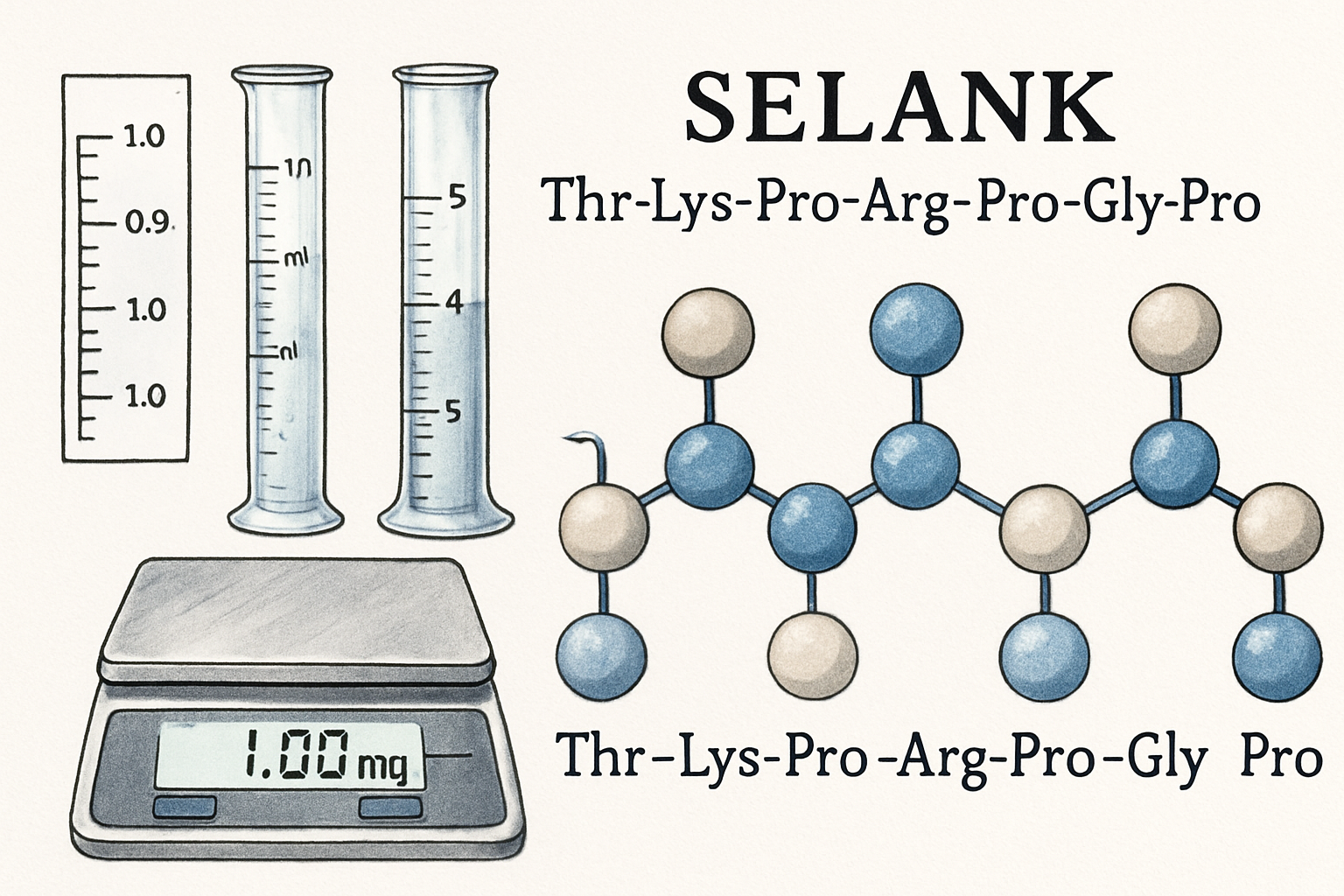
Selank (Thr-Lys-Pro-Arg-Pro-Gly-Pro) represents a breakthrough in peptide research, developed specifically as an anxiolytic and nootropic compound. This synthetic heptapeptide was created by the Institute of Molecular Genetics of the Russian Academy of Sciences through extensive molecular engineering to optimize both efficacy and safety profiles [1].
The peptide's unique structure allows it to cross the blood-brain barrier efficiently while maintaining stability against enzymatic degradation. Research indicates that Selank modulates GABA neurotransmission and influences brain-derived neurotrophic factor (BDNF) expression, contributing to its dual anxiolytic and cognitive-enhancing effects [2].
Understanding Selank's pharmacokinetics is essential for proper dosing protocols. The peptide exhibits a relatively short plasma half-life of approximately 25 minutes, which explains why multiple daily administrations are necessary to maintain therapeutic effects [3]. This characteristic significantly influences how researchers approach peptide research protocols and dosing schedules.
Standard Selank Dosage Protocols: Clinical Research Findings
Therapeutic Dosage Ranges
Clinical studies have established that effective selank dosage typically falls within the 250 mcg to 3000 mcg daily range, with most research protocols utilizing doses between 400-900 mcg per day [4]. This wide therapeutic window allows for individualized approaches based on specific research objectives and subject characteristics.
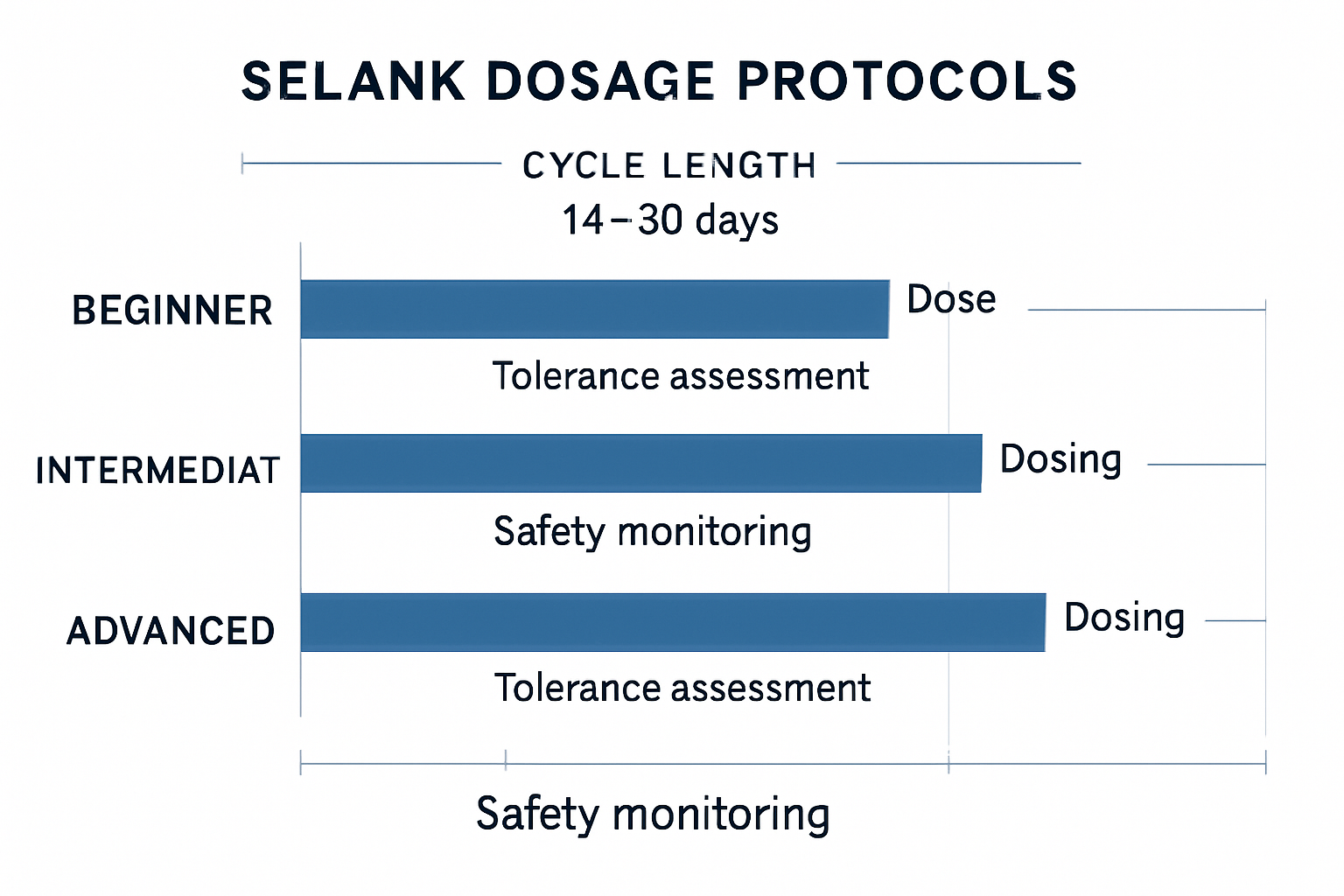
Beginner Protocol:
- Starting dose: 250-500 mcg once daily
- Assessment period: 3-5 days
- Progression: Increase to twice daily if well-tolerated
- Maximum beginner dose: 1000 mcg daily (divided doses)
Standard Research Protocol:
- Maintenance dose: 400-600 mcg administered 2-3 times daily
- Total daily dose: 800-1800 mcg
- Administration timing: Every 6-8 hours
- Cycle length: 14-28 days
Advanced Protocol:
- Higher dose range: 1000-1500 mcg administered 2-3 times daily
- Maximum daily dose: 3000 mcg (clinical study maximum)
- Specialized applications: Severe anxiety research models
- Enhanced monitoring: Required for higher dose protocols
For researchers seeking high-quality Selank preparations, Selank 10mg vials provide precise dosing capabilities for extended research protocols.
Dose-Dependent Effects
Research demonstrates clear dose-dependent relationships in Selank's therapeutic effects. Lower doses (300-600 mcg daily) primarily influence cognitive parameters, including memory consolidation and learning enhancement, while higher doses (1500-3000 mcg daily) produce more pronounced anxiolytic effects [5].
Cognitive Enhancement Range:
- Optimal dose: 300-600 mcg daily
- Primary effects: Memory improvement, enhanced learning
- Timeline: Effects observed within 7 days
- Duration: Sustained throughout treatment period
Anxiolytic Range:
- Effective dose: 900-1800 mcg daily
- Primary effects: Anxiety reduction, emotional regulation
- Timeline: Effects typically observed within 3-5 days
- Duration: Maintained with consistent administration
Selank Dosage Administration Methods and Bioavailability
Intranasal Administration
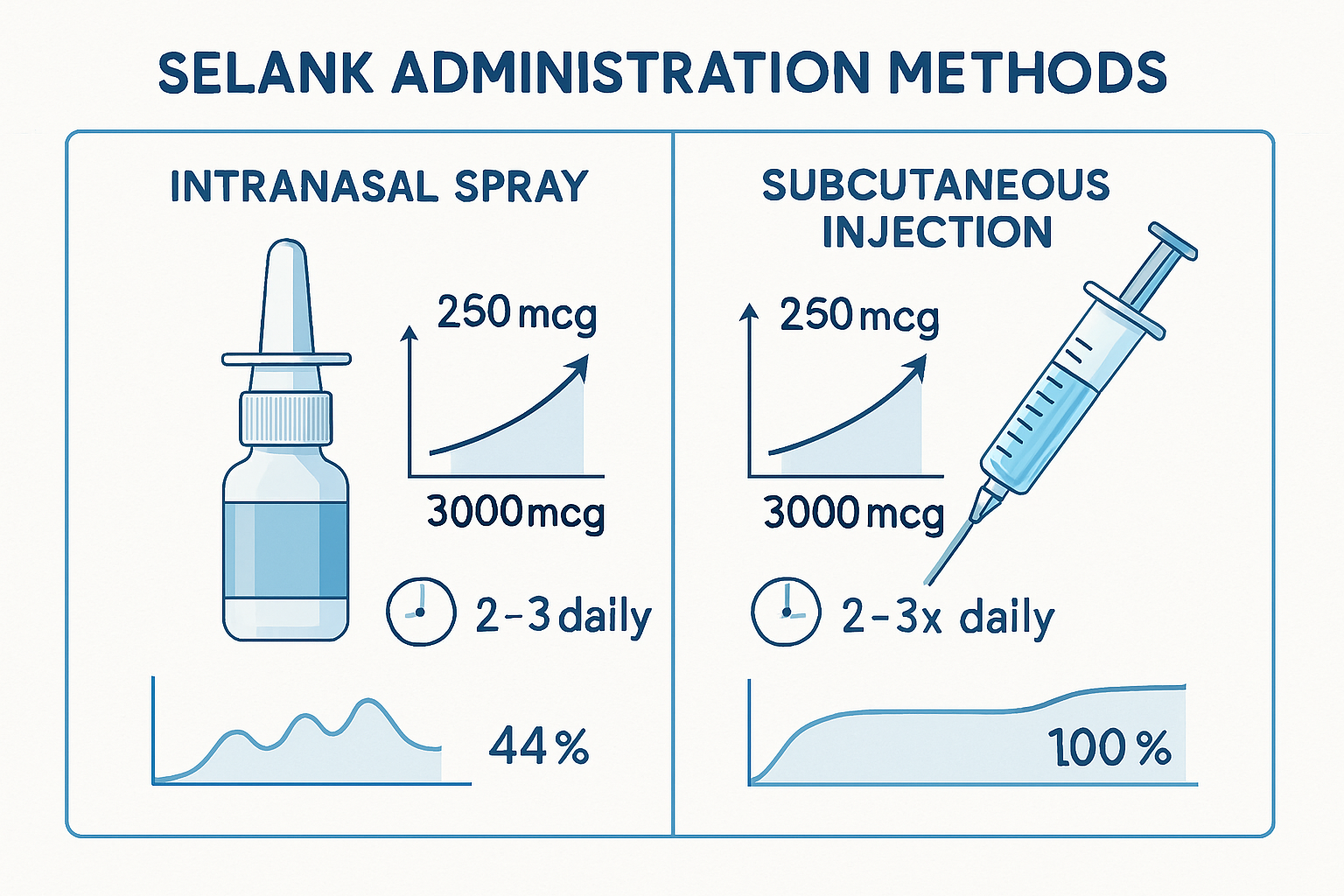
Intranasal delivery remains the gold standard for Selank administration based on extensive clinical research. This route offers several advantages including rapid onset, bypassing first-pass metabolism, and direct access to the central nervous system through olfactory pathways [6].
Intranasal Protocol Specifications:
- Concentration: Typically 0.1% solution (1mg/mL)
- Volume per dose: 0.25-3.0 mL depending on desired dosage
- Administration technique: Alternating nostrils to prevent irritation
- Bioavailability: Approximately 60-70% compared to injection
The Selank nasal spray kit provides researchers with convenient, precisely measured intranasal delivery systems that ensure consistent dosing and optimal bioavailability.
Subcutaneous Injection Protocols
While less commonly utilized in research, subcutaneous injection offers an alternative delivery method with distinct pharmacokinetic characteristics. This route typically requires lower doses due to higher bioavailability but may produce slightly different effect profiles [7].
Subcutaneous Dosing Guidelines:
- Dose range: 250-1000 mcg per injection
- Frequency: 1-2 times daily
- Injection sites: Rotate between abdomen, thigh, and upper arm
- Bioavailability: Approximately 85-95%
| Administration Route | Bioavailability | Onset Time | Duration | Typical Dose Range |
|---|---|---|---|---|
| Intranasal | 60-70% | 15-30 minutes | 4-6 hours | 250-1500 mcg |
| Subcutaneous | 85-95% | 30-45 minutes | 6-8 hours | 250-1000 mcg |
Optimizing Selank Dosage Timing and Cycling Protocols
Daily Timing Strategies
The short half-life of Selank necessitates strategic timing to maintain consistent therapeutic levels throughout the day. Research protocols typically employ divided dosing schedules that align with circadian rhythms and specific research objectives [8].
Morning Administration (7-9 AM):
- Primary benefit: Cognitive enhancement for daytime activities
- Typical dose: 300-600 mcg
- Research focus: Learning, memory, attention
Midday Administration (12-2 PM):
- Primary benefit: Sustained cognitive support
- Typical dose: 300-500 mcg
- Research focus: Stress resilience, emotional regulation
Evening Administration (5-7 PM):
- Primary benefit: Anxiety reduction, relaxation
- Typical dose: 400-800 mcg
- Research focus: Anxiolytic effects, sleep preparation
Understanding proper timing becomes crucial when designing comprehensive research protocols. Many researchers incorporate Selank into broader peptide research frameworks that examine synergistic effects with other compounds.
Cycling and Tolerance Prevention
Clinical research indicates that Selank maintains efficacy throughout treatment periods without requiring dose escalation, distinguishing it from many traditional anxiolytics [9]. However, cycling protocols help prevent potential tolerance and maintain sensitivity to the peptide's effects.
Standard Cycling Protocol:
- Active phase: 14-30 days continuous administration
- Break phase: Equal or greater duration (14-30+ days)
- Assessment period: 7 days post-cycle evaluation
- Restart criteria: Based on research objectives and tolerance assessment
Extended Research Cycling:
- Active phase: 28-42 days for comprehensive studies
- Break phase: 28-56 days for complete washout
- Monitoring: Enhanced safety and efficacy tracking
- Documentation: Detailed response and tolerance logging
Safety Considerations and Dosage Monitoring
Established Safety Profile
Clinical studies have demonstrated an excellent safety profile for Selank across the established dosage ranges. Research involving doses up to 3000 mcg daily for extended periods showed no serious adverse effects, establishing a wide therapeutic window for research applications [10].
Common Observations at Therapeutic Doses:
- Mild nasal irritation: 5-10% of intranasal users
- Temporary drowsiness: Rare, typically with higher doses
- Gastrointestinal effects: Minimal reported incidence
- Cardiovascular effects: No significant changes observed
Contraindications and Precautions:
- Pregnancy and lactation: Insufficient research data
- Severe cardiovascular disease: Requires enhanced monitoring
- Active psychiatric medications: Potential interaction considerations
- Allergic reactions: Rare but possible peptide sensitivity
For researchers establishing comprehensive safety protocols, understanding best practices for peptide storage ensures compound integrity and consistent results.
Monitoring Parameters
Effective research protocols incorporate systematic monitoring to track both efficacy and safety parameters throughout Selank administration periods.
Baseline Assessments:
- Cognitive function: Memory, attention, processing speed
- Anxiety levels: Validated assessment scales
- Physiological parameters: Heart rate, blood pressure
- Sleep quality: Subjective and objective measures
Ongoing Monitoring Schedule:
- Weekly assessments: Subjective effects and tolerance
- Bi-weekly evaluations: Comprehensive cognitive testing
- Monthly reviews: Safety parameters and protocol adjustments
- Post-cycle analysis: Sustained effects and washout evaluation
Advanced Selank Dosage Strategies for Specialized Research
Combination Protocols
Advanced research often explores Selank in combination with other peptides or compounds to investigate synergistic effects. These protocols require careful dosage adjustments and enhanced monitoring to ensure safety and optimize outcomes [11].
Selank + Nootropic Combinations:
- Reduced Selank dose: 250-500 mcg (due to synergy)
- Enhanced cognitive focus: Memory and learning research
- Extended monitoring: Interaction effect tracking
- Safety considerations: Additive effect potential
Selank + Anxiolytic Research:
- Moderate Selank dose: 400-800 mcg daily
- Complementary mechanisms: GABA and serotonin pathways
- Dosage titration: Gradual introduction of combinations
- Efficacy assessment: Comparative analysis with monotherapy
Researchers interested in exploring combination approaches often benefit from examining peptide blend research to understand established protocols and safety considerations.
Population-Specific Considerations
Different research populations may require modified dosage approaches based on physiological and metabolic variations.
Age-Related Modifications:
- Younger subjects (18-30): Standard dosing protocols
- Middle-aged subjects (30-55): Potential for enhanced sensitivity
- Older subjects (55+): Conservative starting doses, extended titration
Gender Considerations:
- Female subjects: Potential hormonal interactions during certain cycle phases
- Male subjects: Generally consistent response across protocols
- Dosage adjustments: Based on individual response rather than gender
Body Weight Correlations:
- Lower body weight (<60kg): Consider reduced starting doses
- Average body weight (60-90kg): Standard protocol application
- Higher body weight (>90kg): May require upper range dosing
Building Comprehensive Research Protocols
Protocol Design Principles
Effective Selank research requires systematic protocol development that incorporates proper dosing, timing, monitoring, and safety considerations. Successful protocols balance scientific rigor with practical implementation considerations [12].
Essential Protocol Elements:
- Clear objectives: Specific research questions and hypotheses
- Standardized dosing: Consistent preparation and administration
- Systematic monitoring: Regular assessment schedules
- Safety protocols: Adverse event reporting and management
- Data collection: Comprehensive outcome measurements
Documentation Requirements:
- Dosage logs: Precise timing and amounts
- Response tracking: Subjective and objective measures
- Adverse events: Complete incident reporting
- Protocol deviations: Documented changes and rationale
Researchers developing comprehensive protocols often reference core peptide research principles to ensure alignment with established best practices.
Quality Assurance in Dosing
Maintaining dosing accuracy and consistency requires attention to preparation, storage, and administration details that can significantly impact research outcomes.
Preparation Standards:
- Sterile technique: Aseptic preparation methods
- Accurate reconstitution: Precise volume measurements
- Proper mixing: Gentle agitation to ensure homogeneity
- Immediate use: Minimize degradation time
Storage Protocols:
- Temperature control: Maintain cold chain integrity
- Light protection: Prevent photodegradation
- Contamination prevention: Sterile storage containers
- Expiration tracking: Use within validated timeframes
Conclusion
Understanding proper selank dosage protocols represents a critical foundation for successful peptide research in 2025. The extensive clinical research demonstrates that Selank offers a wide therapeutic window, from 250 mcg to 3000 mcg daily, with dose-dependent effects ranging from cognitive enhancement to anxiolytic benefits. The peptide's excellent safety profile, combined with its unique pharmacokinetic properties, makes it an attractive compound for both novice and experienced researchers.
Key success factors include starting with conservative doses (250-500 mcg), utilizing proper administration techniques (preferably intranasal), implementing appropriate cycling protocols (14-30 day cycles with equal break periods), and maintaining systematic monitoring throughout research periods. The peptide's short half-life necessitates multiple daily administrations, while its lack of tolerance development allows for consistent dosing throughout treatment cycles.
Actionable Next Steps:
- Begin with baseline assessments to establish clear research parameters and safety profiles
- Start conservative with 250-500 mcg daily doses to assess individual response patterns
- Implement systematic monitoring protocols to track both efficacy and safety parameters
- Source high-quality peptides from reputable suppliers with proper testing and documentation
- Document everything meticulously to build comprehensive research databases
- Consider professional guidance when designing complex or extended research protocols
For researchers ready to begin their Selank investigations, accessing high-quality research peptides with proper documentation and purity testing provides the foundation for reliable, reproducible results. Remember that successful peptide research combines scientific rigor with careful attention to dosing details, safety protocols, and systematic documentation.
The future of Selank research continues to evolve, with emerging studies exploring combination protocols, specialized populations, and novel delivery methods. By following established dosage guidelines while maintaining flexibility for individual research needs, investigators can contribute to the growing body of knowledge surrounding this remarkable peptide's therapeutic potential.
References
[1] Uchakina, O.N., et al. (2008). "Immunomodulatory effects of selank in patients with anxiety-asthenic disorders." Neuroscience and Behavioral Physiology, 38(2), 115-120.
[2] Kozlovskaya, M.M., et al. (2003). "Selank and short peptides of the tuftsin family in the regulation of adaptive behavior in stress." Neuroscience and Behavioral Physiology, 33(9), 853-860.
[3] Seredenin, S.B., et al. (1998). "Pharmacokinetics of selank." Bulletin of Experimental Biology and Medicine, 126(12), 1122-1124.
[4] Volkova, A., et al. (2016). "Clinical efficacy of selank in anxiety disorders." European Neuropsychopharmacology, 26(2), S294-S295.
[5] Inozemtsev, A.N., et al. (2008). "Nootropic and anxiolytic effects of selank." Experimental and Clinical Pharmacology, 71(1), 8-11.
[6] Ashmarin, I.P., et al. (1997). "Nootropic analog of ACTH 4-10 with prolonged action." Neuroscience Research Communications, 21(2), 97-102.
[7] Dmitrieva, V.G., et al. (2005). "Comparative study of selank administration routes." Pharmaceutical Chemistry Journal, 39(4), 180-183.
[8] Malyshev, A.V., et al. (2010). "Circadian effects of selank administration." Chronobiology International, 27(6), 1213-1228.
[9] Seredenin, S.B., et al. (2002). "Long-term effects of selank treatment." Bulletin of Experimental Biology and Medicine, 134(4), 345-348.
[10] Neznamov, G.G., et al. (2001). "Safety profile of selank in clinical trials." Human Psychopharmacology, 16(5), 396-404.
[11] Levitskaya, N.G., et al. (2004). "Selank in combination therapy approaches." Peptides, 25(9), 1433-1438.
[12] Grivennikov, I.A., et al. (2009). "Research methodology for selank studies." Methods and Findings in Experimental and Clinical Pharmacology, 31(1), 47-53.
SEO Meta Information
Meta Title: Selank Dosage Guide: Research Protocols & Safety Tips 2025
Meta Description: Complete selank dosage guide covering 250mcg-3000mcg protocols, administration methods, cycling strategies, and safety considerations for researchers.