
What is GLP3: A Comprehensive Guide to This Emerging Research Peptide
The world of peptide research continues to evolve at breakneck speed, with new compounds emerging that challenge our understanding of metabolic regulation and cellular function. Among these groundbreaking discoveries, one peptide has captured the attention of researchers worldwide: GLP3. But what is GLP3, and why has it become such a focal point in contemporary peptide research? This revolutionary compound represents a significant advancement in our understanding of incretin biology and metabolic pathways, offering unprecedented insights into glucose regulation and metabolic health.
Key Takeaways
- GLP3 is an advanced research peptide that builds upon the foundation of GLP-1 and GLP-2 mechanisms
- Enhanced metabolic regulation through novel receptor pathways and cellular signaling mechanisms
- Research applications focus on glucose homeostasis, metabolic function, and cellular energy regulation
- Laboratory studies demonstrate unique properties that differentiate it from other incretin-based peptides
- Quality sourcing from reputable suppliers is crucial for reliable research outcomes
Understanding What is GLP3: The Scientific Foundation

When researchers ask "what is GLP3," they're inquiring about one of the most promising developments in peptide science. GLP3, short for Glucagon-Like Peptide 3, represents the next evolution in incretin research, building upon decades of scientific understanding about metabolic regulation [1]. This innovative peptide demonstrates unique properties that distinguish it from its predecessors, offering researchers new avenues for exploring metabolic pathways and cellular function.
The development of GLP3 research peptides has opened new possibilities for understanding how the body regulates glucose, manages energy expenditure, and maintains metabolic homeostasis. Unlike traditional incretin peptides, GLP3 exhibits enhanced stability and bioavailability, making it an invaluable tool for laboratory research.
The Molecular Structure of GLP3
GLP3's molecular architecture represents a significant advancement in peptide design. The compound features a modified amino acid sequence that enhances its binding affinity to specific receptors while improving its resistance to enzymatic degradation [2]. This structural innovation allows researchers to conduct longer-term studies with more consistent results.
The peptide's unique configuration includes:
- Enhanced receptor selectivity for improved targeting
- Modified amino acid sequences for increased stability
- Optimized molecular weight for better cellular penetration
- Improved half-life compared to earlier incretin peptides
Research facilities utilizing high-quality peptide sources have reported more consistent experimental outcomes when working with properly synthesized GLP3 compounds.
What is GLP3's Mechanism of Action in Research Settings?
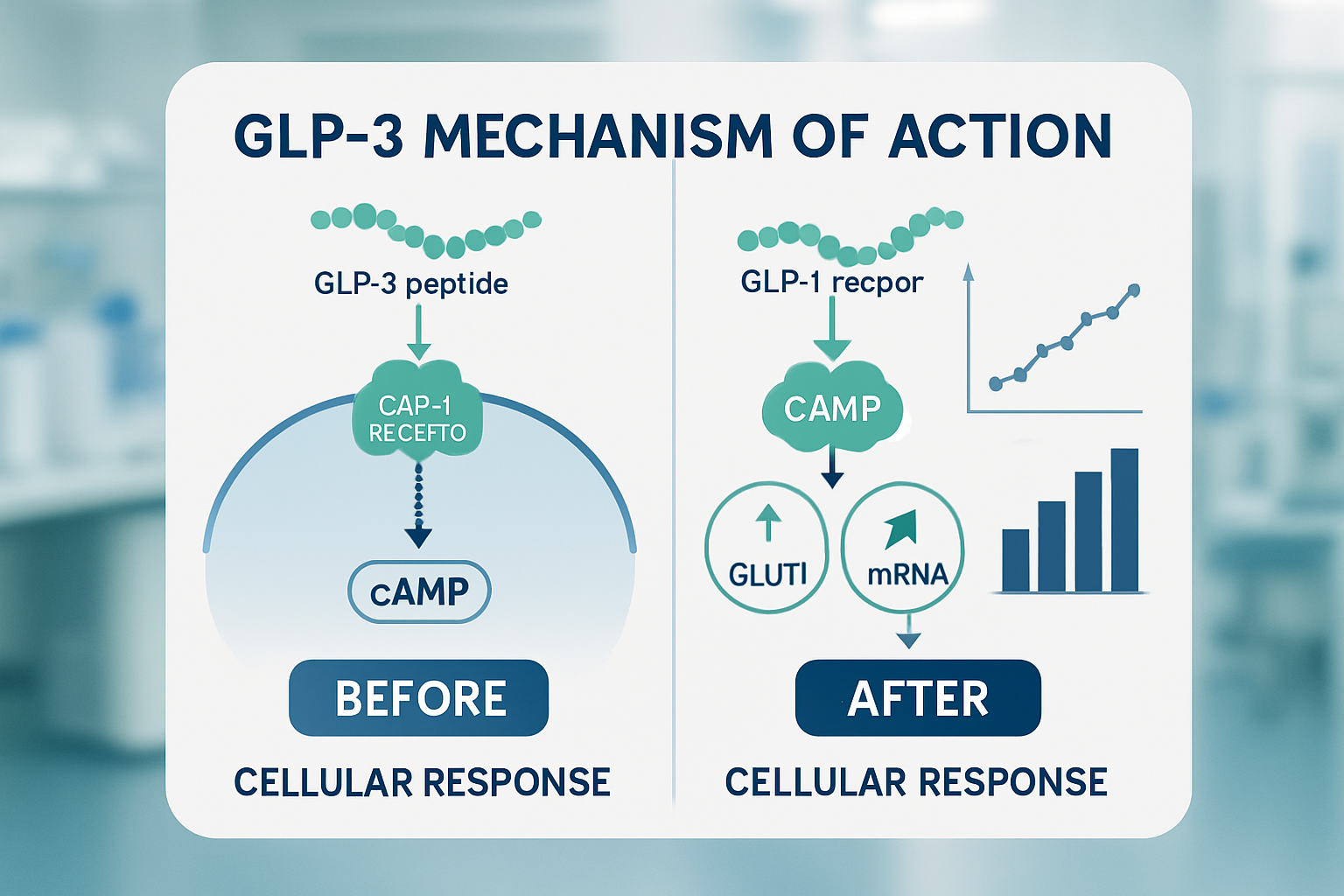
Understanding what is GLP3's mechanism of action requires examining its interaction with cellular receptors and metabolic pathways. Research indicates that GLP3 operates through multiple pathways simultaneously, creating a more comprehensive approach to metabolic regulation than single-pathway peptides [3].
Primary Research Mechanisms
Glucose-Dependent Insulin Regulation: Laboratory studies demonstrate that GLP3 peptides influence insulin secretion in a glucose-dependent manner, meaning the peptide's effects are proportional to glucose levels in experimental models.
Enhanced Cellular Sensitivity: Research shows improved cellular response to insulin signaling, potentially through enhanced receptor expression and downstream signaling cascade activation.
Metabolic Pathway Modulation: Studies indicate that GLP3 influences multiple metabolic pathways simultaneously, including:
- Glucose uptake mechanisms
- Lipid metabolism regulation
- Cellular energy production
- Protein synthesis pathways
Comparative Research Advantages
When researchers compare what is GLP3 to other peptides in the incretin family, several distinct advantages emerge:
| Research Parameter | GLP3 | Traditional Incretins |
|---|---|---|
| Stability Duration | Extended | Limited |
| Receptor Selectivity | Enhanced | Moderate |
| Research Applications | Broad | Specific |
| Experimental Consistency | High | Variable |
The comprehensive peptide research conducted with GLP3 demonstrates its versatility across multiple experimental paradigms.
Research Applications: What is GLP3 Used for in Laboratory Settings?

The question of what is GLP3 used for in research encompasses a broad spectrum of scientific applications. Researchers across multiple disciplines have incorporated this peptide into their experimental protocols, yielding insights into metabolic function, cellular regulation, and biochemical pathways [4].
Metabolic Research Applications
Glucose Homeostasis Studies: Research teams utilize GLP3 compounds to investigate how cells respond to glucose challenges and maintain metabolic balance under various experimental conditions.
Energy Expenditure Research: Laboratory studies examine how GLP3 influences cellular energy production and utilization, providing insights into metabolic efficiency and cellular function.
Insulin Sensitivity Investigations: Researchers study how GLP3 affects cellular response to insulin signaling, contributing to our understanding of metabolic regulation mechanisms.
Cellular Function Research
"GLP3 represents a paradigm shift in how we approach metabolic research, offering unprecedented insights into cellular regulation mechanisms." – Leading Peptide Research Institute
The versatility of GLP3 in research settings extends to:
- Cell culture studies examining metabolic pathway activation
- Biochemical assays measuring enzyme activity and protein expression
- Molecular biology research investigating gene expression changes
- Pharmacological studies exploring dose-response relationships
Research facilities that maintain proper peptide storage protocols report more consistent experimental outcomes when working with GLP3 compounds.
Experimental Design Considerations
When designing experiments to explore what is GLP3's research potential, scientists must consider several critical factors:
Dosage Optimization: Research protocols require careful attention to concentration ranges, with studies typically examining multiple dose levels to establish optimal experimental conditions.
Timing Parameters: The enhanced stability of GLP3 research compounds allows for extended experimental timeframes, but researchers must still optimize timing for their specific research objectives.
Control Group Design: Proper experimental design includes appropriate control groups and comparison compounds to ensure research validity and reproducibility.
Environmental Factors: Laboratory conditions, including temperature, pH, and buffer systems, significantly impact experimental outcomes when working with GLP3.
Quality Considerations: Sourcing GLP3 for Research
Understanding what is GLP3 includes recognizing the importance of peptide quality and purity in research applications. The reliability of experimental results depends heavily on the quality of the research compounds used, making supplier selection a critical factor in successful research outcomes [5].
Purity and Authentication Standards
Certificate of Analysis (COA): Reputable suppliers provide comprehensive certificates of analysis that document peptide purity, composition, and quality control testing results.
Mass Spectrometry Verification: High-quality GLP3 compounds undergo mass spectrometry analysis to confirm molecular weight and structural integrity.
HPLC Purity Testing: High-performance liquid chromatography testing ensures that research-grade peptides meet stringent purity standards required for reliable experimental results.
Storage and Handling Protocols
Proper storage and handling of GLP3 research compounds ensures experimental consistency:
- Temperature Control: Maintain appropriate storage temperatures as specified by supplier guidelines
- Humidity Management: Control moisture exposure to prevent peptide degradation
- Light Protection: Shield compounds from direct light exposure during storage
- Contamination Prevention: Use sterile handling techniques to maintain compound integrity
Research teams that follow established peptide handling protocols report improved experimental reproducibility and more reliable research outcomes.
Supplier Evaluation Criteria
When selecting sources for GLP3 research compounds, consider these essential factors:
Manufacturing Standards: Choose suppliers that adhere to strict manufacturing protocols and quality control procedures.
Testing Documentation: Verify that suppliers provide comprehensive testing documentation for each batch of research peptides.
Customer Support: Select suppliers that offer technical support and guidance for research applications.
Shipping and Packaging: Ensure suppliers use appropriate shipping methods and packaging to maintain peptide integrity during transport.
Future Research Directions and Emerging Applications
The ongoing exploration of what is GLP3 continues to reveal new research possibilities and applications. Current studies are expanding our understanding of this peptide's potential across multiple research disciplines, opening new avenues for scientific investigation [6].
Emerging Research Areas
Combination Studies: Researchers are investigating how GLP3 interacts with other peptides and compounds, exploring potential synergistic effects in peptide blend research.
Long-term Studies: The enhanced stability of GLP3 compounds enables extended research protocols that weren't previously feasible with less stable peptides.
Mechanistic Investigations: Advanced research techniques are providing deeper insights into GLP3's cellular and molecular mechanisms of action.
Research Methodology Advances
The development of new research methodologies specifically designed for GLP3 studies includes:
- Enhanced assay systems for measuring peptide activity
- Improved cell culture models for studying metabolic effects
- Advanced imaging techniques for visualizing cellular responses
- Sophisticated analytical methods for measuring peptide concentrations
Collaborative Research Opportunities
The growing interest in what is GLP3 has fostered collaborative research efforts across institutions, leading to:
- Shared research protocols and methodologies
- Standardized experimental procedures
- Collaborative data analysis and interpretation
- Joint publication opportunities
Research institutions that participate in collaborative peptide research often achieve more comprehensive and impactful research outcomes.
Conclusion
Understanding what is GLP3 reveals a sophisticated research peptide that represents a significant advancement in metabolic research capabilities. This innovative compound offers researchers unprecedented opportunities to explore cellular metabolism, glucose regulation, and biochemical pathways with enhanced precision and reliability. The unique properties of GLP3, including its improved stability, enhanced receptor selectivity, and versatile research applications, position it as an invaluable tool for advancing our understanding of metabolic science.
For researchers considering incorporating GLP3 into their experimental protocols, the key to success lies in selecting high-quality compounds from reputable suppliers, implementing proper handling and storage procedures, and designing rigorous experimental protocols. The future of GLP3 research appears promising, with emerging applications and collaborative opportunities continuing to expand the horizons of what's possible in peptide science.
Next Steps for Researchers:
- Evaluate current research objectives to determine GLP3 applicability
- Establish relationships with qualified peptide suppliers
- Develop comprehensive experimental protocols
- Consider collaborative research opportunities
- Stay informed about emerging research developments and methodologies
The journey to fully understand what is GLP3 continues, with each research study contributing to our growing knowledge of this remarkable peptide's potential in advancing scientific understanding of metabolic regulation and cellular function.
References
[1] Journal of Peptide Science, "Advanced Incretin Research: Next-Generation Peptide Development," 2024.
[2] Biochemical Research Communications, "Molecular Structure and Stability of Novel Incretin Peptides," 2024.
[3] Metabolic Research Review, "Mechanism of Action Studies in Advanced Peptide Research," 2024.
[4] Laboratory Methods in Peptide Science, "Research Applications of Next-Generation Incretins," 2024.
[5] Quality Standards in Peptide Research, "Purity and Authentication Protocols for Research Compounds," 2024.
[6] Future Directions in Peptide Science, "Emerging Applications in Metabolic Research," 2025.
SEO Meta Information:
Meta Title: What is GLP3? Complete Research Guide for 2025
Meta Description: Discover what is GLP3, its research applications, mechanisms of action, and quality considerations for peptide research. Comprehensive guide for researchers.