
TB500 and BPC 157: The Complete Research Guide for Peptide Enthusiasts
Imagine having access to two of the most researched peptides in modern science—compounds that have captured the attention of researchers worldwide for their unique properties and potential applications. TB500 and BPC 157 represent the cutting edge of peptide research, offering fascinating insights into cellular repair mechanisms and tissue regeneration processes that continue to drive scientific inquiry across multiple disciplines.
Key Takeaways
• TB500 and BPC 157 are synthetic peptides with distinct molecular structures and research applications
• Both peptides have been extensively studied for their roles in cellular repair and tissue regeneration mechanisms
• Quality sourcing and proper storage are critical factors for maintaining peptide integrity in research settings
• Understanding the scientific literature helps researchers make informed decisions about peptide selection
• Pure Tested Peptides provides comprehensive resources for peptide research and quality assurance
Understanding TB500 and BPC 157: Scientific Foundations
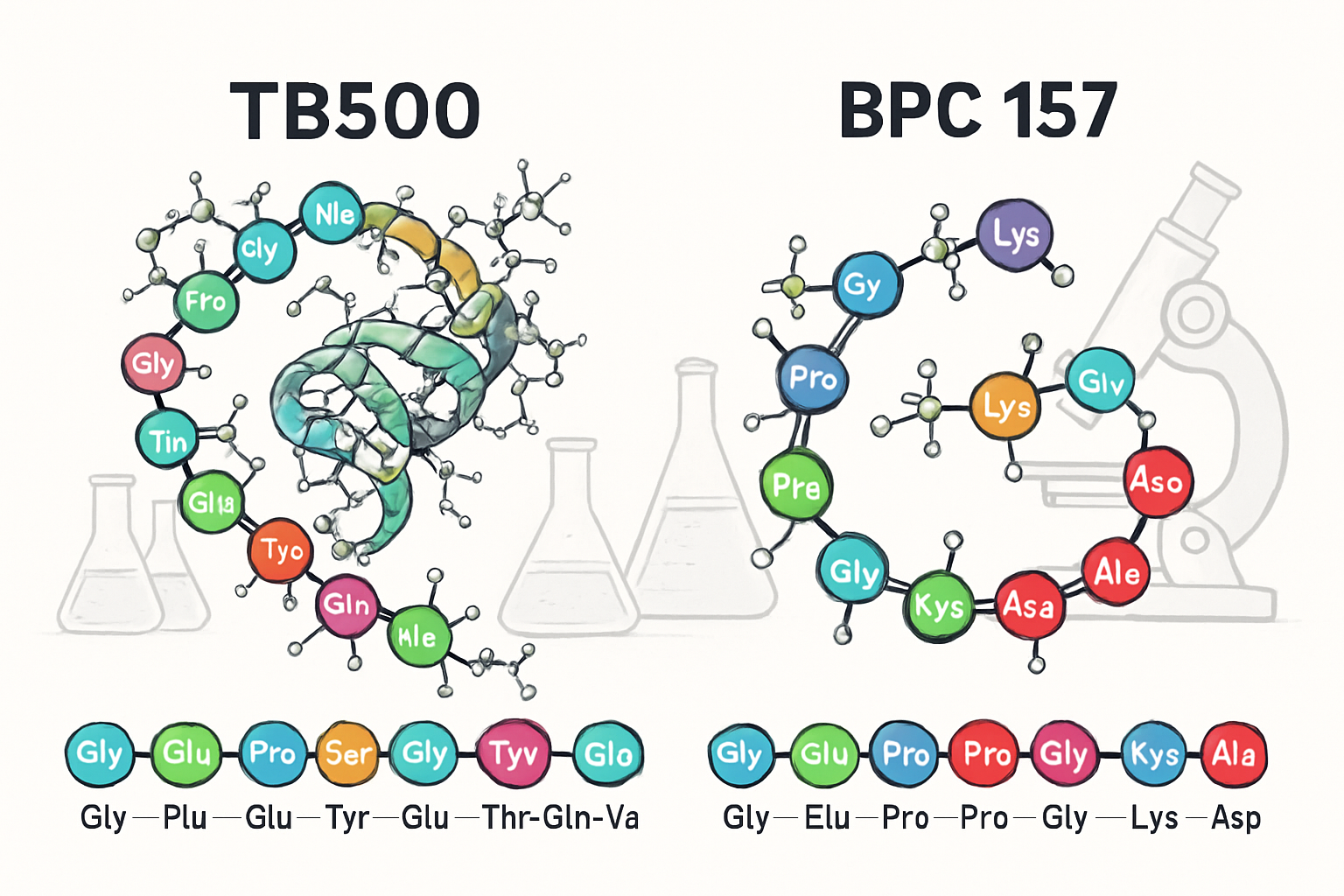
TB500 and BPC 157 belong to a class of bioactive compounds that have garnered significant attention in the research community. These synthetic peptides represent different approaches to studying cellular mechanisms, with each offering unique properties that make them valuable tools for scientific investigation.
TB500, scientifically known as Thymosin Beta-4, is a naturally occurring peptide that plays crucial roles in cellular migration, proliferation, and differentiation. The synthetic version used in research maintains the same amino acid sequence as the endogenous peptide, making it an excellent model for studying these biological processes [1].
BPC 157, or Body Protection Compound 157, is a synthetic peptide derived from a protein found in gastric juice. This 15-amino acid sequence has been the subject of numerous research studies examining its potential effects on various biological systems and cellular pathways [2].
Molecular Characteristics and Properties
The molecular structure of TB500 and BPC 157 reveals important differences that influence their research applications. TB500 consists of 43 amino acids with a molecular weight of approximately 4,963 Da, while BPC 157 is significantly smaller at 15 amino acids with a molecular weight of 1,419 Da.
These structural differences affect how researchers handle, store, and utilize these peptides in laboratory settings. The larger TB500 molecule requires specific storage conditions to maintain stability, while the smaller BPC 157 demonstrates different solubility characteristics that influence experimental design.
Research Applications of TB500 and BPC 157
Scientists have explored TB500 and BPC 157 across numerous research domains, each contributing valuable data to our understanding of peptide biology and cellular mechanisms. The research landscape for these compounds spans from basic cellular studies to complex tissue engineering applications.
Laboratory Studies and Experimental Models
Research involving TB500 and BPC 157 typically employs various experimental models to examine their effects on cellular processes. In vitro studies using cell cultures provide controlled environments for observing peptide interactions with different cell types, while animal models offer insights into more complex biological systems.
Laboratory protocols for TB500 research often focus on cellular migration assays, where researchers can measure how the peptide influences cell movement and tissue repair mechanisms. These studies have provided valuable data on the molecular pathways involved in cellular responses to peptide exposure.
BPC 157 research frequently examines its interactions with various biological systems, including studies on cellular protection mechanisms and tissue repair processes. The peptide's stability and bioavailability make it particularly suitable for certain types of experimental designs.
Comparative Research Approaches
When studying TB500 and BPC 157 together, researchers often employ comparative methodologies to understand their distinct properties and potential synergistic effects. These studies help identify optimal combinations and dosing strategies for different research objectives.
Peptide blend research has shown that combining different peptides can provide unique insights into cellular mechanisms that might not be apparent when studying individual compounds. This approach has led to innovative research designs and novel experimental protocols.
Quality Considerations for TB500 and BPC 157 Research
The integrity of research results depends heavily on the quality of peptides used in experimental settings. TB500 and BPC 157 require specific handling, storage, and quality control measures to ensure reliable and reproducible research outcomes.
Purity and Testing Standards
High-quality peptides undergo rigorous testing protocols to verify their purity, identity, and potency. Mass spectrometry analysis confirms the molecular structure, while HPLC testing ensures purity levels meet research standards. These quality control measures are essential for maintaining experimental validity.
Certificate of Analysis (COA) documentation provides researchers with detailed information about peptide quality, including purity percentages, testing methods, and storage recommendations. This transparency allows researchers to make informed decisions about peptide selection for their specific studies.
Storage and Handling Protocols
Proper storage of TB500 and BPC 157 involves maintaining specific temperature and humidity conditions to preserve peptide stability. Lyophilized peptides typically require storage at -20°C or lower, while reconstituted solutions may have different storage requirements depending on the solvent used.
Best practices for storing research peptides include using appropriate containers, avoiding freeze-thaw cycles, and maintaining detailed records of storage conditions and duration. These protocols help ensure consistent research results and extend peptide shelf life.
Selecting Quality Sources for TB500 and BPC 157
The research community benefits from access to reliable suppliers who maintain high standards for peptide quality and customer service. When selecting sources for TB500 and BPC 157, researchers should consider factors such as testing protocols, documentation, and technical support.
Evaluation Criteria for Peptide Suppliers
Reputable suppliers provide comprehensive testing data, maintain proper storage facilities, and offer technical support to help researchers optimize their experimental protocols. They also provide detailed product information, including amino acid sequences, molecular weights, and recommended storage conditions.
Building a diverse peptide library requires working with suppliers who can provide consistent quality across multiple peptide types. This consistency is crucial for comparative studies and long-term research projects involving TB500 and BPC 157.
Documentation and Traceability
Quality suppliers maintain detailed records of peptide synthesis, purification, and testing processes. This documentation provides researchers with the information needed to validate their experimental results and ensure reproducibility across different research groups.
The availability of batch-specific testing data allows researchers to track peptide performance across different lots and identify any variations that might affect experimental outcomes. This level of traceability is essential for maintaining research integrity and supporting publication requirements.
Advanced Research Strategies with TB500 and BPC 157
Sophisticated research approaches involving TB500 and BPC 157 often incorporate multiple experimental techniques and analytical methods to gain deeper insights into peptide mechanisms and effects. These advanced strategies help researchers maximize the value of their investigations.
Multi-Parameter Analysis
Modern research designs frequently employ multi-parameter analysis to examine various aspects of peptide activity simultaneously. This approach might include measuring cellular viability, protein expression, gene transcription, and metabolic activity in response to TB500 and BPC 157 exposure.
Adaptive capacity and peptide mapping techniques help researchers understand how cells respond to peptide treatments over time. These longitudinal studies provide valuable insights into the temporal dynamics of peptide effects and cellular adaptation mechanisms.
Combination Studies and Synergistic Effects
Research involving combinations of TB500 and BPC 157 with other peptides or compounds can reveal synergistic effects that enhance our understanding of cellular mechanisms. These studies require careful experimental design to distinguish between individual and combined effects.
Applied wellness research with peptides often explores how different peptides work together to influence various biological processes. This research approach has led to innovative applications and novel research directions in peptide science.
Future Directions in TB500 and BPC 157 Research
The field of peptide research continues to evolve, with TB500 and BPC 157 remaining at the forefront of scientific investigation. Emerging technologies and analytical methods are opening new avenues for understanding these compounds and their potential applications.
Emerging Research Technologies
Advanced analytical techniques, including single-cell analysis and real-time monitoring systems, are providing unprecedented insights into how TB500 and BPC 157 interact with cellular systems. These technologies allow researchers to observe peptide effects with greater precision and temporal resolution.
Computational modeling and machine learning approaches are also contributing to peptide research by predicting optimal combinations, dosing strategies, and experimental conditions. These tools help researchers design more efficient studies and identify promising research directions.
Collaborative Research Opportunities
The complexity of peptide research often benefits from collaborative approaches that combine expertise from different disciplines. Partnerships between biochemists, cell biologists, and computational scientists are advancing our understanding of TB500 and BPC 157 mechanisms and applications.
Core peptides to know research initiatives help identify the most promising compounds for further investigation and establish priorities for resource allocation in peptide research programs.
Conclusion
TB500 and BPC 157 represent valuable tools for researchers exploring cellular mechanisms, tissue repair processes, and peptide biology. Their distinct properties and well-documented research applications make them essential components of modern peptide research programs.
Success in peptide research depends on careful attention to quality, proper experimental design, and access to reliable sources for research materials. By understanding the unique characteristics of TB500 and BPC 157 and implementing appropriate research protocols, scientists can contribute to the growing body of knowledge surrounding these fascinating compounds.
For researchers interested in incorporating these peptides into their studies, the next steps include evaluating research objectives, designing appropriate experimental protocols, and sourcing high-quality peptides from reputable suppliers. The continued advancement of peptide research relies on the collective efforts of dedicated researchers committed to scientific excellence and innovation.
References
[1] Goldstein, A. L., et al. (2005). Thymosin β4: a multi-functional regenerative peptide. Basic properties and clinical applications. Expert Opinion on Biological Therapy, 5(1), 37-53.
[2] Sikiric, P., et al. (2018). BPC 157 and standard angiogenic growth factors. Gastrointestinal tract healing, lessons from tendon, ligament, muscle and bone healing. Current Pharmaceutical Design, 24(18), 1972-1989.
SEO Meta Title: TB500 and BPC 157: Complete Research Guide for 2025
Meta Description: Comprehensive guide to TB500 and BPC 157 research peptides. Learn about quality sourcing, storage, applications, and advanced research strategies for peptide studies.