
TB500 vs BPC 157: The Complete Research Peptide Comparison Guide for 2025
In the rapidly evolving world of peptide research, two compounds have emerged as frontrunners in regenerative medicine studies: TB500 and BPC 157. These synthetic peptides have captured the attention of researchers worldwide, sparking countless studies into their potential mechanisms and applications. The tb500 vs bpc 157 debate continues to generate significant interest among scientists investigating tissue repair, wound healing, and cellular regeneration processes.
Key Takeaways
• TB500 is a synthetic version of Thymosin Beta-4, primarily studied for its role in actin regulation and cellular migration
• BPC 157 is a pentadecapeptide derived from body protection compound, researched for its gastric protective and tissue healing properties
• Both peptides show promise in laboratory studies for tissue repair, but through different molecular mechanisms
• Combination research suggests potential synergistic effects when TB500 and BPC 157 are studied together
• Quality sourcing from reputable suppliers is crucial for consistent research outcomes
Understanding TB500: The Actin-Regulating Peptide
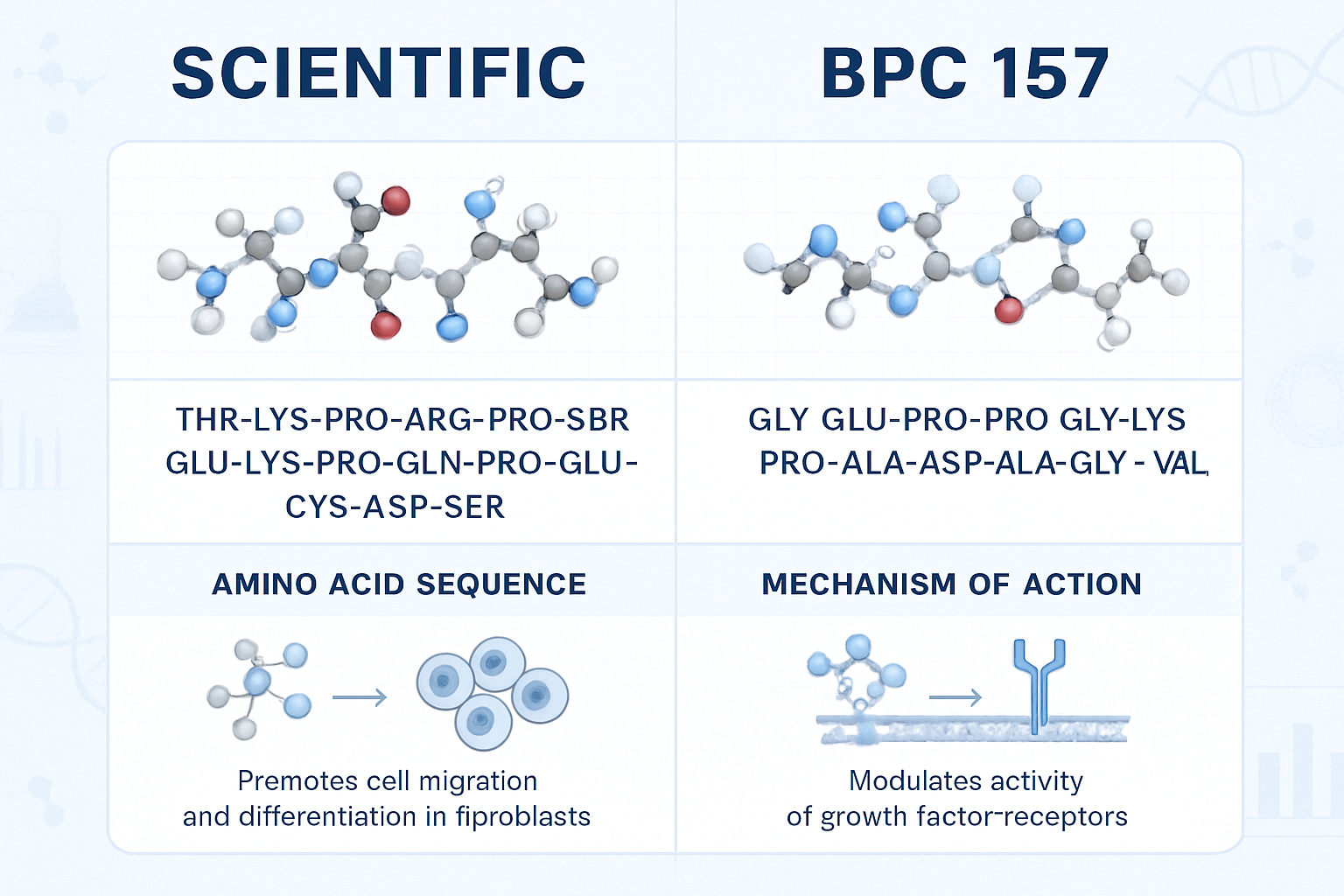
TB500, scientifically known as Thymosin Beta-4 acetate, represents a synthetic version of a naturally occurring peptide found in most animal and human cells. This 43-amino acid sequence has become a cornerstone in regenerative medicine research due to its unique properties and mechanisms of action.
Molecular Structure and Mechanism
The peptide's primary function revolves around actin regulation – a crucial protein involved in cellular structure and movement. Research indicates that TB500 binds to actin monomers, preventing their polymerization and promoting cellular migration [1]. This mechanism has made it particularly interesting for studies involving:
- Wound healing acceleration
- Angiogenesis (blood vessel formation)
- Cellular migration and proliferation
- Anti-inflammatory responses
Research Applications and Findings
Laboratory studies have demonstrated TB500's potential in various research contexts. Animal models have shown promising results in cardiac tissue repair, with some studies indicating improved recovery following myocardial infarction [2]. Additionally, research has explored its effects on:
Tissue Repair Studies:
- Muscle tissue regeneration
- Tendon and ligament healing
- Skin wound closure
- Neurological tissue protection
For researchers interested in exploring TB500 research applications, understanding proper handling and storage protocols is essential for maintaining peptide integrity throughout experimental procedures.
BPC 157: The Body Protection Compound
BPC 157, or Body Protection Compound 157, is a pentadecapeptide consisting of 15 amino acids. Originally derived from a protective protein found in gastric juice, this synthetic peptide has garnered attention for its remarkable stability and diverse research applications.
Unique Properties and Stability
Unlike many peptides that degrade rapidly in biological systems, BPC 157 demonstrates exceptional stability in both gastric acid and enzymatic environments. This characteristic has made it particularly valuable for oral administration studies and gastrointestinal research [3].
Research Focus Areas
Scientific investigations into BPC 157 have revealed multiple potential mechanisms:
Gastrointestinal Protection:
- Gastric ulcer healing
- Inflammatory bowel condition studies
- Intestinal barrier function
- Digestive tract regeneration
Systemic Effects:
- Tendon-to-bone healing
- Blood vessel formation
- Neurotransmitter system modulation
- Oxidative stress reduction
Research teams studying BPC 157 applications have noted its versatility across multiple biological systems, making it a valuable tool for diverse research protocols.
TB500 vs BPC 157: Direct Comparison Analysis
When examining tb500 vs bpc 157 in research settings, several key differences emerge that influence their respective applications and study designs.
Mechanism Comparison Table
| Aspect | TB500 | BPC 157 |
|---|---|---|
| Primary Target | Actin regulation | Multiple pathways |
| Stability | Moderate | High (acid-stable) |
| Administration Routes | Injectable primarily | Oral and injectable |
| Research Focus | Cellular migration | Tissue protection |
| Half-life | Shorter | Extended |
Molecular Pathway Differences
TB500 Pathways:
- Direct actin binding and regulation
- VEGF (Vascular Endothelial Growth Factor) upregulation
- Matrix metalloproteinase activation
- Inflammatory mediator modulation
BPC 157 Pathways:
- Growth hormone receptor interaction
- Nitric oxide system modulation
- VEGF receptor activation
- Serotonin and dopamine system influence
These distinct mechanisms suggest that while both peptides may influence tissue repair processes, they operate through complementary rather than competing pathways.
Synergistic Research: Combining TB500 and BPC 157
The tb500 vs bpc 157 discussion has evolved beyond simple comparison to explore potential synergistic effects. Research teams have begun investigating combination protocols to determine whether these peptides might work more effectively together than individually.
Combination Study Protocols
Laboratory investigations into combined TB500 and BPC 157 research have revealed interesting findings:
Enhanced Tissue Repair:
- Accelerated wound closure rates
- Improved vascularization
- Reduced inflammatory markers
- Enhanced collagen synthesis
Complementary Mechanisms:
- TB500's cellular migration effects
- BPC 157's protective properties
- Synergistic angiogenesis promotion
- Combined anti-inflammatory responses
Research Design Considerations
When designing studies comparing or combining these peptides, researchers must consider:
- Dosing Protocols – Individual vs. combined administration
- Timing Sequences – Simultaneous vs. staggered delivery
- Route Selection – Matching administration methods
- Outcome Measurements – Comprehensive endpoint analysis
Research Applications and Study Designs
Understanding the practical applications of tb500 vs bpc 157 research requires examining current study methodologies and emerging research trends in the field.
Current Research Trends
Regenerative Medicine Studies:
Modern research protocols increasingly focus on comparative effectiveness studies, examining how TB500 and BPC 157 perform under controlled laboratory conditions. These investigations often utilize:
- Cell culture models for initial screening
- Animal models for tissue repair studies
- Biochemical assays for mechanism elucidation
- Histological analysis for tissue assessment
Combination Therapy Research:
Scientists are exploring whether peptide combinations might offer advantages over single-peptide approaches. This research direction has led to sophisticated study designs incorporating:
- Multi-arm experimental groups
- Dose-response relationship analysis
- Time-course effectiveness studies
- Biomarker correlation assessments
Laboratory Protocol Development
Successful tb500 vs bpc 157 research requires standardized protocols addressing:
Sample Preparation:
- Proper reconstitution techniques
- Sterile handling procedures
- Concentration verification
- Storage condition maintenance
Quality Control Measures:
- Peptide purity verification
- Stability testing protocols
- Contamination screening
- Batch consistency analysis
Researchers working with high-quality peptide sources report more consistent and reproducible results across experimental replicates.
Dosing Considerations and Research Protocols
The tb500 vs bpc 157 comparison extends to dosing strategies and administration protocols used in research settings. Understanding these parameters is crucial for designing effective studies and interpreting research outcomes.
TB500 Research Dosing
Laboratory studies with TB500 typically employ dosing ranges that reflect its pharmacokinetic properties:
Standard Research Parameters:
- Concentration ranges: 2-10 mg per research cycle
- Administration frequency: 2-3 times weekly
- Study duration: 4-8 week protocols
- Route preference: Subcutaneous injection
BPC 157 Research Dosing
BPC 157's stability characteristics allow for more flexible dosing approaches:
Research Protocol Variations:
- Concentration ranges: 250-500 mcg per administration
- Frequency options: Daily to twice daily
- Extended study periods: 6-12 weeks
- Multiple routes: Oral, injectable, topical
Comparative Effectiveness Studies
When conducting tb500 vs bpc 157 comparative research, scientists must account for these dosing differences to ensure fair comparison. Standardized research protocols help maintain consistency across different laboratory settings.
Safety Profiles and Research Considerations

Laboratory safety protocols for tb500 vs bpc 157 research require understanding each peptide's characteristics and potential interactions within experimental systems.
TB500 Safety Profile in Research
Research with TB500 has generally shown favorable safety profiles in laboratory settings:
Laboratory Observations:
- Minimal cytotoxicity in cell culture studies
- Low immunogenicity in animal models
- Stable under standard storage conditions
- Compatible with most research protocols
BPC 157 Research Safety
BPC 157's gastric origin contributes to its favorable research profile:
Research Advantages:
- Acid-stable formulation reduces degradation
- Low toxicity profiles in multiple species
- Minimal interaction with standard laboratory reagents
- Suitable for long-term studies
Quality Assurance in Peptide Research
Ensuring research integrity requires attention to peptide quality and sourcing. Best practices for peptide storage include:
- Temperature-controlled storage (-20°C for long-term)
- Desiccant protection from moisture
- Light protection for photosensitive compounds
- Regular purity testing and verification
Future Research Directions and Emerging Studies
The tb500 vs bpc 157 research landscape continues evolving as new studies emerge and methodologies advance. Understanding future directions helps researchers plan comprehensive study programs.
Emerging Research Areas
Mechanistic Studies:
- Detailed pathway mapping
- Receptor interaction analysis
- Downstream signaling cascades
- Cellular response characterization
Combination Research:
- Synergistic effect quantification
- Optimal ratio determination
- Timing sequence optimization
- Multi-target approach validation
Advanced Research Methodologies
Modern research approaches incorporate sophisticated analytical techniques:
Molecular Analysis:
- Proteomics and genomics integration
- Real-time cellular imaging
- Advanced biomarker assessment
- Systems biology approaches
Computational Modeling:
- Molecular dynamics simulations
- Pharmacokinetic modeling
- Dose-response prediction
- Interaction mapping
Research teams utilizing comprehensive peptide libraries can explore these advanced methodologies more effectively.
Practical Research Implementation
Implementing tb500 vs bpc 157 research programs requires careful planning and resource allocation. Successful research teams focus on several key implementation factors.
Research Infrastructure Requirements
Laboratory Setup:
- Sterile preparation areas
- Appropriate storage facilities
- Analytical equipment access
- Documentation systems
Personnel Training:
- Peptide handling protocols
- Safety procedure compliance
- Data collection standardization
- Quality control implementation
Experimental Design Optimization
Effective tb500 vs bpc 157 studies incorporate:
Control Groups:
- Vehicle control comparisons
- Positive control standards
- Dose-response evaluations
- Time-course assessments
Outcome Measurements:
- Primary endpoint selection
- Secondary parameter monitoring
- Biomarker correlation analysis
- Statistical power calculations
Research teams working with established peptide suppliers often achieve more consistent results due to standardized product quality and documentation.
Conclusion
The tb500 vs bpc 157 comparison reveals two distinct yet potentially complementary research tools in the peptide research landscape. TB500's actin-regulating properties and cellular migration effects offer unique advantages for studies focusing on cellular movement and tissue repair mechanisms. Meanwhile, BPC 157's stability, gastric protection properties, and multi-pathway effects provide researchers with a versatile tool for diverse experimental applications.
Rather than viewing this as a competitive comparison, the research community increasingly recognizes the potential for synergistic applications. Combination studies suggest that TB500 and BPC 157 may work through complementary mechanisms, potentially offering enhanced research outcomes when used together in carefully designed protocols.
For researchers planning tb500 vs bpc 157 studies in 2025, several key considerations emerge:
Immediate Action Steps:
- Define Research Objectives – Clearly identify whether single-peptide or combination studies best serve your research goals
- Establish Quality Sources – Partner with reputable suppliers offering comprehensive testing and documentation
- Develop Standardized Protocols – Create consistent procedures for handling, storage, and administration
- Plan Comprehensive Analysis – Design studies with appropriate controls and multiple outcome measurements
The future of peptide research lies in understanding not just individual compound effects, but how these molecules interact within complex biological systems. As research methodologies advance and our understanding deepens, the tb500 vs bpc 157 discussion will likely evolve toward optimized combination strategies and personalized research approaches.
Success in this field requires commitment to rigorous scientific methodology, quality sourcing, and comprehensive experimental design. Research teams that embrace these principles while remaining adaptable to emerging findings will be best positioned to contribute meaningful advances to the regenerative medicine field.
References
[1] Goldstein, A.L., et al. (2012). Thymosin β4: a multi-functional regenerative peptide. Basic properties and clinical applications. Expert Opinion on Biological Therapy, 12(1), 37-51.
[2] Bock-Marquette, I., et al. (2004). Thymosin β4 activates integrin-linked kinase and promotes cardiac cell migration, survival and cardiac repair. Nature, 432(7016), 466-472.
[3] Sikiric, P., et al. (2020). Stable gastric pentadecapeptide BPC 157-NO-system relation. Current Pharmaceutical Design, 26(25), 2994-3010.
SEO Meta Information
Meta Title: TB500 vs BPC 157: Complete Research Peptide Comparison 2025
Meta Description: Compare TB500 and BPC 157 research peptides. Comprehensive analysis of mechanisms, applications, dosing, and combination studies for researchers in 2025.