
Epithalon and Thymalin: The Complete Guide to Advanced Peptide Research in 2025
Imagine unlocking the secrets of cellular regeneration and immune system optimization through two remarkable peptides that have captured the attention of researchers worldwide. Epithalon and thymalin represent the cutting edge of peptide science, offering unique mechanisms for studying aging, cellular repair, and immune function enhancement. These bioactive compounds have emerged as powerful tools in research laboratories, providing scientists with new avenues to explore longevity and wellness optimization.
Key Takeaways
• Epithalon and thymalin work through distinct but complementary pathways – epithalon focuses on telomerase activation while thymalin targets immune system modulation
• Research protocols typically involve specific dosing schedules, with epithalon commonly studied at 10mg doses and thymalin at varying concentrations
• Both peptides demonstrate excellent safety profiles in laboratory studies, making them valuable for long-term research applications
• Quality sourcing is crucial – researchers should prioritize certified peptide suppliers with comprehensive testing protocols
• Combining these peptides in research may offer synergistic effects for comprehensive anti-aging and immune system studies
Understanding Epithalon: The Telomerase Activator
Epithalon peptide stands as one of the most studied synthetic tetrapeptides in modern research. Composed of four amino acids (Ala-Glu-Asp-Gly), this remarkable compound was first developed by Russian scientist Professor Vladimir Khavinson. The peptide's primary mechanism involves the activation of telomerase, an enzyme responsible for maintaining telomere length in cells.
Research has consistently shown that epithalon can extend telomeres in various cell types, potentially slowing the cellular aging process. Studies indicate that this peptide may help maintain chromosomal stability and promote cellular longevity. The epithalon peptide benefits extend beyond simple telomere maintenance, with research suggesting improvements in sleep quality, stress resistance, and overall cellular function.
When examining epithalon dosage protocols in research settings, scientists typically employ cycles ranging from 10-20 days. The standard epithalon 50mg research vials allow for precise dosing and extended study periods. Researchers often question epithalon vs epitalon – these terms refer to the same compound, with epithalon being the more commonly used nomenclature in scientific literature.
Epithalon Research Applications
The versatility of epithalon peptides makes them valuable for numerous research applications:
- Cellular aging studies 📧
- Telomere length research
- Sleep pattern investigations
- Stress response analysis
- Longevity mechanism exploration
Laboratory studies have demonstrated that epithalon can influence circadian rhythms, potentially through its effects on the pineal gland. This connection makes it particularly interesting for researchers studying sleep disorders and age-related changes in sleep patterns.
Thymalin: The Immune System Modulator
Thymalin represents a different class of peptide research tools, focusing primarily on immune system function and thymic restoration. This bioregulatory peptide was also developed through the pioneering work of Professor Khavinson and his team. Unlike epithalon's focus on cellular aging, thymalin specifically targets the thymus gland and immune system optimization.
The thymus gland naturally shrinks with age, leading to decreased immune function and increased susceptibility to various health challenges. Thymalin research has shown promising results in supporting thymic function and potentially reversing age-related immune decline. Studies suggest that this peptide can help restore T-cell production and improve overall immune system responsiveness.
Research protocols for thymalin typically involve subcutaneous administration, with dosing schedules varying based on the specific study objectives. The peptide's bioregulatory properties make it particularly valuable for researchers investigating immune system aging and restoration mechanisms.
Thymalin Research Benefits
Key areas of thymalin research include:
- Immune system restoration 🔬
- T-cell function studies
- Thymic regeneration research
- Age-related immune decline
- Autoimmune condition investigations
Epithalon and Thymalin: Synergistic Research Potential
The combination of epithalon and thymalin in research protocols offers unique opportunities to study comprehensive anti-aging mechanisms. While epithalon focuses on cellular longevity through telomerase activation, thymalin addresses immune system optimization – two critical components of healthy aging.
Research teams exploring peptide blends often find that combining these compounds provides more comprehensive data than studying either peptide in isolation. The synergistic potential stems from their complementary mechanisms of action, addressing both cellular aging and immune system decline simultaneously.
Studies investigating epithalon and thymalin combinations typically follow structured protocols that account for the different pharmacokinetics of each peptide. Researchers must carefully consider timing, dosing, and administration methods to maximize the research value of combined protocols.
Optimal Research Protocols for Combined Studies
When designing studies involving both peptides, researchers should consider:
- Sequential administration to avoid interference
- Staggered dosing schedules for optimal bioavailability
- Comprehensive monitoring of both cellular and immune markers
- Extended study periods to capture long-term effects
The epithalon dosage protocol typically remains consistent whether used alone or in combination, but researchers may need to adjust timing to accommodate thymalin administration schedules.
Dosing Protocols and Research Considerations
Understanding proper epithalon dosing is crucial for meaningful research outcomes. Laboratory studies commonly employ doses ranging from 1-10mg per administration, with the specific amount depending on the research objectives and study duration. The epithalon 50mg research vials provide flexibility for various dosing protocols and extended studies.
Epithalon 10mg doses represent a common starting point for many research applications, offering a balance between efficacy and safety margins. Researchers often begin with lower doses and gradually increase based on observed responses and study requirements.
For thymalin, dosing protocols typically involve smaller amounts due to its potent bioregulatory effects. Research teams must carefully calibrate doses to achieve meaningful results without overwhelming the biological systems under study.
Research Administration Methods
Both peptides offer multiple administration routes for research purposes:
- Subcutaneous injection – Most common and well-studied
- Intravenous administration – For rapid bioavailability studies
- Intramuscular injection – Alternative route for specific research needs
The choice of administration method can significantly impact research outcomes, making it essential to maintain consistency throughout study periods.
Quality and Sourcing Considerations
The integrity of epithalon and thymalin research depends heavily on peptide quality and purity. Researchers must prioritize suppliers who provide comprehensive certificates of analysis and maintain strict quality control standards. Pure Tested Peptides exemplifies the quality standards necessary for reliable research outcomes.
When evaluating potential suppliers, researchers should examine:
- Purity levels (typically >95% for research-grade peptides)
- Stability testing data
- Storage and handling protocols
- Third-party verification of quality claims
- Batch consistency records
Buy epithalon only from suppliers who can provide detailed documentation of their quality control processes. The investment in high-quality peptides pays dividends in research reliability and reproducibility.
Storage and Handling Best Practices
Proper storage is critical for maintaining peptide integrity:
| Storage Condition | Epithalon | Thymalin |
|---|---|---|
| Temperature | -20°C to -80°C | -20°C to -80°C |
| Humidity | <10% | <10% |
| Light exposure | Minimize | Minimize |
| Reconstitution | Sterile water/saline | Sterile water/saline |
| Shelf life | 2-3 years frozen | 2-3 years frozen |
Following best practices for storing research peptides ensures consistent results throughout extended study periods.
Safety and Research Ethics
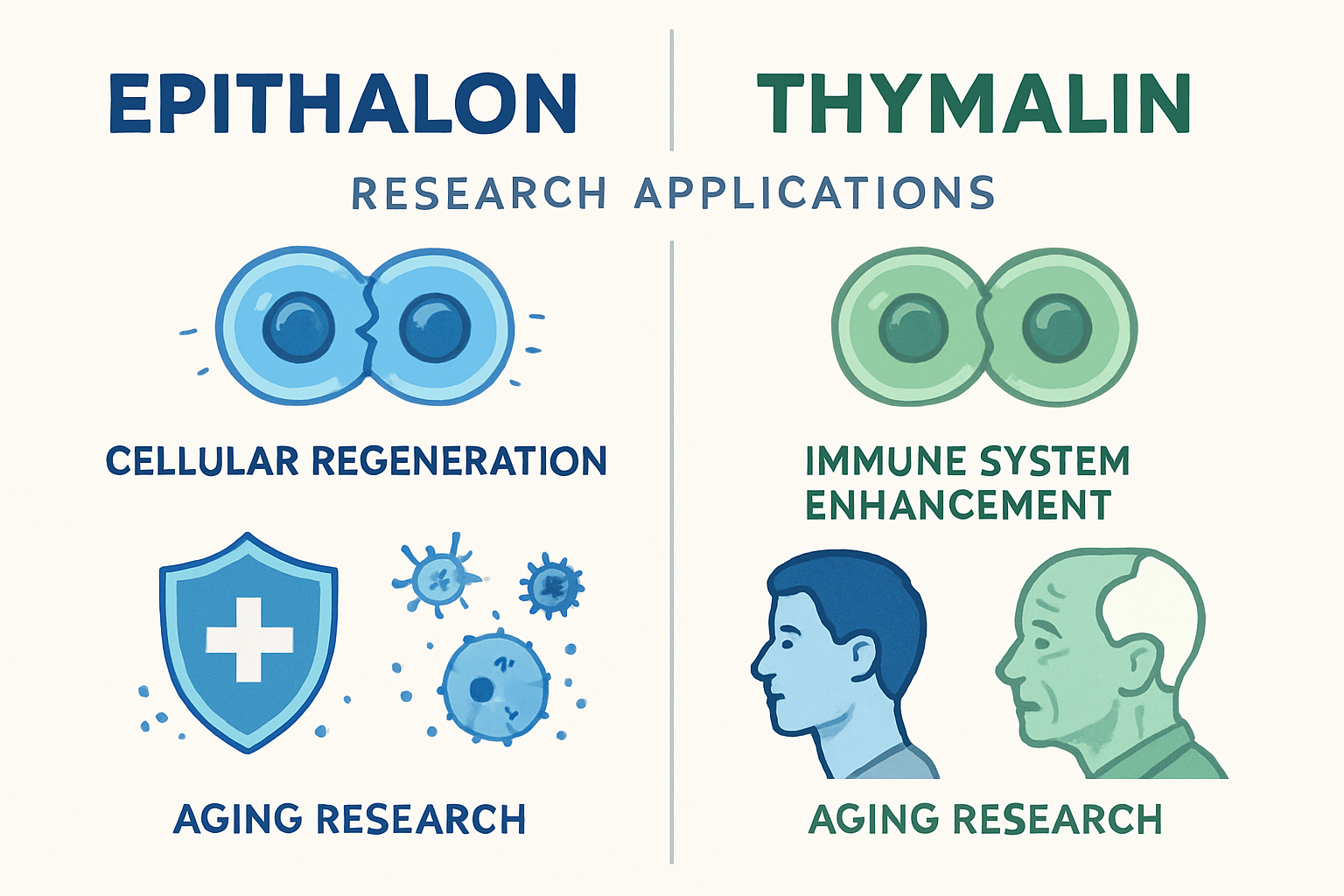
Both epithalon and thymalin demonstrate excellent safety profiles in laboratory research settings. However, researchers must maintain strict adherence to safety protocols and ethical guidelines throughout their studies. The peptides' bioactive nature requires careful handling and appropriate safety measures.
Research teams should establish comprehensive safety protocols that include:
- Personal protective equipment requirements
- Waste disposal procedures
- Emergency response plans
- Documentation standards
- Training requirements for all personnel
The relatively mild side effect profiles of these peptides in research settings make them attractive for long-term studies, but researchers must never compromise on safety protocols.
Current Research Trends and Future Directions
The field of epithalon and thymalin research continues to evolve rapidly, with new applications and protocols emerging regularly. Current trends include investigating these peptides' potential in neurodegenerative disease research, cardiovascular health studies, and metabolic optimization research.
Emerging research areas include:
- Combination therapies with other bioactive compounds
- Personalized dosing based on individual characteristics
- Novel delivery methods for enhanced bioavailability
- Long-term safety studies
- Mechanism elucidation research
The growing interest in applied wellness research with peptides has expanded the scope of potential applications for both compounds. Researchers are increasingly exploring how these peptides might complement other interventions in comprehensive wellness studies.
Integration with Modern Research Technologies
Advanced research technologies are enhancing our understanding of epithalon peptide mechanisms:
- Genomic analysis of telomerase activation
- Proteomic studies of immune system changes
- Metabolomic profiling of cellular responses
- Advanced imaging of cellular structures
- Biomarker development for monitoring effects
These technological advances are providing unprecedented insights into how epithalon and thymalin exert their effects at the molecular level.
Building Comprehensive Research Programs
Successful research programs incorporating epithalon and thymalin require careful planning and systematic approaches. Researchers should consider developing diverse peptide libraries that include both compounds alongside complementary research tools.
Key elements of comprehensive programs include:
- Clear research objectives with measurable outcomes
- Standardized protocols for consistency
- Appropriate controls for meaningful comparisons
- Statistical power calculations for study design
- Publication strategies for sharing findings
The complexity of aging and immune system research often requires multi-faceted approaches that can benefit from the combined use of these peptides.
Cost Considerations and Bulk Purchasing
Research institutions often benefit from epithalon and thymalin bulk sale opportunities that reduce per-unit costs while ensuring adequate supplies for extended studies. Bulk purchasing also provides consistency across study batches, reducing variability in research outcomes.
When considering bulk purchases, researchers should evaluate:
- Volume discounts available
- Storage capacity requirements
- Shelf life considerations
- Study timeline projections
- Quality consistency across batches
Many suppliers offer flexible purchasing options that accommodate various research budgets and timelines while maintaining quality standards.
Regulatory and Compliance Considerations
Research involving epithalon and thymalin must comply with applicable regulations and institutional guidelines. Researchers should familiarize themselves with relevant regulatory frameworks and ensure proper documentation of all research activities.
Key compliance areas include:
- Institutional review board approvals where applicable
- Import/export regulations for international research
- Documentation requirements for research records
- Safety reporting protocols
- Publication guidelines and requirements
Maintaining compliance protects both researchers and institutions while ensuring the integrity of research outcomes.
Conclusion
Epithalon and thymalin represent powerful tools for advancing our understanding of aging, cellular regeneration, and immune system function. These peptides offer researchers unique opportunities to explore fundamental biological processes while maintaining excellent safety profiles and research flexibility.
The synergistic potential of combining these compounds opens new avenues for comprehensive anti-aging research that addresses both cellular longevity and immune system optimization. As research technologies continue to advance, our understanding of these peptides' mechanisms and applications will undoubtedly expand.
For researchers ready to begin or expand their peptide research programs, the next steps are clear:
✅ Evaluate research objectives and determine optimal protocols
✅ Source high-quality peptides from reputable suppliers
✅ Establish proper storage and handling procedures
✅ Develop comprehensive safety protocols
✅ Design studies with appropriate controls and statistical power
✅ Consider combination approaches for enhanced research value
The future of peptide research continues to evolve, and epithalon and thymalin will undoubtedly play important roles in advancing our understanding of human health and longevity. By maintaining high standards for quality, safety, and scientific rigor, researchers can contribute meaningfully to this exciting field while exploring the remarkable potential of these bioactive compounds.
Whether pursuing fundamental research questions or applied wellness studies, these peptides offer researchers valuable tools for investigating some of the most important questions in modern biomedical science. The investment in quality peptides and proper research protocols pays dividends in reliable, reproducible results that advance our collective understanding of aging and immune system function.
SEO Meta Information:
Meta Title: Epithalon and Thymalin: Complete Research Guide 2025
Meta Description: Comprehensive guide to epithalon and thymalin peptides for research. Learn dosing protocols, benefits, and sourcing for advanced peptide studies in 2025.