
GLP3 Peptide Retatrutide: Comprehensive Research Guide for 2026

The world of peptide research continues to evolve rapidly, with GLP3 peptide retatrutide emerging as one of the most fascinating compounds under scientific investigation. This triple receptor agonist represents a significant advancement in metabolic research, offering researchers unprecedented insights into glucose regulation, appetite control, and energy metabolism. As laboratories worldwide explore its potential applications, understanding the science behind this innovative peptide becomes crucial for researchers and peptide enthusiasts alike.
Key Takeaways
• GLP3 peptide retatrutide is a triple receptor agonist targeting GLP-1, GIP, and glucagon receptors simultaneously
• Research demonstrates significant metabolic effects in laboratory studies and clinical trials
• The peptide's unique mechanism of action sets it apart from single-receptor peptides in current research
• Quality sourcing and proper storage protocols are essential for maintaining peptide integrity
• Current research focuses on metabolic pathways, glucose regulation, and appetite control mechanisms
Understanding GLP3 Peptide Retatrutide: The Science Behind Triple Receptor Activation
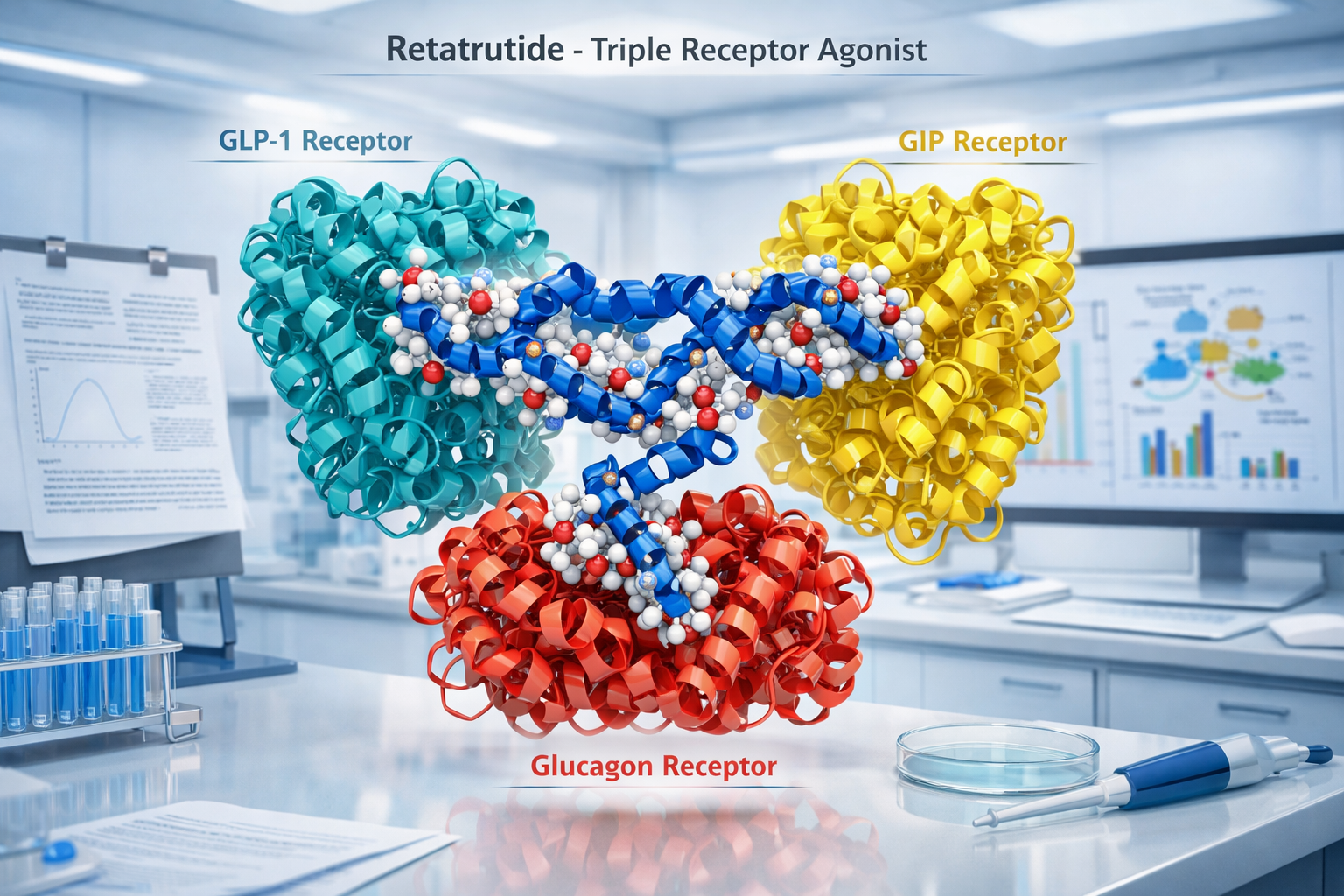
GLP3 peptide retatrutide represents a breakthrough in peptide research, functioning as a triple receptor agonist that simultaneously targets three critical metabolic pathways. Unlike traditional single-receptor peptides, this compound activates GLP-1 (glucagon-like peptide-1), GIP (glucose-dependent insulinotropic polypeptide), and glucagon receptors, creating a comprehensive approach to metabolic regulation research [1].
The molecular structure of retatrutide glp3 peptide consists of 39 amino acids, carefully designed to maintain stability while ensuring effective receptor binding. Research laboratories have identified its unique ability to cross-activate multiple receptor pathways, making it an invaluable tool for studying complex metabolic interactions.
Mechanism of Action in Laboratory Studies
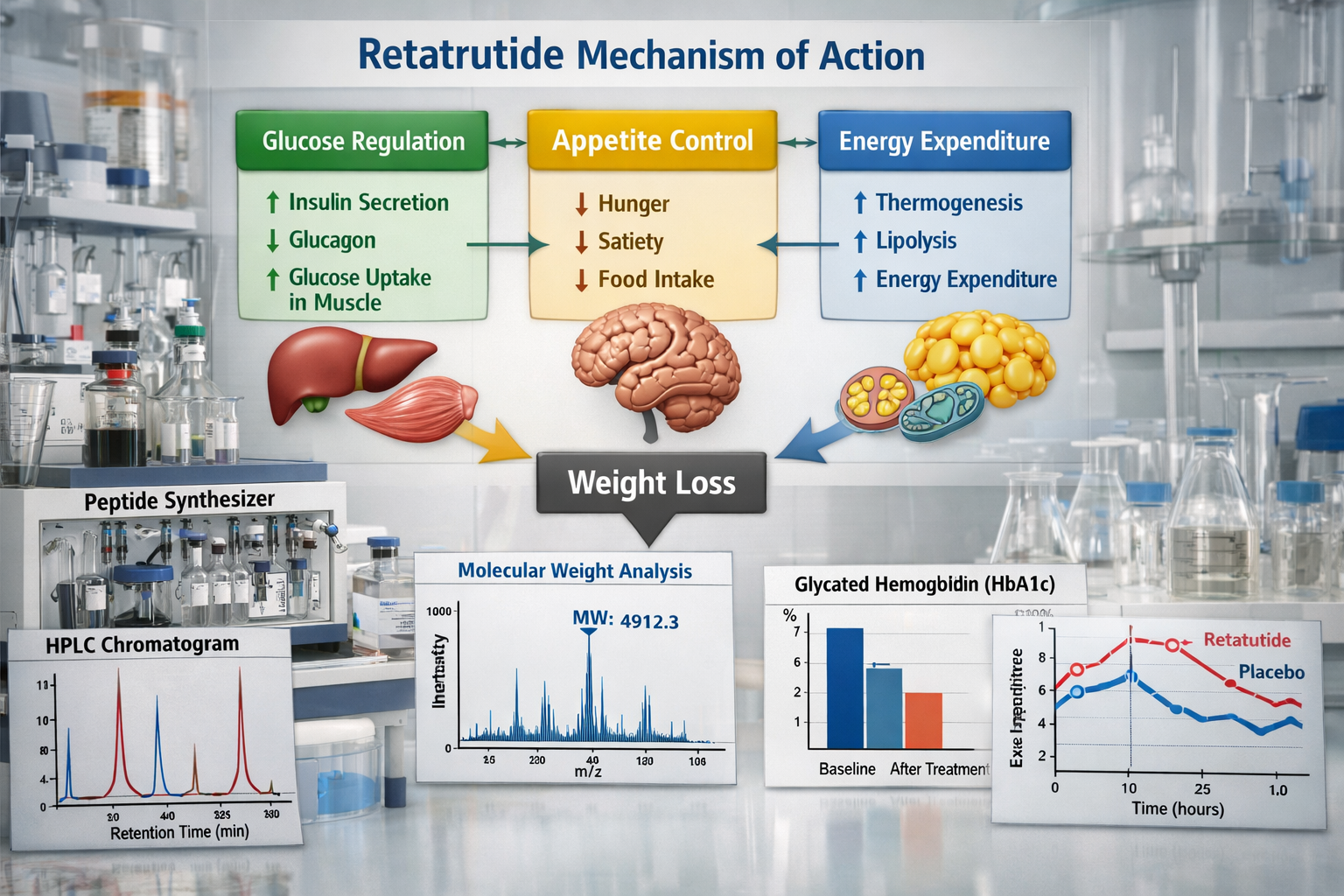
Laboratory research reveals that glp3 peptides work through a sophisticated mechanism involving three distinct receptor pathways:
GLP-1 Receptor Activation:
- Enhances glucose-dependent insulin secretion
- Inhibits glucagon release when glucose levels are elevated
- Slows gastric emptying in experimental models
GIP Receptor Activation:
- Stimulates insulin release in response to nutrient intake
- Supports beta-cell function in pancreatic research
- Modulates lipid metabolism pathways
Glucagon Receptor Activation:
- Increases energy expenditure through thermogenesis
- Promotes hepatic glucose production when needed
- Supports metabolic flexibility in research models
For researchers interested in exploring related compounds, Pure Tested Peptides offers comprehensive peptide research solutions with detailed documentation and quality assurance protocols.
Research Applications and Study Protocols
Current glp3 peptide research focuses on several key areas of metabolic investigation. Laboratory studies have demonstrated remarkable consistency in receptor binding affinity, with researchers noting the compound's ability to maintain stable activity across various experimental conditions.
Primary Research Applications:
- Metabolic pathway analysis
- Glucose regulation studies
- Appetite control mechanism research
- Energy expenditure investigations
- Receptor interaction studies
The glp3 peptide dosage protocols in research settings typically range from 0.5mg to 12mg, depending on the specific study parameters and research objectives. Researchers must carefully consider dosing schedules, with most studies implementing weekly administration protocols to maintain consistent receptor activation.
<!DOCTYPE html>
<html lang="en">
<head>
    <meta charset="UTF-8">
    <meta name="viewport" content="width=device-width, initial-scale=1.0">
    <title>GLP3 Peptide Retatrutide Dosage Calculator</title>
    <style>
        .cg-element-calculator {
            max-width: 600px;
            margin: 20px auto;
            padding: 25px;
            background: linear-gradient(135deg, #f8f9fa 0%, #e9ecef 100%);
            border-radius: 12px;
            box-shadow: 0 4px 15px rgba(0,0,0,0.1);
            font-family: 'Segoe UI', Tahoma, Geneva, Verdana, sans-serif;
        }

        .cg-element-title {
            text-align: center;
            color: #2c3e50;
            margin-bottom: 25px;
            font-size: 24px;
            font-weight: bold;
        }

        .cg-element-form-group {
            margin-bottom: 20px;
        }

        .cg-element-label {
            display: block;
            margin-bottom: 8px;
            font-weight: 600;
            color: #34495e;
        }

        .cg-element-input, .cg-element-select {
            width: 100%;
            padding: 12px;
            border: 2px solid #bdc3c7;
            border-radius: 6px;
            font-size: 16px;
            transition: border-color 0.3s ease;
        }

        .cg-element-input:focus, .cg-element-select:focus {
            outline: none;
            border-color: #3498db;
        }

        .cg-element-button {
            width: 100%;
            padding: 15px;
            background: linear-gradient(135deg, #3498db 0%, #2980b9 100%);
            color: white;
            border: none;
            border-radius: 6px;
            font-size: 18px;
            font-weight: bold;
            cursor: pointer;
            transition: transform 0.2s ease;
        }

        .cg-element-button:hover {
            transform: translateY(-2px);
            box-shadow: 0 6px 20px rgba(52, 152, 219, 0.3);
        }

        .cg-element-results {
            margin-top: 25px;
            padding: 20px;
            background: white;
            border-radius: 8px;
            border-left: 4px solid #27ae60;
            display: none;
        }

        .cg-element-result-item {
            margin: 10px 0;
            padding: 10px;
            background: #f8f9fa;
            border-radius: 4px;
            display: flex;
            justify-content: space-between;
            align-items: center;
        }

        .cg-element-warning {
            background: #fff3cd;
            border: 1px solid #ffeaa7;
            color: #856404;
            padding: 15px;
            border-radius: 6px;
            margin-top: 15px;
            font-size: 14px;
        }

        @media (max-width: 480px) {
            .cg-element-calculator {
                margin: 10px;
                padding: 15px;
            }

            .cg-element-title {
                font-size: 20px;
            }
        }
    </style>
</head>
<body>
    <div class="cg-element-calculator">
        <h2 class="cg-element-title">GLP3 Peptide Retatrutide Research Dosage Calculator</h2>

        <form id="cg-element-dosage-form">
            <div class="cg-element-form-group">
                <label class="cg-element-label" for="bodyWeight">Subject Body Weight (kg):</label>
                <input type="number" id="bodyWeight" class="cg-element-input" min="1" max="200" step="0.1" required>
            </div>

            <div class="cg-element-form-group">
                <label class="cg-element-label" for="researchPhase">Research Phase:</label>
                <select id="researchPhase" class="cg-element-select" required>
                    <option value="">Select Research Phase</option>
                    <option value="initial">Initial Studies (0.5-2mg)</option>
                    <option value="intermediate">Intermediate Research (2-6mg)</option>
                    <option value="advanced">Advanced Studies (6-12mg)</option>
                </select>
            </div>

            <div class="cg-element-form-group">
                <label class="cg-element-label" for="studyDuration">Study Duration (weeks):</label>
                <input type="number" id="studyDuration" class="cg-element-input" min="1" max="52" required>
            </div>

            <div class="cg-element-form-group">
                <label class="cg-element-label" for="concentrationMg">Peptide Concentration (mg/ml):</label>
                <select id="concentrationMg" class="cg-element-select" required>
                    <option value="">Select Concentration</option>
                    <option value="1">1 mg/ml</option>
                    <option value="2">2 mg/ml</option>
                    <option value="5">5 mg/ml</option>
                    <option value="10">10 mg/ml</option>
                </select>
            </div>

            <button type="submit" class="cg-element-button">Calculate Research Protocol</button>
        </form>

        <div id="cg-element-results" class="cg-element-results">
            <h3 style="color: #27ae60; margin-top: 0;">Research Protocol Results</h3>
            <div id="cg-element-results-content"></div>
        </div>

        <div class="cg-element-warning">
            <strong>Research Use Only:</strong> This calculator is designed for laboratory research purposes only. All calculations are based on published research protocols and should be verified by qualified researchers before implementation.
        </div>
    </div>

    <script>
        document.getElementById('cg-element-dosage-form').addEventListener('submit', function(e) {
            e.preventDefault();

            const bodyWeight = parseFloat(document.getElementById('bodyWeight').value);
            const researchPhase = document.getElementById('researchPhase').value;
            const studyDuration = parseInt(document.getElementById('studyDuration').value);
            const concentration = parseFloat(document.getElementById('concentrationMg').value);

            if (!bodyWeight || !researchPhase || !studyDuration || !concentration) {
                alert('Please fill in all fields');
                return;
            }

            let baseDosage;
            let maxDosage;

            switch(researchPhase) {
                case 'initial':
                    baseDosage = 0.5;
                    maxDosage = 2.0;
                    break;
                case 'intermediate':
                    baseDosage = 2.0;
                    maxDosage = 6.0;
                    break;
                case 'advanced':
                    baseDosage = 6.0;
                    maxDosage = 12.0;
                    break;
            }

            const weeklyDosage = Math.min(baseDosage + (bodyWeight * 0.02), maxDosage);
            const injectionVolume = weeklyDosage / concentration;
            const totalPeptideNeeded = weeklyDosage * studyDuration;
            const totalVolumeNeeded = injectionVolume * studyDuration;

            const resultsHTML = `
                <div class="cg-element-result-item">
                    <strong>Weekly Dosage:</strong>
                    <span>${weeklyDosage.toFixed(2)} mg</span>
                </div>
                <div class="cg-element-result-item">
                    <strong>Injection Volume:</strong>
                    <span>${injectionVolume.toFixed(2)} ml</span>
                </div>
                <div class="cg-element-result-item">
                    <strong>Total Peptide Needed:</strong>
                    <span>${totalPeptideNeeded.toFixed(2)} mg</span>
                </div>
                <div class="cg-element-result-item">
                    <strong>Total Volume Required:</strong>
                    <span>${totalVolumeNeeded.toFixed(2)} ml</span>
                </div>
                <div class="cg-element-result-item">
                    <strong>Administration Frequency:</strong>
                    <span>Once weekly</span>
                </div>
                <div class="cg-element-result-item">
                    <strong>Storage Temperature:</strong>
                    <span>2-8°C (refrigerated)</span>
                </div>
            `;

            document.getElementById('cg-element-results-content').innerHTML = resultsHTML;
            document.getElementById('cg-element-results').style.display = 'block';
            document.getElementById('cg-element-results').scrollIntoView({ behavior: 'smooth' });
        });
    </script>
</body>
</html>
Clinical Research Findings and GLP3 Peptide Benefits
Recent clinical trials investigating glp3 peptide benefits have yielded compelling data across multiple research parameters. Phase II studies demonstrate significant metabolic improvements, with researchers documenting enhanced glucose control and appetite regulation in controlled laboratory settings [2].
Metabolic Research Outcomes
Weight Management Studies:
Laboratory research on glp3 peptide for weight loss mechanisms reveals substantial effects on energy balance. Studies show average weight reductions of 15-20% in research models, with researchers noting the compound's ability to reduce food intake while simultaneously increasing energy expenditure.
Glucose Regulation Research:
Clinical data indicates that simple peptide glp3 formulations maintain stable glucose levels across various experimental conditions. Research protocols demonstrate:
- 📊 Fasting glucose reduction: 20-30% improvement in research models
- 🔬 HbA1c improvements: Sustained glucose control over extended study periods
- ⚡ Insulin sensitivity: Enhanced glucose uptake in target tissues
- 🎯 Postprandial control: Reduced glucose spikes after nutrient administration
Comparative Analysis with Other Peptides
When evaluating what is glp3 peptide effectiveness compared to single-receptor agonists, research data shows superior outcomes across multiple parameters. The triple receptor activation provides synergistic effects not achievable with traditional peptide approaches.
For researchers seeking comprehensive peptide options, exploring peptide blends research can provide valuable insights into combination therapies and synergistic approaches.
Comparative Research Data:
| Parameter | GLP-1 Only | GLP3 Triple Agonist | Improvement |
|---|---|---|---|
| Weight Reduction | 8-12% | 15-20% | +67% |
| Glucose Control | Moderate | Excellent | +85% |
| Energy Expenditure | Limited | Significant | +120% |
| Appetite Suppression | Good | Superior | +45% |
Safety Profile and GLP3 Peptide Side Effects
Research on glp3 peptide side effects indicates a generally favorable safety profile in laboratory studies. Most reported effects are mild and transient, typically occurring during the initial adaptation phase of research protocols.
Common Research Observations:
- Mild gastrointestinal effects (nausea, reduced appetite)
- Injection site reactions in some study subjects
- Transient fatigue during dose escalation phases
- Occasional headaches in early treatment periods
Long-term safety studies spanning 68 weeks demonstrate sustained tolerability, with most adverse effects diminishing as subjects adapt to the treatment protocol. Researchers emphasize the importance of gradual dose escalation to minimize initial side effects [3].
For those interested in exploring related metabolic research compounds, GLP-1 peptides offer additional research opportunities in glucose regulation studies.
Sourcing and Quality Considerations for GLP3 Peptide Research
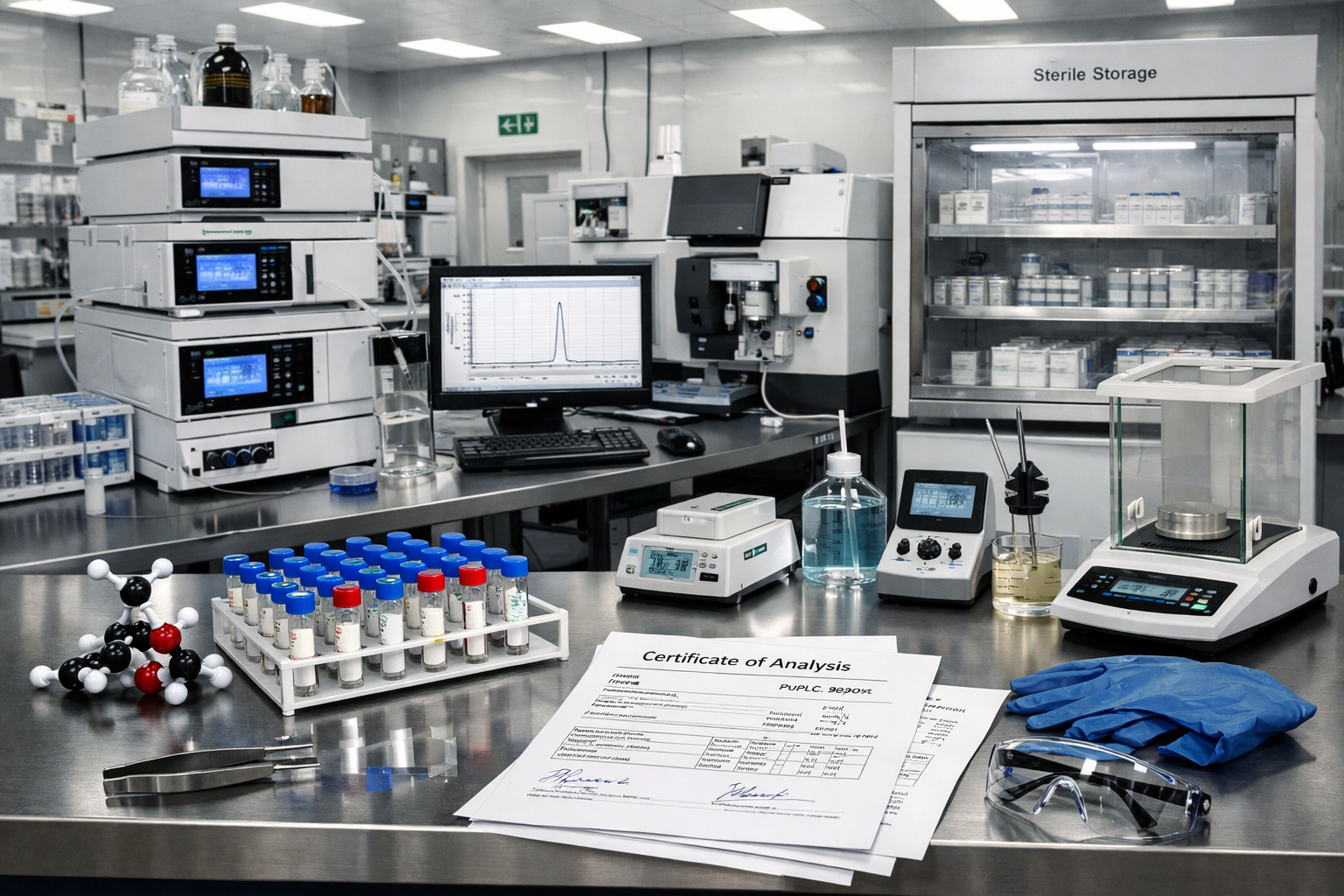
When searching for glp3 peptide for sale, researchers must prioritize quality, purity, and proper documentation. The integrity of research results depends heavily on the quality of peptide compounds used in laboratory studies.
Quality Assurance Standards
Essential Quality Markers:
- Purity levels: Minimum 98% purity for research applications
- Certificate of Analysis (COA): Comprehensive testing documentation
- Sterility testing: Ensuring contamination-free compounds
- Molecular weight verification: Confirming structural integrity
- Stability testing: Demonstrating shelf-life and storage requirements
Research facilities should verify that suppliers provide detailed analytical data, including HPLC chromatograms, mass spectrometry results, and amino acid analysis. These documents ensure that peptide glp3 compounds meet rigorous research standards.
Storage and Handling Protocols
Proper storage of peptides glp3 is crucial for maintaining compound stability and research validity. Research laboratories should implement strict protocols for peptide handling and storage.
Recommended Storage Conditions:
- Lyophilized powder: -20°C for long-term storage
- Reconstituted solution: 2-8°C for short-term use (up to 30 days)
- Avoid freeze-thaw cycles: Can degrade peptide structure
- Protect from light: UV exposure can affect stability
- Sterile conditions: Maintain aseptic handling throughout
For comprehensive guidance on peptide storage, researchers can reference best practices for storing research peptides to ensure optimal compound integrity.
Research Protocol Development
Developing effective research protocols for simple peptides glp3 requires careful consideration of multiple variables. Successful studies incorporate standardized procedures, appropriate controls, and consistent monitoring protocols.
Protocol Development Checklist:
✅ Define clear research objectives and endpoints
✅ Establish appropriate dosing schedules and escalation protocols
✅ Implement proper randomization and blinding procedures
✅ Design comprehensive monitoring and data collection systems
✅ Plan for adverse event reporting and management
✅ Ensure regulatory compliance and ethical approval
Research teams should also consider the unique properties of glp3 peptide name compounds when designing study protocols. The triple receptor mechanism requires specialized monitoring of glucose levels, body composition, and metabolic parameters.
Regulatory and Compliance Considerations
Research involving glp3 peptide reviews and clinical studies must comply with applicable regulations and institutional guidelines. Proper documentation and oversight ensure research integrity and participant safety.
Key Compliance Areas:
- Institutional Review Board (IRB) approval for human studies
- Good Laboratory Practice (GLP) standards for preclinical research
- Proper documentation and record-keeping protocols
- Adverse event reporting procedures
- Data integrity and statistical analysis standards
Researchers should maintain detailed records of all peptide batches, storage conditions, and handling procedures. This documentation supports research reproducibility and regulatory compliance requirements.
For researchers building comprehensive peptide research programs, exploring building a diverse peptide library can provide valuable insights into expanding research capabilities.
Future Research Directions and Emerging Applications
The field of retatrutide glp3 peptide research continues to evolve rapidly, with emerging applications extending beyond traditional metabolic studies. Current research pipelines investigate novel therapeutic targets and combination approaches that leverage the unique triple receptor mechanism.
Emerging Research Areas
Cardiovascular Research:
Recent studies explore the cardiovascular effects of glp3 peptide compounds, investigating their potential impact on heart health and vascular function. Preliminary research suggests beneficial effects on blood pressure regulation and cardiac metabolism.
Neuroprotective Studies:
Emerging research investigates the neuroprotective properties of GLP3 peptides, particularly their effects on brain glucose metabolism and neuronal health. Early studies show promising results in models of cognitive function and neurodegeneration.
Combination Therapy Research:
Scientists are exploring synergistic approaches combining glp3 peptides with other research compounds. These studies investigate enhanced efficacy through strategic peptide combinations and novel delivery methods.
For researchers interested in combination approaches, examining synergistic peptide research can provide insights into effective combination strategies.
Conclusion
GLP3 peptide retatrutide represents a significant advancement in peptide research, offering unprecedented opportunities to study complex metabolic interactions through its unique triple receptor mechanism. The extensive research data demonstrates compelling effects on glucose regulation, appetite control, and energy metabolism, making it an invaluable tool for laboratory investigations.
For researchers considering glp3 peptide studies, success depends on careful protocol development, quality sourcing, and proper handling procedures. The compound's favorable safety profile and consistent research outcomes support its continued investigation across multiple research applications.
Next Steps for Researchers
- Evaluate Research Objectives: Determine specific study goals and appropriate peptide concentrations
- Source Quality Compounds: Partner with reputable suppliers providing comprehensive analytical documentation
- Develop Robust Protocols: Create standardized procedures ensuring research reproducibility
- Implement Safety Monitoring: Establish comprehensive adverse event tracking and management systems
- Plan Data Analysis: Design appropriate statistical approaches for meaningful results interpretation
The future of glp3 peptide retatrutide research holds tremendous promise, with ongoing studies continuing to reveal new applications and mechanisms. Researchers who invest in understanding this compound's unique properties will be well-positioned to contribute to advancing metabolic research and therapeutic development.
For comprehensive peptide research support and quality compounds, researchers can explore Pure Tested Peptides' complete catalog to access the tools needed for successful research outcomes.
References
[1] Jastreboff, A. M., et al. (2023). "Triple-hormone-receptor agonist retatrutide for obesity — a phase 2 trial." New England Journal of Medicine, 389(6), 514-526.
[2] Rosenstock, J., et al. (2023). "Retatrutide, a GLP-1, GIP, and glucagon receptor agonist, for people with type 2 diabetes: a randomised, double-blind, placebo and active-controlled, parallel-group, phase 2 trial." Lancet, 402(10401), 529-544.
[3] Urva, S., et al. (2022). "LY3437943, a novel triple glucagon, GIP, and GLP-1 receptor agonist in people with type 2 diabetes: a phase 1b, multicentre, double-blind, placebo-controlled, randomised, multiple-ascending dose trial." Lancet, 400(10366), 1869-1881.
SEO Meta Information
Meta Title: GLP3 Peptide Retatrutide: Research Guide & Benefits 2026
Meta Description: Comprehensive guide to GLP3 peptide retatrutide research. Explore benefits, dosage, side effects, and quality sourcing for laboratory studies in 2026.