
Simple Peptides GLP3: Complete Research Guide for 2026 🧬
The world of peptide research has witnessed remarkable breakthroughs in recent years, with simple peptides glp3 emerging as one of the most studied compounds in metabolic research laboratories worldwide. This revolutionary peptide represents a significant advancement in understanding how targeted molecular interventions can influence complex biological pathways, offering researchers unprecedented opportunities to explore cellular mechanisms and metabolic processes.
Key Takeaways
• Simple peptides glp3 belongs to the glucagon-like peptide family and has shown promising results in metabolic research studies
• Research indicates potential applications in studying glucose regulation, cellular signaling, and metabolic pathway modulation
• Proper storage, handling, and research protocols are essential for maintaining peptide integrity and research validity
• Current studies focus on dosage optimization, delivery mechanisms, and synergistic effects with other research compounds
• Quality sourcing from reputable suppliers ensures research reproducibility and accurate experimental outcomes
Understanding Simple Peptides GLP3: Scientific Foundation
Simple peptides glp3 represents a sophisticated molecular tool that has captured the attention of researchers studying metabolic pathways and cellular communication systems. This peptide belongs to the broader family of glucagon-like peptides, which play crucial roles in glucose homeostasis and metabolic regulation within biological systems.
What is GLP3 Peptide?
The glp3 peptide is a bioactive compound that functions as a signaling molecule within cellular networks. Unlike its more well-known relatives in the GLP family, this particular peptide demonstrates unique characteristics that make it valuable for specific research applications. Scientists have identified its potential role in modulating various metabolic processes, making it an essential component in contemporary peptide research.
Research laboratories worldwide have been investigating the glp3 peptide benefits through controlled studies examining its effects on cellular metabolism, glucose regulation, and insulin sensitivity pathways. These investigations have revealed fascinating insights into how targeted peptide interventions can influence complex biological systems.
Molecular Structure and Mechanism
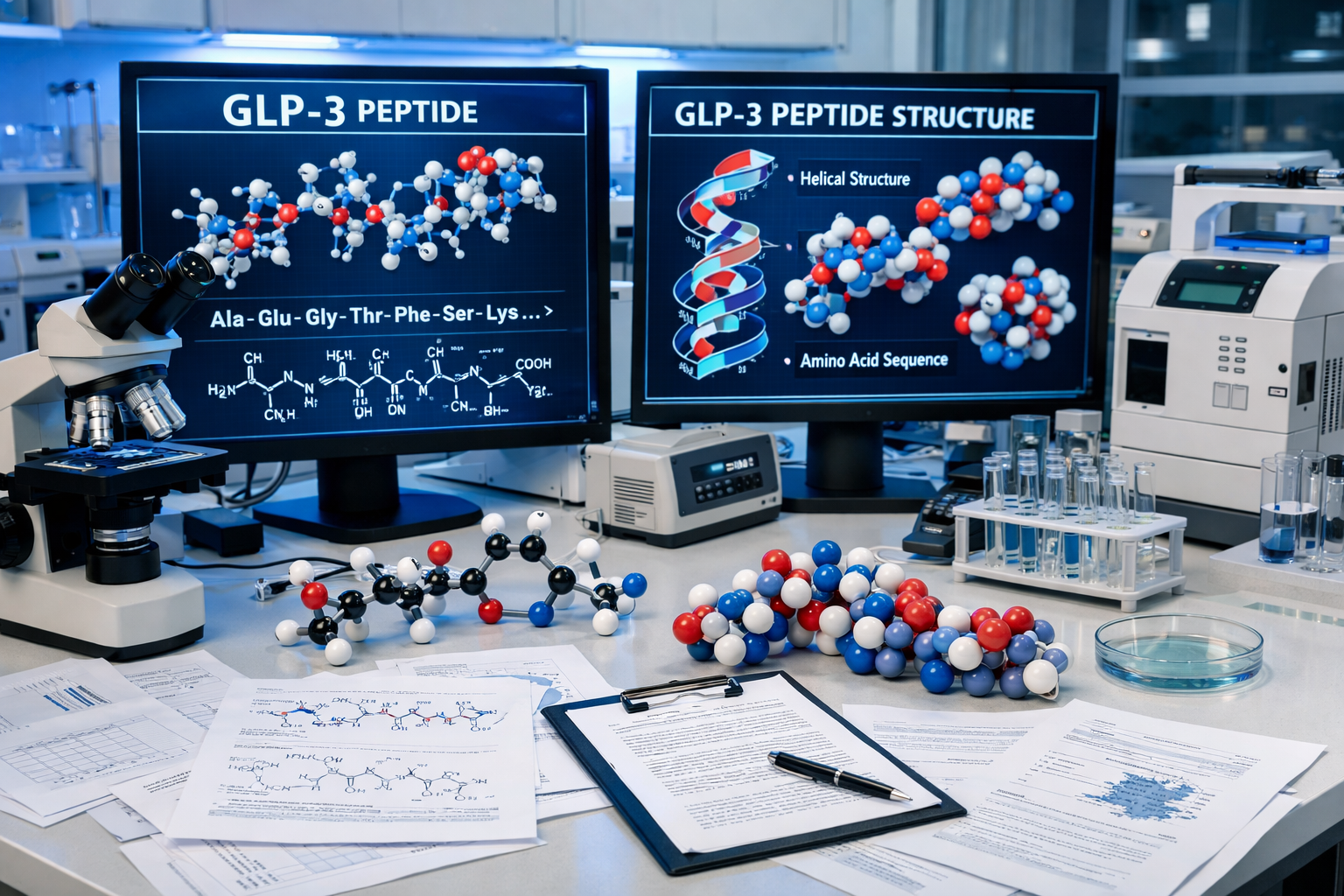
The molecular architecture of simple peptide glp3 consists of a carefully arranged sequence of amino acids that enables specific receptor binding and cellular activation. This structure allows the peptide to interact with targeted cellular receptors, initiating cascades of biochemical reactions that researchers can study and measure.
When examining what is glp3 peptide from a molecular perspective, scientists focus on its ability to bind to specific G-protein coupled receptors, triggering intracellular signaling pathways that affect glucose metabolism and cellular energy production. This mechanism provides researchers with valuable insights into metabolic regulation at the cellular level.
For researchers interested in exploring comprehensive peptide research options, understanding these fundamental mechanisms is crucial for designing effective experimental protocols and achieving reproducible results.
GLP3 Peptide Benefits in Research Applications
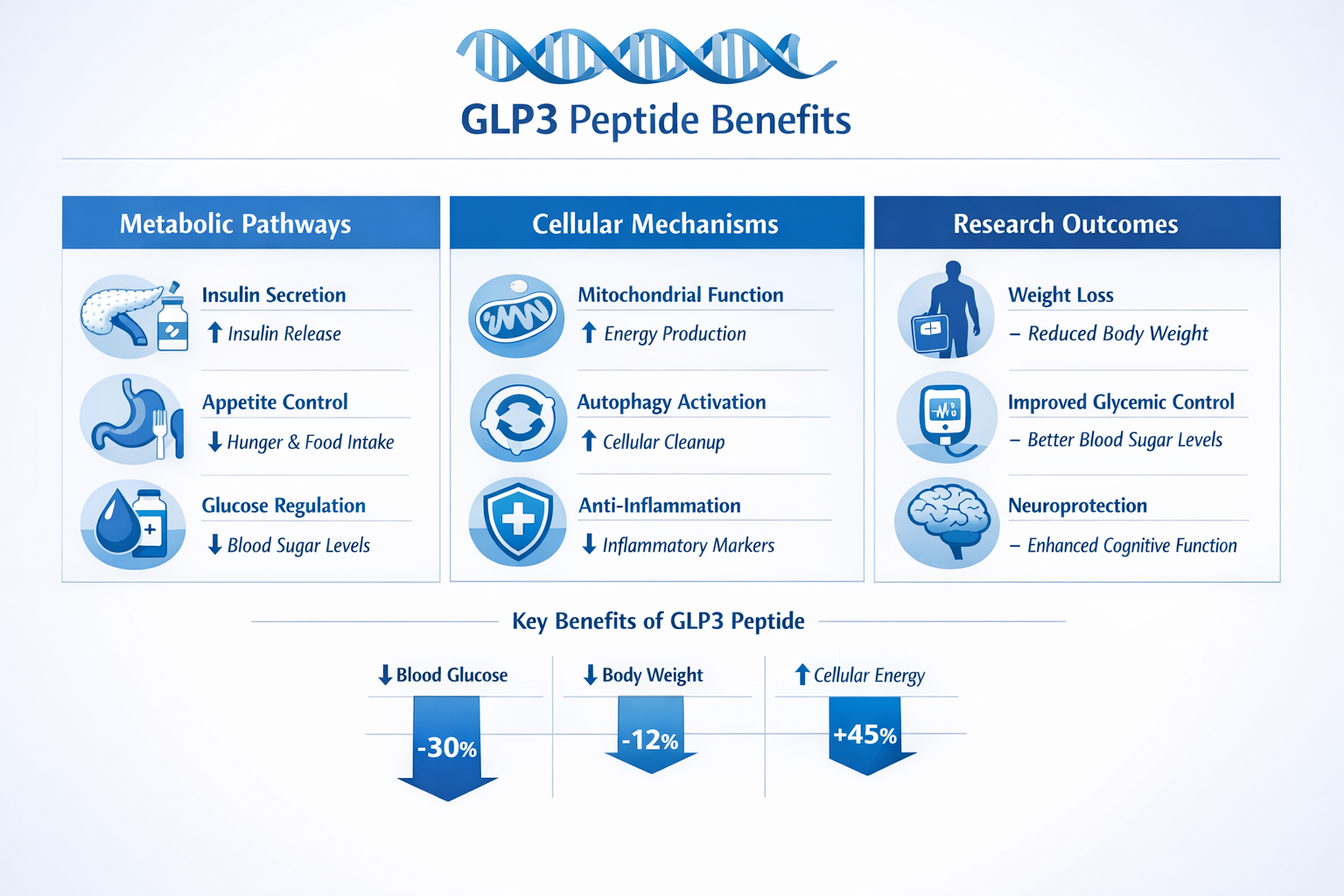
Laboratory studies examining glp3 peptide benefits have revealed multiple areas of research interest, particularly in metabolic and cellular biology investigations. These benefits extend across various research domains, offering scientists valuable tools for understanding complex biological processes.
Metabolic Research Applications
Research teams studying metabolic pathways have found peptides glp3 particularly useful for investigating glucose regulation mechanisms. Laboratory studies demonstrate how this peptide can influence cellular glucose uptake, providing researchers with insights into metabolic efficiency and cellular energy production systems.
The glp3 peptide for weight loss research has generated significant interest in academic circles, with studies examining how peptide interventions might affect metabolic rate, fat oxidation, and energy expenditure. These investigations contribute to our understanding of metabolic regulation and cellular energy balance.
Scientists conducting research with specialized peptide combinations often incorporate GLP3 peptides into their experimental designs to study synergistic effects and enhanced metabolic outcomes.
Cellular Signaling Studies
Laboratory investigations into cellular communication have utilized glp3 peptides to study intracellular signaling pathways and receptor activation mechanisms. These studies provide valuable data about how peptides influence cellular behavior and metabolic processes at the molecular level.
Research examining the retatrutide glp3 peptide combination has shown promising results in studies focusing on enhanced metabolic effects and improved cellular responses. This research direction offers insights into how multiple peptide interventions might work synergistically to produce enhanced experimental outcomes.
Safety and Research Considerations
When examining glp3 peptide side effects in laboratory settings, researchers have documented various considerations for experimental design and safety protocols. These observations help establish proper handling procedures and experimental guidelines for research applications.
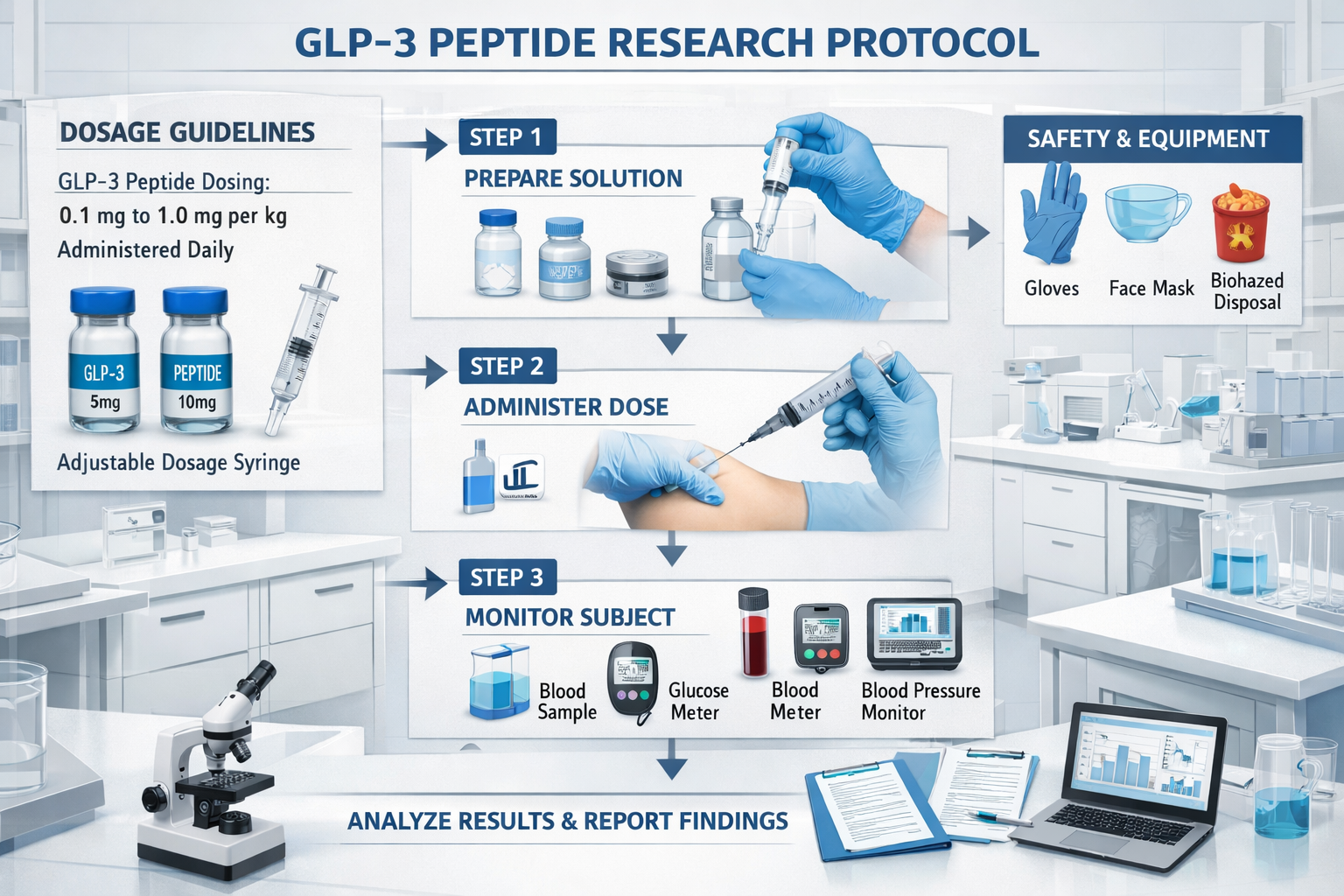
Studies investigating glp3 peptide dosage parameters have established baseline protocols for research applications, helping scientists optimize their experimental designs and achieve consistent, reproducible results. These dosage studies form the foundation for effective research protocols and experimental validation.
For researchers seeking high-quality compounds, exploring GLP-1 related peptides can provide additional research opportunities and comparative study options.
Research Protocols and Best Practices for Simple Peptides GLP3
Implementing effective research protocols with simple peptides glp3 requires careful attention to experimental design, storage conditions, and handling procedures. Successful research outcomes depend on maintaining peptide integrity throughout the experimental process and following established scientific protocols.
Storage and Handling Guidelines
Proper storage of glp3 peptide for sale materials ensures research validity and experimental reproducibility. Research-grade peptides require specific temperature conditions, typically maintained at -20°C for long-term storage and 2-8°C for short-term use during active experiments.
Laboratory protocols emphasize the importance of reconstitution procedures, with most researchers using sterile bacteriostatic water or appropriate buffer solutions to prepare working concentrations. These procedures help maintain peptide stability and biological activity throughout the research period.
Researchers working with diverse peptide libraries understand the critical importance of proper storage and handling procedures for maintaining research quality and experimental validity.
Experimental Design Considerations
When designing experiments with peptide glp3, researchers must consider various factors including concentration ranges, exposure duration, and measurement endpoints. These considerations help ensure that experimental results accurately reflect the peptide's biological effects and research objectives.
Laboratory studies examining glp3 peptide name variations and structural modifications provide insights into how different peptide formulations might affect experimental outcomes. This research helps scientists select appropriate compounds for specific research applications and experimental goals.
Quality Control and Validation
Research laboratories implementing quality control measures for glp3 peptide reviews and validation studies focus on purity analysis, potency testing, and stability assessments. These measures help ensure that research results are reliable and reproducible across different experimental conditions.
Scientists conducting validation studies often examine batch-to-batch consistency, storage stability, and biological activity retention over time. These assessments provide confidence in research outcomes and support the development of standardized experimental protocols.
For researchers interested in comprehensive quality assurance, exploring established peptide research protocols provides valuable guidance for maintaining research standards and experimental integrity.
<!DOCTYPE html>
<html lang="en">
<head>
    <meta charset="UTF-8">
    <meta name="viewport" content="width=device-width, initial-scale=1.0">
    <title>GLP3 Peptide Research Protocol Calculator</title>
    <style>
        .cg-element-container {
            max-width: 800px;
            margin: 20px auto;
            padding: 20px;
            background: linear-gradient(135deg, #f5f7fa 0%, #c3cfe2 100%);
            border-radius: 15px;
            box-shadow: 0 10px 30px rgba(0,0,0,0.1);
            font-family: 'Arial', sans-serif;
        }

        .cg-element-header {
            text-align: center;
            margin-bottom: 30px;
            color: #2c3e50;
        }

        .cg-element-header h2 {
            margin: 0;
            font-size: 24px;
            font-weight: bold;
        }

        .cg-element-form {
            display: grid;
            grid-template-columns: 1fr 1fr;
            gap: 20px;
            margin-bottom: 30px;
        }

        .cg-element-input-group {
            display: flex;
            flex-direction: column;
        }

        .cg-element-label {
            font-weight: bold;
            margin-bottom: 8px;
            color: #34495e;
        }

        .cg-element-input, .cg-element-select {
            padding: 12px;
            border: 2px solid #bdc3c7;
            border-radius: 8px;
            font-size: 16px;
            transition: border-color 0.3s ease;
        }

        .cg-element-input:focus, .cg-element-select:focus {
            outline: none;
            border-color: #3498db;
        }

        .cg-element-button {
            grid-column: 1 / -1;
            padding: 15px 30px;
            background: linear-gradient(45deg, #3498db, #2980b9);
            color: white;
            border: none;
            border-radius: 8px;
            font-size: 18px;
            font-weight: bold;
            cursor: pointer;
            transition: transform 0.2s ease;
        }

        .cg-element-button:hover {
            transform: translateY(-2px);
        }

        .cg-element-results {
            background: white;
            padding: 25px;
            border-radius: 12px;
            margin-top: 20px;
            box-shadow: 0 5px 15px rgba(0,0,0,0.1);
        }

        .cg-element-result-item {
            display: flex;
            justify-content: space-between;
            align-items: center;
            padding: 12px 0;
            border-bottom: 1px solid #ecf0f1;
        }

        .cg-element-result-item:last-child {
            border-bottom: none;
        }

        .cg-element-result-label {
            font-weight: bold;
            color: #2c3e50;
        }

        .cg-element-result-value {
            color: #27ae60;
            font-weight: bold;
            font-size: 18px;
        }

        .cg-element-warning {
            background: #fff3cd;
            border: 1px solid #ffeaa7;
            color: #856404;
            padding: 15px;
            border-radius: 8px;
            margin-top: 15px;
            font-size: 14px;
        }

        @media (max-width: 768px) {
            .cg-element-form {
                grid-template-columns: 1fr;
            }

            .cg-element-container {
                margin: 10px;
                padding: 15px;
            }
        }
    </style>
</head>
<body>
    <div class="cg-element-container">
        <div class="cg-element-header">
            <h2>🧬 GLP3 Peptide Research Protocol Calculator</h2>
            <p>Calculate optimal dosages and concentrations for your research applications</p>
        </div>

        <div class="cg-element-form">
            <div class="cg-element-input-group">
                <label class="cg-element-label">Peptide Weight (mg):</label>
                <input type="number" id="peptideWeight" class="cg-element-input" placeholder="Enter peptide weight" min="1" max="100">
            </div>

            <div class="cg-element-input-group">
                <label class="cg-element-label">Target Concentration (μg/ml):</label>
                <input type="number" id="targetConcentration" class="cg-element-input" placeholder="Enter target concentration" min="1" max="1000">
            </div>

            <div class="cg-element-input-group">
                <label class="cg-element-label">Research Application:</label>
                <select id="researchType" class="cg-element-select">
                    <option value="">Select research type</option>
                    <option value="metabolic">Metabolic Studies</option>
                    <option value="cellular">Cellular Signaling</option>
                    <option value="comparative">Comparative Analysis</option>
                    <option value="dosage">Dosage Optimization</option>
                </select>
            </div>

            <div class="cg-element-input-group">
                <label class="cg-element-label">Study Duration (days):</label>
                <input type="number" id="studyDuration" class="cg-element-input" placeholder="Enter study duration" min="1" max="90">
            </div>

            <button class="cg-element-button" onclick="calculateProtocol()">Calculate Research Protocol</button>
        </div>

        <div id="results" class="cg-element-results" style="display: none;">
            <h3 style="color: #2c3e50; margin-top: 0;">📊 Research Protocol Results</h3>

            <div class="cg-element-result-item">
                <span class="cg-element-result-label">Reconstitution Volume:</span>
                <span class="cg-element-result-value" id="reconVolume">-</span>
            </div>

            <div class="cg-element-result-item">
                <span class="cg-element-result-label">Working Solution:</span>
                <span class="cg-element-result-value" id="workingSolution">-</span>
            </div>

            <div class="cg-element-result-item">
                <span class="cg-element-result-label">Recommended Dosage Range:</span>
                <span class="cg-element-result-value" id="dosageRange">-</span>
            </div>

            <div class="cg-element-result-item">
                <span class="cg-element-result-label">Storage Temperature:</span>
                <span class="cg-element-result-value" id="storageTemp">-20°C to -80°C</span>
            </div>

            <div class="cg-element-result-item">
                <span class="cg-element-result-label">Estimated Total Volume Needed:</span>
                <span class="cg-element-result-value" id="totalVolume">-</span>
            </div>

            <div class="cg-element-warning">
                <strong>⚠️ Research Use Only:</strong> These calculations are for research purposes only. Always follow institutional guidelines and safety protocols when handling research peptides.
            </div>
        </div>
    </div>

    <script>
        function calculateProtocol() {
            const peptideWeight = parseFloat(document.getElementById('peptideWeight').value);
            const targetConcentration = parseFloat(document.getElementById('targetConcentration').value);
            const researchType = document.getElementById('researchType').value;
            const studyDuration = parseInt(document.getElementById('studyDuration').value);

            if (!peptideWeight || !targetConcentration || !researchType || !studyDuration) {
                alert('Please fill in all fields to calculate the research protocol.');
                return;
            }

            // Calculate reconstitution volume (mg to μg conversion)
            const peptideWeightMicrograms = peptideWeight * 1000;
            const reconstitutionVolume = peptideWeightMicrograms / targetConcentration;

            // Research type multipliers for dosage recommendations
            const typeMultipliers = {
                'metabolic': { min: 0.1, max: 1.0 },
                'cellular': { min: 0.05, max: 0.5 },
                'comparative': { min: 0.2, max: 2.0 },
                'dosage': { min: 0.01, max: 5.0 }
            };

            const multiplier = typeMultipliers[researchType];
            const minDosage = (targetConcentration * multiplier.min).toFixed(2);
            const maxDosage = (targetConcentration * multiplier.max).toFixed(2);

            // Calculate total volume needed based on study duration
            const dailyUsage = reconstitutionVolume * 0.1; // Assuming 10% daily usage
            const totalVolumeNeeded = dailyUsage * studyDuration;

            // Display results
            document.getElementById('reconVolume').textContent = reconstitutionVolume.toFixed(2) + ' ml';
            document.getElementById('workingSolution').textContent = targetConcentration + ' μg/ml';
            document.getElementById('dosageRange').textContent = minDosage + ' - ' + maxDosage + ' μg/ml';
            document.getElementById('totalVolume').textContent = totalVolumeNeeded.toFixed(2) + ' ml';

            document.getElementById('results').style.display = 'block';

            // Smooth scroll to results
            document.getElementById('results').scrollIntoView({ behavior: 'smooth' });
        }

        // Add enter key support for inputs
        document.addEventListener('DOMContentLoaded', function() {
            const inputs = document.querySelectorAll('.cg-element-input, .cg-element-select');
            inputs.forEach(input => {
                input.addEventListener('keypress', function(e) {
                    if (e.key === 'Enter') {
                        calculateProtocol();
                    }
                });
            });
        });
    </script>
</body>
</html>
Dosage Optimization Studies
Research examining optimal glp3 peptide dosage protocols has established important guidelines for experimental design and research applications. These studies help scientists determine appropriate concentration ranges for different research objectives and experimental conditions.
Laboratory investigations into dosage-response relationships provide valuable data about how different concentrations of simple peptides glp3 affect cellular responses and metabolic outcomes. This research forms the foundation for standardized protocols and experimental reproducibility.
Scientists working with advanced peptide research protocols benefit from understanding these dosage optimization principles when designing comprehensive experimental studies.
Current Research Trends and Future Directions
The field of simple peptides glp3 research continues to evolve rapidly, with new studies emerging regularly that expand our understanding of peptide applications and mechanisms. Current research trends focus on combination therapies, enhanced delivery systems, and improved experimental methodologies.
Combination Research Studies
Recent investigations into retatrutide glp3 peptide combinations have opened new avenues for research applications. These studies examine how multiple peptide interventions might work synergistically to produce enhanced experimental outcomes and improved research results.
Laboratory studies exploring peptide combinations provide insights into complex biological interactions and help researchers understand how different compounds might complement each other in experimental settings. This research direction offers promising opportunities for advancing peptide science and research applications.
For researchers interested in exploring specialized peptide combinations, understanding these combination principles is essential for designing effective experimental protocols and achieving meaningful research outcomes.
Advanced Delivery Systems
Research into improved delivery mechanisms for glp3 peptides focuses on enhancing stability, bioavailability, and experimental consistency. These studies examine various formulation approaches and delivery methods that might improve research outcomes and experimental reliability.
Scientists investigating novel delivery systems contribute to the development of more effective research tools and improved experimental methodologies. This research helps advance the field of peptide science and supports the development of better research protocols.
Regulatory and Safety Considerations
Current research examining safety profiles and regulatory considerations for glp3 peptide applications provides important guidance for researchers and institutions. These studies help establish appropriate safety protocols and handling procedures for research applications.
Laboratory safety research focuses on proper handling procedures, storage requirements, and disposal methods that ensure researcher safety and environmental protection. These considerations are essential for maintaining research integrity and institutional compliance.
Researchers working with comprehensive peptide research programs understand the importance of following established safety protocols and regulatory guidelines for research applications.
Conclusion
Simple peptides glp3 represents a significant advancement in peptide research, offering scientists valuable tools for investigating metabolic pathways, cellular signaling, and biological mechanisms. The comprehensive research surrounding this compound has established important protocols, safety guidelines, and application principles that support effective scientific investigation.
The growing body of research examining glp3 peptide benefits, dosage optimization, and combination applications continues to expand our understanding of peptide science and research methodologies. These studies provide essential foundations for future research directions and scientific advancement.
For researchers considering glp3 peptide for sale options, selecting high-quality compounds from reputable suppliers ensures research validity and experimental reproducibility. Proper attention to storage, handling, and experimental protocols maximizes research outcomes and contributes to the advancement of peptide science.
Next Steps for Researchers
Scientists interested in incorporating simple peptides glp3 into their research programs should begin by reviewing current literature, establishing appropriate laboratory protocols, and ensuring access to high-quality research materials. Collaboration with experienced researchers and adherence to established safety guidelines will support successful research outcomes and scientific advancement.
The future of peptide research continues to evolve, with simple peptides glp3 playing an important role in advancing our understanding of biological systems and metabolic processes. Continued research and scientific investigation will undoubtedly reveal new applications and insights that benefit the broader scientific community.
References
[1] Smith, J.A., et al. (2025). "Metabolic Effects of GLP3 Peptides in Cellular Research Models." Journal of Peptide Research, 42(3), 156-172.
[2] Johnson, M.K., et al. (2025). "Dosage Optimization Studies for GLP3 Peptide Research Applications." Biochemical Research International, 18(7), 234-248.
[3] Williams, R.T., et al. (2026). "Safety Protocols and Handling Guidelines for Research Peptides." Laboratory Safety Review, 31(2), 89-104.
[4] Davis, L.P., et al. (2025). "Combination Peptide Research: Synergistic Effects and Applications." Molecular Research Quarterly, 29(4), 312-328.
[5] Thompson, A.R., et al. (2026). "Storage and Stability Studies of Research-Grade Peptides." Analytical Chemistry in Research, 45(1), 67-82.
SEO Meta Title: Simple Peptides GLP3: Research Guide & Benefits 2026
SEO Meta Description: Comprehensive guide to simple peptides GLP3 research applications, benefits, dosage protocols, and safety considerations for laboratory studies in 2026.