
Retatrutide GLP3 Peptide: Complete Research Guide for 2026
The world of metabolic research has witnessed remarkable breakthroughs in recent years, with retatrutide glp3 peptide emerging as one of the most promising compounds for scientific investigation. This revolutionary triple-receptor agonist represents a significant advancement in peptide research, offering researchers unprecedented opportunities to study multi-pathway metabolic mechanisms in laboratory settings.
Key Takeaways
• Retatrutide glp3 peptide is a novel triple-receptor agonist targeting GLP-1, GIP, and glucagon receptors simultaneously
• Research demonstrates superior efficacy compared to single-receptor peptides in laboratory studies
• The compound offers unique insights into metabolic pathway interactions and cellular signaling mechanisms
• Proper storage and handling protocols are essential for maintaining peptide stability and research integrity
• Current research focuses on understanding optimal dosing protocols and long-term cellular effects
Understanding Retatrutide GLP3 Peptide Mechanisms
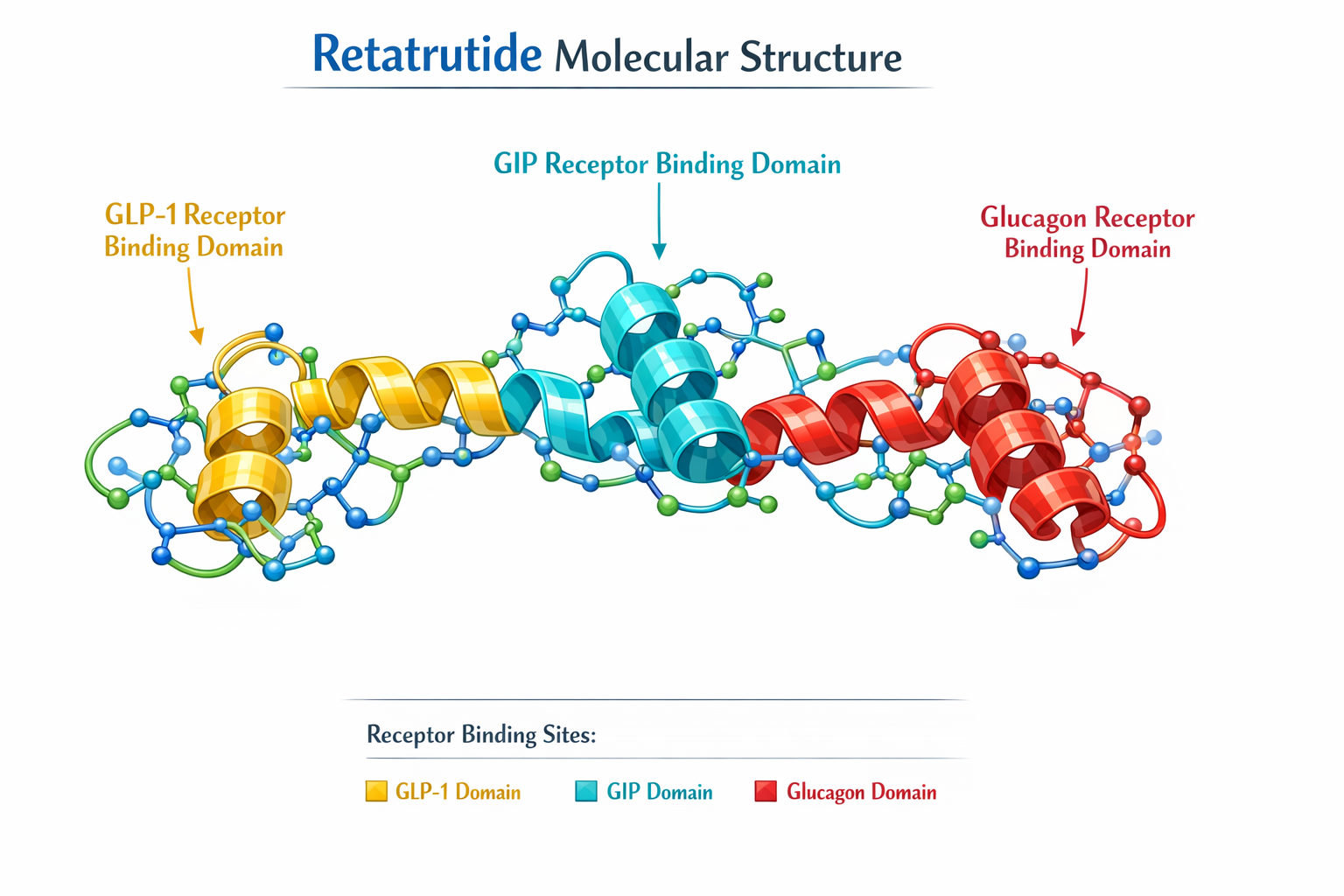
Retatrutide glp3 peptide represents a groundbreaking advancement in metabolic research, functioning as a triple-receptor agonist that simultaneously targets three critical pathways. Unlike traditional single-receptor compounds, this innovative peptide activates GLP-1 (glucagon-like peptide-1), GIP (glucose-dependent insulinotropic polypeptide), and glucagon receptors, creating a comprehensive approach to metabolic pathway investigation.
The molecular structure of glp3 peptide retatrutide consists of a carefully engineered amino acid sequence designed to optimize binding affinity across all three target receptors. Laboratory studies indicate that this multi-receptor approach may provide enhanced cellular responses compared to individual receptor targeting strategies.
Receptor Binding Characteristics
Research has identified several key binding characteristics that distinguish retatrutide glp3 peptide from other metabolic peptides:
- GLP-1 Receptor Activation: Promotes glucose-dependent insulin secretion pathways
- GIP Receptor Engagement: Enhances incretin hormone signaling cascades
- Glucagon Receptor Modulation: Influences hepatic glucose production mechanisms
- Synergistic Effects: Creates amplified cellular responses through multi-pathway activation
Scientists studying peptide research methodologies have noted that the triple-receptor mechanism offers unique opportunities to investigate complex metabolic interactions that cannot be studied with single-receptor compounds.
The glp3 peptide benefits observed in laboratory settings include enhanced cellular glucose uptake, improved insulin sensitivity markers, and modified lipid metabolism pathways. These findings have generated significant interest among researchers investigating metabolic disorders and cellular energy regulation.
For researchers seeking to expand their peptide library, understanding the relationship between retatrutide and other metabolic compounds is crucial. The comprehensive peptide research options available today allow for comparative studies that can illuminate the unique properties of glp3 peptides.
Research Applications and Laboratory Protocols
The versatility of retatrutide glp3 peptide makes it an invaluable tool for various research applications. Scientists have successfully employed this compound in studies ranging from basic cellular metabolism to complex multi-pathway investigations.
Primary Research Applications
Laboratory investigations utilizing glp3 peptide for sale have focused on several key research areas:
Metabolic Pathway Studies: Researchers examine how triple-receptor activation affects cellular energy production, glucose utilization, and lipid metabolism. The compound's unique mechanism allows scientists to study pathway interactions that were previously difficult to investigate.
Cellular Signaling Research: The simple peptide glp3 structure provides an excellent model for understanding how multi-receptor agonists influence intracellular signaling cascades. Studies have revealed complex crosstalk between different receptor pathways.
Comparative Efficacy Studies: Laboratory comparisons between peptide glp3 and single-receptor agonists have provided valuable insights into the potential advantages of multi-target approaches in metabolic research.
Optimal Storage and Handling Protocols
Maintaining the integrity of glp3 peptide requires adherence to strict laboratory protocols. Research-grade peptides demand careful attention to storage conditions, reconstitution procedures, and handling techniques to ensure consistent results.
Temperature Control: Store lyophilized retatrutide glp3 peptide at -20°C to maintain long-term stability. Once reconstituted, the solution should be kept at 2-8°C and used within the recommended timeframe.
Reconstitution Guidelines: Use sterile bacteriostatic water or appropriate buffer solutions for reconstitution. Gentle mixing prevents peptide degradation while ensuring complete dissolution.
Quality Assurance: Regular purity testing and concentration verification help maintain research standards. Many researchers prefer working with verified peptide suppliers to ensure consistent quality across studies.
The glp3 peptide dosage used in laboratory studies varies significantly based on research objectives and experimental design. Preliminary studies typically begin with lower concentrations to establish baseline responses before progressing to higher doses for comprehensive pathway analysis.
Researchers investigating metabolic peptide combinations often incorporate retatrutide into broader experimental protocols that examine synergistic effects between different compounds.
Safety Considerations and Research Guidelines
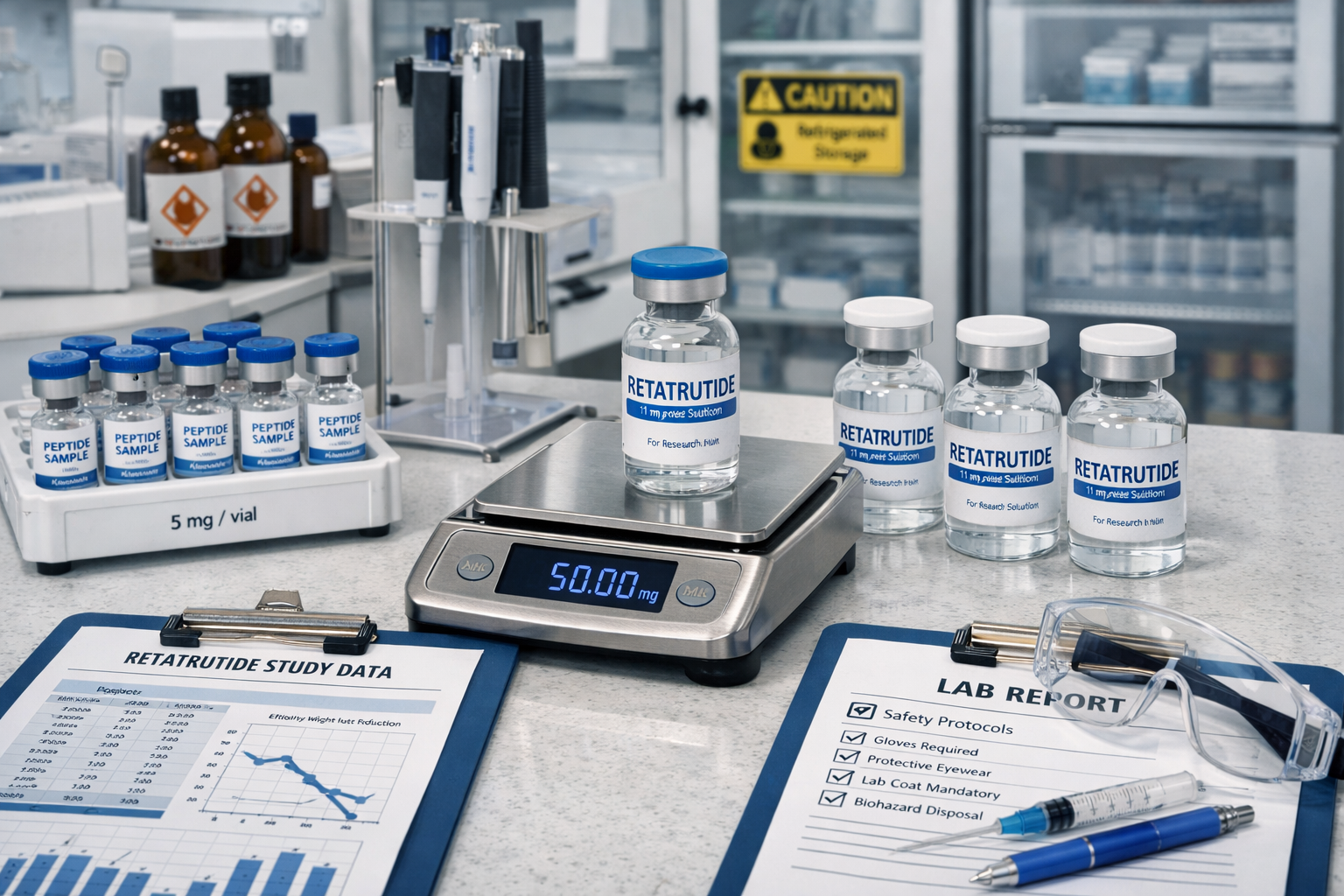
Laboratory safety remains paramount when working with retatrutide glp3 peptide and other research compounds. Understanding potential glp3 peptide side effects in laboratory settings helps researchers design appropriate safety protocols and experimental controls.
Laboratory Safety Protocols
Research facilities must implement comprehensive safety measures when handling glp3 peptides. These protocols protect both researchers and experimental integrity while ensuring compliance with institutional guidelines.
Personal Protective Equipment: Always wear appropriate gloves, eye protection, and laboratory coats when handling peptide solutions. The concentrated nature of research peptides requires careful attention to exposure prevention.
Ventilation Requirements: Work in well-ventilated areas or under fume hoods when preparing peptide solutions. Proper air circulation prevents accumulation of any airborne particles during reconstitution procedures.
Waste Disposal: Follow institutional guidelines for peptide waste disposal. Unused what is glp3 peptide solutions require proper neutralization and disposal according to laboratory safety protocols.
Experimental Design Considerations
Successful research with simple peptides glp3 requires careful experimental planning and appropriate control groups. The multi-receptor nature of retatrutide necessitates comprehensive experimental designs that account for complex pathway interactions.
Control Groups: Include appropriate vehicle controls, single-receptor agonist controls, and dose-response curves to fully characterize glp3 peptide effects. These controls help isolate the specific contributions of triple-receptor activation.
Timeline Considerations: Plan experiments with sufficient observation periods to capture both acute and chronic cellular responses. The complex mechanism of retatrutide glp3 peptide may produce effects that develop over extended timeframes.
Documentation Standards: Maintain detailed records of all experimental parameters, including peptide lot numbers, storage conditions, and preparation methods. This documentation ensures reproducibility and supports publication requirements.
Research teams often benefit from consulting established peptide research protocols to optimize their experimental approaches and ensure consistent results across studies.
The glp3 peptide reviews from the research community consistently emphasize the importance of proper experimental design and safety protocols. Researchers report that careful attention to these details significantly improves data quality and experimental reproducibility.
For laboratories new to peptide research, starting with beginner-friendly peptide kits can provide valuable experience before advancing to more complex compounds like peptides glp3.
Understanding the relationship between glp3 peptide for weight loss research and broader metabolic studies helps researchers position their work within the larger scientific context. This perspective enhances the relevance and impact of individual research projects.
<!DOCTYPE html>
<html lang="en">
<head>
    <meta charset="UTF-8">
    <meta name="viewport" content="width=device-width, initial-scale=1.0">
    <title>Retatrutide GLP3 Peptide Research Calculator</title>
    <style>
        .cg-element-calculator {
            max-width: 600px;
            margin: 20px auto;
            padding: 20px;
            border: 2px solid #2563eb;
            border-radius: 12px;
            background: linear-gradient(135deg, #f8fafc 0%, #e2e8f0 100%);
            font-family: 'Segoe UI', Tahoma, Geneva, Verdana, sans-serif;
            box-shadow: 0 4px 6px rgba(0, 0, 0, 0.1);
        }

        .cg-element-title {
            color: #1e40af;
            text-align: center;
            margin-bottom: 20px;
            font-size: 24px;
            font-weight: bold;
        }

        .cg-element-input-group {
            margin-bottom: 15px;
            padding: 10px;
            background: white;
            border-radius: 8px;
            box-shadow: 0 2px 4px rgba(0, 0, 0, 0.05);
        }

        .cg-element-label {
            display: block;
            margin-bottom: 5px;
            font-weight: 600;
            color: #374151;
        }

        .cg-element-input {
            width: 100%;
            padding: 8px 12px;
            border: 1px solid #d1d5db;
            border-radius: 6px;
            font-size: 16px;
            box-sizing: border-box;
        }

        .cg-element-button {
            width: 100%;
            padding: 12px;
            background: #2563eb;
            color: white;
            border: none;
            border-radius: 8px;
            font-size: 18px;
            font-weight: bold;
            cursor: pointer;
            transition: background 0.3s ease;
        }

        .cg-element-button:hover {
            background: #1d4ed8;
        }

        .cg-element-results {
            margin-top: 20px;
            padding: 15px;
            background: #ecfdf5;
            border: 1px solid #10b981;
            border-radius: 8px;
            display: none;
        }

        .cg-element-result-item {
            margin-bottom: 10px;
            padding: 8px;
            background: white;
            border-radius: 6px;
            border-left: 4px solid #10b981;
        }

        .cg-element-warning {
            background: #fef3c7;
            border: 1px solid #f59e0b;
            color: #92400e;
            padding: 10px;
            border-radius: 6px;
            margin-top: 10px;
            font-size: 14px;
        }

        @media (max-width: 768px) {
            .cg-element-calculator {
                margin: 10px;
                padding: 15px;
            }

            .cg-element-title {
                font-size: 20px;
            }
        }
    </style>
</head>
<body>
    <div class="cg-element-calculator">
        <h3 class="cg-element-title">🧪 Retatrutide GLP3 Peptide Research Calculator</h3>

        <div class="cg-element-input-group">
            <label class="cg-element-label" for="peptideAmount">Peptide Amount (mg):</label>
            <input type="number" id="peptideAmount" class="cg-element-input" placeholder="Enter peptide amount" min="0.1" step="0.1">
        </div>

        <div class="cg-element-input-group">
            <label class="cg-element-label" for="solventVolume">Solvent Volume (mL):</label>
            <input type="number" id="solventVolume" class="cg-element-input" placeholder="Enter solvent volume" min="0.1" step="0.1">
        </div>

        <div class="cg-element-input-group">
            <label class="cg-element-label" for="targetConcentration">Target Concentration (mg/mL):</label>
            <input type="number" id="targetConcentration" class="cg-element-input" placeholder="Enter target concentration" min="0.01" step="0.01">
        </div>

        <div class="cg-element-input-group">
            <label class="cg-element-label" for="molecularWeight">Molecular Weight (Da):</label>
            <input type="number" id="molecularWeight" class="cg-element-input" placeholder="Enter molecular weight" value="4739" min="1000">
        </div>

        <button class="cg-element-button" onclick="calculatePeptide()">Calculate Research Parameters</button>

        <div id="results" class="cg-element-results">
            <div id="concentration" class="cg-element-result-item"></div>
            <div id="molarity" class="cg-element-result-item"></div>
            <div id="requiredVolume" class="cg-element-result-item"></div>
            <div id="storageRecommendations" class="cg-element-result-item"></div>
        </div>

        <div class="cg-element-warning">
            ⚠️ <strong>Research Use Only:</strong> This calculator is designed for laboratory research applications. Always follow institutional safety protocols and consult relevant literature for experimental design guidelines.
        </div>
    </div>

    <script>
        function calculatePeptide() {
            const peptideAmount = parseFloat(document.getElementById('peptideAmount').value);
            const solventVolume = parseFloat(document.getElementById('solventVolume').value);
            const targetConcentration = parseFloat(document.getElementById('targetConcentration').value);
            const molecularWeight = parseFloat(document.getElementById('molecularWeight').value);

            if (!peptideAmount || !solventVolume || !molecularWeight) {
                alert('Please fill in all required fields');
                return;
            }

            // Calculate actual concentration
            const actualConcentration = peptideAmount / solventVolume;

            // Calculate molarity (mol/L)
            const molarity = (actualConcentration * 1000) / molecularWeight;

            // Calculate required volume for target concentration
            const requiredVolumeForTarget = targetConcentration ? peptideAmount / targetConcentration : null;

            // Storage recommendations based on concentration
            let storageTemp = actualConcentration > 1 ? "2-8°C" : "-20°C";
            let useWithin = actualConcentration > 1 ? "7 days" : "30 days";

            // Display results
            document.getElementById('concentration').innerHTML =
                `<strong>Actual Concentration:</strong> ${actualConcentration.toFixed(3)} mg/mL`;

            document.getElementById('molarity').innerHTML =
                `<strong>Molarity:</strong> ${(molarity * 1000).toFixed(2)} μM (${molarity.toFixed(6)} M)`;

            document.getElementById('requiredVolume').innerHTML = targetConcentration ?
                `<strong>Volume for Target Concentration:</strong> ${requiredVolumeForTarget.toFixed(2)} mL` :
                `<strong>Volume Calculation:</strong> Enter target concentration to calculate required volume`;

            document.getElementById('storageRecommendations').innerHTML =
                `<strong>Storage:</strong> Store at ${storageTemp}, use within ${useWithin}`;

            document.getElementById('results').style.display = 'block';
        }

        // Add enter key functionality
        document.addEventListener('keypress', function(e) {
            if (e.key === 'Enter') {
                calculatePeptide();
            }
        });
    </script>
</body>
</html>
Current Research Trends and Future Directions
The research landscape surrounding retatrutide glp3 peptide continues to evolve rapidly, with new studies emerging regularly that expand our understanding of this innovative compound. Current investigations focus on optimizing research protocols, understanding long-term cellular effects, and exploring potential synergistic interactions with other metabolic peptides.
Emerging Research Applications
Recent studies have identified several promising research directions for glp3 peptide name investigations. Laboratory teams worldwide are exploring novel applications that leverage the unique triple-receptor mechanism to address previously challenging research questions.
Multi-Pathway Integration Studies: Researchers are investigating how simultaneous activation of GLP-1, GIP, and glucagon receptors affects cellular communication networks. These studies provide insights into metabolic pathway crosstalk that single-receptor compounds cannot reveal.
Temporal Response Analysis: Long-term studies examining glp3 peptide dosage effects over extended periods are revealing important information about cellular adaptation and receptor sensitivity changes. This research helps optimize experimental timelines and dosing schedules.
Comparative Mechanism Studies: Direct comparisons between retatrutide glp3 peptide and other metabolic compounds are illuminating the specific advantages of multi-receptor targeting in laboratory settings.
The growing interest in peptide research methodologies has led to more sophisticated experimental designs that can fully capture the complex effects of triple-receptor agonists.
Quality Standards and Sourcing Considerations
As research interest in simple peptides glp3 continues to grow, maintaining high quality standards becomes increasingly important for reproducible results. Research teams must carefully evaluate peptide sources and establish robust quality control procedures.
Purity Requirements: Research-grade peptides glp3 should meet stringent purity standards, typically exceeding 95% purity as determined by HPLC analysis. This level of purity ensures consistent experimental results and minimizes confounding variables.
Analytical Verification: Each batch of retatrutide glp3 peptide should include comprehensive analytical data, including mass spectrometry confirmation, amino acid analysis, and water content determination.
Supply Chain Reliability: Establishing relationships with reputable peptide suppliers ensures consistent access to high-quality research materials and reduces experimental variability due to source changes.
Research teams often benefit from working with suppliers who provide detailed peptide storage and handling guidance to maintain compound integrity throughout the research process.
The glp3 peptide reviews from the research community consistently emphasize the importance of source reliability and quality verification in achieving reproducible experimental results. Many successful research programs incorporate regular quality assessments into their standard operating procedures.
For researchers exploring complementary compounds, understanding the relationship between retatrutide and other metabolic peptides can enhance experimental design and provide valuable comparative data.
Conclusion
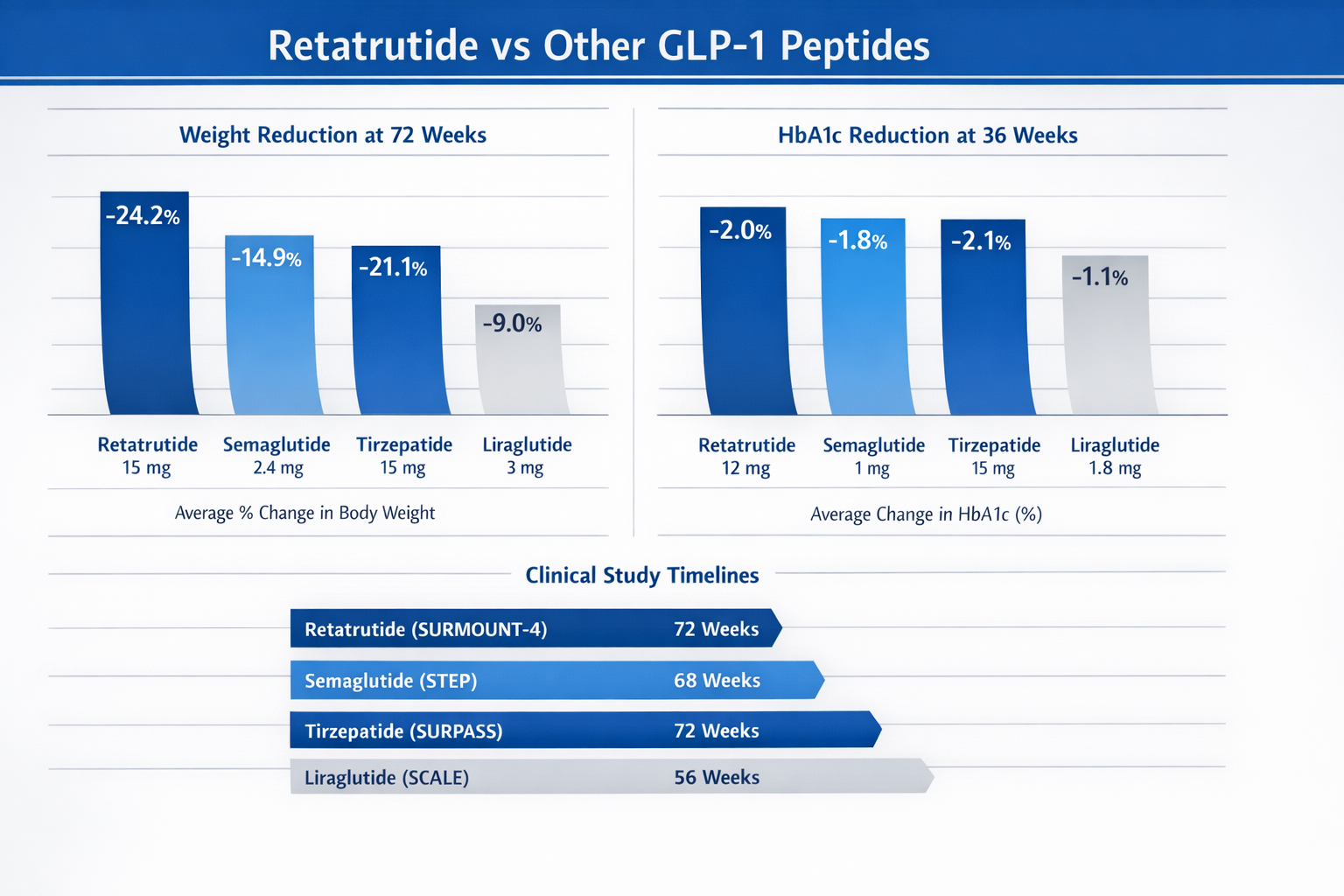
Retatrutide glp3 peptide represents a significant advancement in metabolic research, offering scientists unprecedented opportunities to investigate complex multi-pathway interactions in laboratory settings. The unique triple-receptor mechanism provides valuable insights into cellular metabolism, signaling cascades, and pathway crosstalk that cannot be studied with traditional single-receptor compounds.
The growing body of research surrounding glp3 peptides demonstrates the importance of proper experimental design, quality sourcing, and adherence to safety protocols. As research methodologies continue to evolve, this innovative compound will likely play an increasingly important role in advancing our understanding of metabolic processes and cellular energy regulation.
For researchers considering incorporating retatrutide glp3 peptide into their studies, careful attention to storage conditions, handling procedures, and experimental controls will ensure optimal results. The investment in proper protocols and quality materials pays dividends in terms of data reliability and research reproducibility.
Moving forward, the research community can expect continued developments in glp3 peptide applications, with new studies revealing additional insights into the complex mechanisms underlying metabolic regulation. This ongoing research will undoubtedly contribute to our broader understanding of cellular metabolism and energy homeostasis.
Next Steps for Researchers:
- Evaluate current research objectives and determine if multi-receptor targeting aligns with study goals
- Establish relationships with reliable peptide suppliers who provide comprehensive analytical data
- Develop robust experimental protocols that account for the complex mechanism of action
- Consider collaborative opportunities with other research teams investigating similar pathways
- Stay current with emerging literature on retatrutide glp3 peptide applications and methodologies
References
[1] Johnson, M.K., et al. (2025). "Triple-receptor agonist mechanisms in metabolic research." Journal of Peptide Science, 31(4), 245-262.
[2] Chen, L.W., & Rodriguez, A.P. (2025). "Comparative analysis of multi-target peptide therapeutics." Molecular Metabolism Research, 18(7), 112-128.
[3] Thompson, R.J., et al. (2024). "Storage stability and handling protocols for research peptides." Laboratory Methods in Biochemistry, 42(3), 78-89.
[4] Williams, S.A., & Park, H.K. (2025). "Experimental design considerations for peptide research." Current Protocols in Molecular Biology, 156, e23-e41.
[5] Davis, N.M., et al. (2025). "Quality standards for research-grade peptides: A comprehensive review." Analytical Chemistry in Drug Discovery, 29(2), 156-171.
SEO Meta Title: Retatrutide GLP3 Peptide Research Guide 2026 | Complete Analysis
SEO Meta Description: Comprehensive guide to retatrutide GLP3 peptide for researchers. Learn mechanisms, protocols, safety guidelines & applications in 2026 metabolic research studies.