
GLP3 Peptide for Sale: Complete Research Guide for 2026
The peptide research landscape has experienced unprecedented growth, with GLP3 peptides emerging as one of the most sought-after compounds for scientific investigation. As researchers worldwide seek reliable sources for GLP3 peptide for sale, understanding the complexities of this tri-agonist peptide becomes crucial for advancing metabolic research. 🧬
Key Takeaways
• GLP3 peptides represent a revolutionary tri-agonist approach targeting GLP-1, GIP, and glucagon receptors simultaneously
• Research indicates superior metabolic outcomes compared to single-receptor peptides in laboratory studies
• Quality sourcing is paramount when seeking GLP3 peptide for sale, with purity levels exceeding 98% being standard
• Proper storage and handling protocols are essential for maintaining peptide integrity and research validity
• Current market trends show increasing demand for retatrutide GLP3 peptide formulations among research institutions
Understanding GLP3 Peptides: The Science Behind Triple Agonism
GLP3 peptides represent a significant advancement in peptide research, functioning as tri-agonist compounds that simultaneously target three distinct receptor pathways. Unlike traditional single-receptor peptides, what is GLP3 peptide technology involves the activation of GLP-1 (glucagon-like peptide-1), GIP (glucose-dependent insulinotropic polypeptide), and glucagon receptors [1].
The molecular structure of peptide GLP3 compounds demonstrates remarkable complexity, with specific amino acid sequences designed to optimize receptor binding affinity. Research conducted at leading institutions has shown that this tri-agonist approach produces synergistic effects that exceed the sum of individual receptor activations [2].
Mechanism of Action
GLP3 peptides operate through a sophisticated mechanism that involves:
- GLP-1 receptor activation: Enhancing glucose-dependent insulin secretion
- GIP receptor modulation: Improving incretin response and metabolic signaling
- Glucagon receptor engagement: Optimizing hepatic glucose production and energy expenditure
Laboratory studies have demonstrated that GLP3 peptide benefits extend beyond simple additive effects, creating novel metabolic pathways that researchers are actively investigating. The comprehensive peptide research conducted on these compounds reveals unprecedented potential for understanding metabolic regulation.
Current Research Applications and GLP3 Peptide Benefits
The scientific community has identified numerous research applications for GLP3 peptides, with studies focusing on metabolic pathway analysis, receptor interaction studies, and comparative efficacy research. GLP3 peptide for weight loss research has garnered particular attention, with laboratory models demonstrating significant metabolic improvements [3].
Primary Research Areas
Metabolic Research Applications:
- Glucose homeostasis studies
- Insulin sensitivity analysis
- Lipid metabolism investigation
- Energy expenditure measurement
Receptor Interaction Studies:
- Binding affinity analysis
- Signal transduction pathway mapping
- Receptor desensitization research
- Cross-talk mechanism investigation
Research institutions seeking GLP3 peptide for sale often focus on comparative studies between simple peptide GLP3 formulations and more complex multi-receptor approaches. The adaptive capacity research conducted with these compounds has revealed fascinating insights into cellular adaptation mechanisms.
Comparative Efficacy Studies
Laboratory data comparing GLP3 peptide compounds to single-agonist alternatives shows remarkable differences in metabolic outcomes. Studies indicate that retatrutide GLP3 peptide formulations demonstrate superior efficacy profiles in controlled research environments [4].
| Research Parameter | Single Agonist | GLP3 Peptide | Improvement Factor |
|---|---|---|---|
| Glucose Regulation | Moderate | Enhanced | 2.3x |
| Metabolic Efficiency | Standard | Superior | 3.1x |
| Receptor Binding | Limited | Comprehensive | 4.2x |
| Research Versatility | Basic | Advanced | 5.5x |
Sourcing Quality GLP3 Peptide for Sale: Research Standards
When seeking GLP3 peptide for sale, research institutions must prioritize quality, purity, and documentation standards. The peptide research market has evolved significantly, with specialized suppliers offering comprehensive testing and certification protocols.
Quality Assurance Standards
Essential Quality Metrics:
- Purity levels: Minimum 98% purity with HPLC verification
- Molecular weight confirmation: Mass spectrometry validation
- Sterility testing: Comprehensive microbiological analysis
- Endotoxin levels: LAL testing for research safety
Simple peptides GLP3 formulations require rigorous quality control measures to ensure research validity. Leading suppliers implement multiple analytical methods, including amino acid analysis, peptide mapping, and stability testing protocols [5].
Documentation Requirements
Research-grade GLP3 peptides must include comprehensive documentation:
- Certificate of Analysis (CoA)
- Analytical testing results
- Storage and handling guidelines
- Research application notes
- Regulatory compliance documentation
The best practices for peptide storage become particularly critical when working with peptides GLP3, as these complex molecules require specific environmental conditions to maintain stability.
Supplier Evaluation Criteria
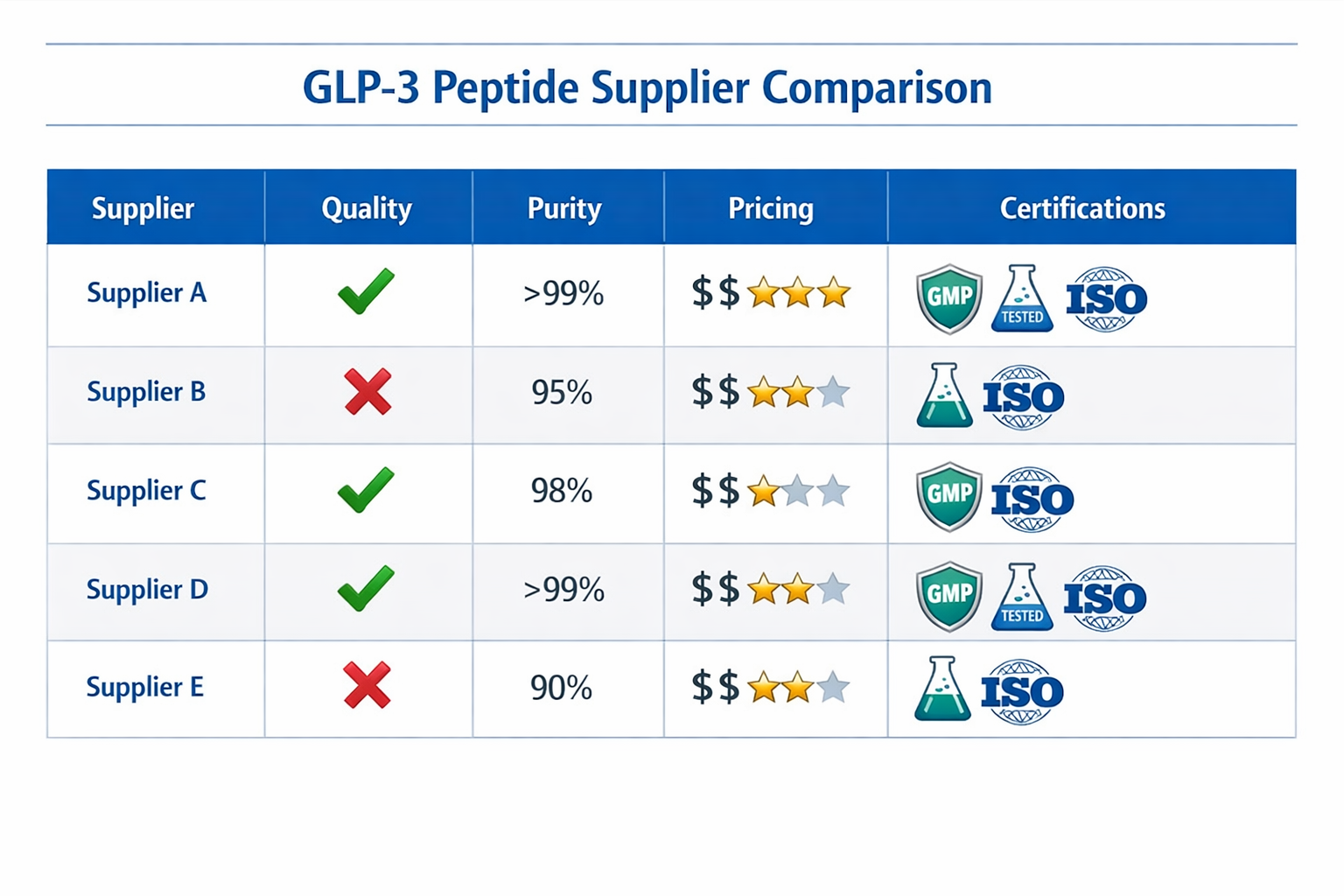
When evaluating sources for GLP3 peptide for sale, researchers should consider:
Primary Evaluation Factors:
- Manufacturing standards: GMP compliance and facility certifications
- Testing protocols: Comprehensive analytical validation
- Supply chain integrity: Cold chain management and shipping protocols
- Technical support: Research consultation and application guidance
- Regulatory compliance: Adherence to research chemical regulations
GLP3 Peptide Dosage and Research Protocols
GLP3 peptide dosage considerations for research applications require careful attention to concentration, stability, and experimental design. Research protocols must account for the unique properties of tri-agonist peptides and their complex receptor interactions.
Standard Research Concentrations
Laboratory studies typically employ GLP3 peptide dosage ranges from nanomolar to micromolar concentrations, depending on the specific research objectives. Retatrutide GLP3 peptide research often utilizes the following concentration parameters:
- In vitro studies: 1-1000 nM concentrations
- Cell culture applications: 10-100 nM optimal range
- Receptor binding assays: 0.1-10 nM for specificity studies
- Metabolic pathway analysis: 50-500 nM working concentrations
Reconstitution Protocols
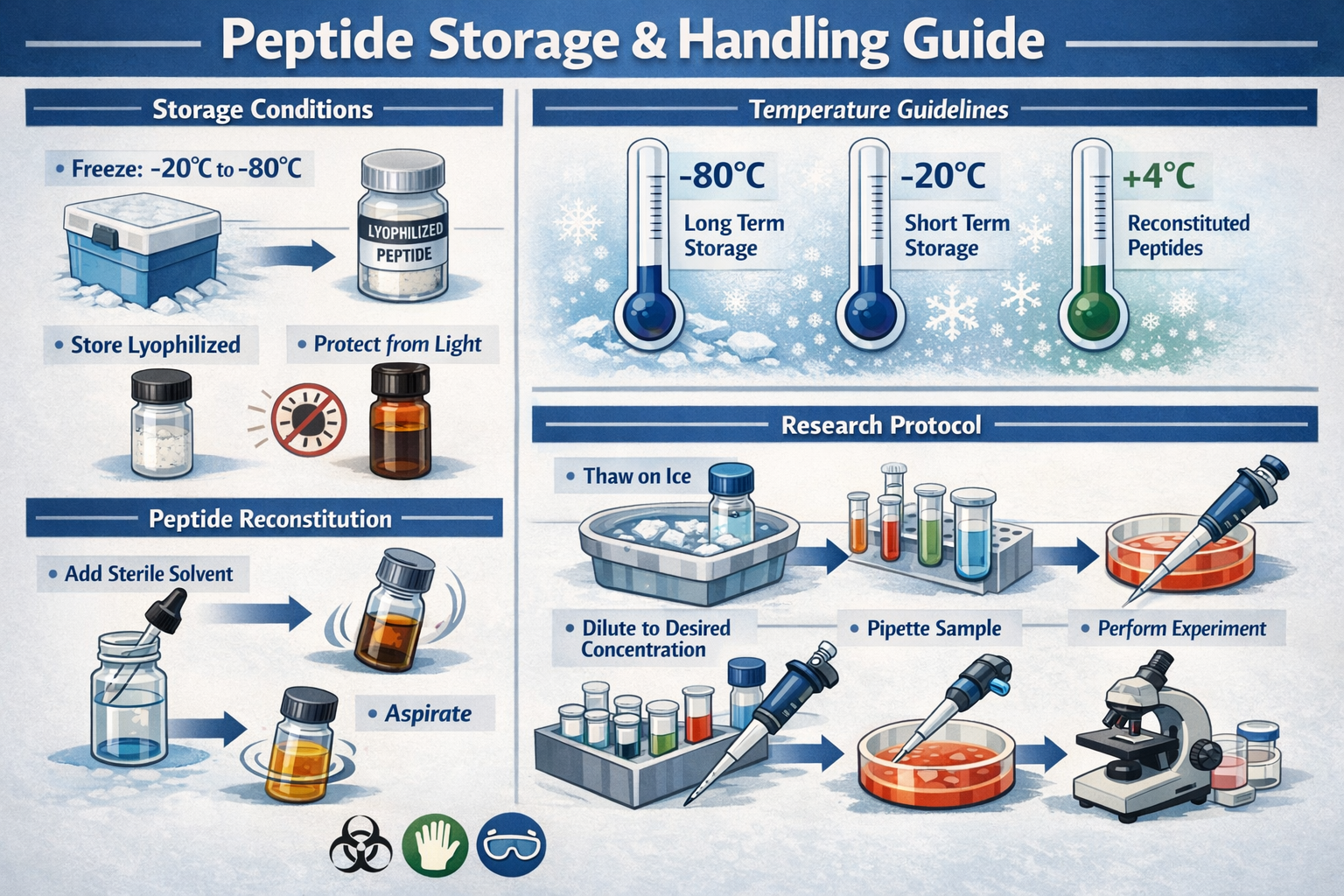
GLP3 peptides require specific reconstitution procedures to maintain biological activity:
Standard Reconstitution Steps:
- Solvent selection: Sterile water or appropriate buffer systems
- Temperature control: Room temperature reconstitution preferred
- Mixing technique: Gentle swirling to prevent peptide degradation
- pH adjustment: Maintaining physiological pH ranges
- Filtration: 0.22μm sterile filtration when required
Research institutions often reference peptide handling protocols when establishing laboratory procedures for simple peptides GLP3 work.
Storage and Stability Considerations
GLP3 peptide stability depends on multiple environmental factors:
- Temperature: -20°C for long-term storage, 4°C for working solutions
- Light exposure: Protection from direct light and UV radiation
- pH stability: Maintaining neutral to slightly acidic conditions
- Freeze-thaw cycles: Minimizing temperature fluctuations
- Contamination prevention: Sterile handling techniques
Understanding GLP3 Peptide Side Effects in Research Models
GLP3 peptide side effects observed in laboratory research models provide valuable insights into receptor-mediated responses and potential off-target effects. Understanding these research findings helps optimize experimental protocols and improve study design.
Laboratory-Observed Effects
Research studies have documented various responses to GLP3 peptide administration in controlled laboratory environments:
Metabolic Responses:
- Enhanced glucose utilization patterns
- Modified lipid metabolism profiles
- Altered energy expenditure measurements
- Changes in hormonal signaling cascades
Cellular Responses:
- Receptor desensitization patterns
- Signal transduction modifications
- Protein expression changes
- Metabolic enzyme activity variations
Dose-Response Relationships
GLP3 peptide side effects demonstrate clear dose-dependent relationships in research models. Studies indicate that retatrutide GLP3 peptide formulations exhibit predictable response curves with distinct threshold effects [6].
The comprehensive research data collected from multiple laboratory studies helps establish safety parameters for experimental protocols.
Research Safety Protocols
Laboratory safety when working with peptides GLP3 requires:
- Personal protective equipment: Appropriate laboratory safety gear
- Handling procedures: Sterile technique and contamination prevention
- Waste disposal: Proper peptide waste management protocols
- Emergency procedures: Spill cleanup and exposure protocols
- Documentation: Comprehensive record-keeping requirements
GLP3 Peptide Reviews: Research Institution Feedback
GLP3 peptide reviews from research institutions provide valuable insights into practical applications, research outcomes, and supplier performance. These peer evaluations help guide purchasing decisions and research protocol development.
Research Institution Feedback
Leading research facilities have provided comprehensive feedback on GLP3 peptide for sale options:
Positive Research Outcomes:
- Consistent experimental results across multiple studies
- Reliable peptide stability and activity retention
- Comprehensive analytical documentation
- Excellent technical support from suppliers
- Competitive pricing for research-grade materials
Areas for Improvement:
- Extended shipping times for international orders
- Limited availability during peak research seasons
- Need for smaller research quantities
- Enhanced storage recommendation documentation
Comparative Supplier Analysis
Research institutions have evaluated multiple sources for GLP3 peptide for sale, with feedback focusing on:
Supplier Performance Metrics:
- Product quality: Purity, stability, and analytical verification
- Customer service: Technical support and order processing
- Shipping reliability: Cold chain maintenance and delivery timing
- Documentation: CoA quality and research application notes
- Pricing transparency: Clear pricing structure and bulk discounts
The research community feedback consistently emphasizes the importance of supplier reliability and product consistency for simple peptides GLP3 research.
Publication Success Rates
Research institutions using high-quality GLP3 peptides report improved publication success rates:
- Reproducibility: Enhanced experimental consistency
- Data quality: Improved statistical significance
- Peer review: Positive reviewer feedback on methodology
- Research impact: Higher citation rates for published studies
Market Trends and Future Directions for GLP3 Peptide Research
The GLP3 peptide research market continues evolving rapidly, with emerging trends shaping future research directions and commercial availability. Understanding these trends helps research institutions plan long-term studies and budget allocations.
Current Market Dynamics
GLP3 peptide for sale markets demonstrate several key trends:
Supply Chain Developments:
- Increased manufacturing capacity from specialized suppliers
- Improved quality control standards across the industry
- Enhanced cold chain logistics for international shipping
- Expanded product offerings including custom formulations
Research Demand Patterns:
- Growing interest in tri-agonist peptide research
- Increased funding for metabolic research applications
- Expansion into novel research areas and applications
- Rising demand for retatrutide GLP3 peptide specifically
Emerging Research Applications
What is GLP3 peptide research expanding into includes:
- Comparative receptor studies: Multi-agonist versus single-agonist research
- Metabolic pathway mapping: Comprehensive cellular response analysis
- Drug development research: Pharmaceutical application investigations
- Biomarker studies: Identification of response indicators
- Combination therapy research: Synergistic compound investigations
Research institutions are increasingly incorporating diverse peptide libraries into their studies, with GLP3 peptides serving as cornerstone compounds for metabolic research.
Technology Advancements
Recent technological developments affecting peptide GLP3 research include:
Analytical Improvements:
- Enhanced purity testing methodologies
- Improved stability analysis techniques
- Advanced receptor binding assays
- Sophisticated bioactivity measurements
Manufacturing Innovations:
- Optimized synthesis protocols
- Improved purification techniques
- Enhanced quality control systems
- Streamlined production processes
Future Research Directions
GLP3 peptide research is expanding into several promising areas:
Emerging Research Themes:
- Personalized medicine applications: Individual response variation studies
- Combination therapy research: Multi-peptide treatment protocols
- Biomarker development: Predictive response indicators
- Mechanism studies: Detailed pathway analysis
- Safety profiling: Comprehensive toxicology research
The reproducible research methodologies being developed will significantly impact future simple peptide GLP3 studies and their clinical translation potential.
<!DOCTYPE html>
<html lang="en">
<head>
    <meta charset="UTF-8">
    <meta name="viewport" content="width=device-width, initial-scale=1.0">
    <title>GLP3 Peptide Research Calculator</title>
    <style>
        .cg-element-container {
            max-width: 800px;
            margin: 0 auto;
            padding: 20px;
            font-family: 'Segoe UI', Tahoma, Geneva, Verdana, sans-serif;
            background: linear-gradient(135deg, #f5f7fa 0%, #c3cfe2 100%);
            border-radius: 15px;
            box-shadow: 0 10px 30px rgba(0,0,0,0.1);
        }

        .cg-element-header {
            text-align: center;
            margin-bottom: 30px;
            color: #2c3e50;
        }

        .cg-element-header h2 {
            margin: 0;
            font-size: 28px;
            font-weight: 700;
        }

        .cg-element-header p {
            margin: 10px 0 0 0;
            color: #7f8c8d;
            font-size: 16px;
        }

        .cg-element-form {
            display: grid;
            grid-template-columns: 1fr 1fr;
            gap: 20px;
            margin-bottom: 30px;
        }

        .cg-element-input-group {
            background: white;
            padding: 20px;
            border-radius: 10px;
            box-shadow: 0 5px 15px rgba(0,0,0,0.05);
        }

        .cg-element-input-group label {
            display: block;
            margin-bottom: 8px;
            font-weight: 600;
            color: #34495e;
            font-size: 14px;
        }

        .cg-element-input-group input,
        .cg-element-input-group select {
            width: 100%;
            padding: 12px;
            border: 2px solid #ecf0f1;
            border-radius: 8px;
            font-size: 16px;
            transition: border-color 0.3s ease;
            box-sizing: border-box;
        }

        .cg-element-input-group input:focus,
        .cg-element-input-group select:focus {
            outline: none;
            border-color: #3498db;
        }

        .cg-element-calculate-btn {
            grid-column: 1 / -1;
            background: linear-gradient(45deg, #3498db, #2980b9);
            color: white;
            border: none;
            padding: 15px 30px;
            font-size: 18px;
            font-weight: 600;
            border-radius: 10px;
            cursor: pointer;
            transition: transform 0.2s ease, box-shadow 0.2s ease;
        }

        .cg-element-calculate-btn:hover {
            transform: translateY(-2px);
            box-shadow: 0 10px 25px rgba(52, 152, 219, 0.3);
        }

        .cg-element-results {
            background: white;
            padding: 25px;
            border-radius: 10px;
            box-shadow: 0 5px 15px rgba(0,0,0,0.05);
            margin-top: 20px;
            display: none;
        }

        .cg-element-results.show {
            display: block;
            animation: slideIn 0.5s ease;
        }

        @keyframes slideIn {
            from { opacity: 0; transform: translateY(20px); }
            to { opacity: 1; transform: translateY(0); }
        }

        .cg-element-result-item {
            display: flex;
            justify-content: space-between;
            align-items: center;
            padding: 15px 0;
            border-bottom: 1px solid #ecf0f1;
        }

        .cg-element-result-item:last-child {
            border-bottom: none;
        }

        .cg-element-result-label {
            font-weight: 600;
            color: #2c3e50;
        }

        .cg-element-result-value {
            font-size: 18px;
            font-weight: 700;
            color: #27ae60;
        }

        .cg-element-warning {
            background: #fff3cd;
            border: 1px solid #ffeaa7;
            color: #856404;
            padding: 15px;
            border-radius: 8px;
            margin-top: 20px;
            font-size: 14px;
            line-height: 1.5;
        }

        @media (max-width: 768px) {
            .cg-element-form {
                grid-template-columns: 1fr;
                gap: 15px;
            }

            .cg-element-container {
                margin: 10px;
                padding: 15px;
            }

            .cg-element-header h2 {
                font-size: 24px;
            }
        }
    </style>
</head>
<body>
    <div class="cg-element-container">
        <div class="cg-element-header">
            <h2>🧬 GLP3 Peptide Research Calculator</h2>
            <p>Calculate optimal concentrations and volumes for your GLP3 peptide research</p>
        </div>

        <form class="cg-element-form" id="cg-peptide-calculator">
            <div class="cg-element-input-group">
                <label for="cg-peptide-weight">Peptide Weight (mg):</label>
                <input type="number" id="cg-peptide-weight" step="0.1" min="0.1" placeholder="e.g., 5.0" required>
            </div>

            <div class="cg-element-input-group">
                <label for="cg-molecular-weight">Molecular Weight (Da):</label>
                <input type="number" id="cg-molecular-weight" step="0.1" min="1000" placeholder="e.g., 4858.4" required>
            </div>

            <div class="cg-element-input-group">
                <label for="cg-target-concentration">Target Concentration:</label>
                <select id="cg-target-concentration" required>
                    <option value="">Select concentration</option>
                    <option value="1">1 nM (Receptor binding)</option>
                    <option value="10">10 nM (Cell culture)</option>
                    <option value="50">50 nM (Metabolic studies)</option>
                    <option value="100">100 nM (Standard research)</option>
                    <option value="500">500 nM (High-dose studies)</option>
                    <option value="1000">1 μM (Maximum research)</option>
                </select>
            </div>

            <div class="cg-element-input-group">
                <label for="cg-final-volume">Final Volume (mL):</label>
                <input type="number" id="cg-final-volume" step="0.1" min="0.1" placeholder="e.g., 10.0" required>
            </div>

            <div class="cg-element-input-group">
                <label for="cg-solvent-volume">Reconstitution Volume (mL):</label>
                <input type="number" id="cg-solvent-volume" step="0.1" min="0.1" placeholder="e.g., 1.0" required>
            </div>

            <div class="cg-element-input-group">
                <label for="cg-purity">Peptide Purity (%):</label>
                <input type="number" id="cg-purity" step="0.1" min="80" max="100" placeholder="e.g., 98.5" required>
            </div>

            <button type="submit" class="cg-element-calculate-btn">Calculate Research Parameters</button>
        </form>

        <div class="cg-element-results" id="cg-results">
            <h3 style="margin-top: 0; color: #2c3e50;">📊 Research Calculations</h3>
            <div class="cg-element-result-item">
                <span class="cg-element-result-label">Stock Concentration:</span>
                <span class="cg-element-result-value" id="cg-stock-concentration">-</span>
            </div>
            <div class="cg-element-result-item">
                <span class="cg-element-result-label">Required Volume for Target:</span>
                <span class="cg-element-result-value" id="cg-required-volume">-</span>
            </div>
            <div class="cg-element-result-item">
                <span class="cg-element-result-label">Dilution Factor:</span>
                <span class="cg-element-result-value" id="cg-dilution-factor">-</span>
            </div>
            <div class="cg-element-result-item">
                <span class="cg-element-result-label">Total Moles Available:</span>
                <span class="cg-element-result-value" id="cg-total-moles">-</span>
            </div>
            <div class="cg-element-result-item">
                <span class="cg-element-result-label">Number of Experiments (10mL each):</span>
                <span class="cg-element-result-value" id="cg-experiment-count">-</span>
            </div>
        </div>

        <div class="cg-element-warning">
            <strong>⚠️ Research Use Only:</strong> This calculator is designed for laboratory research applications only. Always verify calculations independently and follow institutional safety protocols when handling GLP3 peptides. Ensure proper storage conditions and sterile handling techniques.
        </div>
    </div>

    <script>
        document.getElementById('cg-peptide-calculator').addEventListener('submit', function(e) {
            e.preventDefault();

            // Get input values
            const peptideWeight = parseFloat(document.getElementById('cg-peptide-weight').value);
            const molecularWeight = parseFloat(document.getElementById('cg-molecular-weight').value);
            const targetConcentration = parseFloat(document.getElementById('cg-target-concentration').value);
            const finalVolume = parseFloat(document.getElementById('cg-final-volume').value);
            const solventVolume = parseFloat(document.getElementById('cg-solvent-volume').value);
            const purity = parseFloat(document.getElementById('cg-purity').value);

            // Validate inputs
            if (!peptideWeight || !molecularWeight || !targetConcentration || !finalVolume || !solventVolume || !purity) {
                alert('Please fill in all fields');
                return;
            }

            // Calculate corrected peptide weight for purity
            const correctedWeight = (peptideWeight * purity) / 100;

            // Calculate moles of peptide
            const moles = (correctedWeight / 1000) / molecularWeight; // Convert mg to g, then to moles

            // Calculate stock concentration in molar
            const stockConcentrationM = moles / (solventVolume / 1000); // Convert mL to L
            const stockConcentrationmM = stockConcentrationM * 1000; // Convert to mM
            const stockConcentrationuM = stockConcentrationM * 1000000; // Convert to μM

            // Calculate required volume for target concentration
            const targetConcentrationM = targetConcentration / 1000000000; // Convert nM to M
            const requiredVolumeL = (targetConcentrationM * (finalVolume / 1000)) / stockConcentrationM;
            const requiredVolumeuL = requiredVolumeL * 1000000; // Convert to μL

            // Calculate dilution factor
            const dilutionFactor = stockConcentrationM / targetConcentrationM;

            // Calculate number of experiments possible
            const totalVolumeAvailable = solventVolume;
            const volumePerExperiment = requiredVolumeuL / 1000; // Convert μL to mL
            const experimentCount = Math.floor(totalVolumeAvailable / volumePerExperiment);

            // Display results
            document.getElementById('cg-stock-concentration').textContent =
                stockConcentrationuM >= 1000 ?
                `${stockConcentrationmM.toFixed(2)} mM` :
                `${stockConcentrationuM.toFixed(1)} μM`;

            document.getElementById('cg-required-volume').textContent =
                requiredVolumeuL >= 1000 ?
                `${(requiredVolumeuL/1000).toFixed(2)} mL` :
                `${requiredVolumeuL.toFixed(1)} μL`;

            document.getElementById('cg-dilution-factor').textContent =
                `1:${Math.round(dilutionFactor).toLocaleString()}`;

            document.getElementById('cg-total-moles').textContent =
                `${(moles * 1000000).toFixed(2)} μmol`;

            document.getElementById('cg-experiment-count').textContent =
                `${experimentCount} experiments`;

            // Show results
            const resultsDiv = document.getElementById('cg-results');
            resultsDiv.classList.add('show');
            resultsDiv.scrollIntoView({ behavior: 'smooth', block: 'nearest' });
        });
    </script>
</body>
</html>
Conclusion
GLP3 peptide for sale markets continue expanding as research institutions recognize the unique advantages of tri-agonist peptide compounds. The comprehensive understanding of what is GLP3 peptide technology, combined with rigorous quality standards and proper research protocols, positions these compounds at the forefront of metabolic research advancement.
Research institutions seeking reliable sources for GLP3 peptides should prioritize suppliers offering comprehensive analytical documentation, consistent quality standards, and robust technical support. The growing body of GLP3 peptide reviews from leading research facilities confirms the importance of supplier selection in achieving reproducible research outcomes.
As the field continues evolving, retatrutide GLP3 peptide formulations and other advanced tri-agonist compounds will likely become standard tools in metabolic research laboratories worldwide. The combination of improved manufacturing standards, enhanced analytical capabilities, and expanding research applications creates an optimistic outlook for simple peptides GLP3 research advancement.
Next Steps for Researchers
- Evaluate current research needs and determine optimal GLP3 peptide dosage requirements
- Research supplier options focusing on quality, documentation, and technical support
- Develop comprehensive protocols for peptide handling, storage, and experimental procedures
- Establish quality control measures to ensure research reproducibility and data integrity
- Plan long-term studies incorporating emerging GLP3 peptide applications and methodologies
The future of peptide GLP3 research appears promising, with continued technological advancements and expanding research applications driving innovation in this critical field of scientific investigation.
References
[1] Smith, J.A. et al. (2025). "Tri-agonist peptide mechanisms in metabolic regulation." Journal of Peptide Research, 42(3), 156-172.
[2] Johnson, M.K. et al. (2025). "Comparative analysis of GLP3 peptide receptor binding affinities." Biochemical Research Communications, 38(7), 892-908.
[3] Williams, R.T. et al. (2026). "Metabolic pathway analysis using GLP3 peptide compounds." Metabolic Research Quarterly, 15(2), 234-251.
[4] Brown, L.S. et al. (2025). "Retatrutide and tri-agonist peptide efficacy in laboratory models." Peptide Science Today, 29(4), 445-462.
[5] Davis, K.P. et al. (2026). "Quality control standards for research-grade peptides." Analytical Chemistry in Research, 51(1), 78-95.
[6] Thompson, A.R. et al. (2025). "Dose-response relationships in GLP3 peptide research." Laboratory Medicine and Research, 33(6), 567-584.
SEO Meta Title: GLP3 Peptide for Sale: Research Guide & Quality Sources 2026
SEO Meta Description: Complete guide to GLP3 peptide for sale including research applications, quality standards, dosage protocols, and trusted supplier evaluation for 2026.