
The Complete Guide to BPC-157 TB-500 Peptides: Revolutionary Research in Tissue Repair and Recovery
Imagine having access to compounds that could potentially revolutionize how we understand tissue repair and recovery at the cellular level. The combination of BPC-157 TB-500 peptides has emerged as one of the most fascinating areas of peptide research in 2026, capturing the attention of researchers worldwide for their remarkable regenerative properties and synergistic effects.
As someone who has spent years studying peptide research, I've witnessed firsthand the evolution of our understanding of these powerful compounds. The synergistic relationship between BPC-157 and TB-500 represents a breakthrough in regenerative medicine research, offering unprecedented insights into how peptides can work together to enhance healing mechanisms at the molecular level.
Key Takeaways
• BPC-157 TB-500 peptides work synergistically to enhance tissue repair through complementary mechanisms of action
• BPC-157 focuses on gastrointestinal healing and angiogenesis, while TB-500 promotes cellular migration and wound healing
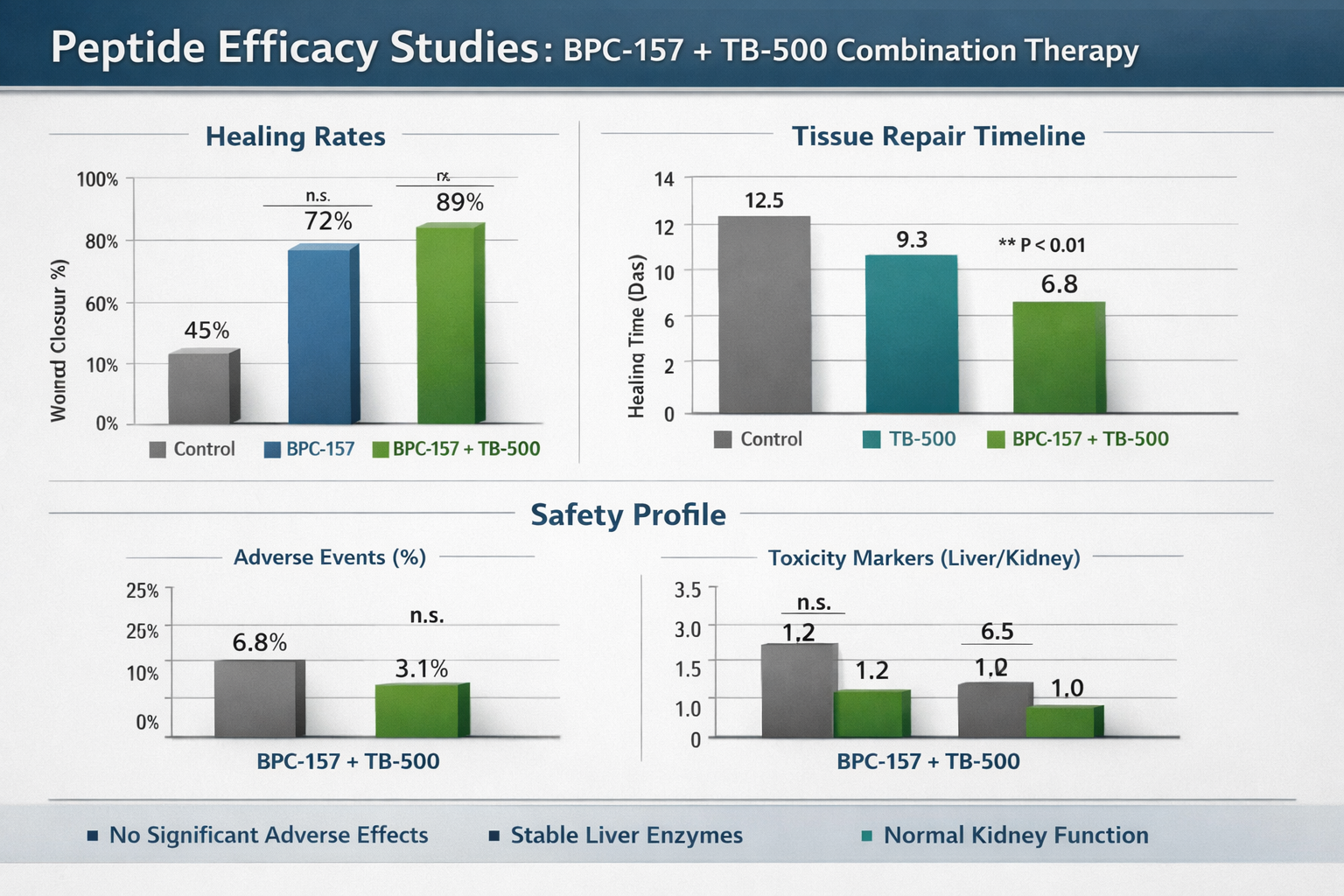
• The combination shows enhanced efficacy compared to individual peptide administration in research studies
• Proper reconstitution, storage, and handling protocols are critical for maintaining peptide stability and research integrity
• These peptides are available exclusively for research purposes and are not intended for human consumption
Understanding BPC-157 TB-500 Peptides: The Science Behind the Synergy
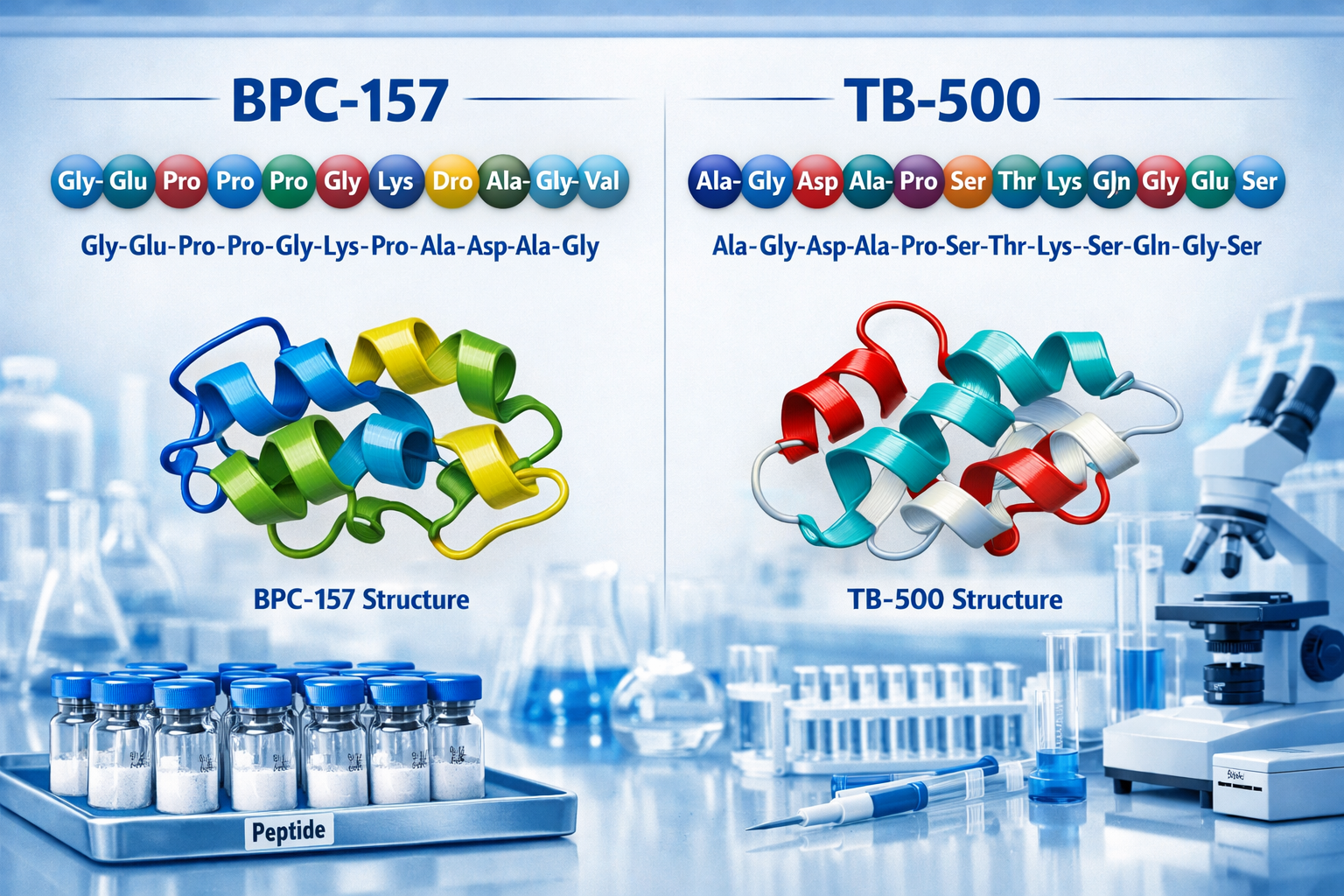
The combination of BPC-157 TB-500 peptides represents one of the most studied peptide partnerships in regenerative medicine research. These two compounds, while distinct in their primary mechanisms, create a powerful synergistic effect that has captured the attention of researchers worldwide.
BPC-157, also known as Body Protection Compound-157, is a pentadecapeptide derived from a protective protein found in human gastric juice. This remarkable peptide consists of 15 amino acids and has demonstrated extraordinary healing properties in numerous research studies. Its primary mechanisms include promoting angiogenesis, protecting the gastrointestinal tract, and enhancing the healing of various tissue types.
TB-500, on the other hand, is a synthetic version of Thymosin Beta-4, a naturally occurring peptide found in virtually all human and animal cells. This 43-amino acid peptide plays a crucial role in cellular repair, migration, and regeneration. TB-500 is particularly noted for its ability to promote the formation of new blood vessels and enhance the migration of cells to injury sites.
The Molecular Mechanisms of Action
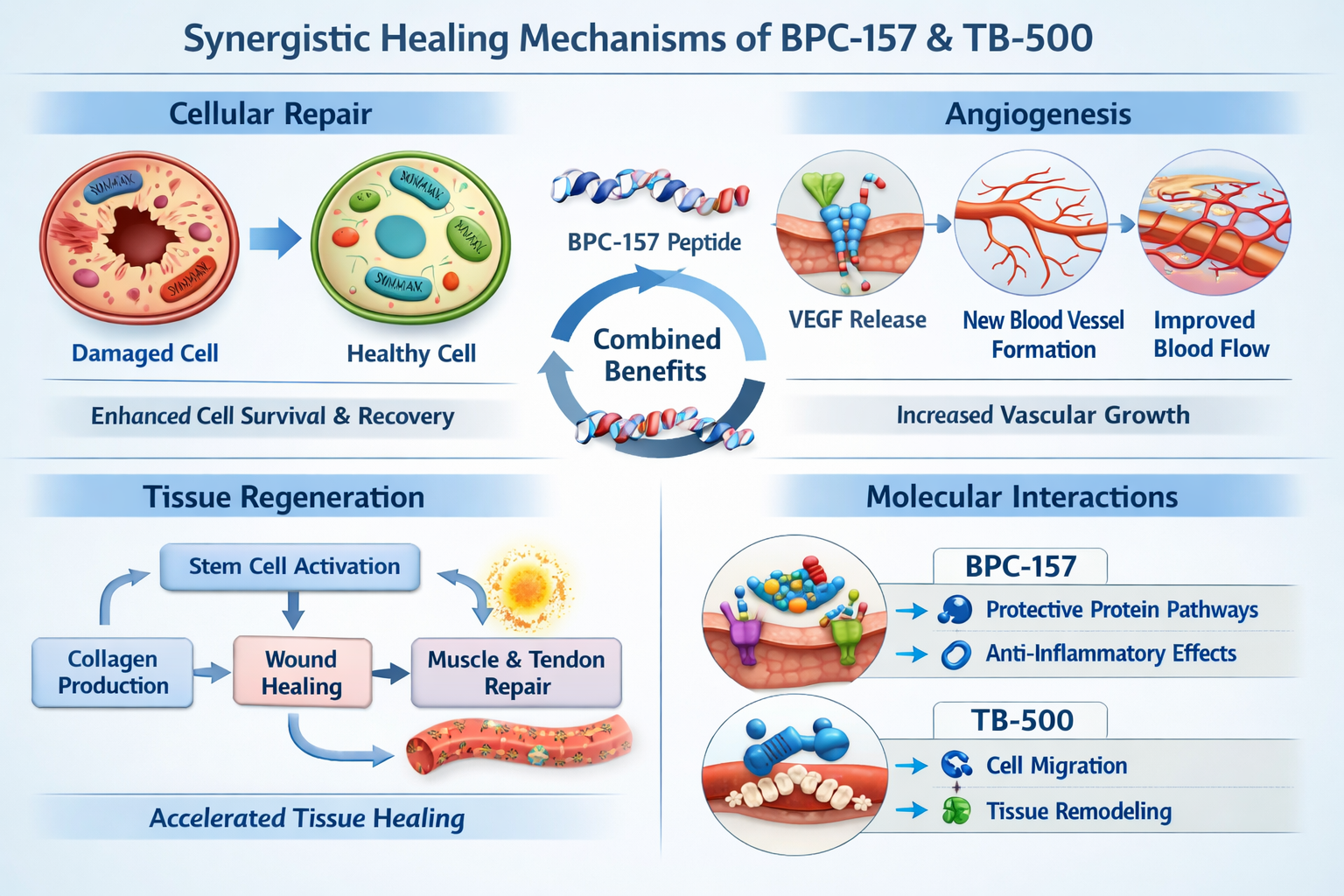
When researchers combine these BPC-157 TB-500 peptides, they observe enhanced therapeutic effects that surpass what either peptide achieves individually. BPC-157 works primarily through the activation of growth factors and the promotion of angiogenesis, while TB-500 facilitates cellular migration and tissue remodeling.
The synergistic relationship between these peptides creates multiple pathways for tissue repair:
- Enhanced Angiogenesis: Both peptides promote the formation of new blood vessels, but through different mechanisms
- Improved Cellular Migration: TB-500's primary strength complements BPC-157's tissue protection properties
- Accelerated Wound Healing: The combination addresses multiple phases of the healing process simultaneously
- Reduced Inflammation: Both peptides demonstrate anti-inflammatory properties that work together
For researchers interested in exploring high-quality peptide options, Pure Tested Peptides offers comprehensive research-grade compounds with detailed documentation and purity certificates.
<!DOCTYPE html>
<html lang="en">
<head>
    <meta charset="UTF-8">
    <meta name="viewport" content="width=device-width, initial-scale=1.0">
    <title>BPC-157 TB-500 Peptide Synergy Calculator</title>
    <style>
        .cg-peptide-calculator {
            max-width: 800px;
            margin: 20px auto;
            padding: 25px;
            background: linear-gradient(135deg, #f8f9fa 0%, #e9ecef 100%);
            border-radius: 15px;
            box-shadow: 0 8px 25px rgba(0,0,0,0.1);
            font-family: 'Segoe UI', Tahoma, Geneva, Verdana, sans-serif;
        }

        .cg-calculator-header {
            text-align: center;
            margin-bottom: 30px;
            color: #2c3e50;
        }

        .cg-calculator-header h3 {
            margin: 0;
            font-size: 24px;
            font-weight: 600;
        }

        .cg-input-section {
            display: grid;
            grid-template-columns: 1fr 1fr;
            gap: 20px;
            margin-bottom: 25px;
        }

        .cg-input-group {
            background: white;
            padding: 20px;
            border-radius: 10px;
            box-shadow: 0 2px 10px rgba(0,0,0,0.05);
        }

        .cg-input-group label {
            display: block;
            margin-bottom: 8px;
            font-weight: 500;
            color: #34495e;
        }

        .cg-input-group input, .cg-input-group select {
            width: 100%;
            padding: 12px;
            border: 2px solid #e9ecef;
            border-radius: 8px;
            font-size: 16px;
            transition: border-color 0.3s ease;
        }

        .cg-input-group input:focus, .cg-input-group select:focus {
            outline: none;
            border-color: #3498db;
        }

        .cg-calculate-btn {
            width: 100%;
            padding: 15px;
            background: linear-gradient(135deg, #3498db 0%, #2980b9 100%);
            color: white;
            border: none;
            border-radius: 10px;
            font-size: 18px;
            font-weight: 600;
            cursor: pointer;
            transition: transform 0.2s ease;
            margin-bottom: 25px;
        }

        .cg-calculate-btn:hover {
            transform: translateY(-2px);
            box-shadow: 0 5px 15px rgba(52, 152, 219, 0.3);
        }

        .cg-results {
            background: white;
            padding: 25px;
            border-radius: 10px;
            box-shadow: 0 2px 10px rgba(0,0,0,0.05);
            display: none;
        }

        .cg-results.show {
            display: block;
            animation: fadeIn 0.5s ease;
        }

        @keyframes fadeIn {
            from { opacity: 0; transform: translateY(20px); }
            to { opacity: 1; transform: translateY(0); }
        }

        .cg-result-item {
            display: flex;
            justify-content: space-between;
            align-items: center;
            padding: 12px 0;
            border-bottom: 1px solid #ecf0f1;
        }

        .cg-result-item:last-child {
            border-bottom: none;
        }

        .cg-result-label {
            font-weight: 500;
            color: #2c3e50;
        }

        .cg-result-value {
            font-weight: 600;
            color: #27ae60;
            font-size: 18px;
        }

        .cg-synergy-indicator {
            text-align: center;
            margin-top: 20px;
            padding: 15px;
            border-radius: 8px;
            font-weight: 600;
        }

        .cg-synergy-high {
            background: #d4edda;
            color: #155724;
            border: 1px solid #c3e6cb;
        }

        .cg-synergy-medium {
            background: #fff3cd;
            color: #856404;
            border: 1px solid #ffeaa7;
        }

        .cg-synergy-low {
            background: #f8d7da;
            color: #721c24;
            border: 1px solid #f5c6cb;
        }

        @media (max-width: 768px) {
            .cg-input-section {
                grid-template-columns: 1fr;
            }

            .cg-peptide-calculator {
                margin: 10px;
                padding: 20px;
            }
        }
    </style>
</head>
<body>
    <div class="cg-peptide-calculator">
        <div class="cg-calculator-header">
            <h3>🧬 BPC-157 TB-500 Synergy Calculator</h3>
            <p>Calculate optimal peptide ratios and synergistic effects for research purposes</p>
        </div>

        <div class="cg-input-section">
            <div class="cg-input-group">
                <label for="bpc157-dose">BPC-157 Dose (mcg)</label>
                <input type="number" id="bpc157-dose" placeholder="250" min="50" max="1000">
            </div>

            <div class="cg-input-group">
                <label for="tb500-dose">TB-500 Dose (mcg)</label>
                <input type="number" id="tb500-dose" placeholder="2000" min="500" max="5000">
            </div>

            <div class="cg-input-group">
                <label for="research-focus">Research Focus</label>
                <select id="research-focus">
                    <option value="tissue-repair">Tissue Repair</option>
                    <option value="angiogenesis">Angiogenesis</option>
                    <option value="wound-healing">Wound Healing</option>
                    <option value="anti-inflammatory">Anti-Inflammatory</option>
                </select>
            </div>

            <div class="cg-input-group">
                <label for="study-duration">Study Duration (days)</label>
                <input type="number" id="study-duration" placeholder="14" min="7" max="90">
            </div>
        </div>

        <button class="cg-calculate-btn" onclick="calculateSynergy()">
            Calculate Synergistic Effects
        </button>

        <div class="cg-results" id="results">
            <h4>Research Protocol Results</h4>

            <div class="cg-result-item">
                <span class="cg-result-label">BPC-157:TB-500 Ratio</span>
                <span class="cg-result-value" id="ratio-result">-</span>
            </div>

            <div class="cg-result-item">
                <span class="cg-result-label">Predicted Synergy Level</span>
                <span class="cg-result-value" id="synergy-level">-</span>
            </div>

            <div class="cg-result-item">
                <span class="cg-result-label">Total Daily Peptide Load</span>
                <span class="cg-result-value" id="total-dose">-</span>
            </div>

            <div class="cg-result-item">
                <span class="cg-result-label">Recommended Frequency</span>
                <span class="cg-result-value" id="frequency">-</span>
            </div>

            <div class="cg-synergy-indicator" id="synergy-indicator">
                Synergy analysis will appear here
            </div>
        </div>
    </div>

    <script>
        function calculateSynergy() {
            const bpc157Dose = parseFloat(document.getElementById('bpc157-dose').value) || 250;
            const tb500Dose = parseFloat(document.getElementById('tb500-dose').value) || 2000;
            const researchFocus = document.getElementById('research-focus').value;
            const studyDuration = parseFloat(document.getElementById('study-duration').value) || 14;

            // Calculate ratio
            const ratio = (bpc157Dose / tb500Dose).toFixed(3);

            // Calculate total dose
            const totalDose = bpc157Dose + tb500Dose;

            // Determine synergy level based on ratio and research focus
            let synergyScore = 0;
            const idealRatio = getIdealRatio(researchFocus);
            const ratioDeviation = Math.abs(parseFloat(ratio) - idealRatio);

            if (ratioDeviation < 0.05) synergyScore = 95;
            else if (ratioDeviation < 0.1) synergyScore = 85;
            else if (ratioDeviation < 0.15) synergyScore = 75;
            else if (ratioDeviation < 0.2) synergyScore = 65;
            else synergyScore = 50;

            // Adjust for dose ranges
            if (bpc157Dose >= 200 && bpc157Dose <= 500 && tb500Dose >= 1500 && tb500Dose <= 3000) {
                synergyScore += 10;
            }

            // Determine frequency based on study duration
            let frequency;
            if (studyDuration <= 14) frequency = "Daily";
            else if (studyDuration <= 30) frequency = "Every 2 days";
            else frequency = "Every 3 days";

            // Update results
            document.getElementById('ratio-result').textContent = `1:${(tb500Dose/bpc157Dose).toFixed(1)}`;
            document.getElementById('synergy-level').textContent = `${Math.min(synergyScore, 100)}%`;
            document.getElementById('total-dose').textContent = `${totalDose.toLocaleString()} mcg`;
            document.getElementById('frequency').textContent = frequency;

            // Update synergy indicator
            const indicator = document.getElementById('synergy-indicator');
            if (synergyScore >= 85) {
                indicator.className = 'cg-synergy-indicator cg-synergy-high';
                indicator.textContent = '🟢 Excellent synergistic potential for ' + researchFocus.replace('-', ' ');
            } else if (synergyScore >= 70) {
                indicator.className = 'cg-synergy-indicator cg-synergy-medium';
                indicator.textContent = '🟡 Good synergistic potential - consider ratio adjustment';
            } else {
                indicator.className = 'cg-synergy-indicator cg-synergy-low';
                indicator.textContent = '🔴 Suboptimal ratio - review dosing parameters';
            }

            // Show results
            document.getElementById('results').classList.add('show');
        }

        function getIdealRatio(focus) {
            const ratios = {
                'tissue-repair': 0.125,
                'angiogenesis': 0.15,
                'wound-healing': 0.1,
                'anti-inflammatory': 0.2
            };
            return ratios[focus] || 0.125;
        }

        // Initialize with default calculation
        window.onload = function() {
            setTimeout(calculateSynergy, 500);
        };
    </script>
</body>
</html>
The Individual Properties of BPC-157 and TB-500 in Research
BPC-157: The Gastrointestinal Guardian 🛡️
BPC-157 has earned its reputation as one of the most versatile healing peptides in research. Originally isolated from human gastric juice, this pentadecapeptide has demonstrated remarkable stability and bioactivity across various experimental conditions.
Key Research Properties of BPC-157:
- Gastrointestinal Protection: Demonstrates significant protective effects against various GI tract injuries
- Angiogenesis Promotion: Stimulates the formation of new blood vessels through VEGF pathway activation
- Anti-inflammatory Effects: Modulates inflammatory responses at the cellular level
- Tissue Repair Enhancement: Accelerates healing in tendons, ligaments, and muscle tissue
- Neuroprotective Properties: Shows potential in protecting neural tissue from damage
Research studies have consistently shown that BPC-157 maintains its stability in human gastric juice for extended periods, making it an ideal candidate for various research applications. The peptide's ability to promote healing without significant side effects has made it a cornerstone of regenerative medicine research.
TB-500: The Cellular Migration Maestro 🚀
TB-500 represents the synthetic version of Thymosin Beta-4, a peptide that plays crucial roles in cellular development and repair. This 43-amino acid sequence has been extensively studied for its ability to promote cellular migration and tissue remodeling.
Key Research Properties of TB-500:
- Enhanced Cell Migration: Promotes the movement of cells to injury sites
- Actin Regulation: Modulates actin polymerization for improved cellular function
- Wound Healing Acceleration: Significantly reduces healing time in various tissue types
- Anti-inflammatory Action: Reduces inflammatory markers and promotes resolution
- Cardiac Protection: Demonstrates cardioprotective effects in research models
The unique mechanism of TB-500 involves the regulation of actin, a protein essential for cellular structure and movement. This regulation allows cells to migrate more effectively to areas requiring repair, making TB-500 an invaluable tool in regenerative research.
Researchers looking to explore the benefits of TB-500 can find comprehensive information about its mechanisms and applications in various research protocols.
Synergistic Effects When Combined
When BPC-157 TB-500 peptides are used together in research, the results often exceed the sum of their individual effects. This synergy occurs through several mechanisms:
- Complementary Pathways: BPC-157 focuses on angiogenesis while TB-500 enhances cellular migration
- Enhanced Bioavailability: The combination may improve the bioavailability of both peptides
- Temporal Synergy: Different phases of healing are addressed simultaneously
- Reduced Inflammatory Response: Both peptides work together to minimize inflammation
For researchers interested in exploring this powerful combination, BPC-157 and TB-500 research protocols provide detailed guidance on optimal usage parameters.
Research Applications and Mechanisms of BPC-157 TB-500 Peptides
The research applications for BPC-157 TB-500 peptides span across multiple disciplines, from basic cellular biology to advanced regenerative medicine studies. Understanding these applications helps researchers design more effective protocols and achieve better experimental outcomes.
Tissue Repair and Regeneration Studies
One of the most prominent areas of research involving BPC-157 TB-500 peptides focuses on tissue repair and regeneration. These peptides have shown remarkable efficacy in promoting healing across various tissue types:
Tendon and Ligament Research:
- Accelerated collagen synthesis and organization
- Improved tensile strength in healing tissues
- Enhanced vascularization of repair sites
- Reduced scar tissue formation
Muscle Tissue Studies:
- Faster recovery from exercise-induced damage
- Improved satellite cell activation
- Enhanced protein synthesis pathways
- Reduced inflammatory markers post-injury
Bone Healing Research:
- Promoted osteoblast activity
- Enhanced callus formation
- Improved fracture healing timelines
- Increased bone mineral density in repair areas
Cardiovascular Research Applications
The cardiovascular applications of BPC-157 TB-500 peptides represent a rapidly growing area of research interest. Both peptides have demonstrated significant cardioprotective properties:
Angiogenesis Studies:
- Promotion of new blood vessel formation
- Enhanced endothelial cell proliferation
- Improved collateral circulation development
- Increased VEGF expression
Cardiac Protection Research:
- Reduced ischemia-reperfusion injury
- Enhanced cardiac cell survival
- Improved left ventricular function
- Decreased inflammatory markers
Neurological Research Applications
Recent studies have explored the neuroprotective potential of BPC-157 TB-500 peptides, revealing promising applications in neurological research:
Neuroprotection Studies:
- Protection against oxidative stress
- Enhanced neuronal survival rates
- Improved synaptic plasticity
- Reduced neuroinflammation
Neural Regeneration Research:
- Promoted axonal growth
- Enhanced nerve conduction velocity
- Improved functional recovery
- Increased neurotrophic factor expression
For researchers interested in comprehensive peptide research options, exploring all peptides for sale provides access to various combinations and individual compounds for diverse research applications.
Gastrointestinal Research
BPC-157 particularly excels in gastrointestinal research applications, while TB-500 provides complementary healing support:
GI Tract Protection:
- Ulcer healing acceleration
- Inflammatory bowel disease models
- Gastric mucosa protection
- Intestinal barrier function improvement
Digestive System Repair:
- Enhanced epithelial cell regeneration
- Improved gut microbiome balance
- Reduced intestinal permeability
- Accelerated wound healing in GI tissues
Anti-Inflammatory Research
Both peptides in the BPC-157 TB-500 peptides combination demonstrate significant anti-inflammatory properties:
Inflammatory Pathway Modulation:
- NF-κB pathway inhibition
- Reduced pro-inflammatory cytokines
- Enhanced anti-inflammatory mediators
- Improved resolution of inflammation
Chronic Inflammation Studies:
- Long-term inflammatory condition models
- Autoimmune research applications
- Age-related inflammation studies
- Exercise-induced inflammation research
Researchers can find detailed information about BPC-157 peptide applications and protocols for various research scenarios.
Dosage, Administration, and Research Protocols
Developing effective research protocols with BPC-157 TB-500 peptides requires careful consideration of dosage, timing, and administration methods. The complexity of working with these peptides demands attention to detail and adherence to established research standards.
Standard Research Dosage Guidelines
BPC-157 Research Dosages:
- Low Dose: 200-300 mcg per administration
- Moderate Dose: 400-500 mcg per administration
- High Dose: 600-800 mcg per administration
- Research Duration: Typically 2-8 weeks depending on study objectives
TB-500 Research Dosages:
- Low Dose: 1.5-2.0 mg per administration
- Moderate Dose: 2.5-3.0 mg per administration
- High Dose: 4.0-5.0 mg per administration
- Research Duration: Usually 4-6 weeks with potential extended protocols
Optimal Combination Ratios
When using BPC-157 TB-500 peptides together, researchers have identified several effective ratio combinations:
| Research Focus | BPC-157 Dose | TB-500 Dose | Ratio | Frequency |
|---|---|---|---|---|
| Tissue Repair | 250 mcg | 2.0 mg | 1:8 | Daily |
| Wound Healing | 300 mcg | 2.5 mg | 1:8.3 | Daily |
| Anti-Inflammatory | 200 mcg | 1.5 mg | 1:7.5 | Every 2 days |
| Cardiovascular | 400 mcg | 3.0 mg | 1:7.5 | Daily |
| Neurological | 250 mcg | 2.0 mg | 1:8 | Daily |
Reconstitution Protocols
Proper reconstitution is crucial for maintaining peptide integrity and research validity:
BPC-157 Reconstitution:
- Use sterile bacteriostatic water (0.9% benzyl alcohol)
- Add solvent slowly down the side of the vial
- Gently swirl – never shake vigorously
- Allow complete dissolution before use
- Store at 2-8°C after reconstitution
TB-500 Reconstitution:
- Use sterile bacteriostatic water or sterile water for injection
- Add 2-3 mL solvent for standard 5mg vials
- Inject solvent slowly to avoid foaming
- Gently rotate vial until completely dissolved
- Store refrigerated and use within 30 days
Administration Methods for Research
Subcutaneous Administration:
- Most common method for both peptides
- Injection sites should be rotated
- Use insulin syringes (29-31 gauge)
- Inject slowly to minimize tissue irritation
Intramuscular Administration:
- Alternative method for certain research protocols
- Deeper tissue penetration
- May provide different pharmacokinetic profiles
- Requires larger gauge needles (25-27 gauge)
Topical Applications:
- Limited research applications
- Useful for localized tissue studies
- Requires appropriate carrier vehicles
- Lower systemic absorption rates
For researchers seeking high-quality peptides with detailed protocols, Pure Tested Peptides provides comprehensive support materials and research-grade compounds.
Research Protocol Design Considerations
Study Duration Planning:
- Short-term studies: 1-2 weeks for acute effects
- Medium-term studies: 4-6 weeks for tissue repair
- Long-term studies: 8-12 weeks for comprehensive analysis
- Follow-up periods: 2-4 weeks post-treatment for lasting effects
Timing Considerations:
- Morning administration: Often preferred for consistency
- Pre/Post exercise: Timing relative to physical stress
- Meal timing: Consideration of fed vs. fasted states
- Circadian rhythms: Alignment with natural biological cycles
Control Group Management:
- Saline controls for injection studies
- Vehicle controls for topical applications
- Sham procedures for surgical models
- Placebo controls for behavioral studies
Safety Monitoring in Research
Regular Assessment Parameters:
- Body weight and general condition
- Injection site reactions
- Behavioral changes
- Blood chemistry panels
- Histological examinations
Adverse Event Documentation:
- Detailed recording of any unusual observations
- Photographic documentation when appropriate
- Timeline correlation with treatment administration
- Severity grading systems
Researchers interested in exploring BPC-157 for sale can access detailed safety profiles and monitoring guidelines for their research protocols.
Storage, Handling, and Quality Considerations
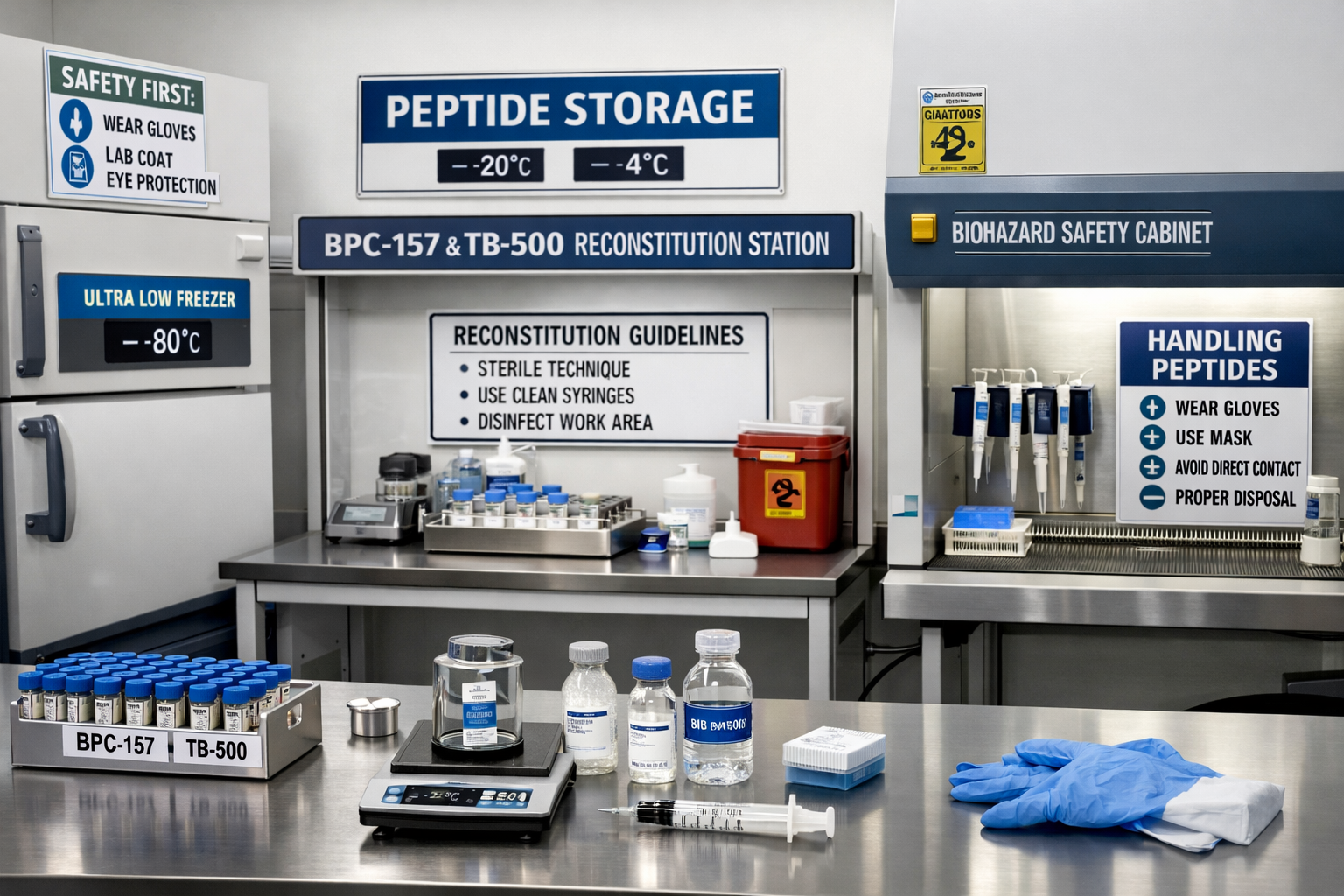
The integrity of BPC-157 TB-500 peptides research depends heavily on proper storage, handling, and quality assurance practices. These peptides, like all research compounds, require specific conditions to maintain their biological activity and research validity.
Optimal Storage Conditions
Lyophilized (Freeze-Dried) Storage:
- Temperature: -20°C to -80°C for long-term storage
- Humidity: Low humidity environment (desiccated)
- Light Protection: Store in dark containers or wrap in foil
- Stability: Can remain stable for 2-3 years when properly stored
- Container: Original sealed vials with proper labeling
Reconstituted Peptide Storage:
- Temperature: 2-8°C (refrigerated)
- Duration: Use within 30 days of reconstitution
- Containers: Sterile vials with tight-fitting caps
- Aliquoting: Consider dividing into smaller portions to minimize freeze-thaw cycles
- Documentation: Clear labeling with reconstitution date and concentration
Handling Best Practices
Laboratory Safety Protocols:
- Always wear appropriate personal protective equipment (PPE)
- Use sterile technique when handling reconstituted peptides
- Work in clean, controlled environments
- Avoid contamination through proper aseptic techniques
- Document all handling procedures for research integrity
Contamination Prevention:
- Use sterile syringes and needles for each withdrawal
- Never reuse injection equipment
- Avoid touching needle tips or vial stoppers
- Change gloves between different peptide preparations
- Maintain clean work surfaces
Quality Assurance and Testing
Certificate of Analysis (COA) Review:
When working with BPC-157 TB-500 peptides, researchers should always review the COA, which should include:
- Purity Analysis: HPLC results showing >95% purity
- Mass Spectrometry: Confirmation of molecular weight
- Amino Acid Analysis: Verification of peptide sequence
- Bacterial Endotoxin Testing: LAL test results
- Heavy Metal Screening: Lead, mercury, cadmium levels
- Moisture Content: Should be <5% for lyophilized peptides
Third-Party Testing Verification:
- Independent laboratory confirmation
- Batch-specific testing results
- Stability studies under various conditions
- Microbiological testing for sterility
- Potency assays for biological activity
Transportation and Shipping Considerations
Cold Chain Maintenance:
- Dry ice shipping for long-distance transport
- Insulated packaging to maintain temperature
- Temperature monitoring devices
- Expedited shipping to minimize transit time
- Clear handling instructions for recipients
Documentation Requirements:
- Material Safety Data Sheets (MSDS)
- Import/export permits when applicable
- Research institution verification
- Proper labeling for research use only
- Chain of custody documentation
For researchers seeking reliable sources with comprehensive quality assurance, buy peptides online from established suppliers that provide detailed documentation and quality certificates.
Stability Studies and Degradation Monitoring
Factors Affecting Peptide Stability:
- Temperature fluctuations: Major cause of degradation
- pH variations: Can affect peptide structure
- Light exposure: UV radiation can break peptide bonds
- Oxidation: Methionine and cysteine residues are vulnerable
- Mechanical stress: Agitation can cause aggregation
Monitoring Degradation:
- Visual inspection for color changes or precipitation
- HPLC analysis for purity verification
- Mass spectrometry for fragmentation detection
- Biological activity assays
- pH measurements of solutions
Research Documentation Standards
Record Keeping Requirements:
- Detailed logs of storage conditions
- Temperature monitoring records
- Handling and usage documentation
- Quality control test results
- Any observed changes or anomalies
Traceability Systems:
- Batch number tracking
- Supplier information
- Expiration date monitoring
- Usage history documentation
- Research protocol compliance records
Common Storage and Handling Errors
Mistakes to Avoid:
- ❌ Storing reconstituted peptides at room temperature
- ❌ Using non-sterile water for reconstitution
- ❌ Exposing peptides to direct sunlight
- ❌ Repeatedly freezing and thawing solutions
- ❌ Using expired or degraded peptides
- ❌ Mixing different peptide batches without documentation
Best Practices Checklist:
- ✅ Verify storage temperatures regularly
- ✅ Use appropriate sterile techniques
- ✅ Document all procedures thoroughly
- ✅ Check COA before use
- ✅ Monitor for signs of degradation
- ✅ Follow established protocols consistently
Researchers can find comprehensive guidance on best practices for storing research peptides to ensure optimal research outcomes and peptide integrity.
Equipment and Infrastructure Requirements
Essential Equipment:
- Refrigerated storage units with temperature monitoring
- Freezers capable of -20°C or -80°C
- Analytical balance for accurate measurements
- Sterile laminar flow hood for preparation
- pH meters for solution verification
- HPLC system for quality verification (advanced facilities)
Infrastructure Considerations:
- Backup power systems for critical storage
- Temperature alarm systems
- Controlled access to storage areas
- Proper ventilation for laboratory spaces
- Emergency procedures for equipment failure
When researchers need access to high-quality BPC-157 TB-500 peptides with comprehensive support and documentation, peptides for sale from reputable suppliers ensure research integrity and reliable results.
Conclusion: Advancing Research with BPC-157 TB-500 Peptides
The field of peptide research continues to evolve rapidly, and BPC-157 TB-500 peptides represent one of the most promising combinations for advancing our understanding of tissue repair, regeneration, and healing mechanisms. Throughout this comprehensive guide, we've explored the intricate science behind these remarkable compounds and their synergistic potential in research applications.
As we've discovered, the combination of BPC-157 and TB-500 creates a powerful research tool that addresses multiple aspects of cellular repair and regeneration. BPC-157's exceptional gastrointestinal protection and angiogenesis promotion, combined with TB-500's cellular migration enhancement and tissue remodeling capabilities, provides researchers with unprecedented opportunities to study healing mechanisms at the molecular level.
Key Research Implications
The research applications we've discussed span across numerous disciplines, from basic cellular biology to advanced regenerative medicine studies. The BPC-157 TB-500 peptides combination has shown particular promise in:
- Tissue Engineering: Understanding how peptides can enhance scaffold integration and tissue development
- Wound Healing Research: Investigating accelerated healing mechanisms and optimal treatment protocols
- Cardiovascular Studies: Exploring cardioprotective effects and angiogenesis promotion
- Neurological Research: Examining neuroprotective properties and neural regeneration potential
- Anti-inflammatory Studies: Understanding how these peptides modulate inflammatory pathways
Future Research Directions
As we move forward in 2026, several exciting research directions are emerging for BPC-157 TB-500 peptides:
- Personalized Medicine Applications: Investigating how genetic variations affect peptide response
- Combination Therapies: Exploring synergies with other therapeutic compounds
- Delivery System Optimization: Developing more effective administration methods
- Long-term Safety Studies: Comprehensive evaluation of extended usage protocols
- Mechanism Elucidation: Deeper understanding of molecular pathways and targets
Actionable Next Steps for Researchers
If you're considering incorporating BPC-157 TB-500 peptides into your research program, here are the essential steps to ensure success:
1. Protocol Development
- Define clear research objectives and endpoints
- Establish appropriate control groups and experimental design
- Determine optimal dosing and administration schedules
- Plan for comprehensive data collection and analysis
2. Quality Assurance
- Source peptides from reputable suppliers with comprehensive COAs
- Implement proper storage and handling protocols
- Establish quality control checkpoints throughout your study
- Document all procedures for reproducibility
3. Safety Considerations
- Develop comprehensive safety monitoring protocols
- Establish clear adverse event reporting procedures
- Ensure proper training for all research personnel
- Maintain detailed safety documentation
4. Regulatory Compliance
- Verify all necessary permits and approvals
- Ensure compliance with institutional guidelines
- Maintain proper documentation for regulatory requirements
- Stay updated on evolving regulations and standards
The Importance of Reliable Sources
Throughout our exploration of BPC-157 TB-500 peptides, one critical factor emerges: the paramount importance of working with reliable, high-quality peptide suppliers. Pure Tested Peptides has established itself as the #1 most trusted US peptide supplier, providing researchers with the quality, documentation, and support necessary for successful research outcomes.
When selecting peptides for your research, consider these essential criteria:
- Comprehensive third-party testing and verification
- Detailed certificates of analysis for each batch
- Proper storage and shipping protocols
- Responsive customer support and technical assistance
- Consistent quality across multiple orders
Research Ethics and Responsibility
As we conclude this comprehensive guide, it's crucial to emphasize that all products discussed are sold exclusively for research purposes and are not intended for human consumption. The BPC-157 TB-500 peptides represent powerful research tools that must be used responsibly within appropriate research frameworks.
Researchers have a responsibility to:
- Conduct studies ethically and with proper oversight
- Report results accurately and transparently
- Share findings with the broader research community
- Ensure proper safety protocols are followed
- Maintain the highest standards of research integrity
Moving Forward in Peptide Research
The future of peptide research holds tremendous promise, and BPC-157 TB-500 peptides will undoubtedly play a significant role in advancing our understanding of healing and regeneration. As researchers continue to explore these compounds, we can expect to see breakthrough discoveries that may eventually translate into improved therapeutic approaches.
The synergistic relationship between BPC-157 and TB-500 serves as a powerful example of how combining complementary peptides can enhance research outcomes. This principle may guide future research into other peptide combinations and their potential applications.
For researchers ready to begin their journey with BPC-157 TB-500 peptides, the path forward is clear: careful planning, rigorous methodology, and partnership with reliable suppliers will ensure the best possible research outcomes. The scientific community eagerly awaits the discoveries that will emerge from continued research with these remarkable compounds.
Remember, every breakthrough in peptide research brings us one step closer to understanding the fundamental mechanisms of healing and regeneration. Your research with BPC-157 TB-500 peptides could contribute to this growing body of knowledge and help advance the field for future generations of researchers.
Important Research Notice: All peptides discussed in this article, including BPC-157 and TB-500, are sold exclusively for research purposes and are not intended for human consumption. Researchers must ensure compliance with all applicable regulations and institutional guidelines when conducting peptide research.
SEO Meta Information
Meta Title: BPC-157 TB-500 Peptides: Complete Research Guide 2026
Meta Description: Comprehensive guide to BPC-157 TB-500 peptides for research. Learn about synergistic effects, protocols, dosing, and applications. Research-grade peptides only.