
Ideal Dose and Dosing for TB4 Peptide: A Comprehensive Guide for 2026
Imagine unlocking the potential of one of the most researched regenerative peptides available today—but only if you get the dosing right. The ideal dose and dosing for TB4 peptide can make the difference between optimized research outcomes and wasted resources. Thymosin Beta-4 (TB4) has captured attention across research communities, fitness circles, and wellness clinics for its remarkable properties in tissue repair and cellular regeneration studies. Understanding proper dosing protocols is essential for anyone exploring this fascinating compound.
Key Takeaways
- TB4 peptide dosing typically ranges from 2-10mg per administration, depending on research goals and body weight considerations
- Frequency protocols vary from twice weekly to daily, with most research suggesting 2-3 times per week for optimal results
- Proper reconstitution with bacteriostatic water is critical for maintaining peptide stability and effectiveness
- Dosing should be adjusted based on specific research objectives, whether for acute injury protocols or long-term maintenance
- Quality sourcing from reputable suppliers ensures accurate dosing and reliable research outcomes
Understanding TB4 Peptide Fundamentals
What is TB4 Peptide?
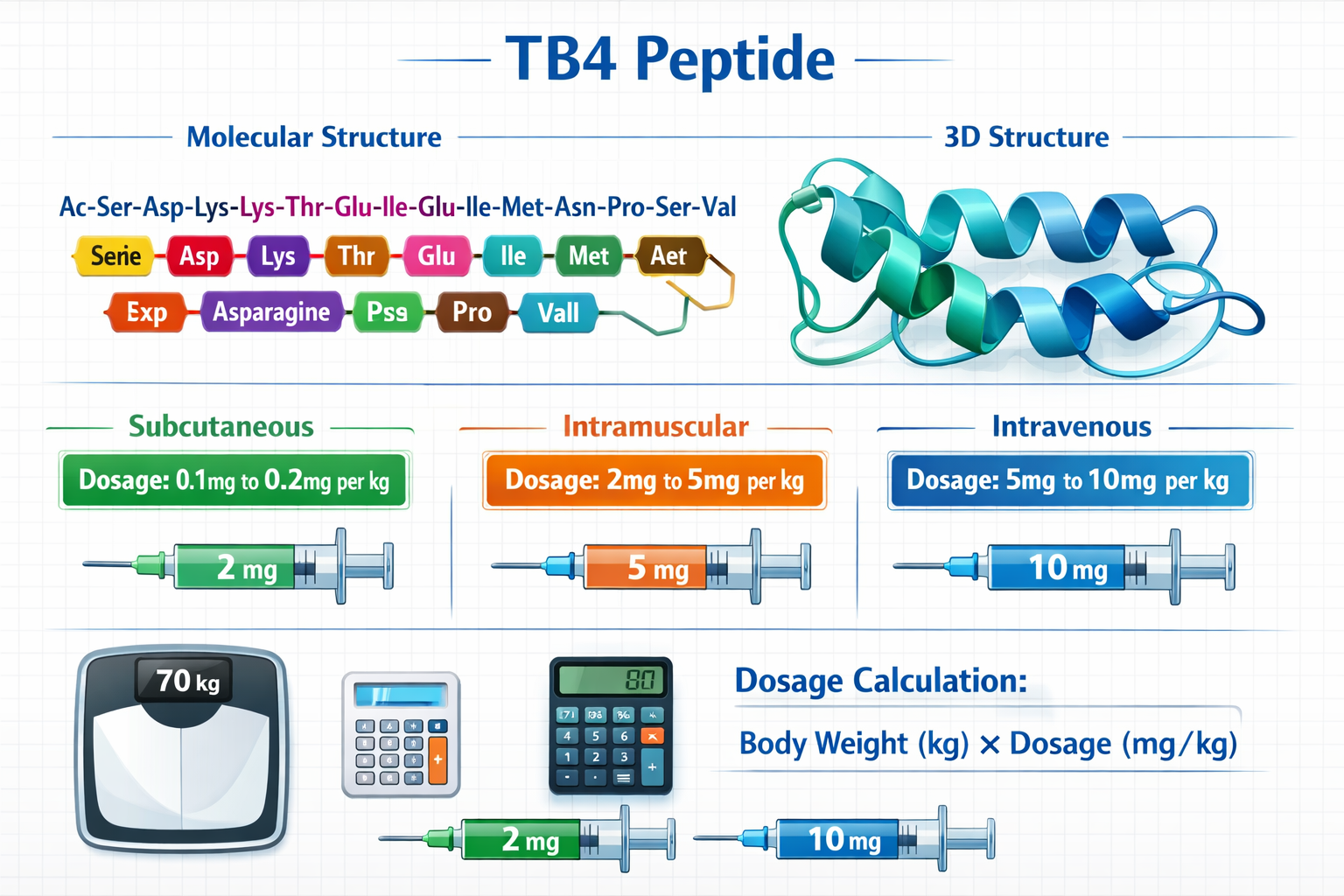
Thymosin Beta-4 (TB4) is a naturally occurring peptide consisting of 43 amino acids. Found in virtually all human cells except red blood cells, TB4 plays a crucial role in cellular migration, proliferation, and differentiation. This peptide has been extensively studied since its discovery, with research focusing on its regenerative properties and potential applications in tissue repair.
TB4 works primarily by regulating actin polymerization, a fundamental process in cell movement and structure. This mechanism underlies many of its observed effects in research settings, including wound healing, angiogenesis (new blood vessel formation), and anti-inflammatory responses. 🔬
The peptide's molecular weight of approximately 4.9 kDa makes it suitable for various administration methods. Researchers appreciate TB4 for its stability profile and relatively straightforward handling requirements compared to more delicate peptides. For those exploring peptide research options, understanding TB4's unique characteristics is foundational.
TB4 vs TB-500: Important Distinctions
Many discussions about the ideal dose and dosing for TB4 peptide become confused with TB-500, a synthetic version containing a specific fragment of the full TB4 sequence. While TB-500 contains the active region (amino acids 1-43 or specifically the 17-23 fragment), full-sequence TB4 represents the complete naturally occurring peptide.
Key differences include:
| Characteristic | TB4 (Full Sequence) | TB-500 (Synthetic Fragment) |
|---|---|---|
| Amino Acid Count | 43 amino acids | Variable (often 7-43) |
| Source | Naturally occurring | Synthetically produced |
| Research History | Extensive clinical studies | Primarily animal studies |
| Availability | Limited commercial | More widely available |
| Dosing Protocols | Well-established ranges | Often extrapolated |
Understanding this distinction matters when reviewing research literature and determining appropriate dosing protocols. The benefits of TB500 often reference studies using various forms of the peptide.
Ideal Dose and Dosing for TB4 Peptide: Research-Based Protocols
Standard Dosing Guidelines
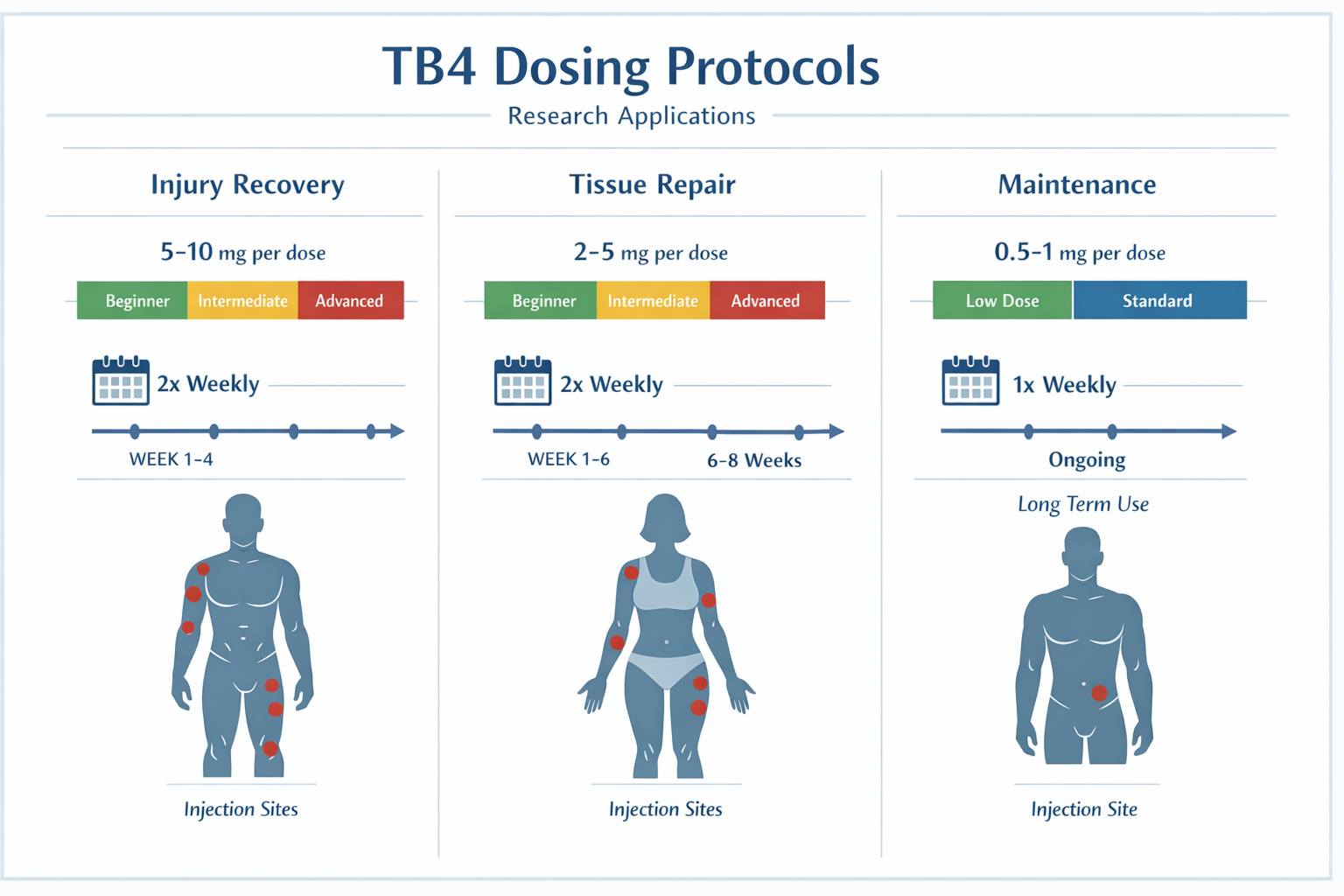
The ideal dose and dosing for TB4 peptide varies significantly based on research objectives, subject characteristics, and intended duration of use. Published research and clinical observations suggest several established protocols:
Loading Phase Protocols:
- Dose range: 5-10mg per administration
- Frequency: 2-3 times per week
- Duration: 4-6 weeks
- Purpose: Establishing therapeutic levels for acute research applications
Maintenance Phase Protocols:
- Dose range: 2-5mg per administration
- Frequency: 1-2 times per week
- Duration: Ongoing as needed
- Purpose: Sustaining research effects after loading phase
Body Weight Considerations:
Most research protocols calculate TB4 dosing based on body weight, typically ranging from 0.05mg to 0.15mg per kilogram. For a 70kg individual, this translates to approximately 3.5-10.5mg per dose.
"Proper dosing of TB4 peptide requires careful consideration of research goals, subject characteristics, and administration frequency to optimize outcomes while maintaining appropriate protocols." – Research Protocol Guidelines
When exploring peptide options, researchers should carefully document their protocols and adjust based on observed responses.
Frequency and Timing Protocols
The frequency of TB4 administration significantly impacts research outcomes. The peptide's half-life of approximately 2-4 hours in circulation means that while acute effects occur rapidly, sustained benefits require regular dosing.
Recommended Frequency Schedules:
-
Twice Weekly Protocol 💉
- Monday and Thursday (or similar spacing)
- Allows 3-4 days between administrations
- Suitable for maintenance research
- Total weekly dose: 4-10mg
-
Three Times Weekly Protocol
- Monday, Wednesday, Friday pattern
- Balanced approach for active research phases
- Provides consistent peptide availability
- Total weekly dose: 6-15mg
-
Daily Protocol
- Reserved for intensive research periods
- Typically shorter duration (2-4 weeks)
- Requires careful monitoring
- Total weekly dose: 14-35mg
Timing considerations include administering TB4 at consistent times to maintain stable research conditions. Many protocols suggest morning administration on an empty stomach, though timing flexibility exists compared to some other peptides.
Dosing for Specific Research Applications
The ideal dose and dosing for TB4 peptide should align with specific research objectives. Different applications may warrant adjusted protocols:
Acute Injury Research Protocols:
- Initial dose: 7-10mg
- Frequency: Daily for first week, then 3x weekly
- Duration: 4-6 weeks intensive phase
- Rationale: Higher initial dosing supports acute phase responses
Tissue Repair Studies:
- Dose range: 5-7mg
- Frequency: 2-3 times weekly
- Duration: 6-12 weeks
- Rationale: Sustained moderate dosing supports regenerative processes
Preventive/Maintenance Research:
- Dose range: 2-4mg
- Frequency: 1-2 times weekly
- Duration: Ongoing
- Rationale: Lower doses maintain baseline support
Athletic Performance Research:
- Dose range: 4-8mg
- Frequency: 2 times weekly
- Duration: 8-12 weeks
- Rationale: Supports recovery and adaptation studies
For comprehensive information on peptide dosing protocols, researchers should consult current literature and adjust based on specific study parameters.
Reconstitution and Preparation Guidelines
Proper Reconstitution Techniques
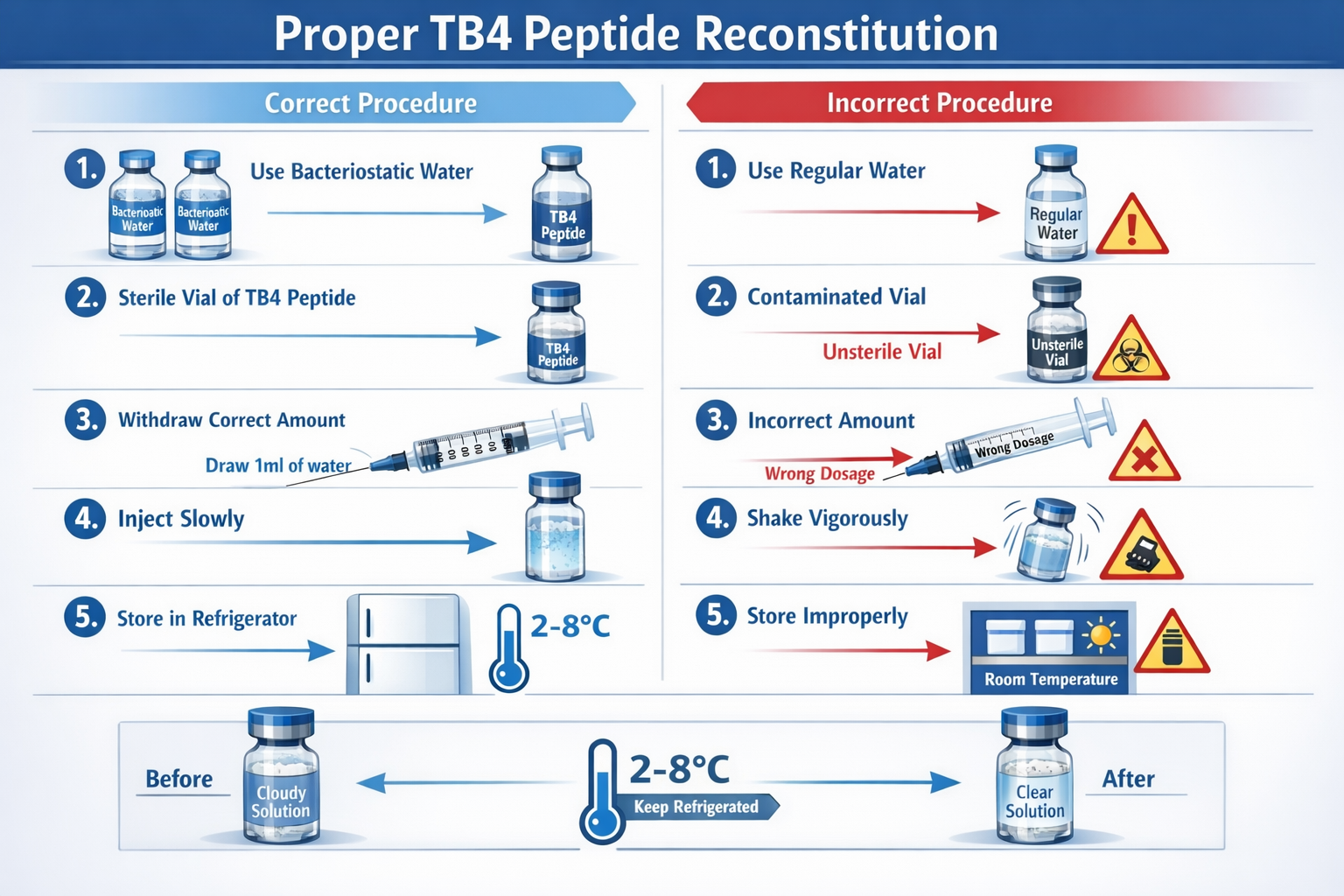
Understanding the ideal dose and dosing for TB4 peptide requires mastery of proper reconstitution procedures. TB4 typically arrives as a lyophilized (freeze-dried) powder requiring reconstitution with bacteriostatic water before administration.
Step-by-Step Reconstitution Process:
-
Gather Materials 🧪
- TB4 peptide vial (typically 2mg, 5mg, or 10mg)
- Bacteriostatic water (0.9% benzyl alcohol)
- Sterile syringes (1mL and 3mL)
- Alcohol swabs
- Sterile work surface
-
Calculate Required Water Volume
- Common ratio: 1mg TB4 per 0.5mL water
- Example: 5mg vial = 2.5mL bacteriostatic water
- Creates easy-to-measure concentrations
-
Reconstitution Procedure
- Clean vial tops with alcohol swabs
- Draw calculated water volume into syringe
- Inject water slowly down vial side (not directly onto powder)
- Gently swirl (never shake) until fully dissolved
- Solution should be clear and colorless
-
Concentration Calculations
- 5mg TB4 in 2.5mL = 2mg/mL concentration
- For 5mg dose: draw 2.5mL (entire vial)
- For 2mg dose: draw 1mL
- Use insulin syringes for precise measurement
Important Reconstitution Tips:
- Always use bacteriostatic water, not sterile water, for multi-dose vials
- Allow refrigerated peptides to reach room temperature before reconstitution
- Never shake vigorously—this can damage peptide structure
- Use within 30 days of reconstitution when stored properly
Those seeking quality peptide sources should verify proper storage and handling information from suppliers.
Storage and Stability Considerations
Proper storage directly impacts TB4 peptide potency and the reliability of dosing protocols. Both unreconstituted and reconstituted peptides require specific conditions:
Unreconstituted (Lyophilized) Storage:
- Temperature: -20°C to -80°C (freezer)
- Alternative: 2-8°C (refrigerator) for short-term
- Duration: 12-24 months when frozen
- Protection: Keep away from light and moisture
Reconstituted Solution Storage:
- Temperature: 2-8°C (refrigerator) always
- Duration: Up to 30 days maximum
- Container: Original sterile vial
- Protection: Minimize light exposure
Stability Factors:
Temperature fluctuations significantly impact peptide integrity. Each freeze-thaw cycle can reduce potency by 5-10%. For this reason, researchers should:
✅ Do:
- Store in consistent refrigerator location
- Use dedicated peptide storage container
- Label vials with reconstitution date
- Track remaining doses and expiration
- Maintain sterile technique during each draw
❌ Don't:
- Freeze reconstituted solutions
- Store at room temperature
- Expose to direct sunlight
- Reuse or contaminate vials
- Keep beyond 30-day window
Understanding proper storage ensures that the ideal dose and dosing for TB4 peptide remains accurate throughout the research period. For additional guidance on peptide handling protocols, consult supplier documentation.
Administration Methods and Best Practices
Subcutaneous Injection Technique
Subcutaneous (SubQ) injection represents the most common administration method for TB4 peptide research. This technique delivers the peptide into the fatty tissue layer between skin and muscle, allowing for gradual absorption.
Optimal Injection Sites:
- Abdomen: 2 inches away from navel (most common)
- Thigh: Upper outer quadrant
- Upper arm: Outer back area (requires assistance)
- Lower back: Above hip area
Proper Injection Procedure:
-
Preparation Phase
- Wash hands thoroughly
- Clean injection site with alcohol swab
- Allow skin to dry completely
- Remove air bubbles from syringe
-
Injection Phase
- Pinch skin to create fold
- Insert needle at 45-90 degree angle
- Inject slowly and steadily
- Withdraw needle quickly
- Apply gentle pressure (don't rub)
-
Post-Injection Care
- Dispose of needle in sharps container
- Rotate injection sites with each dose
- Monitor for any adverse reactions
- Document administration details
Needle Specifications:
- Size: 29-31 gauge (thinner = less discomfort)
- Length: 0.5 inch (12.7mm) for SubQ
- Type: Insulin syringes work well for small volumes
The ideal dose and dosing for TB4 peptide remains consistent regardless of injection site, though absorption rates may vary slightly. Researchers exploring comprehensive peptide protocols should maintain detailed administration logs.
Alternative Administration Routes
While subcutaneous injection dominates TB4 research protocols, alternative administration methods exist with varying efficacy profiles:
Intramuscular (IM) Injection:
- Needle length: 1-1.5 inches
- Sites: Deltoid, vastus lateralis, gluteus
- Absorption: Faster than SubQ
- Use case: Some research protocols prefer IM for acute applications
Oral Administration:
- Bioavailability: Significantly lower than injection
- Dosing adjustment: May require 5-10x higher doses
- Research status: Limited published data
- Consideration: Peptide degradation in digestive system
Nasal Administration:
- Method: Specialized nasal spray formulations
- Absorption: Direct to bloodstream via nasal mucosa
- Availability: Limited commercial options
- Research: Emerging area of study
Topical Application:
- Formulation: Specialized cream or serum bases
- Penetration: Limited systemic absorption
- Use case: Localized research applications
- Effectiveness: Primarily surface-level effects
"Subcutaneous injection remains the gold standard for TB4 peptide administration due to its reliable absorption profile, ease of self-administration, and extensive research validation."
For most research applications, subcutaneous injection provides the optimal balance of effectiveness, convenience, and documented outcomes. Those interested in exploring various peptide formulations should prioritize methods with established research backing.
Safety Considerations and Monitoring
Potential Side Effects and Responses
Understanding the safety profile is essential when determining the ideal dose and dosing for TB4 peptide. Research literature documents a generally favorable safety profile, though individual responses vary.
Commonly Reported Responses:
Mild Effects (Most Common):
- Injection site reactions (redness, mild swelling)
- Temporary fatigue or lethargy
- Mild headaches
- Slight nausea (rare)
- Increased appetite in some subjects
Moderate Effects (Less Common):
- Temporary changes in energy levels
- Sleep pattern alterations
- Mild fluid retention
- Temporary joint discomfort (paradoxical)
Rare Observations:
- Significant allergic reactions
- Prolonged injection site reactions
- Systemic inflammatory responses
Dosing Relationship:
Higher doses (>10mg) may increase likelihood of side effects, though research suggests TB4 maintains a wide therapeutic window. The peptide's natural occurrence in human tissue contributes to its generally well-tolerated profile.
Risk Mitigation Strategies:
- Start with lower doses (2-5mg) to assess tolerance
- Gradually increase to target dose over 1-2 weeks
- Maintain consistent administration schedule
- Document all observations systematically
- Adjust protocols based on individual responses
Researchers should maintain comprehensive logs when working with research peptides to track patterns and optimize protocols.
Contraindications and Precautions
Certain conditions and circumstances warrant special consideration when establishing TB4 dosing protocols:
General Contraindications:
- Active cancer or recent cancer history (theoretical proliferation concerns)
- Pregnancy or lactation (insufficient research data)
- Known allergies to peptide compounds
- Active infections requiring medical attention
- Uncontrolled chronic health conditions
Special Populations:
Older Adults (65+):
- Consider starting at lower dose ranges
- Monitor for enhanced sensitivity
- Adjust frequency based on response
- Coordinate with healthcare oversight
Athletes and Active Individuals:
- Standard dosing typically well-tolerated
- Consider timing relative to training cycles
- Monitor for performance-related changes
- Document recovery metrics
Those with Autoimmune Conditions:
- Theoretical immune modulation concerns
- Requires careful consideration
- Lower initial doses recommended
- Enhanced monitoring protocols
Medication Interactions:
TB4 research suggests minimal direct drug interactions, though theoretical considerations include:
- Anticoagulants (potential additive effects on healing)
- Immunosuppressants (opposing mechanisms)
- Growth factors (potential synergistic effects)
Pre-Research Screening Recommendations:
- Comprehensive health history review
- Current medication documentation
- Baseline health markers
- Clear research objectives
- Established monitoring protocols
Those exploring the ideal dose and dosing for TB4 peptide should prioritize safety through proper screening and ongoing monitoring. Consulting with qualified healthcare professionals ensures appropriate research design.
Optimizing TB4 Peptide Research Outcomes
Combining TB4 with Other Peptides
Many research protocols explore peptide stacking—combining multiple peptides to potentially enhance or complement effects. TB4 frequently appears in combination protocols with other regenerative compounds.
Common TB4 Combinations:
TB4 + BPC-157:
- Rationale: Complementary healing mechanisms
- Dosing: TB4 (5mg) + BPC-157 (250-500mcg)
- Frequency: Both 2-3x weekly
- Research focus: Tissue repair and recovery
- Synergy: Different but complementary pathways
The BPC-157 / TB-500 combination represents one of the most researched peptide stacks for regenerative applications.
TB4 + Growth Hormone Secretagogues:
- Examples: Ipamorelin, CJC-1295
- Rationale: Enhanced recovery and regeneration
- Dosing: Standard TB4 doses + standard GHS protocols
- Timing: Can be administered separately or together
- Research applications: Performance and recovery studies
TB4 + Anti-inflammatory Peptides:
- Examples: KPV, LL-37
- Rationale: Multi-pathway inflammation modulation
- Dosing: Adjusted based on specific combination
- Applications: Complex inflammatory research models
Stacking Considerations:
When combining peptides, researchers should:
- Understand individual peptide mechanisms
- Start with established single-peptide protocols
- Introduce combinations gradually
- Monitor for unexpected interactions
- Maintain detailed documentation
The ideal dose and dosing for TB4 peptide may require adjustment when used in combination protocols. Researchers interested in comprehensive peptide research should approach stacking systematically.
Cycle Length and Rest Periods
Strategic cycling optimizes TB4 research outcomes while potentially minimizing adaptation or tolerance development.
Standard Cycling Protocols:
Short Cycle (4-6 weeks):
- Loading phase: 3x weekly dosing
- Duration: 4-6 weeks
- Rest period: 2-4 weeks off
- Use case: Acute research objectives
- Advantages: Intensive short-term focus
Medium Cycle (8-12 weeks):
- Initial phase: 3x weekly (4 weeks)
- Maintenance phase: 2x weekly (4-8 weeks)
- Rest period: 4-6 weeks off
- Use case: Moderate-term research goals
- Advantages: Balanced approach
Extended Protocol (12+ weeks):
- Loading phase: 3x weekly (4-6 weeks)
- Maintenance phase: 1-2x weekly (ongoing)
- Rest period: 8-12 weeks after completion
- Use case: Long-term research objectives
- Advantages: Sustained effects observation
Rest Period Rationale:
Research suggests several benefits of strategic rest periods:
- Prevents potential receptor downregulation
- Allows assessment of sustained effects
- Provides baseline comparison data
- Reduces long-term cost
- Enables protocol adjustment
Continuous vs. Cycled Approaches:
| Aspect | Continuous Use | Cycled Approach |
|---|---|---|
| Duration | Ongoing indefinitely | Defined on/off periods |
| Dosing | Often lower maintenance | Higher during "on" phases |
| Monitoring | Baseline drift concern | Clear comparison points |
| Cost | Consistent monthly | Variable by phase |
| Research Design | Long-term observation | Comparative analysis |
The ideal dose and dosing for TB4 peptide should align with overall research timeline and objectives. Those exploring peptide research protocols benefit from structured cycling approaches.
Monitoring and Adjusting Protocols
Systematic monitoring enables protocol optimization and ensures research quality throughout TB4 peptide studies.
Key Monitoring Parameters:
Subjective Measures:
- Recovery time observations
- Comfort and well-being assessments
- Energy level tracking
- Sleep quality documentation
- Overall response ratings
Objective Measures:
- Body composition changes
- Performance metrics
- Range of motion assessments
- Specific injury healing progress
- Biomarker tracking (if applicable)
Documentation Best Practices:
Create a comprehensive research log including:
- Administration details: Date, time, dose, injection site
- Observations: Immediate and delayed responses
- Measurements: Relevant objective data points
- Variables: Diet, activity, sleep, stress factors
- Adjustments: Protocol changes and rationale
Protocol Adjustment Triggers:
Consider modifying TB4 dosing when:
- ✅ Desired outcomes plateau
- ✅ Side effects emerge or persist
- ✅ Research objectives change
- ✅ Tolerance indicators appear
- ✅ New research data becomes available
Adjustment Strategies:
Dose Modifications:
- Increase by 1-2mg if suboptimal response
- Decrease by 1-2mg if side effects occur
- Never exceed 15mg per administration without specific rationale
Frequency Adjustments:
- Add administration day if response insufficient
- Reduce frequency if maintaining desired effects
- Adjust timing based on observation patterns
Duration Changes:
- Extend cycle if positive progression continues
- Shorten if objectives achieved early
- Implement rest period if diminishing returns observed
Researchers committed to optimizing the ideal dose and dosing for TB4 peptide should embrace systematic monitoring and evidence-based adjustments. Access to quality peptide sources ensures consistency throughout research protocols.
Sourcing and Quality Considerations
Selecting Reputable Peptide Suppliers
The effectiveness of any TB4 dosing protocol depends fundamentally on peptide quality and purity. Substandard products compromise research integrity and potentially introduce safety concerns.
Critical Quality Indicators:
Third-Party Testing:
- HPLC (High-Performance Liquid Chromatography) analysis
- Mass spectrometry verification
- Purity certificates (≥98% preferred)
- Batch-specific documentation
- Accessible test results
Supplier Reputation Factors:
- Established business history
- Transparent sourcing information
- Responsive customer support
- Clear product specifications
- Professional presentation
Red Flags to Avoid:
- ❌ Suspiciously low pricing
- ❌ Lack of testing documentation
- ❌ Vague product descriptions
- ❌ No contact information
- ❌ Unrealistic claims
- ❌ Poor packaging quality
Verification Steps:
- Request Certificate of Analysis (COA) for specific batch
- Verify testing laboratory credentials
- Compare pricing across reputable suppliers
- Review customer feedback and experiences
- Assess communication quality and transparency
When determining the ideal dose and dosing for TB4 peptide, researchers must account for actual peptide content. A vial labeled "5mg" with only 80% purity contains just 4mg of active TB4, requiring dosing adjustments.
Trusted Source Considerations:
Pure Tested Peptides represents the type of supplier prioritizing quality verification, transparent testing, and research-grade peptides. Researchers should establish relationships with suppliers meeting rigorous quality standards.
Understanding Peptide Purity and Testing
Purity levels directly impact dosing accuracy and research outcomes. Understanding testing methodologies helps researchers evaluate product quality.
Common Purity Grades:
Research Grade (≥98% purity):
- Highest quality standard
- Minimal contaminants
- Precise dosing possible
- Premium pricing justified
Standard Grade (95-98% purity):
- Acceptable for most research
- Minor impurities present
- Slight dosing adjustments needed
- More economical option
Lower Grade (<95% purity):
- Not recommended for serious research
- Significant contaminant concerns
- Unpredictable results
- False economy
Testing Methodologies:
HPLC Analysis:
- Separates peptide from impurities
- Provides purity percentage
- Industry standard method
- Should be batch-specific
Mass Spectrometry:
- Confirms molecular weight
- Verifies peptide identity
- Detects structural issues
- Complementary to HPLC
Amino Acid Analysis:
- Confirms sequence accuracy
- Detailed composition data
- Less commonly provided
- Highest verification level
Interpreting Test Results:
A quality COA should clearly show:
- Batch/lot number matching product
- Testing date (recent)
- Purity percentage (≥98% ideal)
- Testing laboratory information
- Clear pass/fail criteria
Understanding these quality factors ensures that the ideal dose and dosing for TB4 peptide translates to actual therapeutic amounts. Researchers exploring peptide options should prioritize suppliers providing comprehensive quality documentation.
Frequently Asked Questions About TB4 Dosing
How Long Until TB4 Effects Are Observable?
Timeline varies by research application:
Acute Applications (Injury Research):
- Initial responses: 3-7 days
- Significant changes: 2-4 weeks
- Optimal effects: 6-8 weeks
- Protocol: Higher frequency dosing
Chronic/Maintenance Applications:
- Initial responses: 1-2 weeks
- Significant changes: 4-8 weeks
- Optimal effects: 8-12 weeks
- Protocol: Lower frequency dosing
Factors Affecting Timeline:
- Dose amount and frequency
- Individual response variability
- Specific research objectives
- Baseline condition
- Complementary interventions
Can TB4 Be Used Long-Term?
Research suggests TB4 can be used in extended protocols with appropriate cycling:
Long-term Considerations:
- Maintenance dosing (1-2x weekly) appears sustainable
- Strategic rest periods recommended every 12-16 weeks
- Lower doses for extended use vs. loading phases
- Ongoing monitoring essential
- Individual response guides duration
Sustainability Factors:
- Cost considerations
- Continued effectiveness assessment
- Safety profile observations
- Research objective achievement
- Alternative protocol evaluation
The ideal dose and dosing for TB4 peptide in long-term applications typically involves lower maintenance doses rather than continuous high-dose protocols.
What If a Dose Is Missed?
Missed Dose Guidelines:
Single Missed Dose:
- Resume normal schedule at next planned administration
- Do not double dose to "catch up"
- Document the missed dose
- Minimal impact on overall protocol
Multiple Missed Doses:
- Resume at normal maintenance dose
- Consider brief loading phase if extended gap (>2 weeks)
- Reassess research timeline
- Document reasons for interruption
Prevention Strategies:
- Set calendar reminders
- Prepare doses in advance
- Maintain consistent schedule
- Plan around travel or disruptions
How Should Dosing Change with Body Weight?
Weight-Based Dosing Calculations:
Standard research protocols suggest 0.05-0.15mg per kg body weight:
Example Calculations:
- 60kg person: 3-9mg per dose
- 70kg person: 3.5-10.5mg per dose
- 80kg person: 4-12mg per dose
- 90kg person: 4.5-13.5mg per dose
Practical Application:
- Lighter individuals: Start at lower range (2-5mg)
- Average weight: Standard protocols (5-7mg)
- Heavier individuals: Upper range (7-10mg)
- Adjust based on response, not just weight
Body weight provides a starting framework, but the ideal dose and dosing for TB4 peptide should ultimately be individualized based on observed responses and research objectives.
Cost Considerations and Value Analysis
Budgeting for TB4 Research Protocols
Understanding cost structures helps researchers plan sustainable protocols and maximize research value.
Typical Pricing Ranges (2026):
Per Vial Costs:
- 2mg vial: $25-45
- 5mg vial: $50-85
- 10mg vial: $90-150
Protocol Cost Examples:
Loading Phase (6 weeks, 5mg 3x weekly):
- Total TB4 needed: 90mg
- Vials required: 18 x 5mg vials
- Estimated cost: $900-1,530
- Weekly cost: $150-255
Maintenance Phase (12 weeks, 5mg 2x weekly):
- Total TB4 needed: 120mg
- Vials required: 24 x 5mg vials
- Estimated cost: $1,200-2,040
- Weekly cost: $100-170
Cost Optimization Strategies:
- Bulk purchasing: Volume discounts from suppliers
- Larger vials: Better per-mg pricing (10mg vs 2mg vials)
- Efficient protocols: Minimum effective dose approach
- Strategic cycling: Rest periods reduce consumption
- Combination protocols: Synergistic effects may allow lower doses
Value Considerations:
The ideal dose and dosing for TB4 peptide should balance cost with research objectives. While higher doses increase expenses, inadequate dosing wastes resources through suboptimal outcomes.
Budget Planning Tips:
- Calculate total protocol costs before starting
- Factor in ancillary supplies (syringes, alcohol swabs, bacteriostatic water)
- Plan for potential protocol extensions
- Consider seasonal research timing
- Establish relationships with reliable suppliers
Comparing TB4 to Alternative Peptides
Cost-Benefit Analysis:
| Peptide | Typical Dose | Frequency | Monthly Cost | Primary Research Focus |
|---|---|---|---|---|
| TB4 | 5-10mg | 2-3x weekly | $400-800 | Tissue repair, recovery |
| BPC-157 | 250-500mcg | Daily | $150-300 | Gut health, healing |
| TB-500 | 2-5mg | 2-3x weekly | $200-500 | Similar to TB4 |
| GHK-Cu | 1-2mg | Daily | $100-250 | Skin, anti-aging |
Decision Factors:
Choose TB4 when:
- Comprehensive tissue repair research is priority
- Budget accommodates premium peptides
- Established protocols are preferred
- Systemic regenerative effects are desired
Consider alternatives when:
- Specific targeted effects are sufficient
- Budget constraints are significant
- Combining multiple peptides
- Exploring emerging research areas
The ideal dose and dosing for TB4 peptide represents a significant investment, but its comprehensive research backing and broad applications often justify the cost for serious researchers.
Conclusion: Implementing Your TB4 Peptide Protocol
Mastering the ideal dose and dosing for TB4 peptide requires understanding multiple interconnected factors: proper dosing ranges, administration techniques, quality sourcing, safety monitoring, and protocol optimization. This comprehensive guide has provided the foundational knowledge needed to design and implement effective TB4 research protocols in 2026.
Essential Takeaways:
The standard TB4 dosing range of 5-10mg administered 2-3 times weekly represents the most widely researched protocol, with adjustments based on specific objectives, body weight, and individual responses. Proper reconstitution with bacteriostatic water, subcutaneous administration technique, and appropriate storage conditions ensure dosing accuracy and peptide stability.
Quality sourcing from reputable suppliers providing third-party testing documentation is non-negotiable for research integrity. The difference between 98% pure and 90% pure peptides significantly impacts actual dosing and outcomes.
Strategic cycling with defined loading phases, maintenance periods, and rest intervals optimizes long-term research outcomes while managing costs and potentially minimizing adaptation. Combining TB4 with complementary peptides like BPC-157 may enhance research applications through synergistic mechanisms.
Actionable Next Steps
For Researchers Beginning TB4 Protocols:
-
Define Research Objectives 🎯
- Clarify specific research goals
- Determine appropriate timeline
- Establish success metrics
- Plan monitoring protocols
-
Source Quality Peptides
- Identify reputable suppliers like Pure Tested Peptides
- Verify third-party testing
- Review certificates of analysis
- Calculate total protocol needs
-
Prepare Administration Setup
- Acquire necessary supplies (syringes, bacteriostatic water, alcohol swabs)
- Establish sterile workspace
- Create dosing schedule
- Set up documentation system
-
Implement Starting Protocol
- Begin with conservative doses (5mg, 2x weekly)
- Master reconstitution and injection technique
- Document all administrations and observations
- Monitor for responses and side effects
-
Optimize Based on Results
- Assess progress at 4-week intervals
- Adjust dose, frequency, or duration as needed
- Consider combination protocols if appropriate
- Plan strategic rest periods
For Experienced Researchers:
- Review current protocols against updated 2026 research
- Explore strategic peptide combinations
- Implement more sophisticated monitoring systems
- Share findings with research community
- Investigate emerging administration methods
Final Thoughts
The ideal dose and dosing for TB4 peptide is not a one-size-fits-all prescription but rather a framework requiring individualization based on research objectives, subject characteristics, and observed responses. Success comes from combining evidence-based starting protocols with systematic monitoring and thoughtful adjustments.
As research continues advancing understanding of TB4's mechanisms and applications, protocols will continue evolving. Staying informed through current literature, maintaining detailed research documentation, and sourcing from quality peptide suppliers positions researchers for optimal outcomes.
Whether exploring TB4 for tissue repair research, recovery optimization studies, or regenerative applications, the principles outlined in this guide provide the foundation for designing effective, safe, and scientifically sound protocols. The investment in proper dosing, quality sourcing, and systematic implementation yields research outcomes that justify TB4's position as one of the most studied regenerative peptides available in 2026.
Begin your TB4 research journey with confidence, armed with comprehensive knowledge of proper dosing protocols, administration techniques, and optimization strategies. The potential insights from well-designed TB4 research protocols continue expanding our understanding of tissue repair, cellular regeneration, and therapeutic peptide applications.
<!DOCTYPE html>
<html lang="en">
<head>
<meta charset="UTF-8">
<meta name="viewport" content="width=device-width, initial-scale=1.0">
<title>TB4 Peptide Dosing Calculator</title>
<style>
.cg-calculator-container {
max-width: 800px;
margin: 20px auto;
padding: 30px;
background: linear-gradient(135deg, #667eea 0%, #764ba2 100%);
border-radius: 15px;
box-shadow: 0 10px 40px rgba(0,0,0,0.2);
font-family: 'Segoe UI', Tahoma, Geneva, Verdana, sans-serif;
}
.cg-calculator-title {
color: white;
text-align: center;
font-size: 28px;
margin-bottom: 25px;
font-weight: bold;
text-shadow: 2px 2px 4px rgba(0,0,0,0.3);
}
.cg-calculator-content {
background: white;
padding: 30px;
border-radius: 10px;
}
.cg-input-group {
margin-bottom: 25px;
}
.cg-label {
display: block;
margin-bottom: 8px;
color: #333;
font-weight: 600;
font-size: 16px;
}
.cg-input {
width: 100%;
padding: 12px;
border: 2px solid #e0e0e0;
border-radius: 8px;
font-size: 16px;
transition: border-color 0.3s;
box-sizing: border-box;
}
.cg-input:focus {
outline: none;
border-color: #667eea;
}
.cg-select {
width: 100%;
padding: 12px;
border: 2px solid #e0e0e0;
border-radius: 8px;
font-size: 16px;
background: white;
cursor: pointer;
transition: border-color 0.3s;
box-sizing: border-box;
}
.cg-select:focus {
outline: none;
border-color: #667eea;
}
.cg-button {
width: 100%;
padding: 15px;
background: linear-gradient(135deg, #667eea 0%, #764ba2 100%);
color: white;
border: none;
border-radius: 8px;
font-size: 18px;
font-weight: bold;
cursor: pointer;
transition: transform 0.2s, box-shadow 0.2s;
margin-top: 10px;
}
.cg-button:hover {
transform: translateY(-2px);
box-shadow: 0 5px 15px rgba(102, 126, 234, 0.4);
}
.cg-button:active {
transform: translateY(0);
}
.cg-results {
margin-top: 30px;
padding: 25px;
background: #f8f9fa;
border-radius: 10px;
border-left: 5px solid #667eea;
display: none;
}
.cg-results.cg-show {
display: block;
animation: cg-slideIn 0.4s ease-out;
}
@keyframes cg-slideIn {
from {
opacity: 0;
transform: translateY(-10px);
}
to {
opacity: 1;
transform: translateY(0);
}
}
.cg-result-item {
margin-bottom: 15px;
padding: 15px;
background: white;
border-radius: 8px;
box-shadow: 0 2px 5px rgba(0,0,0,0.05);
}
.cg-result-label {
font-weight: 600;
color: #667eea;
font-size: 14px;
text-transform: uppercase;
margin-bottom: 5px;
}
.cg-result-value {
font-size: 24px;
font-weight: bold;
color: #333;
}
.cg-result-description {
font-size: 14px;
color: #666;
margin-top: 5px;
line-height: 1.5;
}
.cg-info-box {
background: #e3f2fd;
padding: 15px;
border-radius: 8px;
margin-top: 20px;
border-left: 4px solid #2196f3;
}
.cg-info-box p {
margin: 5px 0;
color: #1565c0;
font-size: 14px;
}
.cg-protocol-table {
width: 100%;
margin-top: 20px;
border-collapse: collapse;
}
.cg-protocol-table th {
background: #667eea;
color: white;
padding: 12px;
text-align: left;
font-weight: 600;
}
.cg-protocol-table td {
padding: 12px;
border-bottom: 1px solid #e0e0e0;
}
.cg-protocol-table tr:hover {
background: #f5f5f5;
}
@media (max-width: 600px) {
.cg-calculator-container {
padding: 20px;
margin: 10px;
}
.cg-calculator-content {
padding: 20px;
}
.cg-calculator-title {
font-size: 22px;
}
}
</style>
</head>
<body>
<div class="cg-calculator-container">
<h1 class="cg-calculator-title">💉 TB4 Peptide Dosing Calculator</h1>
<div class="cg-calculator-content">
<div class="cg-input-group">
<label class="cg-label" for="cg-body-weight">Body Weight (kg)</label>
<input type="number" id="cg-body-weight" class="cg-input" placeholder="Enter your body weight" min="40" max="150" value="70">
</div>
<div class="cg-input-group">
<label class="cg-label" for="cg-research-goal">Research Goal</label>
<select id="cg-research-goal" class="cg-select">
<option value="acute">Acute Injury Research (Loading Phase)</option>
<option value="moderate">Tissue Repair Studies (Moderate)</option>
<option value="maintenance">Maintenance/Prevention Research</option>
<option value="performance">Athletic Performance Research</option>
</select>
</div>
<div class="cg-input-group">
<label class="cg-label" for="cg-vial-size">Available Vial Size (mg)</label>
<select id="cg-vial-size" class="cg-select">
<option value="2">2mg</option>
<option value="5" selected>5mg</option>
<option value="10">10mg</option>
</select>
</div>
<div class="cg-input-group">
<label class="cg-label" for="cg-protocol-duration">Protocol Duration (weeks)</label>
<input type="number" id="cg-protocol-duration" class="cg-input" placeholder="Enter duration" min="4" max="16" value="8">
</div>
<button class="cg-button" onclick="calculateDosing()">Calculate Dosing Protocol</button>
<div id="cg-results" class="cg-results">
<div class="cg-result-item">
<div class="cg-result-label">Recommended Dose Per Administration</div>
<div class="cg-result-value" id="cg-dose-per-admin">--</div>
<div class="cg-result-description" id="cg-dose-description">--</div>
</div>
<div class="cg-result-item">
<div class="cg-result-label">Recommended Frequency</div>
<div class="cg-result-value" id="cg-frequency">--</div>
<div class="cg-result-description" id="cg-frequency-description">--</div>
</div>
<div class="cg-result-item">
<div class="cg-result-label">Total TB4 Needed for Protocol</div>
<div class="cg-result-value" id="cg-total-needed">--</div>
<div class="cg-result-description" id="cg-vials-needed">--</div>
</div>
<div class="cg-result-item">
<div class="cg-result-label">Reconstitution Instructions</div>
<div class="cg-result-value" id="cg-reconstitution">--</div>
<div class="cg-result-description" id="cg-recon-description">--</div>
</div>
<table class="cg-protocol-table">
<thead>
<tr>
<th>Week</th>
<th>Phase</th>
<th>Dose</th>
<th>Frequency</th>
</tr>
</thead>
<tbody id="cg-protocol-schedule">
</tbody>
</table>
<div class="cg-info-box">
<p><strong>⚠️ Important Reminders:</strong></p>
<p>• Always use bacteriostatic water for reconstitution</p>
<p>• Store reconstituted peptides at 2-8°C (refrigerator)</p>
<p>• Use within 30 days of reconstitution</p>
<p>• Rotate injection sites to prevent tissue irritation</p>
<p>• Document all administrations and observations</p>
</div>
</div>
</div>
</div>
<script>
function calculateDosing() {
const bodyWeight = parseFloat(document.getElementById('cg-body-weight').value);
const researchGoal = document.getElementById('cg-research-goal').value;
const vialSize = parseFloat(document.getElementById('cg-vial-size').value);
const duration = parseInt(document.getElementById('cg-protocol-duration').value);
if (!bodyWeight || bodyWeight < 40 || bodyWeight > 150) {
alert('Please enter a valid body weight between 40-150 kg');
return;
}
if (!duration || duration < 4 || duration > 16) {
alert('Please enter a protocol duration between 4-16 weeks');
return;
}
let dosePerAdmin, frequency, frequencyText, phaseDescription;
let loadingWeeks = 0;
// Calculate dose based on research goal and body weight
switch(researchGoal) {
case 'acute':
dosePerAdmin = Math.round(bodyWeight * 0.12); // 0.12mg/kg
if (dosePerAdmin < 7) dosePerAdmin = 7;
if (dosePerAdmin > 10) dosePerAdmin = 10;
frequency = 3;
frequencyText = "3x per week (Mon/Wed/Fri)";
phaseDescription = "Intensive loading phase for acute research applications";
loadingWeeks = Math.min(4, duration);
break;
case 'moderate':
dosePerAdmin = Math.round(bodyWeight * 0.08); // 0.08mg/kg
if (dosePerAdmin < 5) dosePerAdmin = 5;
if (dosePerAdmin > 7) dosePerAdmin = 7;
frequency = 2.5;
frequencyText = "2-3x per week";
phaseDescription = "Balanced approach for tissue repair studies";
loadingWeeks = Math.min(4, duration);
break;
case 'maintenance':
dosePerAdmin = Math.round(bodyWeight * 0.05); // 0.05mg/kg
if (dosePerAdmin < 2) dosePerAdmin = 2;
if (dosePerAdmin > 4) dosePerAdmin = 4;
frequency = 1.5;
frequencyText = "1-2x per week";
phaseDescription = "Lower dose maintenance protocol";
loadingWeeks = 0;
break;
case 'performance':
dosePerAdmin = Math.round(bodyWeight * 0.09); // 0.09mg/kg
if (dosePerAdmin < 4) dosePerAdmin = 4;
if (dosePerAdmin > 8) dosePerAdmin = 8;
frequency = 2;
frequencyText = "2x per week (Mon/Thu)";
phaseDescription = "Athletic performance and recovery research";
loadingWeeks = Math.min(4, duration);
break;
}
// Calculate total needed
const totalDoses = Math.ceil(frequency * duration);
const totalMg = dosePerAdmin * totalDoses;
const vialsNeeded = Math.ceil(totalMg / vialSize);
// Reconstitution calculation
const waterVolume = vialSize * 0.5; // 0.5mL per mg
const concentration = vialSize / waterVolume;
const volumeToInject = (dosePerAdmin / concentration).toFixed(2);
// Display results
document.getElementById('cg-dose-per-admin').textContent = dosePerAdmin + ' mg';
document.getElementById('cg-dose-description').textContent =
`Based on ${bodyWeight}kg body weight (${(dosePerAdmin/bodyWeight).toFixed(2)}mg/kg)`;
document.getElementById('cg-frequency').textContent = frequencyText;
document.getElementById('cg-frequency-description').textContent = phaseDescription;
document.getElementById('cg-total-needed').textContent = totalMg + ' mg';
document.getElementById('cg-vials-needed').textContent =
`Requires approximately ${vialsNeeded} x ${vialSize}mg vials for ${duration} weeks`;
document.getElementById('cg-reconstitution').textContent =
`${waterVolume.toFixed(1)}mL bacteriostatic water per ${vialSize}mg vial`;
document.getElementById('cg-recon-description').textContent =
`Inject ${volumeToInject}mL for ${dosePerAdmin}mg dose (concentration: ${concentration.toFixed(1)}mg/mL)`;
// Generate protocol schedule
let scheduleHTML = '';
let currentWeek = 1;
if (loadingWeeks > 0) {
// Loading phase
for (let i = 0; i < loadingWeeks; i++) {
scheduleHTML += `
<tr>
<td>Week ${currentWeek}</td>
<td><strong>Loading Phase</strong></td>
<td>${dosePerAdmin}mg</td>
<td>${frequencyText}</td>
</tr>
`;
currentWeek++;
}
// Maintenance phase (if duration extends beyond loading)
if (duration > loadingWeeks) {
const maintenanceDose = Math.max(2, Math.floor(dosePerAdmin * 0.6));
const maintenanceFreq = researchGoal === 'acute' ? '2x per week' : frequencyText;
for (let i = loadingWeeks; i < duration; i++) {
scheduleHTML += `
<tr>
<td>Week ${currentWeek}</td>
<td>Maintenance Phase</td>
<td>${maintenanceDose}mg</td>
<td>${maintenanceFreq}</td>
</tr>
`;
currentWeek++;
}
}
} else {
// No loading phase (maintenance protocol)
for (let i = 0; i < duration; i++) {
scheduleHTML += `
<tr>
<td>Week ${currentWeek}</td>
<td>Maintenance</td>
<td>${dosePerAdmin}mg</td>
<td>${frequencyText}</td>
</tr>
`;
currentWeek++;
}
}
document.getElementById('cg-protocol-schedule').innerHTML = scheduleHTML;
// Show results with animation
const resultsDiv = document.getElementById('cg-results');
resultsDiv.classList.add('cg-show');
resultsDiv.scrollIntoView({ behavior: 'smooth', block: 'nearest' });
}
</script>
</body>
</html>
SEO Meta Title and Description
Meta Title (58 characters):
Ideal Dose and Dosing for TB4 Peptide: Complete Guide
Meta Description (158 characters):
Comprehensive guide to ideal dose and dosing for TB4 peptide in 2026. Learn proper protocols, reconstitution, administration, and optimization strategies.
Focus Keywords:
- Ideal dose and dosing for TB4 peptide
- TB4 peptide dosing
- TB4 dosage protocols
- Thymosin Beta-4 dosing
- TB4 peptide administration
Related Keywords:
- TB4 reconstitution
- TB4 injection protocol
- TB4 peptide frequency
- TB4 loading phase
- TB4 maintenance dosing
- TB4 peptide cycling
- TB4 peptide sourcing