
Ideal Dose and Dosing for MOTS-C: A Comprehensive Guide for 2026
Imagine unlocking your body's cellular powerhouse with a single peptide that could revolutionize how your mitochondria function. MOTS-C (Mitochondrial Open Reading Frame of the 12S rRNA-c) has emerged as one of the most fascinating peptides in metabolic research, yet determining the ideal dose and dosing for MOTS-C remains a critical question for researchers, fitness enthusiasts, and medical professionals alike. This mitochondrial-derived peptide has captured attention for its potential role in metabolic regulation, exercise performance, and cellular longevity—but getting the dosage right is essential for optimal research outcomes.
Understanding the ideal dose and dosing for MOTS-C requires examining current research protocols, safety considerations, and practical administration guidelines. Whether you're a peptide researcher exploring metabolic pathways or a medi-spa professional considering peptide therapies, this comprehensive guide provides evidence-based insights into MOTS-C dosing strategies.
Key Takeaways
- 💉 Standard research dosing for MOTS-C typically ranges from 5mg to 15mg per administration, with frequency varying based on research objectives
- ⏰ Injection frequency commonly follows protocols of 2-3 times weekly for most research applications
- 🔬 Subcutaneous administration is the preferred delivery method, with proper reconstitution using bacteriostatic water
- 📊 Dose-dependent effects have been observed in research, with higher doses not necessarily producing superior outcomes
- ⚕️ Individual variation in response suggests personalized dosing approaches may optimize research results
Understanding MOTS-C: The Mitochondrial Peptide
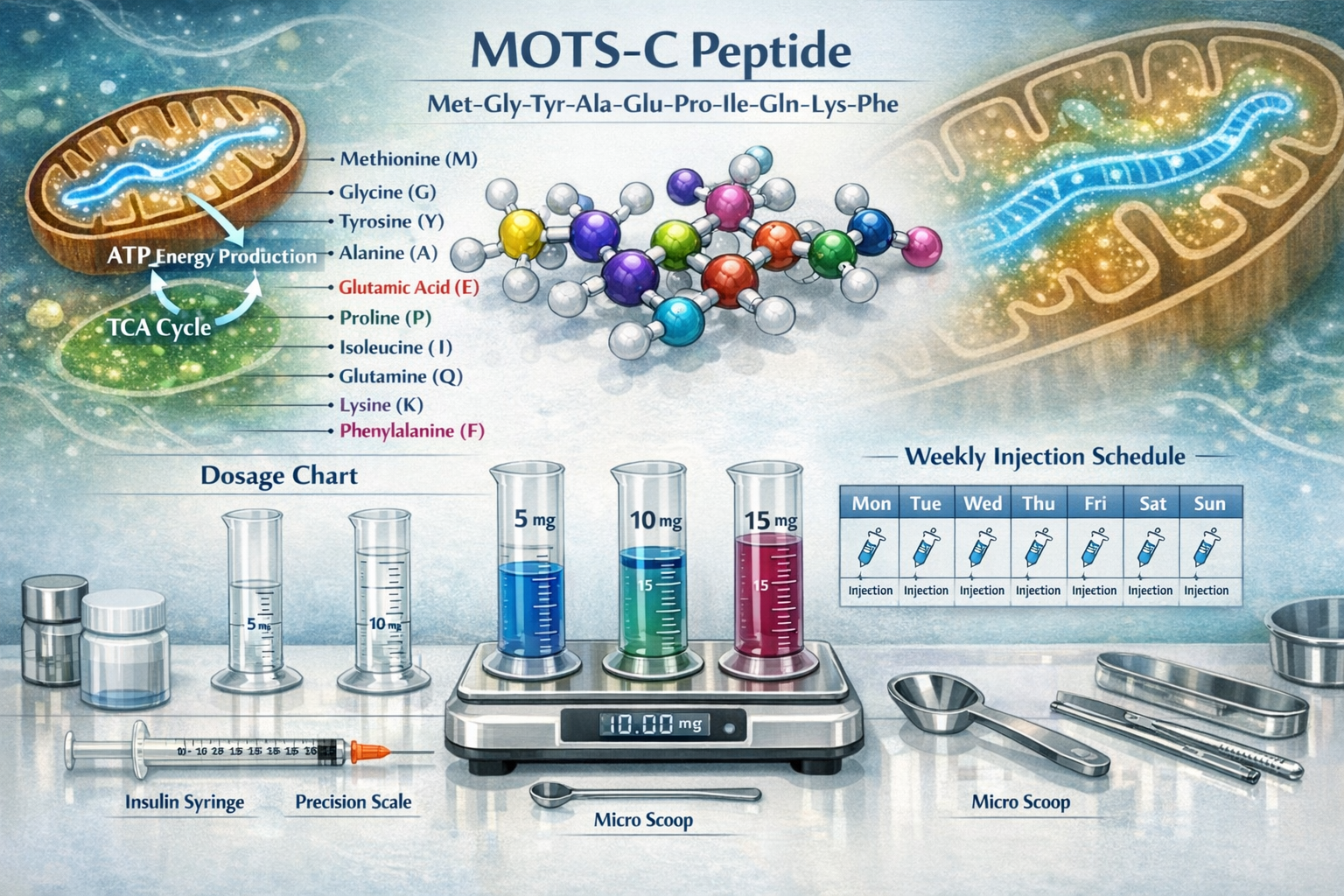
MOTS-C represents a unique class of bioactive peptides encoded within mitochondrial DNA rather than nuclear DNA. This 16-amino acid peptide has demonstrated remarkable properties in preclinical research, particularly regarding metabolic regulation and cellular energy production.
What Makes MOTS-C Different?
Unlike traditional peptides derived from nuclear DNA, MOTS-C originates from the mitochondrial genome. This distinction is significant because mitochondria serve as the cellular powerhouses responsible for energy production through ATP synthesis. Research published in Cell Metabolism has shown that MOTS-C can influence glucose metabolism, insulin sensitivity, and metabolic homeostasis.
The peptide's mechanism involves regulating metabolic pathways at the cellular level, potentially influencing how cells utilize glucose and fatty acids for energy. Studies have demonstrated that MOTS-C may enhance metabolic flexibility—the ability of cells to switch between different fuel sources based on availability.
Key biological functions observed in research:
- Regulation of glucose metabolism
- Enhancement of insulin sensitivity
- Modulation of mitochondrial function
- Potential influence on age-related metabolic decline
- Support for cellular stress responses
For those interested in exploring various peptide options, Pure Tested Peptides offers comprehensive resources and research-grade materials for peptide studies.
Ideal Dose and Dosing for MOTS-C: Research Protocols
Determining the ideal dose and dosing for MOTS-C requires careful consideration of published research protocols and observed outcomes. Current evidence suggests several dosing approaches based on research objectives and subject characteristics.
Standard Dosing Ranges
Research protocols have explored various MOTS-C dosing regimens:
| Dosing Tier | Amount per Injection | Frequency | Research Context |
|---|---|---|---|
| Conservative | 5mg | 2x weekly | Initial research, baseline studies |
| Moderate | 10mg | 2-3x weekly | Standard metabolic research |
| Advanced | 15mg | 3x weekly | Intensive research protocols |
Important considerations:
- Dosing should always align with specific research objectives
- Individual response variation requires monitoring and adjustment
- Higher doses do not automatically produce better outcomes
- Consistency in timing and administration is crucial
Frequency and Timing Protocols
The ideal dose and dosing for MOTS-C extends beyond just the amount—timing and frequency play critical roles:
Weekly Administration Patterns:
- Twice-weekly protocol: Monday/Thursday or Tuesday/Friday spacing
- Three-times-weekly protocol: Monday/Wednesday/Friday pattern
- Cycle-based approach: 4-6 week administration periods with rest phases
Research suggests that consistent timing helps maintain stable peptide levels and may optimize metabolic effects. Some protocols incorporate morning administration to align with natural circadian metabolic rhythms, though evidence for time-of-day superiority remains limited.
For researchers exploring complementary peptides, understanding dosing protocols for other peptides can provide valuable context for comprehensive research designs.
Administration Methods and Reconstitution
Proper administration technique is as important as determining the ideal dose and dosing for MOTS-C. The peptide requires specific handling and preparation procedures to maintain stability and efficacy.
Reconstitution Guidelines
MOTS-C typically arrives in lyophilized (freeze-dried) powder form requiring reconstitution before use:
Step-by-step reconstitution process:
- Gather materials: Lyophilized MOTS-C vial, bacteriostatic water, alcohol swabs, syringes
- Clean workspace: Ensure sterile environment and sanitized surfaces
- Calculate volume: Determine bacteriostatic water amount based on desired concentration
- Gentle mixing: Inject water slowly down vial side, avoid shaking
- Complete dissolution: Allow 2-3 minutes for powder to fully dissolve
- Storage preparation: Transfer to refrigeration immediately after reconstitution
Injection Techniques
Subcutaneous injection is the preferred administration method for MOTS-C:
- Injection sites: Abdomen, thighs, or upper arms (rotate regularly)
- Needle specifications: 29-31 gauge, 1/2 inch insulin syringes
- Technique: Pinch skin, insert at 45-90 degree angle, inject slowly
- Post-injection: Apply gentle pressure, avoid rubbing area
🔍 Pro Tip: Rotating injection sites prevents tissue irritation and maintains consistent absorption rates.
Researchers interested in metabolic peptides may also want to explore information about 5-amino-1-mq dosage protocols for comparative research purposes.
Factors Influencing MOTS-C Dosing
The ideal dose and dosing for MOTS-C isn't one-size-fits-all. Multiple factors influence optimal dosing strategies for research applications.
Body Weight and Composition
Research protocols often consider body weight when determining peptide dosing:
- Weight-based calculations: Some protocols use 0.1-0.2mg per kilogram of body weight
- Lean mass considerations: Body composition may influence metabolic response
- Adjustment periods: Initial conservative dosing with gradual increases based on response
Research Objectives
Different research goals may warrant different dosing approaches:
Metabolic research focus:
- Glucose metabolism studies: Moderate doses (10mg) 2-3x weekly
- Insulin sensitivity research: Conservative to moderate doses with consistent timing
- Longevity research: Lower doses (5mg) with extended duration protocols
Performance research focus:
- Exercise metabolism: Higher doses (10-15mg) timed around training periods
- Recovery studies: Moderate doses with post-exercise administration
- Endurance research: Consistent moderate dosing throughout training cycles
Individual Response Variation
Biological individuality means response to MOTS-C varies between subjects:
- Metabolic baseline: Pre-existing metabolic health influences response
- Age factors: Research suggests age-related differences in peptide sensitivity
- Genetic variation: Mitochondrial genetics may affect individual responses
- Lifestyle factors: Diet, exercise, and sleep patterns influence outcomes
For comprehensive peptide research, exploring various peptide options can help researchers design multi-faceted study protocols.
Safety Considerations and Monitoring
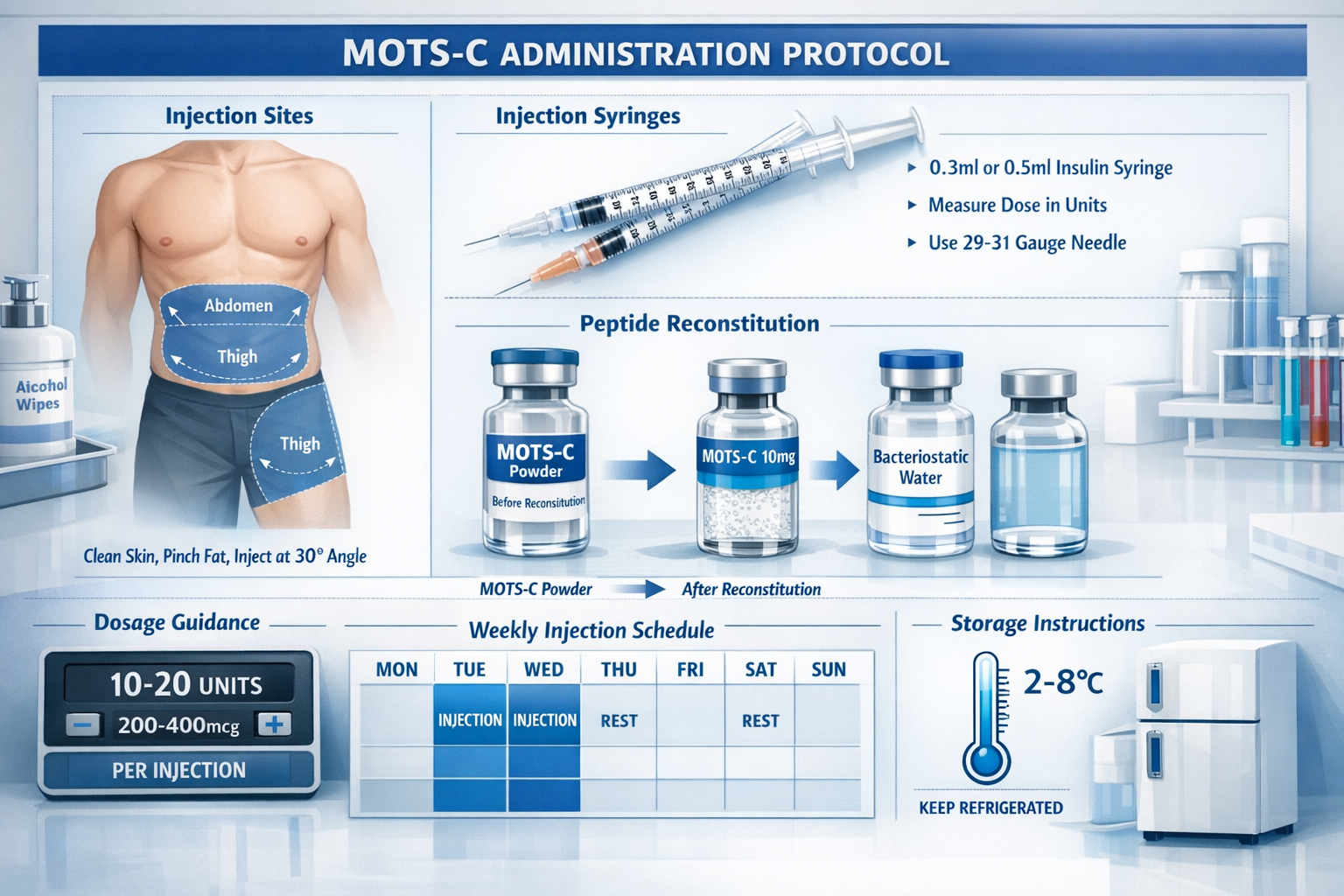
While determining the ideal dose and dosing for MOTS-C, safety remains paramount. Research protocols incorporate monitoring and safety measures to ensure responsible peptide use.
Reported Observations from Research
Published research and anecdotal reports have documented various observations:
Commonly reported experiences:
- Generally well-tolerated across dosing ranges
- Minimal adverse effects in most research contexts
- Occasional injection site reactions (mild redness, temporary discomfort)
- Some reports of temporary fatigue during initial administration periods
Monitoring recommendations:
- Track metabolic markers (glucose, insulin sensitivity indicators)
- Document subjective responses and timing patterns
- Monitor injection sites for unusual reactions
- Record any unexpected observations
Contraindications and Precautions
Certain situations warrant additional caution or consultation:
- Pre-existing mitochondrial disorders require specialized assessment
- Concurrent medication use should be reviewed for potential interactions
- Pregnancy and lactation contexts require additional considerations
- Active metabolic conditions need professional oversight
⚠️ Important: MOTS-C is intended for research purposes. Any therapeutic applications should involve qualified healthcare professionals familiar with peptide protocols.
Optimizing MOTS-C Research Protocols
Beyond basic dosing, several factors can optimize MOTS-C research outcomes and data quality.
Cycle Duration and Rest Periods
Research protocols often incorporate structured cycles:
Typical cycle structures:
- 4-week cycles: Conservative approach with 2-week rest periods
- 6-week cycles: Standard duration for most research objectives
- 8-12 week cycles: Extended protocols for longitudinal studies
- Continuous protocols: Some research employs ongoing administration without rest periods
The rationale for rest periods includes:
- Preventing potential receptor desensitization
- Allowing baseline metabolic assessment
- Evaluating sustained effects post-administration
- Reducing overall peptide consumption
Synergistic Research Approaches
Some research protocols combine MOTS-C with complementary interventions:
Dietary considerations:
- Caloric restriction protocols may enhance metabolic effects
- Ketogenic approaches align with mitochondrial metabolism focus
- Nutrient timing strategies around administration periods
Exercise integration:
- Resistance training protocols combined with MOTS-C administration
- Endurance exercise research with peptide supplementation
- Recovery-focused studies incorporating peptide timing
Complementary peptides:
Research exploring peptide combinations often examines MOTS-C alongside other metabolic peptides. For instance, some protocols investigate synergies with compounds like AOD-9604 for comprehensive metabolic research.
Storage and Stability
Proper storage ensures peptide integrity throughout research duration:
Lyophilized powder storage:
- Store at -20°C (freezer) for long-term preservation
- Protect from light and moisture exposure
- Shelf life typically 2-3 years when properly stored
Reconstituted solution storage:
- Refrigerate at 2-8°C immediately after reconstitution
- Use within 30 days for optimal stability
- Avoid freeze-thaw cycles with reconstituted solutions
- Store in sterile, sealed vials
Ideal Dose and Dosing for MOTS-C: Practical Implementation
Translating research protocols into practical implementation requires systematic approaches and careful documentation.
Creating a Dosing Schedule
Establishing a consistent schedule optimizes research outcomes:
Sample 6-week protocol (moderate dosing):
Week 1-2: Initial Phase
- Monday: 10mg MOTS-C (morning)
- Thursday: 10mg MOTS-C (morning)
- Document baseline metabolic markers
Week 3-4: Maintenance Phase
- Monday: 10mg MOTS-C
- Wednesday: 10mg MOTS-C
- Friday: 10mg MOTS-C
- Monitor response patterns
Week 5-6: Assessment Phase
- Continue 3x weekly administration
- Comprehensive data collection
- Prepare for rest period or protocol adjustment
Documentation and Data Collection
Rigorous documentation enhances research quality:
Essential tracking elements:
- Date and time of each administration
- Exact dosage amount and injection site
- Subjective observations (energy, recovery, etc.)
- Metabolic measurements (if applicable)
- Any unusual observations or responses
📊 Research Tip: Maintain detailed logs using spreadsheets or research journals to identify patterns and optimize future protocols.
Adjusting Protocols Based on Response
The ideal dose and dosing for MOTS-C may require adjustment based on observed outcomes:
Indicators suggesting dose reduction:
- Excessive fatigue or lethargy
- Persistent injection site reactions
- Unexpected metabolic changes
- Individual tolerance concerns
Indicators supporting dose increase:
- Minimal observable effects at conservative doses
- Well-tolerated current dosing with research objectives unmet
- Plateau in measured outcomes
- Alignment with published research protocols using higher doses
For researchers exploring comprehensive peptide protocols, reviewing peptide blend options may provide insights into multi-peptide research approaches.
Comparing MOTS-C to Other Metabolic Peptides
Understanding the ideal dose and dosing for MOTS-C benefits from context provided by comparing it to other metabolic research peptides.
MOTS-C vs. AOD-9604
Both peptides focus on metabolic research but with different mechanisms:
| Characteristic | MOTS-C | AOD-9604 |
|---|---|---|
| Origin | Mitochondrial DNA | Modified growth hormone fragment |
| Primary focus | Mitochondrial function, glucose metabolism | Fat metabolism, lipolysis |
| Typical dose | 5-15mg | 250-500mcg |
| Frequency | 2-3x weekly | Daily |
| Administration | Subcutaneous | Subcutaneous or oral |
MOTS-C vs. 5-Amino-1MQ
These peptides approach metabolic research from different angles:
MOTS-C characteristics:
- Mitochondrial-derived peptide
- Broad metabolic regulation
- Focus on cellular energy production
- Emerging research base
5-Amino-1MQ characteristics:
- NNMT enzyme inhibitor
- NAD+ metabolism focus
- Different mechanism of action
- Complementary research applications
Researchers interested in comparing metabolic peptides can explore detailed information about 5-amino-1-mq peptide protocols and mechanisms.
Synergistic Research Combinations
Some research protocols explore combining MOTS-C with complementary peptides:
Potential research combinations:
- MOTS-C + AOD-9604: Comprehensive metabolic research approach
- MOTS-C + BPC-157: Metabolic and recovery-focused studies
- MOTS-C + Epithalon: Longevity-focused research protocols
Common Questions About MOTS-C Dosing
Addressing frequently encountered questions helps researchers implement effective protocols.
How Long Until Observable Effects?
Timeline varies based on research parameters and measurement methods:
- Acute metabolic markers: Some studies observe changes within 1-2 weeks
- Subjective experiences: Reports vary from days to several weeks
- Comprehensive metabolic shifts: 4-6 weeks typically required for robust data
- Long-term adaptations: Extended protocols (8-12 weeks) reveal sustained effects
Can Dosing Be Adjusted Mid-Protocol?
Protocol adjustments are common in research:
Reasons for mid-protocol adjustments:
- Unexpected response patterns requiring modification
- Tolerance or sensitivity issues
- Research objective refinement
- Alignment with emerging published research
Best practices for adjustments:
- Document reasons for protocol changes
- Allow 1-2 weeks to assess new dosing effects
- Avoid frequent changes that complicate data interpretation
- Maintain consistent timing even when adjusting amounts
What Happens After Completing a Cycle?
Post-cycle considerations are important for comprehensive research:
Immediate post-cycle phase (1-2 weeks):
- Metabolic markers may show sustained effects
- Some research suggests continued benefits beyond administration period
- Baseline reassessment provides valuable comparative data
Extended post-cycle phase (4-8 weeks):
- Long-term metabolic adaptations can be evaluated
- Determination of whether effects persist or diminish
- Planning for subsequent research cycles if applicable
For researchers planning comprehensive peptide studies, exploring various peptide research options can inform multi-phase research designs.
Advanced Dosing Strategies for MOTS-C
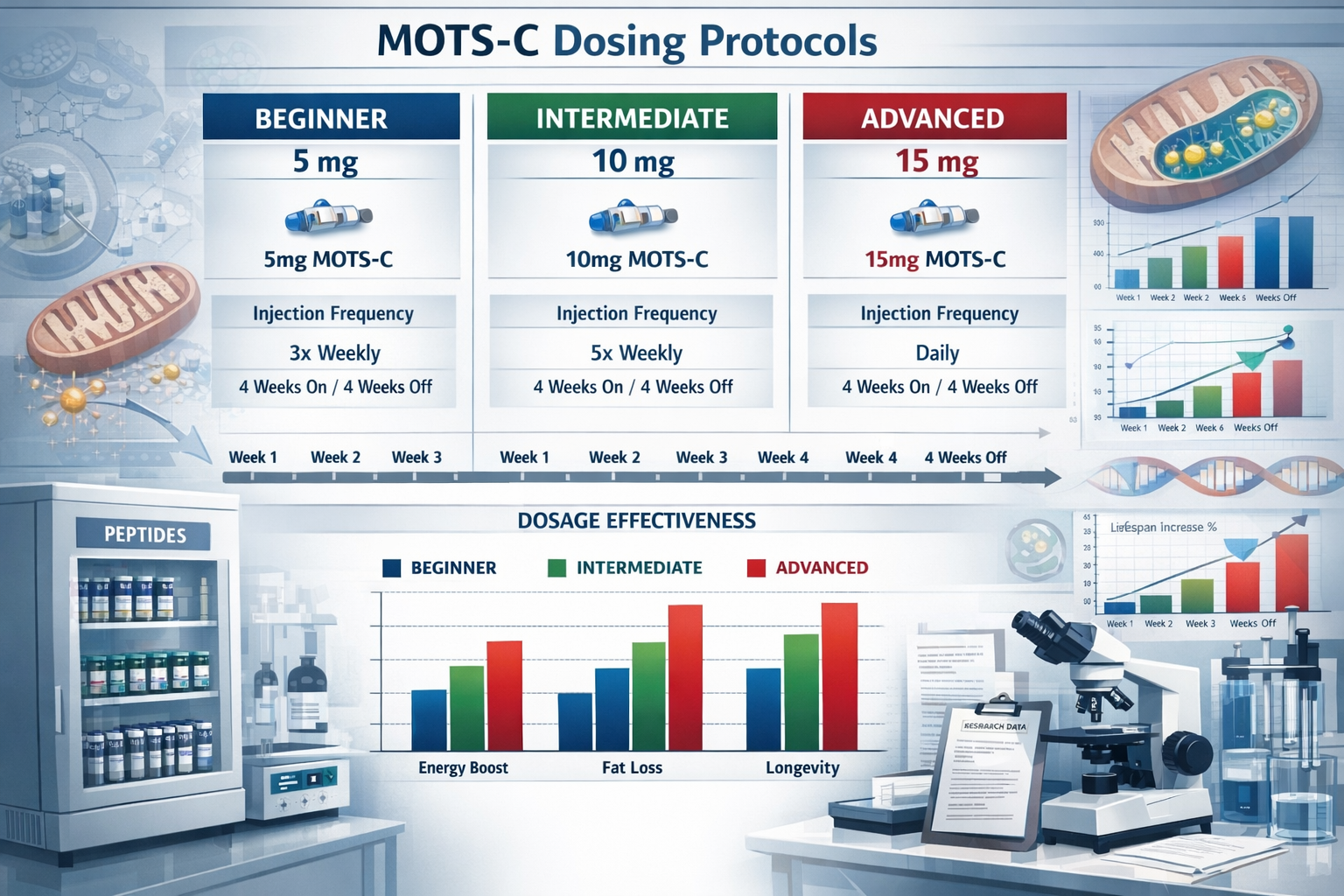
Sophisticated research protocols may incorporate advanced dosing approaches based on emerging evidence and specific research objectives.
Pulsatile Dosing Protocols
Some research explores non-linear dosing patterns:
Concept: Varying doses throughout the week rather than consistent amounts
Example pulsatile protocol:
- Monday: 15mg (higher dose)
- Wednesday: 5mg (lower dose)
- Friday: 10mg (moderate dose)
Theoretical rationale:
- May prevent receptor adaptation
- Mimics natural biological rhythms
- Potentially optimizes metabolic flexibility
Evidence status: Limited published research; primarily theoretical and anecdotal
Loading and Maintenance Phases
Some protocols incorporate initial loading phases:
Loading phase approach:
- Week 1-2: Higher frequency (daily or 4-5x weekly)
- Week 3+: Standard maintenance (2-3x weekly)
Potential applications:
- Rapid achievement of steady-state levels
- Accelerated research timelines
- Specific metabolic research objectives
Circadian-Aligned Dosing
Emerging research explores timing alignment with circadian rhythms:
Morning administration rationale:
- Aligns with natural metabolic activation periods
- May optimize glucose metabolism effects
- Corresponds with typical exercise timing
Evening administration considerations:
- Potential alignment with recovery processes
- May influence sleep-related metabolic functions
- Limited research on comparative timing effects
Quality and Sourcing Considerations
The ideal dose and dosing for MOTS-C assumes high-quality, properly manufactured peptide material. Source quality significantly impacts research outcomes.
Purity and Testing Standards
Research-grade peptides should meet rigorous standards:
Essential quality markers:
- ✅ Minimum 98% purity (verified by HPLC)
- ✅ Third-party testing certificates
- ✅ Proper lyophilization and packaging
- ✅ Clear labeling with batch numbers
- ✅ Appropriate storage conditions maintained throughout supply chain
Reconstitution Supplies
Quality extends beyond the peptide itself:
Bacteriostatic water requirements:
- 0.9% benzyl alcohol for preservation
- Sterile, pharmaceutical-grade
- Proper storage and handling
- Expiration date verification
Injection supplies:
- Sterile, single-use syringes
- Appropriate gauge needles (29-31G)
- Alcohol prep pads
- Sharps disposal container
For researchers seeking reliable peptide sources, Pure Tested Peptides provides comprehensive quality documentation and third-party testing verification.
Red Flags in Peptide Sourcing
Awareness of quality concerns protects research integrity:
Warning signs:
- ⚠️ Unusually low pricing compared to market standards
- ⚠️ Lack of testing documentation or certificates of analysis
- ⚠️ Unclear storage or handling history
- ⚠️ Absence of batch tracking or lot numbers
- ⚠️ Poor packaging or evidence of temperature exposure
Future Directions in MOTS-C Research
The field of MOTS-C research continues evolving, with implications for future dosing protocols and applications.
Emerging Research Areas
Current research trajectories include:
Longevity and aging research:
- Studies examining MOTS-C's role in age-related metabolic decline
- Investigation of mitochondrial function preservation
- Exploration of healthspan extension potential
Exercise and performance science:
- Research on MOTS-C's influence on exercise metabolism
- Studies of endurance capacity and metabolic flexibility
- Investigation of recovery and adaptation processes
Metabolic disease research:
- Exploration of insulin sensitivity enhancement
- Studies on glucose metabolism regulation
- Investigation of metabolic syndrome components
Personalized Dosing Approaches
Future protocols may incorporate individualized dosing based on:
Genetic factors:
- Mitochondrial DNA variations
- Metabolic enzyme polymorphisms
- Individual response predictors
Metabolic phenotyping:
- Baseline metabolic flexibility assessment
- Insulin sensitivity measurements
- Mitochondrial function testing
Advanced monitoring:
- Continuous glucose monitoring integration
- Metabolic biomarker tracking
- Real-time protocol adjustments
Combination Therapy Research
Emerging studies explore MOTS-C in multi-peptide protocols:
- Synergistic effects with other mitochondrial peptides
- Complementary metabolic pathway targeting
- Enhanced research outcomes through strategic combinations
Researchers interested in comprehensive approaches can explore information about peptide blend research for insights into multi-peptide protocols.
<!DOCTYPE html>
<html lang="en">
<head>
    <meta charset="UTF-8">
    <meta name="viewport" content="width=device-width, initial-scale=1.0">
    <title>MOTS-C Dosing Calculator</title>
    <style>
        * {
            margin: 0;
            padding: 0;
            box-sizing: border-box;
        }

        .cg-calculator-container {
            max-width: 800px;
            margin: 20px auto;
            padding: 30px;
            background: linear-gradient(135deg, #667eea 0%, #764ba2 100%);
            border-radius: 15px;
            box-shadow: 0 10px 30px rgba(0,0,0,0.2);
            font-family: 'Segoe UI', Tahoma, Geneva, Verdana, sans-serif;
        }

        .cg-calculator-title {
            color: white;
            text-align: center;
            font-size: 28px;
            margin-bottom: 25px;
            text-shadow: 2px 2px 4px rgba(0,0,0,0.2);
        }

        .cg-calculator-content {
            background: white;
            padding: 30px;
            border-radius: 10px;
        }

        .cg-input-group {
            margin-bottom: 25px;
        }

        .cg-label {
            display: block;
            margin-bottom: 8px;
            font-weight: 600;
            color: #333;
            font-size: 16px;
        }

        .cg-input, .cg-select {
            width: 100%;
            padding: 12px;
            border: 2px solid #e0e0e0;
            border-radius: 8px;
            font-size: 16px;
            transition: border-color 0.3s;
        }

        .cg-input:focus, .cg-select:focus {
            outline: none;
            border-color: #667eea;
        }

        .cg-button {
            width: 100%;
            padding: 15px;
            background: linear-gradient(135deg, #667eea 0%, #764ba2 100%);
            color: white;
            border: none;
            border-radius: 8px;
            font-size: 18px;
            font-weight: 600;
            cursor: pointer;
            transition: transform 0.2s;
            margin-top: 10px;
        }

        .cg-button:hover {
            transform: translateY(-2px);
            box-shadow: 0 5px 15px rgba(102, 126, 234, 0.4);
        }

        .cg-results {
            margin-top: 30px;
            padding: 25px;
            background: #f8f9fa;
            border-radius: 10px;
            border-left: 5px solid #667eea;
        }

        .cg-result-item {
            margin-bottom: 15px;
            padding: 15px;
            background: white;
            border-radius: 8px;
            box-shadow: 0 2px 5px rgba(0,0,0,0.05);
        }

        .cg-result-label {
            font-weight: 600;
            color: #667eea;
            margin-bottom: 5px;
            font-size: 14px;
        }

        .cg-result-value {
            font-size: 20px;
            color: #333;
            font-weight: 700;
        }

        .cg-schedule {
            margin-top: 20px;
        }

        .cg-schedule-title {
            font-weight: 600;
            color: #333;
            margin-bottom: 15px;
            font-size: 18px;
        }

        .cg-schedule-item {
            padding: 12px;
            background: white;
            margin-bottom: 8px;
            border-radius: 6px;
            display: flex;
            justify-content: space-between;
            align-items: center;
        }

        .cg-day {
            font-weight: 600;
            color: #667eea;
        }

        .cg-dose {
            background: #667eea;
            color: white;
            padding: 5px 15px;
            border-radius: 20px;
            font-size: 14px;
        }

        .cg-info-box {
            background: #fff3cd;
            border: 1px solid #ffc107;
            padding: 15px;
            border-radius: 8px;
            margin-top: 20px;
            font-size: 14px;
            color: #856404;
        }

        .cg-hidden {
            display: none;
        }

        @media (max-width: 600px) {
            .cg-calculator-container {
                padding: 20px;
            }

            .cg-calculator-title {
                font-size: 24px;
            }

            .cg-calculator-content {
                padding: 20px;
            }
        }
    </style>
</head>
<body>
    <div class="cg-calculator-container">
        <h1 class="cg-calculator-title">🧬 MOTS-C Dosing Calculator</h1>

        <div class="cg-calculator-content">
            <div class="cg-input-group">
                <label class="cg-label" for="bodyWeight">Body Weight (kg)</label>
                <input type="number" id="bodyWeight" class="cg-input" placeholder="Enter weight in kg" min="40" max="200" value="70">
            </div>

            <div class="cg-input-group">
                <label class="cg-label" for="experience">Experience Level</label>
                <select id="experience" class="cg-select">
                    <option value="beginner">Beginner (Conservative)</option>
                    <option value="intermediate" selected>Intermediate (Moderate)</option>
                    <option value="advanced">Advanced (Higher Dose)</option>
                </select>
            </div>

            <div class="cg-input-group">
                <label class="cg-label" for="frequency">Weekly Frequency</label>
                <select id="frequency" class="cg-select">
                    <option value="2">2x per week</option>
                    <option value="3" selected>3x per week</option>
                    <option value="4">4x per week</option>
                </select>
            </div>

            <div class="cg-input-group">
                <label class="cg-label" for="objective">Research Objective</label>
                <select id="objective" class="cg-select">
                    <option value="metabolic">Metabolic Research</option>
                    <option value="performance">Performance Research</option>
                    <option value="longevity">Longevity Research</option>
                </select>
            </div>

            <button class="cg-button" onclick="calculateDosing()">Calculate Dosing Protocol</button>

            <div id="results" class="cg-results cg-hidden">
                <div class="cg-result-item">
                    <div class="cg-result-label">Recommended Dose per Injection</div>
                    <div class="cg-result-value" id="doseAmount">--</div>
                </div>

                <div class="cg-result-item">
                    <div class="cg-result-label">Weekly Total</div>
                    <div class="cg-result-value" id="weeklyTotal">--</div>
                </div>

                <div class="cg-result-item">
                    <div class="cg-result-label">Cycle Duration</div>
                    <div class="cg-result-value" id="cycleDuration">--</div>
                </div>

                <div class="cg-schedule">
                    <div class="cg-schedule-title">📅 Suggested Weekly Schedule</div>
                    <div id="scheduleContainer"></div>
                </div>

                <div class="cg-info-box">
                    <strong>⚠️ Research Note:</strong> This calculator provides general guidelines based on published research protocols. Individual responses vary. Always start conservatively and adjust based on observed outcomes. MOTS-C is intended for research purposes only.
                </div>
            </div>
        </div>
    </div>

    <script>
        function calculateDosing() {
            const weight = parseFloat(document.getElementById('bodyWeight').value);
            const experience = document.getElementById('experience').value;
            const frequency = parseInt(document.getElementById('frequency').value);
            const objective = document.getElementById('objective').value;

            if (!weight || weight < 40 || weight > 200) {
                alert('Please enter a valid body weight between 40-200 kg');
                return;
            }

            let baseDose;
            let cycleDuration;

            // Determine base dose based on experience level
            switch(experience) {
                case 'beginner':
                    baseDose = 5;
                    cycleDuration = '4-6 weeks';
                    break;
                case 'intermediate':
                    baseDose = 10;
                    cycleDuration = '6-8 weeks';
                    break;
                case 'advanced':
                    baseDose = 15;
                    cycleDuration = '8-12 weeks';
                    break;
            }

            // Adjust based on objective
            if (objective === 'performance' && experience !== 'beginner') {
                baseDose += 2;
            } else if (objective === 'longevity') {
                baseDose = Math.max(5, baseDose - 2);
            }

            // Calculate weekly total
            const weeklyTotal = baseDose * frequency;

            // Display results
            document.getElementById('doseAmount').textContent = baseDose + ' mg';
            document.getElementById('weeklyTotal').textContent = weeklyTotal + ' mg';
            document.getElementById('cycleDuration').textContent = cycleDuration;

            // Generate schedule
            generateSchedule(frequency, baseDose);

            // Show results
            document.getElementById('results').classList.remove('cg-hidden');

            // Smooth scroll to results
            document.getElementById('results').scrollIntoView({ behavior: 'smooth', block: 'nearest' });
        }

        function generateSchedule(frequency, dose) {
            const scheduleContainer = document.getElementById('scheduleContainer');
            scheduleContainer.innerHTML = '';

            const schedules = {
                2: ['Monday', 'Thursday'],
                3: ['Monday', 'Wednesday', 'Friday'],
                4: ['Monday', 'Tuesday', 'Thursday', 'Friday']
            };

            const days = schedules[frequency];

            days.forEach(day => {
                const scheduleItem = document.createElement('div');
                scheduleItem.className = 'cg-schedule-item';
                scheduleItem.innerHTML = `
                    <span class="cg-day">${day}</span>
                    <span class="cg-dose">${dose} mg</span>
                `;
                scheduleContainer.appendChild(scheduleItem);
            });
        }
    </script>
</body>
</html>
Conclusion: Implementing Your MOTS-C Research Protocol
Understanding the ideal dose and dosing for MOTS-C represents a critical foundation for effective peptide research. As we've explored throughout this comprehensive guide, successful MOTS-C protocols require careful consideration of multiple factors—from baseline dosing ranges and administration frequency to individual variation and research objectives.
Key principles to remember:
✅ Start conservatively: Beginning with lower doses (5mg) allows assessment of individual response before escalating
✅ Maintain consistency: Regular timing and frequency optimize research data quality and metabolic effects
✅ Document thoroughly: Detailed records enable pattern recognition and protocol optimization
✅ Prioritize quality: Source verification and proper handling ensure research integrity
✅ Monitor continuously: Regular assessment allows timely protocol adjustments based on observed outcomes
The emerging research on MOTS-C continues to reveal fascinating insights into mitochondrial function, metabolic regulation, and cellular longevity. As the field evolves, dosing protocols will likely become increasingly refined and personalized based on genetic factors, metabolic phenotypes, and specific research applications.
Next Steps for Your Research
For researchers beginning MOTS-C protocols:
- Review published research relevant to your specific objectives
- Source high-quality, tested peptide materials from reputable suppliers
- Establish baseline measurements for comparison
- Implement a conservative initial protocol with clear documentation systems
- Plan for systematic assessment and potential protocol adjustments
For experienced researchers:
- Consider advanced dosing strategies aligned with emerging research
- Explore synergistic combinations with complementary peptides
- Implement sophisticated monitoring approaches for comprehensive data collection
- Contribute to the growing knowledge base through careful documentation
- Stay current with evolving research and protocol refinements
The ideal dose and dosing for MOTS-C ultimately depends on your specific research context, objectives, and individual response patterns. By applying the evidence-based principles outlined in this guide, researchers can design robust protocols that maximize data quality while maintaining appropriate safety considerations.
For those ready to begin their MOTS-C research journey, exploring comprehensive peptide options from verified sources provides the foundation for successful protocols. Whether your focus is metabolic research, performance science, or longevity studies, proper dosing represents the cornerstone of meaningful research outcomes.
Remember that peptide research continues to evolve rapidly. Staying informed about emerging studies, refined protocols, and new applications ensures your research remains at the forefront of this exciting field. The mitochondrial peptide landscape holds tremendous promise, and MOTS-C stands as a particularly intriguing area of investigation for researchers committed to advancing our understanding of metabolic health and cellular function.
SEO Meta Information
Meta Title: Ideal Dose and Dosing for MOTS-C | 2026 Research Guide
Meta Description: Complete guide to MOTS-C dosing protocols. Learn ideal doses (5-15mg), frequency, administration methods, and safety considerations for peptide research in 2026.
Keywords: ideal dose and dosing for MOTS-C, MOTS-C dosing protocol, MOTS-C dosage guide, mitochondrial peptide dosing, MOTS-C administration, peptide research protocols, MOTS-C injection frequency, metabolic peptide dosing