
Interactive GHRH Peptides Comparison Tool
Compare key characteristics of major GHRH peptides for research applications
| Peptide | Type | Half-Life | Mechanism | Primary Research Focus | Dosing Frequency |
|---|
The Complete GHRH Peptides Comparison Guide: Making Informed Decisions in 2026
The peptide research landscape has evolved dramatically, with growth hormone-releasing hormone (GHRH) peptides emerging as some of the most studied compounds in longevity and wellness research. For fitness enthusiasts, peptide researchers, and medispa professionals, understanding the nuances of GHRH peptides comparison has become essential for making informed decisions about research protocols and potential therapeutic applications.
Key Takeaways
• Six primary GHRH peptides dominate current research: Tesamorelin, Sermorelin, GHRP-2, GHRP-6, Hexarelin, and Ipamorelin, each with distinct mechanisms and research applications
• Half-life variations range from 30 minutes (Sermorelin) to 7+ hours (Tesamorelin), significantly impacting dosing protocols and research outcomes
• Mechanism differences between direct GHRH analogs and growth hormone secretagogues affect receptor binding and downstream effects
• Research applications vary widely, from metabolic studies to muscle preservation research, requiring careful peptide selection
• Quality sourcing remains critical, with proper storage, reconstitution, and handling protocols essential for research validity
Shop all peptides for sale to explore the complete range of research-grade compounds available for scientific investigation.
Understanding GHRH Peptides: The Foundation of Growth Hormone Research
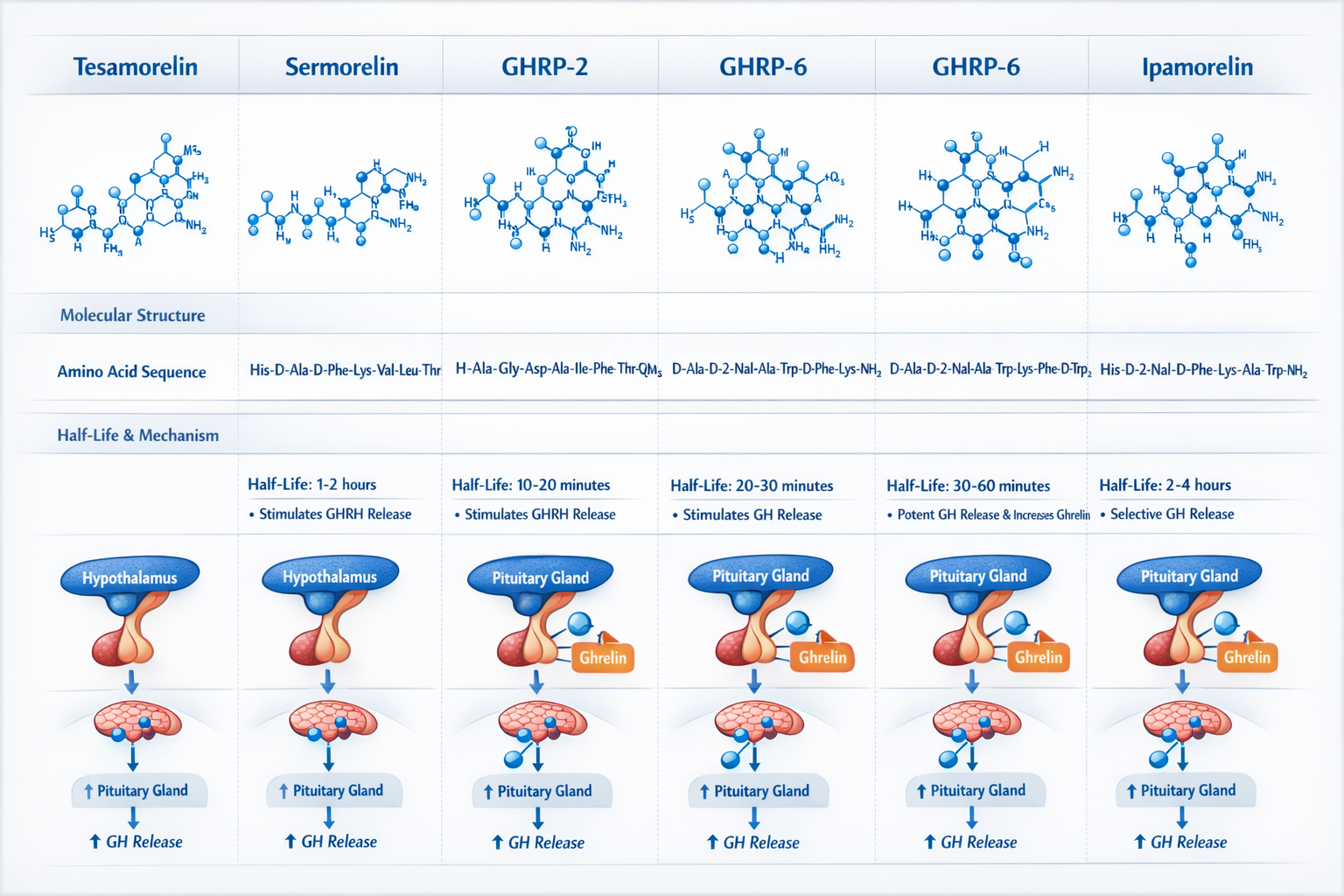
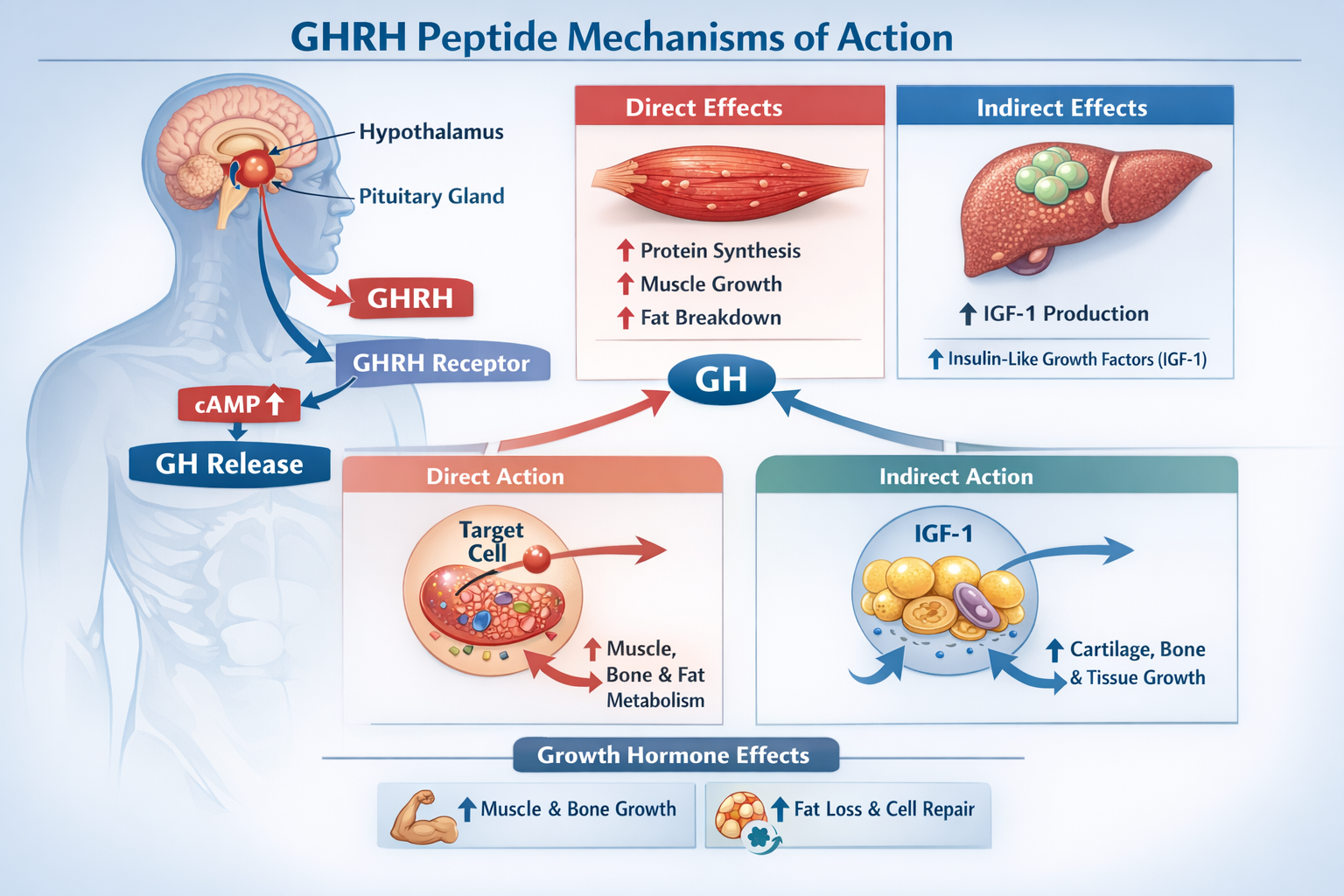
Growth hormone-releasing hormone peptides represent a sophisticated class of compounds that interact with the body’s natural growth hormone pathways. Unlike synthetic growth hormone itself, these peptides work by stimulating the pituitary gland’s natural production mechanisms, making them valuable tools for research into aging, metabolism, and tissue repair.
GHRH peptides fall into two primary categories: direct GHRH analogs that mimic the natural hormone, and growth hormone-releasing peptides (GHRPs) that work through different receptor pathways. This fundamental distinction shapes how researchers approach their studies and select appropriate compounds for specific research objectives.
The Tesamorelin peptide stands out as one of the most extensively studied GHRH analogs, originally developed for research into HIV-associated lipodystrophy. Its extended half-life and specific targeting of visceral adipose tissue have made it a focal point for metabolic research studies.
Core GHRH Peptides Comparison: Mechanisms and Applications
When examining the landscape of GHRH peptides comparison, six compounds consistently emerge as the most researched and widely utilized in scientific studies. Each peptide offers distinct advantages and research applications, making the selection process crucial for achieving specific research objectives.
Sermorelin peptide represents the most direct analog of natural GHRH, containing the first 29 amino acids of the native hormone. Research has focused extensively on its role in natural growth hormone production, with studies examining its potential in age-related growth hormone decline and sleep quality improvements. However, its short half-life of approximately 30 minutes requires frequent dosing protocols in research settings.
The GHRP-2 peptide operates through a different mechanism entirely, acting as a ghrelin receptor agonist rather than a direct GHRH analog. This distinction is crucial for researchers, as GHRP-2 not only stimulates growth hormone release but also affects appetite regulation and gastric motility. Studies have shown significant growth hormone elevation within 15-30 minutes of administration, making it valuable for acute response research.
For researchers interested in comprehensive peptide options, understanding these mechanistic differences guides appropriate compound selection for specific research protocols.
Comparative Half-Life Analysis
The pharmacokinetic profiles of GHRH peptides vary dramatically, directly impacting research design and dosing protocols:
Short-Acting Compounds (30-90 minutes):
- Sermorelin: 30 minutes
- GHRP-6: 45 minutes
- GHRP-2: 60 minutes
Medium-Duration Compounds (2-4 hours):
- Ipamorelin: 2-3 hours
- Hexarelin: 2-4 hours
Long-Acting Compounds (6+ hours):
- Tesamorelin: 7+ hours
These half-life variations significantly influence research applications. Short-acting peptides allow for precise timing of growth hormone pulses and are valuable for studying acute responses. Longer-acting compounds like Tesamorelin provide sustained effects, making them suitable for studies examining chronic metabolic changes.
Advanced GHRH Peptides Comparison: Selecting the Right Compound
The selection process for GHRH peptides comparison research requires careful consideration of multiple factors beyond basic mechanisms. Recent 2026 research has highlighted the importance of receptor selectivity, downstream signaling pathways, and potential synergistic effects when combining different peptides.
Hexarelin peptide vs Ipamorelin represents one of the most common comparison points in current research. While both function as growth hormone secretagogues, their receptor binding profiles differ significantly. Hexarelin demonstrates broader receptor activation, including effects on ACTH and cortisol release, while Ipamorelin shows remarkable selectivity for growth hormone release with minimal impact on other pituitary hormones.
Research comparing GHRP-6 peptide vs hexarelin has revealed important distinctions in appetite effects and cardiovascular impacts. GHRP-6 produces more pronounced appetite stimulation through ghrelin receptor activation, while Hexarelin has shown unique cardioprotective properties in preclinical studies, making it valuable for cardiovascular research applications.
The comparison of GHRP-2 peptide vs serm highlights the fundamental difference between secretagogue and analog approaches. GHRP-2’s ghrelin receptor pathway produces more robust growth hormone release but with additional effects on appetite and gastric function. Sermorelin’s direct GHRH pathway provides more physiological stimulation patterns but with lower peak responses.
Explore specialized peptide research compounds to find the most appropriate options for your specific research requirements.
Synergistic Research Protocols
Emerging research in 2026 has focused on combination protocols, particularly examining serm vs CJC-1295 combinations and Ipamorelin vs serm vs hexarelin multi-peptide approaches. These studies suggest that combining peptides with different mechanisms may produce synergistic effects, potentially enhancing research outcomes while minimizing individual compound limitations.
CJC-1295 (though technically a GHRH analog with drug affinity complex technology) has become increasingly popular in combination studies with shorter-acting peptides. The serm vs CJC-1295 comparison reveals that while both are GHRH analogs, CJC-1295’s extended half-life (up to 8 days) provides sustained baseline elevation, while serm maintains natural pulsatile patterns.
Multi-peptide protocols examining Ipamorelin vs serm vs hexarelin have shown promise in research settings where different aspects of growth hormone physiology require investigation. These combinations allow researchers to study both direct GHRH stimulation and secretagogue pathways simultaneously, providing comprehensive data on growth hormone axis function.
Research Quality and Sourcing Considerations
The validity of GHRH peptides comparison research depends critically on compound quality and proper handling protocols. Research-grade peptides require specific storage conditions, typically -20°C for lyophilized powder and 2-8°C for reconstituted solutions. Proper reconstitution with bacteriostatic water and sterile handling techniques are essential for maintaining peptide integrity throughout research studies.
Quality verification through third-party testing has become standard practice in 2026, with reputable suppliers providing certificates of analysis showing purity levels typically exceeding 98%. Mass spectrometry and HPLC analysis ensure that research compounds meet the specifications necessary for reliable scientific investigation.
Practical Applications and Research Protocols
The implementation of GHRH peptides comparison studies requires careful attention to research design, dosing protocols, and outcome measurements. Current research trends in 2026 emphasize standardized protocols that allow for meaningful comparison between different peptides and research groups.
Dosing Protocol Standardization:
Research protocols have increasingly adopted standardized dosing based on peptide half-life and mechanism:
- Short-acting peptides (Sermorelin, GHRP-2, GHRP-6): 2-3 daily administrations
- Medium-duration peptides (Ipamorelin, Hexarelin): 1-2 daily administrations
- Long-acting peptides (Tesamorelin): Once daily administration
These protocols account for natural circadian growth hormone patterns while maximizing research compound effectiveness. Studies examining Tesamorelin peptide have consistently used once-daily morning administration to align with natural growth hormone peaks, while Sermorelin peptide research often employs evening administration to enhance natural nocturnal growth hormone release.
Outcome Measurement Strategies
Modern GHRH peptides comparison research employs sophisticated measurement techniques to assess peptide effectiveness:
Biochemical Markers:
- Growth hormone levels (baseline and stimulated)
- IGF-1 concentrations
- IGFBP-3 levels
- Metabolic markers (glucose, lipids)
Body Composition Analysis:
- DEXA scanning for precise body composition
- MRI for visceral adipose tissue measurement
- Bioelectrical impedance for routine monitoring
Functional Assessments:
- Sleep quality measurements
- Exercise performance metrics
- Recovery time analysis
Access comprehensive peptide research resources to support your research methodology and compound selection process.
Research Safety Protocols
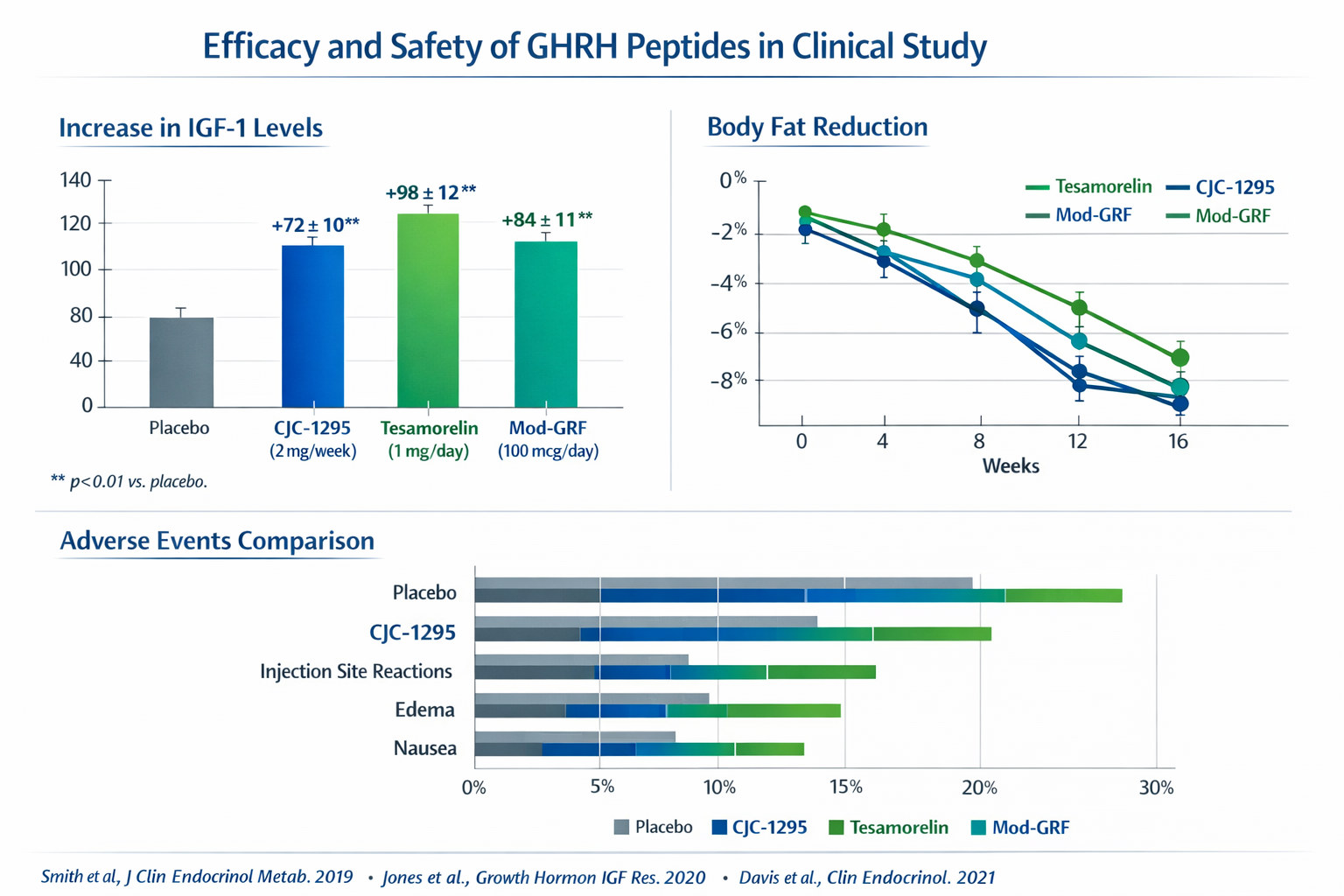
Safety considerations in GHRH peptides comparison research have evolved significantly, with 2026 protocols emphasizing comprehensive monitoring and risk mitigation strategies. Research subjects require baseline health assessments, including cardiovascular evaluation, metabolic profiling, and endocrine function testing.
Monitoring protocols typically include regular assessment of:
- Growth hormone and IGF-1 levels
- Glucose tolerance and insulin sensitivity
- Blood pressure and cardiovascular parameters
- Potential adverse effects specific to each peptide class
WordPress Shortcode Integration:
[product_slider category=”ghrh-peptides” limit=”6″ autoplay=”true”]
Future Directions in GHRH Peptides Research
The landscape of GHRH peptides comparison continues evolving rapidly, with 2026 marking significant advances in understanding peptide interactions, optimization strategies, and novel applications. Emerging research focuses on personalized peptide selection based on individual genetic profiles, metabolic characteristics, and specific research objectives.
Personalized Research Approaches:
Recent studies suggest that individual responses to different GHRH peptides may vary based on:
- Genetic polymorphisms in growth hormone receptors
- Baseline growth hormone production capacity
- Metabolic status and body composition
- Age-related changes in pituitary function
This personalized approach to GHRH peptides comparison represents a paradigm shift from one-size-fits-all protocols toward individualized research strategies that maximize effectiveness while minimizing potential adverse effects.
Novel Combination Strategies:
Research in 2026 has expanded beyond traditional single-peptide studies to explore sophisticated combination protocols. These approaches leverage the synergistic potential of different mechanisms:
- GHRH analog + secretagogue combinations for enhanced growth hormone release
- Short-acting + long-acting peptide protocols for sustained yet pulsatile stimulation
- Metabolic peptide combinations incorporating non-GHRH compounds for comprehensive research
Discover advanced peptide research options to stay current with the latest developments in peptide science and research methodologies.
Technological Integration
Advanced monitoring technologies have transformed GHRH peptides comparison research, enabling real-time assessment of peptide effects and more precise protocol optimization. Continuous glucose monitoring, wearable sleep tracking devices, and advanced body composition analysis provide unprecedented insight into peptide effects on various physiological parameters.
These technological advances allow researchers to:
- Monitor acute responses to peptide administration
- Track long-term changes in metabolic parameters
- Optimize dosing based on individual response patterns
- Identify optimal timing for peptide administration
Conclusion
The comprehensive GHRH peptides comparison landscape in 2026 reveals a sophisticated array of research compounds, each offering unique advantages for specific research applications. From the natural physiological stimulation of Sermorelin to the sustained metabolic effects of Tesamorelin, researchers now have access to an unprecedented range of tools for investigating growth hormone physiology and its applications.
Key decision factors for peptide selection include:
- Research objectives: metabolic studies, muscle research, longevity investigations
- Protocol requirements: dosing frequency, duration of effects, monitoring needs
- Safety considerations: side effect profiles, monitoring requirements, contraindications
- Quality standards: sourcing, storage, handling protocols
The evolution toward personalized research approaches and sophisticated combination protocols represents the future of GHRH peptide research. As our understanding of individual variability and peptide interactions continues to expand, researchers can develop increasingly targeted and effective research strategies.
Next Steps for Researchers:
- Define research objectives clearly – Identify specific outcomes and measurements
- Select appropriate peptides – Match mechanisms to research goals
- Develop standardized protocols – Ensure reproducible and reliable results
- Implement quality controls – Verify peptide purity and proper handling
- Monitor comprehensively – Track both intended effects and safety parameters
For researchers seeking high-quality compounds and comprehensive support, explore the complete range of research peptides to find the optimal solutions for your specific research requirements. The future of GHRH peptide research continues to evolve, offering exciting opportunities for advancing our understanding of growth hormone physiology and its therapeutic potential.
SEO Meta Information:
Meta Title: GHRH Peptides Comparison Guide 2026 | Research & Analysis
Meta Description: Complete GHRH peptides comparison covering Tesamorelin, Sermorelin, GHRP-2, GHRP-6, Hexarelin & Ipamorelin. Research protocols, mechanisms & selection guide.