
The Ultimate Guide to Finding a Bioactive Peptides Supplier in 2026 💪
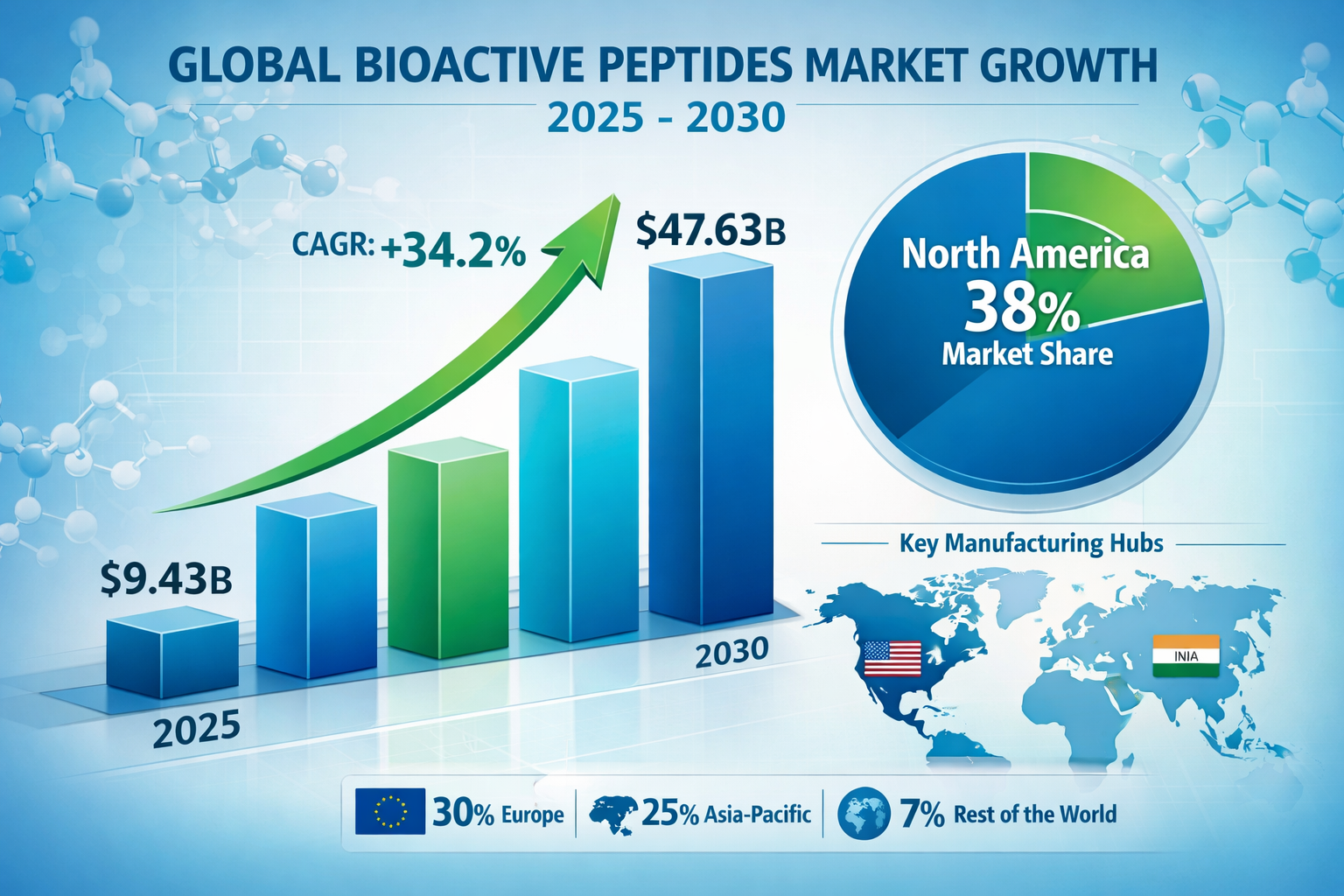
The global bioactive peptides market is experiencing unprecedented growth, with valuations skyrocketing from USD 9.43 billion in 2025 to a projected USD 47.63 billion in the coming years[2]. For fitness enthusiasts, martial artists, and weightlifters seeking cutting-edge performance support, choosing the right bioactive peptides supplier has never been more critical—or more complex. With hundreds of vendors flooding the market and quality varying dramatically, how do you separate legitimate research-grade suppliers from questionable sources? This comprehensive guide cuts through the confusion, providing you with the essential knowledge to make informed decisions about your peptide research needs.
Key Takeaways
- Market explosion: The bioactive peptides industry is experiencing 16% annual growth, driven by technological advances and expanding applications[2]
- Quality matters: Third-party testing, certificates of analysis (COA), and transparent sourcing distinguish reputable suppliers from questionable vendors
- North American dominance: The U.S. holds 38% of the global market share, with over $480 billion invested in domestic manufacturing infrastructure[1][2]
- Diverse applications: Bioactive peptides serve multiple research areas including recovery, longevity, mitochondrial health, and performance optimization
- Supplier verification: Look for suppliers offering lab-tested peptides with comprehensive documentation and transparent business practices
Understanding Bioactive Peptides and Their Growing Market
Bioactive peptides are short chains of amino acids that demonstrate specific biological activities when isolated from protein sources. Unlike complete proteins, these peptide sequences typically contain 2-20 amino acids and can exert various physiological effects relevant to athletic performance, recovery, and overall wellness research.
The explosive growth in the bioactive peptides supplier landscape reflects several converging trends. Major pharmaceutical companies have committed unprecedented resources to peptide manufacturing, with biopharma firms investing more than $480 billion in U.S. manufacturing and R&D projects as of mid-November 2025[1]. This massive capital influx signals industry confidence in peptide therapeutics and research applications.
Market Drivers and Industry Expansion
Several factors are propelling the bioactive peptides market forward:
Technological Advancement: Breakthrough oral delivery technologies are revolutionizing how peptides can be administered, making them more accessible for research purposes[2]. Companies like Entera Bio and Oramed Pharmaceuticals are pioneering novel delivery systems that protect peptides from digestive degradation.
Manufacturing Scale: Eli Lilly's announcement of a $6 billion plant in Alabama dedicated to producing peptide APIs demonstrates the pharmaceutical industry's long-term commitment to peptide production[1]. This facility alone will create 450 permanent jobs and significantly expand domestic peptide manufacturing capacity.
For researchers interested in exploring various peptide options, reviewing all peptides for sale from verified suppliers provides a comprehensive starting point.
Plant-Based Innovation: The plant-derived protein segment is experiencing the fastest growth at 16% CAGR, driven by demand for sustainable, vegetarian-friendly bioactive peptides with antioxidant and anti-inflammatory properties[2]. Next-generation sources including chickpea, pumpkin seed, mung bean, and fava bean proteins are emerging as viable alternatives[4].
Regional Market Leadership
North America currently dominates the global landscape, holding 38% of market share in 2025[2]. This leadership position stems from:
- Robust R&D infrastructure and university partnerships
- Concentration of major pharmaceutical companies
- Supportive regulatory environment for research
- High prevalence of conditions driving peptide research interest
- Advanced biotechnology ecosystem
Meanwhile, India has emerged as a strategic production hub for generic peptide drugs and APIs, with government initiatives strengthening the biosimilars market and developing innovative nanoparticle-based delivery systems[2].
Top Qualities to Look for in a Bioactive Peptides Supplier 🔬
Selecting a reliable bioactive peptides supplier requires careful evaluation of multiple quality indicators. The peptide research market contains both exceptional suppliers and problematic vendors, making due diligence essential for anyone serious about their research.
Third-Party Testing and Certificates of Analysis
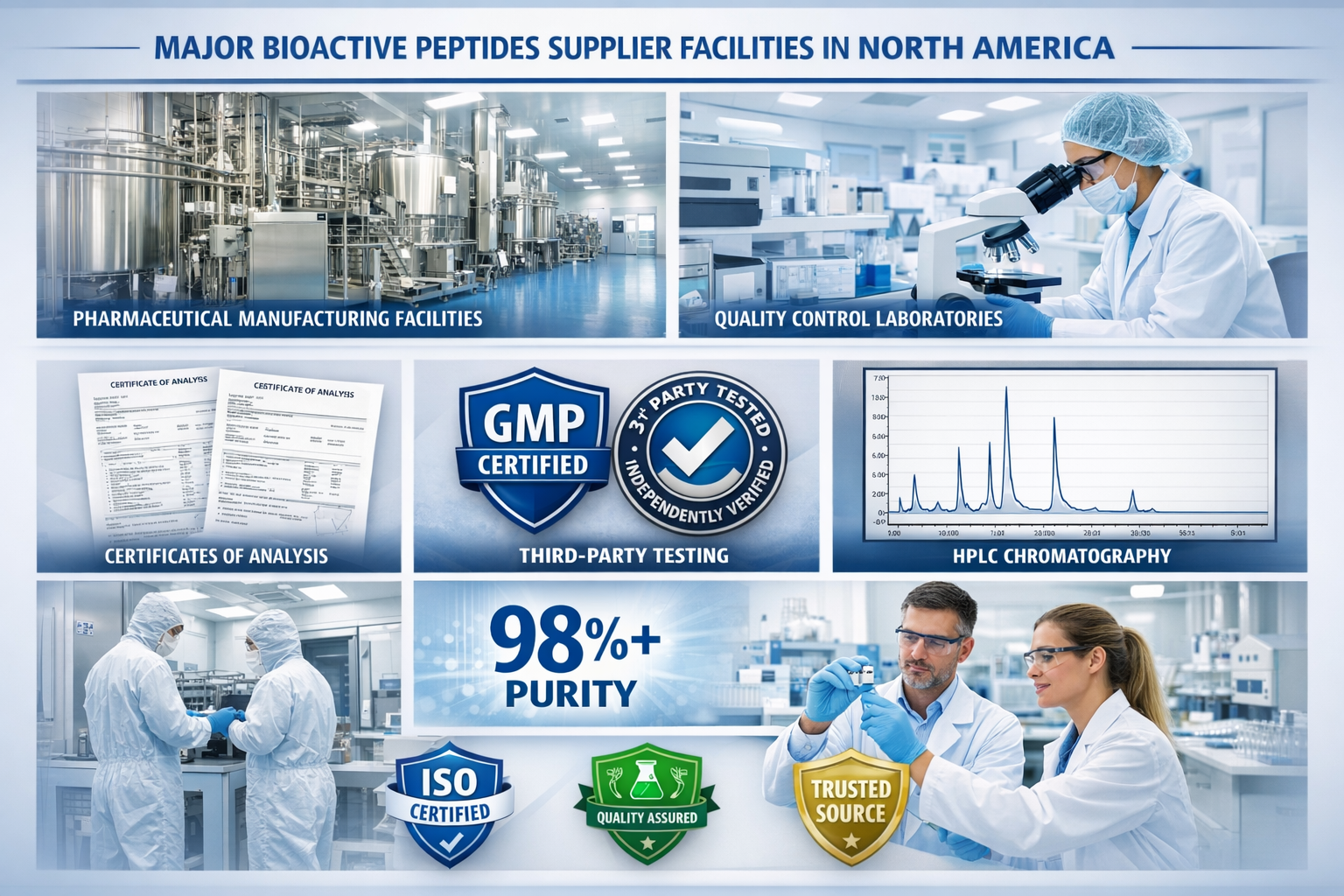
The single most important quality indicator is independent third-party testing. Reputable suppliers provide detailed Certificates of Analysis (COA) for every batch, documenting:
- Purity percentage (ideally 98% or higher)
- Molecular weight verification
- Peptide sequence confirmation
- Contamination screening (bacterial endotoxins, heavy metals)
- Sterility testing results
A trustworthy bioactive peptides supplier makes COAs readily accessible, often posting them directly on product pages or providing them immediately upon request. Suppliers who hesitate to provide testing documentation or offer vague quality claims should raise immediate red flags.
Manufacturing Standards and Facility Quality
Professional peptide synthesis requires sophisticated equipment and controlled environments. When evaluating potential suppliers, consider:
| Quality Factor | What to Look For |
|---|---|
| GMP Compliance | Good Manufacturing Practice certification or adherence |
| Cleanroom Standards | ISO-rated cleanroom facilities for sterile production |
| Synthesis Method | Solid-phase peptide synthesis (SPPS) or liquid-phase synthesis |
| Purification Process | High-performance liquid chromatography (HPLC) purification |
| Storage Conditions | Proper cold chain management and lyophilization |
The recent consolidation of Rousselot and PB Leiner, forming a major collagen and bioactive peptides company with USD 1.5 billion in annual revenue and capacity of 200,000 metric tons across 22 global facilities, demonstrates the scale required for serious peptide production[3].
Transparency and Customer Support
Quality suppliers demonstrate transparency through:
- Clear sourcing information about peptide origins
- Detailed product specifications including molecular formulas
- Responsive customer service with knowledgeable staff
- Educational resources about proper handling and storage
- Straightforward return policies and quality guarantees
For those researching specific peptides, exploring options like wholesale peptides from established suppliers can provide both quality assurance and cost efficiency.
Regulatory Compliance and Legal Standing
Legitimate bioactive peptides suppliers operate within clear legal frameworks. They should:
- Clearly label products as "for research purposes only"
- Comply with relevant regulations in their jurisdiction
- Maintain proper business licensing and registration
- Avoid making therapeutic or medical claims
- Provide accurate product labeling and safety information
The peptide industry's regulatory landscape continues evolving, with companies like Pfizer investing $1.25 billion upfront plus $100 million in equity for licensing deals related to peptide therapeutics[1], signaling the serious regulatory scrutiny these compounds receive.
Leading Bioactive Peptides Supplier Categories and Options
The bioactive peptides supplier landscape encompasses several distinct categories, each serving different research needs and applications. Understanding these categories helps researchers identify the most appropriate sources for their specific requirements.
Pharmaceutical-Grade Research Suppliers
These suppliers focus on high-purity peptides intended for serious research applications. They typically offer:
- Purity levels of 98%+ verified by independent testing
- Comprehensive documentation including COAs and handling protocols
- Peptides synthesized using pharmaceutical-grade equipment
- Strict quality control at every production stage
- Proper cold chain logistics and specialized packaging
Major players in this category often collaborate with academic institutions and maintain relationships with the pharmaceutical industry. The peptide supplier comparisons available through established vendors help researchers evaluate different options systematically.
Specialty Peptide Manufacturers
Specialized manufacturers focus on specific peptide categories or applications:
Longevity-Focused Suppliers: These vendors emphasize peptides associated with aging research and cellular health, including options detailed in longevity peptide research. Common offerings include epithalon, MOTS-C, and thymosin alpha-1.
Performance and Recovery Specialists: Suppliers targeting athletic research communities offer peptides like BPC-157, TB-500, and various growth hormone secretagogues. Understanding BPC-157 core peptides documentation helps researchers evaluate quality standards in this category.
Mitochondrial Health Providers: Emerging suppliers focus on peptides supporting mitochondrial function, such as SS-31 peptides, which demonstrate potential in cellular energy research.
Collagen and Food-Derived Peptide Suppliers
The merger creating a combined Rousselot-PB Leiner entity represents the scale of collagen and food-derived bioactive peptides production, with 200,000 metric tons annual capacity across 22 facilities globally[3]. These suppliers typically provide:
- Marine and bovine collagen peptides
- Whey-derived bioactive peptides with antimicrobial properties[6]
- Plant-based peptides from emerging sources like chickpea and mung bean[4]
- Hydrolyzed protein peptides for various applications
For fitness enthusiasts and martial artists, whey-based bioactive peptides demonstrate particularly interesting properties, including antioxidant, antimicrobial, and antihypertensive potential[6].
Custom Synthesis and Contract Manufacturers
For researchers requiring specific peptide sequences not available commercially, custom synthesis providers offer:
- Bespoke peptide design based on specific amino acid sequences
- Modification services (PEGylation, acetylation, amidation)
- Scalable production from milligram to kilogram quantities
- Proprietary peptide development with confidentiality agreements
Companies like Bachem, Catalent, and Evonik Health Care represent established players in this space, serving both research and pharmaceutical development needs[2].
Evaluating Specific Bioactive Peptides for Athletic Research 🏋️
For the fitness, martial arts, and weightlifting communities, certain bioactive peptides have garnered particular research interest. Understanding the landscape of available peptides helps inform supplier selection based on specific research goals.
Recovery and Tissue Repair Peptides
BPC-157 (Body Protection Compound-157) remains one of the most researched peptides in athletic recovery contexts. This pentadecapeptide, derived from a protective gastric protein, has been studied for its potential effects on tissue healing processes. When sourcing BPC-157, researchers should verify:
- Sequence accuracy (GEPPPGKPADDAGLV)
- Acetylated or non-acetylated form specification
- Purity verification through mass spectrometry
- Proper storage in lyophilized form
Exploring TB500 BPC157 regeneration research provides context for understanding how these peptides are studied in combination.
TB-500 (Thymosin Beta-4 fragment) represents another peptide of interest in recovery research. This 43-amino acid peptide has been investigated for its role in cellular migration and tissue development processes.
Growth Hormone Secretagogues
Several peptides function as growth hormone secretagogues (GHS), stimulating the body's natural production of growth hormone:
CJC-1295: This modified growth hormone-releasing hormone (GHRH) analog comes in two forms—with or without Drug Affinity Complex (DAC). The CJC-1295 plus ipamorelin combination represents a popular research protocol for investigating synergistic effects.
Ipamorelin: A selective growth hormone secretagogue receptor (GHSR) agonist, ipamorelin is valued in research for its specificity and lack of effect on cortisol or prolactin levels. Quality suppliers provide this peptide at high purity with clear dosage information.
Tesamorelin: FDA-approved for specific medical applications, tesa peptide research has expanded into areas of body composition and metabolic function. Understanding tesa side effects helps researchers design appropriate protocols.
Mitochondrial Function Peptides
Mitochondrial health represents a frontier in performance and longevity research, with several peptides showing promise:
SS-31 (Elamipretide): This tetrapeptide selectively targets mitochondrial membranes and has been studied extensively for its potential effects on cellular energy production. Researchers can explore SS-31 mitochondrial research themes to understand current investigation directions.
MOTS-C: A mitochondrial-derived peptide, MOTS-C has gained attention for its potential role in metabolic regulation and exercise response. The MOTS-C mitochondrial peptide research landscape continues expanding rapidly.
Longevity and Cellular Health Peptides
Epithalon: This tetrapeptide (Ala-Glu-Asp-Gly) has been researched for its potential effects on telomerase activity and cellular aging processes. Quality epithalon peptides for sale should come with complete documentation and purity verification.
Thymosin Alpha-1: Investigated for its potential immunomodulatory properties, understanding the thymosin alpha-1 mechanism helps researchers appreciate its applications in various contexts.
Practical Considerations When Buying from a Bioactive Peptides Supplier 📦
Beyond quality verification, several practical factors influence the purchasing experience and research outcomes when working with a bioactive peptides supplier.
Pricing and Value Assessment
Peptide pricing varies significantly based on:
- Synthesis complexity (number of amino acids, modifications)
- Purity level (95% vs. 98% vs. 99%+)
- Quantity purchased (bulk discounts often available)
- Supplier overhead (research-grade vs. pharmaceutical-grade facilities)
While cost considerations matter, the cheapest option rarely represents the best value. A peptide priced 30% below market average should prompt questions about purity, testing, or sourcing practices. For budget-conscious researchers, exploring wholesale peptides for sale from established suppliers can provide cost savings without compromising quality.
Shipping and Storage Considerations
Peptides are delicate molecules requiring careful handling:
Cold Chain Management: Most peptides require refrigerated or frozen storage. Quality suppliers use:
- Insulated packaging with gel ice packs or dry ice
- Temperature monitoring during transit
- Expedited shipping options to minimize temperature exposure
- Clear storage instructions upon receipt
Reconstitution and Stability: Lyophilized (freeze-dried) peptides offer superior stability compared to pre-mixed solutions. Reputable suppliers provide:
- Bacteriostatic water or appropriate reconstitution solutions
- Detailed mixing instructions
- Stability data for both lyophilized and reconstituted forms
- Proper vial sizes to minimize waste
Product Selection and Availability
A comprehensive bioactive peptides supplier maintains consistent inventory across popular research peptides while also offering specialty items. Consider:
- Core product availability: Common peptides like BPC-157, TB-500, and ipamorelin should be consistently stocked
- Specialty offerings: Access to emerging peptides like SLU-PP-332 or 5-Amino-1MQ indicates a supplier staying current with research trends
- Blend formulations: Pre-mixed combinations like the Glow Peptide Blend offer convenience for specific research protocols
- Alternative delivery methods: Options like nasal spray peptides provide different administration routes for research
Documentation and Educational Resources
Superior suppliers go beyond simply selling products—they provide educational support:
- Detailed product monographs explaining peptide mechanisms
- Dosage calculators and reconstitution guides
- Research protocol suggestions based on published literature
- Safety information and handling precautions
- Storage and stability guidelines
Resources like the ultimate guide to peptide therapy help researchers understand broader contexts for their work.
Red Flags and Warning Signs in Peptide Suppliers ⚠️
Not all bioactive peptides suppliers operate with the same standards. Recognizing warning signs helps researchers avoid problematic vendors and potential quality issues.
Documentation and Testing Red Flags
Absent or Generic COAs: Suppliers who cannot provide batch-specific Certificates of Analysis, or who offer generic "template" COAs without actual test results, should be avoided. Legitimate testing includes:
- Specific batch numbers matching product labels
- Actual numerical results (not just "pass/fail")
- Independent laboratory identification
- Recent testing dates (within months, not years)
Reluctance to Share Information: Suppliers who become defensive or evasive when asked about testing procedures, synthesis methods, or quality control measures likely have something to hide.
Impossible Purity Claims: While 98-99% purity is achievable with proper HPLC purification, claims of "99.9%" or "100% pure" peptides are unrealistic and suggest either dishonesty or lack of understanding about peptide chemistry.
Business Practice Warning Signs
Therapeutic Claims: Legitimate research peptide suppliers carefully avoid making medical claims or suggesting therapeutic uses. Vendors who market peptides as "treatments" or "cures" for specific conditions are operating outside appropriate boundaries and may attract unwanted regulatory attention.
Pressure Tactics: High-pressure sales techniques, artificial scarcity claims ("only 3 left!"), or aggressive upselling suggest a vendor more focused on sales volume than research quality.
Poor Communication: Suppliers who fail to respond to inquiries, provide vague answers, or demonstrate poor knowledge of their own products lack the professionalism expected in research-grade peptide supply.
Payment Irregularities: Requests for payment through unusual channels, cryptocurrency-only transactions, or reluctance to provide proper invoicing may indicate tax evasion or other problematic business practices.
Product and Pricing Red Flags
Significantly Below-Market Pricing: While competitive pricing is normal, peptides priced 40-50% below industry averages likely involve:
- Lower purity products mislabeled as higher purity
- Incorrect peptide sequences or substitutions
- Contaminated or degraded products
- Counterfeit or misrepresented materials
Vague Product Descriptions: Professional suppliers provide complete specifications including:
- Exact amino acid sequence
- Molecular weight
- Purity percentage
- Storage requirements
- CAS number (when applicable)
Descriptions like "premium quality" or "pharmaceutical grade" without supporting documentation are meaningless marketing terms.
Inconsistent Inventory: Suppliers whose product availability fluctuates wildly or who frequently substitute products without explanation may lack reliable manufacturing relationships or quality control.
The Future of Bioactive Peptides Supply and Innovation 🚀
The bioactive peptides supplier landscape continues evolving rapidly, with several trends shaping the industry's future trajectory through 2026 and beyond.
Technological Advances in Peptide Delivery
The MSD and Cyprumed partnership, involving a nonexclusive license for oral peptide delivery technology with potential milestone payments up to USD 493 million[2], exemplifies the industry's focus on novel delivery systems. These advances include:
Oral Delivery Breakthroughs: Traditional peptides face degradation in the digestive system, limiting oral administration. New technologies using protective carriers, absorption enhancers, and enzyme inhibitors are revolutionizing oral peptide delivery[2].
Transdermal and Topical Applications: Peptides like topical GHK-Cu demonstrate the potential for skin-based delivery, bypassing digestive degradation while targeting specific tissues.
Nasal Administration: The development of BPC-157 nasal spray formulations offers rapid absorption and convenience, expanding research possibilities.
Innovative Delivery Systems: Research into innovative peptide delivery systems explores nanoparticle carriers, liposomal encapsulation, and other advanced technologies.
Sustainability and Plant-Based Sources
The plant-derived bioactive peptides segment's 16% CAGR growth[2] reflects broader sustainability trends:
- Chickpea, pumpkin seed, and mung bean proteins emerging as viable peptide sources[4]
- Fermentation-derived peptides reducing environmental impact
- Sustainable sourcing practices becoming competitive differentiators
- Vegan-friendly options expanding market accessibility
Manufacturing Localization and Supply Chain Resilience
The $480 billion investment in U.S. biopharma manufacturing[1] signals a strategic shift toward domestic production:
- Reduced dependence on overseas manufacturing
- Shorter supply chains improving reliability
- Enhanced quality control through proximity
- Job creation in specialized manufacturing sectors
Eli Lilly's $6 billion Alabama facility[1] represents just one example of this massive infrastructure buildout, which will increase domestic peptide production capacity and potentially improve availability for research purposes.
Personalization and Custom Formulations
Emerging trends point toward increasingly personalized peptide research:
- Custom blend formulations tailored to specific research goals
- Synergistic combinations like synergy of LL37 and MOTS-C or synergy of LL37 and SS31
- Peptide blend research exploring complementary mechanisms
- Targeted delivery systems optimizing bioavailability for specific tissues
Regulatory Evolution and Industry Standards
As the peptide industry matures, regulatory frameworks continue developing:
- Clearer guidelines for research peptide labeling and marketing
- Industry self-regulation through quality standards
- Enhanced testing requirements and documentation expectations
- Greater scrutiny of supplier claims and product quality
The pharmaceutical industry's massive investments in peptide therapeutics—including Pfizer's $1.25 billion upfront payment for peptide licensing rights[1]—demonstrate the serious regulatory and quality standards these compounds command at the highest levels.
Making Your Final Supplier Selection Decision ✅
After evaluating quality indicators, product offerings, and business practices, making a final decision about your bioactive peptides supplier requires synthesizing multiple factors.
Creating Your Evaluation Checklist
Develop a systematic approach to supplier comparison:
Quality Verification (Weight: 40%)
- ✓ Third-party COAs available for all products
- ✓ Purity levels of 98% or higher documented
- ✓ Independent laboratory testing verified
- ✓ Batch-specific documentation provided
- ✓ Clear synthesis and purification methods disclosed
Business Practices (Weight: 25%)
- ✓ Transparent company information and contact details
- ✓ Professional customer service and technical support
- ✓ Clear return and refund policies
- ✓ Appropriate research-only labeling
- ✓ Positive reputation and customer reviews
Product Selection (Weight: 20%)
- ✓ Comprehensive inventory of research peptides
- ✓ Consistent product availability
- ✓ Specialty and emerging peptides offered
- ✓ Multiple delivery format options
- ✓ Proper storage and handling materials available
Practical Factors (Weight: 15%)
- ✓ Competitive pricing for quality level
- ✓ Reliable shipping with cold chain management
- ✓ Secure payment processing
- ✓ Educational resources and documentation
- ✓ Responsive communication channels
Testing Your Chosen Supplier
Consider starting with a small order to evaluate:
- Product quality: Verify the peptide matches specifications upon arrival
- Packaging integrity: Assess cold chain maintenance and protective packaging
- Documentation accuracy: Confirm COAs match received products
- Customer service responsiveness: Test support channels with questions
- Reconstitution and stability: Observe product behavior when prepared for use
This trial approach minimizes risk while providing real-world experience with the supplier's operations.
Building Long-Term Supplier Relationships
Once you've identified a reliable bioactive peptides supplier, nurturing that relationship offers benefits:
- Consistent quality: Established suppliers maintain quality standards across orders
- Priority service: Regular customers often receive preferential treatment during high-demand periods
- Volume discounts: Long-term relationships may unlock better pricing
- Early access: Trusted customers might gain early access to new products
- Custom solutions: Established relationships facilitate custom orders or special requests
For researchers committed to ongoing peptide work, exploring comprehensive options through established vendors like those offering all peptides for sale provides a foundation for long-term research success.
Staying Informed About Industry Developments
The peptide industry evolves rapidly. Staying current involves:
- Following industry publications and research journals
- Monitoring regulatory developments affecting peptide research
- Tracking emerging peptides and novel applications
- Reviewing updated supplier comparisons and evaluations
- Participating in research communities and forums
Resources covering topics like peptides in skincare science or next-generation supplement ingredients help researchers understand broader market trends[4].
Conclusion: Empowering Your Peptide Research Journey
The explosive growth of the bioactive peptides market—from USD 9.43 billion in 2025 to a projected USD 47.63 billion[2]—creates both opportunities and challenges for researchers in the fitness, martial arts, and weightlifting communities. Selecting the right bioactive peptides supplier fundamentally impacts research quality, safety, and outcomes.
Key principles for successful supplier selection include:
- Prioritize quality verification through third-party testing and comprehensive COAs
- Evaluate business practices including transparency, communication, and regulatory compliance
- Assess product selection to ensure your research needs can be met consistently
- Consider practical factors like pricing, shipping, and customer support
- Recognize red flags that indicate problematic suppliers or questionable products
- Stay informed about industry developments and emerging peptide research
The massive infrastructure investments—including $480 billion in U.S. biopharma manufacturing[1] and facilities like Eli Lilly's $6 billion Alabama plant[1]—signal a maturing industry with increasing quality standards and regulatory oversight. These developments benefit serious researchers by improving product availability, quality consistency, and supply chain reliability.
Your Next Steps
Immediate Actions:
- Create your supplier evaluation checklist based on the criteria outlined in this guide
- Research 3-5 potential suppliers, requesting COAs and product specifications
- Start with a small trial order to verify quality and service
- Document your experience to inform future purchasing decisions
Ongoing Practices:
- Maintain relationships with 2-3 reliable suppliers for redundancy
- Regularly review COAs and quality documentation for each order
- Stay current with peptide research through scientific literature
- Participate in research communities to share experiences and insights
- Monitor industry developments affecting peptide availability and regulation
Resources for Continued Learning:
- Explore comprehensive peptide research resources from established suppliers
- Review peptide supplier comparisons to understand quality differences
- Investigate specific peptides relevant to your research goals
- Follow industry trends through publications covering emerging supplement trends[5]
The right bioactive peptides supplier becomes a partner in your research journey, providing not just products but also documentation, support, and reliability. By applying the evaluation criteria and quality standards outlined in this guide, you can navigate the complex supplier landscape with confidence, ensuring your peptide research rests on a foundation of quality, safety, and scientific integrity.
Remember that the peptide research field continues evolving rapidly, with new compounds, delivery methods, and applications emerging regularly. Maintaining a commitment to quality, staying informed about industry developments, and working with reputable suppliers positions you to take advantage of these advances while minimizing risks associated with substandard products or questionable vendors.
Your dedication to finding a trustworthy bioactive peptides supplier reflects a commitment to research excellence—an investment that pays dividends in reliable results, safety, and scientific credibility.
References
[1] Seven Biopharma Trends To Watch In 2026 – https://www.genengnews.com/insights/trends-for-2026/seven-biopharma-trends-to-watch-in-2026/
[2] Oral Protein And Peptide Market – https://www.precedenceresearch.com/oral-protein-and-peptide-market
[3] Rousselot Pb Leiner Darling Ingredients Tessenderlo – https://www.nutritioninsight.com/news/rousselot-pb-leiner-darling-ingredients-tessenderlo.html
[4] Next Gen Supplement Ingredients 2026 – https://www.champion-bio.com/news-detail/next-gen-supplement-ingredients-2026/
[5] 10 Emerging Supplement Trends 2026 – https://www.supplysidesj.com/market-trends-analysis/10-emerging-supplement-trends-2026
[6] How Whey Powers Food Nutrition Precision Fermentation And Biotechnology – https://www.dairyreporter.com/Article/2026/01/27/how-whey-powers-food-nutrition-precision-fermentation-and-biotechnology/
SEO Meta Title and Description
Meta Title: Bioactive Peptides Supplier Guide 2026 | Quality & Reviews
Meta Description: Find the best bioactive peptides supplier in 2026. Expert guide covering quality testing, top suppliers, pricing, and red flags for fitness researchers.