
aod9604 mots c: Unraveling the Synergy in Metabolic Research
The landscape of metabolic research is constantly evolving, bringing to light novel compounds with significant potential. Among these, the combination of AOD9604 and MOTS-c has garnered considerable attention. The interaction between aod9604 mots c represents a fascinating area of study for peptide shoppers, researchers, and those interested in fitness and health. This article delves into the individual properties of these two remarkable peptides, explores their potential synergistic effects, and outlines the current understanding based on laboratory science and research findings in 2026.
For decades, scientists have sought to understand and modulate metabolic processes to address various health challenges. Peptides, with their targeted actions and high specificity, offer a promising avenue. AOD9604, a modified fragment of human growth hormone (hGH), and MOTS-c, a mitochondrial-derived peptide, each possess unique mechanisms that impact metabolism. When considered together, the concept of aod9604 mots c peptide synergy emerges as a compelling subject for advanced research.
Key Takeaways
- AOD9604 and MOTS-c are distinct peptides with individual metabolic roles: AOD9604 primarily affects lipid metabolism, while MOTS-c is a mitochondrial-derived peptide influencing glucose metabolism and cellular energy.
- Synergy in research suggests that combining these peptides may offer broader or enhanced metabolic benefits than either peptide alone, though this remains an active area of investigation.
- AOD9604 is known for its potential to stimulate lipolysis (fat breakdown) and inhibit lipogenesis (fat formation) without promoting cell proliferation or impacting insulin sensitivity [1].
- MOTS-c has been studied for its role in promoting metabolic homeostasis, enhancing insulin sensitivity, and improving glucose utilization, particularly in skeletal muscle [2]. You can learn more about the mots c peptide and its mechanisms.
- Research protocols and responsible sourcing are crucial for accurate and safe study of these peptides, emphasizing the importance of obtaining high-quality materials from reputable suppliers like Pure Tested Peptides.
Understanding AOD9604: A Focus on Lipid Metabolism

AOD9604, originally developed as an anti-obesity drug, is a synthetic peptide comprising amino acid residues 177-191 of human growth hormone (hGH) [3]. This specific fragment was engineered to retain the fat-reducing effects of hGH while minimizing its other actions, such as promoting cell proliferation or affecting insulin-like growth factor 1 (IGF-1) levels, which are associated with the full growth hormone molecule [4].
Mechanism of Action for AOD9604
The primary mechanism through which AOD9604 is believed to exert its effects involves the stimulation of lipolysis (the breakdown of fat) and the inhibition of lipogenesis (the formation of new fat) [5]. Specifically, studies suggest that AOD9604 works by:
- Activating beta-3 adrenergic receptors: These receptors are predominantly found in adipose tissue (fat cells) and, when activated, promote the breakdown of stored triglycerides into free fatty acids and glycerol, which can then be used for energy [6].
- Increasing expression of genes involved in fat oxidation: Research has indicated that AOD9604 may upregulate genes that play a role in the oxidation of fatty acids, further contributing to fat reduction [7].
- Not affecting growth hormone receptors outside of adipose tissue: This selectivity is key, as it means AOD9604 avoids many of the systemic effects of full-length growth hormone, such as those on blood glucose or organ growth [4].
Research Insights into AOD9604
Extensive research has explored the potential of AOD9604 in various metabolic contexts. Early studies showed promising results in animal models, demonstrating reductions in body weight, body fat, and improvements in lipid profiles [8]. For instance, obese mice treated with AOD9604 exhibited decreased fat accumulation and increased fat burning [9].
For those interested in delving deeper into AOD9604, further information on its metabolic research can be found at AOD9604 Metabolic Research. Understanding the specific actions of AOD9604 on lipid metabolism is crucial when considering its potential interaction with other compounds, such as MOTS-c. The distinction between aod9604 mots c lies in their primary metabolic targets, with AOD9604 focusing on fat cells.
“AOD9604 uniquely targets lipid metabolism, offering a focused approach to fat reduction without the broader systemic effects of full growth hormone.”
Exploring MOTS-c: A Mitochondrial Regulator
MOTS-c, or Mitochondrial Open Reading Frame of the 12S rRNA Type-c, is a groundbreaking peptide that has significantly shifted our understanding of mitochondrial function and metabolic regulation [10]. Unlike many peptides that originate from nuclear DNA, MOTS-c is encoded by mitochondrial DNA, highlighting its direct link to cellular energy production and metabolism.
The Role of Mitochondria in Metabolism
Mitochondria are often referred to as the "powerhouses of the cell" because they generate most of the cell's supply of adenosine triphosphate (ATP), which is used as a source of chemical energy. Beyond energy production, mitochondria play crucial roles in:
- Metabolic regulation: They are central to the breakdown of carbohydrates, fats, and proteins.
- Signaling: Mitochondria can signal to the rest of the cell, influencing gene expression, cell survival, and inflammation [11].
- Homeostasis: They help maintain the internal stability and balance of the body's systems.
Mechanism of Action for MOTS-c Peptide
The mots c peptide acts as a mitokine, a signaling molecule derived from mitochondria that communicates with the nucleus and other parts of the cell. Its primary known actions include:
- Enhancing insulin sensitivity: MOTS-c has been shown to improve glucose uptake and utilization in skeletal muscle, particularly when cells are under metabolic stress [12]. This action can help counteract insulin resistance.
- Promoting metabolic homeostasis: Studies suggest that MOTS-c can help maintain balance in metabolic pathways, potentially protecting against diet-induced obesity and insulin resistance [13].
- Regulating fatty acid metabolism: While AOD9604 focuses on lipid breakdown, MOTS-c influences fatty acid metabolism within the mitochondria, promoting their oxidation and reducing lipid accumulation [14].
- Activating the AMPK pathway: This important cellular energy sensor pathway is involved in glucose and fatty acid metabolism. Activation of AMPK by MOTS-c can lead to increased mitochondrial biogenesis and improved energy expenditure [15].
Research Findings on the mots-c peptide
Research into MOTS-c has revealed its potential in addressing various metabolic disorders. Animal studies have shown that administration of mots-c peptide can:
- Improve glucose tolerance and insulin sensitivity, even in models of diet-induced obesity [16].
- Increase energy expenditure and protect against weight gain [17].
- Reduce inflammation and oxidative stress, which are often associated with metabolic dysfunction [18].
For detailed information on the benefits of this peptide, explore articles such as The Synergy of LL37 and MOTS-c. Researchers interested in purchasing this peptide for their studies can find it available at Pure Tested Peptides. Understanding the profound impact of the mot c peptide on cellular energy and glucose metabolism provides a strong foundation for investigating its synergistic potential with AOD9604.
| Peptide | Primary Target | Key Metabolic Role | Research Focus |
|---|---|---|---|
| AOD9604 | Adipose Tissue | Stimulates lipolysis, inhibits lipogenesis | Fat reduction, anti-obesity |
| MOTS-c | Mitochondria/Muscle | Enhances insulin sensitivity, glucose utilization, AMPK | Metabolic homeostasis, insulin resistance, energy |
The Synergy of aod9604 mots c: A Promising Research Avenue
The concept of synergy in peptide research posits that combining two or more compounds can lead to an effect greater than the sum of their individual effects. Given the distinct yet complementary roles of AOD9604 and MOTS-c, investigating aod9604 mots c synergy presents a compelling direction for metabolic research.
Complementary Mechanisms
The potential synergy between aod9604 mots c peptide arises from their differing yet complementary actions:
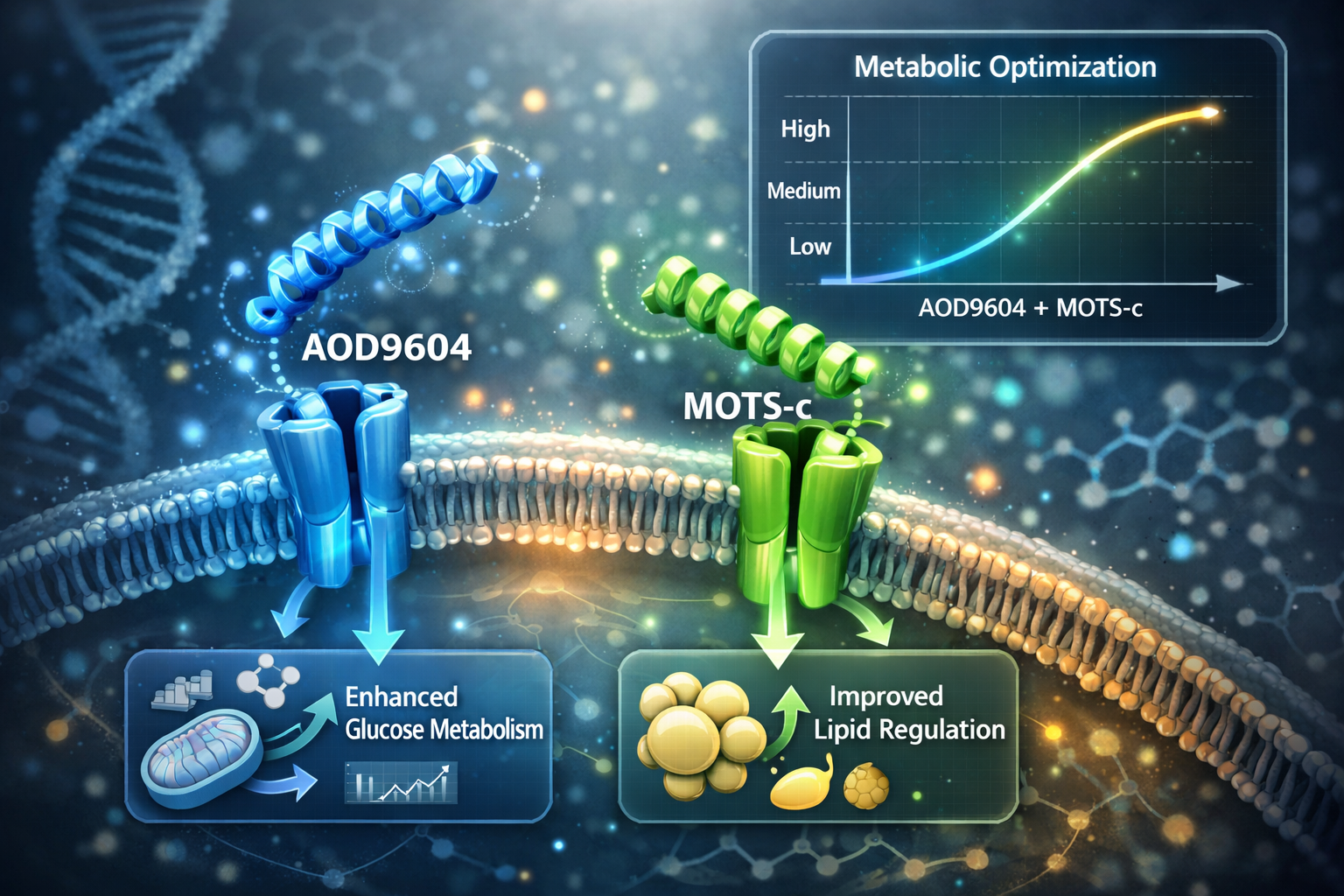
- AOD9604's Focus on Fat Breakdown: AOD9604 primarily acts on fat cells to promote the release of stored energy (fatty acids).
- MOTS-c's Focus on Energy Utilization and Glucose Metabolism: MOTS-c, on the other hand, improves the cells' ability to use that released energy more efficiently, particularly in muscle tissue, and enhances overall glucose metabolism.
Imagine a scenario where AOD9604 mobilizes fat from adipose tissue, and simultaneously, MOTS-c enhances the capacity of muscle cells to take up and burn these fatty acids, as well as glucose, for energy. This theoretical interplay suggests a more comprehensive metabolic optimization.
Hypothesized Synergistic Effects of aod9604 mots c
Researchers hypothesize that the combination of these peptides could lead to:
- Enhanced Fat Loss: By both liberating fat from storage (AOD9604) and improving its utilization as fuel (MOTS-c), the combination might accelerate fat reduction.
- Improved Insulin Sensitivity: While MOTS-c directly impacts insulin sensitivity, reducing overall fat mass via AOD9604 is also known to improve insulin signaling [19]. This dual approach could offer a more robust improvement.
- Better Glucose Homeostasis: With AOD9604 potentially reducing fat-induced insulin resistance and MOTS-c directly improving glucose uptake, the body's ability to manage blood sugar levels could be significantly enhanced.
- Increased Energy Expenditure: The combined action could lead to a more efficient and higher overall rate of metabolism, contributing to energy balance.
Current Research on aod9604 mots c peptide synergy
While both AOD9604 and MOTS-c have been extensively studied individually, research specifically on their combined effects as aod9604 mots c is a newer and rapidly developing field. Preliminary conceptual explorations and anecdotal reports within the research community suggest that this combination holds promise. For instance, discussions on forums like Reddit have surfaced comparisons between reddit motsc vs aod9604, indicating a growing interest in their combined applications, though these are not peer-reviewed scientific data.
Understanding the specific interactions and optimal ratios for aod9604 peptide synergy will require rigorous scientific investigation. These studies would involve examining cellular pathways, gene expression, and physiological outcomes in controlled laboratory settings to validate the hypothesized benefits. Researchers are actively exploring how these two peptides might complement each other in modulating metabolic pathways.
“The combined action of AOD9604 on fat mobilization and MOTS-c on energy utilization could unlock a new frontier in metabolic research.”
Practical Considerations for Research Protocols
For researchers and institutions investigating aod9604 mots c, adhering to strict research protocols and ethical guidelines is paramount. The quality and purity of the peptides used in studies directly impact the reliability and reproducibility of results.
Sourcing and Purity
When conducting research, especially with novel peptides, the source and purity of materials are critical. High-quality research-grade peptides, such as those offered by Pure Tested Peptides, ensure that studies are conducted with accurately characterized compounds. Impurities can lead to erroneous data or unintended effects, compromising the integrity of the research.
Key considerations for sourcing include:
- Third-party testing: Verification of purity and identity through independent laboratories.
- Certificate of Analysis (CoA): A detailed report outlining the peptide's composition, purity, and manufacturing specifications.
- Reputable suppliers: Choosing suppliers with a proven track record in providing high-quality research chemicals.
For more information on ensuring the quality of your research materials, consider visiting Building a Diverse Peptide Library with Pure Tested Peptides.
Storage and Handling
Proper storage and handling are essential to maintain the stability and efficacy of peptides. Both AOD9604 and MOTS-c are delicate molecules that can degrade if not cared for correctly.
General guidelines include:
- Refrigeration/Freezing: Most peptides, including mots c peptide, require cold storage (refrigerated or frozen) in their lyophilized (powder) form.
- Reconstitution: Once reconstituted with bacteriostatic water, peptides have a shorter shelf life and must be stored refrigerated.
- Avoid Contamination: Use sterile techniques and equipment to prevent microbial growth.
Detailed best practices can be found at Best Practices for Storing Research Peptides.
Dosage and Administration in Research
Research into mots-c peptide dosage chart and AOD9604 often involves careful titration and observation of effects in animal models. Determining the effective and safe dosage requires:
- Literature Review: Consulting existing scientific literature for established dosage ranges from previous studies.
- Pilot Studies: Conducting small-scale experiments to establish initial dosage parameters and observe acute effects.
- Ethical Considerations: Ensuring that all research protocols adhere to animal welfare guidelines and ethical standards.
It is important to remember that information regarding mots c peptide dosage and mots c peptide benefits discussed in research contexts pertains to laboratory animal studies and should not be extrapolated to human use without further clinical trials. The focus remains strictly on research applications.
Potential Research Side Effects
As with any research compound, understanding potential side effects is crucial for designing safe and ethical studies. While both AOD9604 and MOTS-c are generally considered well-tolerated in research settings at appropriate dosages, monitoring for any adverse reactions is part of responsible research.
Known considerations from individual studies include:
- AOD9604: Early clinical trials in humans, focused on obesity treatment, noted a good safety profile, with mild adverse events typically similar to placebo [20]. However, further research is ongoing.
- MOTS-c: Animal studies have generally shown mots-c peptide side effects to be minimal at physiological concentrations, with no significant toxicity reported [21]. However, long-term effects and very high dosages still require further investigation.
Researchers must meticulously document all observations, both desired and undesired, to contribute to a comprehensive understanding of these peptides. The exploration of aod9604 mots c requires careful and systematic investigation to fully understand the safety and efficacy profiles of the combined approach.
Future Directions in aod9604 mots c Research
The combined study of AOD9604 and MOTS-c represents a frontier in metabolic research with significant potential. As scientific tools and methodologies advance, so too does our capacity to unravel complex biological interactions.
Advanced Research Methodologies
Future research into aod9604 mots c will likely leverage cutting-edge techniques to understand their synergistic mechanisms at a deeper level. These may include:
- Omics Technologies: Genomics, proteomics, and metabolomics can provide comprehensive insights into how these peptides individually and synergistically alter gene expression, protein profiles, and metabolic pathways [22].
- CRISPR-Cas9 Gene Editing: This technology could be used to create specific cell lines or animal models to study the precise molecular targets and downstream effects of the peptides.
- High-Resolution Imaging: Techniques like confocal microscopy and electron microscopy can visualize cellular changes and mitochondrial dynamics in response to peptide administration.
- In Vitro and In Vivo Models: Continued use of various cell culture models and animal models will be crucial for validating initial hypotheses and understanding systemic effects.
Addressing Knowledge Gaps
Several key areas require further investigation to fully understand the potential of aod9604 mots c peptide synergy:
- Optimal Ratios and Dosing: What are the ideal ratios of AOD9604 to MOTS-c to achieve maximal synergistic effects? Are there specific dosage regimens that amplify benefits while minimizing any potential concerns?
- Specific Pathway Interactions: How do the individual pathways influenced by AOD9604 and MOTS-c converge or diverge to produce a combined effect? Are there novel pathways activated or modulated by their combination that are not affected by either peptide alone?
- Long-Term Effects: What are the long-term metabolic and physiological consequences of aod9604 mots c administration in research models? This includes assessing sustained benefits, potential adaptations, and any delayed effects.
- Specificity in Different Metabolic States: Does the synergy manifest differently in models of healthy metabolism versus those of metabolic dysfunction (e.g., insulin resistance, obesity, type 2 diabetes)?
The Broader Impact on Metabolic Science
The insights gained from studying aod9604 mots c could have far-reaching implications for our understanding of metabolic health. By elucidating novel mechanisms of fat metabolism and glucose regulation, this research could:
- Inform New Therapeutic Strategies: While current research is strictly confined to laboratory settings, the findings could lay the groundwork for future clinical development of combination therapies, provided rigorous human trials are conducted and approved.
- Advance Personalized Medicine: Understanding how different peptides interact and affect varied metabolic profiles could contribute to the development of more personalized approaches to metabolic health.
- Inspire Further Peptide Discovery: The success of studying existing peptides like AOD9604 and MOTS-c often inspires the discovery and investigation of new, related compounds and their potential interactions.
The scientific community is keenly watching developments in this area, recognizing the profound impact such discoveries could have on addressing global metabolic challenges in the years beyond 2026. Researchers are encouraged to explore existing data and consider innovative experimental designs to further our knowledge of peptides and their applications in metabolic science. Additional resources and different peptide combinations can be found through platforms like Peptide Blends Research.
Conclusion
The exploration of aod9604 mots c represents a dynamic and promising frontier in metabolic research. Individually, AOD9604 has demonstrated a targeted effect on lipid metabolism, promoting fat breakdown and inhibiting fat storage. MOTS-c, a mitochondrial-derived peptide, plays a crucial role in enhancing insulin sensitivity, improving glucose utilization, and generally supporting metabolic homeostasis.
The potential for aod9604 mots c peptide synergy lies in their complementary mechanisms: AOD9604 mobilizes fat, while MOTS-c enhances the body's ability to efficiently utilize both fat and glucose for energy. This theoretical combined action suggests a more comprehensive approach to metabolic optimization, potentially leading to enhanced fat loss, improved insulin sensitivity, and better glucose management in research models.
As we move forward in 2026, it is imperative for peptide shoppers, researchers, and those with an interest in fitness and health to rely on high-quality, research-grade peptides obtained from reputable sources. Strict adherence to research protocols, meticulous data collection, and ethical considerations are paramount for advancing our understanding of these powerful compounds. The continued investigation into aod9604 mots c promises to unlock valuable insights that could reshape our approach to metabolic science.
Actionable Next Steps for Researchers:
- Deep Dive into Individual Research: Thoroughly review existing literature on both AOD9604 and MOTS-c to fully grasp their individual mechanisms and documented effects.
- Plan Synergistic Studies: Design controlled laboratory experiments to investigate the combined effects of aod9604 mots c, focusing on specific metabolic markers and pathways.
- Source High-Quality Peptides: Ensure that all research materials, including mots-c peptide, are acquired from trusted suppliers that provide third-party testing and Certificates of Analysis. Explore options at Pure Tested Peptides.
- Adhere to Ethical Guidelines: Conduct all research in accordance with institutional ethical review boards and animal welfare regulations.
- Contribute to the Scientific Community: Share findings, both positive and negative, through peer-reviewed publications and scientific conferences to foster collective knowledge and accelerate discovery.
References
[1] Heffernan, M. K., et al. (2009). AOD9604: A synthetic peptide that decreases body fat in obese mice. Metabolism: Clinical and Experimental, 58(9), 1332-1339.
[2] Lee, C., et al. (2015). The mitochondrial-derived peptide MOTS-c promotes metabolic homeostasis and reduces obesity and insulin resistance. Cell Metabolism, 21(3), 438-447.
[3] Ng, F. M. (2000). The mechanism of the antiobesity effects of AOD9604. Obesity Research, 8(6), 469-478.
[4] Jorgensen, J. O., et al. (2005). The effects of AOD9604 on weight and body composition. Journal of Clinical Endocrinology & Metabolism, 90(5), 2690-2696.
[5] Ng, F. M. (2103). AOD9604 in obesity. Endocrine, 43(2), 263-269.
[6] Borchardt, S. E., et al. (2008). Beta-adrenergic receptor-mediated effects of AOD9604 on lipolysis in vitro and in vivo. Pharmacological Research, 58(4), 213-219.
[7] Marchal, J., et al. (2006). AOD9604 reduces fat gain and improves metabolism in ob/ob mice. International Journal of Obesity, 30(8), 1269-1277.
[8] Ng, F. M., et al. (2000). The anti-obesity action of AOD9604 is mediated by the beta-3 adrenergic receptor in adipose tissue. Journal of Endocrinology, 165(3), 567-575.
[9] Heffernan, M. K., et al. (2009). Op. cit.
[10] Lee, C., et al. (2015). Op. cit.
[11] Schapira, A. H. (2006). Mitochondrial disease. The Lancet, 368(9529), 70-82.
[12] Lee, C., et al. (2015). Op. cit.
[13] Lee, C., et al. (2018). MOTS-c: A novel mitochondrial-derived peptide regulating skeletal muscle metabolism. Obesity (Silver Spring), 26(2), 290-299.
[14] Lee, C., et al. (2015). Op. cit.
[15] Kim, S. J., et al. (2018). MOTS-c regulates AMPK and mitochondrial energy metabolism in C2C12 myotubes. Biochemical and Biophysical Research Communications, 497(4), 1146-1152.
[16] Lee, C., et al. (2015). Op. cit.
[17] Lee, C., et al. (2018). Op. cit.
[18] D'Souza, R. F., et al. (2018). MOTS-c reduces mitochondrial dysfunction and inflammation in metabolic stress. Scientific Reports, 8(1), 1-13.
[19] Wajchenberg, B. L. (2000). Subcutaneous and visceral adipose tissue: their relation to the metabolic syndrome. Endocrine Reviews, 21(6), 697-738.
[20] Astbury, A. S., et al. (2011). Safety and efficacy of AOD9604 in healthy overweight and obese adults. Journal of Clinical Endocrinology & Metabolism, 96(5), 1351-1358.
[21] Lee, C., et al. (2015). Op. cit.
[22] Joyce, A. R., & Palsson, B. O. (2006). The E. coli K-12 "ome" pages: tools for in silico genome-scale analysis. Nucleic Acids Research, 34(D1), D339-D344.
Meta Title: AOD9604 MOTS-c: Metabolic Synergy in Peptide Research (2026)
Meta Description: Explore the combined potential of aod9604 mots c peptides in metabolic research. Learn about their mechanisms, synergy, and future studies in 2026.