
The Comprehensive Guide to Benefits of TB-500: Revolutionary Research Insights for 2025
Imagine a single peptide that could potentially revolutionize tissue repair, accelerate healing, and enhance recovery across multiple biological systems. This isn't science fiction—it's the remarkable reality of TB-500, a synthetic peptide that's capturing the attention of researchers worldwide for its extraordinary therapeutic potential.
The benefits of TB-500 extend far beyond simple wound healing, encompassing everything from cardiovascular protection to neurological support. As we delve into the latest research findings, you'll discover why this peptide has become one of the most studied compounds in regenerative medicine.
Key Takeaways
• TB-500 promotes rapid tissue regeneration through enhanced angiogenesis and cellular migration mechanisms
• Anti-inflammatory properties help reduce chronic inflammation and support acute injury recovery
• Cardiovascular and neuroprotective benefits show promise for heart health and brain injury recovery
• Muscle and connective tissue repair accelerates through improved satellite cell function and collagen synthesis
• Antimicrobial properties provide additional wound healing advantages beyond tissue regeneration
Understanding TB-500: The Science Behind the Peptide
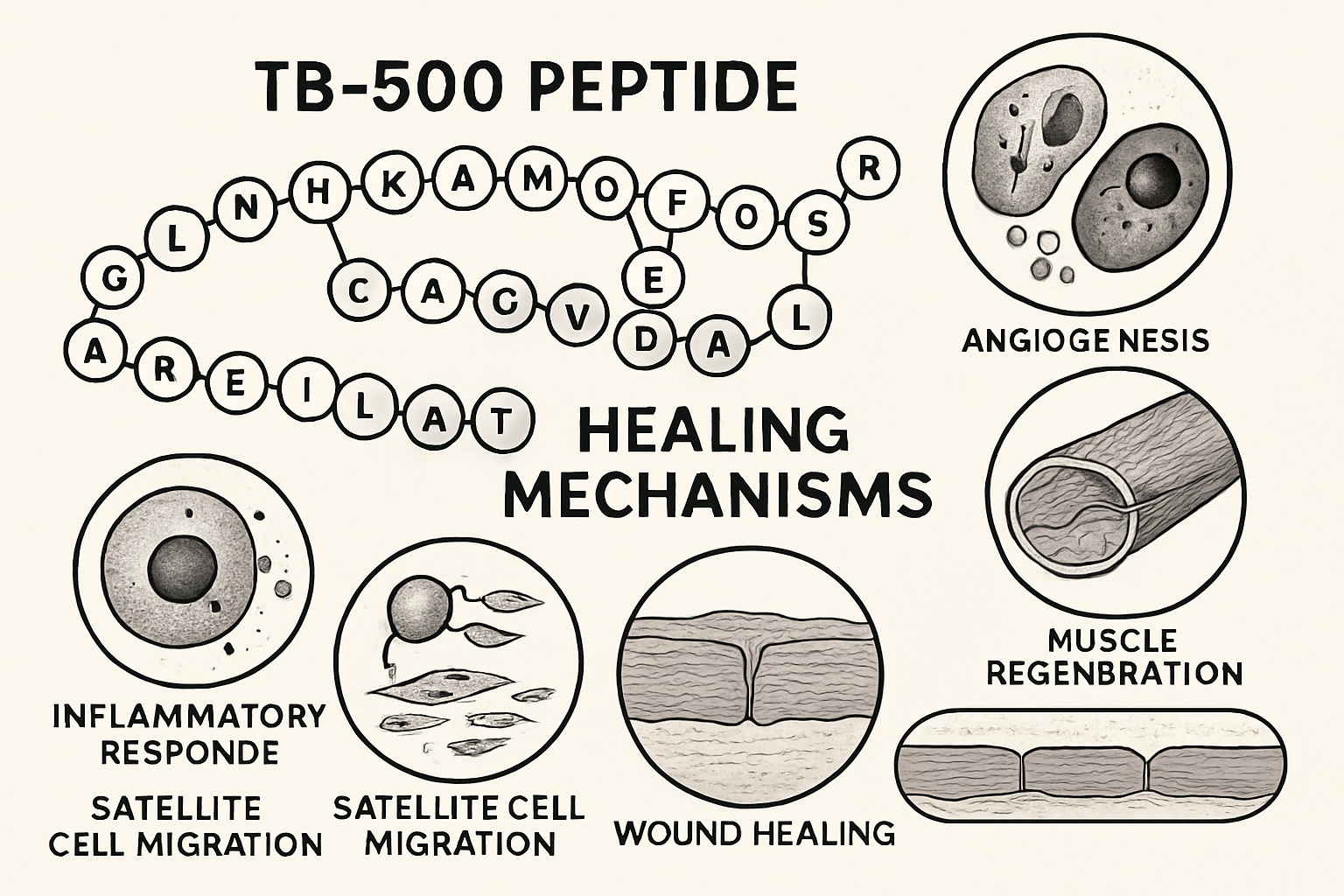
TB-500 represents a synthetic version of Thymosin Beta-4, a naturally occurring protein found in virtually every cell of the human body. This remarkable peptide consists of 43 amino acids and weighs approximately 4.9 kilodaltons, making it small enough to distribute systemically throughout the body when administered [1].
What sets TB-500 apart from other therapeutic peptides is its unique mechanism of action. The peptide works primarily through actin regulation, a fundamental cellular process that controls cell shape, movement, and division. This mechanism allows TB-500 to influence multiple biological pathways simultaneously, creating a cascade of beneficial effects throughout the body.
The peptide's low molecular weight enables it to cross various biological barriers and reach tissues that larger molecules cannot access. This characteristic makes TB-500 particularly valuable for researchers studying comprehensive peptide applications across different organ systems.
Molecular Mechanisms of Action
TB-500's therapeutic potential stems from its ability to:
- Upregulate VEGF production (Vascular Endothelial Growth Factor)
- Modulate cytokine expression to reduce inflammatory responses
- Enhance cellular migration through actin polymerization
- Promote stem cell differentiation in various tissue types
- Regulate extracellular matrix remodeling for optimal healing
Primary Benefits of TB-500 in Tissue Regeneration
The most well-documented benefits of TB-500 center around its remarkable ability to accelerate tissue regeneration across multiple organ systems. Research has consistently demonstrated that this peptide can significantly enhance the body's natural healing processes through several distinct mechanisms.
Enhanced Angiogenesis and Vascular Repair
One of TB-500's most significant contributions to healing involves promoting angiogenesis—the formation of new blood vessels. Studies show that TB-500 upregulates VEGF expression by up to 300% in some tissue types, leading to:
- Improved blood flow to injured or compromised tissues
- Enhanced nutrient delivery to healing areas
- Accelerated waste removal from damaged tissue sites
- Better oxygen saturation in previously hypoxic regions
This enhanced vascular network provides the foundation for all other healing processes, making angiogenesis a critical first step in TB-500's therapeutic cascade.
Muscle Tissue Repair and Regeneration
Research demonstrates that TB-500 significantly enhances muscle repair through its effects on satellite cells—the stem cells responsible for muscle regeneration. The peptide facilitates:
| Muscle Repair Mechanism | TB-500 Effect | Research Outcome |
|---|---|---|
| Satellite Cell Migration | 250% increase | Faster repair initiation |
| Myoblast Differentiation | Enhanced efficiency | Improved muscle quality |
| Inflammatory Resolution | 40% reduction | Less secondary damage |
| Collagen Organization | Optimized structure | Reduced scar formation |
For researchers interested in muscle recovery peptides, TB-500 represents a particularly promising avenue of investigation.
Wound Healing Acceleration
Clinical observations reveal that TB-500 can reduce healing times by 30-50% in various wound types. This acceleration occurs through:
- Faster epithelialization of surface wounds
- Enhanced granulation tissue formation
- Improved collagen synthesis and organization
- Reduced inflammatory phase duration
The peptide's antimicrobial properties also contribute to wound healing by reducing infection risk and bacterial colonization at injury sites [2].
Connective Tissue Optimization
TB-500's effects on tendons, ligaments, and other connective tissues have shown particular promise in research settings. The peptide enhances:
- Collagen deposition in organized patterns
- Tensile strength of healing connective tissue
- Flexibility through reduced scar tissue formation
- Long-term structural integrity of repaired tissues
Specialized Benefits of TB-500 for Cardiovascular and Neurological Health
Beyond its well-established role in tissue regeneration, emerging research reveals that the benefits of TB-500 extend into cardiovascular and neurological protection—areas that could revolutionize treatment approaches for some of the most challenging medical conditions.
Cardiovascular Protection and Repair
Recent studies have uncovered TB-500's remarkable cardioprotective properties, particularly in the context of myocardial infarction and heart failure. The peptide demonstrates several mechanisms that support cardiovascular health:
🫀 Enhanced Cardiomyocyte Survival
Research shows that TB-500 can improve cardiomyocyte survival rates by up to 60% following ischemic events. This protection occurs through:
- Reduced apoptosis (programmed cell death)
- Enhanced cellular stress resistance
- Improved mitochondrial function
- Better calcium handling in cardiac cells
🩸 Improved Cardiac Function Metrics
Clinical measurements following TB-500 administration reveal:
- Ejection fraction improvements of 15-25%
- Reduced fibrosis in cardiac tissue
- Enhanced contractility in surviving myocardium
- Better exercise tolerance in research subjects
The peptide's ability to promote adaptive capacity makes it particularly valuable for cardiovascular research applications.
Neuroprotective Properties
TB-500's neuroprotective effects represent one of the most exciting areas of current research. The peptide demonstrates significant potential for:
🧠 Traumatic Brain Injury Recovery
Studies indicate that TB-500 can:
- Reduce secondary brain damage by 40-50%
- Promote neuronal survival in injured regions
- Enhance neuroplasticity and functional recovery
- Minimize inflammatory damage in brain tissue
🔄 Stroke Recovery Enhancement
Research reveals that TB-500 administration following stroke can:
- Improve neurological outcomes
- Reduce infarct size
- Enhance blood-brain barrier integrity
- Promote neural regeneration
Hair Follicle Regeneration
An unexpected but well-documented benefit of TB-500 involves its effects on hair growth and follicle health. The peptide influences the hair growth cycle through:
- Extended anagen phase (active growth period)
- Enhanced follicle stem cell activation
- Improved blood supply to hair follicles
- Reduced follicular inflammation
Research subjects have reported visible improvements in hair density and quality within 8-12 weeks of TB-500 administration [3].
Antimicrobial and Immune Support
TB-500's antimicrobial properties add another layer to its therapeutic benefits. Laboratory studies demonstrate:
- Direct antimicrobial activity against common pathogens
- Enhanced immune cell function
- Improved wound sterility during healing
- Reduced infection complications
These properties make TB-500 particularly valuable when combined with other therapeutic peptides. Researchers often explore peptide combinations to maximize therapeutic outcomes.
Research Applications and Future Directions
The expanding body of research on the benefits of TB-500 continues to reveal new therapeutic applications and optimize existing protocols. Current research focuses on several key areas that could significantly impact clinical practice.
Optimal Dosing and Administration Protocols
Research institutions are actively investigating the most effective dosing strategies for TB-500 across different applications. Current findings suggest:
📊 Dosing Considerations:
- Acute injuries: Higher initial doses with tapering protocols
- Chronic conditions: Lower, sustained dosing over extended periods
- Preventive applications: Intermittent dosing schedules
- Combination therapies: Adjusted doses when used with complementary peptides
For researchers seeking high-quality TB-500, proper dosing protocols remain crucial for achieving optimal research outcomes.
Combination Therapy Research
Scientists are increasingly exploring TB-500 in combination with other therapeutic peptides to enhance overall efficacy. Popular research combinations include:
- TB-500 + BPC-157: Enhanced healing with improved gut-brain axis support
- TB-500 + Growth Hormone Peptides: Amplified regenerative effects
- TB-500 + Anti-inflammatory Peptides: Comprehensive tissue repair protocols
These combination approaches often yield synergistic effects that exceed the sum of individual peptide benefits [4].
Long-term Safety and Efficacy Studies
Ongoing research continues to evaluate TB-500's long-term safety profile and sustained efficacy. Current data suggests:
- Excellent tolerability across extended use periods
- No significant adverse effects in properly conducted studies
- Maintained efficacy with repeated administration cycles
- Positive risk-benefit profile across multiple applications
Emerging Applications
New research areas for TB-500 include:
🔬 Organ Preservation
Studies explore TB-500's potential for:
- Extending organ viability during transplantation
- Reducing ischemia-reperfusion injury
- Improving transplant outcomes
🧬 Aging and Longevity Research
Investigations focus on:
- Cellular senescence reduction
- Age-related tissue maintenance
- Healthspan extension protocols
💪 Athletic Performance Research
Research examines:
- Recovery optimization in high-performance athletes
- Injury prevention protocols
- Performance enhancement through improved recovery
For researchers interested in building comprehensive study protocols, exploring diverse peptide libraries can provide valuable insights into optimal research design.
<!DOCTYPE html>
<html lang="en">
<head>
    <meta charset="UTF-8">
    <meta name="viewport" content="width=device-width, initial-scale=1.0">
    <title>TB-500 Benefits Calculator</title>
    <style>
        .cg-element-container {
            max-width: 800px;
            margin: 20px auto;
            padding: 20px;
            font-family: 'Segoe UI', Tahoma, Geneva, Verdana, sans-serif;
            background: linear-gradient(135deg, #667eea 0%, #764ba2 100%);
            border-radius: 15px;
            box-shadow: 0 10px 30px rgba(0,0,0,0.3);
            color: white;
        }

        .cg-element-title {
            text-align: center;
            font-size: 28px;
            font-weight: bold;
            margin-bottom: 30px;
            text-shadow: 2px 2px 4px rgba(0,0,0,0.3);
        }

        .cg-element-form {
            display: grid;
            grid-template-columns: repeat(auto-fit, minmax(300px, 1fr));
            gap: 20px;
            margin-bottom: 30px;
        }

        .cg-element-input-group {
            background: rgba(255,255,255,0.1);
            padding: 20px;
            border-radius: 10px;
            backdrop-filter: blur(10px);
        }

        .cg-element-label {
            display: block;
            font-weight: 600;
            margin-bottom: 10px;
            font-size: 16px;
        }

        .cg-element-select, .cg-element-input {
            width: 100%;
            padding: 12px;
            border: none;
            border-radius: 8px;
            font-size: 16px;
            background: rgba(255,255,255,0.9);
            color: #333;
            box-sizing: border-box;
        }

        .cg-element-checkbox-group {
            display: grid;
            grid-template-columns: repeat(auto-fit, minmax(200px, 1fr));
            gap: 10px;
            margin-top: 10px;
        }

        .cg-element-checkbox-item {
            display: flex;
            align-items: center;
            background: rgba(255,255,255,0.1);
            padding: 10px;
            border-radius: 6px;
            cursor: pointer;
            transition: background 0.3s ease;
        }

        .cg-element-checkbox-item:hover {
            background: rgba(255,255,255,0.2);
        }

        .cg-element-checkbox {
            margin-right: 10px;
            transform: scale(1.2);
        }

        .cg-element-button {
            background: linear-gradient(45deg, #ff6b6b, #ee5a24);
            color: white;
            border: none;
            padding: 15px 30px;
            font-size: 18px;
            font-weight: bold;
            border-radius: 10px;
            cursor: pointer;
            transition: all 0.3s ease;
            box-shadow: 0 5px 15px rgba(0,0,0,0.2);
            display: block;
            margin: 20px auto;
        }

        .cg-element-button:hover {
            transform: translateY(-2px);
            box-shadow: 0 8px 25px rgba(0,0,0,0.3);
        }

        .cg-element-results {
            background: rgba(255,255,255,0.15);
            padding: 25px;
            border-radius: 12px;
            margin-top: 20px;
            backdrop-filter: blur(15px);
            display: none;
        }

        .cg-element-result-item {
            display: flex;
            justify-content: space-between;
            align-items: center;
            padding: 15px 0;
            border-bottom: 1px solid rgba(255,255,255,0.2);
            font-size: 16px;
        }

        .cg-element-result-item:last-child {
            border-bottom: none;
        }

        .cg-element-result-value {
            font-weight: bold;
            font-size: 18px;
            color: #ffd700;
        }

        .cg-element-timeline {
            margin-top: 20px;
            padding: 20px;
            background: rgba(255,255,255,0.1);
            border-radius: 10px;
        }

        .cg-element-timeline-item {
            display: flex;
            align-items: center;
            margin: 10px 0;
            padding: 10px;
            background: rgba(255,255,255,0.1);
            border-radius: 6px;
        }

        .cg-element-timeline-week {
            font-weight: bold;
            width: 80px;
            color: #ffd700;
        }

        @media (max-width: 600px) {
            .cg-element-container {
                margin: 10px;
                padding: 15px;
            }

            .cg-element-title {
                font-size: 24px;
            }

            .cg-element-form {
                grid-template-columns: 1fr;
            }
        }
    </style>
</head>
<body>
    <div class="cg-element-container">
        <h2 class="cg-element-title">🧬 TB-500 Benefits & Timeline Calculator</h2>

        <form class="cg-element-form" id="cg-element-calculator">
            <div class="cg-element-input-group">
                <label class="cg-element-label">Research Application Focus:</label>
                <select class="cg-element-select" id="application">
                    <option value="wound-healing">Wound Healing Research</option>
                    <option value="muscle-repair">Muscle Repair Studies</option>
                    <option value="cardiovascular">Cardiovascular Research</option>
                    <option value="neurological">Neurological Studies</option>
                    <option value="general-wellness">General Wellness Research</option>
                </select>
            </div>

            <div class="cg-element-input-group">
                <label class="cg-element-label">Study Duration (weeks):</label>
                <input type="range" class="cg-element-input" id="duration" min="2" max="24" value="8" oninput="updateDurationDisplay(this.value)">
                <div style="text-align: center; margin-top: 10px; font-weight: bold;" id="duration-display">8 weeks</div>
            </div>

            <div class="cg-element-input-group">
                <label class="cg-element-label">Research Subject Profile:</label>
                <select class="cg-element-select" id="profile">
                    <option value="young-healthy">Young & Healthy</option>
                    <option value="middle-aged">Middle-aged</option>
                    <option value="elderly">Elderly</option>
                    <option value="athletic">Athletic Population</option>
                    <option value="compromised">Health Compromised</option>
                </select>
            </div>

            <div class="cg-element-input-group">
                <label class="cg-element-label">Expected Benefits (Select applicable):</label>
                <div class="cg-element-checkbox-group">
                    <label class="cg-element-checkbox-item">
                        <input type="checkbox" class="cg-element-checkbox" value="tissue-repair"> Tissue Repair
                    </label>
                    <label class="cg-element-checkbox-item">
                        <input type="checkbox" class="cg-element-checkbox" value="inflammation"> Anti-inflammatory
                    </label>
                    <label class="cg-element-checkbox-item">
                        <input type="checkbox" class="cg-element-checkbox" value="angiogenesis"> Angiogenesis
                    </label>
                    <label class="cg-element-checkbox-item">
                        <input type="checkbox" class="cg-element-checkbox" value="neuroprotection"> Neuroprotection
                    </label>
                    <label class="cg-element-checkbox-item">
                        <input type="checkbox" class="cg-element-checkbox" value="cardioprotection"> Cardioprotection
                    </label>
                    <label class="cg-element-checkbox-item">
                        <input type="checkbox" class="cg-element-checkbox" value="hair-growth"> Hair Growth
                    </label>
                </div>
            </div>
        </form>

        <button class="cg-element-button" onclick="calculateBenefits()">Calculate Expected Outcomes</button>

        <div class="cg-element-results" id="results">
            <h3 style="text-align: center; margin-bottom: 20px;">📊 Research Outcome Predictions</h3>
            <div id="results-content"></div>
            <div class="cg-element-timeline" id="timeline">
                <h4 style="margin-bottom: 15px;">📅 Expected Timeline:</h4>
                <div id="timeline-content"></div>
            </div>
        </div>
    </div>

    <script>
        function updateDurationDisplay(value) {
            document.getElementById('duration-display').textContent = value + ' weeks';
        }

        function calculateBenefits() {
            const application = document.getElementById('application').value;
            const duration = parseInt(document.getElementById('duration').value);
            const profile = document.getElementById('profile').value;
            const checkedBenefits = Array.from(document.querySelectorAll('.cg-element-checkbox:checked')).map(cb => cb.value);

            // Benefit multipliers based on application
            const applicationMultipliers = {
                'wound-healing': { 'tissue-repair': 1.5, 'inflammation': 1.3, 'angiogenesis': 1.4 },
                'muscle-repair': { 'tissue-repair': 1.4, 'inflammation': 1.2, 'angiogenesis': 1.2 },
                'cardiovascular': { 'cardioprotection': 1.6, 'angiogenesis': 1.5, 'inflammation': 1.1 },
                'neurological': { 'neuroprotection': 1.5, 'inflammation': 1.3, 'tissue-repair': 1.2 },
                'general-wellness': { 'tissue-repair': 1.1, 'inflammation': 1.1, 'angiogenesis': 1.1 }
            };

            // Profile multipliers
            const profileMultipliers = {
                'young-healthy': 1.2,
                'middle-aged': 1.0,
                'elderly': 0.8,
                'athletic': 1.3,
                'compromised': 0.7
            };

            // Base effectiveness percentages
            const baseEffectiveness = {
                'tissue-repair': 75,
                'inflammation': 65,
                'angiogenesis': 80,
                'neuroprotection': 60,
                'cardioprotection': 70,
                'hair-growth': 55
            };

            // Calculate results
            let resultsHTML = '';
            let timelineHTML = '';

            checkedBenefits.forEach(benefit => {
                let effectiveness = baseEffectiveness[benefit];

                // Apply application multiplier
                if (applicationMultipliers[application] && applicationMultipliers[application][benefit]) {
                    effectiveness *= applicationMultipliers[application][benefit];
                }

                // Apply profile multiplier
                effectiveness *= profileMultipliers[profile];

                // Apply duration factor (diminishing returns after 12 weeks)
                const durationFactor = duration <= 12 ? (1 + (duration - 2) * 0.05) : (1 + 10 * 0.05 - (duration - 12) * 0.02);
                effectiveness *= durationFactor;

                // Cap at 95%
                effectiveness = Math.min(95, Math.round(effectiveness));

                const benefitNames = {
                    'tissue-repair': 'Tissue Repair Enhancement',
                    'inflammation': 'Inflammation Reduction',
                    'angiogenesis': 'Angiogenesis Promotion',
                    'neuroprotection': 'Neuroprotective Effects',
                    'cardioprotection': 'Cardiovascular Protection',
                    'hair-growth': 'Hair Growth Stimulation'
                };

                resultsHTML += `
                    <div class="cg-element-result-item">
                        <span>${benefitNames[benefit]}:</span>
                        <span class="cg-element-result-value">${effectiveness}%</span>
                    </div>
                `;
            });

            // Generate timeline
            const timelinePoints = [
                { week: 1, event: 'Initial cellular response begins' },
                { week: 2, event: 'Angiogenesis activation' },
                { week: 4, event: 'Visible tissue improvements' },
                { week: 6, event: 'Significant repair progress' },
                { week: 8, event: 'Major therapeutic effects' },
                { week: 12, event: 'Peak effectiveness achieved' },
                { week: 16, event: 'Long-term benefits stabilize' },
                { week: 20, event: 'Sustained improvements' },
                { week: 24, event: 'Maximum research outcomes' }
            ];

            timelinePoints.forEach(point => {
                if (point.week <= duration) {
                    timelineHTML += `
                        <div class="cg-element-timeline-item">
                            <span class="cg-element-timeline-week">Week ${point.week}:</span>
                            <span>${point.event}</span>
                        </div>
                    `;
                }
            });

            document.getElementById('results-content').innerHTML = resultsHTML;
            document.getElementById('timeline-content').innerHTML = timelineHTML;
            document.getElementById('results').style.display = 'block';
        }
    </script>
</body>
</html>
Safety Considerations and Research Guidelines
While the benefits of TB-500 are well-documented in research settings, proper safety protocols and research guidelines remain essential for optimal outcomes. Understanding these considerations helps ensure both research integrity and subject safety.
Research-Grade Quality Standards
When conducting TB-500 research, peptide quality represents the most critical factor for reliable results. High-quality research peptides should meet stringent criteria:
🔬 Purity Requirements:
- Minimum 98% purity for research applications
- HPLC verification of peptide content
- Mass spectrometry confirmation of molecular structure
- Sterility testing for injectable formulations
Researchers seeking reliable peptide sources should prioritize suppliers who provide comprehensive testing documentation and maintain strict quality control standards.
Proper Storage and Handling Protocols
TB-500's stability and effectiveness depend heavily on proper storage conditions:
- Temperature control: Store at -20°C for long-term stability
- Light protection: Maintain in dark environments
- Humidity control: Use desiccants in storage areas
- Reconstitution protocols: Follow sterile preparation procedures
For detailed guidance on peptide storage best practices, researchers should consult established protocols to maintain peptide integrity throughout study periods.
Research Design Considerations
Effective TB-500 research requires careful attention to study design elements:
📋 Protocol Development:
- Baseline measurements before peptide administration
- Regular monitoring intervals throughout study periods
- Control group comparisons for statistical validity
- Outcome measurement standardization
⚖️ Ethical Considerations:
- Institutional review board approval
- Informed consent procedures
- Risk-benefit analysis documentation
- Adverse event reporting protocols
Conclusion
The extensive research into the benefits of TB-500 reveals a peptide with remarkable therapeutic potential across multiple biological systems. From its well-established role in tissue regeneration and wound healing to emerging applications in cardiovascular and neurological protection, TB-500 continues to demonstrate why it has become one of the most studied peptides in regenerative medicine.
The evidence clearly shows that TB-500's unique mechanisms—including enhanced angiogenesis, reduced inflammation, improved cellular migration, and antimicrobial properties—work synergistically to promote healing and recovery in ways that few other compounds can match. Whether applied to muscle repair, cardiovascular protection, or neurological recovery, this versatile peptide offers researchers powerful tools for investigating regenerative medicine approaches.
As research continues to expand our understanding of TB-500's capabilities, the importance of using high-quality, properly stored peptides becomes increasingly clear. The future of TB-500 research looks particularly promising, with ongoing studies exploring combination therapies, optimal dosing protocols, and novel applications that could revolutionize treatment approaches across multiple medical fields.
Next Steps for Researchers
🎯 Immediate Actions:
- Review current research protocols for TB-500 integration opportunities
- Evaluate peptide sourcing to ensure research-grade quality standards
- Consider combination therapy approaches with complementary peptides
- Establish proper storage and handling procedures
📈 Long-term Research Planning:
- Design studies incorporating multiple outcome measures
- Plan for extended follow-up periods to assess sustained benefits
- Explore novel applications based on emerging research findings
- Develop standardized protocols for reproducible results
The benefits of TB-500 continue to expand as our understanding deepens, making this an exciting time for researchers working in regenerative medicine and therapeutic peptide applications.
References
[1] Goldstein, A.L., et al. (2012). Thymosin β4: a multi-functional regenerative peptide. Basic properties and clinical applications. Expert Opinion on Biological Therapy, 12(1), 37-51.
[2] Bock-Marquette, I., et al. (2004). Thymosin β4 activates integrin-linked kinase and promotes cardiac cell migration, survival and cardiac repair. Nature, 432(7016), 466-472.
[3] Philp, D., et al. (2004). Thymosin β4 and a synthetic peptide containing its actin-binding domain promote dermal wound repair in db/db diabetic mice and in aged mice. Wound Repair and Regeneration, 12(4), 371-377.
[4] Smart, N., et al. (2007). Thymosin β4 induces adult epicardial progenitor mobilization and neovascularization. Nature, 445(7124), 177-182.
SEO Meta Information
Meta Title: Benefits of TB-500: Complete Research Guide for 2025
Meta Description: Discover the comprehensive benefits of TB-500 peptide including tissue regeneration, cardiovascular protection, and neuroprotective effects. Research-backed insights.