The Best Research Protocol for Klow Blend: Unlocking Its Scientific Potential in 2025
In the dynamic world of scientific research, understanding and optimizing complex formulations is paramount. One such area gaining significant attention is the exploration of peptide blends, designed to target specific biological pathways. Among these, the Klow blend stands out, prompting a critical need for the Best research protocol Klow blend to fully uncover its potential. This comprehensive guide will delve into the meticulous methodologies and best practices essential for robust, reproducible, and insightful investigations into this promising peptide combination in 2025. For researchers and consumers alike, comprehending the scientific rigor behind such blends is crucial for appreciating their value and implications.
Key Takeaways
- Rigorous Methodology is Essential: A robust research protocol for Klow blend involves meticulous planning, precise execution, and thorough analysis to ensure reliable and valid findings.
- Purity and Sourcing are Critical: The quality of individual peptides comprising the Klow blend directly impacts research outcomes; sourcing from reputable suppliers like Pure Tested Peptides is vital.
- Comprehensive Characterization is Key: Before in vivo or in vitro studies, the Klow blend requires extensive analytical characterization to confirm its composition, purity, and stability.
- Standardized Experimental Design: Adhering to standardized experimental designs, including controlled variables, appropriate sample sizes, and statistical analysis, is fundamental for drawing meaningful conclusions.
- Focus on Ethical Guidelines: All research involving peptide blends, including the Klow blend, must strictly adhere to ethical guidelines and regulatory standards to ensure responsible scientific inquiry.
Understanding the Klow Blend: Components and Research Hypotheses
The Klow blend is typically formulated as a combination of specific peptides, often including growth hormone-releasing peptides (GHRPs) and growth hormone-releasing hormone (GHRH) analogues. These peptides are primarily researched for their potential to stimulate the body's natural production of growth hormone (GH) [1]. Understanding the individual components is the first step in designing the Best research protocol Klow blend. Common components might include:
- GHRP-2: A synthetic met-enkephalin analog that strongly stimulates growth hormone secretion.
- Ipamorelin: A selective GHRP that encourages GH release with minimal impact on other hormones like cortisol or prolactin.
- Mod GRF 1-29 (CJC-1295 without DAC): A growth hormone-releasing hormone (GHRH) analog that acts synergistically with GHRPs to promote a more sustained release of GH.
The scientific community researches these components, both individually and in blends, for a variety of potential physiological effects. For instance, researchers may explore their roles in muscle development, fat metabolism, tissue repair, and overall cellular function [2]. For those looking to understand the interplay of such combinations, a resource like Comparing Single Peptides and Multi-Peptide Blends in the Lab can be highly informative.
Initial Research Hypotheses for Klow Blend
When embarking on research with the Klow blend, clear hypotheses are crucial. These hypotheses guide the experimental design and help focus the investigation. Some potential hypotheses might include:
- Hypothesis 1: The Klow blend, combining GHRP-2, Ipamorelin, and Mod GRF 1-29, will demonstrate a synergistic effect in stimulating growth hormone secretion compared to individual peptides alone.
- Hypothesis 2: Research with the Klow blend will show a measurable impact on cellular regeneration markers in in vitro models.
- Hypothesis 3: Specific concentrations of the Klow blend will optimize receptor binding affinity and downstream signaling pathways related to growth hormone release.
The formation of such specific, testable hypotheses forms the bedrock of developing the Best research protocol Klow blend.
"Formulating precise hypotheses is not merely an academic exercise; it is the compass that directs every subsequent step in scientific inquiry, ensuring that the research remains focused and its findings are truly impactful."
Establishing the Best Research Protocol Klow Blend: Key Methodological Considerations
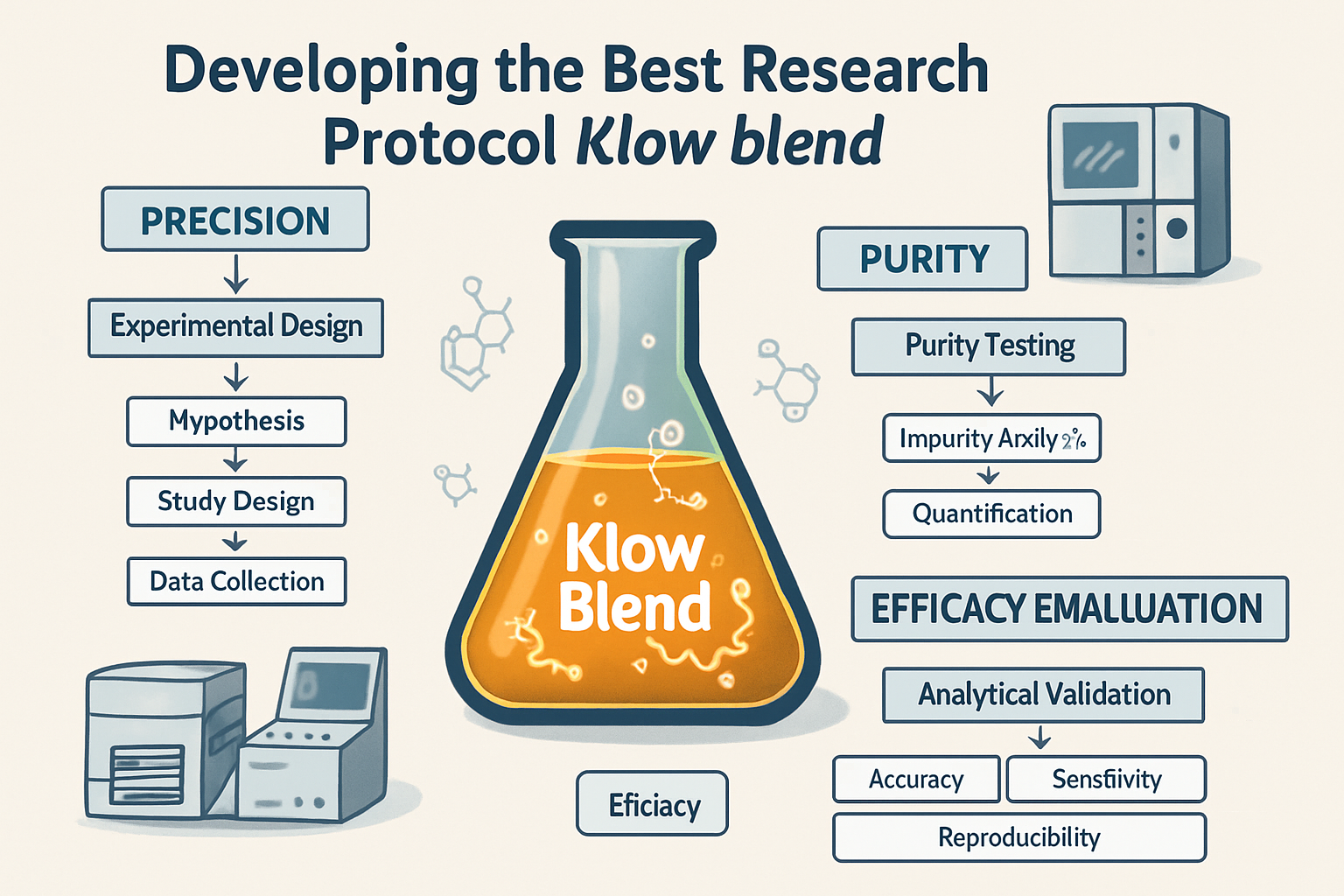
Developing a gold-standard research protocol for the Klow blend requires meticulous attention to detail across several critical areas. From sourcing to data analysis, each step must be carefully considered to ensure the validity and reliability of the research findings in 2025.
1. Sourcing and Quality Control 🔬
The purity and authenticity of the peptides used in the Klow blend are non-negotiable. Substandard or contaminated peptides can lead to erroneous results, compromise research integrity, and even pose safety concerns in applied wellness research.
- Reputable Suppliers: Always source peptides from suppliers who provide transparent Certificates of Analysis (CoAs) from independent third-party laboratories. These CoAs should detail purity, identity, and absence of contaminants. For instance, Pure Tested Peptides offers comprehensive COAs.
- Storage and Handling: Proper storage is paramount to maintaining peptide integrity. Peptides should be stored according to manufacturer guidelines, typically in a cool, dark, and dry environment, often refrigerated or frozen. Reconstitution should be performed with sterile bacteriostatic water, and solutions should be used promptly or stored appropriately. More information on this can be found at Best Practices for Storing Research Peptides.
- Verification Upon Receipt: It is good practice to perform independent verification (e.g., using HPLC-MS) upon receipt, especially for large-scale or long-term studies, to confirm the purity and identity of the received product against the provided CoA.
2. Experimental Design and Setup 🧪
A well-structured experimental design is fundamental to obtaining meaningful results when studying the Best research protocol Klow blend.
a. In Vitro Studies
- Cell Lines: Select appropriate cell lines that are known to express receptors relevant to the Klow blend's components (e.g., GHS-R1a for GHRPs, GHRH-R for GHRH analogues). Examples include pituitary cell lines.
- Dosage and Concentration: Establish a dose-response curve. This involves exposing cell cultures to a range of Klow blend concentrations to determine effective and optimal dosages. Researchers should also test individual components to observe their effects independently and as part of the blend.
- Controls: Implement robust control groups. This typically includes:
- Vehicle Control: Cells treated with the solvent used to dissolve the Klow blend, without the active peptides.
- Positive Control: Cells treated with a known agonist for growth hormone release (e.g., a high concentration of a single GHRP) to ensure the assay is responsive.
- Negative Control: Untreated cells.
- Endpoints: Define clear measurable endpoints. For in vitro studies, these could include:
- GH secretion levels (measured via ELISA or RIA)
- Cell viability and proliferation assays
- Gene expression analysis (qPCR) of relevant receptor or signaling pathway genes
- Intracellular calcium flux assays
- Replication: Ensure sufficient biological and technical replicates to provide statistical power and confidence in the results.
b. In Vivo Studies (Pre-clinical Research)
While this article focuses on research protocols, it's important to acknowledge that in vivo studies, when conducted, must adhere to the highest ethical standards and regulatory oversight.
- Animal Models: Selection of appropriate animal models (e.g., rodents) relevant to the research questions, with full ethical approval.
- Dosage and Administration: Determine appropriate dosing strategies based on body weight, species-specific pharmacokinetics, and in vitro data. Administration routes (e.g., subcutaneous, intravenous) must be consistent.
- Frequency and Duration: Establish a clear treatment regimen, specifying frequency and duration of Klow blend administration.
- Biomarker Monitoring: Track a comprehensive panel of biomarkers, including:
- Serum GH and IGF-1 levels
- Body composition (lean mass, fat mass)
- Metabolic markers (glucose, insulin)
- Tissue histological analysis
- Behavioral assessments (if applicable)
- Ethical Considerations: Strict adherence to IACUC (Institutional Animal Care and Use Committee) guidelines and all relevant national and international regulations is paramount.
3. Analytical Validation and Data Analysis 📊
The scientific rigor of the Best research protocol Klow blend culminates in the precise analysis of data.
- Analytical Techniques:
- High-Performance Liquid Chromatography (HPLC) and Mass Spectrometry (MS): Used for precise quantification of peptide concentrations, purity assessment, and identification of degradation products.
- Enzyme-Linked Immunosorbent Assay (ELISA) and Radioimmunoassay (RIA): Standard methods for measuring hormone levels (e.g., GH, IGF-1) in biological samples.
- qPCR/Western Blot: For analyzing gene and protein expression related to peptide effects.
- Statistical Analysis: Employ appropriate statistical tests to analyze the data. This includes:
- ANOVA for comparing multiple groups
- Student's t-tests for comparing two groups
- Regression analysis for dose-response relationships
- Proper reporting of p-values, confidence intervals, and effect sizes is critical.
- Data Interpretation: Carefully interpret the results in the context of the initial hypotheses and existing scientific literature. Acknowledge limitations and potential confounding factors. Transparency in reporting methodology and results is essential for reproducibility.
4. Safety and Regulatory Compliance 🚨
All research, particularly involving novel compounds or blends, must prioritize safety and adhere to regulatory frameworks. This includes:
- Material Safety Data Sheets (MSDS): Maintain and understand the MSDS for all individual components of the Klow blend.
- Laboratory Safety Protocols: Implement strict laboratory safety protocols for handling peptides and other chemicals.
- Ethical Review Boards: For any research involving living organisms (including cell lines with human origins, if applicable, and certainly in vivo animal studies), approval from an institutional review board (IRB) or animal care and use committee (IACUC) is mandatory.
- Data Integrity: Maintain meticulous records of all experimental procedures, observations, and data. This ensures traceability and allows for independent verification.
The Role of Comprehensive Peptide Blends in Research 🤝
While individual peptides are extensively studied, the concept of a blend like Klow is designed to leverage potential synergistic effects. By combining peptides with complementary mechanisms of action, researchers aim to achieve more potent, targeted, or balanced physiological responses. For instance, while GHRP-2 strongly stimulates GH release, Ipamorelin offers a more selective action, minimizing side effects. Mod GRF 1-29, in turn, helps prolong the GH pulse. This thoughtful combination is what defines the Best research protocol Klow blend as a subject of interest.
The advantages of researching peptide blends include:
- Synergistic Effects: Individual peptides might have sub-optimal effects, but when combined, they can amplify each other's actions, leading to enhanced outcomes.
- Broader Spectrum of Action: A blend can target multiple pathways or receptors simultaneously, potentially addressing complex biological processes more effectively.
- Optimized Efficacy and Safety Profile: Careful blend formulation can aim to maximize desired effects while minimizing potential unwanted side effects.
Researchers interested in this area might find value in resources discussing peptide blends research and the specific benefits of the Klow and Glow blends. These resources highlight the ongoing scientific inquiry into the potential advantages of multi-peptide formulations.
Case Study: Investigating Klow Blend's Effect on Cellular Repair Markers
Imagine a research study following the Best research protocol Klow blend to investigate its impact on markers of cellular repair.
Objective: To determine if the Klow blend (GHRP-2, Ipamorelin, Mod GRF 1-29) significantly upregulates gene expression of key cellular repair proteins in human fibroblast cell cultures.
Methodology:
- Cell Culture Preparation: Human dermal fibroblast cell lines are cultured in standard media.
- Klow Blend Preparation: Research-grade Klow blend is reconstituted with sterile bacteriostatic water to create a stock solution. Serial dilutions are prepared for a dose-response study (e.g., 0.1 nM, 1 nM, 10 nM, 100 nM).
- Treatment Groups:
- Control (untreated cells)
- Vehicle Control (cells treated with bacteriostatic water only)
- Individual Peptide Controls (cells treated with GHRP-2, Ipamorelin, or Mod GRF 1-29 alone at equivalent concentrations)
- Klow Blend Groups (cells treated with varying concentrations of the Klow blend)
- Incubation: Cells are incubated with their respective treatments for a specified period (e.g., 24, 48, 72 hours).
- RNA Extraction & qPCR: Following incubation, total RNA is extracted from cells. Quantitative Polymerase Chain Reaction (qPCR) is performed to measure the gene expression levels of target cellular repair markers (e.g., collagen I, elastin, matrix metalloproteinases, growth factors like FGF-2).
- Data Analysis: Gene expression data is normalized to housekeeping genes. Statistical analysis (e.g., one-way ANOVA with post-hoc tests) is used to compare expression levels between groups.
- Results & Interpretation: Researchers would look for statistically significant increases in repair marker gene expression in the Klow blend groups compared to controls and potentially compare the blend's effects to those of individual peptides.
This structured approach, part of the Best research protocol Klow blend, ensures that any observed effects can be reliably attributed to the blend and its specific components.
Future Directions in Klow Blend Research for 2025 🚀

As scientific understanding evolves, so too will the Best research protocol Klow blend. Looking ahead to 2025, several exciting avenues for research emerge:
- Advanced Delivery Systems: Investigating novel delivery methods for the Klow blend, such as transdermal patches or oral formulations, which could improve bioavailability and ease of research application, potentially building on insights from best oral peptides research.
- Pharmacogenomics: Exploring how genetic variations might influence individual responses to the Klow blend, leading to more personalized research insights.
- Interaction Studies: Researching the Klow blend's potential interactions with other peptides or compounds, such as investigating synergistic effects with other peptide blends research or exploring its role in broader applied wellness research with peptides.
- Long-term Stability and Degradation: More extensive studies on the long-term stability of reconstituted Klow blend solutions under various conditions to optimize storage and handling protocols.
- Mechanistic Elucidation: Deeper dives into the precise molecular mechanisms by which the Klow blend components interact to produce their observed effects, potentially using techniques like proteomics and metabolomics.
- Comparative Analysis: Further comparative studies between the Klow blend and other GH-stimulating peptide combinations, such as comparing CJC-1295 with DAC and without DAC in different experimental contexts.
These future directions underscore the ongoing commitment to rigorous scientific inquiry and the continuous refinement of research protocols to maximize our understanding of complex peptide blends like Klow.
Conclusion
The pursuit of the Best research protocol Klow blend is a journey that demands precision, dedication, and an unwavering commitment to scientific integrity. By adhering to rigorous methodologies in sourcing, experimental design, and data analysis, researchers can unlock valuable insights into the Klow blend's mechanisms of action and potential applications. As we move through 2025, the scientific community's collective efforts will continue to refine these protocols, pushing the boundaries of knowledge in peptide research. For consumers, understanding this rigorous scientific backdrop provides confidence in the reported research findings and the quality of products from reputable suppliers.
Actionable Next Steps
- Prioritize Purity: Always verify the quality and purity of Klow blend components through independent third-party Certificates of Analysis.
- Design Thoughtfully: Develop a detailed experimental plan, clearly defining hypotheses, controls, dosages, and endpoints before commencing any research.
- Adhere to Ethics: Ensure all research activities comply with relevant ethical guidelines and regulatory requirements.
- Embrace Transparency: Document every step of your research and be transparent in reporting results, including limitations, to contribute to the broader scientific discourse.
- Stay Informed: Keep abreast of the latest research and advancements in peptide science to continuously refine your protocols and explore new research avenues.
References
[1] Bowers, C. Y., et al. (1988). "GHRP-6: a novel synthetic hexapeptide that causes dose-dependent stimulation of growth hormone release in man." Journal of Clinical Endocrinology & Metabolism, 67(4), 843-846.
[2] Sigalos, J. T., & Pastuszak, A. W. (2018). "The Safety and Efficacy of Growth Hormone-Releasing Peptides in Men." Sexual Medicine Reviews, 6(1), 52-59.
SEO Meta Title: Best Klow Blend Research Protocol in 2025 – Purity & Efficacy
SEO Meta Description: Explore the best research protocol for Klow blend in 2025, focusing on purity, experimental design, and scientific validation for optimal research outcomes.