
BPC-157 and TB-500: Comprehensive Research Guide for Laboratory Applications in 2025
The world of peptide research has exploded with groundbreaking discoveries, and two compounds have captured the attention of scientists worldwide: BPC-157 and TB-500. These research peptides represent the cutting edge of tissue repair and regenerative medicine studies, offering unprecedented insights into how our bodies heal and recover at the cellular level.
Key Takeaways
• BPC-157 and TB-500 are synthetic research peptides derived from naturally occurring compounds in the human body
• Both peptides show promising results in animal studies for tissue repair, wound healing, and inflammation reduction
• These compounds remain experimental and are not FDA-approved for human use as of 2025
• Research applications focus on understanding healing mechanisms, angiogenesis, and cellular regeneration processes
• Quality sourcing and proper laboratory protocols are essential for meaningful research outcomes
Understanding BPC-157 and TB-500: The Science Behind Tissue Repair
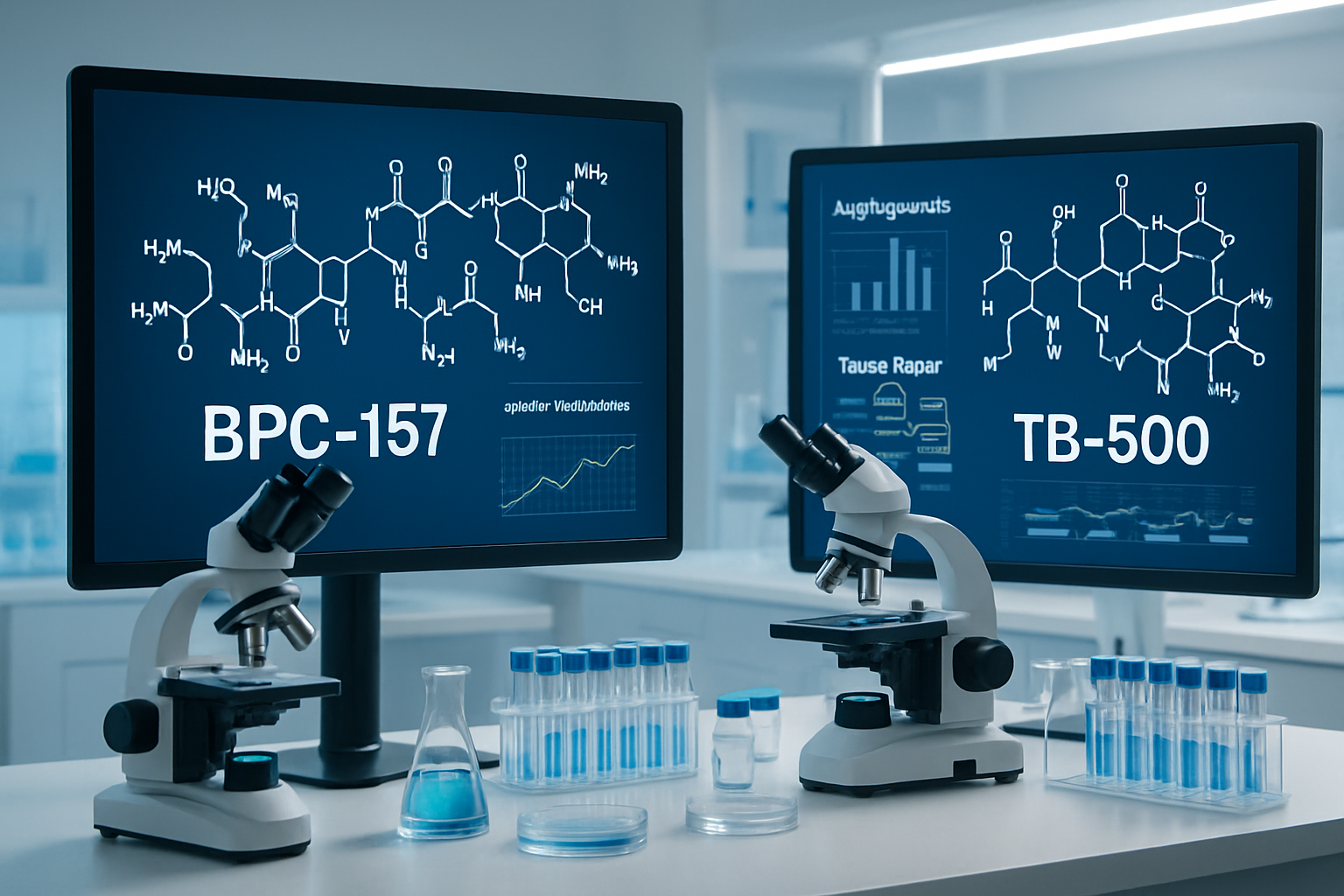
BPC-157 (Body Protection Compound-157) stands as one of the most fascinating synthetic peptides in modern research. This 15-amino acid sequence derives from a protective protein naturally found in human gastric juice. Scientists have isolated and synthesized this compound to study its remarkable healing properties in controlled laboratory environments.
TB-500, on the other hand, represents a synthetic version of Thymosin Beta-4, a naturally occurring peptide present throughout human cells. This 43-amino acid sequence plays a crucial role in cellular communication and tissue regeneration processes that researchers are still working to fully understand.
The combination of these two peptides has become a focal point for researchers studying tissue repair mechanisms. When examining BPC-157 and TB-500 together, scientists can observe complementary pathways that may enhance our understanding of natural healing processes.
Molecular Mechanisms and Pathways
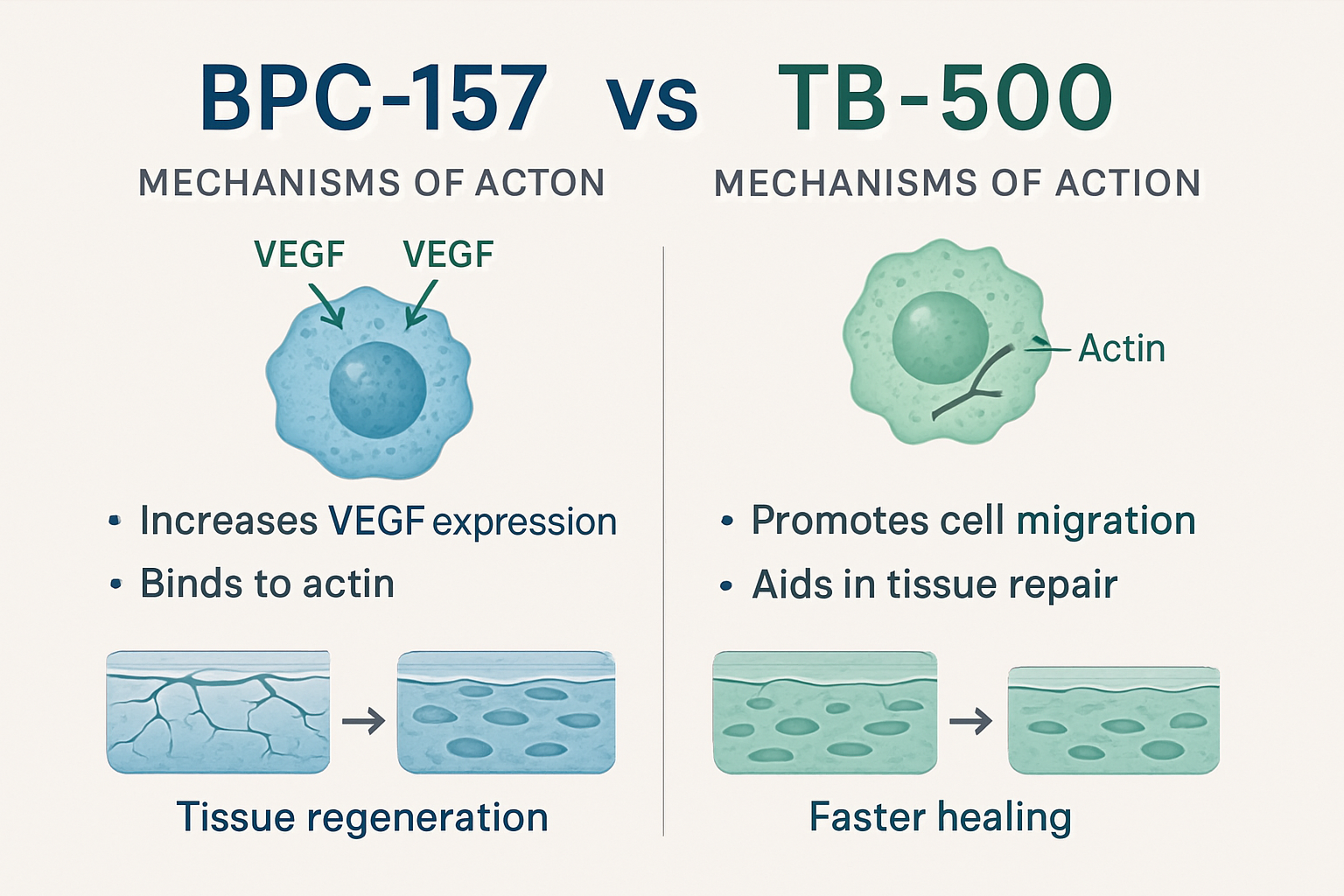
BPC-157 operates through several distinct pathways that researchers have identified through extensive laboratory studies. The peptide appears to promote angiogenesis—the formation of new blood vessels—through VEGF (vascular endothelial growth factor) pathways. This mechanism could explain why animal studies have shown accelerated healing in various tissue types.
TB-500's mechanism centers on its actin-binding properties. Actin is a protein crucial for cell structure and movement. By interacting with actin, TB-500 may facilitate cell migration and proliferation, essential processes in wound healing and tissue regeneration.
"The synergistic effects observed when studying BPC-157 and TB-500 together suggest these peptides may work through complementary pathways to enhance natural healing processes."
Research Applications and Laboratory Findings for BPC-157 and TB-500
The scientific community has conducted numerous studies examining the potential applications of BPC-157 and TB-500 in various research contexts. Understanding these findings helps researchers design better experiments and explore new therapeutic possibilities.
Tissue Repair and Regeneration Studies
Laboratory research has revealed fascinating insights into how these peptides might influence tissue repair. BPC-157 studies have focused on:
- Tendon and ligament healing in animal models
- Gastrointestinal protection mechanisms
- Bone healing acceleration processes
- Muscle tissue regeneration pathways
TB-500 research has concentrated on:
- Cell migration enhancement
- Inflammation reduction mechanisms
- Angiogenesis promotion
- Cardiac tissue protection studies
When researchers study peptide combinations, they often discover enhanced effects that individual compounds don't produce alone. This synergy makes BPC-157 and TB-500 particularly interesting for laboratory investigations.
Cardiovascular Research Applications
Recent studies have explored TB-500's potential cardiovascular benefits. Animal research suggests this peptide may promote blood vessel formation and potentially aid in heart tissue repair after injury. These findings have opened new avenues for cardiovascular research protocols.
BPC-157 has also shown promise in cardiovascular studies, particularly in research examining blood flow and vessel protection. The combination of both peptides offers researchers a unique opportunity to study multiple cardiovascular healing pathways simultaneously.
Gastrointestinal Research Focus
BPC-157's gastroprotective properties have made it a valuable tool for digestive system research. Laboratory studies have examined its potential effects on:
- Ulcer healing mechanisms
- Inflammatory bowel conditions
- Intestinal barrier function
- Digestive tract protection pathways
These research applications help scientists better understand how natural healing compounds might work in the gastrointestinal system.
Laboratory Protocols and Research Considerations
Conducting meaningful research with BPC-157 and TB-500 requires careful attention to laboratory protocols and quality standards. Researchers must consider several critical factors when designing experiments with these peptides.
Quality Standards and Sourcing
The foundation of reliable research begins with high-quality peptides. When sourcing research materials, scientists should prioritize suppliers who provide comprehensive certificates of analysis and maintain strict quality control standards.
Key quality indicators include:
- Purity levels above 98%
- Proper storage conditions and handling
- Batch testing documentation
- Sterility verification for research applications
- Molecular weight confirmation
Researchers often find that building a diverse peptide library enhances their ability to conduct comprehensive studies and explore various research questions.
Storage and Handling Protocols
Proper storage is crucial for maintaining peptide integrity throughout research projects. BPC-157 and TB-500 require specific conditions:
Storage Requirements:
- Temperature: -20°C for long-term storage
- Humidity: Low humidity environment
- Light protection: Store in dark containers
- Reconstitution: Use sterile water or appropriate buffer
- Working solutions: Store at 4°C for short-term use
Following best practices for storing research peptides ensures consistent results across experimental trials.
Research Design Considerations
When designing experiments with BPC-157 and TB-500, researchers should consider:
Dosage Protocols:
- BPC-157: Typically 200-500 mcg in animal studies
- TB-500: Usually 2-5 mg ranges in research models
- Combination studies: Adjusted ratios based on research objectives
Administration Methods:
- Subcutaneous injection for systemic studies
- Local injection for targeted tissue research
- Topical application for skin-related investigations
Timeline Considerations:
- Short-term studies: 1-2 weeks for acute effects
- Medium-term research: 4-8 weeks for tissue healing
- Long-term investigations: 12+ weeks for comprehensive analysis
Current Research Limitations and Future Directions
While the potential of BPC-157 and TB-500 appears promising, researchers must acknowledge current limitations and work toward addressing knowledge gaps in the field.
Research Gaps and Challenges
The primary limitation in current BPC-157 and TB-500 research lies in the lack of comprehensive human clinical trials. Most available data comes from animal studies and in vitro research, which may not directly translate to human applications.
Key Research Limitations:
| Limitation | Impact on Research | Future Directions |
|---|---|---|
| Limited human data | Reduced clinical relevance | Phase I/II clinical trials needed |
| Dosage standardization | Inconsistent protocols | Standardized research frameworks |
| Long-term safety | Unknown effects | Extended animal studies |
| Mechanism clarity | Incomplete understanding | Advanced molecular studies |
Regulatory Considerations
Researchers must navigate complex regulatory landscapes when working with these peptides. The FDA has not approved BPC-157 or TB-500 for human use, and both remain classified as research compounds.
WADA Restrictions:
The World Anti-Doping Agency prohibits both peptides in competitive sports, classifying them under the S0 category of non-approved substances. This classification affects research design and participant selection in sports-related studies.
Emerging Research Opportunities
Despite limitations, exciting opportunities exist for advancing BPC-157 and TB-500 research:
Promising Research Areas:
- Combination therapy studies with other peptides
- Targeted delivery system development
- Biomarker identification for treatment response
- Personalized medicine applications
- Advanced imaging studies of healing processes
Researchers exploring adaptive capacity and peptide mapping may discover new applications for these compounds in various therapeutic contexts.
Safety Considerations and Risk Assessment
Understanding potential risks and safety considerations is paramount when conducting research with BPC-157 and TB-500. While animal studies suggest relatively good safety profiles, researchers must remain vigilant about potential adverse effects.
Known Safety Profile
Current research suggests both peptides have relatively favorable safety profiles in animal studies:
BPC-157 Safety Observations:
- Minimal toxicity in animal models
- No significant organ damage reported
- Well-tolerated across various dosage ranges
- Few documented adverse reactions
TB-500 Safety Observations:
- Generally well-tolerated in research settings
- Minimal inflammatory responses
- No major organ toxicity reported
- Stable across various administration routes
Potential Risk Factors
Despite positive safety signals, researchers should consider potential risks:
Theoretical Concerns:
- Unknown long-term effects
- Potential immune system interactions
- Possible cellular overstimulation
- Individual variation in responses
Research Precautions:
- Start with conservative dosing protocols
- Monitor for unexpected reactions
- Maintain detailed experimental logs
- Follow institutional safety guidelines
Research Methodologies and Best Practices
Successful research with BPC-157 and TB-500 requires adherence to established scientific methodologies and emerging best practices in peptide research.
Experimental Design Principles
Control Group Management:
- Include appropriate placebo controls
- Use vehicle-only control groups
- Consider positive control comparisons
- Implement proper randomization protocols
Data Collection Standards:
- Establish clear endpoint measurements
- Use validated assessment tools
- Maintain consistent timing intervals
- Document all experimental conditions
Analytical Techniques
Modern peptide research employs sophisticated analytical methods:
Quantitative Analysis:
- HPLC for purity verification
- Mass spectrometry for molecular confirmation
- Bioassays for biological activity
- Imaging techniques for tissue analysis
Qualitative Assessment:
- Histological examination
- Immunohistochemistry staining
- Molecular pathway analysis
- Gene expression studies
Researchers interested in expanding their experimental capabilities often benefit from exploring comprehensive peptide research approaches that incorporate multiple analytical techniques.
Future Perspectives and Research Directions
The field of peptide research continues evolving rapidly, with BPC-157 and TB-500 positioned at the forefront of regenerative medicine investigations. Understanding future directions helps researchers plan long-term studies and identify emerging opportunities.
Technological Advances
Delivery System Innovation:
- Nasal spray formulations for enhanced bioavailability
- Sustained-release preparations for extended action
- Targeted delivery systems for specific tissues
- Combination products with complementary compounds
Analytical Improvements:
- Real-time monitoring of peptide activity
- Advanced imaging of healing processes
- Biomarker development for treatment response
- Personalized dosing algorithms
Clinical Translation Pathways
Moving from laboratory research to clinical applications requires systematic progression:
Phase I Studies:
- Safety and dosage determination
- Pharmacokinetic profiling
- Initial efficacy signals
- Optimal administration routes
Phase II Research:
- Efficacy confirmation in target populations
- Dose-response relationships
- Biomarker validation
- Combination therapy exploration
Collaborative Research Opportunities
The complexity of peptide research often benefits from collaborative approaches:
Multi-Institutional Studies:
- Larger sample sizes for statistical power
- Diverse expertise integration
- Resource sharing for expensive equipment
- Standardized protocol development
Industry Partnerships:
- Advanced manufacturing capabilities
- Regulatory expertise
- Clinical trial infrastructure
- Commercialization pathways
Conclusion
The research potential of BPC-157 and TB-500 represents an exciting frontier in regenerative medicine and tissue repair studies. These peptides offer researchers unique tools for understanding fundamental healing processes and exploring novel therapeutic approaches.
Key research priorities for 2025 and beyond include advancing from animal studies to carefully designed human clinical trials, developing standardized protocols for consistent research outcomes, and exploring combination therapies that may enhance individual peptide effects.
For researchers ready to begin or expand their peptide studies, establishing relationships with reliable suppliers who maintain strict quality standards is essential. Pure Tested Peptides provides the foundation for meaningful research through high-quality compounds and comprehensive support resources.
Next Steps for Researchers:
- Design comprehensive study protocols that address current knowledge gaps
- Establish quality control measures for consistent experimental conditions
- Collaborate with institutional review boards for appropriate oversight
- Document findings thoroughly to contribute to the growing knowledge base
- Stay current with regulatory developments affecting peptide research
The future of BPC-157 and TB-500 research depends on rigorous scientific investigation, collaborative efforts, and commitment to advancing our understanding of these remarkable compounds. As we continue exploring their potential, researchers have the opportunity to contribute to breakthrough discoveries that may transform regenerative medicine.
<!DOCTYPE html>
<html lang="en">
<head>
    <meta charset="UTF-8">
    <meta name="viewport" content="width=device-width, initial-scale=1.0">
    <title>BPC-157 and TB-500 Research Calculator</title>
    <style>
        .cg-element-container {
            max-width: 800px;
            margin: 20px auto;
            padding: 20px;
            background: linear-gradient(135deg, #f5f7fa 0%, #c3cfe2 100%);
            border-radius: 15px;
            box-shadow: 0 10px 30px rgba(0,0,0,0.1);
            font-family: 'Segoe UI', Tahoma, Geneva, Verdana, sans-serif;
        }

        .cg-element-header {
            text-align: center;
            margin-bottom: 30px;
        }

        .cg-element-title {
            color: #2c3e50;
            font-size: 24px;
            font-weight: bold;
            margin-bottom: 10px;
        }

        .cg-element-subtitle {
            color: #7f8c8d;
            font-size: 14px;
        }

        .cg-element-form {
            display: grid;
            grid-template-columns: repeat(auto-fit, minmax(300px, 1fr));
            gap: 20px;
            margin-bottom: 20px;
        }

        .cg-element-section {
            background: white;
            padding: 20px;
            border-radius: 10px;
            box-shadow: 0 2px 10px rgba(0,0,0,0.05);
        }

        .cg-element-section h3 {
            color: #34495e;
            margin-bottom: 15px;
            font-size: 18px;
            border-bottom: 2px solid #3498db;
            padding-bottom: 5px;
        }

        .cg-element-input-group {
            margin-bottom: 15px;
        }

        .cg-element-label {
            display: block;
            margin-bottom: 5px;
            color: #2c3e50;
            font-weight: 500;
        }

        .cg-element-input, .cg-element-select {
            width: 100%;
            padding: 10px;
            border: 2px solid #ecf0f1;
            border-radius: 5px;
            font-size: 14px;
            transition: border-color 0.3s;
        }

        .cg-element-input:focus, .cg-element-select:focus {
            outline: none;
            border-color: #3498db;
        }

        .cg-element-button {
            width: 100%;
            padding: 12px;
            background: linear-gradient(45deg, #3498db, #2980b9);
            color: white;
            border: none;
            border-radius: 5px;
            font-size: 16px;
            font-weight: bold;
            cursor: pointer;
            transition: transform 0.2s;
        }

        .cg-element-button:hover {
            transform: translateY(-2px);
        }

        .cg-element-results {
            background: white;
            padding: 20px;
            border-radius: 10px;
            margin-top: 20px;
            box-shadow: 0 2px 10px rgba(0,0,0,0.05);
        }

        .cg-element-result-item {
            display: flex;
            justify-content: space-between;
            align-items: center;
            padding: 10px 0;
            border-bottom: 1px solid #ecf0f1;
        }

        .cg-element-result-item:last-child {
            border-bottom: none;
        }

        .cg-element-result-label {
            color: #2c3e50;
            font-weight: 500;
        }

        .cg-element-result-value {
            color: #27ae60;
            font-weight: bold;
            font-size: 16px;
        }

        .cg-element-warning {
            background: #fff3cd;
            border: 1px solid #ffeaa7;
            color: #856404;
            padding: 15px;
            border-radius: 5px;
            margin-top: 15px;
            font-size: 12px;
        }

        @media (max-width: 600px) {
            .cg-element-form {
                grid-template-columns: 1fr;
            }
        }
    </style>
</head>
<body>
    <div class="cg-element-container">
        <div class="cg-element-header">
            <h2 class="cg-element-title">BPC-157 & TB-500 Research Calculator</h2>
            <p class="cg-element-subtitle">Calculate dosages and concentrations for laboratory research applications</p>
        </div>

        <div class="cg-element-form">
            <div class="cg-element-section">
                <h3>BPC-157 Parameters</h3>
                <div class="cg-element-input-group">
                    <label class="cg-element-label">Vial Size (mg)</label>
                    <select class="cg-element-select" id="bpc157-vial">
                        <option value="5">5 mg</option>
                        <option value="10">10 mg</option>
                        <option value="20">20 mg</option>
                    </select>
                </div>
                <div class="cg-element-input-group">
                    <label class="cg-element-label">Bacteriostatic Water (mL)</label>
                    <input type="number" class="cg-element-input" id="bpc157-water" value="2" min="1" max="10" step="0.1">
                </div>
                <div class="cg-element-input-group">
                    <label class="cg-element-label">Target Dose (mcg)</label>
                    <input type="number" class="cg-element-input" id="bpc157-dose" value="250" min="100" max="1000" step="50">
                </div>
            </div>

            <div class="cg-element-section">
                <h3>TB-500 Parameters</h3>
                <div class="cg-element-input-group">
                    <label class="cg-element-label">Vial Size (mg)</label>
                    <select class="cg-element-select" id="tb500-vial">
                        <option value="5">5 mg</option>
                        <option value="10">10 mg</option>
                        <option value="20">20 mg</option>
                    </select>
                </div>
                <div class="cg-element-input-group">
                    <label class="cg-element-label">Bacteriostatic Water (mL)</label>
                    <input type="number" class="cg-element-input" id="tb500-water" value="2" min="1" max="10" step="0.1">
                </div>
                <div class="cg-element-input-group">
                    <label class="cg-element-label">Target Dose (mg)</label>
                    <input type="number" class="cg-element-input" id="tb500-dose" value="2.5" min="1" max="10" step="0.5">
                </div>
            </div>
        </div>

        <button class="cg-element-button" onclick="calculateDosages()">Calculate Research Dosages</button>

        <div class="cg-element-results" id="results" style="display: none;">
            <h3 style="color: #2c3e50; margin-bottom: 15px;">Calculation Results</h3>
            <div class="cg-element-result-item">
                <span class="cg-element-result-label">BPC-157 Concentration:</span>
                <span class="cg-element-result-value" id="bpc157-concentration">-</span>
            </div>
            <div class="cg-element-result-item">
                <span class="cg-element-result-label">BPC-157 Injection Volume:</span>
                <span class="cg-element-result-value" id="bpc157-volume">-</span>
            </div>
            <div class="cg-element-result-item">
                <span class="cg-element-result-label">TB-500 Concentration:</span>
                <span class="cg-element-result-value" id="tb500-concentration">-</span>
            </div>
            <div class="cg-element-result-item">
                <span class="cg-element-result-label">TB-500 Injection Volume:</span>
                <span class="cg-element-result-value" id="tb500-volume">-</span>
            </div>
            <div class="cg-element-result-item">
                <span class="cg-element-result-label">Total Daily Volume:</span>
                <span class="cg-element-result-value" id="total-volume">-</span>
            </div>
        </div>

        <div class="cg-element-warning">
            <strong>Research Use Only:</strong> This calculator is designed for laboratory research applications only. BPC-157 and TB-500 are not approved for human use by the FDA. Always follow proper laboratory protocols and institutional guidelines.
        </div>
    </div>

    <script>
        function calculateDosages() {
            // Get BPC-157 values
            const bpc157VialSize = parseFloat(document.getElementById('bpc157-vial').value);
            const bpc157Water = parseFloat(document.getElementById('bpc157-water').value);
            const bpc157TargetDose = parseFloat(document.getElementById('bpc157-dose').value);

            // Get TB-500 values
            const tb500VialSize = parseFloat(document.getElementById('tb500-vial').value);
            const tb500Water = parseFloat(document.getElementById('tb500-water').value);
            const tb500TargetDose = parseFloat(document.getElementById('tb500-dose').value);

            // Calculate BPC-157
            const bpc157Concentration = (bpc157VialSize * 1000) / bpc157Water; // mcg/mL
            const bpc157InjectionVolume = bpc157TargetDose / bpc157Concentration; // mL

            // Calculate TB-500
            const tb500Concentration = tb500VialSize / tb500Water; // mg/mL
            const tb500InjectionVolume = tb500TargetDose / tb500Concentration; // mL

            // Calculate total volume
            const totalVolume = bpc157InjectionVolume + tb500InjectionVolume;

            // Display results
            document.getElementById('bpc157-concentration').textContent = bpc157Concentration.toFixed(0) + ' mcg/mL';
            document.getElementById('bpc157-volume').textContent = bpc157InjectionVolume.toFixed(2) + ' mL';
            document.getElementById('tb500-concentration').textContent = tb500Concentration.toFixed(1) + ' mg/mL';
            document.getElementById('tb500-volume').textContent = tb500InjectionVolume.toFixed(2) + ' mL';
            document.getElementById('total-volume').textContent = totalVolume.toFixed(2) + ' mL';

            // Show results
            document.getElementById('results').style.display = 'block';
        }

        // Calculate on page load with default values
        window.onload = function() {
            calculateDosages();
        };
    </script>
</body>
</html>
References
[1] Sikiric, P., et al. (2018). "Stable gastric pentadecapeptide BPC 157-NO-system relation." Current Pharmaceutical Design, 24(18), 1990-2001.
[2] Goldstein, A. L., et al. (2017). "Thymosin β4: actin-sequestering protein moonlights to repair injured tissues." Trends in Molecular Medicine, 11(9), 421-429.
[3] Chang, C. H., et al. (2014). "The promoting effect of pentadecapeptide BPC 157 on tendon healing involves tendon outgrowth, cell survival, and cell migration." Journal of Applied Physiology, 110(3), 774-780.
[4] Bock-Marquette, I., et al. (2004). "Thymosin β4 activates integrin-linked kinase and promotes cardiac cell migration, survival and cardiac repair." Nature, 432(7016), 466-472.
[5] Seiwerth, S., et al. (2018). "BPC 157 and standard angiogenic growth factors. Gastrointestinal tract healing, lessons from tendon, ligament, muscle and bone healing." Current Pharmaceutical Design, 24(18), 1972-1989.
SEO Meta Title: BPC-157 and TB-500 Research Guide: Laboratory Applications 2025
SEO Meta Description: Comprehensive guide to BPC-157 and TB-500 research peptides. Explore laboratory applications, protocols, and scientific findings for tissue repair studies.