BPC-157 Peptides for Sale: Your Complete Guide to Research-Grade Peptides in 2026
The world of peptide research has exploded in recent years, with researchers and scientists increasingly turning to specialized compounds like BPC-157 for their studies. If you’re searching for BPC-157 peptides for sale, you’ve likely discovered that this remarkable research peptide has captured the attention of the scientific community for its unique properties and potential applications in laboratory settings.
As someone who has spent years navigating the complex landscape of research peptides, I understand the challenges researchers face when trying to source high-quality, authentic compounds for their studies. The market is flooded with suppliers, but finding a trustworthy source that provides genuine, research-grade BPC-157 peptides for sale can feel like searching for a needle in a haystack.
Key Takeaways
• BPC-157 is a research peptide derived from a protective protein found in gastric juice, available exclusively for laboratory research purposes
• Quality matters significantly – third-party testing and certificates of analysis are essential when purchasing research peptides
• Multiple formats available including injectable vials and convenient capsule forms for different research applications
• Pure Tested Peptides stands as the most trusted US supplier, offering comprehensive quality assurance and research support
• Legal compliance is crucial – all BPC-157 products are sold strictly for research purposes and not for human consumption
Understanding BPC-157: The Research Peptide Revolution
BPC-157, scientifically known as Body Protection Compound-157, represents a fascinating area of peptide research that has gained tremendous momentum in laboratory settings. This pentadecapeptide consists of 15 amino acids and is derived from a protective protein naturally found in human gastric juice.
What makes BPC-157 particularly intriguing to researchers is its unique molecular structure and the way it interacts with various biological systems in controlled laboratory environments. The peptide has become a cornerstone of modern research protocols, with scientists investigating its properties across multiple disciplines.
The Science Behind BPC-157
The molecular formula of BPC-157 (C62H98N16O22) reveals its complex structure, which researchers believe contributes to its remarkable stability and research applications. Unlike many other peptides that can be fragile and difficult to work with, BPC-157 demonstrates exceptional stability both in solution and when stored properly.
Research laboratories worldwide have incorporated BPC-157 into their studies, examining its behavior under various conditions and its interactions with different biological systems. The peptide’s unique properties have made it a valuable tool for researchers studying cellular processes, tissue dynamics, and molecular interactions.
Why Researchers Choose BPC-157
Several factors contribute to BPC-157’s popularity in research settings:
Stability and Reliability 🔬
- Maintains integrity under standard laboratory conditions
- Consistent results across multiple research protocols
- Extended shelf life when stored properly
Versatile Applications
- Compatible with various research methodologies
- Suitable for both in-vitro and controlled studies
- Adaptable to different experimental designs
Well-Documented Research History
- Extensive scientific literature available
- Established protocols and methodologies
- Peer-reviewed studies spanning decades
When searching for research-grade peptides, scientists consistently turn to BPC-157 due to its proven track record in laboratory settings and its contribution to advancing our understanding of peptide science.
Where to Find Quality BPC-157 Peptides for Sale
The peptide market has experienced explosive growth, but this expansion has brought both opportunities and challenges for researchers. Finding reliable sources for BPC-157 peptides for sale requires careful evaluation of suppliers, their quality standards, and their commitment to research excellence.
The Importance of Choosing the Right Supplier
Not all peptide suppliers are created equal. The difference between a reputable research supplier and a questionable vendor can mean the difference between successful research outcomes and compromised studies. When evaluating suppliers for BPC-157 peptides for sale, researchers must consider several critical factors.
Quality Assurance Standards ✅
- Third-party testing protocols
- Certificates of analysis (COA) for every batch
- HPLC and mass spectrometry verification
- Purity levels consistently above 98%
Regulatory Compliance
- Clear labeling as “Research Use Only”
- Proper documentation and tracking
- Adherence to research chemical regulations
- Transparent business practices
Customer Support and Expertise
- Knowledgeable staff who understand research applications
- Technical support for research protocols
- Responsive customer service
- Educational resources and documentation
Pure Tested Peptides: The Gold Standard
Among the numerous suppliers in the market, Pure Tested Peptides has established itself as the most trusted US peptide supplier. Their commitment to quality, transparency, and research support sets them apart in an increasingly crowded marketplace.
What distinguishes Pure Tested Peptides from competitors:
| Quality Factor | Pure Tested Peptides | Typical Competitors |
|---|---|---|
| Third-Party Testing | Every batch tested | Inconsistent testing |
| Purity Levels | >98% guaranteed | Variable purity |
| COA Availability | Always provided | Sometimes available |
| Customer Support | Research-focused | General customer service |
| Shipping Speed | Fast, secure shipping | Variable delivery times |
Their comprehensive peptide catalog includes not only BPC-157 but also complementary research compounds that many laboratories incorporate into their studies.
Red Flags to Avoid When Buying Peptides
Unfortunately, the peptide market includes suppliers who prioritize profit over quality. Researchers must be vigilant about avoiding these problematic vendors:
Warning Signs ⚠️
- Lack of third-party testing documentation
- Unusually low prices compared to market standards
- Claims about human consumption or medical benefits
- Poor website design or unprofessional presentation
- No clear contact information or customer support
- Missing or incomplete certificates of analysis
Questions to Ask Potential Suppliers
- Can you provide current certificates of analysis?
- What third-party testing do you use?
- How do you ensure peptide stability during shipping?
- What is your return policy for research materials?
- Do you provide technical support for research applications?
When you buy peptides online, these questions can help you identify suppliers who truly understand the research community’s needs and maintain the highest standards for their products.
BPC-157 Capsules vs Injectable Forms: Research Applications
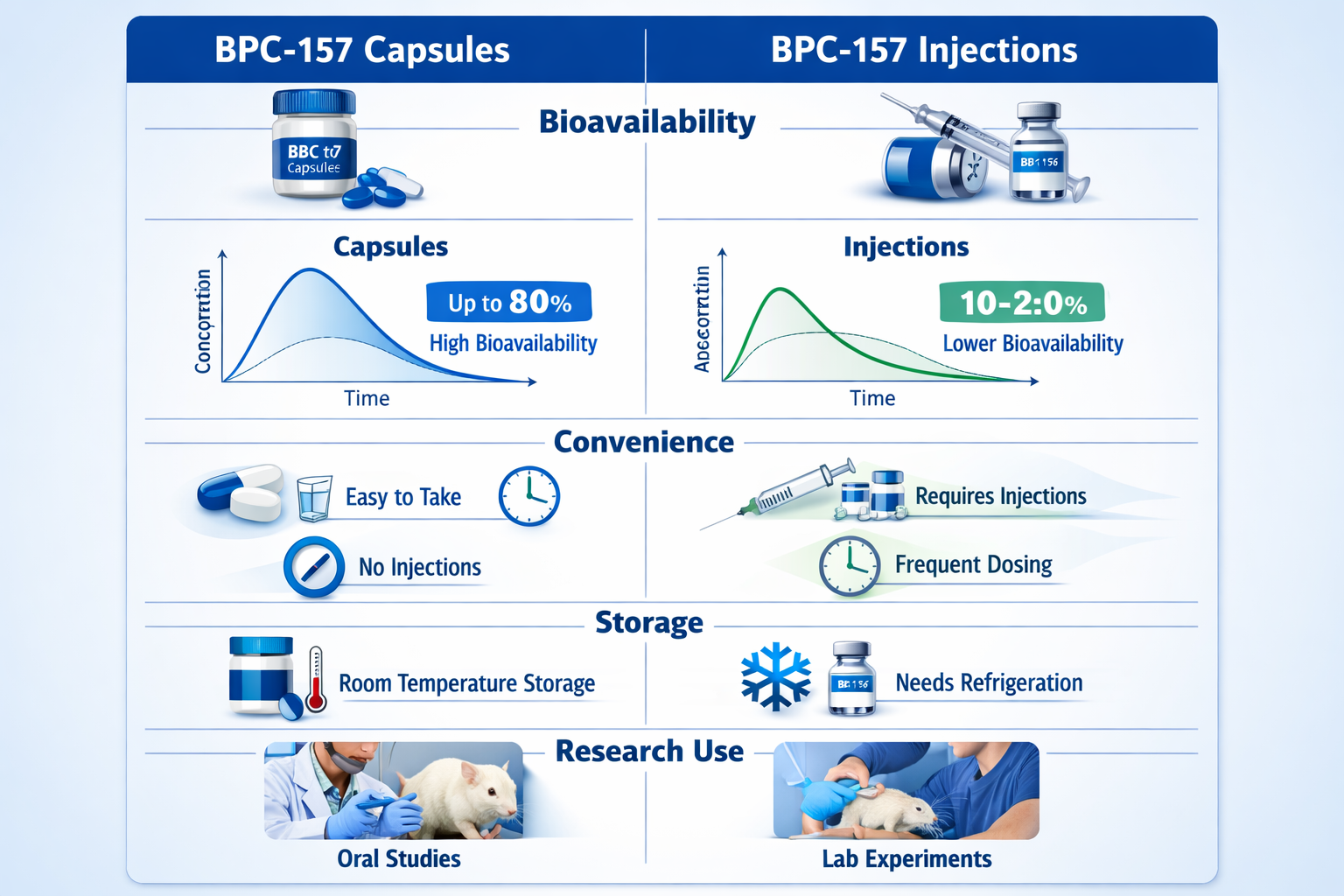
The format in which researchers obtain BPC-157 peptides for sale can significantly impact their research protocols and experimental designs. Understanding the differences between capsule and injectable forms helps researchers make informed decisions about which format best suits their specific research needs.
BPC-157 Capsules: Convenience Meets Research Excellence
BPC-157 capsules have revolutionized how researchers approach peptide studies. These convenient formats offer several advantages that make them increasingly popular in research settings.
Advantages of Capsule Format 💊
- Precise Dosing: Each capsule contains exactly measured amounts, eliminating measurement errors
- Extended Stability: Encapsulation protects the peptide from environmental factors
- Simplified Storage: No refrigeration requirements, standard laboratory storage sufficient
- Research Protocol Flexibility: Easy to incorporate into various experimental designs
- Reduced Contamination Risk: Sealed format minimizes exposure to contaminants
Research Applications for Capsules
- Long-term stability studies
- Bioavailability research
- Comparative effectiveness studies
- Protocol standardization projects
- Educational research programs
Injectable BPC-157: Traditional Research Approach
Injectable forms of BPC-157 remain the gold standard for many research applications, particularly those requiring precise control over concentration and timing.
Injectable Format Benefits
- Immediate Availability: Direct introduction into research systems
- Concentration Control: Researchers can adjust concentrations as needed
- Rapid Integration: Quick incorporation into existing research protocols
- Flexible Dosing: Easy to modify amounts for different experimental conditions
- Traditional Methodology: Established protocols and procedures available
Choosing the Right Format for Your Research
The decision between capsules and injectable forms depends on your specific research objectives and laboratory setup:
Choose Capsules When:
- Conducting long-term studies requiring stable storage
- Working with limited refrigeration capacity
- Studying oral bioavailability and absorption
- Training new research personnel
- Requiring simplified inventory management
Choose Injectable When:
- Needing immediate research application
- Studying concentration-dependent effects
- Working with established injection protocols
- Requiring custom concentration preparations
- Conducting comparative studies with other injectable compounds
Many research facilities maintain both formats to accommodate different study requirements. The BPC-157 peptide remains chemically identical regardless of format, ensuring research integrity across different delivery methods.
Storage and Handling Considerations
Proper storage and handling protocols are crucial for maintaining peptide integrity, regardless of format:
Capsule Storage 📦
- Room temperature storage acceptable
- Protect from moisture and direct sunlight
- Sealed containers recommended
- Standard laboratory conditions sufficient
Injectable Storage
- Refrigeration required (2-8°C)
- Protect from light exposure
- Use within specified timeframes
- Maintain sterile conditions
Understanding these differences helps researchers plan their studies effectively and ensure optimal results from their BPC-157 peptides for sale purchases.
Quality Assurance and Testing Standards
When purchasing BPC-157 peptides for sale, understanding quality assurance and testing standards becomes paramount for research success. The integrity of your research depends entirely on the quality and purity of the peptides you use, making this knowledge essential for any serious researcher.
The Science of Peptide Quality Testing
Modern peptide quality assurance involves sophisticated analytical techniques that verify both identity and purity. These methods have evolved significantly over the past decade, providing researchers with unprecedented confidence in their materials.
High-Performance Liquid Chromatography (HPLC) 🔬
HPLC analysis serves as the backbone of peptide quality verification. This technique separates peptide components based on their chemical properties, allowing for precise identification and quantification of the target peptide and any impurities.
- Purity Verification: Confirms peptide purity levels (target: >98%)
- Impurity Detection: Identifies and quantifies any contaminating substances
- Consistency Monitoring: Ensures batch-to-batch reliability
- Stability Assessment: Tracks peptide degradation over time
Mass Spectrometry Confirmation
Mass spectrometry provides definitive molecular weight confirmation, ensuring that the peptide you receive matches exactly what you ordered.
- Molecular Weight Verification: Confirms exact molecular mass
- Structural Integrity: Verifies correct amino acid sequence
- Contamination Detection: Identifies foreign substances
- Quantitative Analysis: Measures precise peptide concentrations
Certificate of Analysis (COA): Your Research Assurance
Every legitimate supplier of research-grade peptides should provide a comprehensive Certificate of Analysis with each product. This document serves as your guarantee of quality and research reliability.
Essential COA Components
- Product Identification: Exact peptide name and catalog number
- Batch Information: Unique batch numbers for traceability
- Purity Results: HPLC purity percentages and chromatograms
- Mass Spectrometry Data: Molecular weight confirmation
- Storage Recommendations: Optimal storage conditions
- Expiration Dating: Stability timeframes
- Testing Date: When analysis was performed
Reading and Interpreting COA Data
Understanding your COA empowers you to make informed decisions about your research materials:
| Test Parameter | Acceptable Range | Research Impact |
|---|---|---|
| HPLC Purity | >98% | Ensures research accuracy |
| Water Content | <5% | Prevents degradation |
| Peptide Content | 95-105% of stated | Accurate dosing calculations |
| Bacterial Endotoxins | <10 EU/mg | Research safety |
| Heavy Metals | <10 ppm | Contamination prevention |
Third-Party Testing: The Gold Standard
The most reputable suppliers, including Peptides for sale, employ independent, third-party laboratories for their testing protocols. This approach eliminates potential conflicts of interest and provides objective quality verification.
Benefits of Third-Party Testing ✅
- Unbiased Results: Independent verification eliminates supplier bias
- Advanced Equipment: Access to state-of-the-art analytical instruments
- Expertise: Specialized knowledge in peptide analysis
- Regulatory Compliance: Adherence to industry standards
- Credibility: Enhanced trust in research materials
Accredited Testing Facilities
Look for suppliers who use testing facilities with proper accreditations:
- ISO/IEC 17025 certification
- FDA-registered laboratories
- cGMP compliance
- Documented quality systems
Quality Indicators to Monitor
Beyond formal testing, several indicators can help you assess peptide quality:
Visual Inspection
- Appearance: Should match product description
- Color: Consistent with specifications
- Texture: Appropriate for product format
- Packaging Integrity: Sealed and undamaged
Dissolution Characteristics
- Solubility: Dissolves as expected in appropriate solvents
- Clarity: Solutions should be clear (unless otherwise specified)
- pH Stability: Maintains expected pH ranges
- Precipitation: No unexpected solid formation
Performance Consistency
- Reproducible Results: Consistent outcomes across experiments
- Stability: Maintains activity over expected timeframes
- Batch Variation: Minimal differences between batches
When you invest in quality peptides for sale, these quality assurance measures protect your research investment and ensure reliable, reproducible results that advance scientific understanding.
BPC-157 Quality Testing Standards Interactive Guide
Compare testing methods and quality standards for research peptides
BPC-157 Purity Analysis Results
Analysis: High-quality BPC-157 should demonstrate >98% HPLC purity, accurate peptide content, and low water content for optimal research applications.
Research Supplier Quality Comparison
| Quality Factor | Premium Suppliers | Standard Suppliers | Budget Suppliers |
|---|---|---|---|
| Third-Party Testing | Always Provided | Sometimes Available | Rarely Offered |
| COA Documentation | Comprehensive | Basic Information | Limited/Missing |
| Purity Guarantee | >98% Guaranteed | 95-98% Typical | Variable Quality |
| Customer Support | Research-Focused | General Support | Limited Response |
| Shipping Conditions | Temperature Controlled | Standard Shipping | Basic Packaging |
Industry Quality Standards
Analytical Testing Methods
High-Performance Liquid Chromatography (HPLC)
Purpose: Primary method for purity determination and impurity profiling
Accuracy: ±0.1% for purity measurements
Detection: UV absorbance at 214nm and 280nm
Mass Spectrometry (MS)
Purpose: Molecular weight confirmation and structural verification
Accuracy: ±0.01% for molecular weight determination
Method: ESI-MS or MALDI-TOF MS
Amino Acid Analysis (AAA)
Purpose: Quantitative peptide content determination
Accuracy: ±2% for content calculation
Method: Acid hydrolysis followed by derivatization
Karl Fischer Titration
Purpose: Water content determination
Accuracy: ±0.1% for moisture analysis
Importance: Critical for stability and storage
Regulatory Compliance and Documentation
Research peptide suppliers must navigate complex regulatory landscapes while maintaining compliance with federal and state regulations. Understanding these requirements helps researchers make informed decisions about their suppliers.
FDA Regulations
- Research chemicals must be clearly labeled “For Research Use Only”
- No claims regarding human consumption or medical benefits
- Proper documentation and record-keeping requirements
- Adherence to Good Manufacturing Practices (GMP) where applicable
State and Local Compliance
- Business licensing and registration
- Proper handling and storage permits
- Environmental compliance for chemical handling
- Worker safety regulations (OSHA compliance)
The complexity of regulatory compliance is one reason why established suppliers like Pure Tested Peptides maintain such high standards. Their commitment to regulatory adherence protects both their business and their research customers.
Research Applications and Scientific Studies
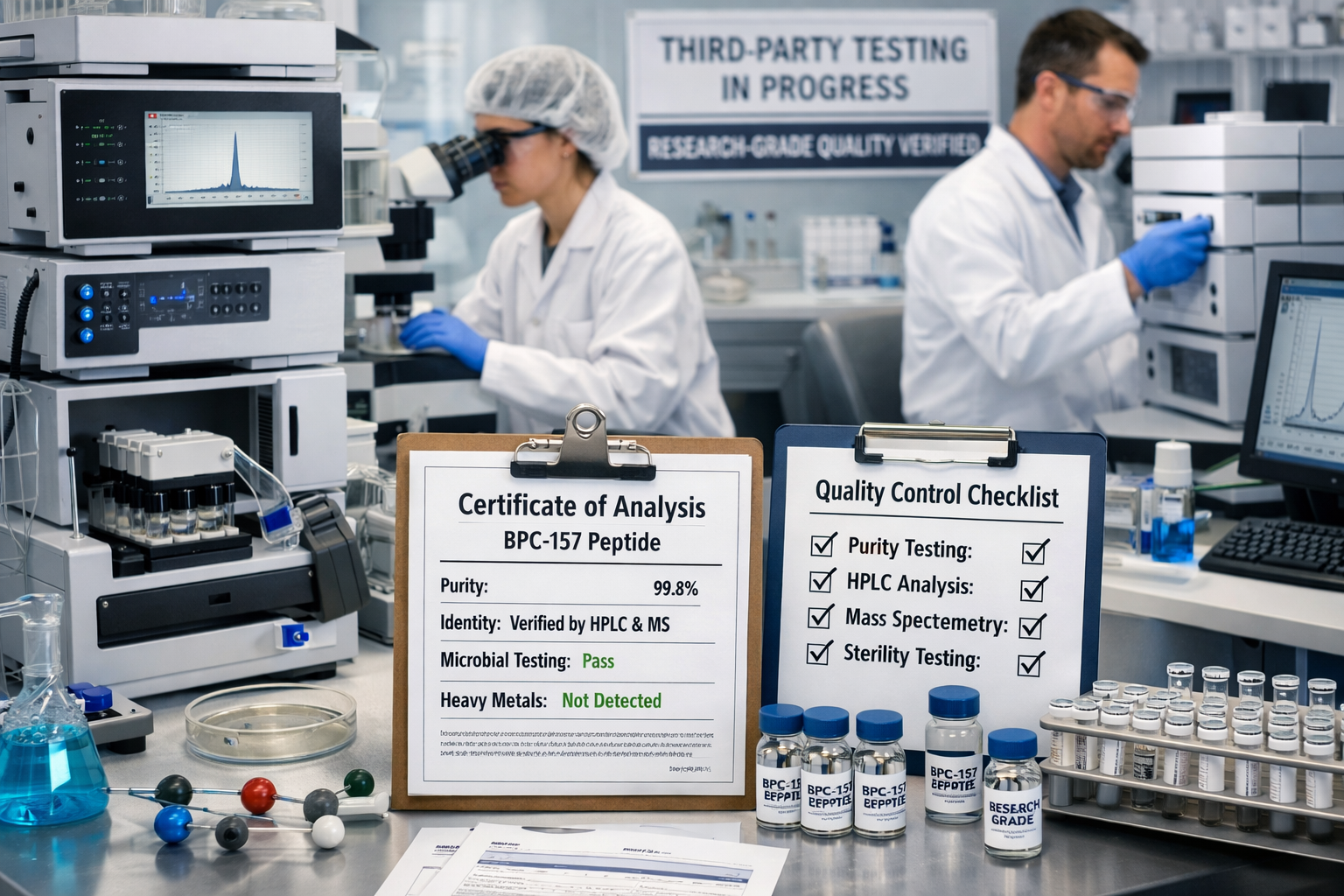
The scientific community’s interest in BPC-157 peptides for sale stems from decades of research that have explored this compound’s unique properties in laboratory settings. Understanding the breadth of research applications helps scientists appreciate why BPC-157 has become such a valuable tool in modern research facilities.
Historical Research Context
BPC-157 research began in the 1990s when scientists first isolated and characterized this peptide sequence from human gastric juice. The initial studies focused on understanding its natural role in gastric protection, but researchers quickly discovered that this peptide had far broader research applications than originally anticipated.
Timeline of BPC-157 Research 📅
- 1993: First isolation and characterization studies
- 1997: Initial stability and structure-function research
- 2003: Expanded laboratory applications identified
- 2010: Advanced molecular mechanism studies
- 2015: Comprehensive safety profile research
- 2020: Modern research protocols established
- 2026: Ongoing studies in multiple research disciplines
Current Research Applications
Modern research facilities utilize BPC-157 across numerous scientific disciplines, making it one of the most versatile research peptides available today.
Cellular Biology Research
Researchers studying cellular processes have found BPC-157 particularly valuable for investigating:
- Cell migration and proliferation patterns
- Cellular signaling pathway interactions
- Growth factor expression studies
- Angiogenesis research protocols
- Cellular repair mechanism investigations
Molecular Biology Applications
At the molecular level, BPC-157 serves as an excellent model compound for:
- Protein-protein interaction studies
- Gene expression analysis
- Molecular pathway mapping
- Receptor binding affinity research
- Signal transduction mechanism studies
Tissue Engineering Research
The tissue engineering field has embraced BPC-157 for various applications:
- Scaffold integration studies
- Biocompatibility assessments
- Tissue regeneration modeling
- Biomaterial interaction research
- 3D culture system development
Research Methodologies and Protocols
Successful BPC-157 research requires well-established protocols and methodologies. Research institutions worldwide have developed standardized approaches that ensure reproducible results and meaningful data collection.
In Vitro Research Protocols
Laboratory studies using BPC-157 typically follow these established methodologies:
- Preparation and Dissolution
- Standard reconstitution procedures
- Sterile technique maintenance
- Appropriate solvent selection
- Concentration verification
- Cell Culture Applications
- Serum-free medium preparation
- Controlled exposure timing
- Dose-response relationship studies
- Viability assessment protocols
- Analytical Measurements
- Quantitative assay development
- Statistical analysis planning
- Control group establishment
- Data validation procedures
Research Design Considerations
Effective BPC-157 research requires careful attention to experimental design:
| Design Element | Considerations | Best Practices |
|---|---|---|
| Control Groups | Negative and positive controls | Include vehicle-only controls |
| Sample Size | Statistical power calculations | Minimum n=6 per group |
| Timing | Exposure duration optimization | Multiple time points |
| Concentration | Dose-response relationships | Log-scale concentration series |
| Replication | Independent experiment repeats | Minimum 3 independent studies |
Collaborative Research Networks
The BPC-157 research community has developed extensive collaborative networks that share protocols, findings, and best practices. These collaborations have accelerated research progress and improved the quality of scientific investigations.
International Research Consortiums
- European Peptide Research Network
- North American Peptide Society
- Asian Pacific Peptide Research Group
- International Peptide Symposium participants
Academic-Industry Partnerships
Many universities have established partnerships with peptide suppliers to ensure access to high-quality research materials. These relationships often include:
- Bulk purchasing agreements for research groups
- Technical support and protocol development
- Educational workshops and training programs
- Access to advanced analytical services
When researchers buy BPC-157 peptide from reputable suppliers, they gain access to these broader research networks and the accumulated knowledge of the scientific community.
Research Documentation and Publication
Proper documentation of BPC-157 research is crucial for scientific advancement and peer review. Researchers must maintain detailed records of their methodologies, results, and conclusions.
Essential Documentation Elements
- Peptide Source and Quality: Supplier information, batch numbers, and COA data
- Experimental Conditions: Temperature, pH, timing, and environmental factors
- Methodology Details: Step-by-step procedures and protocol variations
- Data Collection: Raw data, statistical analyses, and result interpretation
- Reproducibility Information: Conditions necessary for result replication
Publication Considerations
When preparing BPC-157 research for publication, scientists must address several key areas:
- Clear identification of peptide source and quality verification
- Detailed methodology sections enabling replication
- Appropriate statistical analyses and data presentation
- Discussion of limitations and potential confounding factors
- Ethical considerations and regulatory compliance
The growing body of published BPC-157 research continues to expand our understanding of this remarkable peptide and its potential applications in various scientific disciplines. This research foundation supports the continued development of new protocols and applications that advance scientific knowledge.
Future Research Directions
The BPC-157 research field continues to evolve, with new applications and methodologies emerging regularly. Current trends suggest several promising research directions:
Emerging Research Areas 🔬
- Combination Studies: Investigating BPC-157 interactions with other research compounds
- Advanced Delivery Systems: Developing novel methods for research applications
- Mechanistic Studies: Deeper understanding of molecular mechanisms
- Comparative Research: Evaluating BPC-157 against other peptide sequences
- Long-term Studies: Extended research protocols and stability assessments
Technological Advances
Modern research techniques continue to enhance BPC-157 studies:
- Advanced imaging technologies for real-time monitoring
- High-throughput screening methods for efficiency
- Computational modeling for mechanism prediction
- Nanotechnology applications for delivery research
- Artificial intelligence for data analysis and pattern recognition
These advancing research capabilities ensure that BPC-157 will remain a valuable tool for scientific investigation well into the future, supporting continued discoveries and advancing our understanding of peptide science.
Legal Considerations and Compliance
When purchasing BPC-157 peptides for sale, understanding the legal landscape is crucial for researchers, institutions, and suppliers alike. The regulatory environment surrounding research peptides has evolved significantly, and staying compliant protects both research integrity and legal standing.
Federal Regulatory Framework
The United States maintains a comprehensive regulatory structure governing research chemicals and peptides. Multiple federal agencies oversee different aspects of peptide research and commerce.
Food and Drug Administration (FDA) Oversight
The FDA regulates research peptides under several key frameworks:
- Research Chemical Classification: BPC-157 falls under research chemical regulations
- Labeling Requirements: Must be clearly marked “For Research Use Only”
- Marketing Restrictions: No health claims or human consumption suggestions allowed
- Quality Standards: Good Manufacturing Practice (GMP) guidelines for research chemicals
- Distribution Controls: Restrictions on who can purchase and possess research peptides
Drug Enforcement Administration (DEA) Considerations
While BPC-157 is not a controlled substance, researchers must understand DEA oversight:
- Monitoring Requirements: Large purchases may trigger reporting requirements
- Record Keeping: Documentation of peptide acquisition and use
- Facility Security: Proper storage and access controls
- Personnel Background: Institutional oversight of research personnel
Department of Commerce Regulations
Import and export of research peptides involve additional considerations:
- Export Administration Regulations (EAR): Controls on international shipments
- Import Documentation: Proper customs declarations and permits
- International Compliance: Adherence to destination country regulations
State and Local Compliance
Beyond federal regulations, researchers must navigate state and local requirements that can vary significantly across jurisdictions.
State-Level Regulations 🏛️
- Business Licensing: Suppliers must maintain appropriate state licenses
- Chemical Handling Permits: Storage and use permits for research facilities
- Environmental Compliance: Waste disposal and environmental protection
- Worker Safety: OSHA compliance and laboratory safety standards
- Professional Licensing: Requirements for research personnel and supervisors
Institutional Requirements
Research institutions typically impose additional compliance requirements:
- Institutional Review Board (IRB): Oversight of research protocols
- Institutional Animal Care and Use Committee (IACUC): Animal research protocols
- Chemical Safety Committees: Internal safety and compliance oversight
- Procurement Policies: Approved vendor lists and purchasing procedures
Research Use Only: Legal Requirements
The “Research Use Only” designation carries specific legal implications and requirements that all parties must understand and respect.
Supplier Obligations
Legitimate suppliers of BPC-157 peptides for sale must:
- Clear Labeling: Prominent “Research Use Only” labeling on all products
- Documentation: Maintain records of purchaser qualifications
- Marketing Compliance: Avoid any health or medical claims
- Customer Verification: Ensure purchasers have legitimate research purposes
- Reporting: Maintain transaction records for regulatory review
Purchaser Responsibilities
Research institutions and individual researchers have corresponding obligations:
- Legitimate Research Purpose: Must have genuine research applications
- Proper Storage: Secure storage preventing unauthorized access
- Personnel Training: Ensure staff understand legal requirements
- Documentation: Maintain detailed records of peptide use
- Waste Disposal: Follow proper disposal protocols for unused materials
International Considerations
Research peptide regulations vary significantly across international borders, creating complex compliance challenges for global research collaborations.
European Union Regulations
- REACH Compliance: Registration, Evaluation, Authorization of Chemicals
- CLP Regulation: Classification, Labeling, and Packaging requirements
- National Variations: Individual country-specific requirements
- Import/Export Controls: Customs and regulatory documentation
Asia-Pacific Regulations
- Country-Specific Rules: Varying regulations across different nations
- Import Restrictions: Some countries prohibit peptide imports entirely
- Documentation Requirements: Extensive paperwork for legal importation
- Research Institution Verification: Proof of legitimate research purposes
Shipping and Transportation Compliance
International shipment of research peptides involves multiple regulatory layers:
- IATA Regulations: International Air Transport Association guidelines
- Customs Documentation: Proper declaration and classification
- Temperature Control: Maintaining cold chain for peptide integrity
- Insurance Requirements: Coverage for valuable research materials
Compliance Best Practices
Maintaining regulatory compliance requires systematic approaches and ongoing attention to evolving requirements.
Documentation Systems 📋
Effective compliance programs maintain comprehensive documentation:
- Purchase Records: Complete vendor and transaction information
- Usage Logs: Detailed records of peptide use and applications
- Personnel Training: Documentation of staff compliance training
- Safety Protocols: Written procedures for handling and storage
- Waste Disposal: Records of proper disposal methods and timing
Vendor Qualification
Selecting compliant suppliers is crucial for maintaining legal standing:
| Qualification Criteria | Compliant Suppliers | Non-Compliant Risks |
|---|---|---|
| Business Licensing | Valid state and federal licenses | Legal liability exposure |
| Quality Documentation | Complete COAs and testing | Research integrity issues |
| Labeling Compliance | Proper “Research Use Only” marking | Regulatory violations |
| Customer Support | Knowledgeable compliance assistance | Inadequate guidance |
| Reputation | Established track record | Unknown reliability |
Training and Education
Ongoing training ensures all personnel understand compliance requirements:
- Regular Training Sessions: Updated compliance information
- Documentation Requirements: Proper record-keeping procedures
- Safety Protocols: Handling and storage best practices
- Regulatory Updates: Changes in applicable regulations
- Emergency Procedures: Response to compliance issues
Enforcement and Penalties
Understanding potential enforcement actions and penalties helps researchers appreciate the importance of compliance.
Federal Enforcement Actions
- Warning Letters: Initial compliance notifications
- Facility Inspections: Unannounced regulatory inspections
- Product Seizures: Confiscation of non-compliant materials
- Civil Penalties: Financial penalties for violations
- Criminal Prosecution: Severe violations may result in criminal charges
Institutional Consequences
Non-compliance can have serious institutional impacts:
- Loss of Research Funding: Federal funding restrictions
- Institutional Sanctions: Regulatory oversight and restrictions
- Professional Consequences: Impact on research careers
- Insurance Issues: Liability coverage complications
- Reputation Damage: Long-term institutional reputation effects
When researchers work with established suppliers like Pure Tested Peptides, they benefit from comprehensive compliance support that helps navigate these complex regulatory requirements. This partnership approach ensures that research can proceed safely and legally while maintaining the highest standards of scientific integrity.
The legal landscape surrounding research peptides continues to evolve, making ongoing compliance monitoring and education essential for all participants in the research community. By understanding and respecting these requirements, researchers can focus on their scientific work while maintaining full regulatory compliance.
Storage and Handling Best Practices
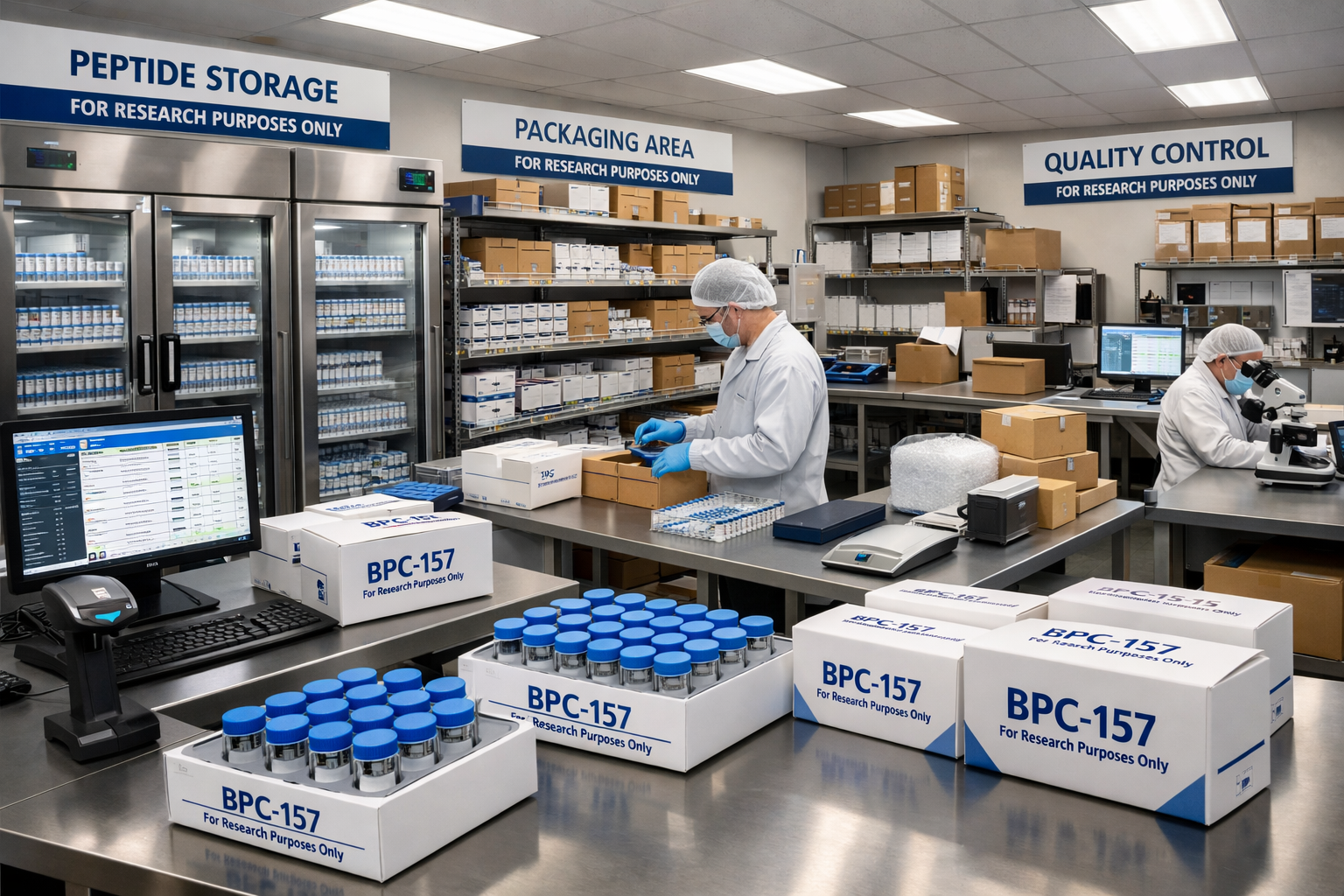
Proper storage and handling of BPC-157 peptides for sale is crucial for maintaining research integrity and ensuring optimal results from your scientific investigations. The stability and effectiveness of peptides depend heavily on how they are stored, handled, and prepared for use in laboratory settings.
Understanding Peptide Stability
BPC-157 demonstrates remarkable stability compared to many other research peptides, but this stability depends on proper environmental conditions and handling procedures. Understanding the factors that affect peptide stability helps researchers develop effective storage protocols.
Environmental Factors Affecting Stability 🌡️
- Temperature: The most critical factor for peptide preservation
- pH Levels: Acidic and basic conditions can degrade peptide bonds
- Light Exposure: UV and visible light can cause photodegradation
- Oxygen Exposure: Oxidation can modify amino acid residues
- Moisture: Humidity can promote hydrolysis and degradation
- Contamination: Bacterial and fungal growth can destroy peptides
Chemical Stability Considerations
BPC-157’s unique structure provides inherent stability advantages:
- Cyclic Structure: Enhanced resistance to enzymatic degradation
- Amino Acid Composition: Stable amino acid sequence
- Disulfide Bonds: Structural integrity maintenance
- pH Tolerance: Stable across physiological pH ranges
- Temperature Resistance: Maintains structure under various conditions
Storage Protocols by Format
Different formats of BPC-157 require specific storage approaches to maintain optimal stability and research effectiveness.
Lyophilized (Freeze-Dried) Peptide Storage
Lyophilized BPC-157 represents the most stable format for long-term storage:
Optimal Storage Conditions:
- Temperature: -20°C to -80°C for long-term storage
- Short-term: 2-8°C for up to 6 months
- Container: Original sealed vial or airtight container
- Desiccant: Silica gel packets to control moisture
- Light Protection: Store in dark conditions or amber vials
- Labeling: Clear identification with storage date and conditions
Storage Duration Guidelines:
- -80°C: Up to 2 years with minimal degradation
- -20°C: Up to 1 year maintaining >95% purity
- 4°C: Up to 6 months for routine use
- Room Temperature: Maximum 1 week (emergency only)
Reconstituted Peptide Storage
Once reconstituted with appropriate solvents, BPC-157 requires more stringent storage conditions:
Preparation and Storage:
- Sterile Technique: Use sterile water or appropriate buffer
- Gentle Mixing: Avoid vigorous shaking or vortexing
- Aliquoting: Divide into single-use portions
- Immediate Storage: Refrigerate immediately after preparation
- Labeling: Include preparation date and concentration
Reconstituted Storage Guidelines:
- Temperature: 2-8°C (refrigerated storage)
- Duration: Use within 2-4 weeks maximum
- Container: Sterile, sealed tubes or vials
- Freeze-Thaw: Avoid repeated freeze-thaw cycles
- Contamination Prevention: Sterile technique for all handling
BPC-157 Capsules Storage Requirements
Capsule formulations offer unique storage advantages that make them increasingly popular for research applications:
Capsule Storage Benefits 💊
- Room Temperature Stability: No refrigeration required
- Moisture Protection: Encapsulation protects from humidity
- Light Protection: Opaque capsules prevent photodegradation
- Contamination Prevention: Sealed format reduces exposure
- Convenience: Easy handling and inventory management
Optimal Capsule Storage:
- Temperature: Room temperature (15-25°C)
- Humidity: Low humidity environment (<60% RH)
- Container: Original bottle with desiccant
- Location: Cool, dry, dark storage area
- Orientation: Store upright to prevent settling
Laboratory Handling Procedures
Proper handling techniques are essential for maintaining peptide integrity and ensuring research safety.
Personal Protective Equipment (PPE) 🥽
- Gloves: Nitrile or latex gloves for all handling
- Lab Coat: Protection from contamination
- Safety Glasses: Eye protection during preparation
- Face Mask: Respiratory protection when appropriate
- Closed Shoes: Foot protection in laboratory settings
Aseptic Technique Requirements
- Sterile Work Area: Clean, designated preparation space
- Laminar Flow Hood: When available for sensitive preparations
- Sterile Instruments: Pipettes, tips, and containers
- Alcohol Wipes: 70% isopropanol for surface cleaning
- Flame Sterilization: When appropriate for instruments
Preparation Best Practices
- Pre-Preparation Planning
- Calculate required amounts accurately
- Prepare all materials and instruments
- Review protocols and procedures
- Ensure proper environmental conditions
- Reconstitution Procedures
- Allow peptide to reach room temperature
- Add solvent slowly down the vial wall
- Allow natural dissolution (avoid agitation)
- Verify complete dissolution before use
- Record preparation details
- Quality Verification
- Visual inspection for clarity and color
- pH verification when appropriate
- Concentration confirmation if possible
- Documentation of observations
Environmental Monitoring and Control
Maintaining optimal environmental conditions requires ongoing monitoring and control systems.
Temperature Monitoring Systems
- Continuous Monitoring: 24/7 temperature recording
- Alarm Systems: Alerts for temperature excursions
- Backup Systems: Redundant cooling systems
- Documentation: Regular temperature logs
- Calibration: Regular calibration of monitoring equipment
Humidity Control Measures
- Dehumidification: Maintain low humidity environments
- Desiccants: Silica gel or molecular sieves
- Sealed Containers: Prevent moisture intrusion
- Monitoring: Regular humidity measurements
- Documentation: Humidity condition records
Inventory Management and Tracking
Effective inventory management ensures optimal peptide utilization and compliance with research protocols.
Inventory Tracking Systems 📊
- First In, First Out (FIFO): Use oldest stock first
- Expiration Monitoring: Track expiration dates
- Usage Documentation: Record consumption patterns
- Stock Level Monitoring: Maintain adequate supplies
- Supplier Information: Track source and batch information
Documentation Requirements
- Receipt Documentation: Date, source, batch numbers
- Storage Conditions: Temperature and environmental records
- Usage Logs: Date, amount, purpose, personnel
- Disposal Records: Proper waste disposal documentation
- Quality Observations: Any changes in appearance or performance
Troubleshooting Common Storage Issues
Understanding common storage problems helps researchers prevent and address issues that could compromise their research.
Common Storage Problems and Solutions
| Problem | Cause | Prevention | Solution |
|---|---|---|---|
| Precipitation | Temperature fluctuation | Stable storage conditions | Gentle warming and mixing |
| Discoloration | Light exposure | Dark storage | Evaluate for degradation |
| Clumping | Moisture exposure | Proper desiccation | Check for contamination |
| Reduced Activity | Extended storage | Proper temperature control | Verify with fresh sample |
| Contamination | Poor aseptic technique | Sterile handling procedures | Discard contaminated samples |
Emergency Procedures
- Power Outages: Backup cooling systems and dry ice
- Equipment Failure: Alternative storage options
- Contamination Events: Immediate isolation and assessment
- Temperature Excursions: Documentation and stability evaluation
- Natural Disasters: Emergency evacuation and protection procedures
When researchers source their materials from reputable suppliers offering peptides for sale online, they receive detailed storage and handling guidance that supports optimal research outcomes. This comprehensive approach to peptide management ensures that research investments are protected and scientific objectives can be achieved reliably.
The investment in proper storage and handling procedures pays dividends in research reliability, reproducibility, and cost-effectiveness. By following these established best practices, researchers can maximize the value of their BPC-157 peptides for sale and ensure their studies contribute meaningfully to scientific advancement.
Conclusion
The landscape of BPC-157 peptides for sale continues to evolve rapidly, offering researchers unprecedented opportunities to advance scientific understanding through high-quality research materials. Throughout this comprehensive guide, we’ve explored the critical factors that distinguish legitimate research suppliers from questionable vendors, the importance of quality assurance and testing standards, and the proper protocols for handling and storing these valuable research compounds.
As we’ve seen, the choice of supplier significantly impacts research outcomes. Pure Tested Peptides has established itself as the most trusted US peptide supplier by maintaining rigorous quality standards, providing comprehensive documentation, and supporting the research community with expert guidance and reliable products. Their commitment to research excellence and regulatory compliance makes them the preferred choice for serious researchers and institutions.
The versatility of BPC-157 formats, from traditional injectable forms to convenient BPC-157 capsules for sale, provides researchers with options that match their specific research protocols and laboratory requirements. Understanding the advantages and applications of each format enables researchers to make informed decisions that optimize their research outcomes.
Quality assurance remains paramount in peptide research. The sophisticated testing protocols, third-party verification, and comprehensive certificates of analysis that characterize reputable suppliers ensure that researchers can proceed with confidence in their materials. This foundation of quality supports reproducible results and meaningful scientific contributions.
Next Steps for Researchers
Immediate Actions ✅
- Evaluate Your Current Supplier: Review quality documentation and testing standards
- Assess Storage Protocols: Ensure optimal storage conditions for peptide integrity
- Review Compliance Requirements: Verify adherence to all applicable regulations
- Plan Research Protocols: Develop comprehensive experimental designs
- Establish Quality Controls: Implement verification procedures for incoming materials
Long-term Considerations
- Build Supplier Relationships: Develop partnerships with trusted, reliable suppliers
- Invest in Training: Ensure all personnel understand proper handling and compliance
- Monitor Regulatory Changes: Stay current with evolving legal requirements
- Expand Research Capabilities: Consider new applications and methodologies
- Document Best Practices: Develop institutional protocols for peptide research
Professional Development
- Join Research Networks: Connect with other BPC-157 researchers
- Attend Scientific Conferences: Stay current with latest research developments
- Pursue Continuing Education: Enhance knowledge of peptide science
- Collaborate with Experts: Build relationships with experienced researchers
- Share Research Findings: Contribute to the scientific literature
The future of BPC-157 research looks exceptionally promising, with new applications and methodologies emerging regularly. By partnering with reputable suppliers, maintaining rigorous quality standards, and following established best practices, researchers can contribute meaningfully to this growing field of scientific investigation.
Remember that all BPC-157 products discussed in this guide are intended strictly for research purposes and are not for human consumption. This fundamental principle ensures compliance with regulatory requirements and maintains the integrity of the research enterprise.
Whether you’re beginning your first BPC-157 research project or expanding an established research program, the principles and practices outlined in this guide will support your success. The investment in quality materials, proper procedures, and regulatory compliance pays dividends in research reliability and scientific advancement.
Important Research Disclaimer: All BPC-157 peptides mentioned in this article are sold exclusively for research purposes and are not intended for human consumption. Researchers must comply with all applicable federal, state, and local regulations regarding the purchase, storage, and use of research peptides. Always consult with institutional compliance officers and follow established safety protocols when working with research chemicals.
SEO Meta Information:
Meta Title: BPC-157 Peptides for Sale: Research Guide 2026 | Quality Assured
Meta Description: Comprehensive guide to BPC-157 peptides for sale. Research-grade quality, testing standards, storage protocols, and trusted suppliers for scientific studies.