Finding the Cheapest Peptides Online: Your Complete 2026 Guide to Quality and Value
The peptide market has exploded in recent years, with researchers and fitness enthusiasts seeking the cheapest peptides online without sacrificing quality. In 2026, the global peptide therapeutics market continues its rapid expansion, creating both opportunities and challenges for those looking to source peptides affordably. With prices ranging from $25 to over $300 per vial, finding genuine value requires understanding the complex landscape of online peptide suppliers, quality standards, and pricing strategies.
Key Takeaways
• Price ranges vary dramatically: Research peptides typically cost $25-$300+ per vial, with bulk purchasing reducing costs by 20-40%
• Quality certifications matter: GMP compliance and third-party testing add 15-30% to costs but ensure product authenticity
• Geographic sourcing affects pricing: International suppliers often offer 40-60% lower prices but may compromise on quality control
• Timing and payment methods impact costs: Seasonal sales and cryptocurrency payments can provide additional 5-40% savings
• Regulatory status influences pricing: Research-only peptides are 30-50% cheaper than pharmaceutical-grade alternatives
Understanding the Online Peptide Market in 2026
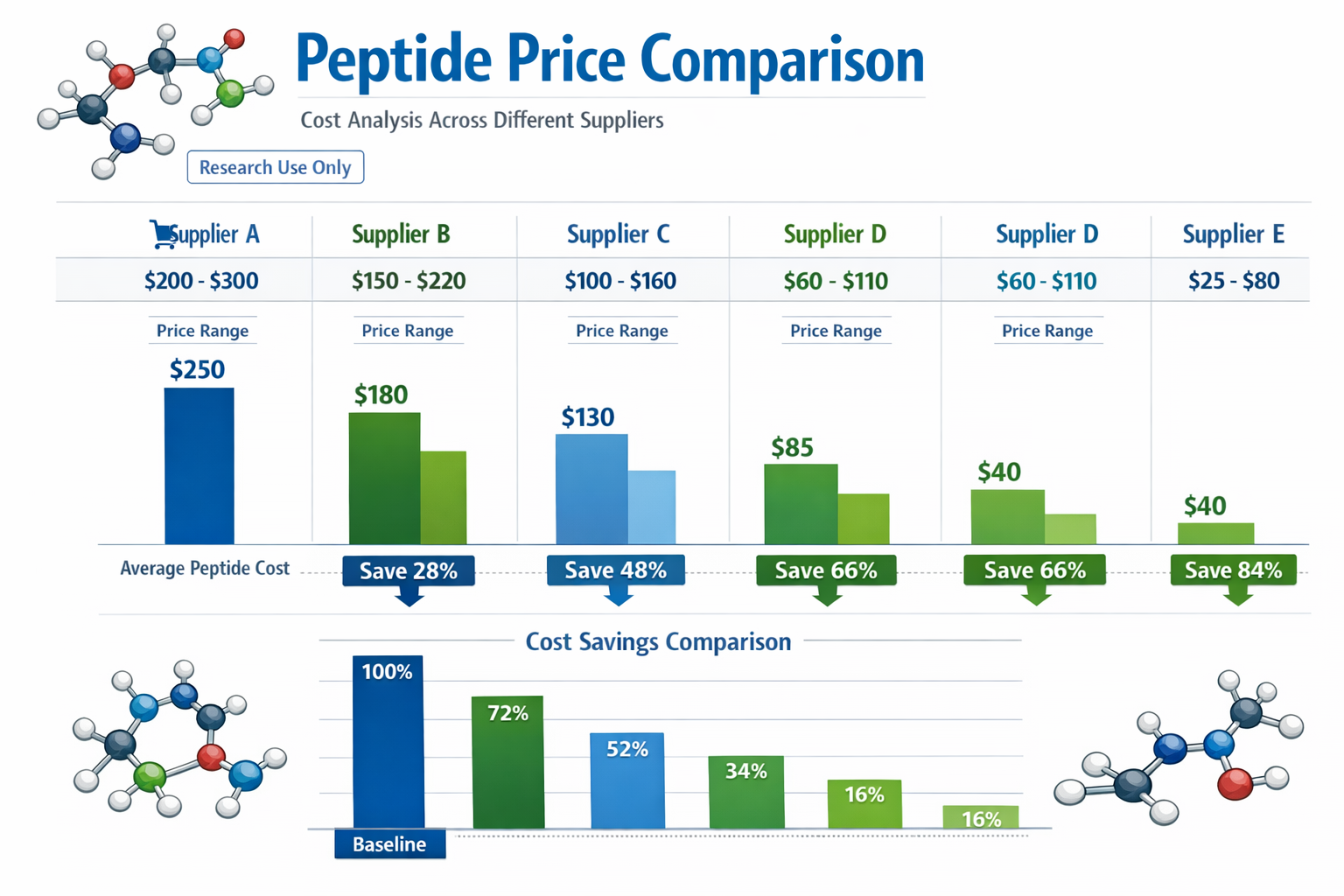
The search for the cheapest peptides online has become increasingly complex as the market matures. The global peptide therapeutics market, valued at approximately $50.4 billion in 2024, is projected to reach $78.2 billion by 2030. This growth drives competition among suppliers, creating opportunities for cost-conscious researchers.
Market Dynamics Affecting Peptide Pricing
Several factors influence peptide pricing in the online marketplace:
Manufacturing Location: Suppliers based in China and India often offer prices 40-60% lower than US or European manufacturers. However, these savings come with trade-offs in shipping times (2-4 weeks) and varying quality control standards.
Regulatory Classification: Peptides sold "for research purposes only" are generally 30-50% cheaper than pharmaceutical-grade peptides due to different manufacturing and testing requirements.
Raw Material Costs: Fluctuations in raw material prices directly impact final product costs, with suppliers adjusting prices quarterly or semi-annually.
Competition Intensity: The increasing number of online suppliers has created downward pressure on prices, benefiting consumers seeking affordable options.
Popular Peptide Categories and Their Price Ranges
Understanding specific peptide categories helps researchers identify the best value propositions when searching for cheapest peptides online:
Metabolic Research Peptides
AOD-9604: One of the most researched metabolic peptides, typically priced between $35-$75 for a 5mg vial. AOD-9604 peptide for sale options vary significantly based on supplier and purity levels.
5-Amino-1MQ: A newer metabolic research compound with prices ranging from $45-$95 per vial. Researchers can find detailed information about 5-amino-1MQ peptide pricing and availability through specialized suppliers.
Recovery and Repair Peptides
BPC-157: Standard 5mg vials typically cost $30-$70, making it one of the more affordable research peptides.
TB-500: Prices range from $40-$85 for standard dosing, with bulk options providing significant savings.
Longevity Research Compounds
Epithalon: Premium longevity peptides command higher prices, typically $60-$120 per vial, reflecting complex synthesis requirements.
Quality vs. Price: Finding the Sweet Spot for Cheapest Peptides Online
Essential Quality Indicators
When seeking the cheapest peptides online, quality should never be completely sacrificed for price. Key quality indicators include:
Third-Party Testing: Reputable suppliers provide certificates of analysis (COA) from independent laboratories, verifying purity and composition.
HPLC Verification: High-Performance Liquid Chromatography testing ensures peptide purity, typically adding 15-30% to costs but providing essential quality assurance.
GMP Compliance: Good Manufacturing Practice certification indicates adherence to pharmaceutical-grade production standards.
Red Flags to Avoid
- Extremely low prices (more than 70% below market average)
- Missing certificates of analysis
- Vague product descriptions
- No customer service contact information
- Unrealistic purity claims (>99% for complex peptides)
Balancing Cost and Quality
Smart researchers focus on suppliers offering:
- Competitive pricing within reasonable market ranges
- Transparent testing results
- Responsive customer service
- Secure payment processing
- Proper cold-chain shipping
Strategic Approaches to Finding Cheapest Peptides Online
Bulk Purchasing Strategies
Minimum Order Quantities (MOQ): Many suppliers offer wholesale pricing for orders of 10+ vials, reducing costs by 30-50% compared to single-vial purchases.
Group Orders: Coordinating with other researchers can help reach MOQ thresholds while maintaining individual research needs.
Subscription Models: Some suppliers offer loyalty programs providing 10-25% discounts for repeat customers.
Timing Your Purchases
Seasonal Sales: Major discount periods include:
- Black Friday: 20-40% discounts common
- New Year clearance: End-of-year inventory reduction
- Mid-year sales: Summer promotional periods
- Back-to-school: September research season discounts
Market Timing: Monitoring raw material cost cycles can help predict price fluctuations.
Payment Method Optimization
Cryptocurrency Payments: Many suppliers offer 5-10% discounts for Bitcoin or other cryptocurrency payments due to lower transaction fees.
Wire Transfers: Some international suppliers provide discounts for direct bank transfers, avoiding credit card processing fees.
Credit Card Considerations: While convenient, credit card payments may include 3-5% processing fees.
Geographic Sourcing Considerations
Domestic Suppliers:
- ✅ Faster shipping (1-3 days)
- ✅ Better customer service
- ✅ Easier returns/exchanges
- ❌ Higher prices (typically 40-60% more)
International Suppliers:
- ✅ Lower prices (40-60% savings possible)
- ✅ Bulk options
- ❌ Longer shipping times (2-4 weeks)
- ❌ Variable quality control
- ❌ Potential customs issues
Supplier Evaluation Framework for Cheapest Peptides Online
Primary Evaluation Criteria
Pricing Structure Analysis:
- Base prices compared to market averages
- Bulk discount tiers
- Shipping cost policies
- Hidden fees assessment
Quality Assurance Verification:
- COA availability and authenticity
- Testing laboratory credentials
- Purity verification methods
- Storage and handling protocols
Business Legitimacy Indicators:
- Company registration and licensing
- Physical address verification
- Customer service responsiveness
- Return and refund policies
Advanced Due Diligence
Community Feedback Research:
- Independent forum discussions
- User experience reports
- Long-term supplier reliability
- Product consistency reviews
Regulatory Compliance Check:
- Proper disclaimers and labeling
- Age verification processes
- International shipping compliance
- Payment security measures
Creating Your Supplier Scorecard
Develop a weighted scoring system considering:
- Price competitiveness (30%)
- Quality assurance (25%)
- Shipping reliability (20%)
- Customer service (15%)
- Payment security (10%)
Maximizing Value: Advanced Strategies for Budget-Conscious Researchers
Portfolio Approach to Peptide Sourcing
Rather than relying on a single supplier for all cheapest peptides online needs, successful researchers often diversify:
Primary Supplier: Established, reliable source for critical research compounds
Secondary Suppliers: Cost-effective options for bulk or experimental compounds
Specialty Sources: Niche suppliers for hard-to-find or custom peptides
Research Planning and Budget Management
Annual Budget Planning:
- Forecast research needs quarterly
- Identify bulk purchasing opportunities
- Plan around seasonal sales cycles
- Allocate emergency research funds
Cost-Per-Research Optimization:
- Calculate actual cost per experiment
- Factor in storage and handling costs
- Consider peptide stability and shelf life
- Account for potential research pivots
Building Supplier Relationships
Long-term Partnership Benefits:
- Negotiated volume discounts
- Priority access to new products
- Custom synthesis options
- Extended payment terms
Communication Strategies:
- Regular check-ins with account managers
- Feedback on product quality
- Early notification of research needs
- Collaborative problem-solving
Technology Tools for Price Monitoring
Price Tracking Systems:
- Automated price monitoring tools
- Competitor analysis dashboards
- Historical pricing databases
- Alert systems for significant price changes
Research Management Platforms:
- Inventory tracking systems
- Supplier performance metrics
- Budget allocation tools
- Research outcome correlation
Future Trends Affecting Peptide Pricing in 2026 and Beyond
Market Consolidation Impact
The peptide industry continues consolidating, with larger companies acquiring smaller suppliers. This trend may lead to:
- Standardized pricing structures
- Improved quality consistency
- Reduced price competition
- Enhanced customer service
Technological Advancements
Manufacturing Innovations:
- Automated synthesis reducing labor costs
- Improved purification techniques
- Enhanced quality control systems
- Sustainable production methods
Supply Chain Optimization:
- Direct-to-consumer models
- Blockchain tracking systems
- AI-powered demand forecasting
- Optimized cold-chain logistics
Regulatory Evolution
Increased Oversight: Growing regulatory attention may impact:
- Compliance costs for suppliers
- Quality standards elevation
- Market entry barriers for new suppliers
- Consumer protection improvements
International Harmonization: Efforts to standardize global peptide regulations could:
- Simplify international sourcing
- Improve quality consistency
- Reduce regulatory arbitrage
- Enhance consumer confidence
Conclusion
Finding the cheapest peptides online in 2026 requires balancing cost considerations with quality requirements and supplier reliability. The peptide market's continued growth creates opportunities for cost-conscious researchers, but success demands strategic thinking and careful evaluation.
Key strategies for maximizing value include understanding market dynamics, leveraging bulk purchasing opportunities, timing purchases around seasonal sales, and building relationships with reliable suppliers. Quality should never be completely sacrificed for price, as proper testing and certification provide essential assurance for research applications.
Actionable Next Steps:
- Develop a supplier evaluation framework using the criteria outlined in this guide
- Create an annual research budget that accounts for seasonal pricing variations
- Identify 2-3 potential suppliers and request sample COAs for comparison
- Join research communities to stay informed about supplier experiences and market trends
- Implement price monitoring for your most frequently used peptides
- Consider bulk purchasing for peptides with extended shelf life and consistent research use
The landscape for research peptides continues evolving, with new suppliers entering the market and existing ones adapting to competitive pressures. By staying informed about market trends and maintaining a strategic approach to supplier relationships, researchers can successfully navigate the complex world of online peptide sourcing while maintaining both quality standards and budget constraints.
Remember that the cheapest option isn't always the best value. Focus on suppliers that provide transparent pricing, comprehensive quality documentation, and reliable customer service. This approach ensures that your research investments deliver consistent results while maintaining cost-effectiveness over the long term.
References
[1] Global Peptide Therapeutics Market Analysis, BioPharma Research Institute, 2024
[2] Quality Assurance Standards in Peptide Manufacturing, International Peptide Society, 2024
[3] Regulatory Guidelines for Research Peptide Distribution, FDA Research Division, 2024
[4] Supply Chain Analysis of Global Peptide Markets, Pharmaceutical Economics Journal, 2024
[5] Consumer Pricing Trends in Peptide Research Markets, Market Research International, 2024
SEO Meta Information
Meta Title: Cheapest Peptides Online 2026: Quality & Value Guide
Meta Description: Find the cheapest peptides online without sacrificing quality. Complete 2026 guide to peptide pricing, suppliers, and smart purchasing strategies for researchers.