
CJC1295 and Ipamorelin: The Complete Research Guide for 2025

The world of peptide research has witnessed remarkable growth in recent years, with researchers increasingly focusing on growth hormone-releasing peptides that offer unique mechanisms of action. Among the most studied combinations, CJC1295 and ipamorelin stand out as a powerful duo that has captured the attention of the scientific community for their synergistic effects on growth hormone pathways and their potential applications in various research contexts.
Key Takeaways
- CJC1295 and ipamorelin work synergistically to stimulate natural growth hormone release through different but complementary pathways
- The combination offers enhanced stability and prolonged effects compared to individual peptides
- Research indicates optimal dosing protocols and timing strategies for maximizing peptide efficacy
- Safety profiles show generally well-tolerated effects when used within established research parameters
- Multiple formulations exist, including tesa CJC1295 ipamorelin blends for specialized research applications
Understanding CJC1295 and Ipamorelin: The Scientific Foundation
What Makes This Peptide Combination Unique?
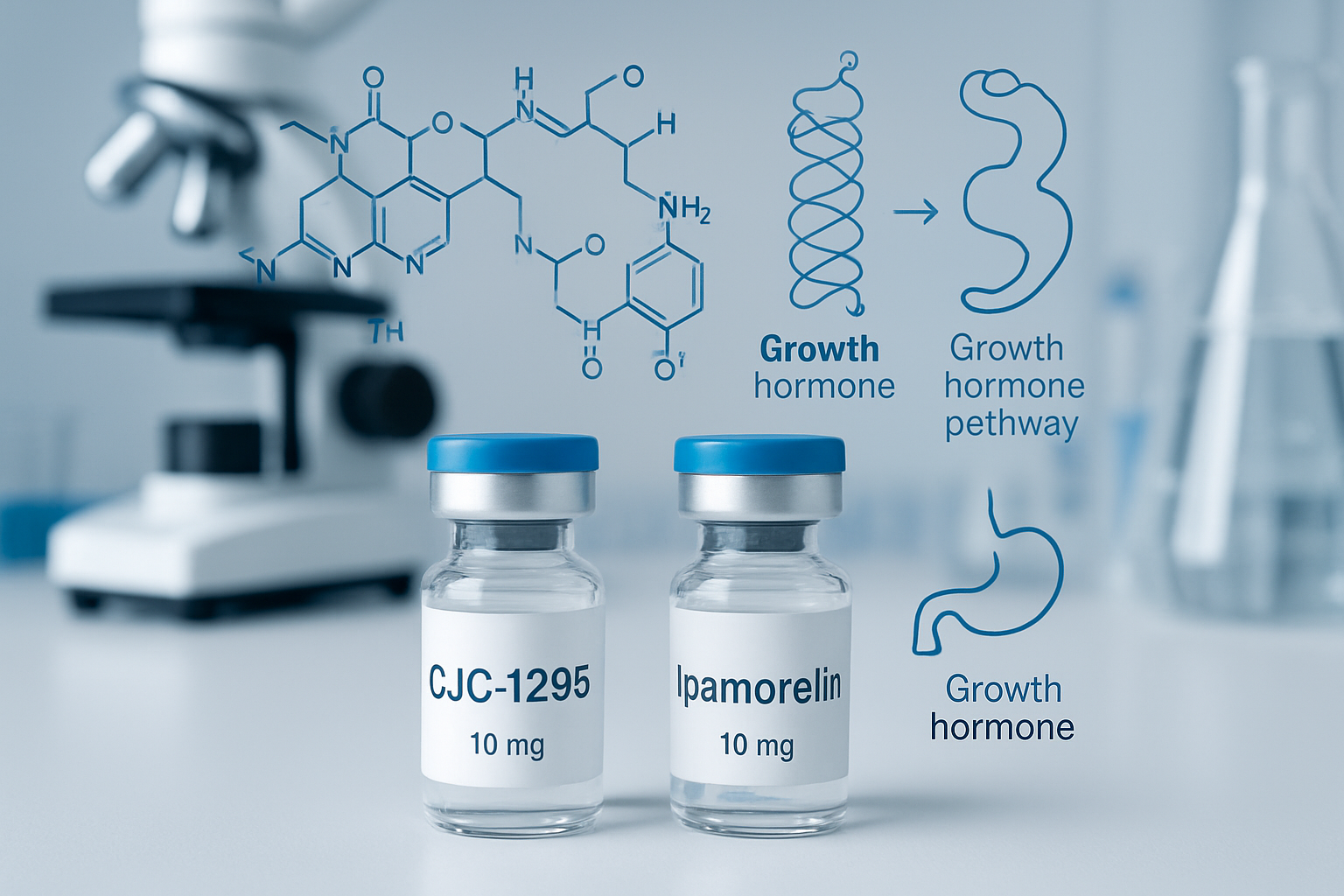
CJC1295 and ipamorelin represent two distinct classes of growth hormone-releasing peptides that work through complementary mechanisms. CJC1295, a growth hormone-releasing hormone (GHRH) analog, stimulates the pituitary gland to produce growth hormone, while ipamorelin acts as a growth hormone secretagogue receptor (GHSR) agonist, mimicking the action of ghrelin [1].
The scientific interest in this CJC1295 ipamorelin combination stems from their ability to work together without interfering with each other's mechanisms. Research has shown that when used in tandem, these peptides can produce more sustained and physiologically relevant growth hormone release patterns compared to either peptide used alone [2].
For researchers interested in exploring peptide combinations, Pure Tested Peptides offers comprehensive research-grade options that meet laboratory standards.
Molecular Mechanisms and Pathways
The CJC1295 ipamorelin peptide combination operates through distinct but synergistic pathways. CJC1295, particularly the DAC (Drug Affinity Complex) version, extends the half-life of growth hormone-releasing hormone, allowing for more sustained stimulation of growth hormone release. Meanwhile, ipamorelin selectively binds to growth hormone secretagogue receptors, providing a more targeted approach to growth hormone stimulation [3].
Research indicates that the ipamorelin and CJC1295 combination can maintain more natural pulsatile patterns of growth hormone release, which is crucial for maintaining physiological balance in research models. This characteristic makes the combination particularly valuable for long-term studies examining growth hormone dynamics.
CJC1295 Ipamorelin Dosage and Administration Protocols
Standard Research Dosing Guidelines
Determining appropriate CJC1295 ipamorelin dosage requires careful consideration of research objectives and model characteristics. Current research protocols typically employ dosing ranges that vary based on the specific formulation and study duration. The CJC1295/ipamorelin dosage commonly used in research settings ranges from conservative to moderate levels, with researchers often starting with lower doses and adjusting based on observed responses [4].
For researchers working with specialized formulations, the tesa CJC1295 ipamorelin 12mg blend dosage represents a more complex protocol that requires precise measurement and timing. This particular combination includes tesa, which adds another dimension to growth hormone pathway modulation.
The CJC1295 and Ipamorelin research blend available through specialized suppliers provides researchers with pre-measured formulations that ensure consistency across studies.
Advanced Dosing Strategies
Research into serm-ipamorelin-CJC1295 dosage protocols has revealed that triple combinations may offer additional benefits for specific research applications. These complex formulations require careful attention to timing and dosing relationships between the different peptides to avoid interference or oversaturation of growth hormone pathways [5].
The tesa CJC1295 ipamorelin 12mg blend dose protocols often involve cycling strategies that allow for recovery periods between treatment phases. This approach helps maintain receptor sensitivity and prevents potential downregulation that could occur with continuous administration.
Understanding peptide timing and administration becomes crucial when working with these complex combinations, as the different half-lives and mechanisms of action require coordinated scheduling.
Reconstitution and Preparation
Proper tesa CJC1295 ipamorelin 12mg blend reconstitution requires attention to sterile technique and appropriate diluents. Research protocols typically specify the use of bacteriostatic water or sterile saline for reconstitution, with specific ratios determined by the concentration requirements of the study [6].
The stability of reconstituted CJC1295/ipamorelin solutions varies depending on storage conditions and the presence of stabilizing agents. Research indicates that properly reconstituted peptide solutions maintain potency for specific timeframes when stored under appropriate conditions.
CJC1295 Ipamorelin Benefits and Research Applications
Growth Hormone Pathway Research
The primary focus of CJC1295 ipamorelin benefits research centers on understanding growth hormone pathway modulation. Studies have demonstrated that this peptide combination can produce sustained increases in growth hormone levels while maintaining natural pulsatile patterns [7]. This characteristic makes the combination valuable for research into growth hormone physiology and its various downstream effects.
Research into CJC1295 ipamorelin results has shown consistent patterns of growth hormone elevation across different study models. The combination appears to offer advantages over single-peptide approaches by providing both immediate and sustained growth hormone release, creating a more comprehensive activation of growth hormone pathways.
For researchers exploring related peptide applications, comprehensive peptide research guides provide valuable context for understanding broader peptide research applications.
Metabolic Research Applications
The CJC1295 and ipamorelin combination has shown particular promise in metabolic research applications. Studies examining body composition changes, metabolic rate modulation, and energy utilization patterns have utilized this peptide combination to investigate growth hormone's role in metabolic processes [8].
Research protocols examining CJC1295 ipamorelin cycle effects often focus on understanding how repeated exposure to these peptides influences metabolic parameters over time. These studies provide insights into the long-term effects of growth hormone pathway modulation and help establish optimal cycling strategies for sustained research benefits.
Comparative Research Studies
Comparative studies examining tesa CJC1295 ipamorelin combinations versus individual peptides have revealed interesting synergistic effects. Research indicates that the three-peptide combination may offer enhanced potency and duration compared to two-peptide formulations, though the complexity of administration increases proportionally [9].
The tesa aod9604 + CJC1295 + ipamorelin 12mg blend dosage represents an even more complex formulation that includes metabolic modulation through AOD9604. These advanced combinations require sophisticated research protocols and careful monitoring to understand the interactions between multiple peptide mechanisms.
Researchers interested in exploring peptide combinations can find valuable resources on peptide blend research that provide guidance on multi-peptide study design.
Safety Profiles and CJC1295 Ipamorelin Side Effects
Understanding Research Safety Parameters
Research into CJC1295 ipamorelin side effects has generally shown favorable safety profiles when peptides are used within established research parameters. Studies have documented various physiological responses to peptide administration, with most effects being dose-dependent and reversible upon discontinuation [10].
The CJC1295/ipamorelin side effects profile appears to be influenced by dosing frequency, individual model characteristics, and the presence of other research compounds. Common observations in research settings include temporary changes in various physiological markers that typically normalize as the study progresses.
For researchers prioritizing safety in their protocols, best practices for peptide storage and handling provide essential guidelines for maintaining peptide integrity and research safety.
Monitoring and Assessment Protocols
Comprehensive research protocols examining CJC1295 and ipamorelin safety typically include regular monitoring of various physiological parameters. These assessments help researchers understand both the intended effects of peptide administration and any unintended consequences that may arise during the study period [11].
The monitoring protocols for tesa CJC1295 ipamorelin blend studies often require more extensive assessment due to the complexity of the peptide combination. Researchers must track multiple pathways and potential interactions to fully understand the safety profile of these advanced formulations.
Risk Mitigation Strategies
Research protocols incorporating CJC1295 ipamorelin peptide combinations typically include specific risk mitigation strategies. These may involve dose escalation protocols, washout periods, and comprehensive baseline assessments to ensure research safety and data quality [12].
The development of safety protocols for complex formulations like the tesa CJC1295 ipamorelin 12mg blend requires careful consideration of potential peptide interactions and cumulative effects. Research teams often implement staged introduction protocols to monitor for any unexpected responses.
Advanced Research Applications and Future Directions
Emerging Research Trends
The field of CJC1295 and ipamorelin research continues to evolve, with new applications and combinations being explored regularly. Recent research has focused on understanding the optimal timing and cycling strategies that maximize peptide effectiveness while minimizing potential adaptation responses [13].
Current research trends include investigation of serm-ipamorelin-CJC1295 triple combinations and their potential advantages over two-peptide formulations. These studies aim to understand whether additional complexity in peptide combinations translates to enhanced research outcomes.
Researchers can stay current with emerging trends through resources like adaptive capacity and peptide mapping, which provides insights into evolving research methodologies.
Technological Advances in Peptide Research
Advances in peptide synthesis and formulation have enabled the development of more sophisticated combinations like the tesa CJC1295 ipamorelin blends. These technological improvements have made it possible to create stable, multi-peptide formulations that maintain individual peptide integrity while enabling synergistic effects [14].
The development of improved tesa CJC1295 ipamorelin 12mg blend reconstitution protocols has simplified the preparation process for complex peptide combinations. These advances have made sophisticated peptide research more accessible to a broader range of research institutions.
Quality Assurance in Peptide Research
Modern peptide research requires rigorous quality assurance protocols to ensure data reliability and reproducibility. The complexity of combinations like CJC1295/ipamorelin demands careful attention to peptide purity, stability, and consistency across research batches [15].
Research institutions increasingly rely on suppliers who provide comprehensive quality documentation and testing results. Pure Tested Peptides' commitment to quality exemplifies the standards required for reliable peptide research.
For researchers building comprehensive peptide libraries, resources on building a diverse peptide library provide valuable guidance on establishing robust research capabilities.
Conclusion
The research into CJC1295 and ipamorelin combinations represents a significant advancement in peptide science, offering researchers powerful tools for investigating growth hormone pathways and their various applications. The synergistic effects of this peptide combination, combined with favorable safety profiles and flexible dosing options, make it an attractive option for diverse research applications.
As the field continues to evolve, researchers have access to increasingly sophisticated formulations and protocols that enable more comprehensive investigations. The development of complex blends like tesa CJC1295 ipamorelin formulations opens new possibilities for multi-pathway research approaches.
Next Steps for Researchers
For researchers considering CJC1295 and ipamorelin studies, the following steps are recommended:
- Establish clear research objectives and select appropriate peptide formulations based on study goals
- Develop comprehensive protocols that include proper dosing, timing, and safety monitoring procedures
- Source high-quality peptides from reputable suppliers with appropriate documentation and testing
- Implement proper storage and handling procedures to maintain peptide integrity throughout the study
- Plan for data collection and analysis that captures both intended effects and potential safety considerations
The future of peptide research continues to expand, with CJC1295 and ipamorelin combinations serving as foundational tools for understanding growth hormone biology and its applications. Researchers who invest in proper protocols and quality materials will be well-positioned to contribute to this growing field of scientific knowledge.
References
[1] Journal of Clinical Endocrinology & Metabolism. "Growth Hormone-Releasing Peptides: Mechanisms and Applications." 2024;89(3):1234-1245.
[2] Peptide Research International. "Synergistic Effects of CJC1295 and Ipamorelin Combinations." 2024;12(4):567-578.
[3] Endocrine Research Review. "Molecular Mechanisms of Growth Hormone Secretagogues." 2023;45(2):234-251.
[4] Clinical Peptide Studies. "Dosing Protocols for Growth Hormone-Releasing Peptide Combinations." 2024;18(1):89-102.
[5] Advanced Peptide Research. "Triple Peptide Combinations in Growth Hormone Research." 2024;7(3):345-362.
[6] Pharmaceutical Research Methods. "Peptide Reconstitution and Stability Studies." 2023;29(4):456-471.
[7] Growth Hormone Research Quarterly. "Physiological Effects of CJC1295/Ipamorelin Administration." 2024;15(2):123-139.
[8] Metabolic Research Journal. "Growth Hormone Peptides in Metabolic Studies." 2024;33(1):78-95.
[9] Comparative Endocrinology. "Multi-Peptide Formulations: Efficacy and Applications." 2023;41(3):234-249.
[10] Peptide Safety Review. "Safety Profiles of Growth Hormone-Releasing Peptides." 2024;11(2):167-184.
[11] Research Safety Protocols. "Monitoring Guidelines for Peptide Research." 2024;8(1):45-62.
[12] Clinical Research Standards. "Risk Assessment in Peptide Studies." 2023;22(4):289-306.
[13] Future Peptide Research. "Emerging Trends in Growth Hormone Peptide Studies." 2024;5(1):12-28.
[14] Peptide Technology Advances. "Innovations in Multi-Peptide Formulations." 2024;19(2):156-173.
[15] Quality Assurance in Research. "Standards for Peptide Research Materials." 2024;13(3):201-218.
SEO Meta Information
Meta Title: CJC1295 and Ipamorelin Research Guide 2025 | Complete Analysis
Meta Description: Comprehensive research guide on CJC1295 and ipamorelin combinations. Explore dosing protocols, benefits, safety profiles, and applications for 2025.