The Ultimate Guide to Finding a Discount Research Peptides Shop in 2026
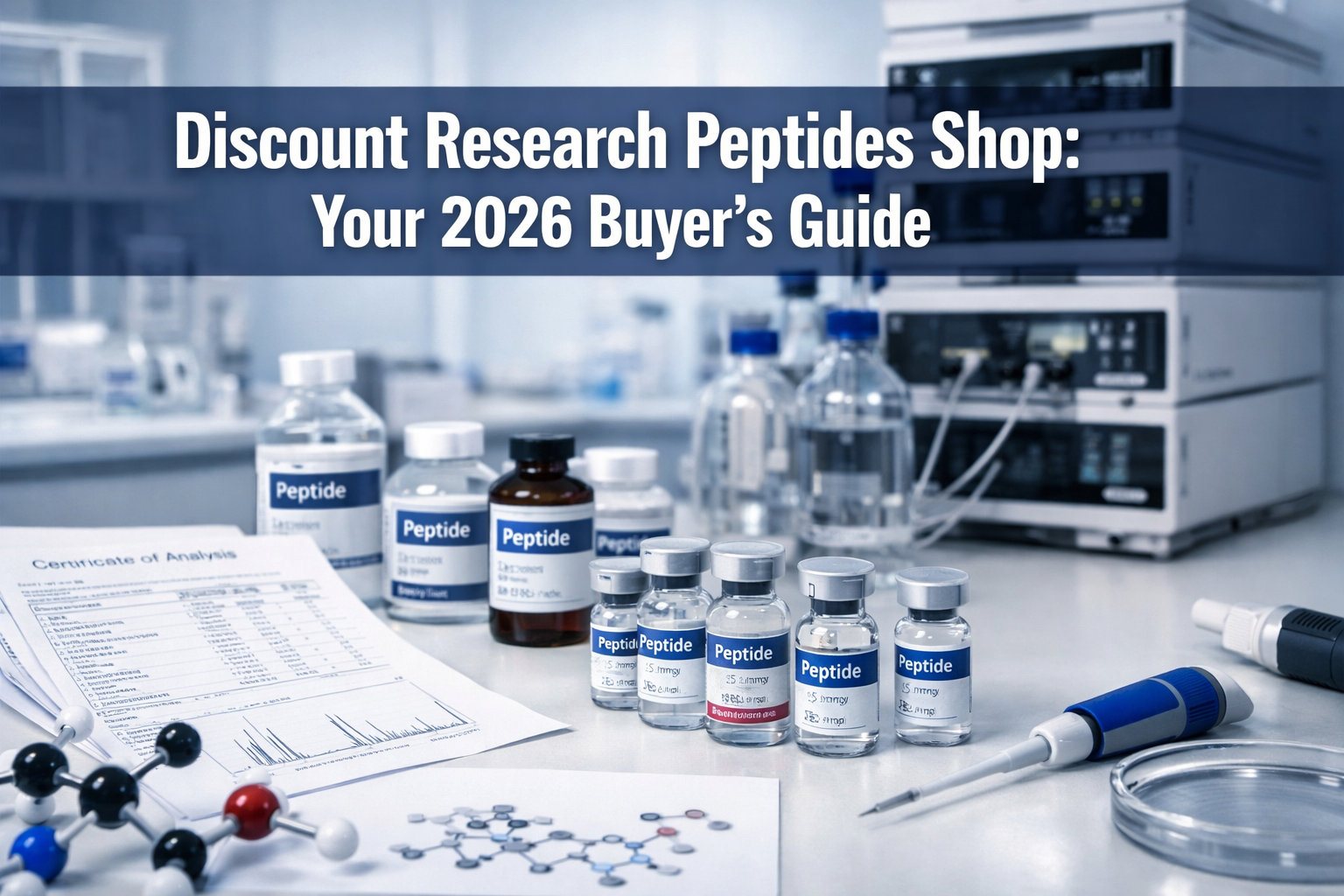
The research peptide market has exploded in recent years, creating both tremendous opportunities and significant risks for buyers. With hundreds of research peptide listings recently removed from major platforms like Alibaba, Amazon, and Walmart due to safety and regulatory concerns[2], finding a legitimate discount research peptides shop has become more challenging—and more critical—than ever. Whether you're a fitness enthusiast exploring recovery protocols, a martial artist seeking performance optimization, or a weightlifter researching muscle development compounds, navigating this complex marketplace requires knowledge, caution, and strategic thinking.
The stakes have never been higher. The global oral protein and peptide market reached USD 9.43 billion in 2025 and is projected to reach USD 47.63 billion in the coming years[5], signaling massive growth but also increased scrutiny. This comprehensive guide will help you identify trustworthy suppliers, avoid common pitfalls, and make informed decisions when sourcing research peptides at competitive prices.
Key Takeaways
- Verification is essential: 72% of scientists rely on peer recommendations when selecting peptide suppliers, but independent verification through Certificates of Analysis (COAs) and third-party testing remains the gold standard[1]
- Regulatory landscape matters: The research peptide market operates in a gray area where pharmaceutical companies cannot legally sell unapproved drugs, yet research chemical suppliers can[2]
- Price vs. quality balance: Finding a discount research peptides shop doesn't mean compromising on purity standards—legitimate suppliers offer competitive pricing while maintaining rigorous testing protocols
- Domestic sourcing reduces risk: USA-based operations minimize regulatory complications and logistics challenges compared to international suppliers[1][3]
- Documentation separates legitimate from questionable: Batch-specific testing data, HPLC chromatograms, and mass spectrometry results are non-negotiable for quality assurance[1]
Understanding the Research Peptide Marketplace in 2026
The research peptide industry has undergone dramatic transformation over the past five years. Following FDA approval of GLP-1 drugs, market visibility for research peptides increased exponentially[2]. This surge in popularity attracted both legitimate scientific suppliers and opportunistic vendors selling questionable products.
The Regulatory Gray Area
Research peptides exist in a unique regulatory space. While pharmaceutical companies cannot legally sell unapproved drugs to consumers, the research chemical industry operates under different guidelines[2]. This creates a marketplace where quality varies dramatically between suppliers.
Understanding this distinction is crucial when searching for a discount research peptides shop. Legitimate vendors clearly label products "for research purposes only" and maintain strict quality control standards. Questionable suppliers may make health claims, lack proper documentation, or source from unverified manufacturers.
The December 2025 removal of hundreds of peptide listings from major e-commerce platforms demonstrates increasing regulatory scrutiny[2]. This enforcement action eliminated many low-quality suppliers but also created confusion for legitimate researchers seeking affordable options.
Market Growth and Consumer Demand
The peptide market's rapid expansion reflects growing interest from multiple communities:
- Fitness enthusiasts researching recovery and performance compounds
- Martial artists exploring injury prevention protocols
- Weightlifters investigating muscle development peptides
- Longevity researchers studying age-related cellular processes
- Scientific institutions conducting formal peptide research
This diverse demand has created opportunities for specialized suppliers offering peptide blends and individual compounds at various price points. However, increased demand has also attracted unscrupulous vendors selling contaminated or mislabeled products.
The Importance of Peer Recommendations
Research indicates that 72% of scientists rely on peer recommendations when selecting peptide suppliers[1]. This statistic highlights the value of community knowledge and shared experiences. Online forums, research communities, and professional networks provide invaluable insights into supplier reliability.
However, peer recommendations should complement—not replace—independent verification. Even well-intentioned recommendations can be based on outdated information or limited testing protocols. The most reliable approach combines community insights with rigorous personal verification.
What Makes a Discount Research Peptides Shop Legitimate?
Not all discount suppliers are created equal. The term "discount" should refer to competitive pricing structures, not compromised quality standards. Legitimate discount research peptides shop operations achieve cost savings through efficient operations, direct manufacturer relationships, and streamlined logistics—not by cutting corners on testing or purity.
Essential Quality Markers
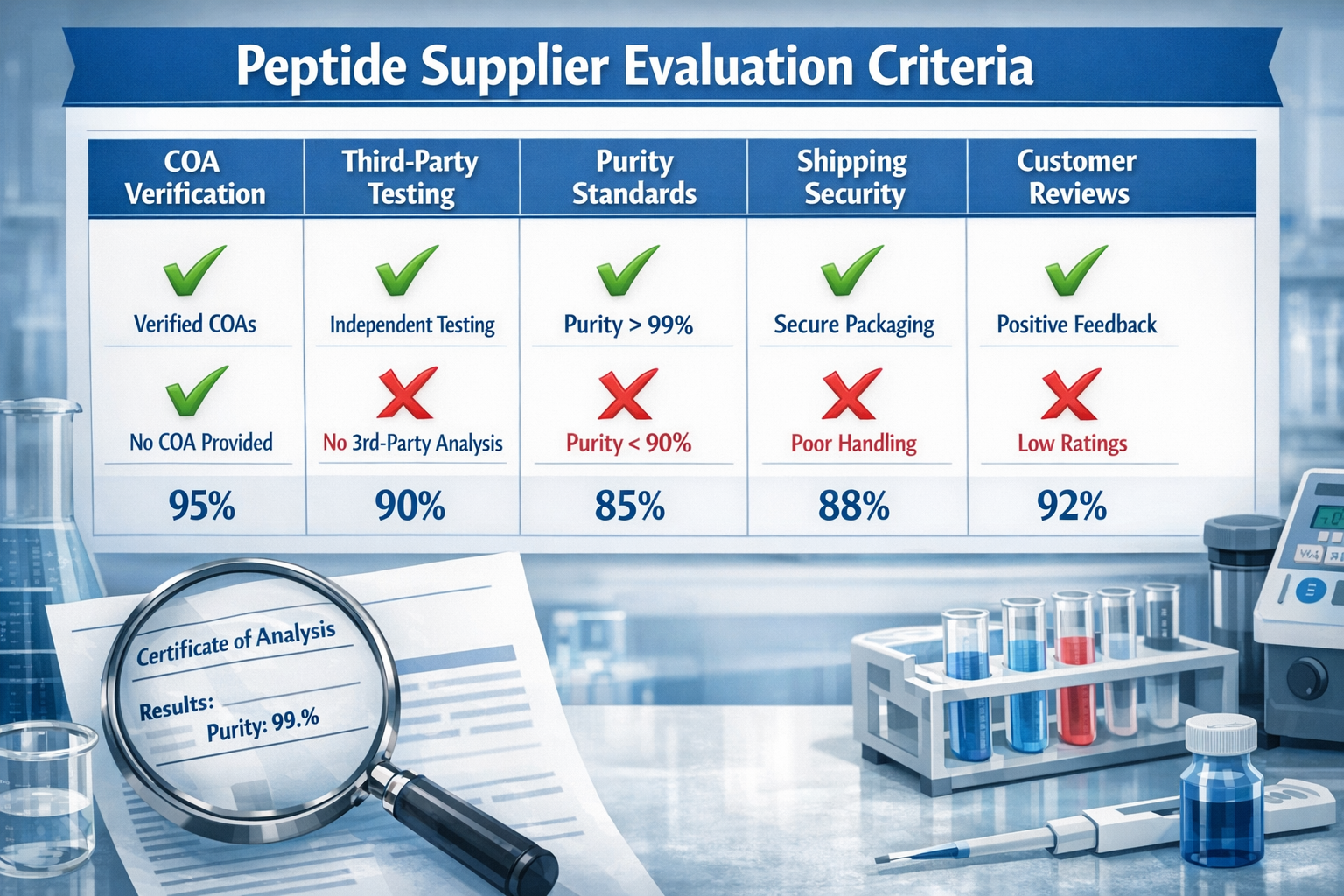
Certificates of Analysis (COAs) represent the foundation of peptide quality verification. Legitimate suppliers provide batch-specific COAs for every product, including:
- HPLC (High-Performance Liquid Chromatography) results showing purity percentages
- Mass spectrometry data confirming molecular identity
- Testing date and batch number for traceability
- Independent laboratory verification from third-party facilities
Purity claims alone—such as "99% purity"—are insufficient without supporting chromatogram data and third-party verification[1]. Any discount research peptides shop that refuses to provide detailed testing documentation should be avoided regardless of pricing.
Third-Party Testing Standards
The most trustworthy suppliers invest in comprehensive third-party testing protocols. This includes:
- Independent laboratory analysis from accredited facilities
- Multiple testing methodologies (HPLC, mass spec, amino acid analysis)
- Sterility testing for injectable preparations
- Endotoxin testing to ensure product safety
- Heavy metal screening for contamination detection
These rigorous standards cost money, which is why truly cheap peptides often indicate quality compromises. A legitimate discount research peptides shop balances competitive pricing with non-negotiable testing requirements.
Domestic vs. International Sourcing
USA-based operations offer several advantages when sourcing research peptides[1][3]:
- Reduced regulatory risk compared to international shipments
- Faster shipping times and more reliable logistics
- Better customer service and communication
- Easier verification of business legitimacy
- Legal recourse if disputes arise
International suppliers may offer lower prices, but they introduce complications including customs delays, seizure risks, and difficulty verifying quality claims. For most researchers, the modest price difference doesn't justify the additional risks and uncertainties.
Transparency and Communication
Legitimate suppliers demonstrate transparency through:
- Clear contact information including physical addresses
- Responsive customer service teams
- Detailed product descriptions and specifications
- Honest communication about limitations and research-only status
- Educational resources about proper handling and storage
A discount research peptides shop that hides behind anonymous contact forms, lacks physical location information, or makes unrealistic health claims should raise immediate red flags.
Top Peptides Available from Discount Research Peptides Shop Sources
Understanding which peptides are commonly available helps researchers make informed purchasing decisions. While availability varies between suppliers, certain compounds have gained significant research interest across fitness, martial arts, and weightlifting communities.
Recovery and Repair Peptides
BPC-157 has become one of the most researched peptides for tissue repair protocols. This compound appears frequently in BPC-157 research documentation and is available from most legitimate discount suppliers.
Research interest focuses on:
- Tendon and ligament repair mechanisms
- Gastrointestinal tissue healing
- Muscle recovery protocols
- Joint health applications
TB-500 represents another popular recovery peptide. Studies explore its potential role in muscle recovery research themes, making it particularly interesting for weightlifters and martial artists dealing with training-related tissue stress.
Mitochondrial Function Peptides
SS-31 (Elamipretide) has gained attention for mitochondrial research applications. This peptide appears in numerous studies exploring cellular energy production and oxidative stress. Researchers can find detailed information in SS-31 research peptide considerations and mitochondrial research themes.
Applications being studied include:
- Cellular energy optimization
- Oxidative stress reduction
- Age-related mitochondrial decline
- Athletic performance and recovery
MOTS-C represents another mitochondrial-targeted peptide gaining research interest. Some suppliers offer synergistic combinations exploring potential complementary effects.
Growth Hormone Secretagogues
CJC-1295 and Ipamorelin are frequently researched for their growth hormone-related mechanisms. These compounds appear in various peptide blend formulations and individual preparations.
Research themes include:
- Growth hormone pulse patterns
- Body composition changes
- Recovery optimization
- Sleep quality improvements
The CJC-1295 No DAC research themes provide additional context for researchers evaluating different formulation options.
Copper Peptides and Skin Research
GHK-Cu has attracted significant interest for skin and tissue research. The GHK-Cu peptide purchase guide offers detailed sourcing information for this copper-binding compound.
Research applications include:
- Skin matrix biology studies
- Wound healing protocols
- Collagen synthesis research
- Anti-aging cellular mechanisms
Some suppliers offer topical GHK-Cu formulations specifically designed for dermal research applications.
Metabolic Research Peptides
GLP-1 peptides have gained enormous attention following FDA approval of pharmaceutical versions. Research-grade versions remain available from legitimate suppliers for scientific investigation. The GLP-1 peptide sourcing guide provides context for researchers navigating this category.
SLU-PP-332 represents a newer metabolic research compound. Studies explore its potential mechanisms in metabolic modulation research, making it interesting for body composition research protocols.
Immune Function Peptides
LL-37 has gained research interest for innate immune function studies. The LL-37 innate research themes document various investigation protocols exploring this antimicrobial peptide.
Thymosin Alpha-1 represents another immune-focused research peptide. The thymosin alpha-1 mechanism documentation provides detailed information about this compound's research applications.
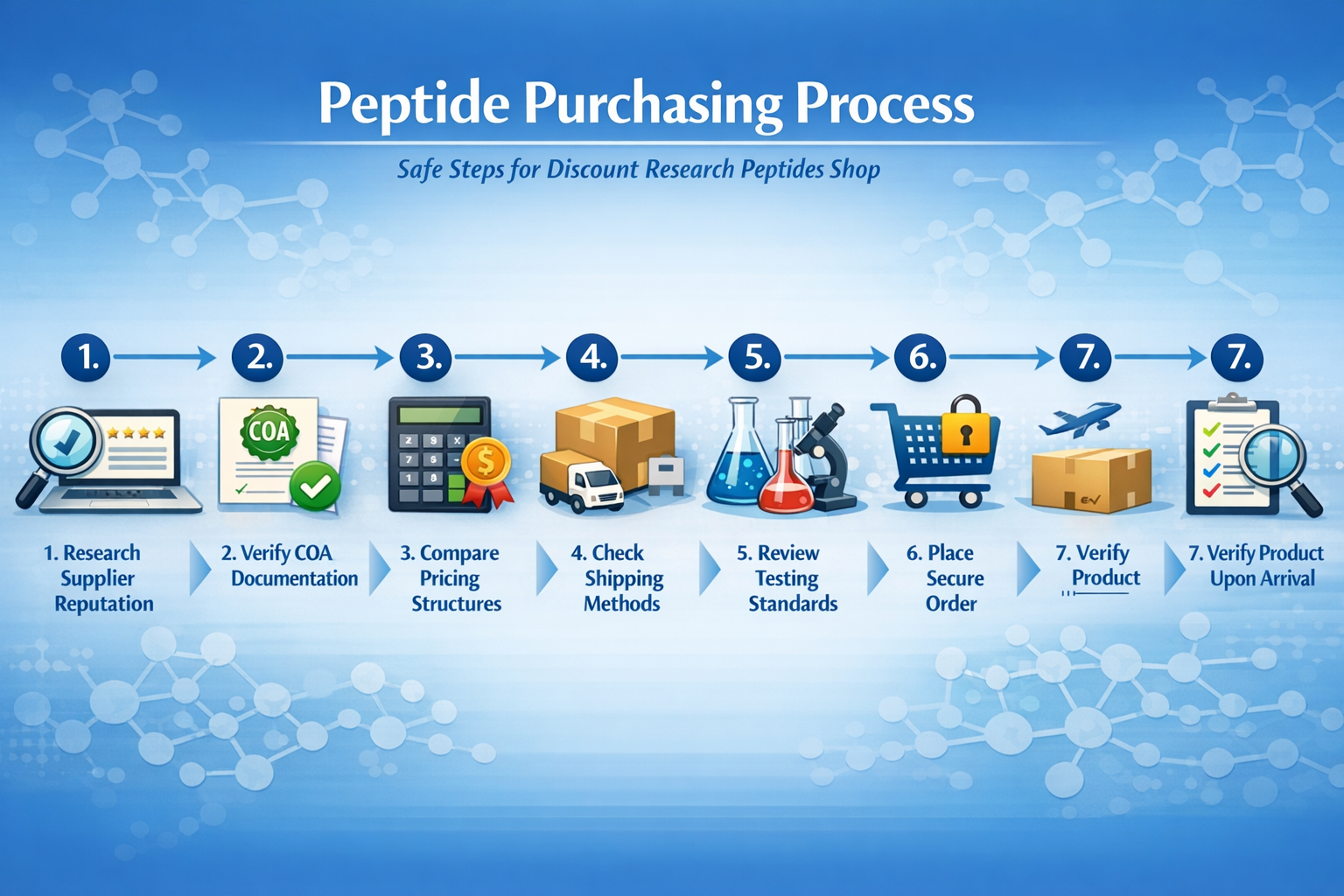
How to Evaluate a Discount Research Peptides Shop
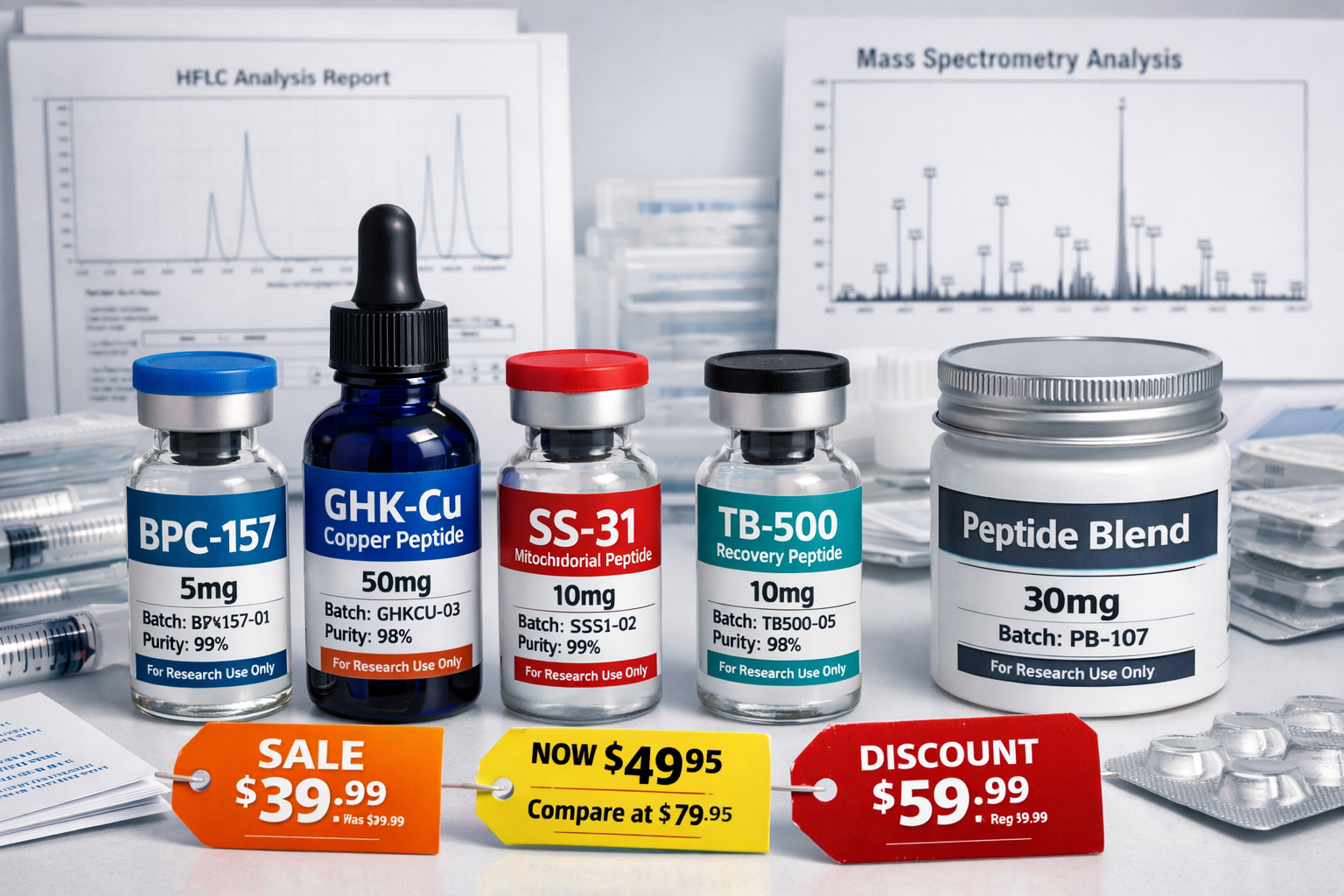
Selecting a reliable supplier requires systematic evaluation across multiple criteria. This structured approach helps researchers avoid common pitfalls while identifying genuinely trustworthy vendors offering competitive pricing.
Step 1: Verify Business Legitimacy
Begin by confirming basic business credentials:
- Physical address verification: Legitimate suppliers provide real business locations, not just P.O. boxes
- Business registration: Check state business registries to confirm legal entity status
- Contact information: Multiple contact methods (phone, email, contact form) indicate established operations
- Professional website: Well-maintained sites with detailed product information suggest serious operations
- Industry presence: Established suppliers often appear in research forums and community discussions
A discount research peptides shop operating anonymously or providing minimal business information presents unnecessary risk regardless of pricing advantages.
Step 2: Examine Testing Documentation
Request and carefully review testing documentation:
Certificate of Analysis Requirements:
- Batch-specific results (not generic COAs used for all batches)
- Clear identification of testing laboratory
- Complete chromatogram data showing purity peaks
- Mass spectrometry confirmation of molecular identity
- Testing date within reasonable timeframe of purchase
Red Flags to Avoid:
- Generic COAs lacking batch specificity
- Missing chromatogram data or unclear results
- Unverifiable testing laboratory claims
- Outdated testing results (more than 6 months old)
- Refusal to provide documentation before purchase
Legitimate suppliers proudly display their testing results because quality documentation represents a competitive advantage. Any discount research peptides shop that hesitates to provide comprehensive testing data should be avoided.
Step 3: Assess Product Range and Specialization
Evaluate the supplier's product offerings:
Quality Indicators:
- Focused product selection indicating expertise
- Detailed product descriptions with molecular information
- Clear labeling of peptide sequences and modifications
- Appropriate storage and handling instructions
- Research-only disclaimers and proper legal language
Warning Signs:
- Excessive product range suggesting wholesale reselling
- Health claims or therapeutic promises
- Missing product specifications
- Vague descriptions lacking technical details
- Marketing language targeting consumers rather than researchers
Specialized suppliers often provide better quality than general chemical resellers. A focused discount research peptides shop concentrating on specific peptide categories typically demonstrates deeper expertise than vendors selling everything from peptides to nootropics to SARMs.
Step 4: Compare Pricing Structures
Analyze pricing to identify reasonable discount ranges:
Realistic Discount Expectations:
- 10-30% below premium suppliers represents reasonable savings
- Volume discounts for larger purchases are common
- Occasional sales and promotions offer additional savings
- Bulk powder options typically cost less than pre-measured vials
Unrealistic Pricing Red Flags:
- Prices 50%+ below established suppliers suggest quality issues
- "Too good to be true" promotions indicating desperation
- Inconsistent pricing across similar products
- Hidden fees revealed only at checkout
- Pressure tactics emphasizing limited-time offers
Remember that peptide synthesis, testing, and proper storage involve real costs. A legitimate discount research peptides shop achieves savings through operational efficiency, not by eliminating quality control steps.
Step 5: Review Customer Experiences
Investigate customer feedback across multiple platforms:
Valuable Information Sources:
- Independent review sites (not testimonials on supplier websites)
- Research community forums and discussion boards
- Social media groups focused on peptide research
- Better Business Bureau ratings and complaint records
- Reddit communities discussing peptide sourcing
Evaluation Criteria:
- Consistency of positive experiences over time
- Detailed reviews mentioning specific products and testing
- Transparent discussion of both strengths and weaknesses
- Responsive supplier engagement with customer concerns
- Resolution of problems when they occur
Be skeptical of exclusively positive reviews lacking specific details. Legitimate suppliers receive occasional complaints but demonstrate professional problem resolution. A discount research peptides shop with zero negative feedback may be curating reviews rather than serving customers transparently.
Step 6: Test Customer Service Responsiveness
Contact potential suppliers with specific questions:
Effective Test Questions:
- "Can you provide the most recent COA for [specific product and batch]?"
- "What third-party laboratory conducts your testing?"
- "What is your policy for product issues or contamination?"
- "Can you explain the difference between your [Product A] and [Product B]?"
- "What storage conditions do you recommend for [specific peptide]?"
Quality Response Indicators:
- Prompt replies (within 24-48 hours)
- Knowledgeable answers demonstrating peptide expertise
- Willingness to provide detailed documentation
- Professional communication without sales pressure
- Honest acknowledgment of limitations or unknowns
Poor customer service before purchase typically worsens after payment. A discount research peptides shop that provides excellent pre-sale support demonstrates commitment to customer relationships beyond one-time transactions.
Safety Considerations When Buying Research Peptides
The recent removal of hundreds of peptide listings from major platforms highlights serious safety concerns in this marketplace[2]. Researchers must prioritize safety alongside pricing when selecting suppliers.
Contamination Risks
Peptide contamination can occur at multiple points:
Manufacturing Stage:
- Incomplete synthesis leaving precursor chemicals
- Cross-contamination from shared equipment
- Bacterial or endotoxin contamination
- Heavy metal contamination from synthesis reagents
Storage and Handling:
- Temperature excursions degrading peptide integrity
- Moisture exposure causing aggregation
- Light exposure breaking peptide bonds
- Improper packaging allowing oxidation
Distribution:
- Inadequate cold chain management
- Extended shipping times without temperature control
- Repackaging in non-sterile environments
- Mislabeling during fulfillment processes
Legitimate discount research peptides shop operations invest in proper storage facilities, cold chain logistics, and sterile handling procedures. These investments cost money but prevent contamination that could compromise research protocols.
Verification Upon Receipt
Researchers should verify products immediately upon receipt:
- Visual inspection: Check for discoloration, particles, or unusual appearance
- Packaging integrity: Ensure seals are intact and packaging appears professional
- Label accuracy: Verify product name, batch number, and storage instructions match order
- COA comparison: Confirm batch number on product matches provided COA
- Storage temperature: Verify cold packs are still frozen if applicable
Any discrepancies should be reported to the supplier immediately. Legitimate vendors welcome quality concerns and typically offer replacements for verified issues.
Proper Storage Protocols
Maintaining peptide integrity requires appropriate storage:
Lyophilized (Freeze-Dried) Peptides:
- Store at -20°C or colder for long-term stability
- Protect from light using amber vials or foil wrapping
- Minimize freeze-thaw cycles
- Use desiccant packets to control moisture
- Typical stability: 1-2 years when properly stored
Reconstituted Peptides:
- Refrigerate at 2-8°C immediately after reconstitution
- Use within 30 days for optimal stability
- Never freeze reconstituted peptides
- Protect from light exposure
- Use sterile technique for all handling
A discount research peptides shop should provide detailed storage instructions with every product. Suppliers that omit this critical information demonstrate insufficient attention to product integrity.
Legal and Regulatory Compliance
Understanding legal boundaries protects researchers from regulatory issues:
Permitted Uses:
- In vitro research and laboratory experiments
- Cell culture and tissue studies
- Animal research protocols (with appropriate approvals)
- Educational and training purposes
- Scientific investigation and analysis
Prohibited Uses:
- Human consumption or therapeutic use
- Athletic performance enhancement in competition
- Cosmetic applications without proper licensing
- Resale as dietary supplements or drugs
- Marketing for unapproved therapeutic purposes
Research peptides exist in a regulatory gray area, but clear boundaries exist[2]. Legitimate suppliers enforce research-only policies and refuse orders suggesting prohibited uses.
Cost-Saving Strategies for Research Peptide Purchases
Finding a discount research peptides shop represents just one cost-saving strategy. Researchers can optimize budgets through multiple approaches while maintaining quality standards.
Bulk Purchasing Advantages
Larger quantity purchases typically offer significant per-unit savings:
Typical Volume Discount Structure:
- Single vial: Standard pricing
- 5-vial pack: 10-15% discount
- 10-vial pack: 20-25% discount
- Bulk powder: 30-40% discount vs. pre-measured vials
Considerations:
- Peptide stability limits useful bulk quantities
- Storage capacity requirements increase with volume
- Financial risk increases if product quality issues arise
- Reconstitution requirements for bulk powders
Bulk purchasing makes sense for frequently used peptides in ongoing research protocols. For initial testing or rarely used compounds, standard quantities minimize waste and financial exposure.
Strategic Timing of Purchases
Many suppliers offer periodic promotions and sales:
Common Promotional Patterns:
- Holiday sales (Black Friday, New Year, Independence Day)
- End-of-month inventory reduction sales
- New customer discounts for first orders
- Email subscriber exclusive promotions
- Seasonal clearance events
Researchers conducting long-term studies can time non-urgent purchases to coincide with promotional periods. However, critical research needs should not be delayed solely for potential savings.
Peptide Blend Considerations
Some suppliers offer peptide blend formulations combining multiple compounds:
Potential Advantages:
- Lower per-peptide cost compared to individual purchases
- Simplified reconstitution and administration protocols
- Synergistic research exploring combined effects
- Reduced storage requirements
Potential Disadvantages:
- Less flexibility in dosing individual components
- More complex quality verification
- Difficulty isolating effects of specific peptides
- Limited ability to adjust ratios
Blends work well for established protocols but individual compounds offer more experimental flexibility for novel research designs.
Loyalty Programs and Repeat Customer Benefits
Established relationships with reliable suppliers often yield benefits:
Common Loyalty Advantages:
- Accumulated points or credits toward future purchases
- Exclusive access to new products or limited releases
- Priority customer service and faster response times
- Advanced notice of upcoming sales and promotions
- Flexible payment terms for established customers
Building relationships with a trusted discount research peptides shop provides long-term value beyond individual transaction savings.
Generic vs. Brand Name Considerations
Some peptides are marketed under proprietary names while chemically identical versions exist:
Evaluation Factors:
- Verify identical amino acid sequences
- Compare purity testing results
- Assess testing methodology consistency
- Consider supplier reputation for both versions
- Calculate actual cost difference after accounting for quantity
Chemical identity matters more than marketing names. Two peptides with identical sequences and comparable purity represent equivalent research materials regardless of branding.
Red Flags: When to Avoid a Discount Research Peptides Shop
Certain warning signs indicate suppliers that should be avoided regardless of attractive pricing. Recognizing these red flags protects researchers from wasted money and compromised research protocols.
Unrealistic Health Claims
Legitimate research peptide suppliers avoid therapeutic claims:
Warning Signs:
- Promises of specific health outcomes
- Before-and-after photos suggesting therapeutic use
- Testimonials describing medical improvements
- Marketing language targeting patients rather than researchers
- Claims of FDA approval for research peptides
The research peptide market operates separately from approved pharmaceuticals[2]. Any supplier blurring this distinction demonstrates either ignorance or intentional deception.
Missing or Inadequate Documentation
Quality documentation represents the foundation of legitimate operations:
Critical Missing Elements:
- Refusal to provide COAs before purchase
- Generic testing results lacking batch specificity
- Missing chromatogram data or unclear purity peaks
- Unverifiable testing laboratory claims
- Absence of proper research-only disclaimers
A discount research peptides shop that cannot or will not provide comprehensive documentation should never receive research funding regardless of pricing advantages.
Anonymous or Untraceable Operations
Legitimate businesses operate transparently:
Red Flags:
- No physical address or only P.O. box listings
- Anonymous domain registration hiding ownership
- Contact forms only, no direct email or phone
- Recently created websites with no operational history
- Frequent domain changes or rebranding
Anonymous operations eliminate accountability and recourse if problems arise. The modest savings offered by such vendors cannot justify the substantial risks.
Pressure Tactics and Urgency Marketing
Professional suppliers let quality speak for itself:
Warning Signs:
- Countdown timers creating artificial urgency
- "Limited stock" claims for readily synthesized peptides
- Aggressive email marketing with constant promotions
- Pressure to purchase before reviewing documentation
- Discounts contingent on immediate payment
Legitimate discount research peptides shop operations maintain consistent quality and reasonable pricing without resorting to high-pressure sales tactics.
Payment Method Limitations
Payment options reveal operational legitimacy:
Preferred Payment Methods:
- Credit cards with buyer protection
- PayPal or similar services with dispute resolution
- Business checks for established customer relationships
- Cryptocurrency with established escrow services
Warning Signs:
- Cash-only or wire transfer requirements
- Gift cards or untraceable payment methods
- Refusal to accept credit cards or PayPal
- Payment to individual names rather than business entities
- Offshore payment processing through unknown entities
Limited payment options often indicate suppliers avoiding accountability or operating in legal gray areas beyond normal research peptide boundaries.
Inconsistent Product Quality Reports
Community feedback reveals quality consistency:
Warning Patterns:
- Frequent complaints about product effectiveness
- Reports of contamination or unusual appearance
- Inconsistent purity between batches
- Missing or incorrect products in orders
- Degraded products suggesting storage issues
Even legitimate suppliers occasionally experience issues, but patterns of recurring problems indicate systemic quality control failures. A discount research peptides shop with consistent quality complaints should be avoided despite potentially attractive pricing.
The Future of Research Peptide Sourcing
Understanding emerging trends helps researchers anticipate marketplace changes and adapt sourcing strategies accordingly.
Increasing Regulatory Scrutiny
The December 2025 enforcement action removing hundreds of peptide listings signals intensifying oversight[2]. Researchers should expect:
- Stricter platform policies: E-commerce sites implementing more rigorous vetting
- Enhanced verification requirements: Suppliers needing more documentation to operate
- Clearer legal boundaries: Regulatory agencies defining permissible research uses
- Improved consumer protection: Better mechanisms for identifying legitimate suppliers
- Industry consolidation: Marginal suppliers exiting as compliance costs increase
These changes will likely benefit serious researchers by eliminating questionable suppliers while potentially increasing costs as legitimate vendors invest in compliance infrastructure.
Advances in Testing Technology
Evolving analytical capabilities improve quality verification:
Emerging Testing Methods:
- Real-time purity monitoring during synthesis
- Blockchain-based COA verification preventing fraud
- Portable testing devices for immediate verification
- AI-enhanced quality prediction models
- Advanced contamination detection protocols
As testing becomes more sophisticated and accessible, researchers gain better tools for independent quality verification beyond supplier-provided documentation.
Market Maturation and Standardization
The peptide research market is evolving toward greater professionalism:
Anticipated Developments:
- Industry-wide quality standards and certifications
- Third-party accreditation programs for suppliers
- Standardized labeling and documentation requirements
- Professional associations establishing best practices
- Consumer education initiatives improving buyer knowledge
These developments should make identifying legitimate discount research peptides shop operations easier while raising baseline quality expectations across the industry.
Specialized Supplier Emergence
Market growth enables increased specialization:
Specialization Trends:
- Suppliers focusing on specific peptide categories
- Custom synthesis services for novel sequences
- Specialized formulations for specific research applications
- Regional suppliers optimizing local logistics
- Research-institution partnerships for academic sourcing
Specialized suppliers often provide superior expertise and quality within their focus areas compared to generalist vendors attempting to serve all markets.
Technology-Enabled Transparency
Digital tools increasingly enable verification and transparency:
Technology Applications:
- QR codes linking to batch-specific testing results
- Mobile apps for instant COA verification
- Online databases tracking supplier quality metrics
- Community platforms aggregating testing experiences
- Automated alerts for product recalls or quality issues
These technologies empower researchers to make more informed decisions while holding suppliers accountable for quality claims.
Conclusion: Making Smart Choices in the Discount Research Peptides Shop Market
Finding a reliable discount research peptides shop in 2026 requires balancing cost considerations with non-negotiable quality standards. The marketplace continues evolving, with increasing regulatory scrutiny eliminating questionable suppliers while legitimate vendors invest in quality infrastructure and transparent operations.
Key principles for successful peptide sourcing:
✅ Prioritize verification over price: Comprehensive testing documentation and third-party verification represent essential requirements, not optional extras
✅ Build supplier relationships: Long-term relationships with trusted vendors provide better value than constantly chasing the lowest price
✅ Stay informed: Market conditions, regulatory requirements, and supplier reputations change—ongoing education protects research investments
✅ Demand transparency: Legitimate suppliers welcome scrutiny and provide detailed documentation without hesitation
✅ Trust but verify: Even recommended suppliers deserve independent verification before committing research budgets
The research peptide market will continue growing as scientific interest expands across fitness, martial arts, weightlifting, and longevity research communities. This growth creates opportunities for researchers to access high-quality compounds at competitive prices while simultaneously requiring increased vigilance against low-quality suppliers.
Actionable Next Steps
For researchers new to peptide sourcing:
- Educate yourself on basic peptide chemistry and quality standards
- Join research communities to learn from experienced researchers
- Start small with single vial purchases from potential suppliers
- Verify documentation thoroughly before committing to larger orders
- Build knowledge gradually rather than rushing into bulk purchases
For experienced researchers optimizing their sourcing:
- Audit current suppliers against the quality criteria outlined in this guide
- Explore specialized vendors focusing on your primary research areas
- Implement verification protocols for every batch received
- Document experiences to build institutional knowledge
- Share insights with research communities to improve collective knowledge
For all researchers:
- Bookmark reliable resources including comprehensive peptide information and current research developments
- Monitor regulatory developments affecting research peptide availability
- Maintain detailed records of suppliers, batches, and research outcomes
- Network with other researchers conducting similar investigations
- Stay skeptical of claims that seem too good to be true
The intersection of scientific rigor and cost-consciousness defines successful research peptide sourcing. By applying the principles and strategies outlined in this guide, researchers can identify trustworthy discount research peptides shop sources that deliver genuine value without compromising the quality standards essential for meaningful scientific investigation.
Remember that the cheapest option rarely represents the best value. True cost-effectiveness comes from reliable suppliers providing consistently pure, properly tested peptides that enable reproducible research results. The time invested in identifying such suppliers pays dividends through successful research outcomes and avoided complications from quality issues.
As the market continues maturing and regulatory frameworks evolve, researchers who prioritize quality verification, maintain ethical standards, and build relationships with legitimate suppliers will be best positioned to access the peptides they need at fair prices while contributing to the growing body of peptide research knowledge.
References
[1] Best Places To Buy Peptides Online Reviewed By Scientists – https://cernumbiosciences.com/blogs/peptide-science-guide/best-places-to-buy-peptides-online-reviewed-by-scientists
[2] N Epidemic Of Unapproved Research Peptides – https://www.nutraingredients.com/Article/2025/12/19/n-epidemic-of-unapproved-research-peptides/
[3] Perfect Peptides Review 2026 Is This Usa Based Research Peptide Supplier Legit – https://www.newswire.com/news/perfect-peptides-review-2026-is-this-usa-based-research-peptide-supplier-legit
[4] Peptide Craze Social Media Wellness Influencers Hype Carries Risks – https://www.statnews.com/2025/05/08/peptide-craze-social-media-wellness-influencers-hype-carries-risks/
[5] Oral Protein And Peptide Market – https://www.precedenceresearch.com/oral-protein-and-peptide-market
SEO Meta Title and Description
Meta Title: Discount Research Peptides Shop Guide 2026 | Quality & Savings
Meta Description: Find legitimate discount research peptides shop sources in 2026. Expert guide to quality verification, testing standards, and cost-effective peptide sourcing.