
The Complete Guide to Epithalon Dosage: Protocols, Safety, and Research Insights for 2025
Imagine unlocking the potential to support cellular health and longevity through precise peptide protocols. As researchers continue to explore the fascinating world of bioregulatory peptides, understanding proper epithalon dosage has become crucial for those seeking to maximize research outcomes while maintaining safety standards.
Epithalon, also known as epitalon, represents one of the most studied tetrapeptides in longevity research. This synthetic version of epithalamin has captured the attention of researchers worldwide for its potential role in telomerase activation and cellular regeneration. However, achieving optimal results requires a thorough understanding of proper dosing protocols, administration methods, and safety considerations.
Key Takeaways
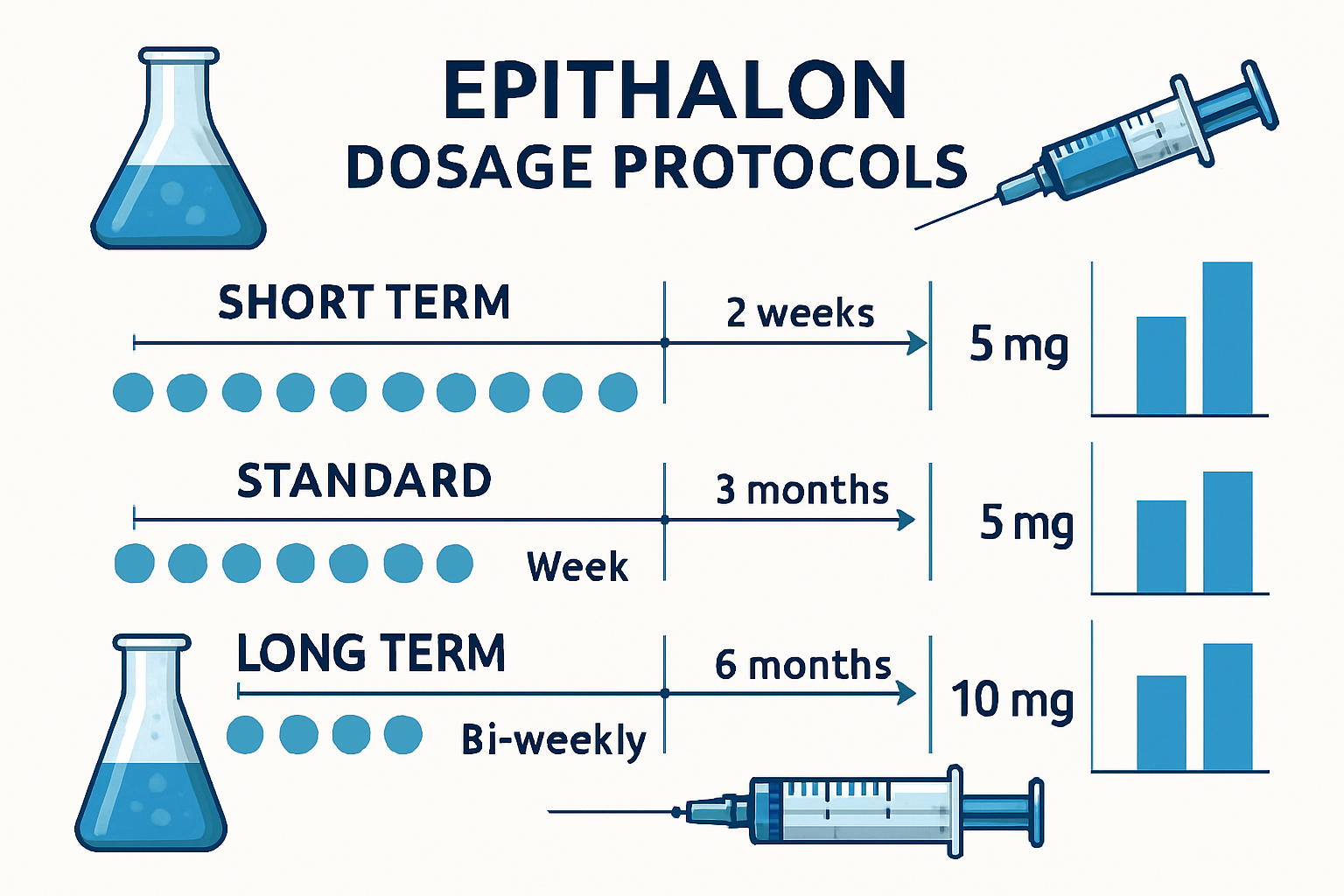
• Standard epithalon dosage typically ranges from 5-10mg per cycle, administered over 10-20 day periods
• Subcutaneous injection remains the most bioavailable administration method for research purposes
• Cycling protocols are essential, with most researchers implementing 2-4 cycles per year with adequate rest periods
• Quality sourcing from verified suppliers ensures peptide purity and research reliability
• Individual response monitoring helps optimize dosing schedules and maximize research outcomes
Understanding Epithalon: The Foundation for Proper Dosing
Before diving into specific epithalon dosage protocols, it's essential to understand what makes this peptide unique. Epithalon consists of four amino acids (Ala-Glu-Asp-Gly) that mirror the natural epithalamin produced by the pineal gland. This bioregulatory peptide has been extensively studied for its potential effects on telomerase activity, circadian rhythm regulation, and cellular health maintenance.
The peptide's mechanism of action involves telomerase enzyme activation, which may help maintain telomere length in cells. This process has significant implications for cellular aging research and longevity studies. Understanding these mechanisms helps researchers appreciate why precise dosing matters so much in epithalon research.
Research indicates that epithalon's effects are dose-dependent, meaning that both under-dosing and over-dosing can impact research outcomes. This makes establishing proper epithalon dosing protocols critical for meaningful research results. When sourcing peptides for research, working with reputable suppliers ensures consistent quality and purity standards.
The Science Behind Epithalon Dosage Calculations
Determining appropriate epithalon dosage involves several factors including research objectives, subject characteristics, and administration methods. Most research protocols base dosing on body weight, typically calculating 0.1-0.2mg per kilogram of body weight. However, many researchers have found success with standardized doses that fall within established safety ranges.
The peptide's half-life and bioavailability also influence dosing decisions. Epithalon has a relatively short half-life, which explains why most protocols involve daily administration during active cycles. This pharmacokinetic profile supports the common practice of splitting larger doses throughout the day or maintaining consistent daily dosing schedules.
Standard Epithalon Dosage Protocols for Research
Basic Dosing Guidelines
Most research protocols utilize epithalon dosage ranges between 5-10mg per complete cycle. This amount is typically divided across 10-20 days of active administration, followed by rest periods. The specific dosing schedule can vary based on research goals and individual response patterns.
For researchers new to epithalon studies, starting with conservative doses allows for proper response assessment and protocol adjustment. A common beginner approach involves:
- Daily dose: 0.5-1mg per day
- Cycle length: 10-20 days
- Rest period: 4-6 months between cycles
- Annual cycles: 2-4 complete cycles
More experienced researchers may utilize higher doses within established safety ranges. Advanced protocols might include:
- Daily dose: 1-2mg per day
- Cycle length: 10-20 days
- Rest period: 3-4 months between cycles
- Annual cycles: 3-4 complete cycles
When implementing any epithalon dosage protocol, researchers should source high-quality peptides from verified suppliers. Premium epithalon preparations ensure consistent potency and purity for reliable research outcomes.
Timing and Administration Schedules
The timing of epithalon administration can significantly impact research results. Most protocols recommend evening administration, typically 2-3 hours before bedtime. This timing aligns with the natural circadian rhythm patterns that epithalon may influence.
Some researchers prefer splitting daily doses into morning and evening administrations. This approach may help maintain more consistent peptide levels throughout the day. However, single daily dosing remains the most common and well-studied approach.
Weekly dosing schedules typically follow these patterns:
| Week | Daily Dose | Administration Time | Notes |
|---|---|---|---|
| 1-2 | 0.5-1mg | Evening (2-3 hours before bed) | Initial response assessment |
| 3 | 1-1.5mg | Evening or split AM/PM | Dose optimization |
| 4+ | Maintenance dose | Consistent timing | Monitor for adaptation |
Cycling Strategies and Rest Periods
Proper cycling represents a crucial aspect of epithalon dosage protocols. The peptide's effects appear to be cumulative, but continuous administration may lead to receptor downregulation or tolerance development. This makes strategic rest periods essential for maintaining research effectiveness.
Most successful protocols incorporate 3-6 month rest periods between active cycles. During these breaks, researchers can assess lasting effects and plan subsequent cycle modifications. Some research suggests that epithalon's benefits may persist for several months after cycle completion, supporting the effectiveness of this cycling approach.
Popular cycling strategies include:
- Conservative approach: 2 cycles per year with 6-month rest periods
- Standard approach: 3 cycles per year with 4-month rest periods
- Intensive approach: 4 cycles per year with 3-month rest periods
The choice between these strategies often depends on research goals, individual response patterns, and tolerance considerations. Comprehensive peptide research guides can help researchers select appropriate cycling strategies for their specific needs.
Administration Methods and Bioavailability Considerations
Subcutaneous Injection Protocols
Subcutaneous injection remains the gold standard for epithalon dosage administration in research settings. This method provides excellent bioavailability, typically achieving 80-95% absorption rates. The injection process is straightforward and can be easily standardized across research protocols.
Proper injection technique involves:
- Site selection: Rotate between abdomen, thighs, and upper arms
- Needle size: 29-31 gauge, 0.5-1 inch length
- Injection angle: 45-90 degrees depending on site
- Volume: Typically 0.5-1ml of reconstituted solution
Site rotation prevents tissue irritation and ensures consistent absorption. Most researchers establish a rotation schedule that allows each site adequate recovery time between injections. This practice maintains injection site health and absorption consistency throughout the cycle.
The reconstitution process requires careful attention to maintain peptide stability. Proper peptide storage and handling ensures maximum potency and research reliability. Most protocols use bacteriostatic water for reconstitution, with final concentrations typically ranging from 1-2mg/ml.
Alternative Administration Routes
While subcutaneous injection provides optimal bioavailability, some research explores alternative administration methods. Nasal spray formulations offer convenience and may achieve 40-60% bioavailability compared to injection. However, dosing calculations must account for reduced absorption rates.
Oral administration presents the lowest bioavailability but offers maximum convenience. Sublingual administration may improve absorption compared to standard oral dosing, though bioavailability remains significantly lower than injection methods.
When considering alternative routes, epithalon dosage adjustments become necessary:
- Nasal spray: Increase dose by 50-75% to compensate for reduced absorption
- Sublingual: Increase dose by 100-150% compared to injection
- Oral capsules: Increase dose by 200-300% due to first-pass metabolism
These adjustments help maintain therapeutic equivalence across different administration methods. However, injection remains the preferred method for most research applications due to its superior and predictable bioavailability profile.
Combination Protocols and Synergistic Effects
Some research explores combining epithalon with other bioregulatory peptides to potentially enhance effects. Epithalon and thymalin combinations have gained attention for their complementary mechanisms of action. These protocols require careful dose adjustment to account for potential synergistic interactions.
When implementing combination protocols, researchers typically reduce individual peptide doses by 25-50% compared to standalone protocols. This approach helps prevent overstimulation while maintaining research effectiveness. Peptide combination research provides valuable insights into these synergistic approaches.
Popular combination strategies include:
- Epithalon + Thymalin: Immune and longevity support focus
- Epithalon + Pinealon: Neurological health emphasis
- Epithalon + Growth factors: Comprehensive regenerative approach
Each combination requires specific epithalon dosage modifications and monitoring protocols to ensure safety and effectiveness.
Safety Considerations and Monitoring Protocols
Establishing Baseline Measurements
Before beginning any epithalon dosage protocol, establishing comprehensive baseline measurements provides crucial reference points for monitoring research progress. These measurements help researchers track changes and adjust protocols as needed.
Essential baseline assessments include:
- Vital signs: Blood pressure, heart rate, temperature
- Sleep quality: Duration, efficiency, subjective quality scores
- Energy levels: Subjective energy scales and objective activity measures
- Cognitive function: Memory, focus, and processing speed assessments
- Physical markers: Weight, body composition, general health indicators
Regular monitoring throughout the research period allows for protocol adjustments and safety verification. Most researchers conduct weekly check-ins during active cycles and monthly assessments during rest periods.
Recognizing Optimal Response Indicators
Successful epithalon dosage protocols typically produce gradual improvements over several weeks. Understanding normal response patterns helps researchers distinguish between effective dosing and potential issues requiring protocol adjustment.
Positive response indicators may include:
- Improved sleep quality: Deeper sleep, easier awakening, better sleep efficiency
- Enhanced energy: Sustained energy levels throughout the day
- Better recovery: Faster recovery from physical and mental stress
- Mood stability: More consistent mood patterns and stress resilience
- Cognitive clarity: Improved focus, memory, and mental processing
These improvements typically emerge gradually over 2-4 weeks of consistent administration. Sudden or dramatic changes may indicate dosing issues requiring protocol review and potential adjustment.
Managing Potential Side Effects
While epithalon generally demonstrates excellent safety profiles in research settings, understanding potential side effects helps researchers maintain safe protocols. Most reported issues relate to administration technique rather than the peptide itself.
Common administration-related issues:
- Injection site reactions: Redness, swelling, or irritation
- Reconstitution problems: Cloudy solutions or precipitation
- Storage issues: Reduced potency from improper storage
Rare systemic considerations:
- Sleep pattern changes: Temporary adjustment periods
- Energy fluctuations: Initial adaptation responses
- Appetite variations: Mild changes in eating patterns
Most side effects resolve with proper technique adjustment or minor protocol modifications. Severe or persistent issues warrant protocol suspension and professional consultation. Quality peptide sourcing significantly reduces the likelihood of quality-related issues.
Optimizing Research Outcomes Through Protocol Refinement
Individual Response Assessment
Every research subject may respond differently to standard epithalon dosage protocols. Successful research involves careful monitoring and protocol customization based on individual response patterns. This personalized approach maximizes research effectiveness while maintaining safety standards.
Response assessment factors include:
- Onset timing: How quickly initial effects appear
- Effect magnitude: The strength of observed changes
- Duration patterns: How long effects persist between doses
- Tolerance development: Changes in response over time
- Recovery periods: How quickly baseline returns during rest phases
This information guides protocol refinements such as dose adjustments, timing modifications, or cycle length changes. Detailed record-keeping enables researchers to identify optimal protocols for specific research objectives.
Advanced Dosing Strategies
Experienced researchers may implement sophisticated epithalon dosage strategies to enhance research outcomes. These approaches require thorough understanding of basic protocols and careful monitoring throughout implementation.
Pulse dosing protocols involve higher doses administered less frequently, potentially reducing tolerance development while maintaining effectiveness. These strategies might include:
- Weekly pulses: 3-5mg once weekly instead of daily dosing
- Bi-weekly cycles: Alternating weeks of administration and rest
- Micro-cycling: Short 3-5 day cycles with equal rest periods
Gradient dosing involves gradually increasing or decreasing doses throughout the cycle. This approach may optimize receptor sensitivity and minimize adaptation effects:
- Ascending protocol: Start low, gradually increase to peak dose
- Descending protocol: Start high, gradually taper to maintenance dose
- Pyramid protocol: Ascend to peak, then descend over cycle duration
These advanced strategies require careful planning and monitoring to ensure safety and effectiveness. Comprehensive research resources provide valuable guidance for implementing sophisticated protocols.
Long-term Research Planning
Successful epithalon research often extends over multiple years, requiring strategic long-term planning. Annual dosing strategies should account for cumulative effects, potential tolerance development, and evolving research objectives.
Yearly planning considerations:
- Cycle scheduling: Optimal timing for maximum effectiveness
- Dose progression: Whether to maintain or modify dosing over time
- Combination integration: When to introduce complementary peptides
- Assessment periods: Scheduled comprehensive evaluations
- Protocol evolution: Planned modifications based on accumulated data
Many researchers find that epithalon dosage requirements may decrease over time as cumulative benefits develop. This phenomenon supports the peptide's potential for lasting effects and suggests that conservative long-term approaches may prove most effective.
Quality Sourcing and Preparation Standards
Peptide Purity and Testing Requirements
The effectiveness of any epithalon dosage protocol depends heavily on peptide quality and purity. Research-grade epithalon should meet stringent purity standards, typically exceeding 98% purity with comprehensive testing documentation.
Essential quality markers include:
- HPLC purity analysis: Confirming peptide identity and purity
- Mass spectrometry: Verifying molecular weight and structure
- Endotoxin testing: Ensuring bacterial contamination absence
- Heavy metals screening: Confirming absence of toxic contaminants
- Sterility testing: Verifying microbiological safety
Reputable suppliers provide complete testing documentation with each batch, allowing researchers to verify quality before use. Certified peptide suppliers maintain rigorous testing standards and provide transparent quality documentation.
Proper Reconstitution and Storage
Maintaining peptide stability throughout the research period requires proper reconstitution and storage techniques. These practices ensure consistent epithalon dosage delivery and prevent degradation that could compromise research results.
Reconstitution best practices:
- Solvent selection: Use bacteriostatic water for multi-dose preparations
- Mixing technique: Gentle swirling, avoid vigorous shaking
- Concentration planning: Calculate final concentrations for accurate dosing
- Sterile technique: Maintain sterility throughout preparation process
Storage requirements:
- Lyophilized peptide: Store at -20°C in original packaging
- Reconstituted solution: Refrigerate at 2-8°C, use within 30 days
- Light protection: Store in original vials or amber containers
- Temperature stability: Avoid freeze-thaw cycles for reconstituted solutions
Proper storage significantly extends peptide stability and ensures consistent research results throughout the study period.
Conclusion
Understanding proper epithalon dosage protocols represents a critical foundation for successful peptide research in 2025. From basic 5-10mg cycles to advanced pulsing strategies, the key lies in starting conservatively, monitoring carefully, and adjusting protocols based on individual response patterns.
The evidence strongly supports subcutaneous administration as the optimal delivery method, providing superior bioavailability compared to alternative routes. Proper cycling with adequate rest periods prevents tolerance development while maximizing long-term research benefits. Quality sourcing from reputable suppliers ensures consistent results and research reliability.
Take action today by establishing your research protocols with these evidence-based guidelines. Start with conservative dosing, implement proper monitoring systems, and source high-quality peptides from verified suppliers. Remember that successful epithalon research requires patience, consistency, and attention to detail.
Whether you're beginning your first research cycle or refining existing protocols, prioritize safety, maintain detailed records, and consider working with experienced research communities to optimize your approach. The future of longevity research depends on rigorous, well-executed studies that advance our understanding of these remarkable bioregulatory peptides.
Ready to begin your research journey? Explore premium epithalon preparations and comprehensive research resources to ensure your protocols meet the highest standards for safety and effectiveness in 2025.
SEO Meta Title: Epithalon Dosage Guide 2025: Protocols, Safety & Research Tips
Meta Description: Complete epithalon dosage guide covering protocols, administration methods, cycling strategies, and safety considerations for optimal peptide research results in 2025.