
The Complete Guide to Epithalon Dosing: Protocols, Safety, and Research Insights for 2025
Imagine unlocking the potential to support your body's natural aging processes with precision and science-backed protocols. Epithalon dosing has emerged as a critical area of research interest, with peptide enthusiasts and researchers seeking comprehensive guidance on proper administration methods, cycle protocols, and safety considerations for this fascinating tetrapeptide.
Key Takeaways
• Standard epithalon dosing typically ranges from 5-10mg per cycle, administered subcutaneously over 10-20 day periods
• Proper timing and frequency are crucial for optimal research outcomes, with most protocols suggesting evening administration
• Cycle length and rest periods should be carefully planned, with typical cycles lasting 10-20 days followed by 4-6 month breaks
• Quality sourcing from reputable suppliers is essential for consistent research results and safety
• Individual response monitoring helps optimize dosing protocols and identify the most effective approach for specific research goals
Understanding Epithalon: The Foundation for Proper Dosing
Epithalon (also known as Epitalon) represents one of the most studied peptides in longevity research. This synthetic tetrapeptide, consisting of four amino acids (Alanine-Glutamic acid-Asparagine-Glycine), was developed by Russian scientist Professor Vladimir Khavinson and has been the subject of extensive research for over four decades.
The peptide's mechanism of action centers around its potential influence on telomerase activity and pineal gland function. Understanding these biological pathways is crucial for developing effective epithalon dosing strategies that align with the body's natural rhythms and cellular processes.
The Science Behind Epithalon Function
Research suggests that epithalon may work through several pathways:
- Telomerase activation: Supporting the enzyme responsible for maintaining telomere length
- Pineal gland regulation: Potentially influencing melatonin production and circadian rhythms
- Cellular repair mechanisms: Supporting various DNA repair and cellular maintenance processes
- Antioxidant activity: Contributing to the body's natural defense against oxidative stress
When considering epithalon peptide research, these mechanisms inform dosing strategies and timing protocols that researchers use to maximize potential benefits while maintaining safety standards.
Standard Epithalon Dosing Protocols: Research-Based Approaches
Basic Dosing Framework
The most commonly referenced epithalon dosing protocols in research literature typically follow these parameters:
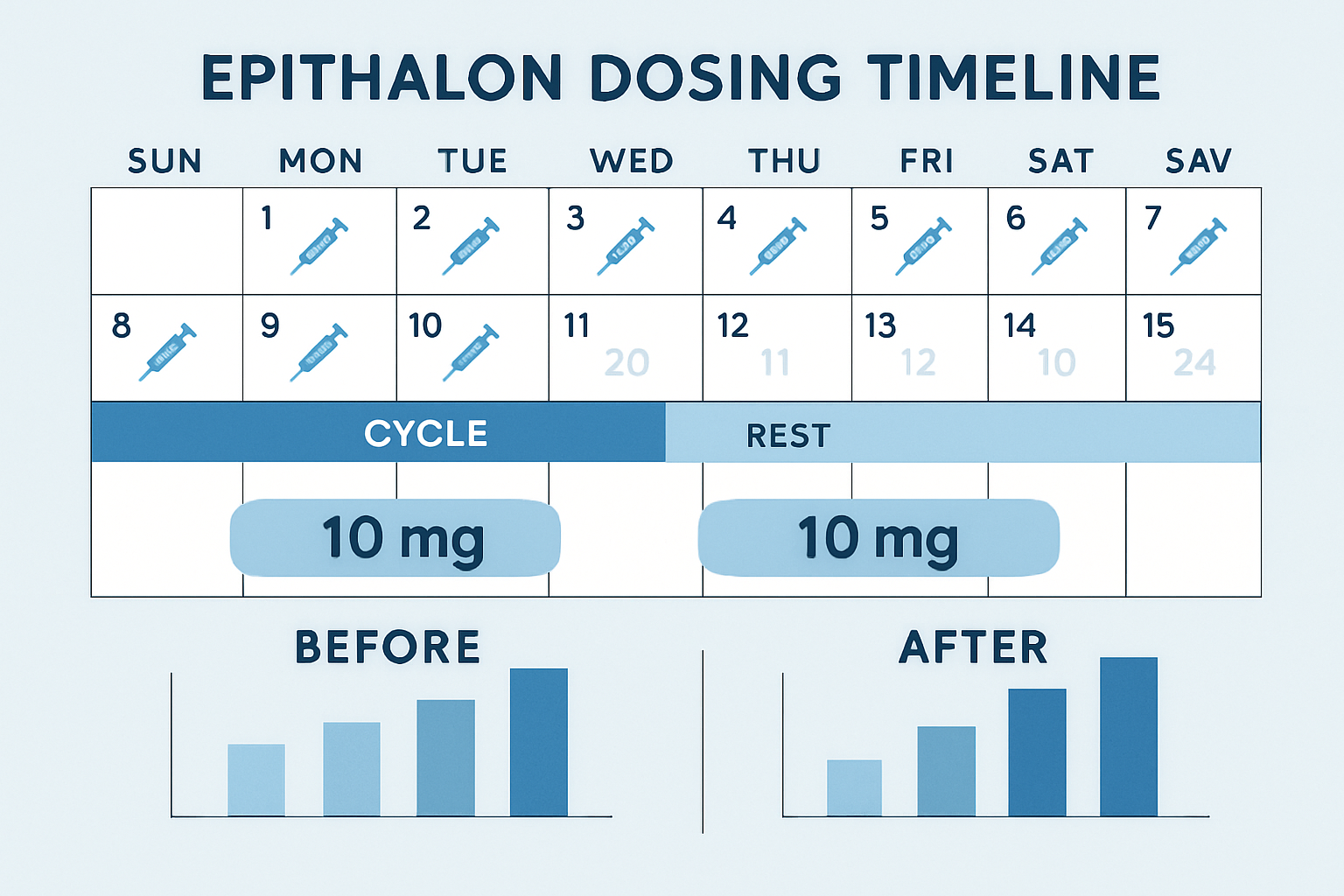
Standard Research Dose: 5-10mg per administration
Frequency: Once daily, preferably in the evening
Cycle Length: 10-20 consecutive days
Rest Period: 4-6 months between cycles
Administration Route: Subcutaneous injection
Detailed Dosing Schedules
Protocol A: Conservative Approach
- Daily Dose: 5mg
- Duration: 10 days
- Administration: Evening, 2-3 hours before bedtime
- Rest Period: 6 months
- Target Population: First-time researchers or those prioritizing minimal intervention
Protocol B: Standard Research Protocol
- Daily Dose: 10mg
- Duration: 10 days
- Administration: Evening, 2-3 hours before bedtime
- Rest Period: 4-6 months
- Target Population: Experienced researchers with established baseline data
Protocol C: Extended Research Cycle
- Daily Dose: 5mg
- Duration: 20 days
- Administration: Evening, 2-3 hours before bedtime
- Rest Period: 4-6 months
- Target Population: Long-term research studies with comprehensive monitoring
Factors Influencing Dosing Decisions
Several variables should be considered when determining optimal epithalon dosing:
Body Weight Considerations
While epithalon dosing isn't typically calculated per kilogram like some peptides, body weight may influence individual responses. Researchers often start with standard doses regardless of weight, then adjust based on observed outcomes.
Research Objectives
- Longevity studies: May favor longer, lower-dose protocols
- Sleep optimization research: Often utilizes standard 10-day cycles
- Cellular function studies: May require more frequent monitoring and dose adjustments
Individual Response Patterns
Some researchers report optimal results with modified protocols based on individual response patterns. This highlights the importance of careful documentation and gradual protocol optimization.
For those interested in exploring comprehensive peptide research approaches, understanding these variables helps create more effective study designs.
Advanced Epithalon Dosing Strategies and Timing Considerations
Circadian Rhythm Optimization
The timing of epithalon dosing plays a crucial role in research outcomes. Given the peptide's potential influence on pineal gland function and melatonin production, evening administration has become the standard approach in most research protocols.
Optimal Timing Windows:
- 2-3 hours before bedtime: Allows for proper absorption and potential circadian rhythm support
- Consistent daily timing: Maintains steady research conditions and supports natural rhythm entrainment
- Fasting state preferred: Many researchers administer epithalon on an empty stomach for optimal absorption
Combination Protocols and Synergistic Approaches
Advanced research often explores epithalon in combination with other peptides or compounds. Popular research combinations include:
Epithalon + Thymalin
This combination targets both cellular aging and immune system support. Typical protocols alternate between peptides or use them in sequential cycles.
Epithalon + NAD+ Precursors
Some research explores combining epithalon with NAD+ boosters like NMN or NR to potentially enhance cellular energy and repair mechanisms.
Epithalon + Pineal Support Compounds
Researchers may combine epithalon with melatonin or other pineal-supporting compounds, though careful timing is essential to avoid interference.
Dosing Adjustments for Specific Research Goals
Different research objectives may require modified epithalon dosing approaches:
Sleep Quality Research
- Focus: Evening administration timing
- Monitoring: Sleep quality metrics, sleep onset time, sleep duration
- Adjustments: May require timing modifications based on individual sleep patterns
Longevity Studies
- Focus: Long-term cellular health markers
- Monitoring: Biomarkers of aging, cellular function tests
- Adjustments: May favor longer cycles with extended rest periods
Stress Response Research
- Focus: HPA axis function and stress adaptation
- Monitoring: Cortisol patterns, stress response markers
- Adjustments: May require coordination with stress testing protocols
When planning advanced research protocols, sourcing high-quality peptides from reputable suppliers ensures consistent results and reliable data collection.
Safety Considerations and Monitoring Protocols
Pre-Research Health Assessment
Before beginning any epithalon dosing protocol, comprehensive baseline health assessment is essential:
Recommended Baseline Tests:
- Complete blood panel including liver and kidney function
- Thyroid function tests
- Sleep quality assessment
- Cardiovascular health markers
- Baseline biomarkers relevant to research objectives
Monitoring During Research Cycles
Ongoing monitoring helps ensure safety and optimize research outcomes:
Weekly Assessments:
- Sleep quality and duration
- Energy levels and mood
- Any adverse reactions or unusual symptoms
- Injection site reactions or complications
Mid-Cycle Evaluations:
- Blood pressure and heart rate
- Digestive function and appetite
- Cognitive function and mental clarity
- Physical performance markers
Common Side Effects and Management
Most research reports minimal side effects with proper epithalon dosing, but awareness of potential reactions is important:
Mild Reactions (typically resolve within 2-3 days):
- Slight drowsiness or changes in sleep patterns
- Minor injection site redness or irritation
- Temporary changes in appetite
- Mild headaches during initial administration
Monitoring Red Flags (require immediate protocol cessation):
- Severe allergic reactions
- Persistent injection site inflammation
- Significant changes in blood pressure
- Unusual cardiac symptoms
- Severe mood changes or cognitive disruption
Best Practices for Safe Administration
Injection Technique:
- Use proper sterile technique
- Rotate injection sites to prevent tissue damage
- Use appropriate needle size (typically 29-31 gauge, 0.5-1 inch)
- Allow peptide to reach room temperature before injection
Storage and Handling:
- Maintain cold chain during transport and storage
- Use proper reconstitution techniques with bacteriostatic water
- Follow manufacturer guidelines for storage duration
- Document lot numbers and expiration dates
For researchers seeking comprehensive safety protocols, proper handling and monitoring procedures are essential components of responsible research.
Optimizing Epithalon Research Outcomes
Documentation and Data Collection
Successful epithalon dosing research requires meticulous documentation:
Daily Logs Should Include:
- Exact dose and timing of administration
- Sleep quality and duration metrics
- Energy levels (1-10 scale)
- Mood and cognitive function assessments
- Any side effects or unusual observations
- Environmental factors that might influence results
Weekly Assessments:
- Comprehensive health markers
- Physical performance metrics
- Biomarker testing results
- Progress photos (if relevant to research objectives)
- Detailed symptom tracking
Factors That Enhance Research Quality
Lifestyle Consistency:
Maintaining consistent lifestyle factors during research cycles improves data quality and outcome reliability.
- Sleep schedule: Regular bedtime and wake times
- Exercise routine: Consistent physical activity levels
- Nutrition: Stable dietary patterns during research periods
- Stress management: Documented stress levels and management techniques
Environmental Controls:
- Temperature and humidity consistency
- Light exposure patterns
- Supplement and medication consistency
- Social and work stress documentation
Interpreting Research Results
Understanding how to evaluate epithalon dosing outcomes helps optimize future research cycles:
Short-term Indicators (within 10-20 days):
- Sleep quality improvements
- Energy level changes
- Mood and cognitive function shifts
- Physical recovery rate changes
Medium-term Markers (1-3 months post-cycle):
- Sustained sleep pattern improvements
- Biomarker changes
- Physical performance enhancements
- Overall well-being assessments
Long-term Outcomes (6+ months):
- Cumulative health improvements
- Biomarker trend analysis
- Quality of life assessments
- Comparative analysis between cycles
Researchers interested in building comprehensive wellness studies can benefit from structured outcome measurement approaches.
Sourcing and Quality Considerations for Epithalon Research
Identifying High-Quality Epithalon Sources
The success of any epithalon dosing protocol depends heavily on peptide quality and purity. Key factors to evaluate when sourcing epithalon include:
Purity Standards:
- Minimum 98% purity for research applications
- Third-party testing verification
- Certificate of Analysis (COA) availability
- Proper analytical testing methods (HPLC, MS)
Manufacturing Standards:
- GMP-compliant facilities
- Proper cold chain maintenance
- Sterile manufacturing processes
- Appropriate packaging and labeling
Documentation Requirements:
- Batch tracking and lot numbers
- Expiration date verification
- Storage requirement specifications
- Reconstitution instructions
Evaluating Supplier Credibility
Research Reputation Indicators:
- Established track record in peptide research
- Transparent testing procedures
- Responsive customer support
- Clear research-only disclaimers
- Professional website and documentation
Quality Assurance Markers:
- Regular third-party testing
- Consistent product availability
- Proper shipping and handling procedures
- Clear return and refund policies for quality issues
When selecting suppliers for epithalon peptide research, these quality indicators help ensure reliable research outcomes and safety.
Cost Considerations and Value Analysis
Pricing Factors:
- Peptide purity levels
- Vial size and concentration
- Shipping and handling requirements
- Bulk purchase discounts
- Testing and certification costs
Value Optimization Strategies:
- Calculate cost per effective dose
- Consider shipping frequency and costs
- Evaluate bulk purchase benefits
- Factor in testing and quality assurance value
Troubleshooting Common Epithalon Dosing Challenges
Addressing Suboptimal Results
When epithalon dosing research doesn't yield expected outcomes, systematic troubleshooting can help identify optimization opportunities:
Protocol Evaluation:
- Verify dosing accuracy and consistency
- Review timing and administration technique
- Assess lifestyle factor consistency
- Check peptide quality and storage conditions
Individual Factor Assessment:
- Consider genetic variations in response
- Evaluate baseline health status
- Review concurrent medications or supplements
- Assess stress levels and sleep quality
Managing Side Effects
Minor Side Effect Management:
- Adjust administration timing
- Modify injection sites and technique
- Consider dose reduction
- Implement supportive measures (hydration, rest)
Protocol Modification Strategies:
- Temporary dose reduction
- Extended rest periods between cycles
- Alternative administration timing
- Combination with supportive compounds
Optimizing Long-term Research Programs
Cycle Planning:
- Establish consistent cycle timing
- Plan rest periods for optimal recovery
- Coordinate with other research activities
- Document long-term trend patterns
Progressive Protocol Development:
- Start with conservative approaches
- Gradually optimize based on individual response
- Incorporate new research findings
- Maintain detailed historical records
For researchers developing comprehensive peptide research programs, systematic approach optimization leads to more valuable research outcomes.
Future Directions in Epithalon Research and Dosing
Emerging Research Trends
The field of epithalon dosing continues to evolve with new research findings and technological advances:
Personalized Dosing Approaches:
- Genetic testing to predict individual response patterns
- Biomarker-guided dose optimization
- AI-assisted protocol development
- Real-time monitoring and adjustment systems
Advanced Delivery Methods:
- Nasal spray formulations for improved convenience
- Sustained-release preparations
- Combination peptide formulations
- Enhanced absorption technologies
Integration with Modern Health Monitoring
Wearable Technology Integration:
- Continuous sleep quality monitoring
- Heart rate variability tracking
- Activity level and recovery assessment
- Stress response measurement
Biomarker Advancement:
- More accessible telomere length testing
- Advanced aging biomarker panels
- Real-time cellular health assessment
- Improved predictive health modeling
Research Community Development
Collaborative Research Opportunities:
- Citizen science initiatives
- Academic-industry partnerships
- International research coordination
- Open-source data sharing platforms
Educational Resource Expansion:
- Advanced training programs for researchers
- Standardized protocol development
- Safety guideline evolution
- Best practice documentation
The future of epithalon research promises exciting developments in personalized peptide approaches and precision dosing strategies.
Conclusion: Mastering Epithalon Dosing for Optimal Research Outcomes
Understanding proper epithalon dosing represents a crucial foundation for anyone serious about peptide research in 2025. The evidence clearly demonstrates that success depends not just on the peptide itself, but on the careful attention to dosing protocols, timing, safety monitoring, and quality sourcing.
The standard protocols outlined in this guide—ranging from conservative 5mg daily doses to extended 20-day cycles—provide researchers with evidence-based starting points that can be adapted based on individual response patterns and research objectives. The key lies in maintaining consistency, documenting outcomes meticulously, and prioritizing safety throughout the research process.
Essential Action Steps for Researchers:
✅ Start with established protocols: Begin with proven 10mg daily doses for 10-day cycles before considering modifications
✅ Prioritize quality sourcing: Invest in high-purity epithalon from reputable suppliers with proper testing documentation
✅ Implement comprehensive monitoring: Track both positive outcomes and potential side effects with detailed daily logs
✅ Plan for long-term success: Design research programs with appropriate rest periods and progressive protocol optimization
✅ Stay informed: Continue learning about emerging research and best practices in the evolving field of peptide science
The future of epithalon research looks increasingly promising, with advances in personalized dosing, improved delivery methods, and enhanced monitoring technologies. By mastering the fundamentals of proper dosing today, researchers position themselves to take advantage of these exciting developments while maintaining the highest standards of safety and scientific rigor.
Remember that epithalon research is a marathon, not a sprint. The most valuable insights come from patient, methodical approaches that prioritize consistency and safety over rapid results. Whether you're beginning your first research cycle or optimizing an established program, the principles outlined in this guide will help you navigate the complexities of epithalon dosing with confidence and precision.
SEO Meta Title: Epithalon Dosing Guide 2025: Protocols, Safety & Research Tips
Meta Description: Complete epithalon dosing guide with proven protocols, safety tips, and research insights. Learn optimal doses, timing, and cycles for effective peptide research in 2025.