

Epithalon Peptide Review: Comprehensive Analysis for Biohackers in 2026 🧬
The quest for cellular longevity has led researchers to explore fascinating compounds that may hold the key to aging gracefully at the molecular level. Among these emerging bioregulators, epithalon peptide stands out as one of the most intriguing synthetic tetrapeptides currently under investigation. This comprehensive epithalon peptide review examines the latest research findings, mechanisms of action, and potential applications that have captured the attention of the biohacking community in 2026.
Key Takeaways
• Epithalon is a synthetic tetrapeptide (AEDG sequence) that may stimulate telomerase activity and promote telomere elongation in somatic cells
• Research indicates potential benefits for cellular aging, chromatin remodeling, and neurogenic differentiation in laboratory studies
• Multiple mechanisms of action include histone binding, melatonin modulation, and antioxidant properties
• Current evidence remains preliminary with most studies conducted in cellular and animal models
• Quality sourcing and proper research protocols are essential for anyone considering epithalon for research purposes
What is Epithalon? Understanding the Tetrapeptide Foundation
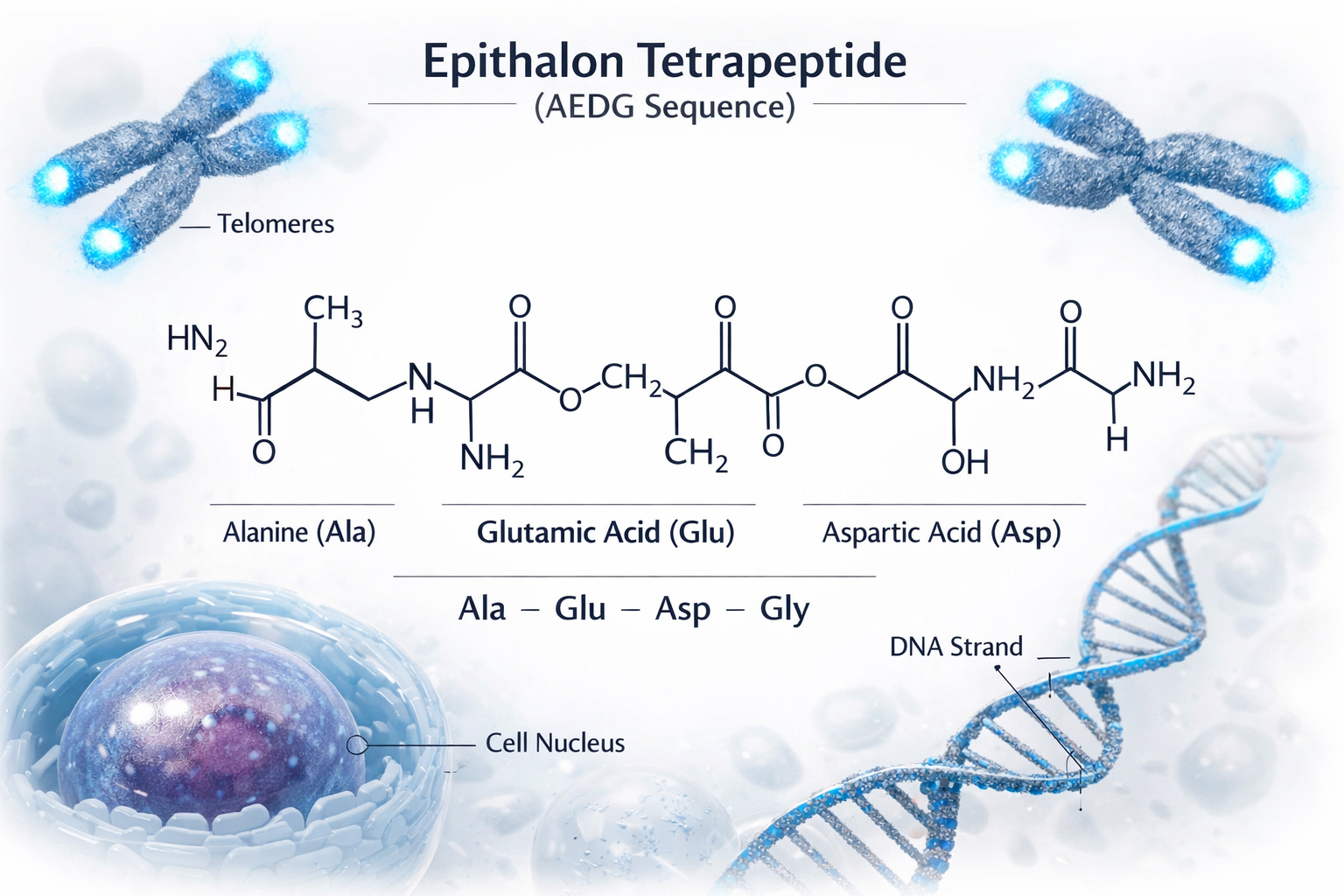
Epithalon represents a fascinating class of bioregulator peptides that has garnered significant attention in longevity research circles. This synthetic tetrapeptide consists of four amino acids arranged in the sequence Alanine-Glutamic acid-Aspartic acid-Glycine (AEDG), originally derived from natural pineal gland extracts [1].
Unlike traditional hormonal interventions, epithalon functions as a non-hormonal bioregulator, meaning it doesn't directly stimulate hormone production but rather modulates cellular processes at the genetic and epigenetic levels [2]. This unique mechanism has positioned it as a compound of interest for researchers exploring cellular aging and longevity pathways.
The peptide's discovery traces back to research into pineal gland function and circadian rhythm regulation. Scientists observed that certain peptide fractions from pineal extracts demonstrated remarkable effects on cellular aging markers, leading to the isolation and synthesis of the epithalon sequence [1].
For those interested in research-grade peptides, epithalon peptides for sale are available through specialized suppliers who maintain strict quality control standards. The importance of sourcing from reputable suppliers cannot be overstated, as peptide purity and stability directly impact research outcomes.
Epithalon Peptide Review: Mechanisms of Action and Cellular Targets
This epithalon peptide review reveals multiple pathways through which this tetrapeptide may exert its biological effects. Understanding these mechanisms provides insight into why researchers continue to investigate its potential applications.
Telomere Biology and Telomerase Activation
The most well-documented mechanism involves epithalon's interaction with telomerase activity. Research indicates that this peptide may stimulate telomerase enzyme function, potentially leading to telomere elongation in somatic cells [1]. Telomeres, the protective DNA-protein structures at chromosome ends, naturally shorten with age and cellular division.
Studies have shown that epithalon treatment may:
- Increase telomerase activity in aged lymphocytes
- Promote telomere elongation in various cell types
- Support cellular replication capacity beyond normal limits
Chromatin Remodeling and Epigenetic Effects
Beyond telomere biology, epithalon demonstrates intriguing effects on chromatin structure and gene expression. Research has identified its ability to decondense heterochromatin structures near centromeres in aged lymphocytes, effectively "opening up" previously silenced genetic regions [1].
This chromatin remodeling activity suggests that epithalon may influence:
- Gene accessibility for transcription factors
- Epigenetic modifications that accumulate with aging
- Cellular plasticity and differentiation potential
Histone Binding and Nuclear Interactions
Molecular modeling studies reveal that epithalon preferentially binds to specific histone proteins, particularly linker histones H1/6 and H1/3 that play crucial roles in DNA packaging [1]. This binding affinity may explain how such a small peptide can exert broad cellular effects.
Those researching peptide combinations often explore most popular products for sale to understand synergistic approaches to cellular optimization.
Research Findings: Epithalon Peptide Review of Current Evidence
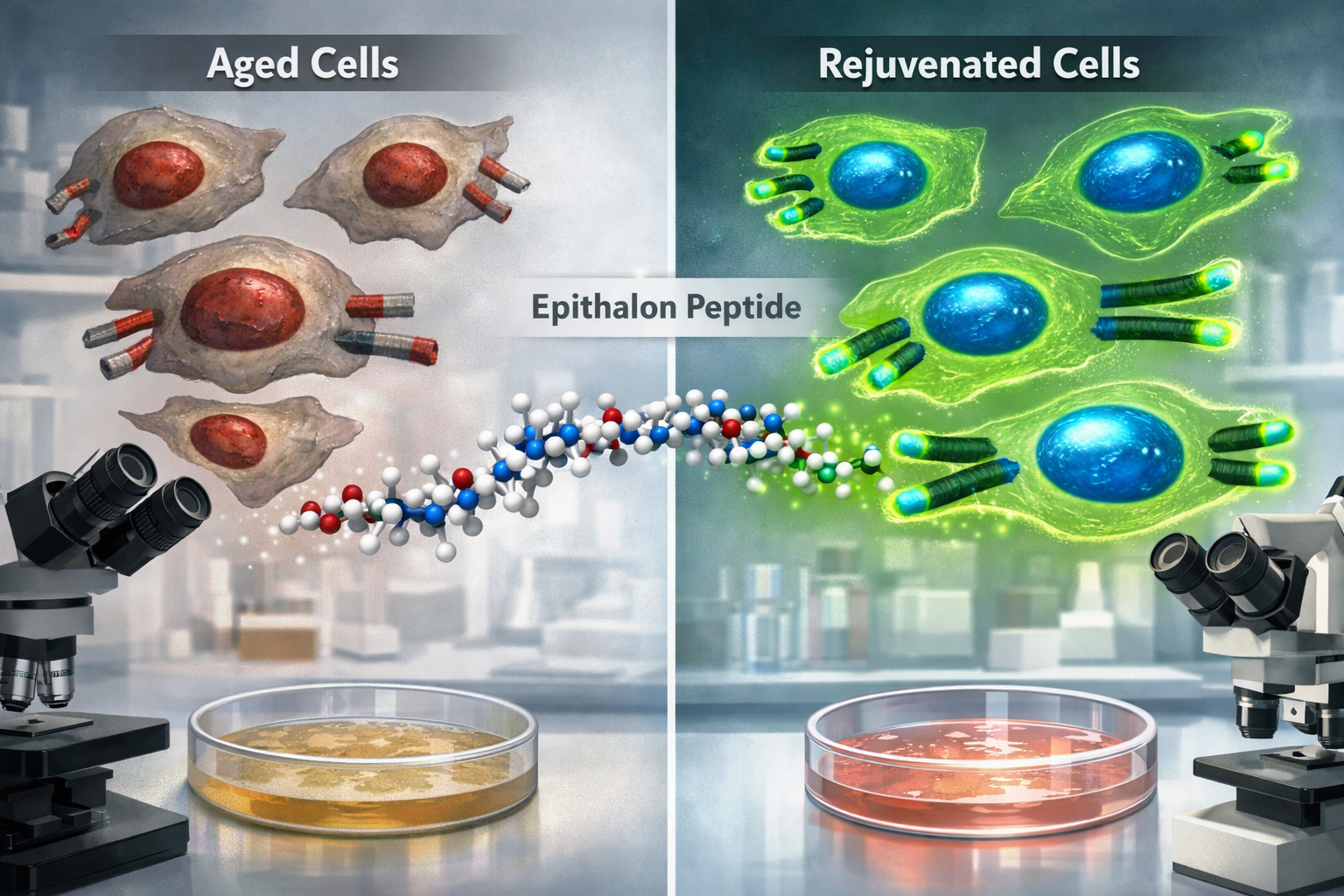
The growing body of research surrounding epithalon encompasses multiple biological systems and potential applications. This section of our epithalon peptide review examines the most compelling findings from recent studies.
Neurogenic Differentiation and Stem Cell Research
One particularly fascinating area of investigation involves epithalon's effects on stem cell differentiation. In studies using gingival mesenchymal stem cells, researchers observed significant upregulation of neurogenic markers following epithalon treatment [1].
Specific findings include:
- 1.6- to 1.8-fold increase in neurogenic markers (Nestin, GAP43, β-Tubulin III)
- Enhanced cellular plasticity toward neural lineages
- Improved differentiation efficiency compared to control groups
These results suggest potential applications in regenerative medicine and neurological research, though translation to human applications requires extensive additional study.
Antioxidant Properties and Cellular Protection
Epithalon demonstrates notable antioxidant capabilities that may contribute to its anti-aging effects. Research indicates the peptide can reduce oxidative signaling while restoring expression of key antioxidant genes [1].
Key antioxidant mechanisms include:
- Upregulation of SOD2 (superoxide dismutase 2)
- Enhanced CAT expression (catalase)
- Increased HMOX1 activity (heme oxygenase-1)
This antioxidant profile complements other longevity-focused compounds. Researchers often compare epithalon with other mitochondrial-targeting peptides like those found in SS-31 peptide research.
Pineal Gland Function and Melatonin Modulation
Given its origins in pineal gland research, epithalon shows promise for supporting circadian rhythm regulation. Studies suggest the peptide may enhance pineal gland function and support natural melatonin synthesis, though results remain inconsistent across different research models [1].
Potential circadian benefits include:
- Improved melatonin production in aged systems
- Enhanced sleep-wake cycle regulation
- Better adaptation to circadian disruption
Retinal and Ocular Research Applications
Recent investigations have explored epithalon's potential in ocular health research. Studies using diabetic-like retinal models demonstrated promising effects on wound healing, epithelial-mesenchymal transition (EMT) regulation, and retinal plasticity [1].
Observed effects include:
- Accelerated retinal wound healing
- Reduced pathological EMT signaling
- Enhanced retinal cell survival under stress conditions
For researchers interested in comprehensive longevity approaches, exploring longevity peptide research provides valuable context for understanding how epithalon fits within broader anti-aging strategies.
Safety Profile and Research Considerations in Epithalon Peptide Review
Understanding the safety profile and research considerations forms a crucial component of any comprehensive epithalon peptide review. While preliminary research appears promising, several important factors require careful consideration.
Current Safety Data and Limitations
The existing safety data for epithalon primarily comes from cellular and animal studies, with limited human clinical trial data available. This represents a significant limitation in our understanding of long-term safety profiles [4].
Current safety considerations include:
- Limited long-term toxicity data in human subjects
- Potential interactions with other medications or supplements
- Individual variation in response and metabolism
- Dosing protocols remain largely experimental
Research Protocol Considerations
For researchers working with epithalon, several protocol considerations can impact study outcomes and safety:
Storage and Handling:
- Requires proper refrigeration (2-8°C)
- Sensitive to light and heat exposure
- Should be reconstituted with appropriate diluents
- Limited stability once reconstituted
Dosing Considerations:
- Most research uses doses ranging from 0.1-10mg
- Frequency varies from daily to several times per week
- Cycle lengths typically range from 10-20 days
- Rest periods between cycles are commonly employed
Quality Control and Sourcing
The importance of high-quality peptide sourcing cannot be overstated in epithalon research. Peptide purity, stability, and accurate dosing depend heavily on manufacturing standards and quality control processes.
Key quality factors include:
- HPLC purity analysis (>95% purity recommended)
- Mass spectrometry verification of molecular weight
- Sterility testing for research applications
- Certificate of analysis from reputable laboratories
Researchers seeking reliable sources often turn to established suppliers who maintain quality testing protocols and provide comprehensive documentation.
Comparative Research Context
When evaluating epithalon, researchers often compare it with other longevity-focused compounds. The article epithalon vs NAD evidence provides valuable insights into how different anti-aging interventions compare in terms of mechanisms and research support.
Additionally, many researchers explore combination approaches, investigating how epithalon might work synergistically with other peptides like MOTS-C or GHK-Cu to enhance overall cellular optimization.
Future Research Directions and Applications
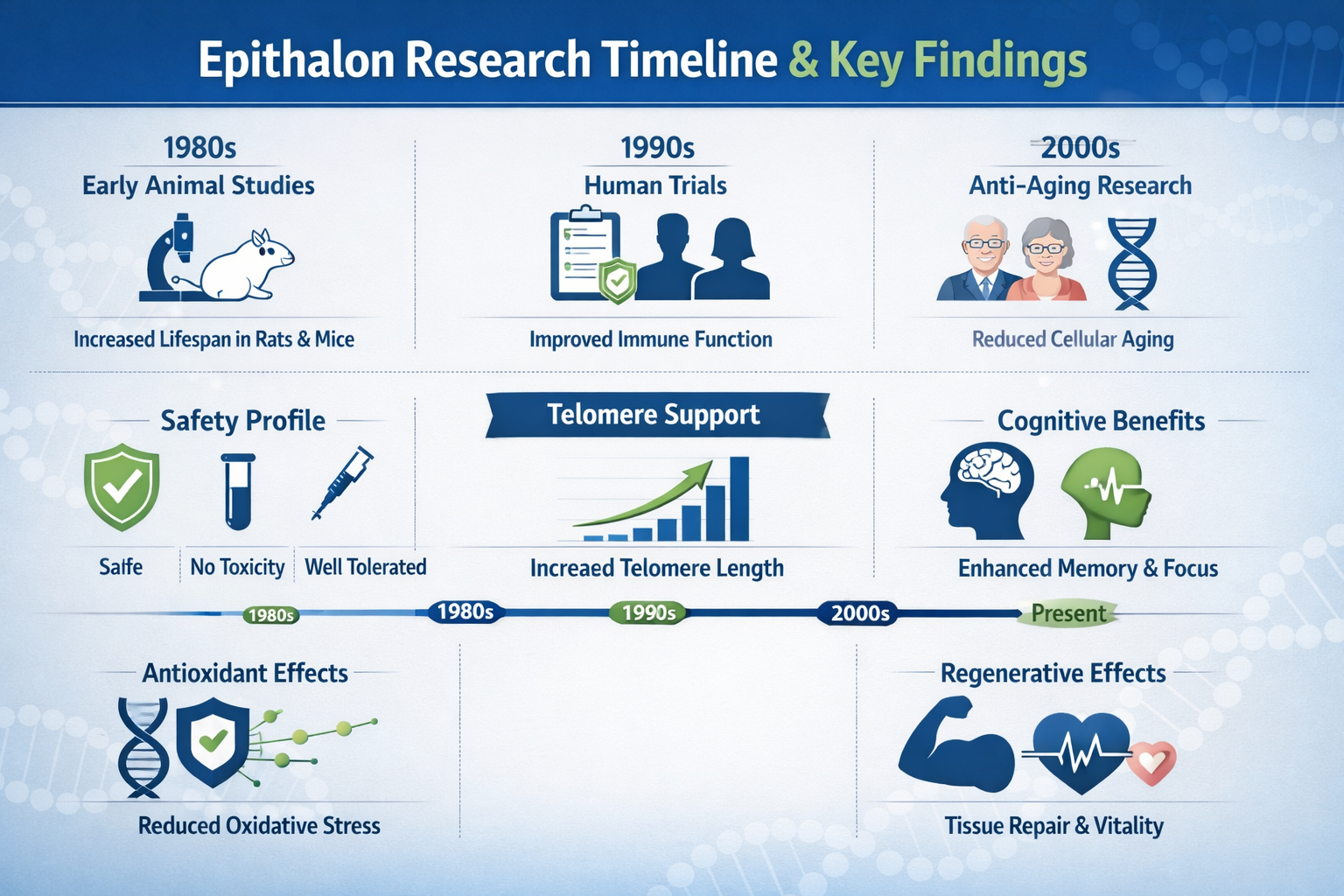
The future of epithalon research appears promising, with several emerging areas of investigation that may expand our understanding of this tetrapeptide's potential applications.
Clinical Translation Challenges
Moving epithalon research from laboratory studies to human clinical applications presents several challenges that researchers must address:
Regulatory Considerations:
- Need for comprehensive toxicology studies
- Development of standardized dosing protocols
- Establishment of biomarkers for efficacy assessment
- Long-term safety monitoring requirements
Research Priorities:
- Large-scale human clinical trials
- Dose-response relationship studies
- Bioavailability and pharmacokinetic analysis
- Combination therapy investigations
Emerging Research Areas
Several promising research directions are currently being explored by investigators worldwide:
Cardiovascular Health:
Research is examining epithalon's potential effects on cardiovascular aging markers, including endothelial function and arterial elasticity.
Cognitive Function:
Given its neurogenic differentiation effects, studies are investigating potential applications in cognitive health and neuroprotection.
Metabolic Health:
Preliminary research suggests possible benefits for metabolic function and insulin sensitivity, though more investigation is needed.
Skin and Dermatological Applications:
The peptide's effects on cellular regeneration have sparked interest in dermatological research applications [3].
For researchers interested in exploring multiple peptide approaches, reviewing most popular products for sale can provide insights into current research trends and combination strategies.
Conclusion: The Current State of Epithalon Peptide Research
This comprehensive epithalon peptide review reveals a compound with fascinating potential that continues to intrigue researchers in the longevity and biohacking communities. The tetrapeptide's multiple mechanisms of action—from telomerase activation to chromatin remodeling—suggest broad cellular effects that may contribute to healthy aging processes.
Key findings from current research include:
- Demonstrated effects on telomere biology and cellular aging markers
- Promising results in neurogenic differentiation and stem cell research
- Antioxidant properties that may support cellular protection
- Potential applications in ocular health and circadian rhythm regulation
However, it's crucial to recognize that most current evidence comes from cellular and animal studies, with limited human clinical data available. This represents both an opportunity for future research and a caution for those considering epithalon applications.
Actionable Next Steps for Researchers
- Stay Updated on Clinical Trials: Monitor ongoing human studies and clinical trial registrations for epithalon research
- Focus on Quality Sources: When conducting research, prioritize suppliers with comprehensive quality testing protocols
- Consider Combination Approaches: Explore how epithalon might work synergistically with other longevity compounds
- Document Research Protocols: Maintain detailed records of dosing, timing, and observed effects
- Engage with Research Communities: Connect with other researchers investigating peptide-based longevity interventions
Final Thoughts
The field of peptide research continues to evolve rapidly, with epithalon representing just one piece of a larger puzzle in understanding cellular aging and longevity. While the current research is promising, the transition from laboratory findings to practical applications requires continued rigorous investigation and proper safety protocols.
For those interested in exploring epithalon research, accessing high-quality epithalon peptides for sale from reputable suppliers represents the first step in conducting meaningful research. As we advance into 2026 and beyond, the continued investigation of compounds like epithalon may provide valuable insights into the fundamental processes of aging and cellular health.
The journey toward understanding longevity at the molecular level continues, and epithalon peptide research represents an exciting frontier in this ongoing scientific exploration.
References
[1] Epithalons Intriguing Potential A Tetrapeptide Poised To Shape Research Frontiers – https://caribbeannewsglobal.com/epithalons-intriguing-potential-a-tetrapeptide-poised-to-shape-research-frontiers/
[2] Epithalon Peptide Mechanism Benefits Research – https://polarispeptides.com/epithalon-peptide-mechanism-benefits-research/
[3] Epithalon Peptide Cellular Longevity And Dermatological Research – https://serbiantimes.info/en/epithalon-peptide-cellular-longevity-and-dermatological-research/
[4] Epitalon – https://www.innerbody.com/epitalon
SEO Meta Title: Epithalon Peptide Review: Science-Based Analysis 2026
SEO Meta Description: Comprehensive epithalon peptide review covering mechanisms, research findings, safety profile, and applications for biohackers in 2026.