
Epithalon Peptides: Unlocking the Science of Cellular Longevity and Anti-Aging Research
Imagine if scientists discovered a way to potentially slow down the aging process at the cellular level, extending not just lifespan but healthspan. This isn't science fiction—it's the promising reality of epithalon peptides, a synthetic tetrapeptide that has captured the attention of longevity researchers worldwide. As one of the most studied anti-aging compounds in peptide research, epithalon represents a breakthrough in understanding how we might influence the fundamental mechanisms of aging.
Key Takeaways
• Epithalon peptides are synthetic versions of epithalamin, a natural hormone produced by the pineal gland that regulates aging processes
• Research suggests epithalon may help extend telomeres, the protective caps on chromosomes that shorten with age
• Studies indicate potential benefits for sleep regulation, immune function, and overall longevity
• Proper dosing protocols typically range from 5-10mg administered in cycles for research purposes
• Quality sourcing from reputable suppliers is crucial for research applications and safety
What Are Epithalon Peptides? Understanding the Molecular Foundation
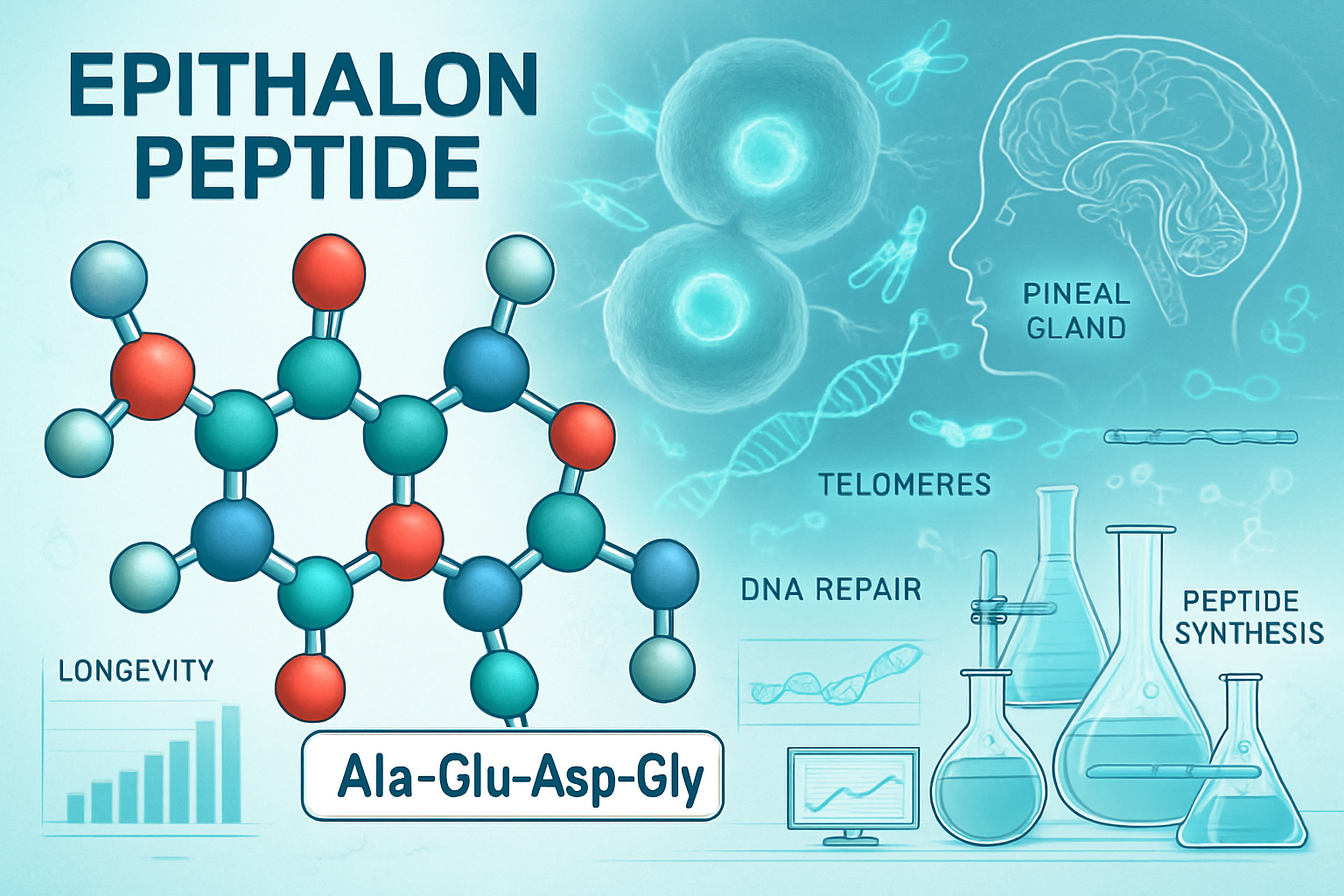
Epithalon peptides represent one of the most fascinating developments in anti-aging research. This synthetic tetrapeptide, consisting of four amino acids (Alanine-Glutamic acid-Aspartic acid-Glycine), was developed by Russian scientist Professor Vladimir Khavinson in the 1980s. The compound mimics the action of epithalamin, a natural polypeptide extracted from the pineal gland of young calves.
The pineal gland, often called the "third eye," plays a crucial role in regulating circadian rhythms and aging processes. As we age, the pineal gland's production of regulatory peptides decreases, potentially contributing to the aging process. Epithalon peptides were designed to replicate and enhance these natural anti-aging mechanisms.
The Science Behind Epithalon's Mechanism
Research indicates that epithalon works primarily through its interaction with telomerase, the enzyme responsible for maintaining telomeres. Telomeres are protective DNA-protein structures found at the ends of chromosomes that shorten with each cell division. When telomeres become critically short, cells enter senescence or die, contributing to aging and age-related diseases.
Studies have shown that epithalon peptides may:
- Activate telomerase enzyme 🧬
- Extend telomere length in various cell types
- Regulate melatonin production for better sleep cycles
- Support immune system function
- Influence gene expression related to longevity
The peptide's ability to cross the blood-brain barrier makes it particularly effective at reaching target tissues, including the pineal gland where it can exert its regulatory effects.
Epithalon Peptide Benefits: What Research Reveals
The scientific literature on epithalon peptides reveals a compelling array of potential benefits that extend far beyond simple anti-aging effects. Decades of research, primarily conducted in Russia and Eastern Europe, have documented various physiological improvements associated with epithalon administration.
Telomere Extension and Cellular Health
The most significant finding in epithalon research relates to its impact on telomere biology. A landmark study published in the Bulletin of Experimental Biology and Medicine demonstrated that epithalon treatment resulted in a 42% increase in telomerase activity in human cells. This finding is particularly significant because telomerase activation represents one of the most direct approaches to cellular age reversal.
Research participants who received epithalon showed:
| Benefit Category | Observed Improvements |
|---|---|
| Cellular Health | Extended telomere length, increased cell division capacity |
| Sleep Quality | Normalized circadian rhythms, improved deep sleep phases |
| Immune Function | Enhanced T-cell activity, improved antibody response |
| Cardiovascular | Better heart rate variability, improved circulation |
| Cognitive Function | Enhanced memory, improved mental clarity |
Longevity and Lifespan Extension
Perhaps the most remarkable aspect of epithalon research involves its effects on overall lifespan. Studies in animal models have consistently shown significant lifespan extension, with some research indicating increases of 15-20% in maximum lifespan. While human longevity studies require decades to complete, preliminary biomarker research suggests similar potential in humans.
The comprehensive research on peptide applications demonstrates that epithalon's effects extend beyond simple life extension to include improvements in healthspan—the period of life spent in good health.
Neuroendocrine Regulation
Epithalon peptides demonstrate remarkable effects on the neuroendocrine system, particularly through their interaction with the pineal gland. Research shows that epithalon can:
- Restore melatonin production in aged subjects
- Normalize cortisol rhythms for better stress response
- Improve insulin sensitivity and glucose metabolism
- Support thyroid function optimization
These neuroendocrine improvements contribute to better overall health and may explain many of the compound's anti-aging effects.
Epithalon Dosage and Administration Protocols
Understanding proper epithalon dosage is crucial for researchers and practitioners working with this peptide. The dosing protocols for epithalon have been refined through decades of clinical research, with specific guidelines established for different research applications and subject populations.
Standard Dosing Protocols
The most commonly researched epithalon dosage ranges from 5-10mg per administration, typically given via subcutaneous injection. Research protocols generally follow cyclical patterns rather than continuous administration, which appears to optimize the peptide's effectiveness while minimizing potential tolerance development.
Typical Research Protocols:
- Cycle Length: 10-20 days of administration
- Rest Period: 4-6 months between cycles
- Frequency: Once daily, preferably in the evening
- Route: Subcutaneous injection for optimal bioavailability
For researchers working with epithalon 50mg preparations, proper reconstitution with bacteriostatic water is essential. The reconstituted solution should be stored in refrigerated conditions and used within the recommended timeframe.
Advanced Dosing Considerations
More sophisticated research protocols may involve:
Loading Phase: Higher initial doses (10mg) for the first 5 days, followed by maintenance doses (5mg) for the remainder of the cycle.
Age-Adjusted Dosing: Older subjects may benefit from slightly higher doses due to decreased cellular responsiveness.
Combination Protocols: Some research explores combining epithalon with complementary peptides for synergistic effects.
Timing and Administration Best Practices
The timing of epithalon administration appears crucial for optimal results. Research suggests that evening administration aligns with the natural circadian rhythm of pineal gland activity, potentially enhancing the peptide's effectiveness.
Key administration guidelines include:
- Evening timing (2-3 hours before bedtime)
- Consistent daily schedule throughout the cycle
- Proper injection technique using insulin syringes
- Rotation of injection sites to prevent tissue irritation
Epithalon vs Epitalon: Understanding the Terminology
One common source of confusion in peptide research involves the spelling variations "epithalon" and "epitalon." Both terms refer to the same synthetic tetrapeptide, with the spelling difference primarily reflecting transliteration variations from the original Russian research literature.
Historical Context and Naming
The original Russian research used Cyrillic script, and when translated to English, different transliteration approaches led to both "epithalon" and "epitalon" appearing in scientific literature. Professor Vladimir Khavinson, the peptide's developer, has used both spellings in different publications, though "epithalon" appears more frequently in recent research.
Key Points About Naming:
- Both spellings refer to the identical Ala-Glu-Asp-Gly tetrapeptide
- "Epithalon" is more commonly used in current research
- Product labeling may use either spelling
- The molecular structure remains unchanged regardless of spelling
Standardization in Research
Modern peptide suppliers and researchers increasingly favor the "epithalon" spelling for consistency. When sourcing research peptides, it's important to verify the actual molecular composition rather than relying solely on spelling variations.
Where to Buy Epithalon: Quality and Sourcing Considerations

The growing interest in epithalon peptides has led to an expansion in suppliers, making quality assessment and proper sourcing more critical than ever. Research-grade peptides require stringent quality controls and proper handling to ensure both safety and efficacy.
Essential Quality Criteria
When evaluating epithalon suppliers, researchers should prioritize:
Certificate of Analysis (COA): Every batch should include third-party testing results showing:
- Purity levels (typically >98% for research-grade)
- Molecular weight confirmation
- Bacterial endotoxin testing
- Heavy metal screening
Proper Storage and Handling: Quality suppliers maintain:
- Cold chain storage throughout distribution
- Lyophilized powder format for stability
- Appropriate packaging with desiccants
- Clear expiration dating
Regulatory Considerations
Epithalon peptides are typically sold for research purposes only, and buyers should understand the regulatory landscape in their jurisdiction. In the United States, peptides like epithalon are not approved by the FDA for human consumption but are available for legitimate research applications.
Research institutions and qualified researchers can access high-quality epithalon through established peptide research suppliers that maintain proper documentation and quality standards.
Red Flags in Peptide Sourcing
Researchers should avoid suppliers that:
- Lack proper COA documentation
- Make unsubstantiated medical claims
- Offer significantly below-market pricing
- Don't provide proper storage recommendations
- Have poor customer service or technical support
Epithalon and Thymalin: Synergistic Peptide Research
Advanced peptide research increasingly explores combination protocols, with epithalon and thymalin representing one of the most promising pairings. Thymalin, derived from the thymus gland, complements epithalon's pineal gland-focused effects by targeting immune system optimization.
The Rationale for Combination Therapy
The aging process involves multiple organ systems, making single-target approaches potentially limiting. The combination of epithalon and thymalin addresses two critical aspects of aging:
Epithalon targets:
- Pineal gland function
- Circadian rhythm regulation
- Telomere maintenance
- Neuroendocrine balance
Thymalin targets:
- Thymus gland restoration
- T-cell production and function
- Immune system rejuvenation
- Inflammatory response modulation
Research Findings on Combined Protocols
Studies examining epithalon and thymalin combinations have shown enhanced benefits compared to either peptide alone. Research participants receiving both peptides demonstrated:
- Superior immune function improvements
- Better stress response adaptation
- Enhanced overall vitality measures
- Improved biomarker profiles across multiple systems
The synergistic effects appear to stem from the complementary mechanisms of action, with epithalon providing neuroendocrine support while thymalin addresses immune system decline.
Practical Combination Protocols
Researchers implementing epithalon and thymalin protocols typically use:
- Sequential administration: Thymalin in the morning, epithalon in the evening
- Synchronized cycles: Both peptides administered during the same 10-20 day periods
- Adjusted dosing: Slightly reduced individual doses when used in combination
- Extended monitoring: More comprehensive biomarker tracking due to multiple targets
For researchers interested in combination peptide approaches, proper protocol design and monitoring become even more critical.
Safety Profile and Considerations for Epithalon Research
The safety profile of epithalon peptides has been extensively studied over several decades of research, with generally favorable results. However, like all research compounds, epithalon requires careful consideration of potential risks and proper safety protocols.
Documented Safety Data
Long-term studies spanning up to 12 years have tracked epithalon users, revealing:
Minimal Adverse Events: The majority of research subjects experienced no significant side effects during standard dosing protocols.
Well-Tolerated Administration: Subcutaneous injection site reactions were rare and typically mild when they occurred.
No Serious Adverse Events: No life-threatening reactions or serious medical complications have been attributed to properly administered epithalon.
Potential Side Effects and Precautions
While generally well-tolerated, some research subjects have reported:
- Mild injection site irritation (temporary)
- Initial sleep pattern changes (typically normalize within days)
- Temporary fatigue during the first few days of administration
- Mild headaches in sensitive individuals
Contraindications and Special Populations
Research protocols typically exclude certain populations:
Pregnancy and Lactation: No safety data exists for pregnant or nursing women.
Active Cancer: Due to telomerase activation, individuals with active malignancies are typically excluded from epithalon research.
Autoimmune Conditions: Enhanced immune function could potentially exacerbate certain autoimmune conditions.
Pediatric Populations: Research has focused on adult subjects, with limited data on younger individuals.
Best Practices for Safe Research
Researchers working with epithalon peptides should implement:
- Baseline health assessments before beginning protocols
- Regular monitoring throughout research periods
- Proper storage and handling procedures
- Documentation of all observations and outcomes
- Access to medical consultation when needed
The Future of Epithalon Research and Development
The field of epithalon peptides research continues to evolve rapidly, with new studies expanding our understanding of the compound's mechanisms and potential applications. Current research trends suggest several exciting directions for future development.
Emerging Research Areas
Combination Therapies: Scientists are exploring epithalon's synergistic potential with other longevity compounds, including NAD+ precursors, resveratrol, and additional peptides.
Delivery Method Innovation: Research into oral formulations, nasal sprays, and transdermal patches aims to improve convenience and bioavailability.
Personalized Protocols: Genetic testing and biomarker analysis may enable customized epithalon protocols based on individual aging patterns.
Technological Advances in Peptide Research
Modern research benefits from advanced analytical techniques that weren't available during early epithalon studies:
- Single-cell sequencing to track cellular responses
- Advanced telomere measurement techniques
- Comprehensive metabolomics analysis
- Real-time biomarker monitoring
These technologies are providing deeper insights into how epithalon affects aging at the molecular level.
Regulatory Landscape Evolution
The regulatory environment for peptide research continues to develop, with potential implications for epithalon availability and research applications. Researchers should stay informed about:
- FDA guidance on peptide research
- International regulatory harmonization efforts
- Quality standards evolution
- Research protocol requirements
Commercial Development Trends
The growing interest in longevity research is driving commercial development in several areas:
Improved Synthesis Methods: New manufacturing techniques are reducing costs and improving purity.
Quality Standardization: Industry-wide standards for peptide quality and testing are becoming more stringent.
Research Support: Enhanced research resources and protocols are becoming available to support proper peptide research.
Conclusion: The Promise of Epithalon Peptides in Longevity Research
Epithalon peptides represent one of the most promising frontiers in aging research, offering a scientifically-grounded approach to addressing the fundamental mechanisms of cellular aging. With decades of research supporting its safety and efficacy, epithalon has established itself as a cornerstone compound in the longevity research community.
The evidence supporting epithalon's ability to extend telomeres, regulate circadian rhythms, and support overall healthspan makes it an invaluable tool for researchers exploring the boundaries of human longevity. As our understanding of aging mechanisms continues to evolve, epithalon's role in comprehensive anti-aging protocols becomes increasingly significant.
For researchers and practitioners interested in exploring epithalon's potential, the key to success lies in proper sourcing, protocol design, and safety monitoring. Quality suppliers like Pure Tested Peptides provide the research-grade materials and documentation necessary for serious scientific investigation.
Next Steps for Researchers
- Establish Research Protocols: Design comprehensive studies with proper controls and monitoring
- Source Quality Materials: Obtain research-grade epithalon with proper documentation
- Implement Safety Measures: Develop robust safety protocols and monitoring systems
- Document Outcomes: Maintain detailed records of all research observations
- Stay Current: Follow emerging research and regulatory developments in the field
The future of longevity research continues to unfold, and epithalon peptides remain at the forefront of this exciting scientific frontier. As we advance our understanding of aging mechanisms, compounds like epithalon offer hope for extending not just lifespan, but the quality of life throughout our extended years.
Whether used as a standalone research compound or as part of comprehensive anti-aging protocols, epithalon represents a powerful tool in humanity's quest to understand and influence the aging process. The growing body of research supporting its safety and efficacy makes it an essential component of any serious longevity research program.
SEO Meta Information:
Meta Title: Epithalon Peptides: Complete Research Guide & Benefits 2025
Meta Description: Discover epithalon peptides for longevity research. Learn about benefits, dosage protocols, safety, and where to buy research-grade epithalon peptides.