Epithalon vs Epitalon: Understanding the Peptide Name Confusion in 2025
Have you ever wondered why the same anti-aging peptide appears under two different names across research studies and supplier websites? The epithalon vs epitalon debate has confused researchers and peptide enthusiasts for years, leading to uncertainty about whether these represent different compounds or simply naming variations of the same molecule.
This comprehensive guide will clarify the confusion surrounding epithalon vs epitalon, examining their chemical properties, research applications, and practical considerations for peptide researchers. Understanding this distinction is crucial for anyone involved in peptide research or considering these compounds for scientific studies.
Key Takeaways
• Epithalon and epitalon refer to the same tetrapeptide with identical amino acid sequences (Ala-Glu-Asp-Gly)
• Different naming conventions arose from various research institutions and commercial suppliers over time
• Both terms describe the synthetic version of epithalamin, originally discovered in the pineal gland
• Research quality and purity matter more than the specific name used by suppliers
• Standardized nomenclature helps avoid confusion when comparing research studies and sourcing peptides
What Are Epithalon and Epitalon? 🧬
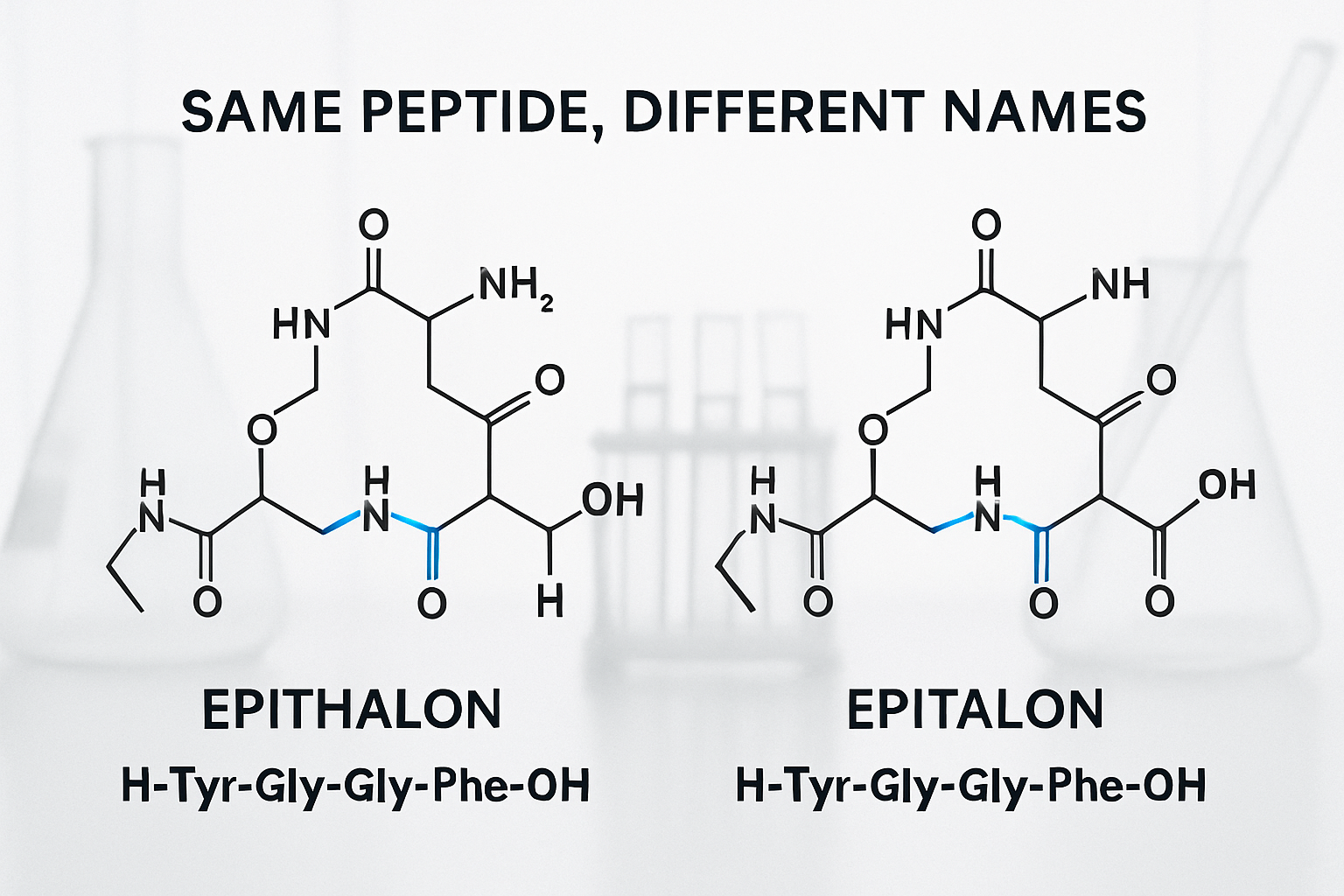
The epithalon vs epitalon confusion stems from inconsistent naming conventions in peptide research literature. Both terms refer to the same synthetic tetrapeptide composed of four amino acids: alanine, glutamic acid, aspartic acid, and glycine (Ala-Glu-Asp-Gly).
This peptide was originally derived from epithalamin, a natural extract from the pineal gland discovered by Russian scientist Vladimir Khavinson in the 1980s. The synthetic version was developed to provide a more stable and standardized research compound compared to the natural extract.
Chemical Structure and Properties
The molecular formula remains identical regardless of whether it's called epithalon or epitalon:
- Molecular Weight: 390.35 g/mol
- Chemical Formula: C14H22N4O9
- Sequence: Ala-Glu-Asp-Gly
- Stability: Requires proper storage conditions and reconstitution
When sourcing high-quality research peptides, the name variation should not impact the actual compound received, provided the supplier maintains proper quality standards.
Historical Development
The peptide's development timeline helps explain the naming inconsistency:
1980s: Discovery of epithalamin in pineal gland extracts
1990s: Synthesis of the active tetrapeptide sequence
2000s: Increased research interest and commercial availability
2010s: Growing confusion over naming conventions
2025: Continued research with both names in circulation
Epithalon vs Epitalon: Are They Actually Different?
The short answer is no – epithalon and epitalon are not different compounds. This section examines why the naming confusion persists and how it affects peptide research.
Linguistic and Regional Variations
The naming differences often reflect:
Translation Variations: Original Russian research used Cyrillic characters, leading to different English transliterations
Regional Preferences: European suppliers often use "epithalon" while some American sources prefer "epitalon"
Commercial Branding: Some companies adopt specific naming for marketing differentiation
Academic Conventions: Different research institutions may have established preferences
Scientific Literature Analysis
A review of peer-reviewed research reveals both names appear in scientific publications, often referring to the same experimental protocols and molecular structures. This inconsistency can complicate literature reviews and meta-analyses.
Research databases show:
- PubMed entries using both terminologies
- Identical molecular diagrams regardless of naming
- Consistent research outcomes across naming variations
- Similar dosage protocols in studies using either term
When building a diverse peptide research library, researchers should focus on molecular specifications rather than naming conventions.
Quality Considerations Over Names
The most important factors when evaluating epithalon vs epitalon products include:
Purity Testing: Look for certificates of analysis showing >95% purity
Third-Party Verification: Independent testing confirms molecular identity
Proper Storage: Appropriate handling and storage conditions
Supplier Reputation: Established track record in peptide synthesis
Documentation: Clear labeling and research support materials
Research Applications and Dosage Protocols
Understanding epithalon dosage protocols requires examining the extensive research conducted under both naming conventions. The peptide has been studied for various applications related to aging, cellular regeneration, and longevity research.
Standard Research Protocols
Most research studies, regardless of whether they use "epithalon" or "epitalon," follow similar experimental frameworks:
Typical Research Dosages:
- Low dose studies: 0.1-1 mg per administration
- Standard protocols: 1-5 mg per research cycle
- Extended studies: 10-50 mg total over research periods
Administration Methods:
- Subcutaneous injection (most common in research)
- Intravenous administration (clinical studies)
- Oral formulations (limited bioavailability studies)
For researchers interested in epithalon 50mg formulations, understanding proper reconstitution and handling procedures is essential for maintaining peptide integrity.
Research Cycle Considerations
Short-term Studies (1-4 weeks):
- Focus on acute cellular responses
- Biomarker analysis
- Safety assessments
- Dose-response relationships
Medium-term Research (1-3 months):
- Sustained cellular changes
- Tissue-specific effects
- Comparative studies with other peptides
- Combination protocols
Long-term Investigations (3+ months):
- Aging-related parameters
- Longitudinal biomarker tracking
- Safety and tolerance studies
- Mechanistic understanding
Combination Research Approaches
Many studies explore epithalon and thymalin combinations, examining how multiple peptides might work synergistically. This research area has grown significantly, with investigators studying:
- Immune system modulation through thymalin addition
- Enhanced cellular protection with combined protocols
- Optimized dosing schedules for multiple peptides
- Tissue-specific targeting strategies
Researchers can explore peptide blend research to understand how epithalon/epitalon fits into broader peptide research frameworks.
Quality Standards and Sourcing Considerations
When navigating the epithalon vs epitalon marketplace, quality standards become the primary differentiating factor rather than naming conventions. This section examines what researchers should prioritize when sourcing these peptides.
Manufacturing Standards
Synthesis Quality Markers:
- High-performance liquid chromatography (HPLC) purity testing
- Mass spectrometry confirmation of molecular weight
- Endotoxin testing for research safety
- Sterility verification for injection-grade preparations
- Proper lyophilization for stability
Documentation Requirements:
- Certificate of Analysis (COA) for each batch
- Amino acid sequence verification
- Storage and handling instructions
- Reconstitution guidelines
- Expiration dating
Supplier Evaluation Criteria
Research-Grade Standards:
- GMP (Good Manufacturing Practice) facilities
- Third-party testing verification
- Batch-to-batch consistency tracking
- Proper cold-chain shipping
- Technical support availability
Red Flags to Avoid:
- Suppliers offering "human consumption" claims
- Lack of proper testing documentation
- Significantly below-market pricing
- Poor packaging or shipping conditions
- Missing regulatory compliance information
When evaluating where to buy peptides online, researchers should prioritize suppliers who maintain consistent quality regardless of the epithalon vs epitalon naming they use.
Storage and Handling Best Practices
Pre-Reconstitution Storage:
- Temperature: -20°C to -80°C for long-term storage
- Humidity: Low moisture environment
- Light protection: Amber vials or dark storage
- Contamination prevention: Sterile handling procedures
Post-Reconstitution Guidelines:
- Refrigerated storage (2-8°C) for short-term use
- Sterile water or bacteriostatic water for reconstitution
- Single-use aliquots to minimize freeze-thaw cycles
- Proper labeling with dates and concentrations
Understanding proper peptide storage practices ensures that epithalon/epitalon maintains its research integrity throughout the study period.
Regulatory Considerations
Research Compliance:
- Institutional review board approval for applicable studies
- Proper documentation of research protocols
- Adherence to laboratory safety standards
- Appropriate waste disposal procedures
International Considerations:
- Import/export regulations for research materials
- Customs documentation requirements
- Regional naming preferences and regulations
- Quality standard variations between countries
Current Research Trends and Future Directions
The field of epithalon/epitalon research continues evolving in 2025, with new applications and methodologies emerging regularly. Understanding these trends helps researchers plan comprehensive studies and identify collaboration opportunities.
Emerging Research Areas
Cellular Senescence Studies:
Recent research has expanded beyond traditional aging markers to examine how epithalon affects cellular senescence pathways. Studies are investigating:
- Telomerase activity modulation
- Senescence-associated secretory phenotype (SASP) reduction
- Cellular reprogramming potential
- Mitochondrial function optimization
Tissue-Specific Applications:
Researchers are exploring targeted applications in specific organ systems:
- Neurological research for cognitive function
- Cardiovascular studies examining endothelial function
- Immune system modulation research
- Reproductive health investigations
Combination Protocols:
The trend toward multi-peptide research approaches has led to studies combining epithalon with:
- Growth hormone releasing peptides
- Antioxidant peptides like SS-31
- Immune-modulating compounds
- Metabolic enhancement peptides
Technological Advances in Research
Analytical Methods:
- Advanced mass spectrometry for peptide characterization
- Real-time biomarker monitoring systems
- High-throughput screening methodologies
- Improved stability testing protocols
Delivery System Innovation:
- Nasal spray formulations for enhanced bioavailability
- Sustained-release preparations
- Targeted delivery mechanisms
- Oral bioavailability enhancement
Research Community Standardization
Efforts are underway to standardize epithalon vs epitalon nomenclature and research protocols:
Nomenclature Initiatives:
- International peptide research consortium recommendations
- Standardized naming conventions for scientific publications
- Database harmonization efforts
- Regulatory guidance development
Protocol Standardization:
- Common dosage guidelines for research applications
- Standardized outcome measurements
- Quality control benchmarks
- Safety assessment protocols
This standardization will help researchers compare studies more effectively and build upon previous work regardless of the epithalon vs epitalon naming used in earlier research.
Future Research Directions
Mechanistic Understanding:
- Detailed pathway analysis of peptide effects
- Receptor binding and signaling studies
- Dose-response relationship mapping
- Duration of effect investigations
Clinical Translation:
- Safety profile development for potential therapeutic applications
- Biomarker identification for treatment monitoring
- Population-specific response studies
- Long-term safety assessments
Personalized Research Approaches:
- Genetic factors affecting peptide response
- Individual dosing optimization strategies
- Biomarker-guided treatment protocols
- Precision medicine applications
Practical Guidelines for Researchers
This section provides actionable guidance for researchers working with epithalon or epitalon, focusing on practical implementation rather than theoretical considerations.
Research Protocol Development
Study Design Considerations:
When planning epithalon research, consider these essential elements:
- Primary endpoints: Clearly define measurable outcomes
- Control groups: Include appropriate placebo or vehicle controls
- Dosing schedules: Plan administration timing and frequency
- Sample collection: Establish biospecimen collection protocols
- Duration planning: Account for both acute and chronic effects
Documentation Requirements:
- Detailed protocol documentation
- Informed consent procedures (where applicable)
- Data collection standardization
- Quality control checkpoints
- Adverse event reporting systems
Laboratory Setup and Equipment
Essential Equipment:
- Analytical balance for precise measurements
- Refrigerated centrifuge for sample processing
- -80°C freezer for long-term storage
- Sterile laminar flow hood for preparation
- Appropriate syringes and filters for reconstitution
Safety Considerations:
- Personal protective equipment protocols
- Waste disposal procedures for peptide materials
- Emergency response plans
- Training requirements for research staff
- Documentation of safety protocols
Data Collection and Analysis
Biomarker Selection:
Choose appropriate markers based on research objectives:
- Aging-related: Telomere length, oxidative stress markers
- Cellular function: Mitochondrial activity, protein synthesis
- Immune function: Cytokine profiles, immune cell counts
- Metabolic markers: Glucose tolerance, lipid profiles
Statistical Considerations:
- Power analysis for sample size determination
- Appropriate statistical tests for data types
- Multiple comparison corrections
- Time-series analysis for longitudinal studies
- Effect size calculations for clinical significance
Researchers can benefit from exploring comprehensive research approaches that integrate multiple methodologies for robust study design.
Troubleshooting Common Issues
Peptide Stability Problems:
- Verify storage conditions throughout the supply chain
- Check reconstitution procedures and sterile water quality
- Monitor pH levels in reconstituted solutions
- Implement proper aliquoting to minimize freeze-thaw cycles
Inconsistent Results:
- Standardize administration timing and procedures
- Verify peptide purity through independent testing
- Check for batch-to-batch variations in peptide lots
- Review subject selection criteria and compliance
Quality Control Failures:
- Establish backup supplier relationships
- Implement incoming material testing protocols
- Document all quality control procedures
- Maintain chain of custody documentation
Economic Considerations and Bulk Purchasing
Understanding the economics of epithalon vs epitalon purchasing helps research institutions optimize their budgets while maintaining quality standards.
Cost Factors Analysis
Price Variables:
- Quantity purchased: Bulk pricing typically offers significant savings
- Purity requirements: Higher purity commands premium pricing
- Packaging specifications: Individual vials vs. bulk containers
- Testing documentation: Comprehensive COAs increase costs
- Shipping requirements: Cold-chain shipping adds expense
Budget Planning Considerations:
- Research duration: Calculate total peptide needs for complete studies
- Waste factors: Account for preparation losses and expired materials
- Quality control: Budget for independent verification testing
- Storage costs: Include proper storage equipment and maintenance
For institutions considering epithalon and thymalin bulk sale options, volume purchasing can provide substantial cost savings while ensuring consistent supply throughout extended research periods.
Supplier Relationship Management
Long-term Partnership Benefits:
- Consistent pricing and quality standards
- Priority access during supply shortages
- Technical support and consultation services
- Flexible payment terms for institutional buyers
- Custom packaging and labeling options
Risk Management Strategies:
- Maintain relationships with multiple qualified suppliers
- Establish minimum inventory levels for critical research
- Negotiate supply agreements with quality guarantees
- Implement supplier performance monitoring systems
Return on Investment Calculations
Research Value Metrics:
- Publication potential and impact factor considerations
- Grant funding opportunities enabled by preliminary data
- Collaboration possibilities with other research groups
- Intellectual property development potential
- Training value for research personnel
Cost-Benefit Analysis:
- Compare peptide costs against potential research outcomes
- Evaluate time savings from reliable, high-quality materials
- Consider opportunity costs of using lower-quality alternatives
- Factor in reputation benefits from rigorous research standards
Conclusion
The epithalon vs epitalon debate ultimately represents a naming convention issue rather than a fundamental difference in peptide composition or research applications. Both terms refer to the same synthetic tetrapeptide (Ala-Glu-Asp-Gly) derived from pineal gland epithalamin, with identical molecular structures and research properties.
Key Resolution Points:
- Chemical Identity: Epithalon and epitalon are the same compound with identical amino acid sequences
- Quality Focus: Supplier quality standards matter more than naming conventions
- Research Consistency: Both names appear in legitimate scientific literature with comparable results
- Standardization Efforts: The research community is working toward unified nomenclature
Actionable Next Steps for Researchers:
-
Prioritize Quality Over Names: Focus on supplier quality standards, purity testing, and proper documentation rather than specific naming preferences
-
Standardize Internal Protocols: Choose one naming convention for your research documentation to maintain consistency across studies
-
Verify Molecular Specifications: Always confirm amino acid sequence and molecular weight regardless of supplier naming
-
Build Supplier Relationships: Establish partnerships with reputable suppliers who maintain consistent quality standards
-
Stay Current with Research: Monitor both "epithalon" and "epitalon" literature to capture all relevant research developments
For researchers ready to begin or expand their peptide research programs, Pure Tested Peptides offers high-quality research materials with comprehensive testing documentation, regardless of naming preferences. The focus should remain on advancing scientific understanding through rigorous research methodologies and quality materials.
The future of epithalon/epitalon research looks promising, with expanding applications in aging research, cellular regeneration, and combination therapy protocols. By understanding that the naming confusion does not reflect actual compound differences, researchers can confidently pursue their scientific objectives while contributing to the growing body of knowledge in peptide research.
Moving Forward in 2025: The peptide research community continues evolving toward greater standardization and quality assurance. Researchers who prioritize scientific rigor over naming conventions will be best positioned to contribute meaningful advances to this exciting field of study.
SEO Meta Information
Meta Title: Epithalon vs Epitalon: Same Peptide, Different Names | 2025 Guide
Meta Description: Discover why epithalon vs epitalon confusion exists. Learn about this anti-aging peptide's research applications, quality standards, and sourcing tips for 2025.