GHK-Cu Peptide Dosage Chart: Your Complete 2026 Guide to Safe and Effective Use
If you're searching for a reliable ghk-cu peptide dosage chart, you're not alone. As peptide therapy continues to gain momentum in 2026, fitness coaches, bodybuilders, medi spa professionals, and life coaches are all seeking clear, evidence-based guidance on how to properly dose this remarkable copper peptide. The challenge? Dosing information is scattered, inconsistent, and often contradictory across different sources. I've spent years researching peptides and working with professionals who use them in clinical and research settings, and I can tell you that getting the dosage right makes all the difference between achieving your desired results and wasting your investment.
GHK-Cu (Glycyl-L-Histidyl-L-Lysine-Copper) has captured attention for its potential applications in skin rejuvenation, wound healing, tissue repair, and anti-aging research. But without proper dosing protocols, even the highest-quality peptides won't deliver optimal results. This comprehensive guide provides you with a detailed ghk-cu peptide dosage chart based on current research findings, helping you understand proper administration methods, frequency schedules, and safety considerations.
Key Takeaways
- Standard GHK-Cu dosage ranges typically fall between 1-3mg per day for general wellness research, with higher doses (5-10mg) reserved for specific therapeutic applications
- Administration methods significantly impact bioavailability—subcutaneous injection offers superior absorption compared to topical or oral routes
- Reconstitution and storage are critical factors that directly affect peptide stability and potency
- Individual response varies based on body weight, age, research goals, and baseline health markers
- Quality sourcing matters—only research-grade peptides from verified suppliers should be considered for serious research applications
Understanding GHK-Cu Peptide: The Foundation for Proper Dosing
Before diving into the ghk-cu peptide dosage chart, it's essential to understand what GHK-Cu actually is and how it functions. GHK-Cu is a naturally occurring copper complex that was first identified in human plasma in the 1970s. This tripeptide consists of three amino acids—glycine, histidine, and lysine—bound to a copper ion.
Research suggests that GHK-Cu levels decline with age, dropping from approximately 200 ng/mL at age 20 to about 80 ng/mL by age 60. This decline has sparked interest in supplementation research to restore youthful levels and potentially support various biological processes.
What Makes GHK-Cu Unique? 🔬
The copper component is what sets GHK-Cu apart from other peptides. Copper ions play crucial roles in numerous enzymatic processes throughout the body. When bound to the GHK peptide sequence, copper becomes more bioavailable and can be delivered more effectively to target tissues.
Research findings indicate that GHK-Cu may influence:
- Collagen synthesis and extracellular matrix remodeling
- Antioxidant enzyme activity and oxidative stress reduction
- Tissue repair mechanisms and wound healing processes
- Gene expression patterns related to inflammation and regeneration
For those interested in exploring quality peptide sources, Pure Tested Peptides offers research-grade materials with third-party testing verification.
The Complete GHK-Cu Peptide Dosage Chart for 2026
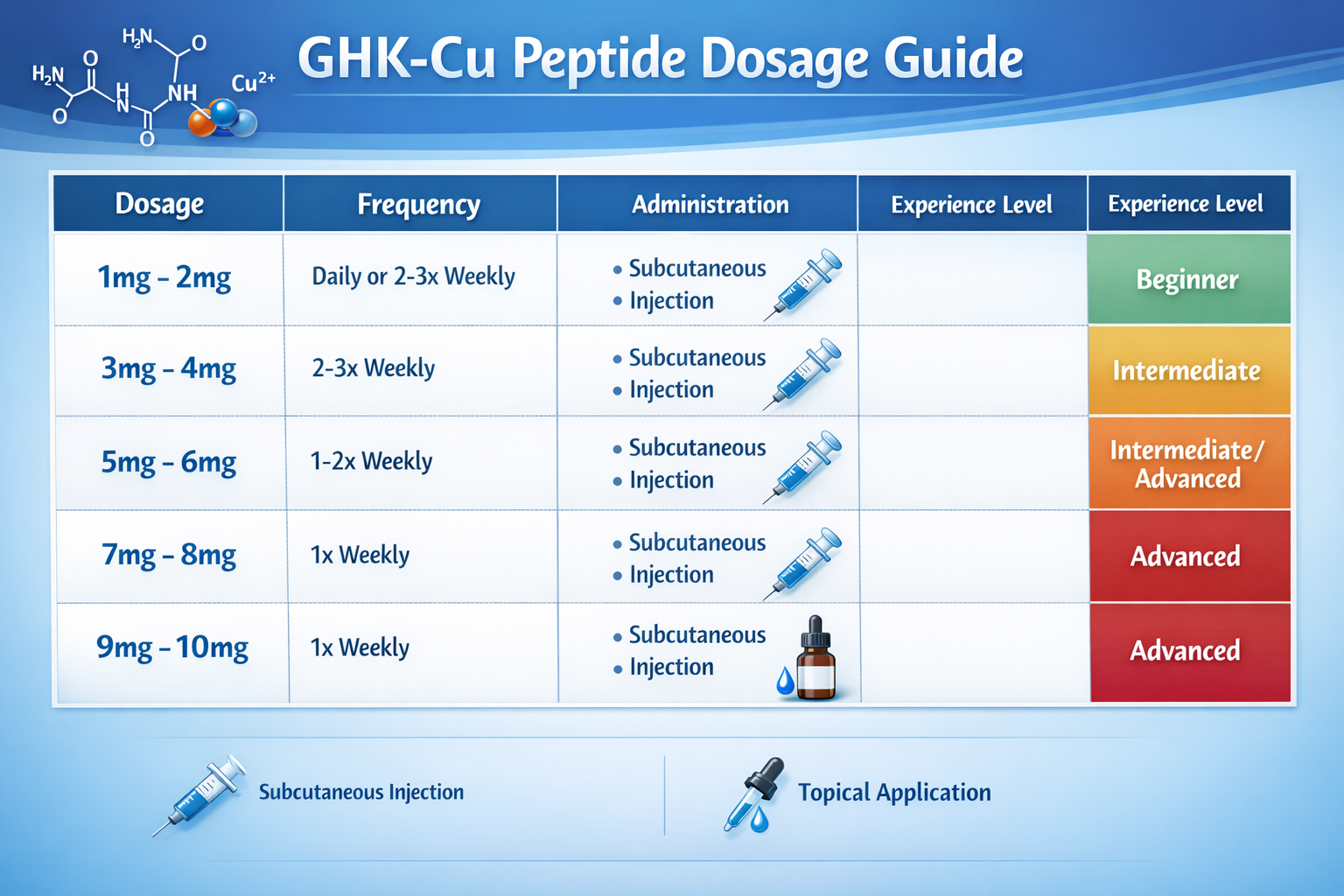
Creating an effective ghk-cu peptide dosage chart requires considering multiple variables including administration route, research objectives, experience level, and individual characteristics. The following chart represents current research protocols and reported usage patterns in 2026.
Standard Dosage Chart by Administration Method
| Administration Route | Beginner Dose | Intermediate Dose | Advanced Dose | Frequency |
|---|---|---|---|---|
| Subcutaneous Injection | 1-2 mg | 3-5 mg | 5-10 mg | Daily or 5x/week |
| Topical Application | 5-10 mg | 10-20 mg | 20-50 mg | 1-2x daily |
| Oral (Limited Data) | 5-10 mg | 10-15 mg | 15-20 mg | Daily |
Important Note: These ranges are based on research protocols and should not be interpreted as medical recommendations. Individual research applications may vary significantly.
Dosage by Research Application
Different research objectives may warrant different dosing strategies. Here's how the ghk-cu peptide dosage chart breaks down by specific research focus:
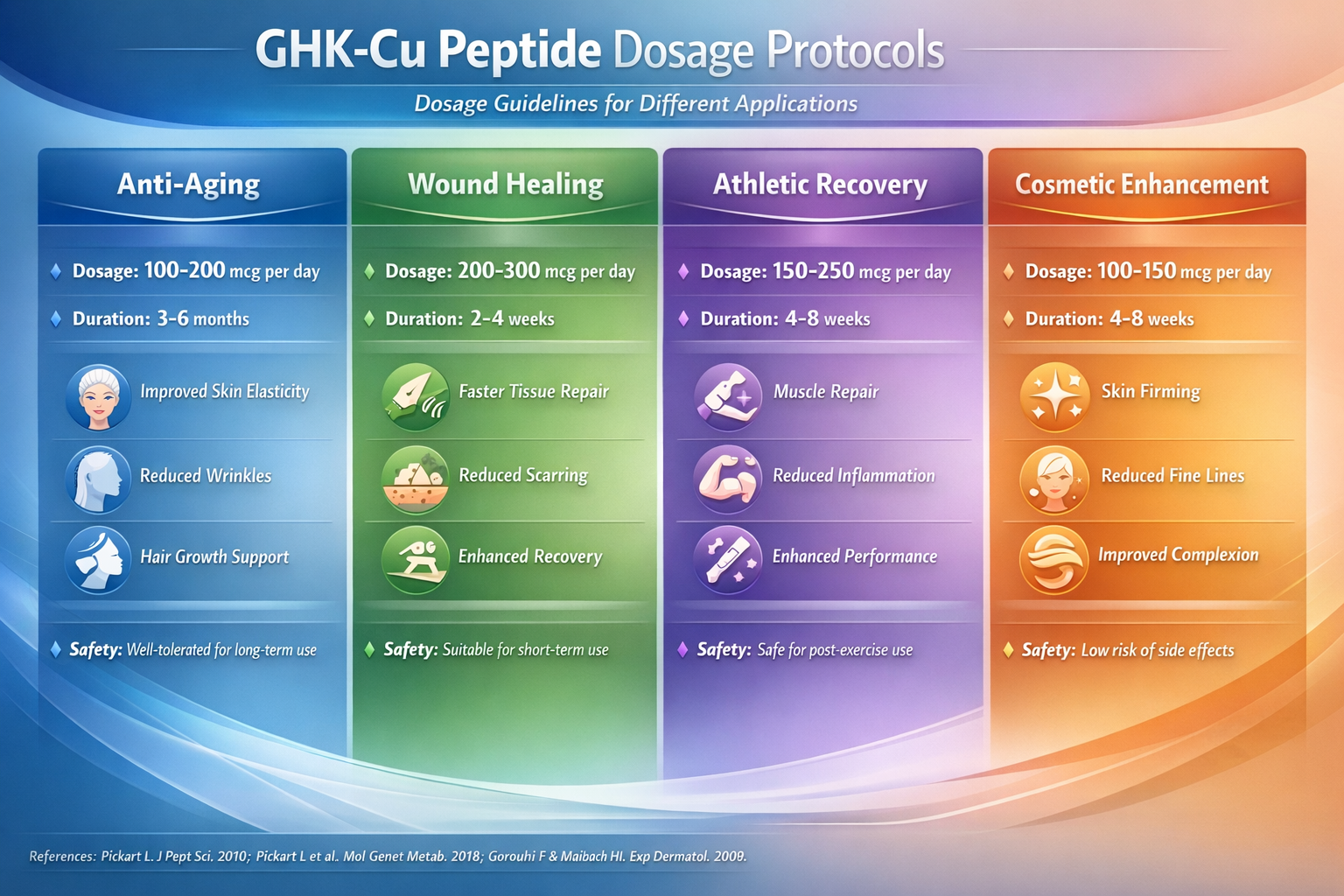
Skin Rejuvenation Research:
- Typical range: 2-5 mg subcutaneously or 10-30 mg topically
- Frequency: Daily application for 8-12 weeks
- Protocol: Often combined with other peptides for synergistic effects
Wound Healing Studies:
- Typical range: 3-10 mg subcutaneously
- Frequency: Daily during active healing phase
- Protocol: Localized application near affected area when possible
Athletic Recovery Research:
- Typical range: 3-7 mg subcutaneously
- Frequency: 5 days per week with 2-day breaks
- Protocol: Post-training administration for optimal tissue repair support
Anti-Aging Protocols:
- Typical range: 2-5 mg subcutaneously
- Frequency: Daily or every other day
- Protocol: Long-term administration (3-6 months) with periodic assessment
When sourcing peptides for research, quality is paramount. GHK-Cu 50mg from verified suppliers ensures you're working with properly manufactured and tested materials.
Factors That Influence Your Optimal GHK-Cu Dosage
The ghk-cu peptide dosage chart provides general guidelines, but your optimal dose depends on several individual factors. Understanding these variables helps you make more informed decisions about your research protocols.
Body Weight and Composition
Research protocols often calculate peptide doses based on body weight, typically expressed as micrograms per kilogram (mcg/kg). For GHK-Cu, common research doses range from 30-100 mcg/kg of body weight.
Example calculation:
- 70 kg individual × 50 mcg/kg = 3,500 mcg (3.5 mg) total dose
However, body composition matters too. Individuals with higher muscle mass may metabolize peptides differently than those with higher body fat percentages, potentially affecting optimal dosing.
Age and Baseline GHK-Cu Levels
Since natural GHK-Cu levels decline with age, older research subjects may benefit from different dosing strategies than younger ones. Some research protocols adjust doses based on:
- Ages 20-35: Lower supplementation doses (1-3 mg)
- Ages 35-50: Moderate doses (3-5 mg)
- Ages 50+: Higher doses (5-10 mg)
These ranges aim to restore more youthful physiological levels rather than simply providing a standard dose across all age groups.
Administration Route and Bioavailability 💉
The route of administration dramatically affects how much GHK-Cu actually reaches target tissues. This is why the ghk-cu peptide dosage chart shows significantly higher doses for topical application compared to injection.
Bioavailability estimates:
- Subcutaneous injection: 80-95%
- Topical application: 5-20% (varies by formulation)
- Oral administration: 10-30% (limited research data)
Subcutaneous injection offers the most predictable and efficient delivery, which is why it's preferred in most research protocols. The peptide bypasses first-pass metabolism and enters systemic circulation more directly.
Research Goals and Timeline
Your specific research objectives should guide dosing decisions:
Short-term intensive protocols (4-8 weeks):
- Higher doses (5-10 mg)
- Daily administration
- Focused on specific outcomes
Long-term maintenance protocols (3-6 months):
- Moderate doses (2-5 mg)
- Daily or 5x weekly administration
- Broader wellness research goals
Cycling protocols:
- 8-12 weeks "on" at moderate-high doses
- 4-6 weeks "off" or reduced doses
- Prevents potential receptor downregulation
For researchers exploring multiple peptide options, understanding peptide dosage protocols across different compounds can provide valuable context.
How to Properly Reconstitute and Prepare GHK-Cu
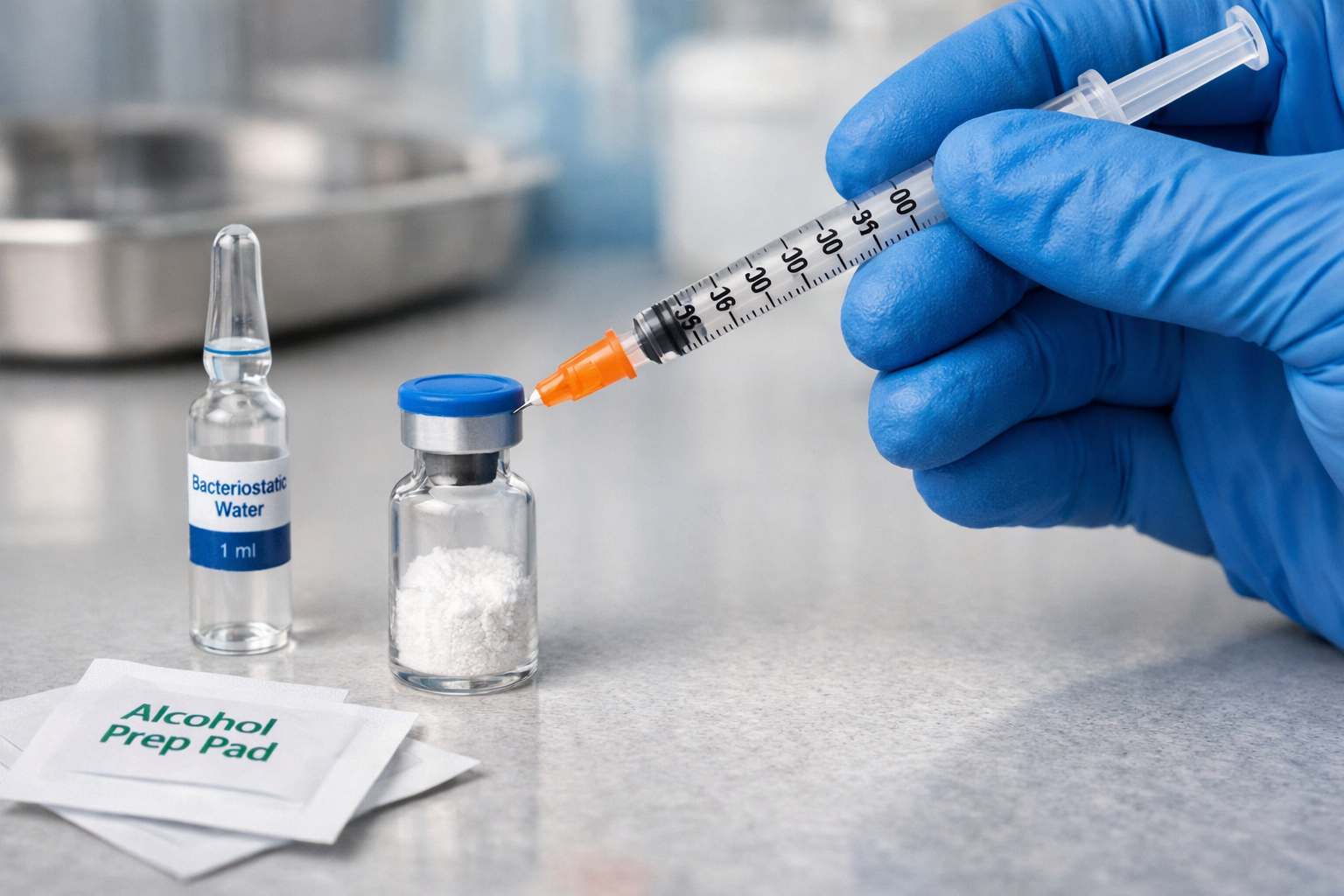
Even with a perfect ghk-cu peptide dosage chart, improper reconstitution can render your peptides ineffective. GHK-Cu typically comes as lyophilized (freeze-dried) powder that must be reconstituted with bacteriostatic water before use.
Step-by-Step Reconstitution Process
Materials needed:
- GHK-Cu lyophilized powder vial
- Bacteriostatic water (0.9% benzyl alcohol)
- Insulin syringes (1mL with fine needle)
- Alcohol prep pads
- Clean workspace
Reconstitution steps:
-
Calculate your target concentration: Decide how many milligrams per milliliter you want. For example, adding 2mL of bacteriostatic water to a 50mg vial creates a 25mg/mL concentration.
-
Prepare your workspace: Clean surface, wash hands thoroughly, gather all materials.
-
Clean vial tops: Use alcohol prep pads on both the peptide vial and bacteriostatic water vial.
-
Draw bacteriostatic water: Using a fresh insulin syringe, draw your calculated amount of bacteriostatic water.
-
Add water to peptide: Slowly inject the water down the side of the vial—never directly onto the powder. This prevents peptide degradation.
-
Gentle mixing: Swirl gently (never shake vigorously) until powder completely dissolves. This may take 1-2 minutes.
-
Label and date: Mark your vial with concentration and reconstitution date.
Concentration Examples for Easy Dosing
Creating the right concentration makes daily dosing simpler and more accurate. Here are practical examples based on the ghk-cu peptide dosage chart:
For 2mg daily dose:
- 50mg vial + 5mL bacteriostatic water = 10mg/mL
- Draw 0.2mL (20 units on insulin syringe) = 2mg dose
For 5mg daily dose:
- 50mg vial + 2mL bacteriostatic water = 25mg/mL
- Draw 0.2mL (20 units on insulin syringe) = 5mg dose
For 3mg daily dose:
- 50mg vial + 5mL bacteriostatic water = 10mg/mL
- Draw 0.3mL (30 units on insulin syringe) = 3mg dose
Quality peptides from sources like Pure Tested Peptides typically include detailed reconstitution instructions specific to their product concentrations.
Storage Requirements for Maximum Stability
Proper storage is critical for maintaining peptide potency:
Before reconstitution:
- Store at 2-8°C (refrigerator) or -20°C (freezer)
- Keep away from light and moisture
- Shelf life: 2-3 years when properly stored
After reconstitution:
- Store at 2-8°C (refrigerator) only
- Protect from light (wrap in foil if needed)
- Use within 30 days for optimal potency
- Never freeze reconstituted peptides
Administration Techniques: Getting Your Dose Right
Having a ghk-cu peptide dosage chart is only half the equation—proper administration technique ensures you actually receive the intended dose safely and effectively.
Subcutaneous Injection Protocol
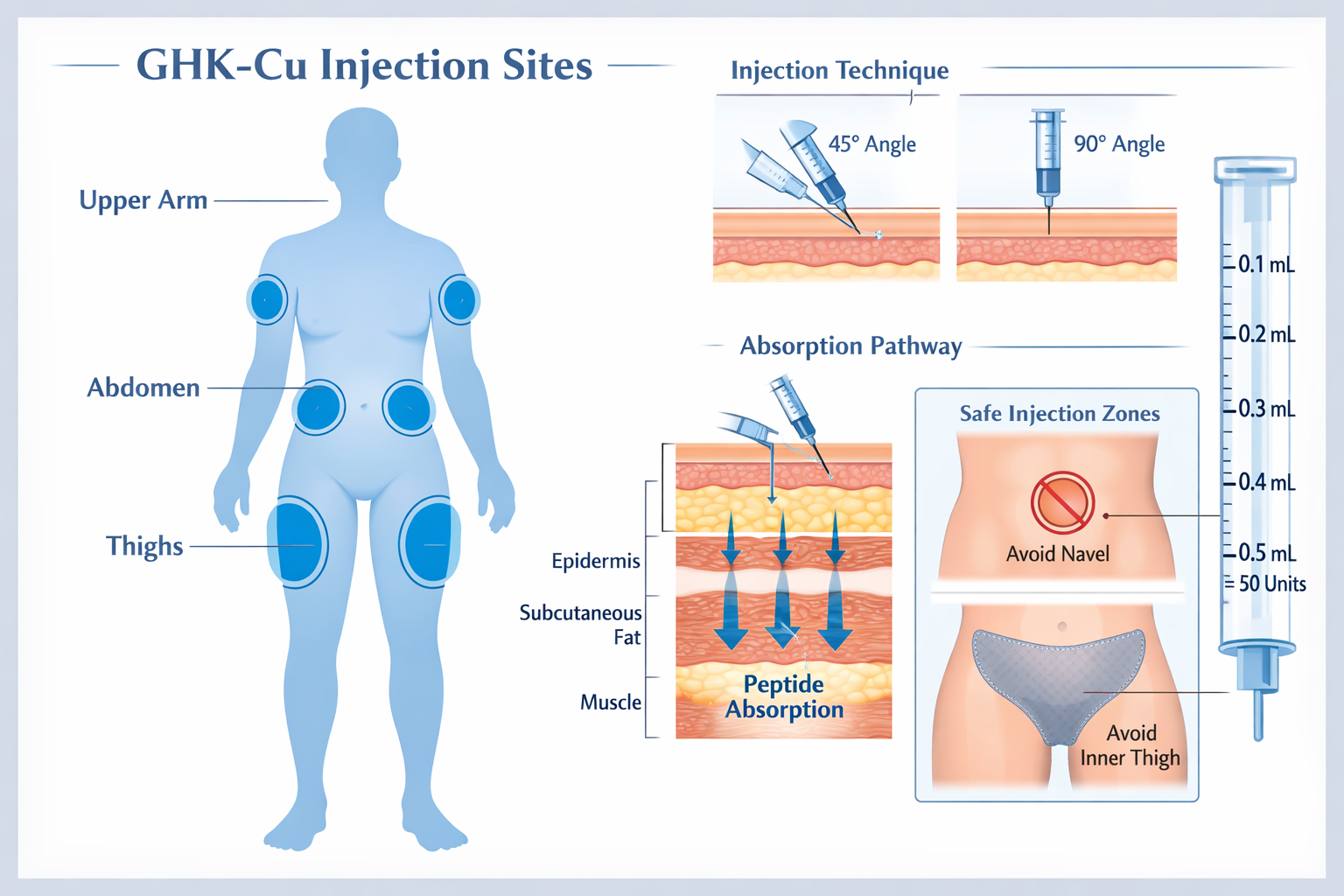
Subcutaneous (SubQ) injection is the gold standard for GHK-Cu administration. This method delivers the peptide into the fatty tissue layer just beneath the skin.
Preferred injection sites:
- Lower abdomen (2 inches from navel)
- Upper thigh (outer quadrant)
- Upper arm (back/outer area)
Injection technique:
-
Prepare injection site: Clean with alcohol prep pad and allow to dry completely.
-
Prepare syringe: Draw your calculated dose from the reconstituted vial, ensuring no air bubbles.
-
Pinch skin: Create a small fold of skin between thumb and forefinger.
-
Insert needle: At a 45-90 degree angle, insert the needle quickly but smoothly into the pinched skin.
-
Inject slowly: Depress plunger slowly and steadily over 5-10 seconds.
-
Withdraw and dispose: Remove needle, apply gentle pressure with clean gauze, dispose of syringe in sharps container.
-
Rotate sites: Never inject in the same exact spot two days in a row to prevent tissue irritation.
Topical Application Methods
Topical GHK-Cu requires higher concentrations due to lower bioavailability. Research protocols typically use specialized formulations designed to enhance skin penetration.
Application guidelines:
- Clean and dry skin thoroughly before application
- Apply to target areas (face, neck, specific wound sites)
- Use gentle circular motions for even distribution
- Allow 5-10 minutes for absorption before applying other products
- Apply 1-2 times daily as per research protocol
Enhancing topical absorption:
- Some research uses dermarolling (microneedling) to increase penetration
- Liposomal formulations may improve delivery
- Combining with DMSO (dimethyl sulfoxide) can enhance absorption (use with caution)
For researchers interested in topical applications, exploring topical GHK-Cu formulations can provide additional insights into effective delivery methods.
Safety Considerations and Monitoring
While the ghk-cu peptide dosage chart provides dosing guidelines, safety should always be the primary concern in any research protocol. GHK-Cu is generally well-tolerated in research settings, but proper monitoring is essential.
Common Observations in Research Settings
Research protocols have documented various observations associated with GHK-Cu administration:
Mild and transient:
- Injection site reactions (redness, slight swelling)
- Temporary flushing or warmth
- Mild headaches (typically with higher doses)
- Slight fatigue in initial days
Rare but notable:
- Allergic reactions (very uncommon)
- Copper-related effects at very high doses
- Interaction effects when combined with other compounds
Monitoring Recommendations
Responsible research protocols include regular monitoring:
Baseline assessments:
- Document starting parameters (skin condition, recovery markers, etc.)
- Consider copper levels if using high doses long-term
- Photograph target areas for visual comparison
Ongoing monitoring:
- Track daily doses and administration times
- Note any observations or changes
- Document injection site rotation
- Assess progress toward research objectives
Periodic evaluation:
- Review progress every 4-6 weeks
- Adjust dosing based on observations
- Consider breaks or cycling for long-term protocols
When to Adjust or Discontinue
The ghk-cu peptide dosage chart provides starting points, but individual responses vary. Consider adjusting your protocol if:
- No observable changes after 8-12 weeks at adequate doses
- Persistent adverse reactions occur
- Research objectives have been achieved
- Combining with other peptides requires dose modification
For comprehensive research planning, exploring peptide research protocols can help you design more effective studies.
Combining GHK-Cu with Other Peptides: Dosage Adjustments
Many researchers explore peptide combinations, often called "stacks," to achieve synergistic effects. When combining GHK-Cu with other peptides, dosage adjustments may be necessary.
Popular GHK-Cu Combinations
GHK-Cu + BPC-157:
- Focus: Enhanced tissue repair and recovery
- Typical GHK-Cu dose: 2-5 mg daily
- BPC-157 dose: 250-500 mcg daily
- Administration: Can be mixed in same syringe or injected separately
GHK-Cu + Thymosin Beta-4 (TB-500):
- Focus: Comprehensive regeneration and healing
- Typical GHK-Cu dose: 3-5 mg daily
- TB-500 dose: 2-5 mg twice weekly
- Administration: Usually separate injections
GHK-Cu + Epithalon:
- Focus: Anti-aging and longevity research
- Typical GHK-Cu dose: 2-3 mg daily
- Epithalon dose: 5-10 mg daily (cycled)
- Administration: Separate injections recommended
Dosage Reduction Considerations
When stacking multiple peptides, some researchers reduce individual doses by 20-30% to avoid excessive total peptide load. The ghk-cu peptide dosage chart serves as a baseline, but combination protocols may warrant:
- Starting at lower end of dosage ranges
- Extending assessment periods before increasing doses
- More frequent monitoring of combined effects
- Careful documentation of all compounds used
For those exploring peptide combinations, understanding peptide synergy can optimize research outcomes.
Cost Considerations: Budgeting Your GHK-Cu Research
Understanding the ghk-cu peptide dosage chart also means calculating the actual cost of your research protocol. GHK-Cu pricing varies significantly based on supplier, purity, and quantity.
Cost Breakdown by Protocol
Example pricing (2026 market averages):
- 50mg GHK-Cu vial: $40-80 from quality suppliers
- 100mg GHK-Cu vial: $70-140 from quality suppliers
Monthly cost calculations:
Low-dose protocol (2mg daily):
- Daily dose: 2mg
- Monthly total: 60mg
- Vials needed: 1-2 (50mg vials)
- Monthly cost: $40-160
Moderate-dose protocol (5mg daily):
- Daily dose: 5mg
- Monthly total: 150mg
- Vials needed: 2-3 (50mg vials)
- Monthly cost: $80-240
High-dose protocol (10mg daily):
- Daily dose: 10mg
- Monthly total: 300mg
- Vials needed: 3-6 (50mg vials)
- Monthly cost: $120-480
Cost-Saving Strategies
Buy larger quantities: 100mg vials typically offer better per-milligram pricing than 50mg vials.
Optimize concentration: Reconstitute to concentrations that minimize waste and allow precise dosing.
Source quality suppliers: While cheaper options exist, poor quality peptides waste money if they're degraded or impure. Pure Tested Peptides offers third-party tested products that ensure you're getting what you pay for.
Plan research duration: Commit to adequate protocol length (8-12 weeks minimum) to properly assess results before deciding to continue.
Advanced Dosing Strategies: Cycling and Pulsing
Beyond the basic ghk-cu peptide dosage chart, advanced researchers often employ cycling or pulsing strategies to potentially optimize results and prevent adaptation.
Cycling Protocols
Cycling involves periods of active administration followed by breaks:
Standard cycle:
- 12 weeks on (daily administration at chosen dose)
- 4-6 weeks off (complete break)
- Repeat as needed for long-term research
Aggressive cycle:
- 8 weeks on (higher doses: 5-10mg)
- 4 weeks off
- Prevents potential receptor downregulation
Maintenance cycle:
- 16 weeks on (moderate doses: 2-5mg)
- 8 weeks off or reduced dose (1-2mg)
- Sustainable long-term approach
Pulsing Strategies
Pulsing involves varying doses throughout the week rather than consistent daily dosing:
5-day pulse:
- Monday-Friday: Full dose (5mg)
- Saturday-Sunday: Off or reduced dose (2mg)
- Mimics natural pulsatile hormone patterns
Alternating dose pulse:
- Day 1: Higher dose (7mg)
- Day 2: Lower dose (3mg)
- Day 3: Higher dose (7mg)
- Continues alternating pattern
Front-loaded pulse:
- Week 1-2: Higher dose (7-10mg daily)
- Week 3-12: Maintenance dose (3-5mg daily)
- Rapid initial loading followed by sustained maintenance
These advanced strategies go beyond the standard ghk-cu peptide dosage chart but may offer benefits for specific research objectives. Always document your protocols carefully to assess which approach works best for your particular research focus.
Quality Matters: Sourcing Reliable GHK-Cu
No ghk-cu peptide dosage chart can compensate for poor-quality peptides. The purity, proper storage, and accurate dosing of your GHK-Cu directly impact research outcomes.
What to Look for in Quality Suppliers
Third-party testing: Reputable suppliers provide certificates of analysis (COA) from independent laboratories verifying:
- Peptide purity (should be ≥98%)
- Actual peptide content per vial
- Absence of contaminants
- Proper molecular weight confirmation
Proper storage and shipping: Quality suppliers:
- Store peptides at appropriate temperatures
- Ship with cold packs or ice
- Use insulated packaging
- Provide tracking information
Transparent information: Reliable sources offer:
- Clear product descriptions
- Reconstitution instructions
- Storage guidelines
- Responsive customer support
Manufacturing standards: Look for suppliers who:
- Use GMP (Good Manufacturing Practice) facilities
- Provide batch numbers for traceability
- Maintain consistent quality across batches
Pure Tested Peptides exemplifies these quality standards, offering research-grade peptides with full transparency and third-party verification.
Red Flags to Avoid
Warning signs of questionable suppliers:
- Prices significantly below market average
- No COA or testing documentation
- Poor packaging or warm shipments
- Lack of contact information
- No clear return or quality guarantee policies
- Unrealistic claims about results
Remember: the ghk-cu peptide dosage chart assumes you're working with properly manufactured, stored, and shipped peptides. Degraded or impure peptides won't deliver expected outcomes regardless of dosing accuracy.
Frequently Asked Questions About GHK-Cu Dosing
How long does it take to see results from GHK-Cu?
Research protocols typically assess outcomes after 4-8 weeks of consistent administration. Some markers may show changes earlier, while others require 12+ weeks. The timeline depends on:
- Specific research objectives
- Dosing protocol followed
- Individual response characteristics
- Baseline conditions
Can I take GHK-Cu orally instead of injecting?
While oral administration is possible, bioavailability is significantly lower than subcutaneous injection. The ghk-cu peptide dosage chart shows oral doses are typically 3-5 times higher than injection doses to account for reduced absorption. Oral administration also faces challenges with stomach acid degradation and first-pass metabolism.
Should I take breaks from GHK-Cu?
Many research protocols incorporate breaks or cycling to potentially:
- Prevent receptor downregulation
- Assess baseline changes
- Reduce long-term costs
- Allow natural processes to stabilize
Typical break periods range from 4-8 weeks after 8-12 weeks of consistent use.
Can I mix GHK-Cu with other peptides in the same syringe?
Some peptides can be safely mixed, while others should be administered separately. GHK-Cu is generally compatible with peptides like BPC-157 and TB-500. However, always research specific combinations and consider:
- pH compatibility
- Potential interactions
- Concentration adjustments
- Stability when mixed
How do I know if my dose is too high or too low?
The ghk-cu peptide dosage chart provides ranges, but individual optimization requires monitoring:
Signs dose may be too high:
- Persistent adverse reactions
- Excessive copper-related effects
- No additional benefit from dose increases
Signs dose may be too low:
- No observable changes after 8-12 weeks
- Minimal response to adequate protocol duration
- Research objectives not progressing
Adjust doses gradually (25-50% changes) and allow 4-6 weeks to assess new dosing effects.
Real-World Application: Sample Research Protocols
To make the ghk-cu peptide dosage chart more practical, here are complete sample protocols for different research objectives.
Protocol 1: Skin Rejuvenation Research (12-Week Protocol)
Objective: Assess effects on skin appearance, texture, and elasticity
Dosing:
- GHK-Cu: 3mg subcutaneous injection daily
- Administration time: Morning, rotating injection sites
- Reconstitution: 50mg vial + 5mL bacteriostatic water (10mg/mL)
- Dose volume: 0.3mL (30 units on insulin syringe)
Schedule:
- Weeks 1-12: Daily administration
- Weeks 13-16: Break period
- Assessment points: Baseline, Week 4, Week 8, Week 12, Week 16
Monitoring:
- Weekly photographs (consistent lighting/angle)
- Skin hydration measurements
- Subjective texture assessments
- Documentation of any observations
Estimated cost: $160-320 for 12-week protocol
Protocol 2: Athletic Recovery Research (8-Week Protocol)
Objective: Evaluate recovery support and tissue repair
Dosing:
- GHK-Cu: 5mg subcutaneous injection
- Frequency: 5 days per week (Monday-Friday)
- Administration time: Post-training
- Reconstitution: 100mg vial + 4mL bacteriostatic water (25mg/mL)
- Dose volume: 0.2mL (20 units on insulin syringe)
Schedule:
- Weeks 1-8: 5x weekly administration
- Weeks 9-12: Break period
- Assessment points: Baseline, Week 4, Week 8, Week 12
Monitoring:
- Recovery time between sessions
- Subjective soreness ratings
- Performance markers
- Sleep quality documentation
Estimated cost: $140-280 for 8-week protocol
Protocol 3: Anti-Aging Research (16-Week Protocol)
Objective: Comprehensive anti-aging marker assessment
Dosing:
- GHK-Cu: 2mg subcutaneous injection daily
- Administration time: Evening before bed
- Reconstitution: 50mg vial + 5mL bacteriostatic water (10mg/mL)
- Dose volume: 0.2mL (20 units on insulin syringe)
Schedule:
- Weeks 1-16: Daily administration
- Weeks 17-24: Maintenance dose (1mg daily)
- Assessment points: Baseline, Week 8, Week 16, Week 24
Monitoring:
- Multiple skin quality markers
- Energy and vitality assessments
- Hair and nail quality observations
- Overall wellness documentation
Estimated cost: $200-400 for 16-week protocol
These protocols demonstrate how the ghk-cu peptide dosage chart translates into practical research applications. Each protocol can be adjusted based on individual responses and specific research goals.
For researchers exploring comprehensive peptide research, Pure Tested Peptides offers the quality materials necessary for reliable, reproducible research outcomes.
The Future of GHK-Cu Research in 2026 and Beyond
As we move through 2026, GHK-Cu research continues to evolve. The ghk-cu peptide dosage chart presented here reflects current understanding, but ongoing research may refine these recommendations.
Emerging Research Directions
Personalized dosing: Future protocols may incorporate genetic testing or biomarker analysis to determine optimal individual doses rather than relying on general ranges.
Novel delivery methods: Research into enhanced delivery systems including:
- Liposomal formulations for improved topical absorption
- Sustained-release preparations for less frequent dosing
- Combination products optimized for synergistic effects
Expanded applications: New research areas exploring GHK-Cu's potential in:
- Neurological health and cognitive function
- Metabolic optimization
- Immune system modulation
- Longevity and healthspan extension
Refined protocols: As more data accumulates, dosing recommendations will become increasingly precise, potentially moving beyond general charts to algorithm-based personalized protocols.
Staying Current with Research
The field of peptide research moves quickly. To stay informed:
- Follow peer-reviewed publications in regenerative medicine
- Monitor reputable peptide research communities
- Track updates from quality suppliers like Pure Tested Peptides
- Document your own research outcomes to contribute to collective knowledge
Conclusion: Making the GHK-Cu Peptide Dosage Chart Work for You
The ghk-cu peptide dosage chart provided in this guide offers evidence-based starting points for various research applications, but remember that optimal dosing is ultimately individual. Whether you're a fitness coach exploring recovery support, a medi spa professional researching skin rejuvenation, or a bodybuilder investigating tissue repair, the key principles remain constant: start conservatively, monitor carefully, adjust thoughtfully, and always prioritize quality.
Your action steps moving forward:
-
Define your research objectives clearly – What specific outcomes are you investigating? This determines your starting dose from the chart.
-
Source quality peptides – Invest in properly tested, stored, and shipped GHK-Cu from reputable suppliers like Pure Tested Peptides.
-
Master reconstitution and administration – Proper technique ensures you actually receive your intended dose safely and effectively.
-
Document everything – Keep detailed records of doses, timing, observations, and outcomes to optimize your protocol over time.
-
Start conservatively – Begin at the lower end of the dosage range for your application and increase only if needed after adequate assessment time.
-
Commit to adequate duration – Give your protocol at least 8-12 weeks before making final assessments about effectiveness.
-
Stay informed – Peptide research evolves rapidly; continue learning and adjusting your approach based on new findings.
The ghk-cu peptide dosage chart is your roadmap, but you're the researcher navigating the journey. With quality peptides, proper technique, careful monitoring, and patience, you'll be well-positioned to explore GHK-Cu's potential applications in your specific research context.
Remember that this guide provides information for research purposes based on current scientific literature and reported protocols. Always conduct research responsibly, document thoroughly, and consult with qualified professionals when appropriate. The world of peptide research offers exciting possibilities, and with the right approach, you can contribute to our collective understanding while pursuing your specific research objectives.
Ready to begin your GHK-Cu research journey? Start with quality materials from Pure Tested Peptides, follow the dosing guidelines in this comprehensive chart, and document your findings carefully. The future of peptide research is being written today—and you can be part of it.
SEO Meta Title and Description
Meta Title: GHK-Cu Peptide Dosage Chart 2026 | Complete Guide
Meta Description: Comprehensive GHK-Cu peptide dosage chart with protocols, reconstitution steps, and safety guidelines. Research-based dosing for all experience levels.