
GHRP-6 Peptide vs Hexarelin: The Complete 2026 Research Comparison Guide
The world of growth hormone-releasing peptides has evolved dramatically, with researchers and fitness enthusiasts increasingly seeking clarity on GHRP-6 peptide vs hexarelin comparisons. These two powerful peptides represent different approaches to growth hormone stimulation, each offering unique mechanisms and research applications that have captured the attention of the scientific community in 2026.
Key Takeaways
• GHRP-6 stimulates growth hormone release while increasing appetite, making it valuable for research into growth and recovery protocols
• Hexarelin provides potent growth hormone stimulation with additional cardiovascular research applications but may cause desensitization with prolonged use
• Both peptides require careful dosing protocols and timing for optimal research outcomes
• GHRP-6 offers more sustained research applications, while hexarelin provides intense short-term effects
• Understanding the GHRP-6 peptide vs hexarelin differences is crucial for selecting the appropriate peptide for specific research goals
Understanding GHRP-6 Peptide vs Hexarelin: Fundamental Differences
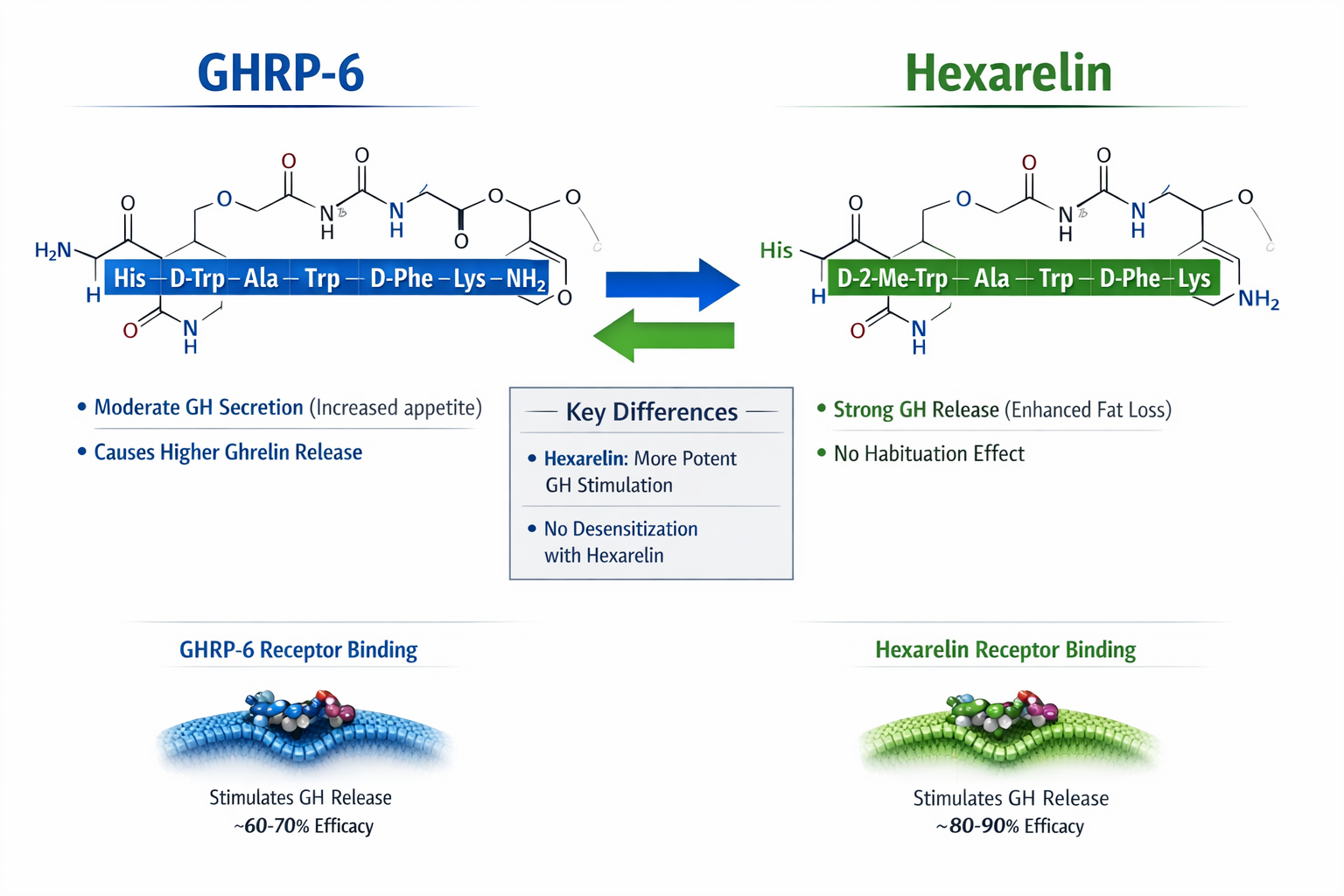
The comparison between GHRP-6 peptide vs hexarelin begins with understanding their distinct molecular structures and mechanisms of action. GHRP-6 (Growth Hormone Releasing Peptide-6) belongs to the family of growth hormone secretagogues, designed to stimulate the natural release of growth hormone from the pituitary gland. This peptide consists of six amino acids and works by binding to specific receptors in the hypothalamus and pituitary gland.
Hexarelin, on the other hand, represents a more potent synthetic growth hormone-releasing peptide. Its molecular structure allows for stronger binding affinity to growth hormone secretagogue receptors, resulting in more pronounced growth hormone release compared to GHRP-6. Research indicates that hexarelin can stimulate growth hormone levels up to 10 times higher than baseline measurements.
The fundamental difference in the GHRP-6 peptide vs hexarelin comparison lies in their receptor selectivity and downstream effects. GHRP-6 demonstrates a broader range of physiological effects, including appetite stimulation through ghrelin receptor activation. This makes it particularly interesting for research involving metabolic processes and recovery protocols.
Hexarelin's mechanism focuses primarily on growth hormone release with additional effects on cardiovascular function. Studies have shown that hexarelin can influence cardiac output and may have protective effects on heart tissue, making it valuable for cardiovascular research applications.
For researchers exploring peptide options, understanding these mechanistic differences is crucial for selecting the appropriate compound for specific research objectives.
Molecular Structure and Receptor Binding
The structural analysis of GHRP-6 peptide vs hexarelin reveals important differences in their pharmacological profiles. GHRP-6's amino acid sequence (His-D-Trp-Ala-Trp-D-Phe-Lys-NH2) provides moderate binding affinity to growth hormone secretagogue receptors, resulting in predictable and sustainable growth hormone release patterns.
Hexarelin's modified structure enhances its binding affinity significantly, leading to more potent growth hormone stimulation. However, this increased potency comes with the trade-off of potential receptor desensitization with prolonged use, a factor that doesn't significantly affect GHRP-6 research applications.
GHRP-6 Peptide vs Hexarelin: Research Applications and Protocols
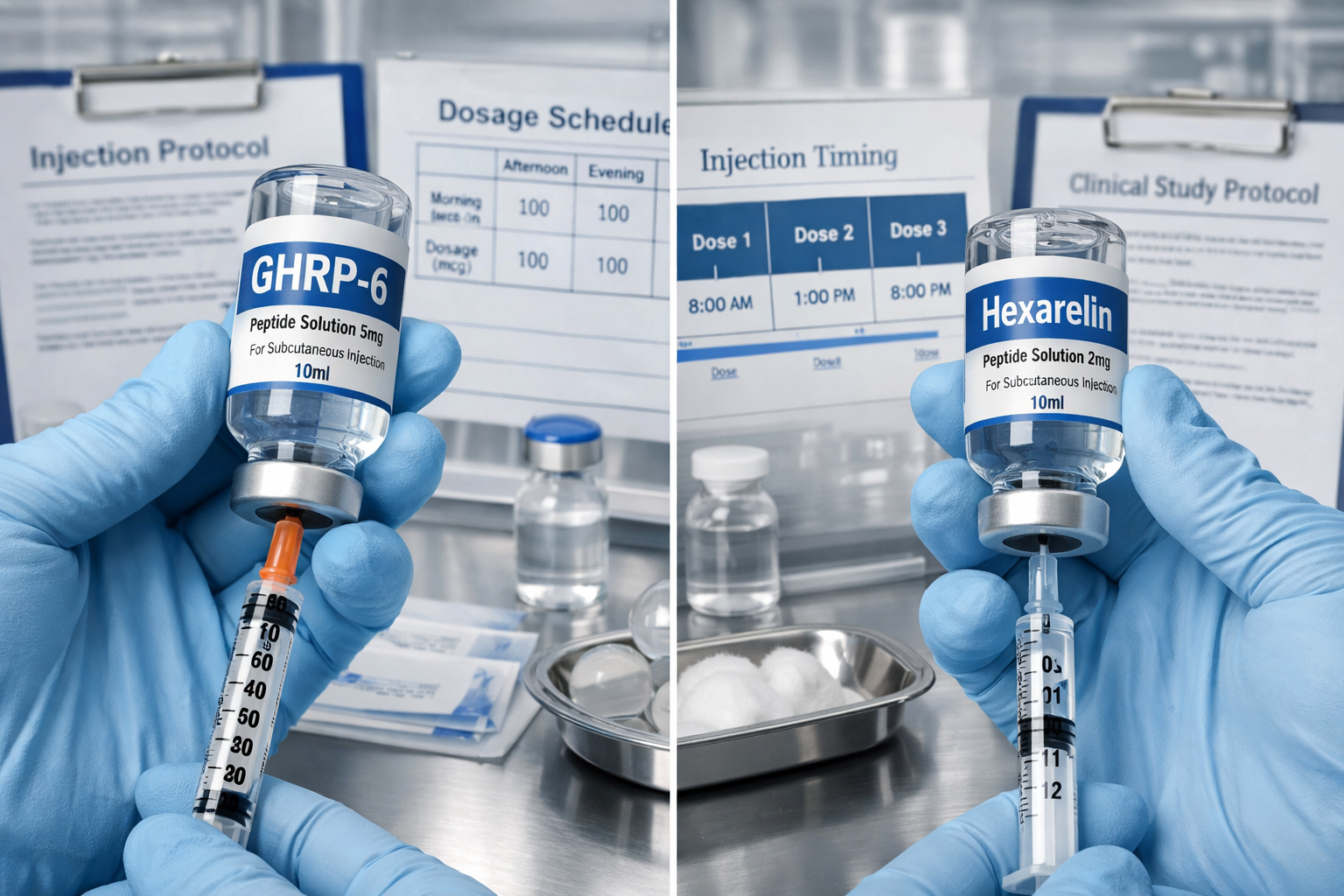
When examining GHRP-6 peptide vs hexarelin for research purposes, the application protocols differ significantly based on each peptide's unique characteristics. GHRP-6 research typically involves longer-term studies due to its sustainable effects and lower risk of receptor desensitization. Research protocols often span several weeks to months, allowing for comprehensive data collection on growth hormone patterns and associated physiological changes.
GHRP-6 research applications frequently focus on:
- Metabolic studies examining appetite regulation and energy balance
- Recovery research investigating tissue repair and regeneration
- Sleep pattern analysis studying growth hormone's role in sleep quality
- Body composition research examining changes in lean mass and fat distribution
Hexarelin research protocols tend to be more intensive but shorter in duration. The peptide's potent effects make it suitable for studies requiring rapid growth hormone elevation and immediate physiological responses. Researchers often design hexarelin studies with cycling protocols to prevent receptor desensitization.
Hexarelin research applications commonly include:
- Acute growth hormone response studies measuring immediate hormonal changes
- Cardiovascular research examining heart function and protection
- Neuroprotective studies investigating brain health applications
- Bone density research analyzing skeletal system responses
The dosing protocols in GHRP-6 peptide vs hexarelin research vary considerably. GHRP-6 studies typically employ doses ranging from 100-300 mcg per administration, with multiple daily doses being common in research settings. The peptide's appetite-stimulating effects must be considered when designing study protocols.
Hexarelin research protocols usually involve lower doses (50-200 mcg) due to its increased potency. The timing of administration becomes critical in hexarelin studies, as the peptide's effects are more pronounced and shorter-lived compared to GHRP-6.
For comprehensive peptide research, many investigators explore additional peptide options to understand the full spectrum of growth hormone-releasing compounds.
Research Timeline Considerations
The temporal aspects of GHRP-6 peptide vs hexarelin research require careful planning. GHRP-6 studies benefit from extended observation periods, allowing researchers to track gradual changes in growth hormone patterns and associated physiological markers. The peptide's consistent effects make it suitable for longitudinal research designs.
Hexarelin research demands more intensive monitoring during shorter periods. The peptide's rapid onset and potent effects require frequent data collection points to capture the full range of physiological responses. Research teams often implement multiple daily measurements during hexarelin studies.
GHRP-6 Peptide vs Hexarelin: Safety Profiles and Research Considerations
The safety profiles in GHRP-6 peptide vs hexarelin research present distinct considerations for investigators. GHRP-6 demonstrates a well-established safety record in research settings, with most studies reporting minimal adverse effects. The primary considerations in GHRP-6 research involve its appetite-stimulating properties, which can influence study outcomes if not properly controlled.
Common GHRP-6 research observations include:
- Increased appetite and food intake
- Mild injection site reactions
- Temporary increases in cortisol levels
- Enhanced sleep quality in some subjects
- Gradual changes in body composition markers
Hexarelin's safety profile requires more careful monitoring due to its potent effects and potential for receptor desensitization. Research teams must implement appropriate cycling protocols and monitor subjects more intensively during hexarelin studies.
Hexarelin research considerations encompass:
- Potential receptor desensitization with prolonged use
- More pronounced growth hormone fluctuations
- Cardiovascular effects requiring monitoring
- Possible impact on glucose metabolism
- Need for strategic dosing intervals
The GHRP-6 peptide vs hexarelin safety comparison favors GHRP-6 for longer-term research applications. Its gentler effects and lower risk of desensitization make it more suitable for extended studies. Hexarelin's intense effects require more sophisticated research protocols but can provide valuable data on acute physiological responses.
Quality sourcing becomes paramount in peptide research. Researchers should prioritize verified peptide suppliers to ensure research integrity and subject safety. The purity and authenticity of research peptides directly impact study outcomes and data validity.
Monitoring Protocols and Data Collection
Effective monitoring in GHRP-6 peptide vs hexarelin research requires tailored approaches for each peptide. GHRP-6 studies benefit from regular but less frequent monitoring, with weekly or bi-weekly assessments often sufficient for tracking changes. Key monitoring parameters include growth hormone levels, IGF-1 measurements, body composition analysis, and appetite assessments.
Hexarelin research demands more intensive monitoring protocols. Daily or even multiple daily assessments may be necessary to capture the peptide's rapid effects. Cardiovascular monitoring becomes particularly important in hexarelin studies due to the peptide's effects on heart function.
Specialized peptide research often requires comprehensive monitoring equipment and trained personnel to ensure accurate data collection and subject safety throughout the study period.
Research Outcomes and Data Analysis: GHRP-6 Peptide vs Hexarelin
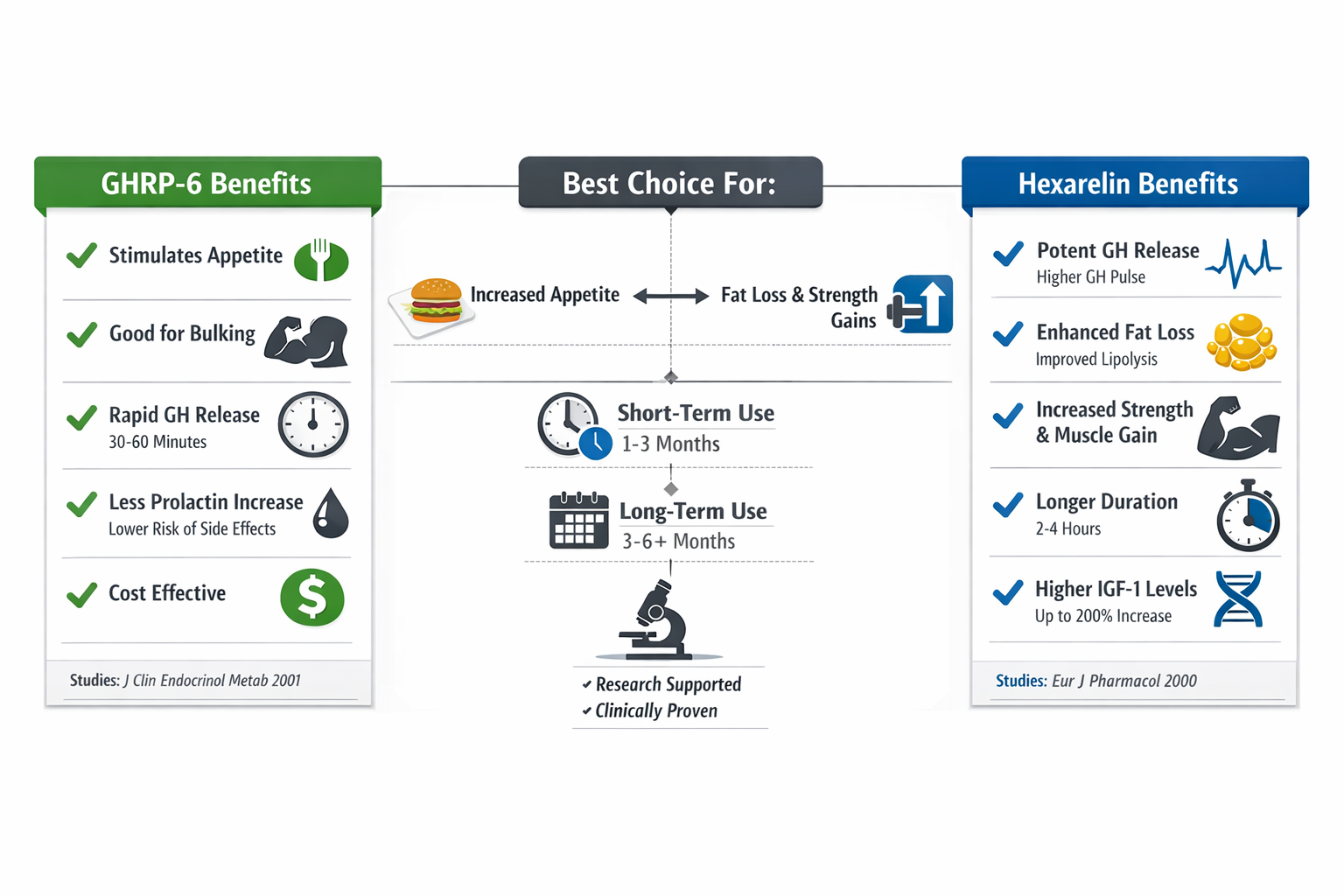
The research outcomes in GHRP-6 peptide vs hexarelin studies reveal distinct patterns that reflect each peptide's unique characteristics. GHRP-6 research typically demonstrates gradual, sustained improvements in measured parameters. Studies consistently show moderate but persistent increases in growth hormone levels, with associated improvements in recovery markers and body composition changes.
Typical GHRP-6 research outcomes include:
- Sustained growth hormone elevation lasting 2-4 hours post-administration
- Improved sleep quality with enhanced deep sleep phases
- Gradual body composition changes over 8-12 week study periods
- Enhanced recovery markers including reduced inflammation indicators
- Increased appetite and food intake affecting metabolic measurements
Hexarelin research produces more dramatic short-term results but requires careful interpretation due to the peptide's intense effects. Studies show rapid, significant increases in growth hormone levels that can exceed 10-fold baseline measurements. However, these effects are typically shorter-lived and may diminish with repeated exposure.
Characteristic hexarelin research findings encompass:
- Rapid, intense growth hormone spikes within 30-60 minutes
- Significant cardiovascular effects including increased cardiac output
- Pronounced but temporary metabolic changes
- Potential neuroprotective effects in specialized studies
- Risk of diminishing returns with prolonged administration
The data analysis approaches for GHRP-6 peptide vs hexarelin research must account for these different response patterns. GHRP-6 studies benefit from trend analysis over extended periods, while hexarelin research requires focus on acute response measurements and careful timing of data collection points.
Statistical considerations in GHRP-6 peptide vs hexarelin research differ significantly. GHRP-6 studies often employ repeated measures analysis to track gradual changes over time. The peptide's consistent effects allow for predictable statistical modeling and reliable outcome predictions.
Hexarelin research requires more sophisticated statistical approaches to account for the peptide's variable effects and potential desensitization. Researchers often employ time-series analysis and non-linear modeling to capture the complex response patterns associated with hexarelin administration.
For researchers interested in expanding their peptide knowledge, exploring related compounds can provide valuable context for understanding the broader landscape of growth hormone-releasing peptides.
<!DOCTYPE html>
<html lang="en">
<head>
<meta charset="UTF-8">
<meta name="viewport" content="width=device-width, initial-scale=1.0">
<title>GHRP-6 vs Hexarelin Comparison Tool</title>
<style>
.cg-element-container {
max-width: 800px;
margin: 20px auto;
font-family: 'Segoe UI', Tahoma, Geneva, Verdana, sans-serif;
background: #f8f9fa;
border-radius: 12px;
padding: 25px;
box-shadow: 0 4px 6px rgba(0,0,0,0.1);
}
.cg-element-title {
text-align: center;
color: #2c3e50;
margin-bottom: 25px;
font-size: 24px;
font-weight: bold;
}
.cg-element-tabs {
display: flex;
background: #fff;
border-radius: 8px;
margin-bottom: 20px;
overflow: hidden;
box-shadow: 0 2px 4px rgba(0,0,0,0.1);
}
.cg-element-tab {
flex: 1;
padding: 15px 20px;
background: #e9ecef;
border: none;
cursor: pointer;
font-size: 16px;
font-weight: 600;
transition: all 0.3s ease;
color: #495057;
}
.cg-element-tab.active {
background: #007bff;
color: white;
}
.cg-element-tab:hover {
background: #0056b3;
color: white;
}
.cg-element-content {
display: none;
background: white;
padding: 20px;
border-radius: 8px;
box-shadow: 0 2px 4px rgba(0,0,0,0.1);
}
.cg-element-content.active {
display: block;
}
.cg-element-comparison-grid {
display: grid;
grid-template-columns: 1fr 1fr;
gap: 20px;
margin-top: 20px;
}
.cg-element-peptide-card {
background: #f8f9fa;
padding: 20px;
border-radius: 8px;
border-left: 4px solid #007bff;
}
.cg-element-peptide-card.hexarelin {
border-left-color: #28a745;
}
.cg-element-peptide-title {
font-size: 18px;
font-weight: bold;
margin-bottom: 15px;
color: #2c3e50;
}
.cg-element-feature-list {
list-style: none;
padding: 0;
}
.cg-element-feature-list li {
padding: 8px 0;
border-bottom: 1px solid #dee2e6;
display: flex;
justify-content: space-between;
align-items: center;
}
.cg-element-feature-list li:last-child {
border-bottom: none;
}
.cg-element-rating {
display: flex;
gap: 2px;
}
.cg-element-star {
width: 16px;
height: 16px;
background: #ffc107;
clip-path: polygon(50% 0%, 61% 35%, 98% 35%, 68% 57%, 79% 91%, 50% 70%, 21% 91%, 32% 57%, 2% 35%, 39% 35%);
}
.cg-element-star.empty {
background: #e9ecef;
}
.cg-element-dosage-calc {
background: white;
padding: 20px;
border-radius: 8px;
margin-top: 20px;
}
.cg-element-input-group {
margin-bottom: 15px;
}
.cg-element-label {
display: block;
margin-bottom: 5px;
font-weight: 600;
color: #495057;
}
.cg-element-input {
width: 100%;
padding: 10px;
border: 2px solid #dee2e6;
border-radius: 4px;
font-size: 14px;
}
.cg-element-input:focus {
border-color: #007bff;
outline: none;
}
.cg-element-result {
background: #e7f3ff;
padding: 15px;
border-radius: 6px;
margin-top: 15px;
border-left: 4px solid #007bff;
}
@media (max-width: 768px) {
.cg-element-comparison-grid {
grid-template-columns: 1fr;
}
.cg-element-tabs {
flex-direction: column;
}
}
</style>
</head>
<body>
<div class="cg-element-container">
<h2 class="cg-element-title">GHRP-6 vs Hexarelin Interactive Comparison</h2>
<div class="cg-element-tabs">
<button class="cg-element-tab active" onclick="cgShowTab('comparison')">Side-by-Side Comparison</button>
<button class="cg-element-tab" onclick="cgShowTab('dosage')">Dosage Calculator</button>
<button class="cg-element-tab" onclick="cgShowTab('timeline')">Research Timeline</button>
</div>
<div id="comparison" class="cg-element-content active">
<div class="cg-element-comparison-grid">
<div class="cg-element-peptide-card">
<div class="cg-element-peptide-title">GHRP-6</div>
<ul class="cg-element-feature-list">
<li>
<span>Potency</span>
<div class="cg-element-rating">
<div class="cg-element-star"></div>
<div class="cg-element-star"></div>
<div class="cg-element-star"></div>
<div class="cg-element-star empty"></div>
<div class="cg-element-star empty"></div>
</div>
</li>
<li>
<span>Duration</span>
<div class="cg-element-rating">
<div class="cg-element-star"></div>
<div class="cg-element-star"></div>
<div class="cg-element-star"></div>
<div class="cg-element-star"></div>
<div class="cg-element-star empty"></div>
</div>
</li>
<li>
<span>Appetite Effects</span>
<div class="cg-element-rating">
<div class="cg-element-star"></div>
<div class="cg-element-star"></div>
<div class="cg-element-star"></div>
<div class="cg-element-star"></div>
<div class="cg-element-star"></div>
</div>
</li>
<li>
<span>Research Sustainability</span>
<div class="cg-element-rating">
<div class="cg-element-star"></div>
<div class="cg-element-star"></div>
<div class="cg-element-star"></div>
<div class="cg-element-star"></div>
<div class="cg-element-star"></div>
</div>
</li>
<li><span>Typical Dose Range</span><span>100-300 mcg</span></li>
<li><span>Administration Frequency</span><span>2-3x daily</span></li>
</ul>
</div>
<div class="cg-element-peptide-card hexarelin">
<div class="cg-element-peptide-title">Hexarelin</div>
<ul class="cg-element-feature-list">
<li>
<span>Potency</span>
<div class="cg-element-rating">
<div class="cg-element-star"></div>
<div class="cg-element-star"></div>
<div class="cg-element-star"></div>
<div class="cg-element-star"></div>
<div class="cg-element-star"></div>
</div>
</li>
<li>
<span>Duration</span>
<div class="cg-element-rating">
<div class="cg-element-star"></div>
<div class="cg-element-star"></div>
<div class="cg-element-star empty"></div>
<div class="cg-element-star empty"></div>
<div class="cg-element-star empty"></div>
</div>
</li>
<li>
<span>Appetite Effects</span>
<div class="cg-element-rating">
<div class="cg-element-star"></div>
<div class="cg-element-star"></div>
<div class="cg-element-star empty"></div>
<div class="cg-element-star empty"></div>
<div class="cg-element-star empty"></div>
</div>
</li>
<li>
<span>Research Sustainability</span>
<div class="cg-element-rating">
<div class="cg-element-star"></div>
<div class="cg-element-star"></div>
<div class="cg-element-star"></div>
<div class="cg-element-star empty"></div>
<div class="cg-element-star empty"></div>
</div>
</li>
<li><span>Typical Dose Range</span><span>50-200 mcg</span></li>
<li><span>Administration Frequency</span><span>1-2x daily</span></li>
</ul>
</div>
</div>
</div>
<div id="dosage" class="cg-element-content">
<div class="cg-element-dosage-calc">
<h3>Research Dosage Calculator</h3>
<div class="cg-element-input-group">
<label class="cg-element-label">Select Peptide:</label>
<select class="cg-element-input" id="peptideType" onchange="cgCalculateDosage()">
<option value="ghrp6">GHRP-6</option>
<option value="hexarelin">Hexarelin</option>
</select>
</div>
<div class="cg-element-input-group">
<label class="cg-element-label">Research Subject Weight (kg):</label>
<input type="number" class="cg-element-input" id="subjectWeight" placeholder="70" onchange="cgCalculateDosage()">
</div>
<div class="cg-element-input-group">
<label class="cg-element-label">Research Intensity:</label>
<select class="cg-element-input" id="intensity" onchange="cgCalculateDosage()">
<option value="low">Conservative</option>
<option value="moderate">Moderate</option>
<option value="high">Intensive</option>
</select>
</div>
<div class="cg-element-result" id="dosageResult">
Select parameters above to calculate research dosage recommendations.
</div>
</div>
</div>
<div id="timeline" class="cg-element-content">
<h3>Research Timeline Comparison</h3>
<div class="cg-element-comparison-grid">
<div class="cg-element-peptide-card">
<div class="cg-element-peptide-title">GHRP-6 Research Timeline</div>
<ul class="cg-element-feature-list">
<li><span>Week 1-2</span><span>Baseline establishment</span></li>
<li><span>Week 3-4</span><span>Initial adaptations</span></li>
<li><span>Week 5-8</span><span>Sustained effects</span></li>
<li><span>Week 9-12</span><span>Long-term analysis</span></li>
<li><span>Optimal Duration</span><span>8-16 weeks</span></li>
</ul>
</div>
<div class="cg-element-peptide-card hexarelin">
<div class="cg-element-peptide-title">Hexarelin Research Timeline</div>
<ul class="cg-element-feature-list">
<li><span>Week 1-2</span><span>Peak response period</span></li>
<li><span>Week 3-4</span><span>Adaptation phase</span></li>
<li><span>Week 5-6</span><span>Potential plateau</span></li>
<li><span>Week 7+</span><span>Cycling required</span></li>
<li><span>Optimal Duration</span><span>4-6 weeks cycles</span></li>
</ul>
</div>
</div>
</div>
</div>
<script>
function cgShowTab(tabName) {
// Hide all content
const contents = document.querySelectorAll('.cg-element-content');
contents.forEach(content => content.classList.remove('active'));
// Remove active from all tabs
const tabs = document.querySelectorAll('.cg-element-tab');
tabs.forEach(tab => tab.classList.remove('active'));
// Show selected content
document.getElementById(tabName).classList.add('active');
// Add active to clicked tab
event.target.classList.add('active');
}
function cgCalculateDosage() {
const peptideType = document.getElementById('peptideType').value;
const weight = parseFloat(document.getElementById('subjectWeight').value);
const intensity = document.getElementById('intensity').value;
const resultDiv = document.getElementById('dosageResult');
if (!weight || weight <= 0) {
resultDiv.innerHTML = 'Please enter a valid weight to calculate dosage.';
return;
}
let baseDosage, maxDosage, frequency;
if (peptideType === 'ghrp6') {
baseDosage = intensity === 'low' ? 100 : intensity === 'moderate' ? 200 : 300;
maxDosage = Math.min(baseDosage + (weight * 2), 400);
frequency = '2-3 times daily';
} else {
baseDosage = intensity === 'low' ? 50 : intensity === 'moderate' ? 100 : 150;
maxDosage = Math.min(baseDosage + (weight * 1.5), 200);
frequency = '1-2 times daily';
}
resultDiv.innerHTML = `
<strong>Research Dosage Recommendation:</strong><br>
Peptide: ${peptideType.toUpperCase()}<br>
Suggested Range: ${Math.round(baseDosage)}-${Math.round(maxDosage)} mcg<br>
Frequency: ${frequency}<br>
<em>Note: These are research guidelines only. Always follow proper research protocols.</em>
`;
}
</script>
</body>
</html>
Research Design Considerations
Effective research design in GHRP-6 peptide vs hexarelin studies requires understanding each peptide's unique characteristics. GHRP-6 research benefits from longitudinal designs that can capture gradual changes over extended periods. The peptide's consistent effects make it suitable for randomized controlled trials with extended follow-up periods.
Hexarelin research often employs crossover designs or short-term intensive protocols. The peptide's potent but potentially diminishing effects require careful study design to maximize data collection while minimizing confounding variables related to receptor desensitization.
Conclusion: Making Informed Decisions About GHRP-6 Peptide vs Hexarelin
The comprehensive analysis of GHRP-6 peptide vs hexarelin reveals two distinct peptides with unique research applications and characteristics. GHRP-6 emerges as the preferred choice for long-term research studies requiring sustained, moderate effects with minimal risk of receptor desensitization. Its appetite-stimulating properties and consistent growth hormone release patterns make it valuable for metabolic and recovery research.
Hexarelin stands out for research requiring intense, rapid growth hormone stimulation and cardiovascular investigations. Its potent effects and additional cardiovascular benefits provide unique research opportunities, though careful protocol design is essential to manage potential desensitization issues.
The choice between GHRP-6 peptide vs hexarelin ultimately depends on specific research objectives, timeline requirements, and monitoring capabilities. Researchers seeking sustained, predictable effects should consider GHRP-6, while those requiring intense, short-term responses may find hexarelin more suitable.
Key decision factors include:
✅ Research duration requirements – GHRP-6 for extended studies, hexarelin for short-term intensive research
✅ Monitoring capabilities – GHRP-6 requires less intensive monitoring than hexarelin
✅ Specific research objectives – metabolic studies favor GHRP-6, cardiovascular research may benefit from hexarelin
✅ Subject considerations – appetite effects with GHRP-6, potential desensitization with hexarelin
Next Steps for Researchers
Researchers interested in exploring GHRP-6 peptide vs hexarelin should begin by clearly defining their research objectives and available resources. Consider consulting with experienced peptide researchers and reviewing current literature to inform study design decisions.
For those ready to proceed with peptide research, sourcing high-quality compounds from reputable suppliers remains crucial for research integrity and meaningful results. Proper planning, quality materials, and appropriate monitoring protocols form the foundation of successful peptide research in 2026.
[Shortcode: product_list_slider]
SEO Meta Information:
Meta Title: GHRP-6 Peptide vs Hexarelin: Complete 2026 Research Guide
Meta Description: Compare GHRP-6 peptide vs hexarelin for research applications. Comprehensive guide covering mechanisms, protocols, safety profiles, and research outcomes for 2026.