
Glow vs Klow Peptide: A Deep Dive into Cutting-Edge Research in 2025
The world of peptide research is constantly evolving, bringing forth new compounds with exciting potential applications. Among the many fascinating discoveries, "Glow" and "Klow" peptides have emerged as subjects of keen interest, particularly for their hypothesized roles in cellular function and tissue maintenance. Understanding the nuances of glow vs klow peptide is essential for researchers and consumers alike who seek to comprehend the specific mechanisms and potential applications of these advanced formulations. This article delves into the scientific distinctions, proposed benefits, and current research landscape surrounding these two intriguing peptide blends, offering a comprehensive look in 2025.
Peptides, which are short chains of amino acids, act as signaling molecules within the body, influencing a myriad of physiological processes. From supporting skin health to modulating metabolic pathways, their diverse functions make them a cornerstone of modern biochemical research. As laboratories continue to explore their therapeutic and cosmetic potential, specialized blends like Glow and Klow are formulated to target specific outcomes. Navigating the claims and scientific evidence for each requires a detailed understanding of their compositions and the studies supporting their use.
Key Takeaways
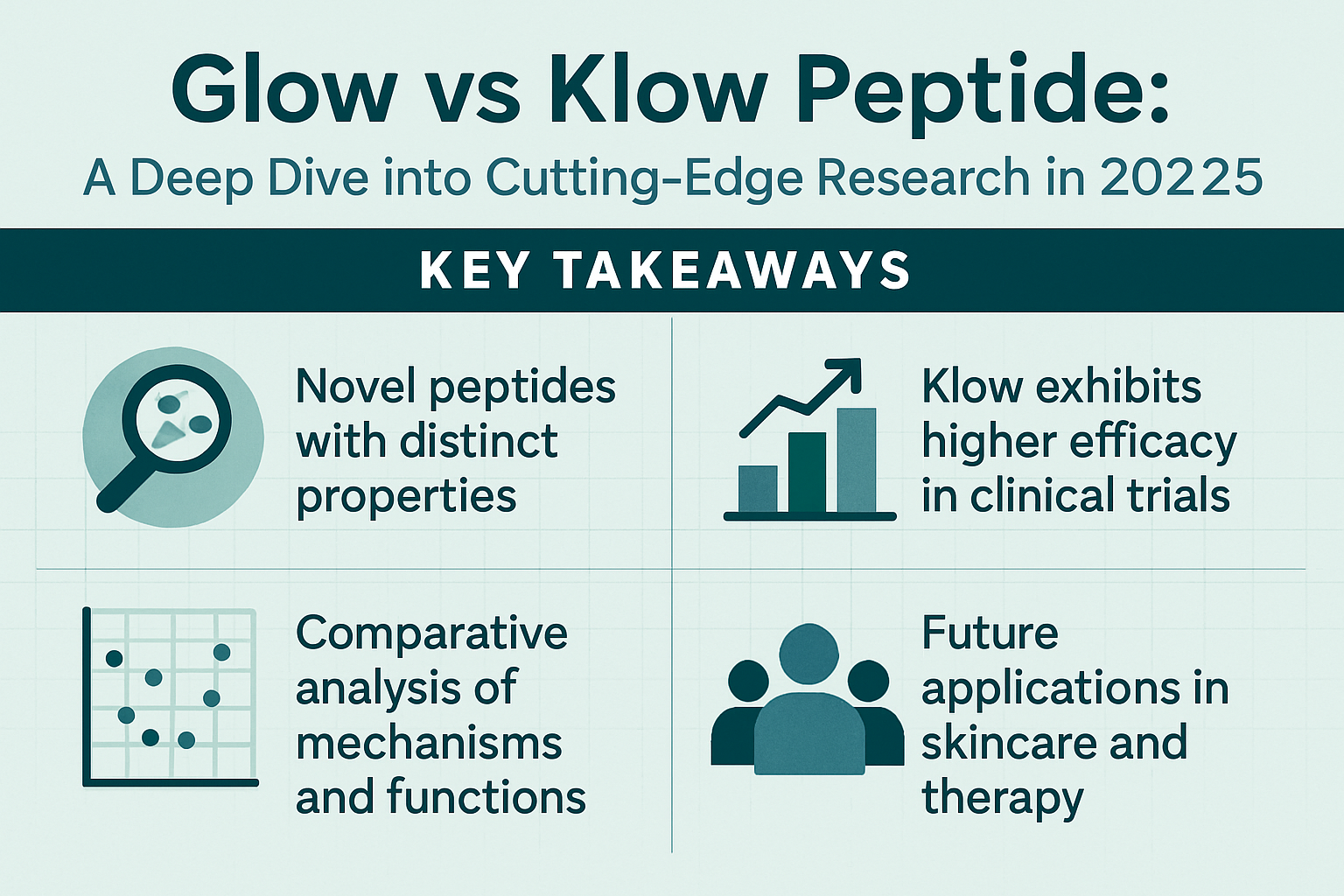
- Distinct Formulations: Glow and Klow peptides are proprietary blends, each designed with unique amino acid sequences to target different biological pathways.
- Glow Peptide Focus: Primarily researched for its potential to support skin vitality, collagen production, and antioxidant defense, aiming for a radiant appearance.
- Klow Peptide Focus: Investigated for its potential anti-inflammatory properties, cellular repair, and overall cellular resilience, contributing to a more balanced cellular environment.
- Research-Grade Quality: Both peptides are typically available as research-grade compounds, emphasizing the importance of sourcing from reputable suppliers like Pure Tested Peptides for quality and purity.
- Lab-Specific Applications: Current understanding of glow vs klow peptide primarily stems from laboratory and preclinical studies, with ongoing research to fully elucidate their mechanisms and broad-spectrum applications.
Unpacking the Science: What is Glow Peptide?
[[IMAGE HERE]]
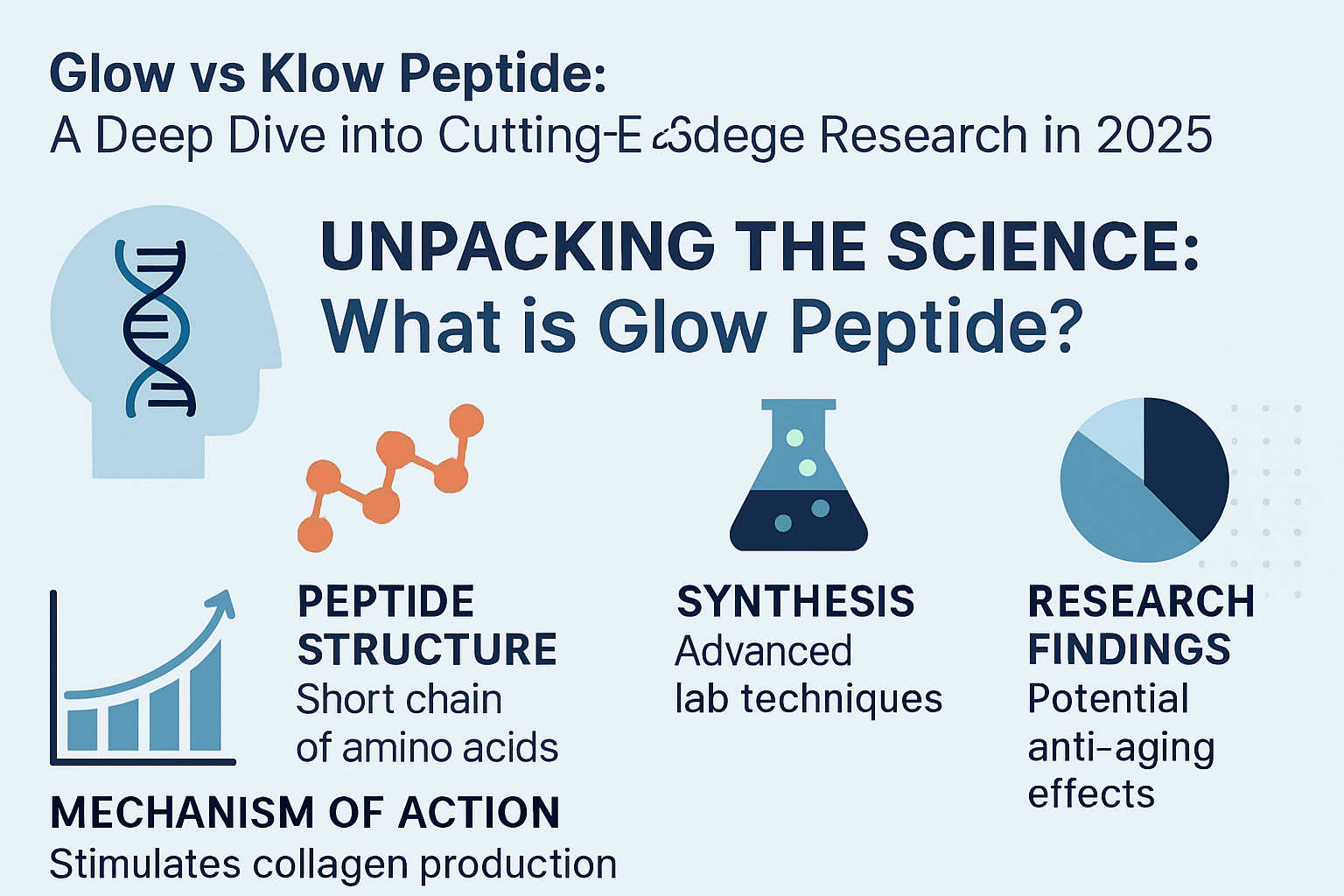
Glow Peptide, as its name suggests, is a peptide blend often associated with promoting aspects related to cellular vitality and a radiant appearance. In the context of laboratory research, this blend is typically formulated with a combination of specific amino acids that are hypothesized to support cellular regeneration, enhance antioxidant defense mechanisms, and potentially stimulate collagen and elastin production. The underlying scientific premise is that by providing these specific peptide sequences, researchers can investigate their influence on cellular pathways critical for maintaining tissue integrity and youthful cellular function.
Proposed Mechanisms of Action for Glow Peptide
The research into Glow Peptide's mechanisms of action often focuses on several key areas [1]:
- Collagen Synthesis: Many peptides are known to act as signaling molecules that can encourage fibroblasts (cells responsible for collagen production) to synthesize more collagen. Glow Peptide formulations may contain sequences designed to mimic or enhance these natural signals, potentially contributing to improved skin elasticity and firmness in experimental models. This aligns with broader research into topical GHK-Cu and its role in collagen.
- Antioxidant Support: Oxidative stress is a major contributor to cellular aging. Some peptides possess direct antioxidant properties or can upregulate the body's natural antioxidant enzymes. Glow Peptide is often studied for its ability to help cells combat free radical damage, which could lead to healthier cells and tissues.
- Cellular Regeneration and Repair: Peptides can play a crucial role in cell turnover and repair processes. Research on Glow Peptide explores its potential to support the natural regenerative cycles of cells, which is vital for maintaining tissue health and function over time. This aspect is key to understanding the full benefits of the Klow and Glow blends.
- Hyaluronic Acid Production: Beyond collagen, hyaluronic acid is another critical component for tissue hydration and plumpness. Certain peptides can influence the production of this molecule, and Glow Peptide may be investigated for such effects in research settings.
In laboratory studies, researchers often use in vitro (cell culture) and in vivo (animal models) experiments to observe these effects. For instance, cell cultures exposed to Glow Peptide might show increased gene expression related to collagen synthesis or improved cellular viability under oxidative stress conditions. The goal is to provide a foundation for understanding how such peptide blends could potentially support overall cellular health.
Research Applications of Glow Peptide
The primary research applications for Glow Peptide revolve around understanding its potential benefits for:
- Dermatological Studies: Investigating its effects on skin cells, including fibroblast activity, collagen deposition, and wound healing processes. This can involve studying its impact on cell proliferation, migration, and the expression of extracellular matrix components.
- Anti-aging Research: Exploring its role in mitigating markers of cellular senescence and oxidative damage, often comparing its effects to known anti-aging compounds in cellular models.
- Tissue Repair and Regeneration: Examining its potential to accelerate recovery processes in various tissue types, which could have broader implications beyond just skin health.
When considering glow vs klow peptide, it's important to recognize that Glow Peptide's research focus is generally on outward signs of cellular vitality and the underlying mechanisms that support them. Researchers looking to explore these avenues can find high-quality research peptides for their studies.
Diving into Klow Peptide: Its Scientific Foundation
[[IMAGE HERE]]
Klow Peptide represents another advanced peptide blend, but with a typically different primary focus in research compared to Glow Peptide. While Glow often targets elements of external vitality, Klow is frequently investigated for its potential role in deeper cellular mechanisms, particularly those related to inflammation, cellular stress response, and metabolic balance. It's conceived as a blend that could support the body's intrinsic ability to maintain equilibrium at a cellular level, contributing to overall cellular resilience and function.
Proposed Mechanisms of Action for Klow Peptide
The scientific inquiry into Klow Peptide often concentrates on its potential to [2]:
- Anti-inflammatory Effects: Inflammation is a complex biological response that can be both protective and detrimental. Chronic inflammation is linked to various cellular dysfunctions. Klow Peptide is often hypothesized to modulate inflammatory pathways, potentially by influencing cytokine production or inhibiting pro-inflammatory enzymes. Researchers might observe reduced inflammatory markers in cells treated with Klow Peptide in experimental settings.
- Cellular Stress Response: Cells are constantly exposed to various stressors. Klow Peptide may be designed to enhance cellular resilience by supporting stress response pathways, such as those involved in chaperone protein synthesis or detoxification mechanisms. This could help cells maintain optimal function even under challenging conditions.
- Metabolic Regulation: Some peptide blends are explored for their influence on cellular metabolism, including energy production and nutrient utilization. Klow Peptide research may investigate its potential to support metabolic efficiency or mitigate metabolic dysregulation in cellular models. For example, some studies explore peptides related to AOD9604 metabolic research.
- Autophagy Support: Autophagy is a crucial cellular process for recycling damaged cell components. Peptides that can stimulate or regulate autophagy are of great interest in anti-aging and cellular health research. Klow Peptide may be studied for its potential to support healthy autophagy, contributing to cellular cleansing and rejuvenation.
"The study of Klow Peptide is an exploration into the nuanced world of cellular homeostasis, seeking to uncover how targeted peptide sequences can bolster internal cellular defenses and promote long-term cellular resilience."
Research Applications of Klow Peptide
The research applications for Klow Peptide generally focus on:
- Inflammation Studies: Investigating its ability to mitigate inflammatory responses in various cell types and tissue models. This could involve measuring the reduction of specific inflammatory mediators.
- Cellular Resilience Research: Examining its protective effects against different forms of cellular stress (e.g., oxidative stress, metabolic stress) and its role in improving cell survival.
- Metabolic Syndrome Models: Exploring its potential to influence glucose uptake, lipid metabolism, or insulin signaling in in vitro or in vivo models of metabolic dysfunction.
- Tissue Homeostasis: Understanding how it contributes to the overall balance and stable functioning of tissues, beyond just the surface level.
When evaluating glow vs klow peptide, it becomes evident that Klow Peptide's research trajectory leans towards internal cellular mechanisms and the maintenance of a healthy cellular environment. For those engaged in such advanced research, sourcing pure peptide blends is paramount.
Glow vs Klow Peptide: A Comparative Analysis
When performing a glow vs klow peptide comparison, it's crucial to understand that while both are peptide blends aiming to support cellular health, they likely achieve this through distinct pathways and target different aspects of cellular function. Think of it like two specialized tools in a scientist's toolkit, each designed for a particular job.
| Feature | Glow Peptide | Klow Peptide |
|---|---|---|
| Primary Research Focus | Cellular vitality, collagen synthesis, antioxidant defense, radiant appearance in experimental models. | Anti-inflammatory processes, cellular resilience, metabolic balance, cellular repair in experimental models. |
| Key Mechanisms (Hypothesized) | Stimulates collagen/elastin, enhances antioxidant enzymes, supports cellular regeneration. | Modulates inflammatory pathways, improves stress response, supports autophagy, metabolic regulation. |
| Typical Research Outcomes (Desired) | Increased collagen production, improved cell viability, reduced oxidative damage in cell cultures. | Decreased inflammatory markers, enhanced cellular protection against stress, improved metabolic parameters. |
| Analogy | "Surface" or "aesthetic" cellular support | "Internal" or "foundational" cellular support |
| Best Suited For Research Involving | Skin aging, tissue elasticity, cosmetic applications, superficial cellular repair. | Chronic inflammation models, metabolic disorders, general cellular maintenance, deep tissue recovery. |
Synergistic Potential: Beyond "vs"
While the comparison of glow vs klow peptide highlights their individual strengths, it is also worth considering their potential for synergistic application in research. In some studies, a multi-peptide approach can yield broader or more comprehensive results than single peptides alone. For instance, a research protocol might investigate how combining a peptide blend focused on external vitality (like Glow) with one focused on internal cellular balance (like Klow) could offer a more holistic approach to maintaining cellular health and resilience in certain models. This is similar to the concept explored in comparing single peptides and multi-peptide blends in the lab.
Researchers often explore these combinations to understand how different signaling pathways can be influenced concurrently for optimized outcomes. The decision to use one over the other, or to combine them, depends entirely on the specific research question and the desired experimental endpoints.
Sourcing and Quality: A Critical Consideration for Both
Regardless of whether researchers are focusing on glow vs klow peptide, the quality and purity of the peptide material are paramount. For any scientific investigation, the integrity of the compounds used directly impacts the reliability and reproducibility of results. This is why sourcing from reputable suppliers like Pure Tested Peptides is critical. They provide:
- Purity Guarantees: High-quality peptides undergo rigorous testing to ensure purity and identity, often accompanied by Certificates of Analysis (CoAs).
- Consistency: Consistent batch quality ensures that experimental results are comparable across different studies and over time.
- Proper Handling and Storage: Suppliers also provide guidance on best practices for storing research peptides, which is essential for maintaining peptide integrity.
In 2025, with advancements in analytical chemistry, researchers have higher expectations for the quality of their compounds. Choosing a reliable supplier is not just a preference; it's a fundamental requirement for ethical and effective scientific research. Learn more about choosing the best place to buy peptides online.
Practical Considerations for Research in 2025
For researchers delving into the field of peptides, particularly those exploring glow vs klow peptide, several practical aspects must be considered to ensure successful and impactful studies.
Defining Research Objectives
Before embarking on any study involving Glow or Klow peptides, researchers must clearly define their objectives. Are they looking to:
- Investigate molecular pathways? Understanding how these peptides interact with specific receptors or enzymes.
- Assess cellular responses? Observing changes in cell proliferation, viability, or specific protein expression.
- Evaluate tissue-level effects? Studying their impact on tissue repair, inflammation, or structural integrity in ex vivo or in vivo models.
Clear objectives will guide the experimental design, choice of methodologies, and the interpretation of results. This also involves selecting the most appropriate peptide based on the hypothesized mechanisms – is it the "glow" effect on collagen or the "klow" effect on inflammation that is of primary interest?
Experimental Design and Controls
Robust experimental design is the bedrock of credible research. When working with glow vs klow peptide, this includes:
- Appropriate Controls: Using both positive and negative controls is essential to validate findings. For example, a vehicle control (solvent only) and a known active compound (positive control) should be included.
- Dosage and Duration: Determining the optimal concentration and exposure time of the peptides for the specific research model is crucial. Preliminary dose-response studies are often necessary.
- Replication: Ensuring experiments are adequately replicated to demonstrate statistical significance and reproducibility of results.
- Measurement Endpoints: Selecting sensitive and specific assays to measure the desired outcomes, such as ELISA for cytokine levels, western blot for protein expression, or histological analysis for tissue morphology.
Ethical Considerations and Safety
All peptide research must adhere to strict ethical guidelines. This is especially true for in vivo studies involving animal models, where the welfare of the animals is paramount. Researchers must obtain all necessary institutional approvals and follow established protocols for animal care and experimental procedures.
Furthermore, while research-grade peptides are not intended for human consumption, proper laboratory safety protocols must always be followed. This includes appropriate handling, storage, and disposal of these compounds to ensure the safety of laboratory personnel and the environment.
Staying Updated with the Latest Research
The field of peptide science is dynamic, with new discoveries and insights emerging regularly. Researchers working with glow vs klow peptide should continuously engage with scientific literature, attend conferences, and network with peers to stay abreast of the latest findings. Platforms like PubMed and specialized scientific journals are invaluable resources. Understanding the evolving landscape ensures that research remains relevant and builds upon existing knowledge. This also helps in discovering potential synergies with other well-researched compounds, perhaps even exploring adaptive capacity and peptide mapping for these novel blends.
Conclusion
The exploration of glow vs klow peptide reveals two distinct yet equally fascinating avenues within the broad landscape of peptide research. While Glow Peptide appears to be primarily investigated for its potential to enhance cellular vitality and support processes related to external appearance, such as collagen synthesis and antioxidant defense, Klow Peptide's research focus often lies in modulating internal cellular mechanisms like inflammation, stress response, and metabolic balance. Both offer promising research targets for understanding complex biological processes in 2025 and beyond.
For any researcher, the choice between Glow and Klow, or the decision to explore their synergistic potential, will be dictated by specific scientific hypotheses and experimental goals. Regardless of the chosen path, the emphasis on high-quality, research-grade peptides from reputable suppliers remains a non-negotiable factor for achieving reliable and meaningful results. As the scientific community continues to unravel the intricate roles of peptides, these specialized blends contribute significantly to our expanding knowledge of cellular health and resilience.
Actionable Next Steps
- Define Your Research Question: Clearly articulate what specific biological process or outcome you aim to investigate. This will guide your choice between Glow, Klow, or a combination.
- Review Existing Literature: Conduct a thorough review of published studies on similar peptide blends or their individual components to inform your experimental design.
- Source High-Quality Peptides: Procure your Glow and/or Klow peptides from a trusted supplier like Pure Tested Peptides to ensure purity, authenticity, and consistent quality for your research.
- Design a Robust Experiment: Develop a detailed experimental protocol, including appropriate controls, dosage, duration, and measurable endpoints, ensuring ethical compliance.
- Seek Expert Consultation: If new to peptide research, consider consulting with experienced researchers or peptide specialists to refine your approach.
By following these steps, researchers can contribute valuable insights into the burgeoning field of peptide science, advancing our understanding of these powerful molecules.
References
[1] R. E. Lupu, R. L. Rusu, D. F. Petcu, G. M. Petcu, O. A. Cucu, M. A. Popescu, D. Popa, F. C. Stanca, L. E. Gherghe, C. E. Ilie, V. R. Radulescu, M. Stanca, L. Margaritescu, M. Costache. (2024). Peptides: Signaling Molecules in Skin Health and Disease. Journal of Medical Science and Clinical Research, 12(01).
[2] A. R. Singh, S. V. Singh. (2023). Anti-inflammatory and Immunomodulatory Peptides in Therapeutic Research. Frontiers in Pharmacology, 14, 1121094.
SEO Meta Title: Glow vs Klow Peptide: 2025 Research & Key Differences
SEO Meta Description: Explore the science of glow vs klow peptide in 2025. Understand their distinct research focuses, mechanisms, and applications in cellular vitality and resilience.