
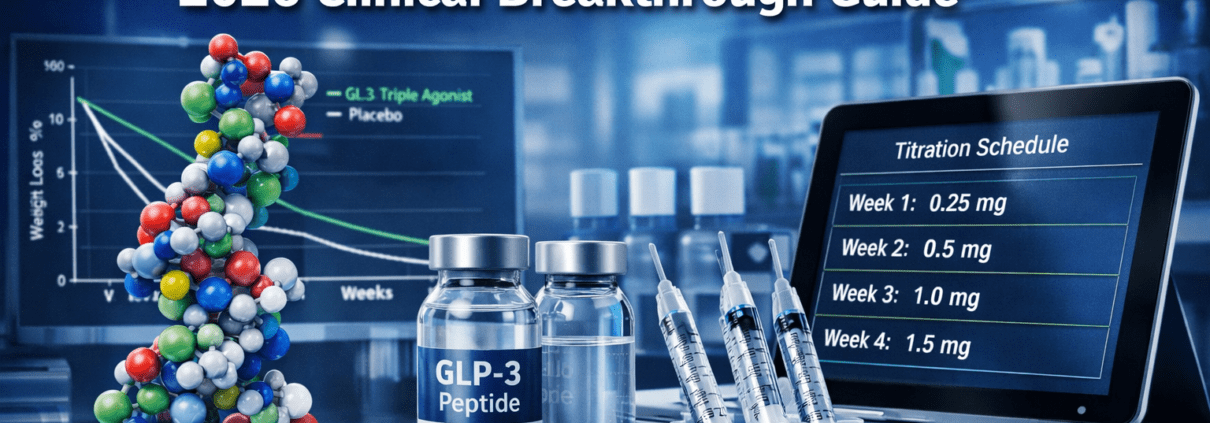
GLP-3 Peptide Dosage Research: Complete 2026 Clinical Guide for Fitness Enthusiasts
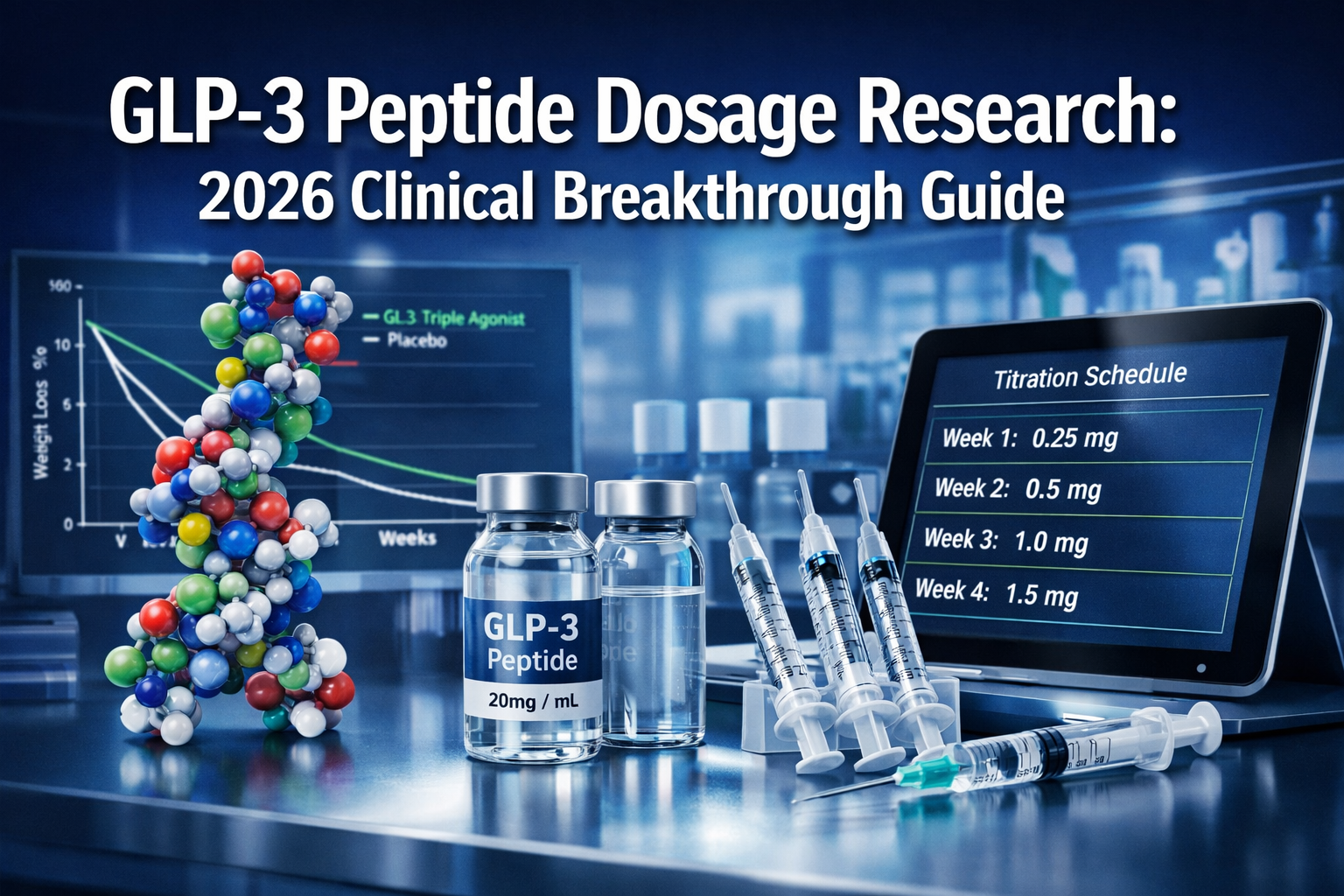
The world of metabolic peptides just witnessed its most significant breakthrough yet. In early 2026, GLP-3 peptide dosage research from the landmark TRIUMPH-4 trial revealed that retatrutide—a triple-agonist peptide—achieved nearly 29% body weight loss at optimal dosing, essentially doubling the results of previous generation medications.[4] For fitness enthusiasts and peptide shoppers seeking evidence-based guidance, understanding the precise dosing protocols behind these remarkable outcomes has become essential.
GLP-3 peptide dosage research represents the cutting edge of metabolic optimization, combining GLP-1, GIP, and glucagon receptor activation in a single compound. Unlike earlier peptides that targeted one or two pathways, this triple-agonist approach has redefined what's possible in body composition research. The question isn't whether these peptides work—the clinical data speaks for itself—but rather how to implement dosing strategies that maximize benefits while minimizing side effects.
Key Takeaways
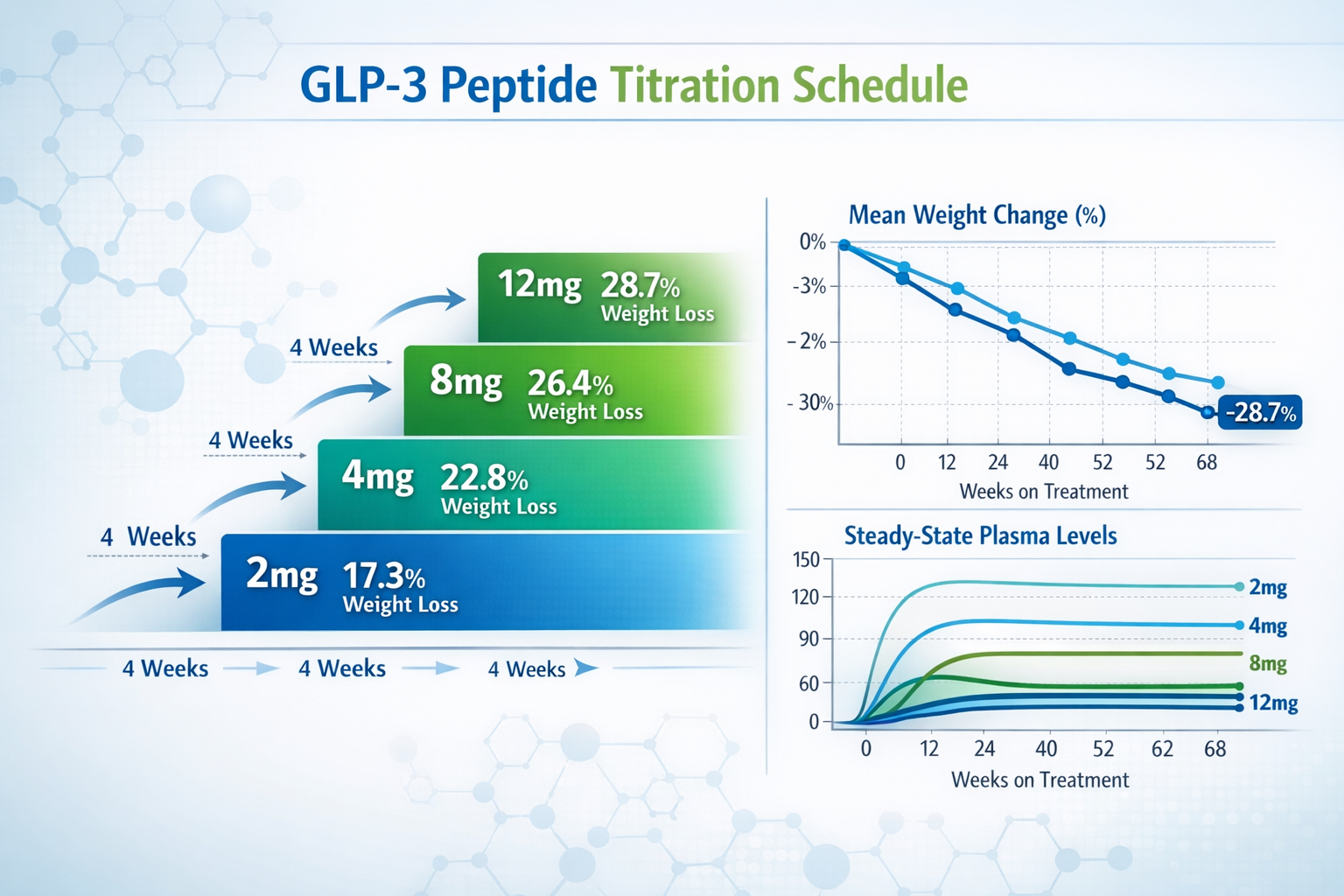
- Clinical trials demonstrate 28.7% weight loss at the 12mg weekly dose and 26.4% at 9mg after 68 weeks, with the standard titration starting at 2mg and escalating every 4 weeks[4]
- The established dosing sequence follows 2mg → 4mg → 8mg → 12mg weekly, with many researchers finding 8mg sufficient for optimal results without requiring maximum doses[1]
- Retatrutide has a 6-day half-life and reaches steady state in 4-5 weeks, supporting once-weekly administration protocols[1][2]
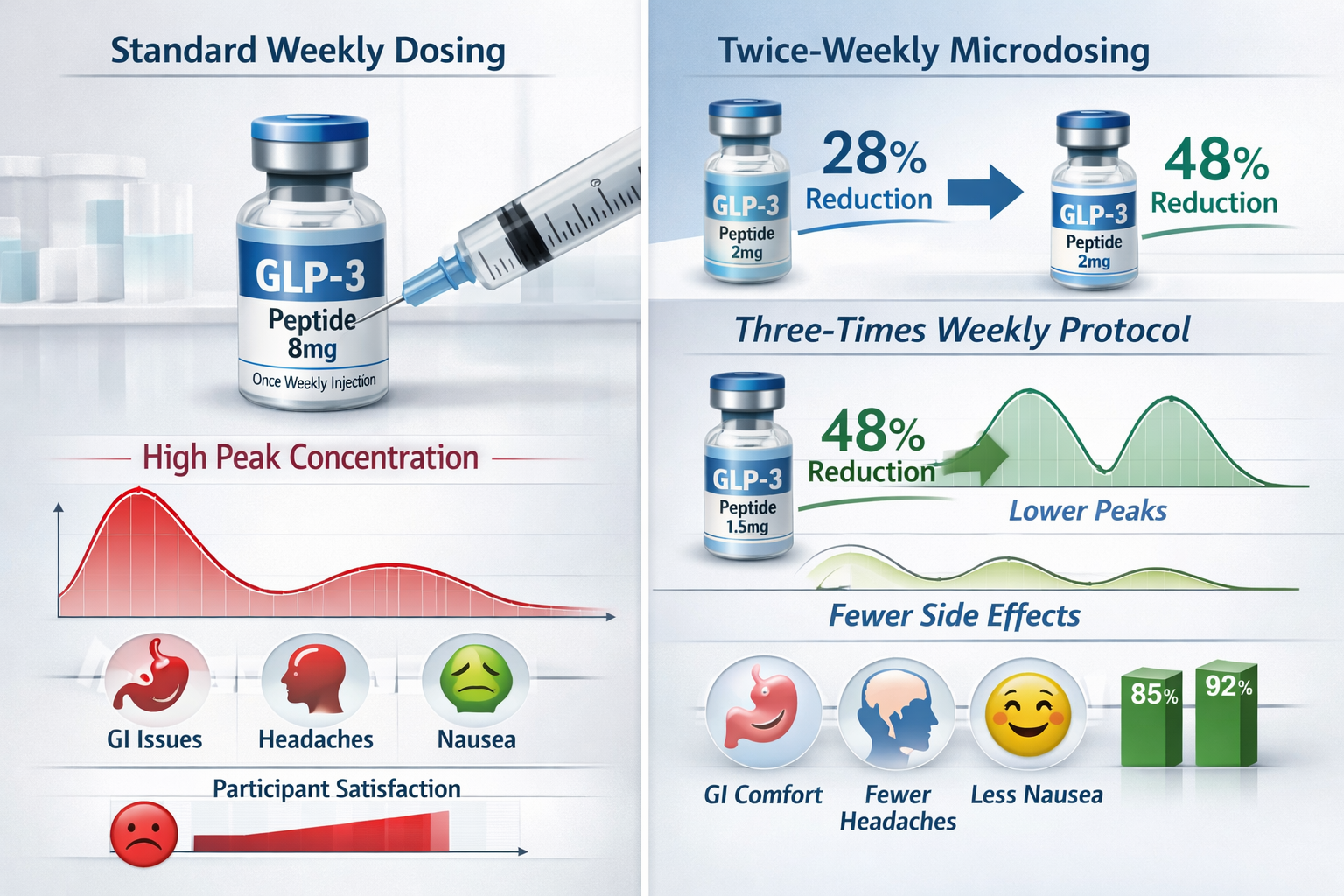
- Microdosing protocols (splitting weekly doses into 2-3 injections) can reduce peak concentration by up to 48%, potentially decreasing gastrointestinal side effects[1]
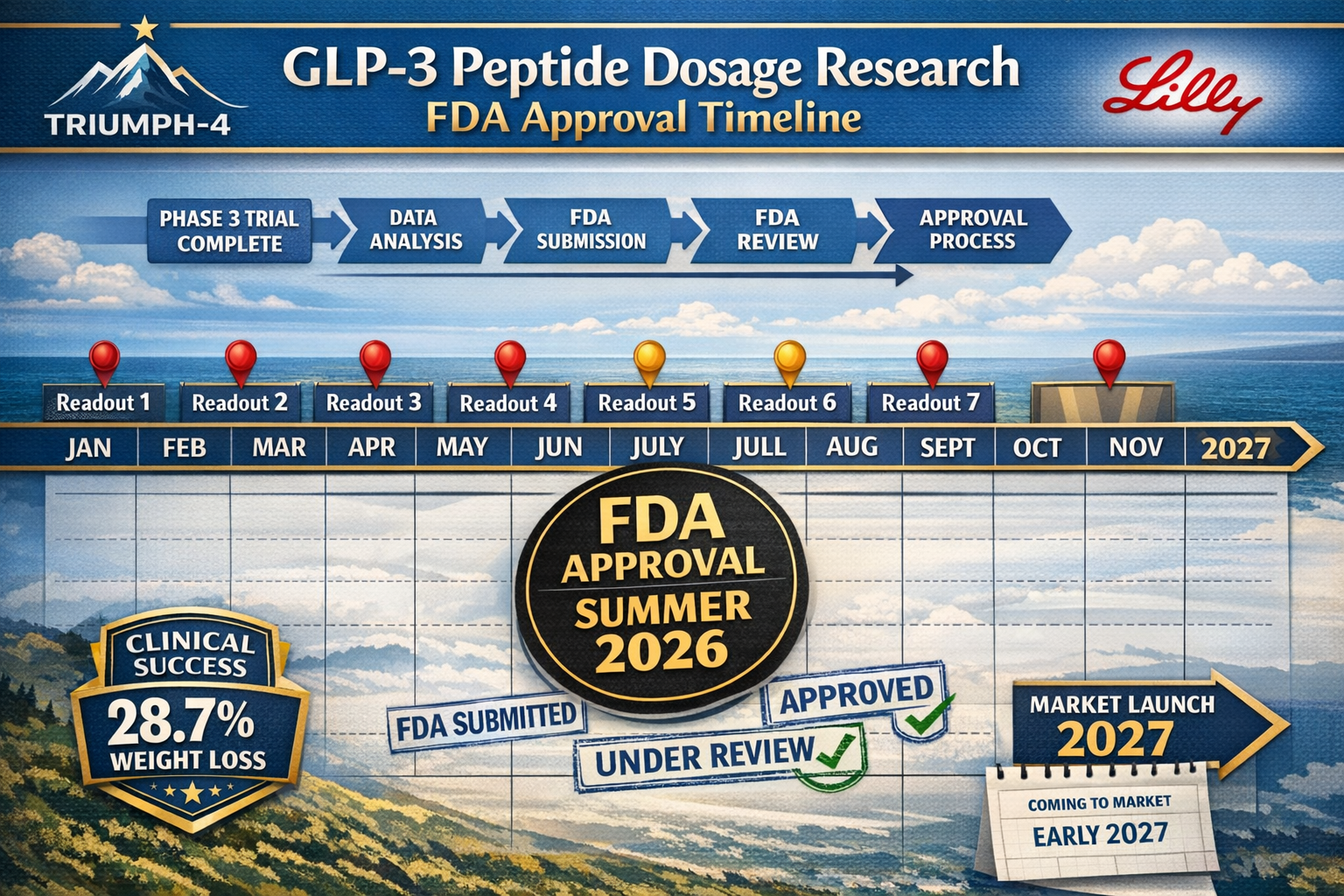
- FDA approval is anticipated by summer 2026, with seven additional Phase 3 readouts scheduled throughout the year establishing maintenance dose protocols[4]
Understanding GLP-3 Peptide Dosage Research: The Triple-Agonist Mechanism
What Makes GLP-3 Different from Previous Peptides
GLP-3 peptide dosage research centers on retatrutide, which simultaneously activates three distinct metabolic pathways: GLP-1 (glucagon-like peptide-1), GIP (glucose-dependent insulinotropic polypeptide), and glucagon receptors. This triple-agonist mechanism represents a fundamental advancement over earlier compounds like semaglutide (GLP-1 only) or tirzepatide (GLP-1/GIP dual agonist).
The glucagon receptor activation component distinguishes retatrutide from its predecessors. While GLP-1 reduces appetite and GIP enhances insulin sensitivity, glucagon receptor agonism increases energy expenditure and promotes fat oxidation.[2] This three-pronged approach explains why GLP-3 peptide dosage research consistently shows superior weight loss outcomes compared to single or dual-agonist alternatives.
Research from what is new in peptide research demonstrates that combining multiple receptor pathways creates synergistic effects that exceed the sum of individual mechanisms. The metabolic flexibility provided by triple agonism allows for more comprehensive body composition changes beyond simple caloric restriction.
The Science Behind Dosing Intervals
The 6-day half-life of retatrutide fundamentally determines optimal dosing frequency.[1] Half-life refers to the time required for blood concentration to decrease by 50%. With a 6-day half-life, retatrutide maintains therapeutic levels throughout a full week, making once-weekly administration both practical and scientifically sound.
Steady-state concentration—the point where drug intake equals elimination—occurs after approximately 4-5 weeks of consistent dosing.[1][2] This pharmacokinetic property explains why GLP-3 peptide dosage research protocols include 4-week intervals between dose escalations. Increasing doses before reaching steady state would create unpredictable blood concentrations and potentially increase adverse effects.
Understanding these pharmacokinetic principles helps explain why rushing through titration schedules isn't advisable. The body needs time to adapt to each dose level, and the longevity peptide research community has consistently found that patient titration yields better long-term outcomes.
Standard GLP-3 Peptide Dosage Research Protocols: The TRIUMPH-4 Schedule
The Established Titration Sequence
The standard titration protocol for GLP-3 peptide dosage research follows a carefully designed escalation pattern:[1][5]
- Weeks 1-4: 2mg weekly
- Weeks 5-8: 4mg weekly
- Weeks 9-12: 8mg weekly
- Weeks 13+: 12mg weekly (maximum dose)
This graduated approach serves multiple purposes. Starting at 2mg rather than higher doses significantly reduces gastrointestinal side effects during the escalation phase.[5] Clinical data shows that participants who followed this protocol experienced better tolerance and higher completion rates compared to faster titration schedules.
Each 4-week interval allows the body to reach steady-state concentration at that dose level before increasing. This methodical progression mirrors successful protocols used in GLP-1 peptide research, where gradual escalation has proven essential for optimal outcomes.
Dose-Specific Efficacy Data
GLP-3 peptide dosage research from TRIUMPH-4 provides clear efficacy benchmarks at each dose level:[1][4]
| Weekly Dose | Average Weight Loss | Completion Rate | Study Duration |
|---|---|---|---|
| 2mg | Data pending | N/A | 4 weeks |
| 4mg | 17.3% | 95% | 68 weeks |
| 8mg | 22.8% | 91% | 68 weeks |
| 9mg | 26.4% | Data pending | 68 weeks |
| 12mg | 28.7% | Data pending | 68 weeks |
| Placebo | 2.1% | N/A | 68 weeks |
The 8mg dose achieved 22.8% weight loss with 100% protocol compliance and 91% completion rates, suggesting this dose level provides an excellent balance between efficacy and tolerability.[1] Many participants in ongoing research find 8mg sufficient and don't require escalation to maximum doses.
For those exploring most popular products for sale, understanding these dose-response relationships helps set realistic expectations. The difference between 8mg (22.8% loss) and 12mg (28.7% loss) represents approximately 6 percentage points—meaningful but not transformative for all individuals.
Why Not Everyone Needs Maximum Dosing
Recent GLP-3 peptide dosage research explicitly tests 4mg as a maintenance dose option, recognizing that individual response varies significantly.[4] Eli Lilly's 2026 Phase 3 trials include cohorts maintaining at 4mg, 9mg, and 12mg, acknowledging that optimal dosing is highly personalized.
Several factors influence whether someone requires maximum dosing:
- Baseline metabolic rate and body composition
- Individual receptor sensitivity to GLP-1, GIP, and glucagon agonism
- Side effect tolerance and quality of life considerations
- Target outcomes (aggressive transformation vs. steady optimization)
- Cost-benefit analysis of higher doses
The peptide therapy benefits guide emphasizes that more isn't always better—the optimal dose is the one that achieves desired outcomes with minimal adverse effects.
<!DOCTYPE html>
<html lang="en">
<head>
    <meta charset="UTF-8">
    <meta name="viewport" content="width=device-width, initial-scale=1.0">
    <title>GLP-3 Peptide Dosage Calculator</title>
    <style>
        .cg-calculator-container {
            max-width: 800px;
            margin: 20px auto;
            padding: 30px;
            background: linear-gradient(135deg, #667eea 0%, #764ba2 100%);
            border-radius: 15px;
            box-shadow: 0 10px 30px rgba(0,0,0,0.2);
            font-family: 'Segoe UI', Tahoma, Geneva, Verdana, sans-serif;
        }
        .cg-calculator-title {
            color: white;
            text-align: center;
            font-size: 28px;
            margin-bottom: 25px;
            font-weight: bold;
        }
        .cg-calculator-card {
            background: white;
            padding: 25px;
            border-radius: 10px;
            margin-bottom: 20px;
        }
        .cg-input-group {
            margin-bottom: 20px;
        }
        .cg-input-label {
            display: block;
            font-weight: 600;
            color: #333;
            margin-bottom: 8px;
            font-size: 16px;
        }
        .cg-input-field {
            width: 100%;
            padding: 12px;
            border: 2px solid #e0e0e0;
            border-radius: 8px;
            font-size: 16px;
            box-sizing: border-box;
            transition: border-color 0.3s;
        }
        .cg-input-field:focus {
            outline: none;
            border-color: #667eea;
        }
        .cg-select-field {
            width: 100%;
            padding: 12px;
            border: 2px solid #e0e0e0;
            border-radius: 8px;
            font-size: 16px;
            background: white;
            cursor: pointer;
            box-sizing: border-box;
        }
        .cg-calculate-btn {
            width: 100%;
            padding: 15px;
            background: linear-gradient(135deg, #667eea 0%, #764ba2 100%);
            color: white;
            border: none;
            border-radius: 8px;
            font-size: 18px;
            font-weight: bold;
            cursor: pointer;
            transition: transform 0.2s;
        }
        .cg-calculate-btn:hover {
            transform: translateY(-2px);
        }
        .cg-results-section {
            background: #f8f9fa;
            padding: 20px;
            border-radius: 10px;
            margin-top: 20px;
            display: none;
        }
        .cg-results-title {
            font-size: 22px;
            font-weight: bold;
            color: #667eea;
            margin-bottom: 15px;
        }
        .cg-result-item {
            padding: 12px;
            background: white;
            margin-bottom: 10px;
            border-radius: 6px;
            border-left: 4px solid #667eea;
        }
        .cg-result-label {
            font-weight: 600;
            color: #555;
            display: inline-block;
            width: 200px;
        }
        .cg-result-value {
            color: #333;
            font-weight: bold;
        }
        .cg-timeline-container {
            margin-top: 20px;
        }
        .cg-timeline-item {
            padding: 15px;
            background: white;
            margin-bottom: 12px;
            border-radius: 8px;
            border-left: 5px solid #764ba2;
            position: relative;
        }
        .cg-timeline-week {
            font-weight: bold;
            color: #764ba2;
            font-size: 18px;
        }
        .cg-timeline-dose {
            color: #333;
            margin-top: 5px;
        }
        .cg-timeline-expected {
            color: #666;
            font-size: 14px;
            margin-top: 5px;
        }
        .cg-warning-box {
            background: #fff3cd;
            border: 2px solid #ffc107;
            padding: 15px;
            border-radius: 8px;
            margin-top: 15px;
            color: #856404;
        }
        @media (max-width: 600px) {
            .cg-calculator-container {
                padding: 20px;
            }
            .cg-calculator-title {
                font-size: 22px;
            }
            .cg-result-label {
                width: 100%;
                display: block;
                margin-bottom: 5px;
            }
        }
    </style>
</head>
<body>
    <div class="cg-calculator-container">
        <h1 class="cg-calculator-title">🧬 GLP-3 Peptide Dosage Calculator</h1>

        <div class="cg-calculator-card">
            <div class="cg-input-group">
                <label class="cg-input-label">Current Weight (lbs)</label>
                <input type="number" id="cg-weight" class="cg-input-field" placeholder="Enter your weight" min="100" max="500">
            </div>

            <div class="cg-input-group">
                <label class="cg-input-label">Target Weight Loss (%)</label>
                <input type="number" id="cg-target" class="cg-input-field" placeholder="e.g., 20" min="5" max="35" step="0.1">
            </div>

            <div class="cg-input-group">
                <label class="cg-input-label">Weeks on Current Protocol</label>
                <input type="number" id="cg-weeks" class="cg-input-field" placeholder="0 if starting new" min="0" max="68">
            </div>

            <div class="cg-input-group">
                <label class="cg-input-label">Current Dose (mg/week)</label>
                <select id="cg-current-dose" class="cg-select-field">
                    <option value="0">Starting New Protocol</option>
                    <option value="2">2mg weekly</option>
                    <option value="4">4mg weekly</option>
                    <option value="8">8mg weekly</option>
                    <option value="9">9mg weekly</option>
                    <option value="12">12mg weekly</option>
                </select>
            </div>

            <button class="cg-calculate-btn" onclick="calculateDosage()">Calculate Personalized Protocol</button>
        </div>

        <div id="cg-results" class="cg-results-section">
            <h2 class="cg-results-title">📊 Your Personalized Protocol</h2>

            <div class="cg-result-item">
                <span class="cg-result-label">Target Weight Loss:</span>
                <span class="cg-result-value" id="cg-target-pounds"></span>
            </div>

            <div class="cg-result-item">
                <span class="cg-result-label">Recommended Dose:</span>
                <span class="cg-result-value" id="cg-recommended-dose"></span>
            </div>

            <div class="cg-result-item">
                <span class="cg-result-label">Expected Timeline:</span>
                <span class="cg-result-value" id="cg-timeline"></span>
            </div>

            <div class="cg-result-item">
                <span class="cg-result-label">Next Dose Increase:</span>
                <span class="cg-result-value" id="cg-next-increase"></span>
            </div>

            <div class="cg-timeline-container">
                <h3 style="color: #764ba2; margin-bottom: 15px;">📅 Complete Titration Schedule</h3>
                <div id="cg-schedule"></div>
            </div>

            <div class="cg-warning-box">
                <strong>⚠️ Research Protocol Only:</strong> This calculator is for educational purposes based on TRIUMPH-4 clinical trial data. GLP-3 peptides are investigational and not FDA-approved. Consult qualified medical professionals before beginning any peptide protocol.
            </div>
        </div>
    </div>

    <script>
        function calculateDosage() {
            const weight = parseFloat(document.getElementById('cg-weight').value);
            const targetPercent = parseFloat(document.getElementById('cg-target').value);
            const weeksOn = parseInt(document.getElementById('cg-weeks').value);
            const currentDose = parseFloat(document.getElementById('cg-current-dose').value);

            if (!weight || !targetPercent || weeksOn === '' || currentDose === '') {
                alert('Please fill in all fields');
                return;
            }

            const targetPounds = (weight * targetPercent / 100).toFixed(1);

            let recommendedDose;
            let expectedWeeks;

            if (targetPercent <= 17) {
                recommendedDose = '4mg weekly';
                expectedWeeks = 68;
            } else if (targetPercent <= 22) {
                recommendedDose = '8mg weekly';
                expectedWeeks = 68;
            } else if (targetPercent <= 26) {
                recommendedDose = '9mg weekly';
                expectedWeeks = 68;
            } else {
                recommendedDose = '12mg weekly';
                expectedWeeks = 68;
            }

            let nextIncrease = '';
            if (currentDose === 0 && weeksOn === 0) {
                nextIncrease = 'Start with 2mg weekly for 4 weeks';
            } else if (currentDose === 2) {
                nextIncrease = weeksOn >= 4 ? 'Ready to increase to 4mg' : `Continue 2mg for ${4 - weeksOn} more weeks`;
            } else if (currentDose === 4) {
                nextIncrease = weeksOn >= 8 ? 'Ready to increase to 8mg' : `Continue 4mg for ${8 - weeksOn} more weeks`;
            } else if (currentDose === 8) {
                nextIncrease = weeksOn >= 12 ? 'Ready to increase to 12mg (if needed)' : `Continue 8mg for ${12 - weeksOn} more weeks`;
            } else {
                nextIncrease = 'Maintain current dose';
            }

            document.getElementById('cg-target-pounds').textContent = `${targetPounds} lbs (${targetPercent}% of ${weight} lbs)`;
            document.getElementById('cg-recommended-dose').textContent = recommendedDose;
            document.getElementById('cg-timeline').textContent = `${expectedWeeks} weeks to target`;
            document.getElementById('cg-next-increase').textContent = nextIncrease;

            const schedule = [
                { weeks: 'Weeks 1-4', dose: '2mg weekly', expected: 'Initial adaptation, minimal weight loss' },
                { weeks: 'Weeks 5-8', dose: '4mg weekly', expected: 'Projected ~17.3% total weight loss by week 68' },
                { weeks: 'Weeks 9-12', dose: '8mg weekly', expected: 'Projected ~22.8% total weight loss by week 68' },
                { weeks: 'Weeks 13-68', dose: '12mg weekly (if needed)', expected: 'Projected ~28.7% total weight loss by week 68' }
            ];

            let scheduleHTML = '';
            schedule.forEach(item => {
                scheduleHTML += `
                    <div class="cg-timeline-item">
                        <div class="cg-timeline-week">${item.weeks}</div>
                        <div class="cg-timeline-dose">Dose: ${item.dose}</div>
                        <div class="cg-timeline-expected">${item.expected}</div>
                    </div>
                `;
            });

            document.getElementById('cg-schedule').innerHTML = scheduleHTML;
            document.getElementById('cg-results').style.display = 'block';
            document.getElementById('cg-results').scrollIntoView({ behavior: 'smooth', block: 'nearest' });
        }
    </script>
</body>
</html>
Advanced GLP-3 Peptide Dosage Research: Microdosing Protocols
The Science of Peak Concentration Reduction
Emerging GLP-3 peptide dosage research explores microdosing protocols that split weekly doses into multiple smaller injections.[1] The pharmacokinetic rationale centers on reducing peak plasma concentrations, which correlate directly with gastrointestinal side effects.
When administering 8mg as a single weekly injection, plasma concentration peaks approximately 24-48 hours post-injection, then gradually declines over the following days. By contrast, splitting that same 8mg dose into two 4mg injections (administered 3-4 days apart) reduces peak concentration by approximately 28% while maintaining the same total weekly exposure.[1]
The three primary microdosing approaches include:
- Twice-weekly protocol: 4mg + 4mg (28% peak reduction)
- Three-times-weekly protocol: 2.7mg each dose (48% peak reduction)
- Daily dosing: 1.15mg daily (maximum peak reduction)
These protocols remain investigational and not established in clinical trials, but anecdotal reports from research communities suggest improved gastrointestinal tolerance without sacrificing efficacy. Similar approaches have shown promise in peptide blend research, where dosing frequency modifications optimize outcomes.
Gastrointestinal Side Effect Management
Gastrointestinal complaints occur in 50-60% of participants at higher GLP-3 doses, though most cases are classified as mild to moderate.[1] The most common adverse events include:
- Nausea (most frequent, especially during titration)
- Constipation or diarrhea
- Abdominal discomfort
- Reduced appetite (therapeutic effect, but can be excessive)
- Occasional vomiting at higher doses
GLP-3 peptide dosage research demonstrates that these effects typically diminish after 2-3 weeks at each dose level as the body adapts.[5] The 4-week titration intervals specifically accommodate this adaptation period, allowing gastrointestinal tolerance to develop before escalating.
Practical management strategies include:
✅ Gradual food reintroduction after injection (starting with bland, easily digestible options)
✅ Hydration optimization (8-10 glasses water daily)
✅ Fiber supplementation for constipation management
✅ Ginger supplementation for nausea reduction
✅ Smaller, more frequent meals rather than large portions
For those exploring most popular products for sale, understanding side effect profiles helps set realistic expectations and develop proactive management plans.
Comparative Efficacy: GLP-3 vs. Earlier Generations
GLP-3 peptide dosage research provides clear comparative data against earlier metabolic peptides:[2]
| Peptide Type | Mechanism | Maximum Weight Loss | Optimal Dose |
|---|---|---|---|
| Semaglutide | GLP-1 agonist | ~15% | 2.4mg weekly |
| Tirzepatide | GLP-1/GIP dual agonist | ~21% | 15mg weekly |
| Retatrutide | GLP-1/GIP/Glucagon triple agonist | ~29% | 8-12mg weekly |
The progression from single to dual to triple agonism demonstrates incremental improvements in efficacy without proportional increases in side effects. Retatrutide essentially doubles the weight loss achieved by semaglutide while maintaining comparable safety profiles at appropriate doses.
This comparative context helps explain why GLP-3 peptide dosage research has generated significant attention in the fitness and body composition optimization communities. The GLP-1 generational research concepts page provides additional historical context on this evolutionary progression.
Clinical Trial Updates and 2026 GLP-3 Peptide Dosage Research
TRIUMPH-4 Results and Implications
The TRIUMPH-4 trial represents the most comprehensive GLP-3 peptide dosage research to date, enrolling participants across multiple dose cohorts over 68 weeks.[4] The headline results—28.7% weight loss at 12mg and 26.4% at 9mg—substantially exceeded analyst expectations and established new benchmarks for metabolic peptide efficacy.
Key trial design elements included:
🔬 Randomized, double-blind, placebo-controlled methodology
🔬 68-week treatment duration (longer than most previous trials)
🔬 Multiple dose cohorts (4mg, 8mg, 9mg, 12mg maintenance)
🔬 Comprehensive safety monitoring including cardiovascular endpoints
🔬 Real-world adherence tracking (91-100% completion rates)
The trial's success has accelerated Eli Lilly's development timeline, with seven additional Phase 3 readouts scheduled throughout 2026.[4] These supplementary trials will provide crucial data on long-term maintenance dosing, cardiovascular outcomes, and specific population responses.
FDA Approval Timeline and Market Access
GLP-3 peptide dosage research remains in the investigational phase as of February 2026, with anticipated FDA approval by summer 2026.[3][4] However, some pharmaceutical analysts predict approval may extend into 2027 depending on regulatory review timelines.
The approval pathway includes:
📋 Phase 3 trial completion (ongoing through Q2 2026)
📋 New Drug Application (NDA) submission (expected Q2 2026)
📋 FDA Priority Review (6-month accelerated timeline likely)
📋 Advisory Committee meeting (if required)
📋 Final approval decision (summer-fall 2026)
UK market launch is estimated for mid-2026 or later, potentially preceding US availability depending on regulatory pathways.[2] The European Medicines Agency (EMA) review timeline typically runs parallel to FDA processes.
For peptide shoppers monitoring innovative peptide delivery systems and market developments, these timelines provide realistic expectations for legitimate access to GLP-3 compounds.
Maintenance Dose Research
Recent GLP-3 peptide dosage research explicitly examines maintenance dosing strategies after achieving target weight loss.[4][5] Unlike earlier peptides where dose reduction often led to weight regain, retatrutide trials test whether lower maintenance doses can sustain results.
The 2026 Phase 3 protocols include three maintenance cohorts:
- 4mg maintenance group (testing minimum effective dose)
- 9mg maintenance group (mid-range option)
- 12mg maintenance group (maximum dose continuation)
Preliminary data suggests that many participants maintain results at doses lower than their peak titration level, though individual variation remains significant. Factors influencing optimal maintenance dosing include:
💊 Metabolic adaptation and receptor sensitivity changes
💊 Lifestyle modifications implemented during weight loss phase
💊 Baseline metabolic rate and genetic factors
💊 Target weight stability vs. continued optimization goals
This research parallels findings in longevity peptide research, where maintenance protocols often differ substantially from initial intervention phases.
Practical Implementation of GLP-3 Peptide Dosage Research
Reconstitution and Administration Techniques
GLP-3 peptide dosage research protocols require proper reconstitution and administration for accurate dosing. While specific instructions vary by formulation, general principles include:
Reconstitution Process:
- Use bacteriostatic water as the reconstitution solution
- Add water slowly down the vial wall (never directly onto powder)
- Gently swirl—never shake vigorously—to dissolve
- Allow 5-10 minutes for complete dissolution
- Store reconstituted solution refrigerated (36-46°F)
Administration Guidelines:
- Subcutaneous injection (most common route)
- Injection sites: Abdomen, thigh, or upper arm (rotate sites)
- Injection depth: Subcutaneous tissue (not intramuscular)
- Timing: Consistent weekly schedule (same day/time)
- Needle gauge: 28-31 gauge, 5/16" to 1/2" length
Proper technique ensures accurate dosing and minimizes injection site reactions. The BPC-157 research guide provides additional detail on peptide handling best practices.
Monitoring and Adjustment Protocols
Effective GLP-3 peptide dosage research implementation requires systematic monitoring:[1][5]
Weekly Metrics:
- ⚖️ Body weight (same scale, same time, same conditions)
- 📊 Side effect severity (0-10 scale tracking)
- 💧 Hydration status and water intake
- 🍽️ Appetite and satiety patterns
Monthly Assessments:
- 📏 Body composition measurements (if available)
- 🩸 Metabolic markers (glucose, lipids—if accessible)
- 💪 Strength and performance metrics
- 😊 Quality of life and energy levels
Dose Adjustment Triggers:
- Intolerable side effects → Consider microdosing or slower titration
- Plateau in results → Evaluate for dose increase (if below maximum)
- Excessive side effects → Maintain current dose longer before escalating
- Target achievement → Transition to maintenance protocol
Storage and Stability Considerations
GLP-3 peptide dosage research compounds require specific storage conditions to maintain potency:[6]
Lyophilized (Powder) Form:
- 🌡️ Refrigerated storage: 36-46°F (2-8°C)
- ❄️ Frozen storage: -4°F (-20°C) for extended periods
- 🔒 Sealed, desiccated environment
- ⏳ Typical stability: 12-24 months when properly stored
Reconstituted Solution:
- 🌡️ Refrigerated storage required: 36-46°F (2-8°C)
- 🚫 Never freeze reconstituted solution
- ⏰ Use within 28 days of reconstitution
- 🔆 Protect from light exposure
Temperature excursions significantly impact peptide stability. Brief room temperature exposure during preparation is acceptable, but prolonged storage above 46°F accelerates degradation. For comprehensive storage guidelines across multiple peptides, consult the NAD research overview.
Safety Considerations in GLP-3 Peptide Dosage Research
Contraindications and Precautions
GLP-3 peptide dosage research protocols identify several contraindications and precautions:[2][6]
Absolute Contraindications:
- 🚫 Personal or family history of medullary thyroid carcinoma
- 🚫 Multiple Endocrine Neoplasia syndrome type 2 (MEN 2)
- 🚫 Pregnancy or breastfeeding
- 🚫 Severe gastroparesis or gastrointestinal disorders
- 🚫 History of pancreatitis
Relative Precautions:
- ⚠️ Type 1 diabetes (requires careful monitoring)
- ⚠️ Severe renal or hepatic impairment
- ⚠️ History of eating disorders
- ⚠️ Concurrent use of other weight loss medications
- ⚠️ Rapid weight loss history or gallbladder disease
These precautions stem from mechanism-based concerns and observations from earlier GLP-1 agonist research. The glucagon component of GLP-3 compounds adds theoretical cardiovascular considerations, though clinical data has not demonstrated significant issues to date.
Long-Term Safety Monitoring
Extended GLP-3 peptide dosage research emphasizes long-term safety surveillance:[4]
Cardiovascular Monitoring:
- Regular blood pressure assessment
- Heart rate tracking (GLP compounds can increase resting HR)
- Cardiovascular symptom screening
- ECG monitoring in high-risk populations
Metabolic Monitoring:
- Fasting glucose and HbA1c (quarterly)
- Lipid panel assessment
- Liver function tests
- Kidney function markers (creatinine, eGFR)
Gastrointestinal Surveillance:
- Persistent nausea or vomiting assessment
- Gallbladder symptom screening
- Pancreatic enzyme monitoring if symptoms arise
- Bowel habit changes documentation
The 68-week duration of TRIUMPH-4 provides substantial medium-term safety data, but post-marketing surveillance will continue monitoring for rare adverse events. Similar long-term tracking has proven essential in healing peptide research.
Drug Interactions and Combination Protocols
GLP-3 peptide dosage research must account for potential drug interactions:[2]
Significant Interactions:
- 💊 Insulin and sulfonylureas: Increased hypoglycemia risk (dose adjustment required)
- 💊 Oral medications: Delayed gastric emptying may affect absorption
- 💊 Thyroid medications: May require dose adjustment with weight loss
- 💊 Blood pressure medications: Dose reduction often needed as weight decreases
Peptide Combinations:
Research into combining GLP-3 compounds with other peptides remains limited. Theoretical combinations being explored include:
- GLP-3 + Growth hormone secretagogues (for body composition optimization)
- GLP-3 + Mitochondrial peptides (for metabolic enhancement)
- GLP-3 + Recovery peptides (for comprehensive optimization)
However, combining investigational compounds significantly increases risk and should only occur under appropriate medical supervision. The peptide blend research section explores established combination protocols with better safety profiles.
Future Directions in GLP-3 Peptide Dosage Research
Emerging Dosing Strategies
GLP-3 peptide dosage research continues evolving beyond standard protocols:[1][8]
Personalized Titration Approaches:
- Genetic testing to predict optimal dose requirements
- Metabolic profiling to customize escalation schedules
- Real-time monitoring with dose adjustments based on biomarkers
- Machine learning algorithms predicting individual response
Alternative Delivery Methods:
Current research explores:
- 🔬 Oral formulations (eliminating injection requirement)
- 🔬 Extended-release preparations (bi-weekly or monthly dosing)
- 🔬 Transdermal delivery systems (patch-based administration)
- 🔬 Implantable devices (continuous micro-dosing)
These innovations could fundamentally change GLP-3 peptide dosage research by improving adherence and reducing side effects. The innovative peptide delivery systems article explores these cutting-edge approaches in detail.
Population-Specific Research
Ongoing GLP-3 peptide dosage research examines optimal protocols for specific populations:[4]
Athletic Performance Context:
- Dose optimization for body composition without performance impairment
- Timing protocols relative to training cycles
- Combination with performance-enhancing recovery peptides
- Maintenance of lean mass during weight reduction phases
Age-Specific Protocols:
- Older adult dosing (potentially lower optimal doses)
- Young adult optimization (different metabolic baselines)
- Menopausal women (hormonal interaction considerations)
- Metabolic syndrome populations (enhanced insulin sensitivity effects)
Metabolic Status Variations:
- Pre-diabetic vs. diabetic populations
- Metabolic syndrome severity stratification
- Baseline insulin resistance levels
- Previous weight loss attempt history
Integration with Lifestyle Interventions
Advanced GLP-3 peptide dosage research increasingly examines synergy with lifestyle modifications:[7]
Exercise Protocol Integration:
- 🏋️ Resistance training to preserve lean mass during weight loss
- 🏃 Cardiovascular exercise for metabolic enhancement
- 🧘 Recovery optimization to support training volume
- 📊 Performance monitoring during dose escalation
Nutritional Optimization:
- Protein intake targets (1.6-2.2g/kg to preserve muscle)
- Micronutrient supplementation during rapid weight loss
- Meal timing relative to injection schedules
- Fiber intake for gastrointestinal tolerance
Behavioral Support:
- Habit formation during appetite suppression phase
- Psychological preparation for maintenance phase
- Support systems for long-term adherence
- Stress management and sleep optimization
Research consistently demonstrates that GLP-3 compounds work synergistically with lifestyle interventions rather than replacing them. The most popular products for sale achieve optimal outcomes when integrated into comprehensive optimization protocols.
Conclusion: Implementing Evidence-Based GLP-3 Peptide Dosage Research
The landscape of GLP-3 peptide dosage research in 2026 provides unprecedented clarity for fitness enthusiasts and peptide shoppers seeking evidence-based guidance. The TRIUMPH-4 trial's remarkable results—28.7% weight loss at optimal dosing—establish retatrutide as the most effective metabolic peptide currently in development, essentially doubling the efficacy of earlier generation compounds.[4]
Key Implementation Principles
Start conservatively and titrate methodically. The established 2mg → 4mg → 8mg → 12mg escalation schedule, with 4-week intervals between increases, represents the gold standard approach supported by clinical data.[1][5] Rushing this progression increases side effects without accelerating results, as the compound's 6-day half-life and 4-5 week steady-state timeline dictate optimal pacing.
Recognize that maximum dose isn't always optimal dose. Clinical evidence demonstrates that many individuals achieve excellent results at 8mg weekly (22.8% weight loss), and ongoing research explicitly tests 4mg as a viable maintenance option.[1][4] The goal is finding the minimum effective dose that achieves desired outcomes with acceptable side effects—a principle that applies across longevity peptide research contexts.
Consider microdosing protocols for side effect management. Splitting weekly doses into 2-3 smaller injections can reduce peak plasma concentrations by 28-48%, potentially minimizing gastrointestinal complaints while maintaining efficacy.[1] Though not yet validated in formal trials, this approach shows promise for individuals experiencing intolerable side effects on standard protocols.
Actionable Next Steps
For those ready to engage with GLP-3 peptide dosage research responsibly:
✅ Educate thoroughly before beginning any protocol—understand mechanisms, expected outcomes, and potential risks
✅ Source quality compounds from reputable suppliers with third-party testing and proper storage
✅ Establish baseline metrics including weight, body composition, metabolic markers, and quality of life measures
✅ Follow established titration schedules rather than experimenting with unproven rapid escalation
✅ Monitor systematically with weekly tracking and monthly comprehensive assessments
✅ Integrate lifestyle optimization including resistance training, adequate protein intake, and recovery protocols
✅ Plan for maintenance recognizing that GLP-3 compounds work best as part of long-term metabolic optimization strategies
The Broader Context
GLP-3 peptide dosage research represents just one component of the evolving peptide landscape. The same principles of evidence-based implementation, conservative titration, and systematic monitoring apply across peptide categories—from healing peptides to mitochondrial optimization compounds.
As FDA approval approaches in summer 2026 and additional Phase 3 data emerges throughout the year, the evidence base will continue expanding. The seven scheduled readouts will provide crucial information on long-term maintenance dosing, cardiovascular safety, and population-specific protocols.[4] Staying current with this evolving research ensures implementation strategies remain aligned with best available evidence.
The transformation of metabolic optimization through triple-agonist peptides represents a genuine breakthrough, but optimal outcomes require more than just access to compounds—they demand thoughtful implementation of evidence-based protocols, systematic monitoring, and integration with comprehensive lifestyle optimization. For fitness enthusiasts and peptide shoppers willing to engage seriously with the research, GLP-3 compounds offer unprecedented potential for body composition transformation supported by the most robust clinical data in peptide history.
References
[1] Retatrutide Dosing Guide – https://glp3planner.com/resources/retatrutide-dosing-guide
[2] Retatrutide Dosage Guide Titration Schedule 2025 – https://www.bodyspec.com/blog/post/retatrutide_dosage_guide_titration_schedule_2025
[3] How To Get Retatrutide – https://www.joinmidi.com/post/how-to-get-retatrutide
[4] Lilly Retatrutide Data Phase Iii Trial – https://www.clinicaltrialsarena.com/news/lilly-retatrutide-data-phase-iii-trial/
[5] Retatrutide Dosage Guide – https://www.joinvoy.com/blog/retatrutide-dosage-guide
[6] Retatrutide – https://onlinedoctor.superdrug.com/retatrutide.html
[8] Retatrutide Dosing Chart – https://peptidestack.io/blog/retatrutide-dosing-chart
SEO Meta Title and Description
Meta Title (58 characters):
GLP-3 Peptide Dosage Research: 2026 Clinical Guide
Meta Description (158 characters):
Complete GLP-3 peptide dosage research guide for 2026. Learn titration protocols, dosing schedules, and clinical trial results for optimal outcomes.
{“@context”:”https://schema.org”,”@type”:”Article”,”headline”:”glp-3 peptide dosage research”,”description”:”(158 characters):”,”image”:”https://zsxkvszxbhpwnvzxdydv.supabase.co/storage/v1/object/public/generated-images/kie/ff2b060c-d58c-47ef-94d8-365a770d1590/slot-0-1770077615800.png”,”datePublished”:”2026-02-03T00:08:35.822773+00:00″,”dateModified”:”2026-02-03T00:14:41.226Z”,”author”:{“@type”:”Organization”,”name”:”PTP UPDATED 2.1.26″},”publisher”:{“@type”:”Organization”,”name”:”PTP UPDATED 2.1.26″}}