

How GLP-3 Peptide Works: Understanding the Triple-Receptor Mechanism in 2026 💊
Imagine a weight loss medication so powerful that clinical trial participants lost nearly 30% of their body weight—almost double what current leading treatments achieve. That's the promise of retatrutide, commonly referred to as GLP-3, a groundbreaking triple-agonist peptide that's revolutionizing our understanding of metabolic regulation. For fitness enthusiasts and peptide shoppers seeking cutting-edge solutions in 2026, understanding how GLP-3 peptide works represents a crucial step toward informed decision-making in the evolving landscape of metabolic peptides.
Unlike traditional single-target medications, how GLP-3 peptide works involves simultaneously activating three distinct hormone receptors in your body—GLP-1, GIP, and glucagon—creating a synergistic effect that addresses multiple aspects of metabolism, appetite regulation, and energy expenditure. This multi-pronged approach explains why early clinical data shows such remarkable results compared to existing treatments.
Key Takeaways 🎯
- Triple-action mechanism: How GLP-3 peptide works by targeting GLP-1, GIP, and glucagon receptors simultaneously, creating synergistic metabolic effects
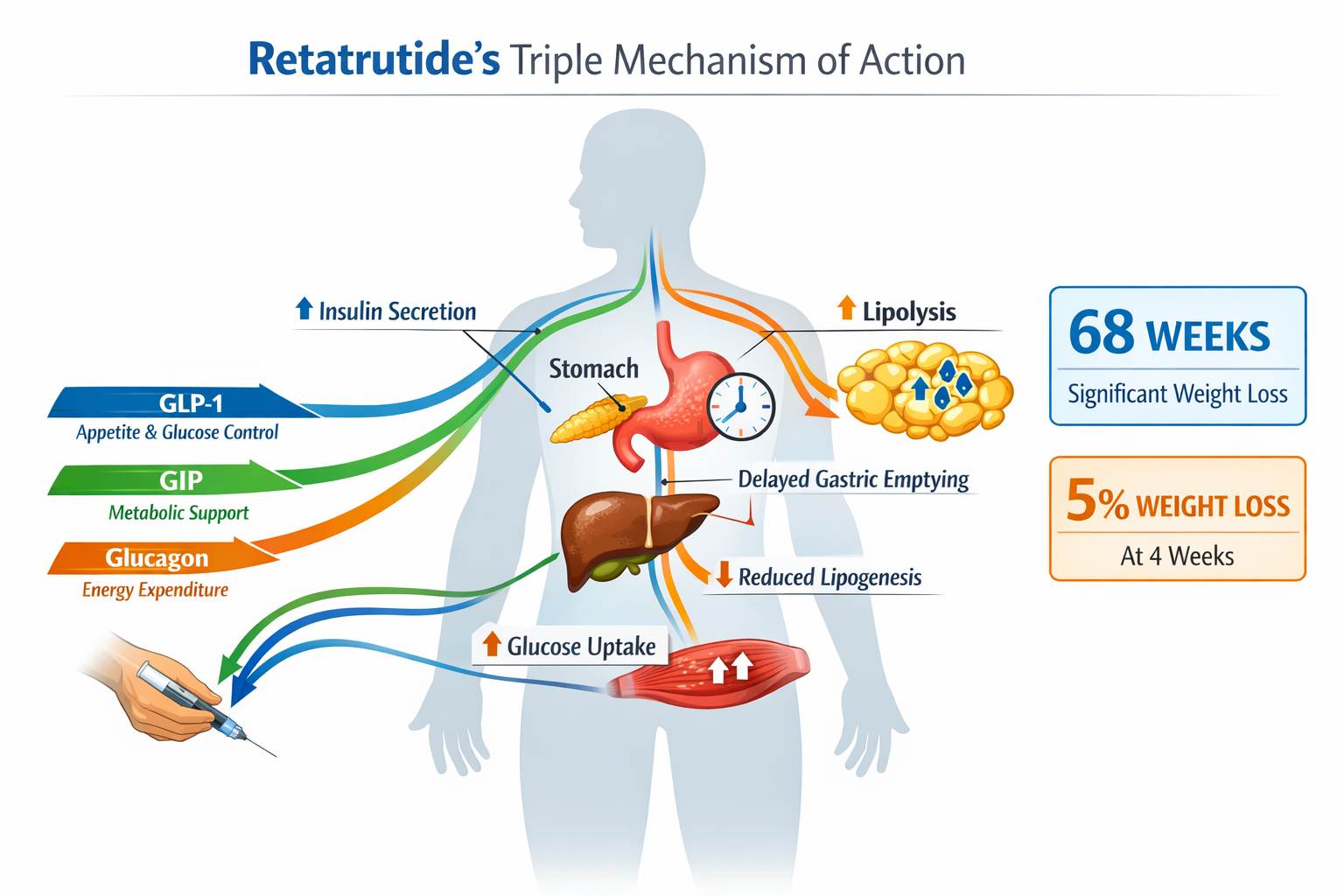
- Superior weight loss: Clinical trials demonstrate an average 28.7% body weight reduction over 68 weeks—nearly double the results of current GLP-1 medications[4]
- Rapid onset: Participants experienced approximately 5% weight loss within just four weeks of starting treatment[4]
- Balanced metabolic effects: The glucagon component counterbalances blood sugar changes while promoting fat breakdown and energy expenditure[1]
- Research-only status: As of 2026, retatrutide remains investigational and is only legally available through clinical trials[4]
What Is GLP-3 (Retatrutide)? The Next Generation of Metabolic Peptides
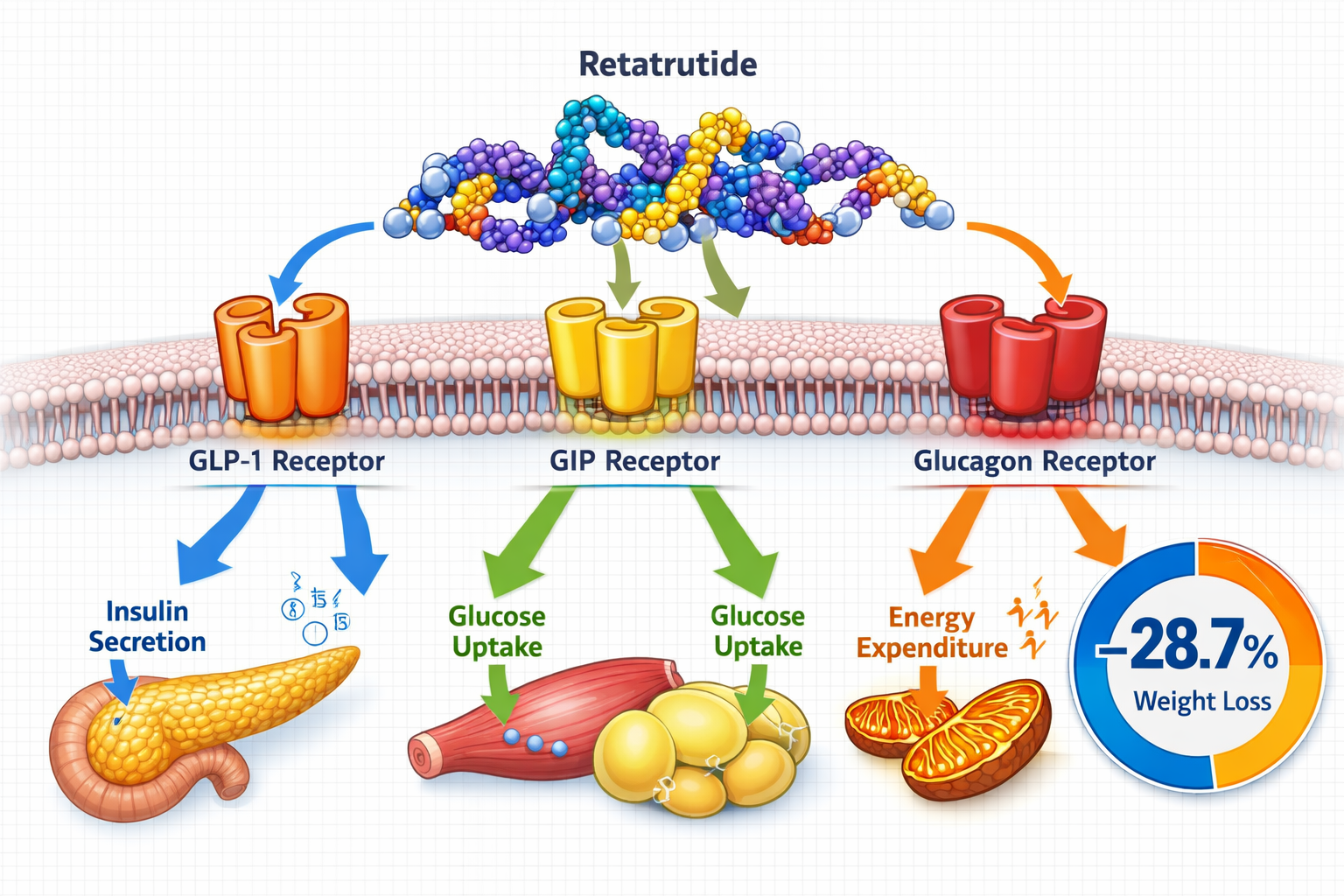
Retatrutide, frequently called GLP-3 in fitness and research communities, represents a significant advancement in peptide-based metabolic therapies. While the "GLP-3" nickname isn't scientifically accurate (there's no naturally occurring GLP-3 hormone), it's become popular shorthand for this triple-agonist peptide that builds upon the foundation established by GLP-1 medications like semaglutide and tirzepatide.
Structurally, how GLP-3 peptide works begins with its molecular design. Retatrutide is engineered to be structurally similar to glucose-dependent insulinotropic polypeptide (GIP), but with specific alterations in the peptide backbone that enable it to activate not just GIP receptors, but also GLP-1 and glucagon receptors[1]. This triple-receptor activation distinguishes it from earlier generations of incretin mimetics.
The Evolution from Single to Triple Agonism
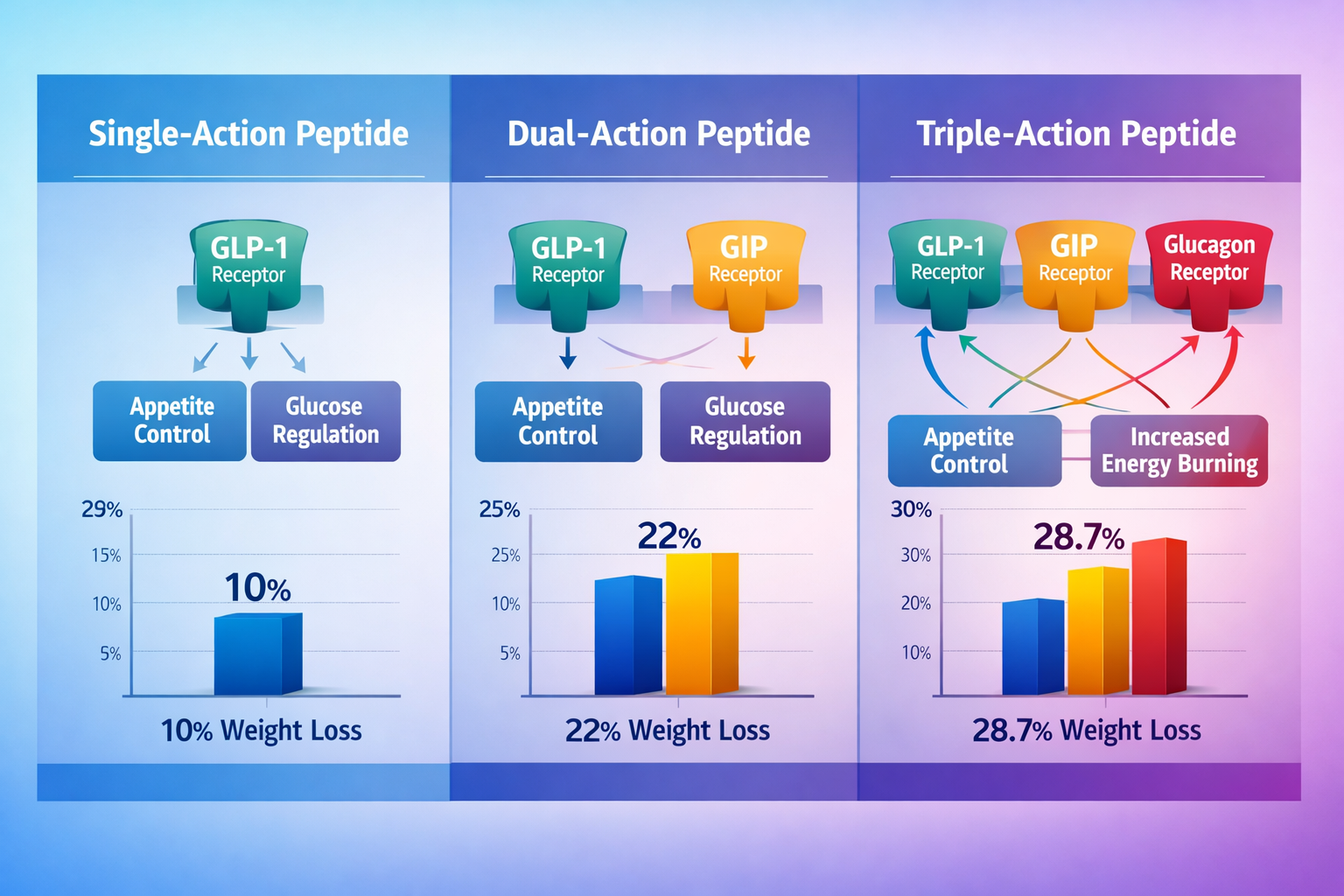
The progression of metabolic peptides follows a clear trajectory:
- First generation: GLP-1 receptor agonists only (semaglutide)
- Second generation: Dual GLP-1/GIP agonists (tirzepatide)
- Third generation: Triple GLP-1/GIP/glucagon agonists (retatrutide)
Each evolutionary step has produced progressively better weight loss outcomes, with retatrutide's triple mechanism showing the most promising results to date[4]. For those exploring wholesale peptides for sale, understanding this generational progression helps contextualize where retatrutide fits in the broader peptide landscape.
How GLP-3 Peptide Works: The Triple-Receptor Mechanism Explained 🔬
Understanding how GLP-3 peptide works requires examining each of its three receptor targets and their combined effects on metabolism, appetite, and energy balance.
GLP-1 Receptor Activation: The Satiety Signal
When retatrutide binds to GLP-1 receptors, it triggers several metabolic responses:
- Increased insulin secretion: GLP-1 agonism stimulates pancreatic beta cells to release insulin in a glucose-dependent manner, meaning insulin is only released when blood sugar is elevated[1]
- Enhanced satiety: GLP-1 receptors in the brain's appetite centers create feelings of fullness and reduce hunger signals
- Delayed gastric emptying: Food moves more slowly from the stomach to the intestines, prolonging feelings of fullness
- Reduced glucagon secretion: Lower glucagon levels prevent the liver from releasing stored glucose when it's not needed
This GLP-1 component forms the foundation of how GLP-3 peptide works to control appetite and blood sugar—mechanisms already proven effective in medications like semaglutide.
GIP Receptor Activation: The Metabolic Enhancer
The glucose-dependent insulinotropic polypeptide (GIP) receptor adds another dimension to how GLP-3 peptide works:
- Amplified insulin response: GIP works synergistically with GLP-1 to enhance insulin secretion beyond what either hormone achieves alone[1]
- Improved glucose uptake: Cells become more responsive to insulin, pulling glucose from the bloodstream more efficiently
- Enhanced nutrient sensing: GIP helps the body better recognize and respond to incoming nutrients
- Potential fat metabolism effects: Emerging research suggests GIP may influence how the body stores and utilizes fat
The dual GLP-1/GIP activation is what distinguishes tirzepatide from earlier GLP-1-only medications, producing roughly 22% average weight loss compared to semaglutide's 10-15%[4]. Similar principles apply to other peptide combinations, much like the synergy of LL37 and MOTS-C demonstrates complementary mechanisms.
Glucagon Receptor Activation: The Energy Expenditure Booster
The third component—glucagon receptor agonism—is what truly sets apart how GLP-3 peptide works from previous generations:
| Glucagon Effect | Metabolic Impact | Weight Loss Contribution |
|---|---|---|
| Increased energy expenditure | Body burns more calories at rest | Higher metabolic rate |
| Enhanced lipolysis | Fat cells break down stored triglycerides | Direct fat reduction |
| Reduced lipogenesis | Liver produces less new fat | Prevents fat accumulation |
| Thermogenesis activation | Heat production from metabolism | Additional calorie burning |
The glucagon component might seem counterintuitive—after all, glucagon typically raises blood sugar. However, when combined with GLP-1 and GIP agonism, the glucagon effects are balanced and coordinated, preventing blood sugar elevation while maintaining the beneficial metabolic effects[1].
This balanced triple action is central to how GLP-3 peptide works to achieve superior weight loss compared to dual-agonist medications.
How GLP-3 Peptide Works for Weight Loss: Clinical Evidence and Mechanisms 📊
The most compelling evidence for how GLP-3 peptide works comes from clinical trial data published in peer-reviewed journals. The Phase 2 trial results revealed remarkable efficacy that exceeded researchers' expectations.
The 68-Week Clinical Trial Results
In the landmark Phase 2 study, participants receiving the highest dose of retatrutide (12 mg weekly) experienced:
- Average weight loss of 28.7% of their starting body weight over 68 weeks[4]
- Rapid initial response: Nearly 5% weight loss within the first four weeks[4]
- Sustained efficacy: Weight loss continued throughout the study period without plateauing
- Improved metabolic markers: Better blood sugar control, lipid profiles, and blood pressure
To put this in perspective, a 200-pound individual would lose approximately 57 pounds on average—results previously only achievable through bariatric surgery. This dramatic efficacy demonstrates how GLP-3 peptide works at a fundamentally different level than earlier medications.
Comparison to Current FDA-Approved Medications
Understanding how GLP-3 peptide works relative to existing treatments helps contextualize its potential impact:
| Medication | Mechanism | Average Weight Loss | Study Duration |
|---|---|---|---|
| Semaglutide (Wegovy) | GLP-1 agonist only | 10-15% | 68 weeks |
| Tirzepatide (Zepbound) | GLP-1/GIP dual agonist | 15-22% | 72 weeks |
| Retatrutide (investigational) | GLP-1/GIP/Glucagon triple agonist | 28.7% | 68 weeks |
The progression clearly shows that each additional receptor target produces incrementally better results. The glucagon component appears to be the differentiating factor that explains how GLP-3 peptide works to achieve nearly 30% weight reduction[4].
Mechanisms Behind Superior Weight Loss
Several interconnected mechanisms explain how GLP-3 peptide works to produce such dramatic weight loss:
Appetite Suppression 🍽️
- Dual GLP-1/GIP activation creates stronger satiety signals than either alone
- Delayed gastric emptying extends the feeling of fullness after meals
- Central nervous system effects reduce food cravings and reward-seeking behavior
Metabolic Rate Enhancement 🔥
- Glucagon receptor activation increases basal metabolic rate
- Enhanced thermogenesis burns additional calories throughout the day
- Improved mitochondrial function increases cellular energy expenditure
Fat Mobilization and Oxidation 💪
- Glucagon-mediated lipolysis breaks down stored body fat
- Reduced lipogenesis prevents new fat formation
- Enhanced fat oxidation preferentially uses fat for energy
Glucose Regulation 📉
- Improved insulin sensitivity allows better glucose disposal
- Reduced hepatic glucose production lowers baseline blood sugar
- Glucose-dependent insulin secretion prevents hypoglycemia
These combined effects illustrate how GLP-3 peptide works through multiple complementary pathways rather than a single mechanism.
How GLP-3 Peptide Works in Different Body Systems 🧬
The systemic nature of how GLP-3 peptide works means it affects multiple organ systems simultaneously, creating coordinated metabolic improvements.
Pancreatic Effects: Insulin and Glucagon Balance
In the pancreas, how GLP-3 peptide works involves carefully orchestrated hormone regulation:
- Beta cell stimulation: GLP-1 and GIP receptors on pancreatic beta cells enhance insulin secretion only when glucose is present
- Alpha cell modulation: Despite activating glucagon receptors elsewhere, retatrutide actually reduces pancreatic alpha cell glucagon secretion
- Preserved beta cell function: GLP-1 effects may protect beta cells from burnout and deterioration
- Improved insulin sensitivity: The overall effect reduces the pancreas's workload over time
Gastrointestinal Effects: Appetite and Digestion
The gut represents a primary site where how GLP-3 peptide works becomes apparent:
- Delayed gastric emptying: Food stays in the stomach longer, creating extended satiety
- Reduced appetite signals: GLP-1 receptors in the gut send "fullness" signals to the brain
- Modified gut hormone secretion: Changes in other gut hormones complement the primary effects
- Potential microbiome effects: Emerging research suggests GLP-1 medications may influence gut bacteria composition
These gastrointestinal effects are central to how GLP-3 peptide works to reduce caloric intake without requiring conscious restriction.
Central Nervous System Effects: Hunger and Reward
Brain-based mechanisms are crucial to understanding how GLP-3 peptide works:
Hypothalamic Effects
- GLP-1 receptors in the hypothalamus regulate appetite and energy balance
- Reduced hunger signaling decreases the drive to eat
- Enhanced satiety signals create earlier meal termination
Reward Pathway Modulation
- GLP-1 receptors in the mesolimbic reward system may reduce food reward
- Decreased cravings for high-calorie, palatable foods
- Reduced emotional and stress-related eating behaviors
Cognitive Effects
- Some research suggests GLP-1 agonists may improve cognitive function
- Potential neuroprotective effects beyond metabolic benefits
- Enhanced decision-making around food choices
Adipose Tissue Effects: Fat Storage and Breakdown
In fat tissue, how GLP-3 peptide works involves direct metabolic changes:
- Enhanced lipolysis: Glucagon receptor activation triggers fat breakdown
- Reduced lipogenesis: Less conversion of excess calories into stored fat
- Improved adipokine secretion: Better hormonal signaling from fat cells
- Reduced inflammation: Lower inflammatory markers in adipose tissue
Hepatic Effects: Glucose Production and Fat Metabolism
The liver is another critical site where how GLP-3 peptide works produces metabolic benefits:
- Reduced gluconeogenesis: Less production of new glucose from non-carbohydrate sources
- Decreased hepatic steatosis: Reduced fat accumulation in liver cells
- Improved lipid metabolism: Better processing of fats and cholesterol
- Enhanced insulin sensitivity: Liver cells respond better to insulin signals
How GLP-3 Peptide Works: Dosing, Administration, and Pharmacokinetics ⚗️
Understanding the practical aspects of how GLP-3 peptide works includes knowing about dosing protocols and how the body processes this medication.
Dosing Protocols in Clinical Trials
The Phase 2 trial that demonstrated 28.7% weight loss used a gradual dose escalation protocol:
- Starting dose: 0.5 mg weekly
- Escalation schedule: Increased every 4 weeks
- Target doses tested: 4 mg, 8 mg, and 12 mg weekly
- Highest efficacy: 12 mg weekly dose produced the greatest weight loss[4]
This gradual escalation is central to how GLP-3 peptide works safely, as it allows the body to adapt to the medication's effects and minimizes side effects.
Administration and Absorption
How GLP-3 peptide works from a pharmacokinetic perspective involves:
- Route of administration: Subcutaneous injection (under the skin)
- Injection sites: Abdomen, thigh, or upper arm
- Frequency: Once-weekly dosing
- Absorption rate: Gradual absorption from injection site over several days
- Peak concentration: Reached approximately 24-48 hours after injection
The once-weekly dosing represents a significant convenience advantage, similar to other modern peptide therapies. For those interested in lab-tested peptides, understanding proper administration is crucial for both efficacy and safety.
Half-Life and Duration of Action
The extended duration of how GLP-3 peptide works results from:
- Long half-life: Approximately 5-7 days (allowing weekly dosing)
- Sustained receptor activation: Continuous effects throughout the week
- Stable blood levels: Minimal peak-to-trough variation
- Cumulative effects: Benefits build over time with consistent dosing
Metabolism and Elimination
The body processes retatrutide through:
- Peptide degradation: Enzymatic breakdown into amino acid components
- Renal elimination: Kidney filtration of metabolites
- No significant drug interactions: Minimal interference with other medications
- Predictable clearance: Consistent elimination patterns across patients
How GLP-3 Peptide Works Compared to Other Metabolic Peptides 🔄
Placing how GLP-3 peptide works in context requires comparing it to other peptides used for metabolic optimization and weight management.
GLP-3 vs. Traditional GLP-1 Agonists
Semaglutide (the active ingredient in Ozempic and Wegovy) works through:
- Single GLP-1 receptor activation only
- 10-15% average weight loss
- Primarily appetite suppression and delayed gastric emptying
- No direct energy expenditure enhancement
In contrast, how GLP-3 peptide works includes all these benefits plus GIP and glucagon effects, nearly doubling the weight loss outcome[4].
GLP-3 vs. Dual Agonists (Tirzepatide)
Tirzepatide represents the current state-of-the-art with:
- Dual GLP-1/GIP receptor activation
- 15-22% average weight loss
- Enhanced insulin secretion beyond GLP-1 alone
- Better glucose control than single agonists
How GLP-3 peptide works builds on this foundation by adding glucagon receptor activation, which contributes an additional 6-13% weight loss through enhanced energy expenditure and fat mobilization[4].
GLP-3 vs. Other Metabolic Peptides
Other peptides in the metabolic optimization space work through different mechanisms:
AOD-9604
- Growth hormone fragment
- Targets fat metabolism specifically
- No appetite suppression effects
- Different mechanism than how GLP-3 peptide works
Tesamorelin
- Growth hormone-releasing hormone analog
- Reduces visceral adipose tissue
- Primarily studied for lipodystrophy
- Complementary to how GLP-3 peptide works
5-Amino-1MQ
- NNMT inhibitor
- Enhances cellular metabolism
- Different pathway than incretin-based therapies
- May complement how GLP-3 peptide works
Tesofensine
- Triple monoamine reuptake inhibitor
- Works through neurotransmitter modulation
- Central appetite suppression
- Different mechanism than how GLP-3 peptide works
Potential Synergies and Combinations
Understanding how GLP-3 peptide works opens possibilities for combination approaches:
- With growth hormone peptides: May enhance body composition changes
- With metabolic modulators: Could amplify fat oxidation
- With mitochondrial peptides: Might improve cellular energy production (similar to SS-31 peptide benefits)
However, any combination therapy remains purely theoretical until clinical trials establish safety and efficacy.
Current Research Status and Future Directions 🔬
As of 2026, understanding how GLP-3 peptide works continues to evolve through ongoing clinical research programs.
Major Ongoing Clinical Trials
Two significant Phase 3 trial programs are investigating retatrutide:
TRIUMPH Program
- Multiple trials assessing weight loss in obesity
- Various doses and populations
- Long-term safety and efficacy data
- Expected completion in 2026-2027[1]
TRANSCEND-T2D Program
- Focus on type 2 diabetes treatment
- Glycemic control as primary endpoint
- Weight loss as secondary endpoint
- Cardiovascular outcomes assessment[1]
These trials will provide comprehensive data on how GLP-3 peptide works across diverse patient populations and clinical scenarios.
Regulatory Timeline and Approval Expectations
The path to market for retatrutide involves:
- Phase 3 data completion: 2026-2027
- Regulatory submission: Expected 2027
- FDA review period: 6-12 months
- Potential approval: Late 2027 or 2028
- Market availability: 2028 at earliest
Initial predictions suggested approval "as early as 2026"[1], but the complex regulatory process typically extends beyond initial estimates.
Potential Indications Beyond Weight Loss
Research into how GLP-3 peptide works suggests applications beyond obesity treatment:
Type 2 Diabetes
- Primary indication alongside obesity
- Superior glycemic control vs. existing medications
- Potential to reduce diabetes complications
Cardiovascular Disease Prevention
- GLP-1 medications show cardiovascular benefits
- Triple agonism may amplify protective effects
- Ongoing trials assessing cardiovascular outcomes
Non-Alcoholic Fatty Liver Disease (NAFLD)
- Weight loss improves liver fat content
- Direct hepatic effects may provide additional benefits
- Emerging research area for incretin therapies
Diabetic Kidney Disease
- GLP-1 agonists show renal protective effects
- May slow progression of kidney complications
- Potential secondary indication[1]
Emerging Research Questions
Scientists continue investigating aspects of how GLP-3 peptide works:
- Optimal dosing strategies: Is 12 mg the ceiling, or could higher doses be beneficial?
- Long-term maintenance: What happens after initial weight loss?
- Weight regain prevention: How effective is retatrutide for maintaining losses?
- Muscle preservation: Does the triple mechanism better preserve lean mass?
- Individual response variation: Why do some patients respond better than others?
Safety Considerations and Side Effect Profile ⚠️
Understanding how GLP-3 peptide works must include awareness of potential adverse effects and safety considerations.
Common Side Effects in Clinical Trials
The most frequent side effects observed with retatrutide mirror those of other GLP-1 medications:
Gastrointestinal Effects (most common)
- Nausea (30-50% of participants)
- Diarrhea (20-30%)
- Vomiting (15-25%)
- Constipation (10-20%)
- Abdominal discomfort
These effects are directly related to how GLP-3 peptide works to slow gastric emptying and are typically:
- Dose-dependent: More common at higher doses
- Transient: Usually improve after 4-8 weeks
- Manageable: Reduced by gradual dose escalation
Other Reported Effects
- Fatigue or decreased energy
- Headache
- Dizziness
- Decreased appetite (intended effect)
- Injection site reactions
Serious Adverse Events and Contraindications
While rare, some serious considerations exist:
Pancreatitis Risk
- GLP-1 medications carry a theoretical pancreatitis risk
- Actual incidence remains very low in trials
- Contraindicated in patients with history of pancreatitis
Thyroid Concerns
- Rodent studies showed thyroid C-cell tumors with GLP-1 agonists
- No evidence of this effect in humans
- Contraindicated in patients with medullary thyroid cancer history
- Contraindicated with Multiple Endocrine Neoplasia syndrome type 2
Gallbladder Issues
- Rapid weight loss increases gallstone risk
- Some GLP-1 medications show increased gallbladder events
- Monitoring recommended during treatment
Hypoglycemia
- Low risk with retatrutide alone (glucose-dependent mechanism)
- Increased risk if combined with insulin or sulfonylureas
- Patients on diabetes medications need dose adjustments
Long-Term Safety Unknowns
Since retatrutide is investigational, long-term safety data remains limited:
- Multi-year effects: Data beyond 2 years is sparse
- Cardiovascular outcomes: Long-term heart health effects under study
- Bone health: Impact on bone density requires monitoring
- Nutritional status: Potential for nutrient deficiencies with extreme weight loss
Legal and Ethical Considerations in 2026
Understanding how GLP-3 peptide works must include awareness of legal status:
Current Legal Status
- NOT FDA-approved for any indication
- Investigational use only through clinical trials
- Illegal to prescribe outside research settings
- No legitimate commercial sources exist[4]
Risks of Unregulated Sources
- Compounding pharmacies cannot legally produce retatrutide
- Online "research chemical" sources are unregulated and potentially dangerous
- No quality control or purity guarantees
- Potential for contamination or incorrect compounds
- Legal consequences for possession/distribution
The only safe and legal way to access retatrutide is through participation in clinical trials[4]. For those interested in quality-tested peptides, waiting for regulatory approval ensures safety and efficacy.
Practical Considerations for Fitness Enthusiasts 💪
For fitness-focused individuals interested in how GLP-3 peptide works, several practical considerations matter.
Impact on Training and Performance
The mechanisms of how GLP-3 peptide works can affect athletic performance:
Potential Benefits
- Significant fat loss while preserving muscle (in theory)
- Improved insulin sensitivity may enhance nutrient partitioning
- Better glucose regulation during workouts
- Reduced inflammation may aid recovery
Potential Challenges
- Reduced appetite may make meeting protein/calorie targets difficult
- Nausea and GI issues can interfere with training
- Rapid weight loss may temporarily reduce strength
- Energy levels may fluctuate during adaptation
Nutrition Strategies While Using GLP-3
Given how GLP-3 peptide works to suppress appetite, maintaining adequate nutrition becomes crucial:
Protein Prioritization
- Aim for 1.0-1.2g per pound of target body weight
- Consume protein early in meals when appetite is highest
- Use protein supplements if whole food intake is insufficient
- Spread protein across multiple small meals
Micronutrient Considerations
- Multivitamin supplementation recommended
- Monitor vitamin B12, iron, and calcium levels
- Consider vitamin D and omega-3 supplementation
- Regular blood work to identify deficiencies
Meal Timing Strategies
- Eat smaller, more frequent meals
- Consume nutrient-dense foods when appetite permits
- Time meals around training for optimal performance
- Stay hydrated to minimize side effects
Body Composition Considerations
Understanding how GLP-3 peptide works for body composition optimization:
Muscle Preservation
- Resistance training is essential during weight loss
- Adequate protein intake protects lean mass
- Progressive overload maintains muscle stimulus
- Consider DEXA scans to track body composition changes
Rate of Weight Loss
- Rapid initial loss (5% in 4 weeks) may include water weight[4]
- Sustainable rate: 1-2% body weight per week after initial phase
- Monitor strength levels as indicator of muscle preservation
- Adjust caloric intake if losing weight too rapidly
How to Access GLP-3 Peptide Safely and Legally 🔒
Given the investigational status of retatrutide, understanding safe and legal access is crucial.
Clinical Trial Participation
The only legitimate way to access retatrutide in 2026 is through clinical trials:
Finding Clinical Trials
- Search ClinicalTrials.gov for "retatrutide" studies
- Check with academic medical centers conducting metabolic research
- Contact pharmaceutical companies running trials
- Consult with endocrinologists about trial opportunities
Eligibility Criteria
- Typically requires BMI ≥30 (or ≥27 with comorbidities)
- Age restrictions (usually 18-75)
- No history of certain medical conditions
- Willingness to commit to study protocols
- Geographic proximity to study sites
Benefits of Trial Participation
- Free medication and medical monitoring
- Regular health assessments
- Contribution to scientific knowledge
- Access to cutting-edge treatment
- Close medical supervision
What to Avoid: Unregulated Sources
Understanding how GLP-3 peptide works doesn't justify obtaining it through illegal channels:
Red Flags
- "Research chemical" websites selling retatrutide
- Compounding pharmacies claiming to produce it
- International suppliers shipping without prescription
- Social media sellers offering "peptide stacks"
- Prices that seem too good to be true
Risks of Unregulated Sources
- Unknown purity and composition
- Potential contamination with harmful substances
- Incorrect dosing or concentration
- No medical supervision
- Legal consequences
- No recourse if adverse effects occur
For those committed to peptide purity and testing, waiting for FDA approval is the only responsible choice.
Alternative Options While Waiting for Approval
For fitness enthusiasts interested in metabolic optimization, several legal alternatives exist:
FDA-Approved GLP-1 Medications
- Semaglutide (Ozempic/Wegovy)
- Tirzepatide (Mounjaro/Zepbound)
- Liraglutide (Saxenda)
- Require prescription from licensed physician
- Proven safety and efficacy profiles
Other Research-Supported Peptides
- Growth hormone secretagogues (where legal)
- BPC-157 for recovery (research use only)
- Thymosin peptides for immune support
- Always verify legal status and quality testing
Lifestyle Interventions
- Evidence-based nutrition protocols
- Structured resistance training programs
- Cardiovascular exercise
- Sleep optimization
- Stress management
The Future of Triple-Agonist Peptide Therapy 🚀
Understanding how GLP-3 peptide works provides a glimpse into the future of metabolic medicine.
Beyond Retatrutide: Next-Generation Peptides
Pharmaceutical companies are developing additional multi-agonist peptides:
Emerging Candidates
- Other GLP-1/GIP/glucagon triple agonists with different structures
- Quadruple agonists adding additional receptor targets
- Oral formulations eliminating injection requirements
- Extended-release versions with monthly dosing
Innovation Areas
- Tissue-selective agonism (targeting specific organs)
- Biased agonism (activating only certain receptor pathways)
- Combination with other therapeutic modalities
- Personalized dosing based on genetic profiles
Potential Impact on Obesity Treatment
If retatrutide achieves FDA approval, how GLP-3 peptide works could transform obesity treatment:
Healthcare System Impact
- Near-surgical weight loss without invasive procedures
- Reduced obesity-related healthcare costs
- Earlier intervention preventing complications
- Broader accessibility than bariatric surgery
Patient Outcomes
- Reversal of type 2 diabetes in many patients
- Improved cardiovascular health
- Better quality of life
- Reduced obesity-related mortality
Integration with Precision Medicine
The future of how GLP-3 peptide works may involve personalized approaches:
Pharmacogenomics
- Genetic testing to predict response
- Identification of optimal responders
- Personalized dosing protocols
- Minimization of side effects
Biomarker-Guided Therapy
- Metabolic profiling to guide treatment selection
- Real-time monitoring of response
- Adjustment based on individual metabolism
- Combination with other targeted therapies
Broader Implications for Peptide Therapeutics
Success with retatrutide validates the multi-agonist approach, potentially influencing development in other areas:
- Longevity peptides: Multi-target approaches for aging (similar to longevity peptide research)
- Metabolic optimization: Beyond weight loss to comprehensive metabolic health
- Neuroprotection: Multi-receptor targeting for brain health
- Regenerative medicine: Combination peptide therapies for tissue repair
Conclusion: The Revolutionary Potential of Understanding How GLP-3 Peptide Works 🎯
The emergence of retatrutide represents a quantum leap in metabolic medicine, demonstrating how triple-receptor agonism can produce weight loss results that rival bariatric surgery. For fitness enthusiasts and peptide shoppers in 2026, understanding how GLP-3 peptide works—through simultaneous activation of GLP-1, GIP, and glucagon receptors—provides crucial insight into the future of body composition optimization and metabolic health.
The clinical evidence is compelling: 28.7% average weight loss over 68 weeks, with rapid onset and sustained efficacy[4]. The mechanisms are well-characterized: enhanced satiety, delayed gastric emptying, improved insulin secretion, increased energy expenditure, and direct fat mobilization[1]. The potential applications extend beyond weight loss to diabetes treatment, cardiovascular protection, and metabolic disease prevention.
Actionable Next Steps 📋
For Those Interested in Retatrutide:
-
Stay Informed: Monitor clinical trial progress and regulatory developments through ClinicalTrials.gov and FDA announcements
-
Consider Trial Participation: If eligible, explore participation in TRIUMPH or TRANSCEND trials to access retatrutide legally and safely
-
Avoid Unregulated Sources: Resist temptation to purchase from "research chemical" suppliers—the risks far outweigh any potential benefits
-
Explore Approved Alternatives: Consult with healthcare providers about currently available GLP-1 or dual-agonist medications that offer proven benefits
-
Optimize Fundamentals: While waiting for approval, focus on evidence-based nutrition, training, and recovery protocols that complement future peptide use
For Fitness Enthusiasts:
-
Educate Yourself: Continue learning about peptide mechanisms and metabolic optimization strategies
-
Build Your Foundation: Establish solid nutrition and training habits that will maximize benefits when advanced therapies become available
-
Monitor Research: Stay current with emerging peptide research and innovative delivery systems
-
Prioritize Quality: When purchasing any peptides, always verify third-party testing and purity
-
Think Long-Term: Consider how peptide therapies fit into comprehensive health and longevity strategies
For Healthcare Professionals:
-
Prepare for Availability: Familiarize yourself with retatrutide's mechanisms and clinical data to counsel patients effectively
-
Identify Candidates: Consider which patients might benefit most from triple-agonist therapy when approved
-
Manage Expectations: Help patients understand realistic timelines and avoid unregulated sources
-
Stay Updated: Monitor Phase 3 trial results and emerging safety data
The story of how GLP-3 peptide works is still being written, but the early chapters are extraordinarily promising. As research continues and regulatory approval approaches, retatrutide may fundamentally change how we approach metabolic disease, obesity, and body composition optimization. For now, patience, education, and adherence to legal, safe practices remain the wisest course of action.
References
[1] Pmc11486854 – https://pmc.ncbi.nlm.nih.gov/articles/PMC11486854/
[2] Retatrutide – https://peptiderestore.com/peptides/retatrutide
[4] How To Get Retatrutide – https://www.joinmidi.com/post/how-to-get-retatrutide
<!DOCTYPE html>
<html lang="en">
<head>
<meta charset="UTF-8">
<meta name="viewport" content="width=device-width, initial-scale=1.0">
<title>GLP-3 Triple Receptor Mechanism Interactive Visualizer</title>
<style>
* {
margin: 0;
padding: 0;
box-sizing: border-box;
}
.cg-element-container {
font-family: 'Segoe UI', Tahoma, Geneva, Verdana, sans-serif;
max-width: 1000px;
margin: 30px auto;
padding: 25px;
background: linear-gradient(135deg, #667eea 0%, #764ba2 100%);
border-radius: 15px;
box-shadow: 0 10px 40px rgba(0,0,0,0.2);
}
.cg-element-title {
color: white;
text-align: center;
font-size: 28px;
font-weight: bold;
margin-bottom: 10px;
text-shadow: 2px 2px 4px rgba(0,0,0,0.3);
}
.cg-element-subtitle {
color: rgba(255,255,255,0.9);
text-align: center;
font-size: 16px;
margin-bottom: 25px;
}
.cg-element-content {
background: white;
border-radius: 12px;
padding: 30px;
box-shadow: 0 5px 20px rgba(0,0,0,0.15);
}
.cg-element-receptor-grid {
display: grid;
grid-template-columns: repeat(auto-fit, minmax(280px, 1fr));
gap: 20px;
margin-bottom: 30px;
}
.cg-element-receptor-card {
border: 3px solid #e0e0e0;
border-radius: 10px;
padding: 20px;
cursor: pointer;
transition: all 0.3s ease;
position: relative;
background: #fafafa;
}
.cg-element-receptor-card:hover {
transform: translateY(-5px);
box-shadow: 0 8px 20px rgba(0,0,0,0.15);
}
.cg-element-receptor-card.cg-active {
border-color: #667eea;
background: linear-gradient(135deg, #667eea15 0%, #764ba215 100%);
}
.cg-element-receptor-header {
display: flex;
align-items: center;
justify-content: space-between;
margin-bottom: 15px;
}
.cg-element-receptor-name {
font-size: 20px;
font-weight: bold;
color: #333;
}
.cg-element-checkbox {
width: 24px;
height: 24px;
cursor: pointer;
}
.cg-element-receptor-icon {
font-size: 48px;
text-align: center;
margin: 15px 0;
}
.cg-element-receptor-effects {
list-style: none;
padding: 0;
}
.cg-element-receptor-effects li {
padding: 8px 0;
border-bottom: 1px solid #e0e0e0;
font-size: 14px;
color: #555;
}
.cg-element-receptor-effects li:last-child {
border-bottom: none;
}
.cg-element-receptor-effects li:before {
content: "✓ ";
color: #667eea;
font-weight: bold;
margin-right: 8px;
}
.cg-element-results-section {
background: linear-gradient(135deg, #f5f7fa 0%, #c3cfe2 100%);
border-radius: 10px;
padding: 25px;
margin-top: 25px;
}
.cg-element-results-title {
font-size: 22px;
font-weight: bold;
color: #333;
margin-bottom: 20px;
text-align: center;
}
.cg-element-efficacy-bar {
background: white;
border-radius: 8px;
padding: 20px;
margin-bottom: 20px;
}
.cg-element-efficacy-label {
display: flex;
justify-content: space-between;
margin-bottom: 10px;
font-weight: 600;
color: #333;
}
.cg-element-bar-container {
width: 100%;
height: 40px;
background: #e0e0e0;
border-radius: 20px;
overflow: hidden;
position: relative;
}
.cg-element-bar-fill {
height: 100%;
background: linear-gradient(90deg, #667eea 0%, #764ba2 100%);
border-radius: 20px;
transition: width 0.8s ease;
display: flex;
align-items: center;
justify-content: flex-end;
padding-right: 15px;
color: white;
font-weight: bold;
font-size: 16px;
}
.cg-element-synergy-info {
background: white;
border-left: 4px solid #667eea;
padding: 15px;
border-radius: 5px;
margin-top: 15px;
}
.cg-element-synergy-info h4 {
color: #667eea;
margin-bottom: 10px;
font-size: 18px;
}
.cg-element-synergy-info p {
color: #555;
line-height: 1.6;
font-size: 14px;
}
.cg-element-comparison-table {
width: 100%;
margin-top: 20px;
border-collapse: collapse;
background: white;
border-radius: 8px;
overflow: hidden;
}
.cg-element-comparison-table th {
background: linear-gradient(135deg, #667eea 0%, #764ba2 100%);
color: white;
padding: 15px;
text-align: left;
font-size: 14px;
}
.cg-element-comparison-table td {
padding: 12px 15px;
border-bottom: 1px solid #e0e0e0;
font-size: 14px;
color: #555;
}
.cg-element-comparison-table tr:last-child td {
border-bottom: none;
}
.cg-element-comparison-table tr:nth-child(even) {
background: #f9f9f9;
}
.cg-element-highlight {
font-weight: bold;
color: #667eea;
}
@media (max-width: 768px) {
.cg-element-container {
padding: 15px;
margin: 15px;
}
.cg-element-title {
font-size: 22px;
}
.cg-element-receptor-grid {
grid-template-columns: 1fr;
}
.cg-element-comparison-table {
font-size: 12px;
}
.cg-element-comparison-table th,
.cg-element-comparison-table td {
padding: 8px;
}
}
</style>
</head>
<body>
<div class="cg-element-container">
<h1 class="cg-element-title">🧬 GLP-3 Triple Receptor Mechanism Interactive Visualizer</h1>
<p class="cg-element-subtitle">Select receptors to see how different combinations affect weight loss efficacy</p>
<div class="cg-element-content">
<div class="cg-element-receptor-grid">
<div class="cg-element-receptor-card" data-receptor="glp1">
<div class="cg-element-receptor-header">
<span class="cg-element-receptor-name">GLP-1 Receptor</span>
<input type="checkbox" class="cg-element-checkbox" id="glp1-check">
</div>
<div class="cg-element-receptor-icon">🔵</div>
<ul class="cg-element-receptor-effects">
<li>Increased insulin secretion</li>
<li>Enhanced satiety signals</li>
<li>Delayed gastric emptying</li>
<li>Reduced appetite</li>
</ul>
</div>
<div class="cg-element-receptor-card" data-receptor="gip">
<div class="cg-element-receptor-header">
<span class="cg-element-receptor-name">GIP Receptor</span>
<input type="checkbox" class="cg-element-checkbox" id="gip-check">
</div>
<div class="cg-element-receptor-icon">🟢</div>
<ul class="cg-element-receptor-effects">
<li>Amplified insulin response</li>
<li>Improved glucose uptake</li>
<li>Enhanced nutrient sensing</li>
<li>Synergistic GLP-1 effects</li>
</ul>
</div>
<div class="cg-element-receptor-card" data-receptor="glucagon">
<div class="cg-element-receptor-header">
<span class="cg-element-receptor-name">Glucagon Receptor</span>
<input type="checkbox" class="cg-element-checkbox" id="glucagon-check">
</div>
<div class="cg-element-receptor-icon">🟠</div>
<ul class="cg-element-receptor-effects">
<li>Increased energy expenditure</li>
<li>Enhanced fat breakdown</li>
<li>Reduced fat production</li>
<li>Thermogenesis activation</li>
</ul>
</div>
</div>
<div class="cg-element-results-section">
<h3 class="cg-element-results-title">Expected Weight Loss Efficacy</h3>
<div class="cg-element-efficacy-bar">
<div class="cg-element-efficacy-label">
<span id="cg-mechanism-name">Select receptors to see results</span>
<span id="cg-weight-loss-percent">0%</span>
</div>
<div class="cg-element-bar-container">
<div class="cg-element-bar-fill" id="cg-efficacy-bar" style="width: 0%;">
<span id="cg-bar-text"></span>
</div>
</div>
</div>
<div class="cg-element-synergy-info" id="cg-synergy-message">
<h4>How It Works</h4>
<p>Select one or more receptors above to see how different agonist combinations affect weight loss outcomes. The triple-agonist approach (all three receptors) produces synergistic effects that exceed the sum of individual components.</p>
</div>
<table class="cg-element-comparison-table">
<thead>
<tr>
<th>Medication Type</th>
<th>Receptors Targeted</th>
<th>Avg. Weight Loss</th>
<th>Study Duration</th>
</tr>
</thead>
<tbody>
<tr>
<td>Semaglutide (Wegovy)</td>
<td>GLP-1 only</td>
<td>10-15%</td>
<td>68 weeks</td>
</tr>
<tr>
<td>Tirzepatide (Zepbound)</td>
<td>GLP-1 + GIP</td>
<td>15-22%</td>
<td>72 weeks</td>
</tr>
<tr>
<td class="cg-element-highlight">Retatrutide (GLP-3)</td>
<td class="cg-element-highlight">GLP-1 + GIP + Glucagon</td>
<td class="cg-element-highlight">28.7%</td>
<td class="cg-element-highlight">68 weeks</td>
</tr>
</tbody>
</table>
</div>
</div>
</div>
<script>
const receptorData = {
none: {
name: 'No Receptors Selected',
weightLoss: 0,
message: 'Select one or more receptors above to see how different agonist combinations affect weight loss outcomes. The triple-agonist approach produces synergistic effects that exceed the sum of individual components.'
},
glp1: {
name: 'GLP-1 Single Agonist (like Semaglutide)',
weightLoss: 12.5,
message: 'GLP-1 receptor activation alone produces significant weight loss through appetite suppression, delayed gastric emptying, and improved insulin secretion. This represents first-generation incretin therapy with proven efficacy of 10-15% average weight loss.'
},
gip: {
name: 'GIP Single Agonist (Theoretical)',
weightLoss: 5,
message: 'GIP receptor activation alone has limited weight loss effects. GIP primarily enhances insulin secretion and glucose uptake. Its true value emerges when combined with GLP-1 agonism, producing synergistic metabolic benefits.'
},
glucagon: {
name: 'Glucagon Single Agonist (Theoretical)',
weightLoss: 8,
message: 'Glucagon receptor activation increases energy expenditure and fat breakdown, but alone may cause blood sugar elevation. When balanced with GLP-1/GIP agonism, it contributes significant additional weight loss through enhanced metabolic rate.'
},
glp1_gip: {
name: 'GLP-1/GIP Dual Agonist (like Tirzepatide)',
weightLoss: 18.5,
message: 'Dual GLP-1/GIP agonism produces synergistic effects exceeding either receptor alone. The combination enhances insulin secretion, improves glucose uptake, and provides superior appetite control. This represents second-generation therapy with 15-22% average weight loss.'
},
glp1_glucagon: {
name: 'GLP-1/Glucagon Dual Agonist (Theoretical)',
weightLoss: 20,
message: 'Combining GLP-1 and glucagon receptors balances appetite suppression with enhanced energy expenditure. The GLP-1 component prevents blood sugar elevation from glucagon while maintaining its metabolic benefits. This combination shows promise but lacks the GIP synergy.'
},
gip_glucagon: {
name: 'GIP/Glucagon Dual Agonist (Theoretical)',
weightLoss: 13,
message: 'GIP and glucagon together enhance metabolic rate and insulin secretion, but without GLP-1's powerful appetite suppression effects. This combination would likely produce modest weight loss compared to GLP-1-containing regimens.'
},
glp1_gip_glucagon: {
name: 'GLP-1/GIP/Glucagon Triple Agonist (Retatrutide)',
weightLoss: 28.7,
message: 'The triple-agonist approach activates all three receptors simultaneously, creating unprecedented synergy. GLP-1 and GIP provide powerful appetite control and glucose regulation, while glucagon adds significant energy expenditure and fat mobilization. Clinical trials demonstrate 28.7% average weight loss—nearly double existing therapies and approaching surgical results without invasive procedures.'
}
};
const cards = document.querySelectorAll('.cg-element-receptor-card');
const checkboxes = document.querySelectorAll('.cg-element-checkbox');
const mechanismName = document.getElementById('cg-mechanism-name');
const weightLossPercent = document.getElementById('cg-weight-loss-percent');
const efficacyBar = document.getElementById('cg-efficacy-bar');
const barText = document.getElementById('cg-bar-text');
const synergyMessage = document.getElementById('cg-synergy-message');
function updateDisplay() {
const selected = [];
checkboxes.forEach(checkbox => {
if (checkbox.checked) {
selected.push(checkbox.id.replace('-check', ''));
}
});
cards.forEach(card => {
const receptor = card.dataset.receptor;
const checkbox = card.querySelector('.cg-element-checkbox');
if (checkbox.checked) {
card.classList.add('cg-active');
} else {
card.classList.remove('cg-active');
}
});
let key = 'none';
if (selected.length > 0) {
key = selected.sort().join('_');
}
const data = receptorData[key] || receptorData.none;
mechanismName.textContent = data.name;
weightLossPercent.textContent = data.weightLoss + '%';
const barWidth = (data.weightLoss / 30) * 100;
efficacyBar.style.width = barWidth + '%';
barText.textContent = data.weightLoss > 0 ? data.weightLoss + '%' : '';
synergyMessage.innerHTML = `
<h4>${selected.length === 3 ? '🎯 Triple Synergy Activated!' : selected.length === 2 ? '⚡ Dual Synergy' : selected.length === 1 ? 'Single Receptor' : 'How It Works'}</h4>
<p>${data.message}</p>
`;
}
cards.forEach(card => {
card.addEventListener('click', function(e) {
if (e.target.type !== 'checkbox') {
const checkbox = this.querySelector('.cg-element-checkbox');
checkbox.checked = !checkbox.checked;
updateDisplay();
}
});
});
checkboxes.forEach(checkbox => {
checkbox.addEventListener('change', updateDisplay);
});
updateDisplay();
</script>
</body>
</html>
SEO Meta Title and Description
Meta Title (59 characters):
How GLP-3 Peptide Works: Triple Receptor Mechanism Guide
Meta Description (158 characters):
Discover how GLP-3 peptide works through triple-receptor activation. Learn about retatrutide's 28.7% weight loss results and GLP-1/GIP/glucagon synergy.
{“@context”:”https://schema.org”,”@type”:”Article”,”headline”:”how glp-3 peptide works”,”description”:”(158 characters):”,”image”:”https://zsxkvszxbhpwnvzxdydv.supabase.co/storage/v1/object/public/generated-images/kie/2de30f47-6ed1-4260-b37a-94fe2bf8411e/slot-0-1770073597566.png”,”datePublished”:”2026-02-02T23:01:15.588875+00:00″,”dateModified”:”2026-02-02T23:07:24.438Z”,”author”:{“@type”:”Organization”,”name”:”PTP UPDATED 2.1.26″},”publisher”:{“@type”:”Organization”,”name”:”PTP UPDATED 2.1.26″}}