
Ideal Dose and Dosing for KPV Peptide: A Comprehensive 2026 Guide
When it comes to peptide therapy, precision matters. KPV peptide has emerged as a promising compound in research settings, particularly for its potential anti-inflammatory properties. Yet, understanding the ideal dose and dosing for KPV peptide remains a critical challenge for researchers, fitness enthusiasts, and medi-spa professionals alike. Getting the dosage right can mean the difference between optimal results and wasted resources—or worse, unwanted effects. This comprehensive guide cuts through the confusion to deliver evidence-based insights on KPV peptide dosing protocols that align with current research standards in 2026.
Key Takeaways
- KPV peptide dosing typically ranges from 250 mcg to 1,000 mcg per administration, depending on the route and research objectives
- Multiple administration routes exist: subcutaneous injection, oral, nasal, and topical, each requiring different dosing considerations
- Dosing frequency varies from once daily to three times daily, with most protocols suggesting twice-daily administration for sustained effects
- Reconstitution ratios and proper storage are critical for maintaining peptide integrity and achieving accurate dosing
- Individual response varies significantly, making careful documentation and gradual dose adjustment essential for optimal outcomes
Understanding KPV Peptide: The Foundation for Proper Dosing
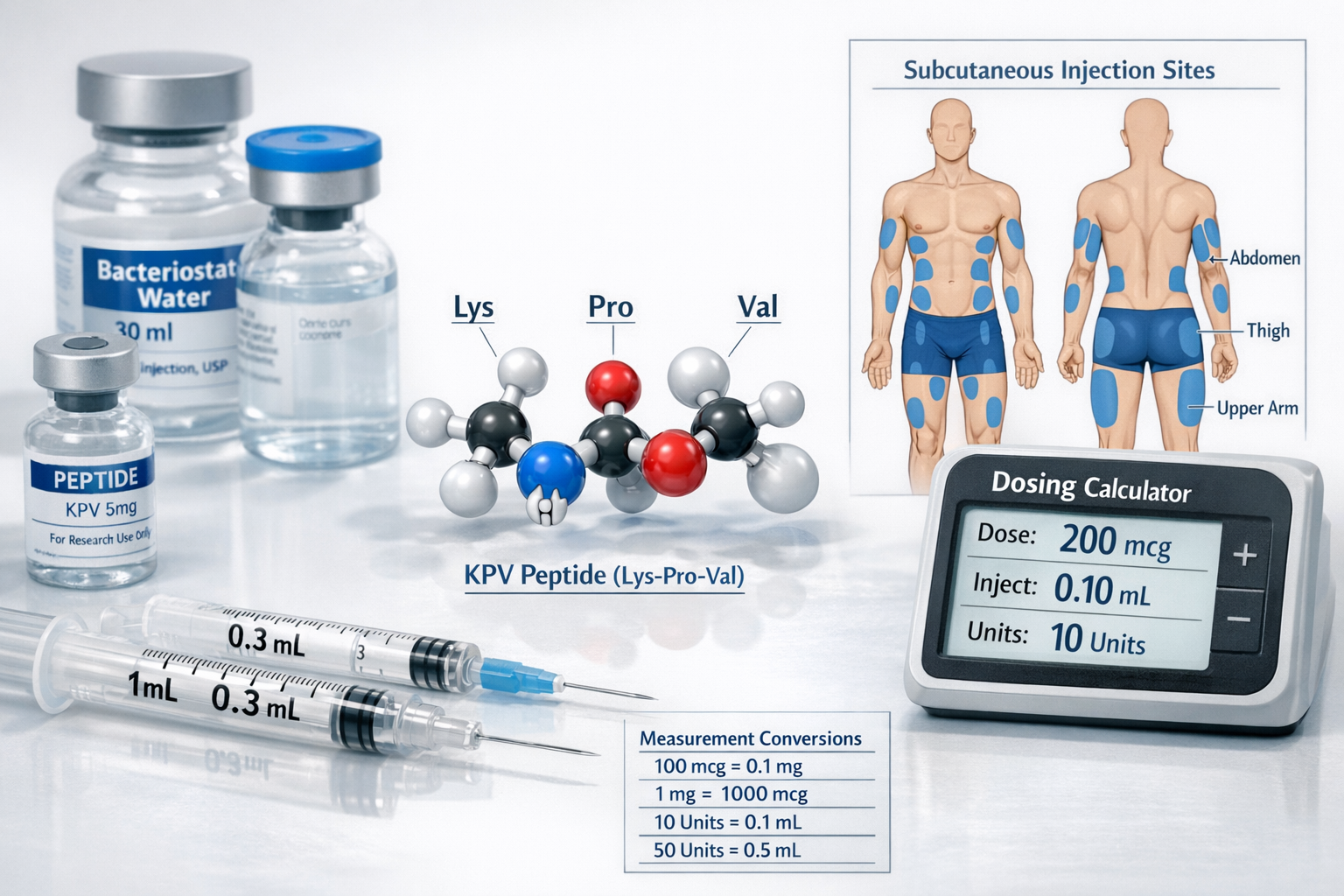
Before diving into the ideal dose and dosing for KPV peptide, it's essential to understand what this compound actually is. KPV is a tripeptide composed of three amino acids: Lysine-Proline-Valine. This sequence represents the C-terminal fragment of alpha-melanocyte-stimulating hormone (α-MSH), a naturally occurring peptide in the human body.
What Makes KPV Unique?
KPV has attracted research attention primarily for its anti-inflammatory properties without the immunosuppressive effects associated with many conventional anti-inflammatory compounds. Research published in various scientific journals has explored KPV's potential mechanisms, which appear to involve:
- 🔬 Modulation of inflammatory pathways
- 🧬 Interaction with cellular signaling mechanisms
- 🛡️ Potential protective effects on gut barrier function
- ⚡ Influence on oxidative stress markers
Understanding these mechanisms helps researchers appreciate why dosing precision matters so much. The compound's activity depends heavily on achieving adequate tissue concentrations while avoiding excessive amounts that might saturate receptors or cause off-target effects.
For those exploring various peptide research options, KPV represents just one of many fascinating compounds available for investigation.
Ideal Dose and Dosing for KPV Peptide: Route-Specific Protocols
The ideal dose and dosing for KPV peptide varies significantly based on the administration route selected. Each delivery method has distinct advantages, bioavailability profiles, and optimal dosing ranges.
Subcutaneous Injection Dosing
Subcutaneous (SubQ) injection remains the most studied and commonly used administration route for KPV peptide. This method offers several advantages:
- ✅ Predictable absorption rates
- ✅ Higher bioavailability compared to oral routes
- ✅ Precise dose control
- ✅ Established research protocols
Typical SubQ Dosing Ranges:
| Experience Level | Dose Range | Frequency | Daily Total |
|---|---|---|---|
| Beginner/Research Start | 250-500 mcg | Once daily | 250-500 mcg |
| Intermediate | 500-750 mcg | Twice daily | 1,000-1,500 mcg |
| Advanced Research | 750-1,000 mcg | Twice daily | 1,500-2,000 mcg |
Most research protocols suggest starting at the lower end of the range (250-500 mcg) and gradually increasing based on observed responses. The subcutaneous route typically shows effects within 30-60 minutes of administration, with peak plasma concentrations occurring around 1-2 hours post-injection.
Oral Administration Dosing
Oral KPV presents unique challenges due to digestive enzyme degradation. However, some formulations utilize protective mechanisms to enhance oral bioavailability. When considering oral administration:
- 💊 Doses typically need to be 3-5 times higher than injectable doses
- 💊 Oral doses commonly range from 1,000-3,000 mcg per administration
- 💊 Taking on an empty stomach may improve absorption
- 💊 Enteric-coated or specially formulated capsules offer better stability
Research into oral peptide delivery continues to evolve, with newer formulations potentially improving bioavailability. Those interested in exploring oral peptide options should consider the trade-offs between convenience and efficiency.
Nasal Spray Dosing
Intranasal administration offers a middle ground between injection and oral routes, with moderate bioavailability and rapid onset:
- 👃 Typical doses range from 500-1,000 mcg per spray
- 👃 Usually administered 1-2 times per nostril
- 👃 Frequency: 2-3 times daily
- 👃 Rapid absorption through nasal mucosa
The nasal route bypasses first-pass metabolism, potentially offering better bioavailability than oral administration while maintaining the convenience of needle-free delivery.
Topical Application Dosing
For localized effects, topical KPV applications have shown promise in research settings:
- 🧴 Concentrations typically range from 0.5% to 2% in carrier solutions
- 🧴 Applied directly to affected areas
- 🧴 Frequency: 2-4 times daily
- 🧴 Absorption varies based on skin condition and location
Topical applications are particularly relevant for research involving skin inflammation or localized gut applications (in suppository form).
When exploring various peptide products for research, understanding these route-specific considerations becomes crucial for protocol design.
Reconstitution and Preparation: Getting Your KPV Dose Right
Achieving the ideal dose and dosing for KPV peptide requires proper reconstitution of lyophilized (freeze-dried) peptide powder. This process is critical for accuracy and peptide stability.
Standard Reconstitution Protocol
Materials Needed:
- Lyophilized KPV peptide vial (typically 5mg or 10mg)
- Bacteriostatic water (BAC water)
- Sterile syringes (insulin syringes for measurement)
- Alcohol swabs
Step-by-Step Process:
- Calculate your target concentration based on desired dose
- Clean vial tops with alcohol swabs
- Draw bacteriostatic water into syringe
- Inject water slowly down the side of the peptide vial (never directly onto powder)
- Gently swirl (never shake) until fully dissolved
- Store properly in refrigerator (2-8°C)
Reconstitution Calculation Examples
Understanding the math behind reconstitution ensures accurate dosing:
Example 1: 5mg KPV vial
- Add 2mL bacteriostatic water
- Final concentration: 2.5mg/mL (2,500 mcg/mL)
- For 500 mcg dose: Draw 0.2mL (20 units on insulin syringe)
Example 2: 10mg KPV vial
- Add 2mL bacteriostatic water
- Final concentration: 5mg/mL (5,000 mcg/mL)
- For 500 mcg dose: Draw 0.1mL (10 units on insulin syringe)
Creating a reconstitution chart for your specific vial size helps eliminate calculation errors during research protocols.
Similar precision is required when working with other research peptides, as detailed in resources about peptide dosage protocols.
Timing and Frequency: Optimizing KPV Peptide Administration
Beyond the amount per dose, the timing and frequency of administration significantly impact research outcomes when determining the ideal dose and dosing for KPV peptide.
Optimal Timing Considerations
For Subcutaneous Administration:
- 🕐 Morning dose: Often administered upon waking (fasted state)
- 🕐 Evening dose: Typically 8-12 hours after morning dose
- 🕐 Pre-meal timing: 30-60 minutes before meals may enhance certain effects
- 🕐 Consistency matters: Same time daily helps maintain stable plasma levels
Frequency Protocols
Research protocols vary in frequency based on objectives:
Once Daily Protocol:
- Best for: Initial assessment, conservative approaches
- Typical dose: 500-1,000 mcg
- Timing: Morning, fasted state
- Duration: 4-8 weeks minimum
Twice Daily Protocol:
- Best for: Sustained effects, inflammation management
- Typical dose: 250-500 mcg per administration
- Timing: Morning and evening (12 hours apart)
- Duration: 8-12 weeks
Three Times Daily Protocol:
- Best for: Intensive research periods, acute situations
- Typical dose: 250-500 mcg per administration
- Timing: Every 8 hours
- Duration: Short-term (2-4 weeks) followed by reassessment
Cycling Considerations
Some research protocols incorporate cycling patterns to potentially prevent receptor desensitization:
- 📅 5 days on, 2 days off (weekly cycle)
- 📅 4 weeks on, 1 week off (monthly cycle)
- 📅 Continuous for 8-12 weeks, then 4-week break
The necessity and effectiveness of cycling remain areas of ongoing investigation. Conservative approaches favor periodic breaks to assess baseline changes and prevent potential tolerance development.
For researchers working with multiple peptide protocols, coordinating timing across different compounds becomes an additional consideration.
Dosing Adjustments: Personalizing Your KPV Protocol
While standard ranges provide starting points, the ideal dose and dosing for KPV peptide often requires individualized adjustment based on response markers and research objectives.
Factors Influencing Dose Requirements
Body Weight Considerations:
While not strictly weight-based dosing, larger individuals may require doses toward the higher end of standard ranges. Some researchers calculate approximately:
- 5-10 mcg per kilogram of body weight for moderate protocols
- Example: 70kg individual = 350-700 mcg per dose
Research Objectives:
Different goals may warrant different dosing strategies:
- 🎯 Gut health research: Often uses higher doses (750-1,000 mcg)
- 🎯 General inflammation markers: Moderate doses (500-750 mcg)
- 🎯 Skin applications: Topical concentrations (1-2%)
- 🎯 Systemic effects: Standard SubQ protocols (500-1,000 mcg)
Response Monitoring:
Adjustments should be based on documented observations:
- Inflammatory marker changes
- Subjective symptom tracking
- Tolerance and side effect profiles
- Biomarker measurements (when available)
Escalation Protocols
A conservative escalation approach minimizes risks while finding optimal doses:
Week 1-2: Start at 250 mcg once daily
Week 3-4: Increase to 250 mcg twice daily (500 mcg total)
Week 5-6: Increase to 500 mcg twice daily (1,000 mcg total)
Week 7+: Maintain or adjust based on response
This gradual approach allows for careful observation of dose-response relationships and identification of the minimum effective dose for individual research contexts.
Understanding proper peptide dosing principles applies across various research compounds and helps establish systematic protocols.
Safety Considerations and Side Effect Management
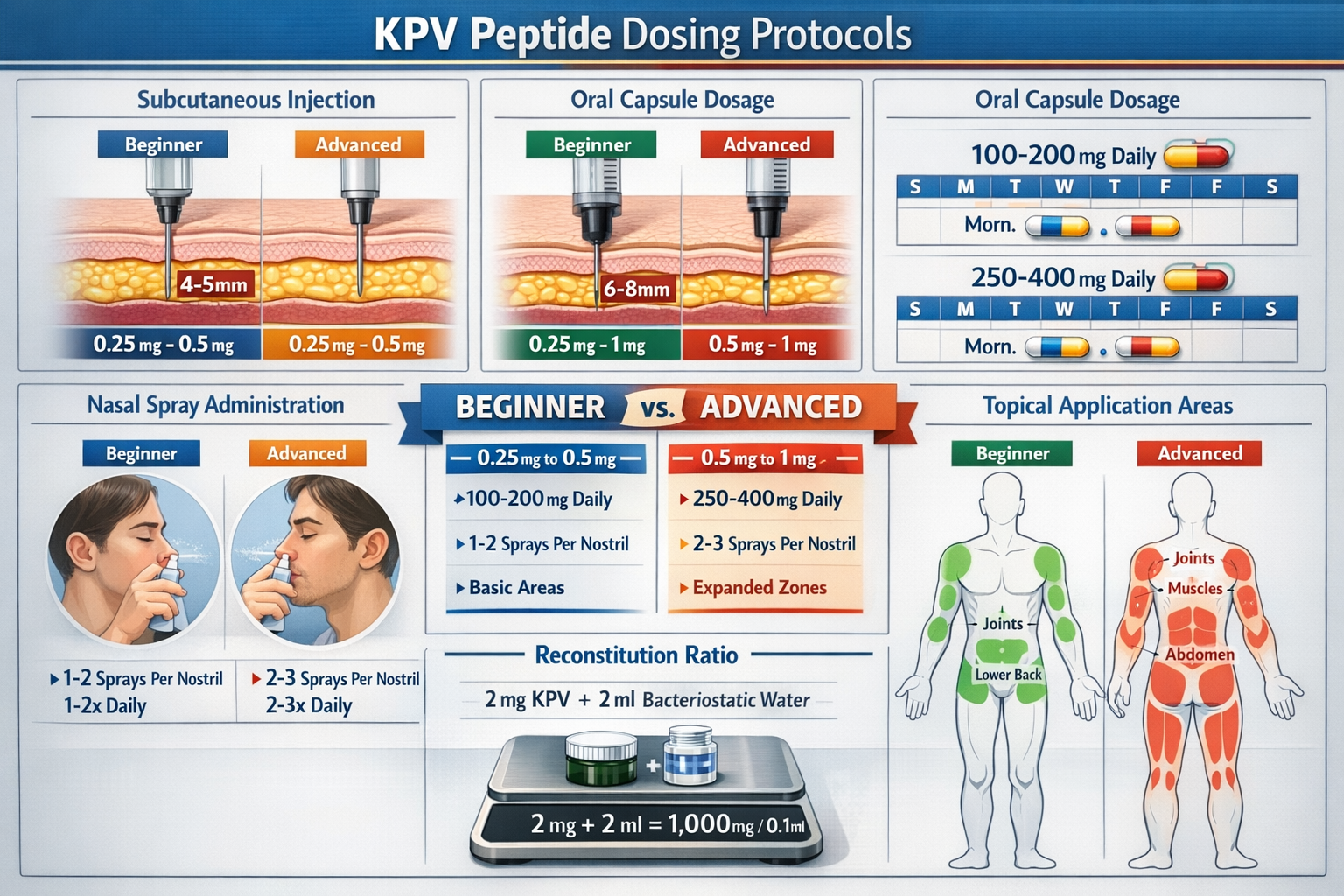
While KPV peptide is generally well-tolerated in research settings, understanding potential issues is essential when establishing the ideal dose and dosing for KPV peptide in any protocol.
Common Observations at Various Doses
Low Doses (250-500 mcg):
- ✓ Generally very well tolerated
- ✓ Minimal reported issues
- ✓ Good starting point for most research
Moderate Doses (500-1,000 mcg):
- ⚠️ Occasional injection site reactions (redness, mild irritation)
- ⚠️ Rare reports of mild gastrointestinal changes
- ⚠️ Generally manageable and transient
Higher Doses (1,000+ mcg):
- ⚠️ Increased likelihood of injection site reactions
- ⚠️ More frequent GI observations
- ⚠️ Potential for diminishing returns
Injection Site Rotation
For subcutaneous administration, proper site rotation minimizes local reactions:
Recommended Injection Sites:
- Abdomen (2 inches from navel)
- Upper thighs (outer areas)
- Upper arms (posterior)
- Lower back/hip area
Rotation Schedule:
- Never use the same exact spot within 7 days
- Rotate systematically (e.g., clockwise around abdomen)
- Document injection sites in research logs
When to Adjust or Discontinue
Reduce dose if experiencing:
- Persistent injection site reactions lasting >48 hours
- Significant gastrointestinal disturbances
- Unexpected responses not aligned with research objectives
Consider discontinuation if:
- Severe allergic reactions occur (extremely rare)
- Persistent adverse effects despite dose reduction
- Research objectives are met or protocol completion reached
Maintaining detailed records helps identify patterns and optimize protocols. Those researching various peptide compounds should apply similar safety monitoring across all substances.
Storage and Stability: Maintaining Dose Accuracy
Proper storage directly impacts whether your calculated dose matches the actual active peptide delivered. Understanding storage requirements is integral to the ideal dose and dosing for KPV peptide.
Lyophilized (Powder) Storage
Before Reconstitution:
- 🌡️ Temperature: -20°C (freezer) for long-term storage
- 🌡️ Alternative: 2-8°C (refrigerator) for up to 6 months
- 🌡️ Room temperature: Stable for several weeks (not recommended)
- 🌡️ Protect from light and moisture
Stability Timeline:
- Freezer (-20°C): 2+ years
- Refrigerator (2-8°C): 6-12 months
- Room temperature: 4-8 weeks
Reconstituted Solution Storage
After Reconstitution:
- 🌡️ Always refrigerate at 2-8°C
- 🌡️ Never freeze reconstituted solutions
- 🌡️ Use within 30 days for optimal potency
- 🌡️ Some degradation begins after 14-21 days
Stability Factors:
- Bacteriostatic water extends stability vs. sterile water
- Lower concentrations may degrade faster
- Light exposure accelerates breakdown
- Temperature fluctuations reduce potency
Practical Storage Tips
Best Practices:
- ✅ Use amber or opaque vials when possible
- ✅ Wrap vials in aluminum foil to block light
- ✅ Store in back of refrigerator (more stable temperature)
- ✅ Label with reconstitution date
- ✅ Use dedicated peptide storage container
- ✅ Minimize time outside refrigeration
Signs of Degradation:
- Cloudiness or discoloration
- Visible particles or precipitation
- Unusual odor
- Reduced effects at usual doses
When sourcing research peptides, proper storage from receipt through final dose ensures research validity and safety.
Combination Protocols: KPV with Other Peptides
Many researchers explore the ideal dose and dosing for KPV peptide within combination protocols that include other compounds. Understanding potential interactions and timing considerations becomes essential.
Common KPV Combinations
KPV + BPC-157:
This combination is popular in gut health research:
- KPV dose: 500-1,000 mcg twice daily
- BPC-157 dose: 250-500 mcg twice daily
- Timing: Can be administered together or separately
- Rationale: Complementary mechanisms for gut barrier support
KPV + Thymosin Beta-4 (TB-500):
For inflammation and recovery research:
- KPV dose: 500 mcg twice daily
- TB-500 dose: 2-5mg twice weekly
- Timing: Different frequencies require separate scheduling
- Rationale: Systemic anti-inflammatory and repair mechanisms
KPV + MotsC:
Combining anti-inflammatory with metabolic research:
- KPV dose: 500-750 mcg daily
- MotsC dose: 5-15mg weekly
- Timing: Different administration schedules
- Rationale: Inflammation reduction alongside metabolic optimization
Timing Considerations for Combinations
When combining peptides:
- 🕐 Same injection: Compatible peptides can be mixed in same syringe
- 🕐 Separate injections: Use different sites if administering simultaneously
- 🕐 Staggered timing: Space by 30-60 minutes if uncertain about interactions
- 🕐 Different days: Some protocols alternate peptides on different days
Dose Adjustments in Combinations
When using KPV with other compounds:
- Consider starting at lower doses for each compound
- Monitor for additive effects that might allow dose reduction
- Watch for unexpected interactions (rare but possible)
- Maintain detailed logs to identify which compound produces which effects
Researchers interested in comprehensive peptide protocols should carefully document combination approaches to identify synergistic effects or necessary adjustments.
Documentation and Research Tracking
Establishing the ideal dose and dosing for KPV peptide requires systematic documentation to identify patterns, optimize protocols, and ensure reproducibility.
Essential Documentation Elements
Pre-Research Baseline:
- Starting measurements (weight, relevant biomarkers)
- Baseline symptom assessments
- Photography (if relevant to research)
- Initial inflammatory markers (if available)
Daily Tracking:
- 📝 Exact dose administered
- 📝 Time of administration
- 📝 Injection site (for SubQ)
- 📝 Any immediate observations
- 📝 Subjective symptom changes
Weekly Assessments:
- Weight and body composition changes
- Symptom severity ratings (1-10 scales)
- Side effects or adverse observations
- Overall protocol adherence
Monthly Evaluations:
- Comprehensive progress review
- Dose adjustment decisions
- Protocol modifications
- Biomarker testing (when available)
Sample Tracking Template
| Date | Time | Dose (mcg) | Route | Site | Observations | Side Effects |
|---|---|---|---|---|---|---|
| 1/15 | 8:00 AM | 500 | SubQ | Abd-L | None | None |
| 1/15 | 8:00 PM | 500 | SubQ | Abd-R | Slight redness | Mild, resolved |
This systematic approach helps identify the truly ideal dose and dosing for KPV peptide for individual research contexts.
Special Populations and Considerations
While KPV peptide research primarily involves healthy adult subjects, certain populations require modified dosing considerations.
Age-Related Adjustments
Younger Adults (18-30):
- May respond well to standard doses
- Potentially faster metabolism may require higher end of range
- Recovery and adaptation typically robust
Middle Age (30-50):
- Standard dosing protocols typically appropriate
- Individual variation increases with age
- Metabolic factors become more variable
Older Adults (50+):
- Consider starting at lower doses (250-500 mcg)
- Potentially slower clearance may allow less frequent dosing
- More careful monitoring recommended
Body Composition Factors
Higher Body Fat Percentage:
- Subcutaneous injections may have altered absorption
- Consider slightly higher doses or alternative sites
- Abdominal injections may be less predictable
Very Lean Individuals:
- Standard doses typically effective
- May experience faster absorption
- Careful site selection to ensure subcutaneous (not intramuscular) delivery
Research Objective Variations
Gut Health Focus:
- Often requires higher doses (750-1,000 mcg)
- Twice daily administration common
- Longer protocols (12+ weeks) frequently employed
Skin/Topical Applications:
- Concentration-based rather than total dose
- Multiple daily applications typical
- Localized effects with minimal systemic absorption
General Wellness Research:
- Moderate doses (500 mcg) often sufficient
- Once or twice daily protocols
- Cycling may be incorporated
Understanding these variations helps researchers establish truly personalized approaches to the ideal dose and dosing for KPV peptide.
Cost Considerations and Dosing Economics
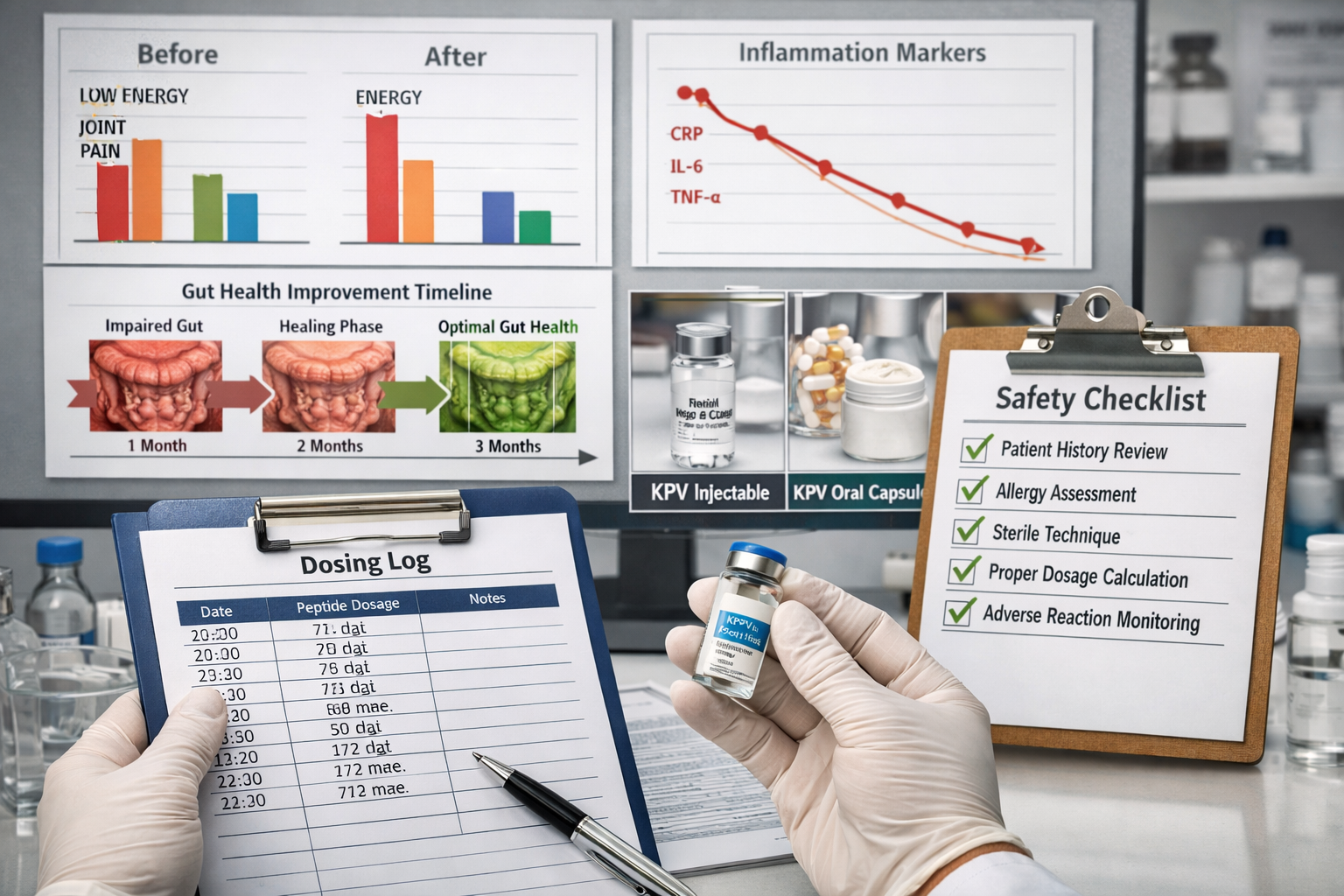
The ideal dose and dosing for KPV peptide must also consider practical economic factors that affect research sustainability and protocol design.
Cost Per Dose Calculations
Understanding the economics helps plan sustainable research:
Example: 10mg KPV vial at $80
- Reconstituted to 2mL (5,000 mcg/mL)
- At 500 mcg per dose: 20 doses per vial
- Cost per dose: $4.00
- Daily cost (twice daily): $8.00
- Monthly cost: ~$240
Example: 5mg KPV vial at $45
- Reconstituted to 2mL (2,500 mcg/mL)
- At 500 mcg per dose: 10 doses per vial
- Cost per dose: $4.50
- Daily cost (twice daily): $9.00
- Monthly cost: ~$270
Bulk Purchasing Considerations
Larger Vials:
- 10mg vials typically offer better per-mg pricing
- Requires confidence in storage and usage timeline
- Risk of waste if degradation occurs before use
Multiple Smaller Vials:
- 5mg vials provide more flexibility
- Reduced waste risk
- Slightly higher per-mg cost
- Better for protocol testing
Dose Optimization for Budget
Strategies to maximize value:
- ✅ Start with minimum effective dose
- ✅ Increase only when clearly beneficial
- ✅ Consider once-daily vs. twice-daily based on response
- ✅ Purchase from reputable sources to ensure quality
- ✅ Proper storage to prevent waste
When sourcing quality research peptides, balancing cost with quality ensures both economic sustainability and research validity.
Quality and Sourcing: Impact on Effective Dosing
The ideal dose and dosing for KPV peptide assumes you're working with high-quality, accurately dosed peptide. Source quality dramatically impacts actual effective dosing.
Purity Considerations
Pharmaceutical Grade (>98% purity):
- Dose calculations are accurate
- Minimal contamination or degradation
- Predictable effects
- Higher cost but better value
Research Grade (95-98% purity):
- May require slight dose adjustments
- Generally acceptable for most research
- Cost-effective option
- Verify with certificates of analysis (COA)
Lower Quality (<95% purity):
- Unpredictable dosing accuracy
- May contain impurities affecting results
- False economy—wasted research time
- Not recommended
Certificate of Analysis (COA) Verification
What to look for:
- 📄 Purity percentage (aim for >97%)
- 📄 Testing methodology (HPLC, mass spectrometry)
- 📄 Batch number matching your product
- 📄 Recent testing date
- 📄 Independent lab testing (third-party)
Red Flags in Sourcing
Warning signs of questionable quality:
- ⚠️ No COA available or provided
- ⚠️ Prices significantly below market average
- ⚠️ Vague product descriptions
- ⚠️ No contact information or customer service
- ⚠️ Unrealistic claims or guarantees
Reputable Source Indicators:
- ✅ Transparent testing and documentation
- ✅ Responsive customer service
- ✅ Clear storage and handling instructions
- ✅ Reasonable pricing aligned with quality
- ✅ Positive research community reputation
Working with trusted peptide suppliers ensures that your carefully calculated doses actually deliver the intended amount of active peptide.
Advanced Dosing Strategies
For experienced researchers, several advanced approaches to the ideal dose and dosing for KPV peptide may offer additional optimization.
Pulsed Dosing Protocols
Rather than consistent daily dosing, some protocols explore pulsed administration:
Weekly Pulse:
- Higher dose (1,000-1,500 mcg) once or twice weekly
- Rationale: Receptor stimulation without constant exposure
- Limited research data on effectiveness
- Theoretical prevention of desensitization
Bi-Weekly Intensive:
- Standard doses (500 mcg twice daily) for 2 weeks
- 1-2 week break
- Repeat cycle
- Allows assessment of sustained effects
Front-Loading Approaches
Some protocols use higher initial doses followed by maintenance:
Week 1-2: 1,000 mcg twice daily (loading phase)
Week 3+: 500 mcg twice daily (maintenance phase)
Rationale:
- Rapidly achieve tissue saturation
- Transition to lower maintenance dose
- Potentially faster initial results
Considerations:
- Limited evidence for superiority
- May increase side effect risk initially
- Requires careful monitoring
Micro-Dosing Exploration
Conversely, some research explores very low, frequent doses:
- 100-250 mcg three to four times daily
- Total daily dose similar to standard protocols
- More stable plasma levels
- Increased administration burden
Potential Benefits:
- Reduced peak-to-trough variations
- Potentially fewer side effects
- More physiologic dosing pattern
Challenges:
- Increased complexity and compliance burden
- Limited research validation
- May not be practical for most applications
These advanced strategies should only be explored after establishing baseline responses with standard protocols and maintaining detailed documentation.
Future Directions in KPV Dosing Research
As we progress through 2026, ongoing research continues to refine our understanding of the ideal dose and dosing for KPV peptide.
Emerging Research Areas
Bioavailability Enhancement:
- Novel delivery systems (nanoparticles, liposomes)
- Absorption enhancers for oral formulations
- Sustained-release formulations
- Potential for reduced dosing frequency
Personalized Dosing Algorithms:
- Genetic markers predicting response
- Biomarker-guided dose adjustments
- AI-assisted protocol optimization
- Individual pharmacokinetic profiling
Combination Synergies:
- Systematic study of peptide combinations
- Dose reduction possibilities through synergy
- Optimized timing protocols
- Enhanced efficacy with lower individual doses
Technological Advances
Monitoring Tools:
- Wearable devices tracking inflammatory markers
- Real-time dose response assessment
- Digital tracking and AI analysis
- Predictive modeling for individual optimization
Delivery Innovations:
- Microneedle patches for painless delivery
- Improved nasal spray formulations
- Oral formulations with enhanced stability
- Implantable sustained-release systems
Regulatory Landscape
The evolving regulatory environment may impact:
- Quality standards and testing requirements
- Documentation and traceability expectations
- Research vs. therapeutic use distinctions
- Access and availability considerations
Staying informed about these developments helps researchers maintain current best practices and anticipate future optimization opportunities in peptide research.
<!DOCTYPE html>
<html lang="en">
<head>
    <meta charset="UTF-8">
    <meta name="viewport" content="width=device-width, initial-scale=1.0">
    <title>KPV Peptide Dosing Calculator</title>
    <style>
        * {
            margin: 0;
            padding: 0;
            box-sizing: border-box;
        }

        .cg-calculator-container {
            max-width: 800px;
            margin: 20px auto;
            padding: 25px;
            background: linear-gradient(135deg, #667eea 0%, #764ba2 100%);
            border-radius: 15px;
            box-shadow: 0 10px 30px rgba(0,0,0,0.2);
            font-family: 'Segoe UI', Tahoma, Geneva, Verdana, sans-serif;
        }

        .cg-calculator-header {
            text-align: center;
            color: white;
            margin-bottom: 25px;
        }

        .cg-calculator-header h2 {
            font-size: 28px;
            margin-bottom: 10px;
        }

        .cg-calculator-header p {
            font-size: 14px;
            opacity: 0.9;
        }

        .cg-calculator-body {
            background: white;
            padding: 30px;
            border-radius: 10px;
        }

        .cg-input-group {
            margin-bottom: 25px;
        }

        .cg-input-group label {
            display: block;
            margin-bottom: 8px;
            font-weight: 600;
            color: #333;
            font-size: 15px;
        }

        .cg-input-group select,
        .cg-input-group input {
            width: 100%;
            padding: 12px;
            border: 2px solid #e0e0e0;
            border-radius: 8px;
            font-size: 15px;
            transition: border-color 0.3s;
        }

        .cg-input-group select:focus,
        .cg-input-group input:focus {
            outline: none;
            border-color: #667eea;
        }

        .cg-input-row {
            display: grid;
            grid-template-columns: 1fr 1fr;
            gap: 15px;
        }

        .cg-calculate-btn {
            width: 100%;
            padding: 15px;
            background: linear-gradient(135deg, #667eea 0%, #764ba2 100%);
            color: white;
            border: none;
            border-radius: 8px;
            font-size: 18px;
            font-weight: 600;
            cursor: pointer;
            transition: transform 0.2s, box-shadow 0.2s;
            margin-top: 10px;
        }

        .cg-calculate-btn:hover {
            transform: translateY(-2px);
            box-shadow: 0 5px 15px rgba(102, 126, 234, 0.4);
        }

        .cg-results-container {
            margin-top: 30px;
            padding: 25px;
            background: #f8f9fa;
            border-radius: 10px;
            display: none;
        }

        .cg-results-container.cg-active {
            display: block;
        }

        .cg-result-item {
            margin-bottom: 20px;
            padding: 15px;
            background: white;
            border-left: 4px solid #667eea;
            border-radius: 5px;
        }

        .cg-result-item h3 {
            color: #667eea;
            margin-bottom: 8px;
            font-size: 16px;
        }

        .cg-result-item p {
            color: #555;
            line-height: 1.6;
            font-size: 14px;
        }

        .cg-result-value {
            font-size: 24px;
            font-weight: 700;
            color: #764ba2;
            margin: 10px 0;
        }

        .cg-info-box {
            background: #fff3cd;
            border-left: 4px solid #ffc107;
            padding: 15px;
            margin-top: 20px;
            border-radius: 5px;
        }

        .cg-info-box p {
            color: #856404;
            font-size: 13px;
            line-height: 1.5;
        }

        @media (max-width: 600px) {
            .cg-calculator-container {
                padding: 15px;
            }

            .cg-calculator-body {
                padding: 20px;
            }

            .cg-input-row {
                grid-template-columns: 1fr;
            }

            .cg-calculator-header h2 {
                font-size: 22px;
            }
        }
    </style>
</head>
<body>
    <div class="cg-calculator-container">
        <div class="cg-calculator-header">
            <h2>🧬 KPV Peptide Dosing Calculator</h2>
            <p>Calculate precise dosing and reconstitution ratios for your research protocol</p>
        </div>

        <div class="cg-calculator-body">
            <div class="cg-input-group">
                <label for="cg-vial-size">Vial Size (mg)</label>
                <select id="cg-vial-size">
                    <option value="5">5 mg</option>
                    <option value="10" selected>10 mg</option>
                    <option value="15">15 mg</option>
                    <option value="20">20 mg</option>
                </select>
            </div>

            <div class="cg-input-group">
                <label for="cg-water-amount">Bacteriostatic Water (mL)</label>
                <select id="cg-water-amount">
                    <option value="1">1 mL</option>
                    <option value="2" selected>2 mL</option>
                    <option value="3">3 mL</option>
                    <option value="4">4 mL</option>
                    <option value="5">5 mL</option>
                </select>
            </div>

            <div class="cg-input-row">
                <div class="cg-input-group">
                    <label for="cg-desired-dose">Desired Dose (mcg)</label>
                    <input type="number" id="cg-desired-dose" value="500" min="100" max="2000" step="50">
                </div>

                <div class="cg-input-group">
                    <label for="cg-frequency">Daily Frequency</label>
                    <select id="cg-frequency">
                        <option value="1">Once daily</option>
                        <option value="2" selected>Twice daily</option>
                        <option value="3">Three times daily</option>
                    </select>
                </div>
            </div>

            <button class="cg-calculate-btn" onclick="calculateDosing()">Calculate Dosing Protocol</button>

            <div class="cg-results-container" id="cg-results">
                <div class="cg-result-item">
                    <h3>📊 Concentration</h3>
                    <div class="cg-result-value" id="cg-concentration">-</div>
                    <p>This is the concentration of your reconstituted solution.</p>
                </div>

                <div class="cg-result-item">
                    <h3>💉 Volume Per Dose</h3>
                    <div class="cg-result-value" id="cg-volume">-</div>
                    <p>Draw this amount for each administration (units on insulin syringe).</p>
                </div>

                <div class="cg-result-item">
                    <h3>📅 Total Doses Per Vial</h3>
                    <div class="cg-result-value" id="cg-total-doses">-</div>
                    <p>Number of individual doses available from this vial.</p>
                </div>

                <div class="cg-result-item">
                    <h3>⏱️ Days Supply</h3>
                    <div class="cg-result-value" id="cg-days-supply">-</div>
                    <p>How many days this vial will last at your selected frequency.</p>
                </div>

                <div class="cg-result-item">
                    <h3>📈 Daily Total Dose</h3>
                    <div class="cg-result-value" id="cg-daily-total">-</div>
                    <p>Combined daily dose across all administrations.</p>
                </div>

                <div class="cg-info-box">
                    <p><strong>⚠️ Important:</strong> Store reconstituted peptide at 2-8°C (refrigerator). Use within 30 days for optimal potency. Always use bacteriostatic water for reconstitution. This calculator is for research planning purposes only.</p>
                </div>
            </div>
        </div>
    </div>

    <script>
        function calculateDosing() {
            // Get input values
            const vialSize = parseFloat(document.getElementById('cg-vial-size').value);
            const waterAmount = parseFloat(document.getElementById('cg-water-amount').value);
            const desiredDose = parseFloat(document.getElementById('cg-desired-dose').value);
            const frequency = parseInt(document.getElementById('cg-frequency').value);

            // Calculate concentration (mcg/mL)
            const concentrationMcgPerMl = (vialSize * 1000) / waterAmount;

            // Calculate volume per dose (mL)
            const volumePerDose = desiredDose / concentrationMcgPerMl;

            // Calculate volume in insulin syringe units (0.01mL = 1 unit)
            const volumeUnits = volumePerDose * 100;

            // Calculate total doses per vial
            const totalDoses = Math.floor((vialSize * 1000) / desiredDose);

            // Calculate days supply
            const daysSupply = Math.floor(totalDoses / frequency);

            // Calculate daily total dose
            const dailyTotal = desiredDose * frequency;

            // Display results
            document.getElementById('cg-concentration').textContent =
                concentrationMcgPerMl.toFixed(0) + ' mcg/mL';

            document.getElementById('cg-volume').textContent =
                volumePerDose.toFixed(2) + ' mL (' + volumeUnits.toFixed(0) + ' units)';

            document.getElementById('cg-total-doses').textContent =
                totalDoses + ' doses';

            document.getElementById('cg-days-supply').textContent =
                daysSupply + ' days';

            document.getElementById('cg-daily-total').textContent =
                dailyTotal.toFixed(0) + ' mcg';

            // Show results container
            document.getElementById('cg-results').classList.add('cg-active');

            // Smooth scroll to results
            document.getElementById('cg-results').scrollIntoView({
                behavior: 'smooth',
                block: 'nearest'
            });
        }

        // Allow Enter key to trigger calculation
        document.getElementById('cg-desired-dose').addEventListener('keypress', function(event) {
            if (event.key === 'Enter') {
                calculateDosing();
            }
        });
    </script>
</body>
</html>
Conclusion: Implementing Your Ideal KPV Peptide Dosing Protocol
Determining the ideal dose and dosing for KPV peptide requires a systematic, evidence-based approach that balances research objectives with practical considerations. As we've explored throughout this comprehensive guide, successful KPV peptide research depends on multiple interconnected factors: proper reconstitution, accurate dosing calculations, appropriate administration routes, consistent timing, quality sourcing, and meticulous documentation.
Key Implementation Steps
Start Conservative:
Begin with lower doses (250-500 mcg) and gradually increase based on documented responses. This approach minimizes risks while establishing individual baseline responses.
Choose Your Route Wisely:
Select the administration method that best aligns with your research objectives—subcutaneous for systemic effects and predictable absorption, oral for convenience (with appropriate dose adjustments), nasal for rapid onset, or topical for localized applications.
Maintain Rigorous Documentation:
Detailed tracking of doses, timing, observations, and outcomes enables protocol optimization and provides valuable data for understanding individual response patterns.
Prioritize Quality:
Working with high-quality, tested peptides ensures that your carefully calculated doses actually deliver the intended amount of active compound, making your research valid and reproducible.
Stay Flexible:
Be prepared to adjust protocols based on observed responses. The "ideal" dose is ultimately the one that achieves your specific research objectives with minimal adverse effects.
Next Steps for Researchers
- Assess your research objectives and determine which dosing protocol aligns best
- Source quality KPV peptide from reputable suppliers with proper documentation
- Prepare your protocol including reconstitution calculations and administration schedule
- Establish baseline measurements before beginning your research
- Implement your chosen protocol with consistent timing and careful documentation
- Monitor and adjust based on systematic observation and data collection
- Review and optimize at regular intervals (weekly, monthly) to refine your approach
Final Considerations
The landscape of peptide research continues to evolve rapidly in 2026, with new formulations, delivery methods, and combination protocols emerging regularly. Staying informed about developments while maintaining rigorous research standards ensures both safety and optimal outcomes.
Remember that the ideal dose and dosing for KPV peptide is not a one-size-fits-all prescription but rather a personalized optimization process. By applying the principles outlined in this guide—starting conservatively, documenting systematically, adjusting thoughtfully, and prioritizing quality—researchers can develop protocols that maximize the potential of this promising compound.
Whether you're exploring KPV for gut health research, investigating anti-inflammatory mechanisms, or examining combination protocols with other peptides, the foundation remains the same: precise dosing, consistent administration, quality compounds, and careful observation.
For those ready to begin or optimize their KPV peptide research, exploring comprehensive peptide resources provides access to quality compounds and additional research support materials.
The journey to finding your ideal KPV peptide dosing protocol is both a science and an art—grounded in evidence, refined through experience, and optimized through systematic observation. With the knowledge and tools provided in this guide, you're well-equipped to design and implement effective research protocols that advance understanding of this fascinating peptide compound.
SEO Meta Information
Meta Title: KPV Peptide Dosing Guide: Ideal Doses & Protocols 2026
Meta Description: Comprehensive guide to ideal dose and dosing for KPV peptide. Evidence-based protocols, reconstitution calculations, timing strategies, and safety considerations.
Keywords: KPV peptide dosing, KPV peptide dose, peptide dosing protocols, KPV reconstitution, subcutaneous peptide dosing, KPV administration, peptide research protocols, anti-inflammatory peptides