
Ideal Dose and Dosing for SLU-PP-332: A Comprehensive 2026 Guide
When it comes to cutting-edge research compounds, few have generated as much interest in the fitness and wellness communities as SLU-PP-332. This novel compound has captured attention for its unique mechanism of action, but understanding the ideal dose and dosing for SLU-PP-332 remains a critical challenge for researchers and enthusiasts alike. Getting the dosing right can mean the difference between optimal results and wasted research efforts. This comprehensive guide breaks down everything you need to know about SLU-PP-332 dosing protocols, timing strategies, and safety considerations based on current scientific literature and emerging research from 2026.
Key Takeaways
- 🔬 SLU-PP-332 dosing typically ranges from 10mg to 50mg in research settings, with most protocols starting at lower doses to assess tolerance
- ⏰ Timing and frequency matter significantly – most research suggests once-daily dosing for optimal results
- 📊 Body weight and research goals influence ideal dosing – personalized approaches yield better outcomes than one-size-fits-all protocols
- ⚠️ Starting low and gradually increasing is the recommended approach to minimize potential side effects
- 🧪 Proper reconstitution and storage are essential for maintaining compound stability and achieving consistent dosing
Understanding SLU-PP-332: What Makes This Compound Unique
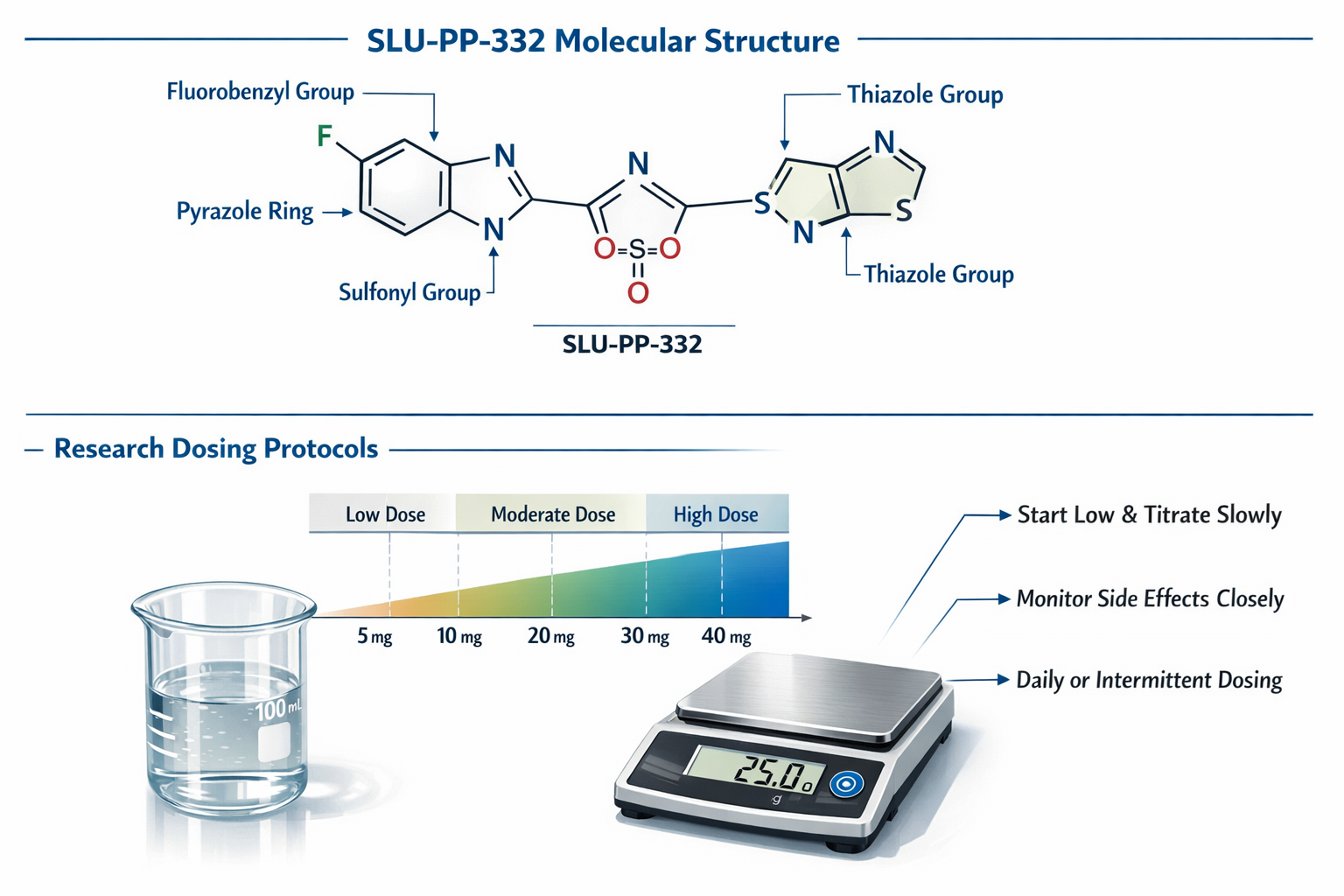
SLU-PP-332 represents a fascinating development in metabolic research compounds. Unlike traditional peptides, this small molecule acts as a selective REV-ERB agonist, which means it influences circadian rhythm pathways and metabolic processes through a distinct mechanism. The compound was developed at the Scripps Research Institute and has shown promising results in preclinical studies related to metabolic function and energy expenditure.
The mechanism of action sets SLU-PP-332 apart from other research compounds. By targeting REV-ERB nuclear receptors, it influences the body's internal clock and metabolic regulation. This unique pathway has attracted attention from researchers exploring metabolic optimization, body composition changes, and energy balance. For those familiar with other research compounds available at Pure Tested Peptides, SLU-PP-332 offers a completely different approach compared to traditional peptide therapies.
How SLU-PP-332 Differs from Traditional Peptides
Traditional peptides like growth hormone secretagogues work through hormone signaling pathways. SLU-PP-332, however, operates at the nuclear receptor level, directly influencing gene expression related to metabolism and circadian function. This fundamental difference means that dosing strategies for SLU-PP-332 cannot simply be copied from peptide protocols.
The compound's half-life and bioavailability also differ significantly from peptides. While many peptides require multiple daily doses due to rapid degradation, SLU-PP-332's chemical stability allows for less frequent administration. This convenience factor has made it particularly appealing to researchers and those exploring various peptide options for metabolic research.
Ideal Dose and Dosing for SLU-PP-332: Research-Based Protocols
Determining the ideal dose and dosing for SLU-PP-332 requires understanding both the published research and practical application considerations. Current scientific literature suggests a dosing range, but individual factors play a crucial role in optimization.
Standard Dosing Ranges in Research Settings
Based on preclinical studies and early research protocols, SLU-PP-332 dosing typically falls within these ranges:
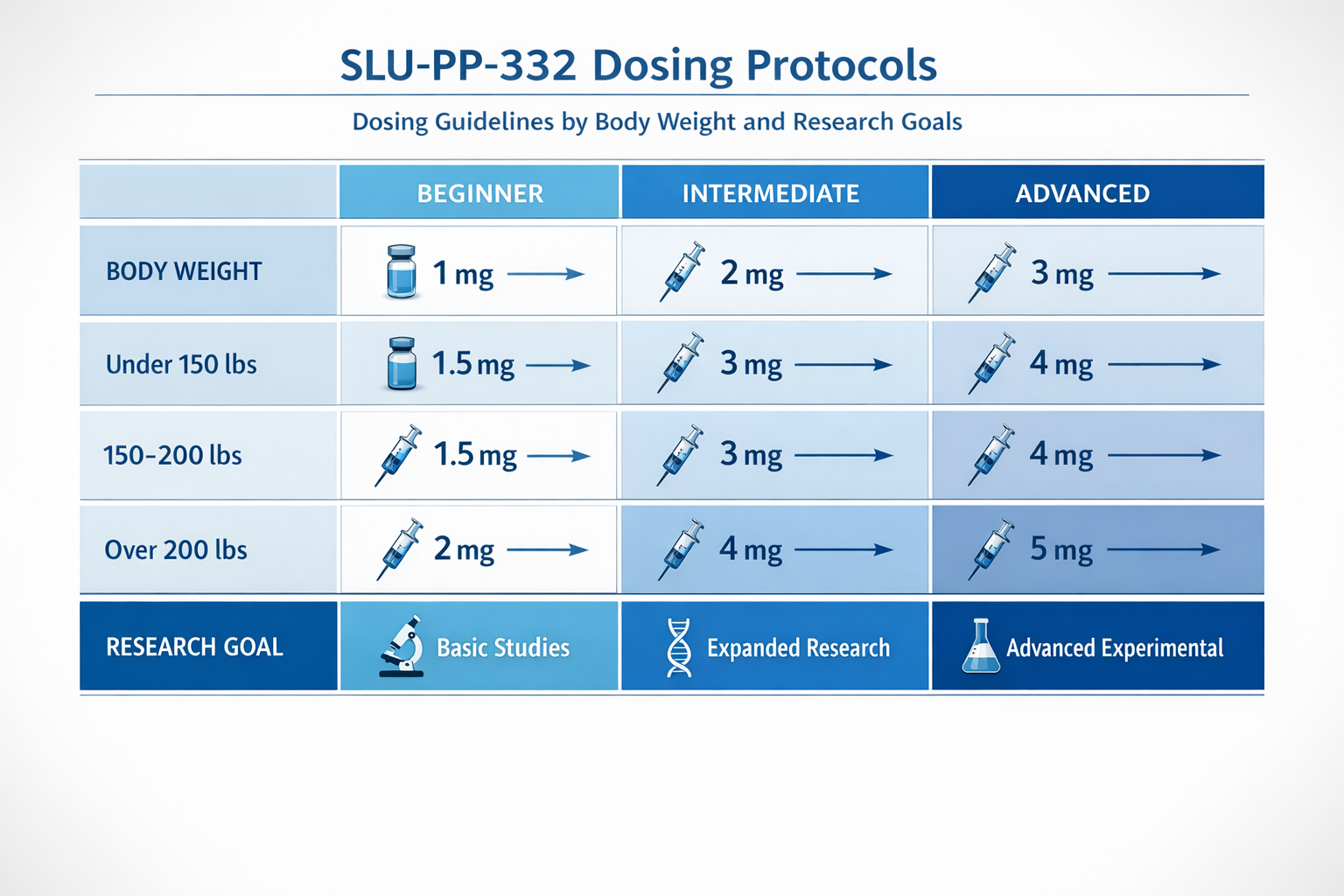
| Experience Level | Starting Dose | Standard Dose | Advanced Dose | Frequency |
|---|---|---|---|---|
| Beginner Researchers | 10-15mg | 20-25mg | Not recommended | Once daily |
| Intermediate | 15-20mg | 25-35mg | 40mg | Once daily |
| Advanced | 20-25mg | 30-40mg | 45-50mg | Once daily |
These ranges represent general guidelines observed in research contexts. The ideal starting point for most researchers is 15-20mg daily, allowing for assessment of individual response before any adjustments. This conservative approach minimizes potential side effects while providing meaningful research data.
For those exploring metabolic research compounds, understanding proper dosing is as critical as it is with compounds like 5-amino-1-mq, where precision matters significantly. The body weight of research subjects also influences optimal dosing, with heavier individuals sometimes requiring doses at the higher end of the range.
Factors That Influence Individual Dosing Needs
Several key factors determine the ideal dose and dosing for SLU-PP-332 for any particular research application:
Body Weight and Composition: Larger individuals may require higher doses to achieve comparable tissue concentrations. A general guideline suggests approximately 0.3-0.5mg per kilogram of body weight as a starting calculation, though this should be adjusted based on response.
Research Goals: Metabolic research may require different dosing than studies focused on circadian rhythm modulation. Those examining body composition changes often utilize the higher end of the dosing spectrum, while circadian research may benefit from lower, more targeted doses.
Tolerance and Sensitivity: Individual variation in receptor sensitivity means some researchers observe significant effects at lower doses, while others require higher amounts. Starting conservatively allows for proper assessment of individual response patterns.
Concurrent Research Protocols: When SLU-PP-332 is used alongside other compounds, dosing adjustments may be necessary. For example, researchers combining it with metabolic compounds like those available through Pure Tested Peptides' research products should consider potential synergistic effects.
Timing and Frequency: Optimizing Your SLU-PP-332 Protocol
Beyond determining the right dose, understanding when and how often to administer SLU-PP-332 significantly impacts research outcomes. The compound's mechanism of action through circadian rhythm pathways makes timing particularly relevant.
Best Time of Day for Administration
Research suggests that morning administration of SLU-PP-332 aligns best with natural circadian rhythms. Taking the compound within 1-2 hours of waking appears to optimize its effects on metabolic regulation throughout the day. This timing strategy leverages the body's natural cortisol awakening response and metabolic activation that occurs in morning hours.
Some researchers have experimented with evening dosing, particularly when studying circadian rhythm modulation directly. However, this approach may interfere with natural sleep patterns in some individuals. The consensus among experienced researchers is that morning dosing between 6-9 AM provides the most consistent and favorable outcomes.
Once Daily vs. Split Dosing Protocols
Unlike some peptides that benefit from split dosing throughout the day, SLU-PP-332's pharmacokinetic profile supports once-daily administration. The compound's half-life of approximately 8-12 hours means that single daily doses maintain adequate tissue levels for sustained effects.
Split dosing protocols (dividing the daily dose into two administrations) have been explored but generally show no significant advantage over once-daily dosing. In fact, split dosing may complicate adherence and make it harder to assess dose-response relationships. For researchers familiar with compounds like peptide blends that sometimes require multiple daily doses, SLU-PP-332's simpler protocol offers a practical advantage.
Cycling Strategies and Duration
Research protocols with SLU-PP-332 typically follow specific duration and cycling patterns:
Standard Research Cycle: 8-12 weeks of continuous daily dosing, followed by a 4-week break. This allows for assessment of sustained effects while preventing potential receptor desensitization.
Extended Protocols: Some research applications utilize 16-week cycles, particularly when examining long-term metabolic adaptations. These extended protocols should include regular monitoring and assessment checkpoints.
Intermittent Dosing: A less common approach involves 5 days on, 2 days off patterns. While this may help maintain receptor sensitivity, it complicates data collection and may reduce overall effectiveness.
The ideal dose and dosing for SLU-PP-332 in cycling contexts often involves starting at the lower end of the range and potentially increasing after the first 2-3 weeks based on observed responses. This progressive approach, similar to strategies used with other metabolic research compounds, allows for optimization while minimizing risks.
Reconstitution and Preparation: Getting Your Doses Right
Proper preparation of SLU-PP-332 is essential for accurate dosing and compound stability. Unlike ready-to-use formulations, research-grade SLU-PP-332 typically comes in powder form requiring reconstitution.
Step-by-Step Reconstitution Process
-
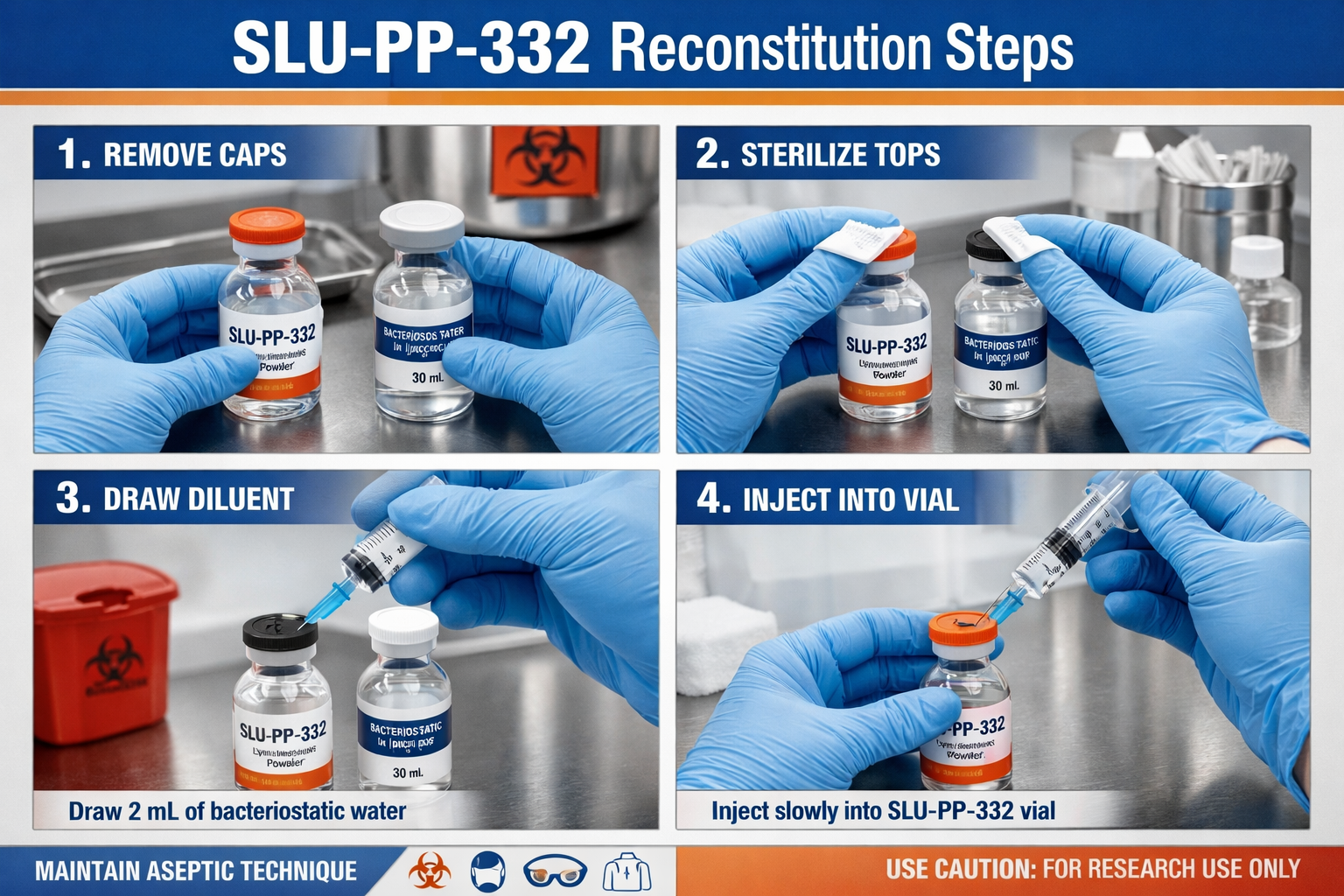
Gather Materials: You'll need bacteriostatic water, sterile vials, alcohol swabs, and appropriate syringes (typically 1mL insulin syringes for precise measurement).
-
Calculate Required Volume: For a 10mg vial, adding 2mL of bacteriostatic water creates a concentration of 5mg/mL, making dosing calculations straightforward. If your target dose is 20mg, you would draw 0.4mL (40 units on an insulin syringe).
-
Clean and Prepare: Wipe the tops of both the SLU-PP-332 vial and bacteriostatic water vial with alcohol swabs. Allow to air dry completely.
-
Add Water Slowly: Draw the calculated amount of bacteriostatic water into your syringe. Inject it slowly down the side of the SLU-PP-332 vial, never directly onto the powder. This gentle approach prevents degradation.
-
Mix Gently: Swirl the vial gently (never shake) until the powder completely dissolves. The solution should be clear without visible particles.
-
Store Properly: Reconstituted SLU-PP-332 should be stored in the refrigerator at 2-8°C (36-46°F) and used within 30 days for optimal stability.
Dosing Accuracy and Measurement Tools
Precision in measuring doses is critical for consistent research outcomes. Insulin syringes marked in units provide the most accurate measurements for small volumes. A 1mL (100 unit) insulin syringe allows for precise dosing when using the concentration calculations mentioned above.
For researchers working with multiple compounds, maintaining separate syringes and clear labeling prevents cross-contamination and dosing errors. This level of precision is equally important whether working with SLU-PP-332 or other research peptides requiring accurate administration.
Safety Considerations and Monitoring
While establishing the ideal dose and dosing for SLU-PP-332, safety monitoring remains paramount. Understanding potential side effects and implementing appropriate monitoring protocols ensures responsible research practices.
Common Observations at Various Dose Levels
Research reports have documented several dose-dependent observations:
At Lower Doses (10-20mg):
- Generally well-tolerated
- Minimal reported side effects
- Subtle metabolic changes
- May require longer assessment periods to observe significant effects
At Moderate Doses (20-35mg):
- Increased metabolic effects
- Potential mild sleep disruptions in sensitive individuals
- Enhanced energy expenditure markers
- Optimal balance of effects and tolerability for most researchers
At Higher Doses (35-50mg):
- More pronounced metabolic effects
- Increased likelihood of sleep pattern changes
- Potential for circadian rhythm disruption if timing isn't optimized
- Greater individual variation in response
Signs to Adjust Dosing
Researchers should watch for specific indicators that dosing adjustments may be needed:
Indicators to Reduce Dose:
- Persistent sleep disruptions
- Excessive restlessness or anxiety
- Significant appetite suppression affecting nutrition
- Any concerning physical symptoms
Indicators Dose May Be Too Low:
- No observable changes after 3-4 weeks at consistent dosing
- Minimal metabolic markers of activity
- No changes in energy expenditure patterns
Optimal Dosing Indicators:
- Sustainable energy levels throughout the day
- Gradual metabolic improvements
- Maintained sleep quality
- Absence of concerning side effects
These monitoring principles apply whether researching SLU-PP-332 or exploring synergistic peptide combinations that may influence overall dosing strategies.
Combining SLU-PP-332 with Other Research Compounds
Many researchers explore SLU-PP-332 as part of broader metabolic research protocols. Understanding how dosing may need adjustment when combining compounds is essential for optimal outcomes.
Synergistic Combinations and Dosing Adjustments
SLU-PP-332 + Metabolic Peptides: When combined with compounds like MOTS-C or other mitochondrial peptides, some researchers reduce SLU-PP-332 dosing by 20-30% to account for synergistic metabolic effects. This conservative approach prevents overstimulation while allowing assessment of combined benefits.
SLU-PP-332 + Growth Hormone Secretagogues: These combinations are less common but have been explored in some research contexts. No significant dosing adjustments are typically necessary due to different mechanisms of action, though monitoring remains important.
SLU-PP-332 + Body Composition Compounds: Researchers combining SLU-PP-332 with compounds focused on body composition often maintain standard SLU-PP-332 dosing while adjusting the secondary compound based on observed effects.
Timing Considerations for Stacked Protocols
When using multiple compounds, timing becomes more complex:
- SLU-PP-332: Morning administration (6-9 AM)
- Growth hormone secretagogues: Evening administration typically preferred
- Metabolic peptides: Can often be taken alongside SLU-PP-332 in morning
This separation allows each compound to work optimally without interference. Researchers interested in complex protocols should review resources on peptide research combinations to understand best practices for stacking strategies.
Advanced Dosing Strategies for Experienced Researchers
For those with experience in peptide and research compound protocols, advanced strategies for optimizing the ideal dose and dosing for SLU-PP-332 can yield enhanced results.
Progressive Dosing Protocols
Rather than maintaining a static dose throughout a research cycle, progressive protocols involve systematic dose adjustments:
Weeks 1-2: Start at 15mg daily to assess baseline tolerance and response
Weeks 3-4: Increase to 25mg daily if well-tolerated
Weeks 5-8: Potentially increase to 30-35mg based on goals and response
Weeks 9-12: Maintain optimal dose identified during earlier weeks
This approach allows for individualized optimization while maintaining safety margins. The progressive strategy mirrors successful protocols used with other research compounds and provides valuable data on dose-response relationships.
Body Composition-Based Dosing Calculations
More sophisticated researchers may utilize body composition data to refine dosing:
For individuals with lower body fat percentages (under 15% for males, under 25% for females):
- Starting dose: 0.25-0.35mg per kg body weight
- Maintenance dose: 0.35-0.45mg per kg body weight
For individuals with higher body fat percentages:
- Starting dose: 0.35-0.45mg per kg body weight
- Maintenance dose: 0.45-0.55mg per kg body weight
These calculations provide a more personalized starting point than standard ranges, though individual response still necessitates adjustment. This precision-focused approach aligns with best practices seen in advanced peptide dosing protocols for other compounds.
Plateau Breaking Strategies
Researchers who observe diminishing returns after extended use may employ several strategies:
Brief Dose Increase: Temporarily increasing dose by 25-30% for 1-2 weeks may overcome adaptation, followed by return to standard dosing.
Cycling Break: Taking a 2-week complete break from SLU-PP-332 can restore sensitivity before resuming at previous effective doses.
Timing Modification: Shifting administration time or experimenting with twice-weekly higher doses instead of daily lower doses (less common but explored in some contexts).
Practical Tips for Consistent Dosing Success
Achieving optimal results with the ideal dose and dosing for SLU-PP-332 requires more than just knowing the numbers—implementation consistency matters enormously.
Creating a Dosing Schedule and Tracking System
Successful researchers maintain detailed records:
📊 Essential Tracking Elements:
- Date and time of each dose
- Exact dose administered (in mg)
- Any concurrent compounds or supplements
- Subjective energy and well-being ratings
- Objective measurements (weight, body composition if available)
- Sleep quality and duration
- Any notable observations or side effects
Digital tracking apps, spreadsheets, or dedicated research journals all work effectively. The key is consistency in documentation to identify patterns and optimize protocols over time.
Storage and Handling Best Practices
Proper storage ensures dosing accuracy and compound stability:
✅ Do's:
- Store reconstituted SLU-PP-332 in refrigerator at 2-8°C
- Keep powder form in freezer before reconstitution
- Use within 30 days of reconstitution
- Protect from light using amber vials or storage in dark areas
- Maintain sterile technique during all handling
❌ Don'ts:
- Never freeze reconstituted solutions
- Avoid temperature fluctuations (taking in and out of refrigerator repeatedly)
- Don't shake vials vigorously
- Never use if solution becomes cloudy or shows particles
- Don't share syringes or vials between different compounds
These practices ensure that the dose you measure is the dose you receive, maintaining research integrity throughout your protocol. Similar attention to detail benefits all research peptide applications.
Common Dosing Mistakes to Avoid
Even experienced researchers sometimes make errors that compromise results:
Mistake #1: Starting Too High: Beginning at 40-50mg without assessing tolerance at lower doses increases side effect risk and makes it impossible to identify minimum effective doses.
Mistake #2: Inconsistent Timing: Taking SLU-PP-332 at different times each day disrupts circadian alignment and makes results harder to interpret.
Mistake #3: Poor Reconstitution Math: Calculation errors lead to significant over or under-dosing. Always double-check concentration calculations.
Mistake #4: Ignoring Individual Response: Sticking rigidly to published ranges without adjusting for personal tolerance and effects.
Mistake #5: Inadequate Monitoring: Failing to track results makes optimization impossible and prevents early identification of issues.
Frequently Asked Questions About SLU-PP-332 Dosing
How long does it take to see results from SLU-PP-332?
Most researchers observe initial metabolic changes within 2-3 weeks of consistent dosing at appropriate levels. More significant effects typically become apparent after 4-6 weeks. Body composition changes, when they occur, generally require 8-12 weeks of consistent protocol adherence to manifest clearly.
Can I take SLU-PP-332 on an empty stomach?
Yes, SLU-PP-332 can be taken with or without food. However, many researchers prefer morning administration before breakfast to maximize metabolic effects during the active day period. There's no evidence that food significantly impacts absorption or effectiveness.
What happens if I miss a dose?
If you miss a dose, take it as soon as you remember if it's still morning or early afternoon. If it's late in the day, skip the missed dose and resume your normal schedule the next morning. Never double dose to make up for a missed administration.
Is it necessary to cycle off SLU-PP-332?
While not absolutely required for safety, cycling is recommended to prevent potential receptor desensitization and to allow for assessment of sustained effects. Most protocols include 4-week breaks after 8-12 weeks of continuous use.
How do I know if my dose is too high?
Signs of excessive dosing include persistent sleep disruptions, excessive anxiety or restlessness, significant appetite suppression affecting nutrition, or any concerning physical symptoms. If these occur, reduce your dose by 25-30% and reassess.
Conclusion: Optimizing Your SLU-PP-332 Research Protocol
Understanding the ideal dose and dosing for SLU-PP-332 represents just one component of successful research protocols, but it's a critical foundation. The evidence suggests that most researchers achieve optimal results with doses in the 20-35mg daily range, administered in the morning, with careful attention to individual response patterns.
The key principles for success include:
🎯 Start conservatively at 15-20mg and adjust based on individual response rather than rushing to higher doses.
📅 Maintain consistency in timing, preferably morning administration to align with circadian rhythms.
📊 Track meticulously to identify your personal optimal dose and recognize when adjustments are needed.
🔄 Implement appropriate cycling to maintain effectiveness and allow for proper assessment of results.
⚖️ Balance ambition with caution, recognizing that higher doses don't always mean better results.
Next Steps for Researchers
If you're ready to begin research with SLU-PP-332, consider these action steps:
-
Source quality compounds from reputable suppliers like Pure Tested Peptides that provide proper testing documentation and purity verification.
-
Establish baseline measurements before beginning your protocol—weight, body composition, energy levels, and any other relevant metrics for your research goals.
-
Design your protocol using the guidelines in this article, starting with conservative doses and clear progression plans.
-
Set up tracking systems to document your research consistently and thoroughly.
-
Plan your assessment schedule with checkpoints at 2 weeks, 4 weeks, 8 weeks, and 12 weeks to evaluate progress and make informed adjustments.
-
Consider complementary research by exploring how SLU-PP-332 might work alongside other metabolic compounds in your research interests.
The landscape of metabolic research compounds continues to evolve rapidly in 2026, with SLU-PP-332 representing an exciting frontier. By applying evidence-based dosing strategies and maintaining rigorous research practices, you can contribute to the growing body of knowledge while achieving your research objectives safely and effectively.
Remember that individual variation means your optimal protocol may differ from published ranges—listen to your observations, track diligently, and adjust thoughtfully. The ideal dose and dosing for SLU-PP-332 is ultimately the protocol that achieves your research goals while maintaining safety and sustainability.
<!DOCTYPE html>
<html lang="en">
<head>
    <meta charset="UTF-8">
    <meta name="viewport" content="width=device-width, initial-scale=1.0">
    <title>SLU-PP-332 Dosing Calculator</title>
    <style>
        * {
            margin: 0;
            padding: 0;
            box-sizing: border-box;
        }

        .cg-calculator-container {
            max-width: 800px;
            margin: 20px auto;
            padding: 30px;
            background: linear-gradient(135deg, #667eea 0%, #764ba2 100%);
            border-radius: 20px;
            box-shadow: 0 10px 40px rgba(0,0,0,0.2);
            font-family: 'Segoe UI', Tahoma, Geneva, Verdana, sans-serif;
        }

        .cg-calculator-title {
            color: white;
            text-align: center;
            font-size: 28px;
            margin-bottom: 10px;
            font-weight: 700;
        }

        .cg-calculator-subtitle {
            color: rgba(255,255,255,0.9);
            text-align: center;
            font-size: 14px;
            margin-bottom: 30px;
        }

        .cg-input-section {
            background: white;
            padding: 25px;
            border-radius: 15px;
            margin-bottom: 20px;
        }

        .cg-input-group {
            margin-bottom: 20px;
        }

        .cg-input-label {
            display: block;
            color: #333;
            font-weight: 600;
            margin-bottom: 8px;
            font-size: 15px;
        }

        .cg-input-field {
            width: 100%;
            padding: 12px 15px;
            border: 2px solid #e0e0e0;
            border-radius: 8px;
            font-size: 16px;
            transition: border-color 0.3s;
        }

        .cg-input-field:focus {
            outline: none;
            border-color: #667eea;
        }

        .cg-select-field {
            width: 100%;
            padding: 12px 15px;
            border: 2px solid #e0e0e0;
            border-radius: 8px;
            font-size: 16px;
            background: white;
            cursor: pointer;
            transition: border-color 0.3s;
        }

        .cg-select-field:focus {
            outline: none;
            border-color: #667eea;
        }

        .cg-calculate-btn {
            width: 100%;
            padding: 15px;
            background: linear-gradient(135deg, #667eea 0%, #764ba2 100%);
            color: white;
            border: none;
            border-radius: 10px;
            font-size: 18px;
            font-weight: 700;
            cursor: pointer;
            transition: transform 0.2s, box-shadow 0.2s;
        }

        .cg-calculate-btn:hover {
            transform: translateY(-2px);
            box-shadow: 0 5px 20px rgba(102, 126, 234, 0.4);
        }

        .cg-calculate-btn:active {
            transform: translateY(0);
        }

        .cg-results-section {
            background: white;
            padding: 25px;
            border-radius: 15px;
            display: none;
        }

        .cg-results-section.cg-active {
            display: block;
        }

        .cg-result-title {
            color: #667eea;
            font-size: 22px;
            font-weight: 700;
            margin-bottom: 20px;
            text-align: center;
        }

        .cg-result-box {
            background: linear-gradient(135deg, #f5f7fa 0%, #c3cfe2 100%);
            padding: 20px;
            border-radius: 10px;
            margin-bottom: 15px;
        }

        .cg-result-label {
            color: #555;
            font-size: 14px;
            margin-bottom: 5px;
        }

        .cg-result-value {
            color: #333;
            font-size: 24px;
            font-weight: 700;
        }

        .cg-result-range {
            background: #fff;
            padding: 15px;
            border-radius: 10px;
            margin-top: 15px;
            border-left: 4px solid #667eea;
        }

        .cg-range-title {
            color: #667eea;
            font-weight: 600;
            margin-bottom: 10px;
        }

        .cg-range-item {
            display: flex;
            justify-content: space-between;
            padding: 8px 0;
            border-bottom: 1px solid #f0f0f0;
        }

        .cg-range-item:last-child {
            border-bottom: none;
        }

        .cg-disclaimer {
            background: rgba(255,255,255,0.95);
            padding: 15px;
            border-radius: 10px;
            margin-top: 20px;
            font-size: 12px;
            color: #666;
            text-align: center;
            border: 2px solid rgba(255,255,255,0.3);
        }

        @media (max-width: 600px) {
            .cg-calculator-container {
                padding: 20px;
                margin: 10px;
            }

            .cg-calculator-title {
                font-size: 22px;
            }

            .cg-result-value {
                font-size: 20px;
            }
        }
    </style>
</head>
<body>
    <div class="cg-calculator-container">
        <h1 class="cg-calculator-title">SLU-PP-332 Dosing Calculator</h1>
        <p class="cg-calculator-subtitle">Calculate your personalized research dosing protocol</p>

        <div class="cg-input-section">
            <div class="cg-input-group">
                <label class="cg-input-label" for="cg-weight">Body Weight (kg)</label>
                <input type="number" id="cg-weight" class="cg-input-field" placeholder="Enter weight in kg" min="40" max="200">
            </div>

            <div class="cg-input-group">
                <label class="cg-input-label" for="cg-experience">Experience Level</label>
                <select id="cg-experience" class="cg-select-field">
                    <option value="">Select experience level</option>
                    <option value="beginner">Beginner (First time with SLU-PP-332)</option>
                    <option value="intermediate">Intermediate (Some research experience)</option>
                    <option value="advanced">Advanced (Extensive research background)</option>
                </select>
            </div>

            <div class="cg-input-group">
                <label class="cg-input-label" for="cg-goal">Primary Research Goal</label>
                <select id="cg-goal" class="cg-select-field">
                    <option value="">Select research goal</option>
                    <option value="metabolic">Metabolic Research</option>
                    <option value="circadian">Circadian Rhythm Studies</option>
                    <option value="composition">Body Composition Research</option>
                </select>
            </div>

            <div class="cg-input-group">
                <label class="cg-input-label" for="cg-bodyfat">Estimated Body Fat Percentage (optional)</label>
                <input type="number" id="cg-bodyfat" class="cg-input-field" placeholder="Enter body fat %" min="5" max="50">
            </div>

            <button class="cg-calculate-btn" onclick="calculateDosing()">Calculate Recommended Dosing</button>
        </div>

        <div class="cg-results-section" id="cg-results">
            <h2 class="cg-result-title">Your Personalized Dosing Protocol</h2>

            <div class="cg-result-box">
                <div class="cg-result-label">Recommended Starting Dose</div>
                <div class="cg-result-value" id="cg-starting-dose">--</div>
            </div>

            <div class="cg-result-box">
                <div class="cg-result-label">Maintenance Dose Range</div>
                <div class="cg-result-value" id="cg-maintenance-dose">--</div>
            </div>

            <div class="cg-result-range">
                <div class="cg-range-title">Dosing Protocol Timeline</div>
                <div class="cg-range-item">
                    <span>Weeks 1-2:</span>
                    <strong id="cg-week-1-2">--</strong>
                </div>
                <div class="cg-range-item">
                    <span>Weeks 3-4:</span>
                    <strong id="cg-week-3-4">--</strong>
                </div>
                <div class="cg-range-item">
                    <span>Weeks 5-8:</span>
                    <strong id="cg-week-5-8">--</strong>
                </div>
                <div class="cg-range-item">
                    <span>Weeks 9-12:</span>
                    <strong id="cg-week-9-12">--</strong>
                </div>
            </div>

            <div class="cg-result-range">
                <div class="cg-range-title">Reconstitution Guide</div>
                <div class="cg-range-item">
                    <span>For 10mg vial + 2mL water:</span>
                    <strong id="cg-recon-volume">--</strong>
                </div>
                <div class="cg-range-item">
                    <span>Concentration:</span>
                    <strong>5mg/mL</strong>
                </div>
            </div>
        </div>

        <div class="cg-disclaimer">
            ⚠️ This calculator provides research guidelines only. Individual responses vary. Always start at the lower end of recommended ranges and adjust based on observed effects. Consult relevant research literature and safety protocols before beginning any research protocol.
        </div>
    </div>

    <script>
        function calculateDosing() {
            const weight = parseFloat(document.getElementById('cg-weight').value);
            const experience = document.getElementById('cg-experience').value;
            const goal = document.getElementById('cg-goal').value;
            const bodyfat = parseFloat(document.getElementById('cg-bodyfat').value);

            if (!weight || !experience || !goal) {
                alert('Please fill in all required fields (weight, experience level, and research goal)');
                return;
            }

            if (weight < 40 || weight > 200) {
                alert('Please enter a valid weight between 40 and 200 kg');
                return;
            }

            // Base calculation factors
            let baseFactor = 0.3; // mg per kg
            let experienceMultiplier = 1;
            let goalMultiplier = 1;

            // Adjust for experience level
            if (experience === 'beginner') {
                experienceMultiplier = 0.85;
            } else if (experience === 'intermediate') {
                experienceMultiplier = 1.0;
            } else if (experience === 'advanced') {
                experienceMultiplier = 1.15;
            }

            // Adjust for research goal
            if (goal === 'metabolic' || goal === 'composition') {
                goalMultiplier = 1.1;
            } else if (goal === 'circadian') {
                goalMultiplier = 0.9;
            }

            // Adjust for body fat if provided
            if (bodyfat && bodyfat >= 5 && bodyfat <= 50) {
                if (bodyfat > 25) {
                    baseFactor = 0.35;
                } else if (bodyfat < 15) {
                    baseFactor = 0.25;
                }
            }

            // Calculate starting dose
            let startingDose = weight * baseFactor * experienceMultiplier * goalMultiplier;

            // Round to nearest 5mg and apply bounds
            startingDose = Math.round(startingDose / 5) * 5;
            startingDose = Math.max(10, Math.min(25, startingDose));

            // Calculate maintenance range
            let maintenanceLow = startingDose + 5;
            let maintenanceHigh = startingDose + 15;

            if (experience === 'advanced') {
                maintenanceHigh = Math.min(50, maintenanceHigh + 5);
            }

            // Calculate progressive protocol
            let week12 = startingDose;
            let week34 = Math.min(startingDose + 5, 30);
            let week58 = Math.min(startingDose + 10, 35);
            let week912 = Math.min(startingDose + 15, maintenanceHigh);

            // Calculate reconstitution volume
            let reconVolume = (startingDose / 5).toFixed(2); // For 5mg/mL concentration

            // Display results
            document.getElementById('cg-starting-dose').textContent = startingDose + ' mg daily';
            document.getElementById('cg-maintenance-dose').textContent = maintenanceLow + '-' + maintenanceHigh + ' mg daily';
            document.getElementById('cg-week-1-2').textContent = week12 + ' mg daily';
            document.getElementById('cg-week-3-4').textContent = week34 + ' mg daily';
            document.getElementById('cg-week-5-8').textContent = week58 + ' mg daily';
            document.getElementById('cg-week-9-12').textContent = week912 + ' mg daily';
            document.getElementById('cg-recon-volume').textContent = reconVolume + ' mL (' + (reconVolume * 100).toFixed(0) + ' units)';

            // Show results section
            document.getElementById('cg-results').classList.add('cg-active');

            // Scroll to results
            document.getElementById('cg-results').scrollIntoView({ behavior: 'smooth', block: 'nearest' });
        }

        // Allow Enter key to trigger calculation
        document.addEventListener('DOMContentLoaded', function() {
            const inputs = document.querySelectorAll('.cg-input-field, .cg-select-field');
            inputs.forEach(input => {
                input.addEventListener('keypress', function(e) {
                    if (e.key === 'Enter') {
                        calculateDosing();
                    }
                });
            });
        });
    </script>
</body>
</html>
SEO Meta Title and Description
Meta Title: Ideal Dose and Dosing for SLU-PP-332 | 2026 Guide
Meta Description: Complete guide to SLU-PP-332 dosing protocols. Learn ideal doses, timing strategies, cycling approaches, and safety considerations for optimal research results.
Keywords: Ideal dose and dosing for SLU-PP-332, SLU-PP-332 dosing protocol, SLU-PP-332 dose range, REV-ERB agonist dosing, metabolic research compounds, SLU-PP-332 reconstitution, research peptide dosing