Is NAD+ a Peptide? Understanding the Science Behind This Vital Molecule
🧬 Imagine a molecule so crucial to life that every cell in your body depends on it for energy production, yet many people confuse its true nature. NAD+ (nicotinamide adenine dinucleotide) has gained significant attention in health and wellness circles, but the question "is NAD+ a peptide" reveals a common misconception about this essential coenzyme. Understanding what NAD+ actually is—and what it isn't—can help you make informed decisions about supplementation and cellular health.
The confusion around whether NAD+ is a peptide stems from the growing popularity of both NAD+ supplements and peptide therapies in anti-aging and wellness communities. While both play important roles in cellular function, they are fundamentally different types of molecules with distinct structures and functions.
Key Takeaways
• NAD+ is not a peptide—it's a coenzyme composed of nucleotides, not amino acids
• Peptides are chains of amino acids, while NAD+ contains nicotinamide and adenine linked by ribose sugars and phosphate groups
• Both NAD+ and peptides support cellular health but through completely different mechanisms
• NAD+ precursors and peptides can be used together in research for complementary cellular benefits
• Understanding the difference helps researchers choose appropriate compounds for their studies
What Is NAD+ and Why Does It Matter?
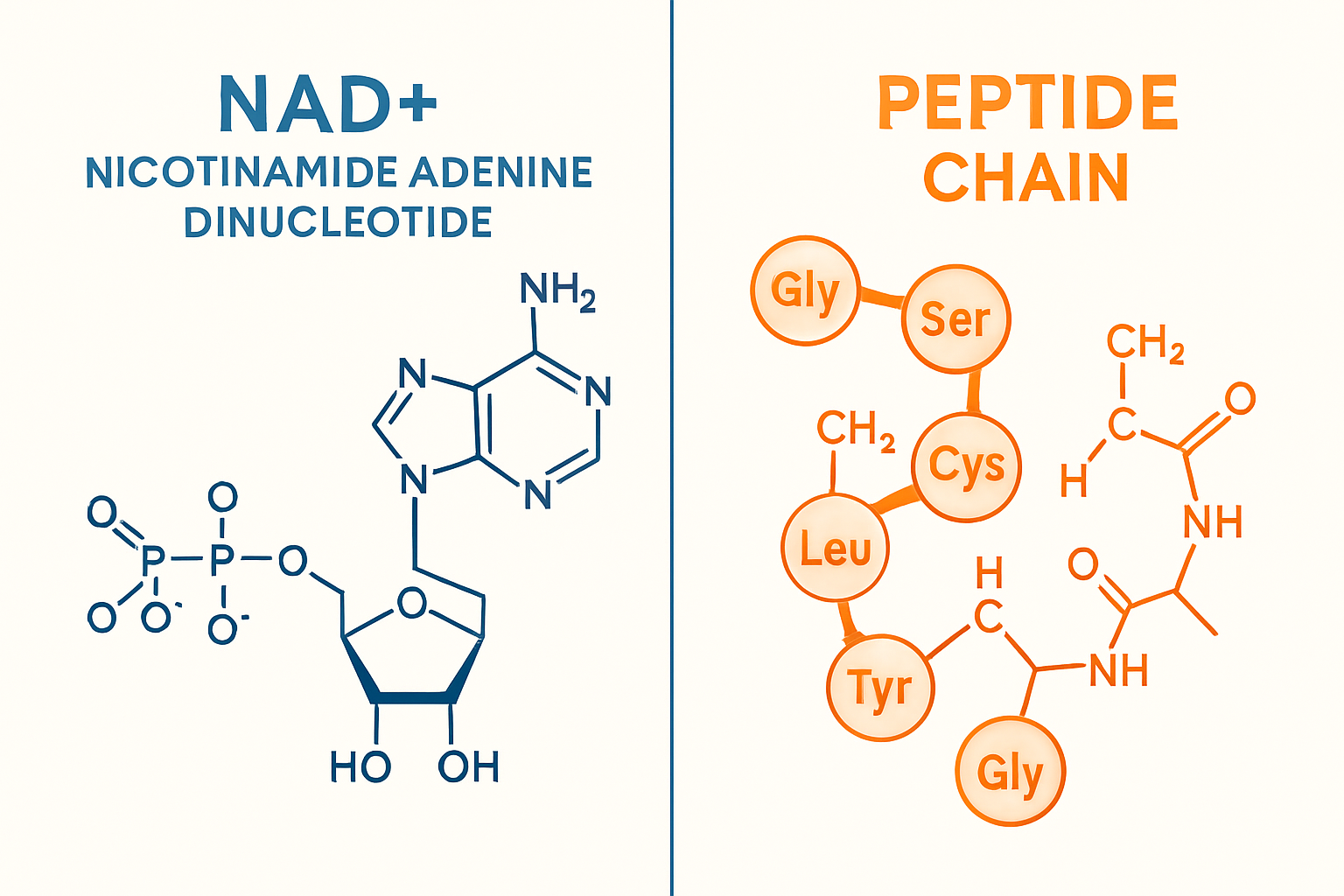
NAD+ (nicotinamide adenine dinucleotide) is a coenzyme found in every living cell. This molecule plays a critical role in cellular energy production, DNA repair, and various metabolic processes. To understand why the question "is NAD+ a peptide" arises, we need to examine NAD+'s actual structure and function.
The Structure of NAD+
NAD+ consists of:
- Nicotinamide (a form of vitamin B3)
- Adenine (a purine base)
- Two ribose sugars
- Two phosphate groups
This structure makes NAD+ a dinucleotide, not a peptide. The molecule acts as an electron carrier in cellular respiration, shuttling electrons between different enzymes in metabolic pathways.
Key Functions of NAD+
-
Energy Production 🔋
- Essential for glycolysis and the citric acid cycle
- Helps convert food into cellular energy (ATP)
-
DNA Repair 🧬
- Activates enzymes that repair damaged DNA
- Supports cellular maintenance and longevity
-
Cellular Signaling 📡
- Regulates various cellular processes
- Influences circadian rhythms and metabolism
Researchers interested in NAD+ supplementation often explore its potential benefits for cellular energy and overall wellness.
Understanding Peptides: The Building Blocks of Proteins
To fully grasp why NAD+ is not a peptide, we must understand what peptides actually are. Peptides are short chains of amino acids connected by peptide bonds. They serve as the building blocks of proteins and play numerous roles in biological systems.
Peptide Structure and Characteristics
Peptides have several defining features:
- Amino acid composition: Made entirely of amino acids
- Peptide bonds: Amino acids linked by covalent bonds
- Variable length: Can range from 2 to 50+ amino acids
- Diverse functions: Hormones, enzymes, signaling molecules
Types of Peptides in Research
| Peptide Type | Example | Primary Function |
|---|---|---|
| Growth Hormone Releasing | CJC-1295 | Stimulates growth hormone release |
| Healing Peptides | BPC-157 | Supports tissue repair |
| Metabolic Peptides | AOD-9604 | Influences metabolism |
| Cognitive Peptides | Nootropic blends | Supports brain function |
Many researchers explore various peptides for different applications, each with unique amino acid sequences that determine their specific functions.
Is NAD+ a Peptide? The Definitive Answer
No, NAD+ is definitively not a peptide. This misconception likely arises from several factors:
Why the Confusion Exists
-
Marketing Overlap 📈
- Both NAD+ and peptides are popular in anti-aging research
- Often discussed together in wellness contexts
- Similar target audiences interested in cellular health
-
Supplement Industry Terminology 🏷️
- Some products combine NAD+ precursors with peptides
- Marketing materials may blur the distinctions
- "Peptide-like" benefits attributed to various molecules
-
Complex Scientific Names 🔬
- Both involve complicated biochemical terminology
- Similar research applications in longevity studies
- Overlapping discussion in scientific literature
The Scientific Reality
NAD+ belongs to a completely different class of molecules:
- Chemical Classification: Dinucleotide coenzyme
- Composition: Nucleotides, not amino acids
- Function: Electron transport and enzymatic reactions
- Synthesis: Produced through salvage and de novo pathways
Understanding these distinctions helps researchers make informed decisions when exploring cellular maintenance approaches.
Key Differences Between NAD+ and Peptides
Understanding the fundamental differences between NAD+ and peptides clarifies why the question "is NAD+ a peptide" has a clear answer. These molecules differ in virtually every aspect of their structure and function.
Structural Differences
NAD+ Structure:
- Two nucleotides joined together
- Contains nicotinamide and adenine bases
- Ribose sugars and phosphate groups
- No amino acids present
Peptide Structure:
- Chains of amino acids
- Connected by peptide bonds
- 20 different possible amino acids
- No nucleotide components
Functional Differences
| Aspect | NAD+ | Peptides |
|---|---|---|
| Primary Role | Coenzyme in metabolism | Signaling and structural |
| Mechanism | Electron carrier | Receptor binding |
| Location | Inside cells (cytoplasm/mitochondria) | Various (blood, tissues, cells) |
| Stability | Relatively unstable | Variable stability |
| Synthesis | Enzymatic pathways | Ribosomal or synthetic |
Bioavailability Considerations
Both NAD+ and peptides face unique challenges in supplementation:
NAD+ Challenges:
- Poor oral bioavailability
- Rapid breakdown in digestive system
- Requires precursors (NR, NMN) for effective supplementation
Peptide Challenges:
- Degradation by digestive enzymes
- Need for specialized delivery methods
- Variable absorption rates
Researchers often explore best practices for storing research compounds to maintain stability and effectiveness.
NAD+ Precursors vs. Peptides in Research
While NAD+ itself is not a peptide, researchers often study NAD+ precursors alongside peptides for comprehensive cellular health approaches. Understanding how these different compounds work can inform research design.
NAD+ Precursors
Common NAD+ precursors include:
-
Nicotinamide Riboside (NR) 🧪
- Converts to NAD+ in cells
- Better bioavailability than NAD+ itself
- Supports cellular energy production
-
Nicotinamide Mononucleotide (NMN) ⚗️
- Direct precursor to NAD+
- Bypasses some metabolic steps
- Popular in longevity research
-
Nicotinic Acid 💊
- Traditional vitamin B3 form
- Converts to NAD+ through longer pathway
- Well-established safety profile
Complementary Research Applications
Researchers often combine NAD+ precursors with peptides because they target different aspects of cellular health:
Energy and Metabolism:
- NAD+ precursors support mitochondrial function
- Metabolic peptides can influence fat burning and glucose metabolism
- Metabolic research applications explore these synergies
Recovery and Repair:
- NAD+ supports DNA repair mechanisms
- Healing peptides promote tissue regeneration
- Combined approaches may offer comprehensive benefits
Cognitive Function:
- NAD+ maintains neuronal energy
- Nootropic peptides support brain signaling
- Both contribute to cognitive wellness
When designing research protocols, scientists consider how different compounds work together for optimal results.
Common Misconceptions About NAD+ and Peptides
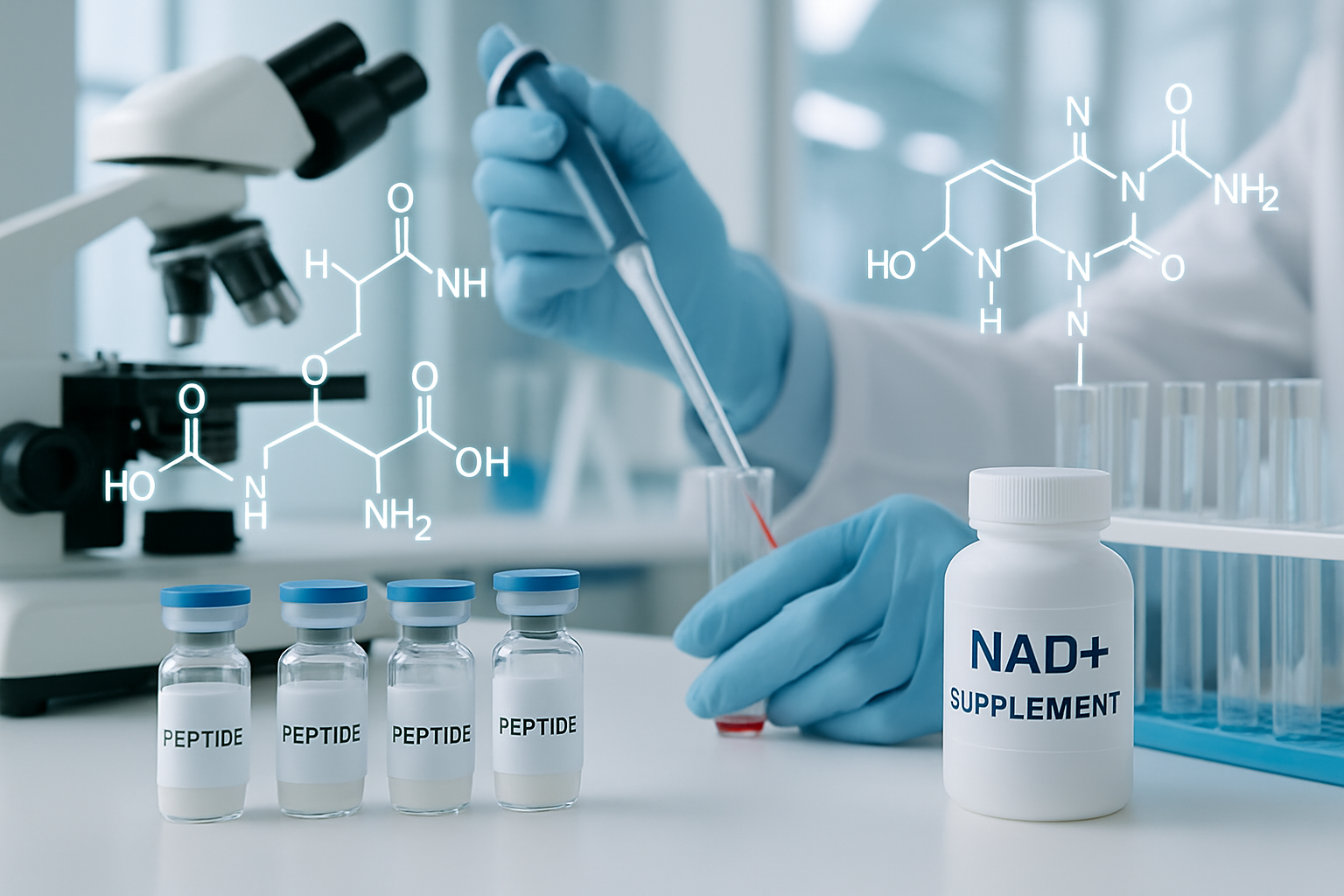
Several misconceptions persist about NAD+ and peptides, contributing to confusion about their nature and applications. Addressing these misconceptions helps clarify the science behind these important molecules.
Misconception 1: "All Small Biological Molecules Are Peptides"
Reality: Biological molecules come in many classes:
- Nucleotides (like NAD+)
- Lipids (fats and oils)
- Carbohydrates (sugars and starches)
- Peptides and proteins (amino acid chains)
- Vitamins and cofactors
Each class has distinct structures and functions that cannot be interchanged.
Misconception 2: "NAD+ Supplements Contain Peptides"
Reality: Pure NAD+ supplements contain:
- NAD+ itself (though poorly absorbed)
- NAD+ precursors (NR, NMN, niacin)
- Supporting compounds (but not necessarily peptides)
Some formulations may include peptides, but this would be clearly labeled as a combination product.
Misconception 3: "Peptides and NAD+ Work the Same Way"
Reality: These molecules have completely different mechanisms:
NAD+ Mechanism:
- Acts as coenzyme in enzymatic reactions
- Transfers electrons in metabolic pathways
- Functions inside cells at the molecular level
Peptide Mechanism:
- Binds to specific receptors
- Triggers cellular signaling cascades
- Can work locally or systemically
Misconception 4: "You Can't Use Both Together"
Reality: NAD+ precursors and peptides often complement each other:
- Target different cellular pathways
- May have synergistic effects
- Commonly studied together in research
Many researchers explore comprehensive approaches to wellness that incorporate multiple types of compounds.
Research Applications: NAD+ and Peptides in Science
Understanding that NAD+ is not a peptide opens up important considerations for research design. Scientists studying cellular health, aging, and metabolism often explore both NAD+ precursors and peptides, but for different reasons and through different mechanisms.
NAD+ Research Focus Areas
Current NAD+ research concentrates on:
-
Aging and Longevity 🕰️
- NAD+ levels decline with age
- Supplementation may support healthy aging
- Mitochondrial function improvement
-
Metabolic Health ⚖️
- Energy production optimization
- Glucose metabolism regulation
- Fat oxidation enhancement
-
Neuroprotection 🧠
- Neuronal energy support
- DNA repair in brain cells
- Cognitive function maintenance
Peptide Research Applications
Peptide research spans numerous areas:
-
Growth and Development 📈
- Growth hormone releasing peptides
- Muscle development studies
- Comparing different approaches to growth factor modulation
-
Recovery and Healing 🏥
- Tissue repair acceleration
- Wound healing enhancement
- Anti-inflammatory effects
-
Cognitive Enhancement 🎯
- Memory and learning support
- Neuroprotective effects
- Mood regulation
Designing Comprehensive Research Protocols
When researchers want to study both NAD+ and peptides, they must consider:
Timing Considerations:
- Different absorption windows
- Varying half-lives
- Potential interactions
Dosage Protocols:
- Independent dose optimization
- Synergistic effects evaluation
- Safety margin establishment
Measurement Parameters:
- Distinct biomarkers for each compound
- Cellular energy metrics for NAD+
- Specific outcomes for peptides
Researchers interested in building comprehensive study designs often benefit from understanding these distinctions.
Choosing the Right Approach for Your Research
Since NAD+ is not a peptide, researchers must make informed decisions about which compounds best suit their study objectives. This choice depends on research goals, target mechanisms, and desired outcomes.
When to Focus on NAD+ Precursors
Choose NAD+ precursors when research focuses on:
Cellular Energy:
- Mitochondrial function studies
- ATP production research
- Metabolic efficiency investigations
DNA Repair Mechanisms:
- Aging-related DNA damage
- Cellular maintenance pathways
- Longevity research protocols
Metabolic Pathways:
- Glucose metabolism studies
- Fat oxidation research
- Insulin sensitivity investigations
When to Focus on Peptides
Select peptides when research emphasizes:
Signaling Pathways:
- Hormone regulation studies
- Growth factor research
- Cellular communication mechanisms
Targeted Tissue Effects:
- Specific organ system studies
- Localized healing research
- Tissue-specific regeneration
Receptor-Mediated Responses:
- Drug development research
- Therapeutic mechanism studies
- Dose-response investigations
Combination Approaches
Many researchers find value in studying both:
Complementary Mechanisms:
- Energy production (NAD+) + signaling (peptides)
- Cellular maintenance + targeted effects
- Broad metabolic support + specific outcomes
Research Design Considerations:
- Sequential administration protocols
- Parallel treatment groups
- Synergy evaluation methods
For researchers new to this field, exploring beginner-friendly research approaches can provide valuable insights into proper study design.
Safety and Quality Considerations
Whether working with NAD+ precursors or peptides, research quality and safety remain paramount. Understanding the distinct nature of these compounds helps ensure appropriate handling and study protocols.
NAD+ Precursor Considerations
Storage Requirements:
- Temperature sensitivity
- Light exposure protection
- Moisture control needs
Purity Standards:
- Third-party testing importance
- Certificate of analysis review
- Contamination prevention
Research Protocols:
- Appropriate dosing ranges
- Administration timing
- Interaction monitoring
Peptide Research Standards
Quality Assurance:
- Amino acid sequence verification
- Purity testing requirements
- Stability assessment needs
Handling Protocols:
- Reconstitution procedures
- Storage temperature requirements
- Contamination prevention measures
Research Safety:
- Proper dosing guidelines
- Monitoring parameters
- Documentation requirements
Choosing Reliable Sources
When sourcing research compounds, consider:
-
Third-Party Testing ✅
- Independent verification of purity
- Certificate of analysis availability
- Batch-to-batch consistency
-
Proper Documentation 📋
- Clear labeling and identification
- Storage instruction provision
- Research-grade certification
-
Scientific Support 🔬
- Technical information availability
- Research guidance provision
- Quality assurance protocols
Researchers seeking reliable peptide sources should prioritize vendors with comprehensive quality control measures and transparent testing procedures.
Future Directions in NAD+ and Peptide Research
As our understanding of cellular biology advances, research into both NAD+ and peptides continues to evolve. While NAD+ is not a peptide, both areas of study contribute valuable insights to human health and longevity research.
Emerging NAD+ Research Areas
Novel Delivery Methods:
- Improved bioavailability approaches
- Targeted cellular delivery systems
- Enhanced stability formulations
Combination Therapies:
- NAD+ precursors with other compounds
- Synergistic effect investigations
- Optimized timing protocols
Personalized Approaches:
- Individual NAD+ level assessment
- Customized supplementation strategies
- Genetic factor considerations
Advancing Peptide Science
New Peptide Discovery:
- Novel sequences identification
- Enhanced stability peptides
- Improved delivery mechanisms
Precision Applications:
- Targeted tissue delivery
- Specific receptor modulation
- Minimized side effect profiles
Manufacturing Innovations:
- Cost-effective production methods
- Improved purity standards
- Scalable synthesis techniques
Integration Opportunities
Future research may explore:
Systems Biology Approaches:
- Comprehensive cellular health studies
- Multi-pathway intervention research
- Holistic wellness investigations
Technology Integration:
- Advanced monitoring systems
- Real-time biomarker tracking
- Personalized protocol development
Clinical Translation:
- Research to application pathways
- Safety profile establishment
- Efficacy demonstration protocols
Researchers interested in staying current with developments can explore comprehensive research catalogs that showcase the latest advances in both NAD+ and peptide research.
Conclusion
The question "is NAD+ a peptide" has a clear and definitive answer: No, NAD+ is not a peptide. NAD+ is a dinucleotide coenzyme composed of nucleotides, while peptides are chains of amino acids. Understanding this fundamental difference is crucial for anyone interested in cellular health research, supplementation, or the science behind these important molecules.
Key points to remember:
✅ NAD+ is a coenzyme made of nucleotides, not amino acids
✅ Peptides are amino acid chains with completely different structures and functions
✅ Both compounds support cellular health but through distinct mechanisms
✅ Research applications differ based on target pathways and desired outcomes
✅ Quality sourcing matters for both NAD+ precursors and peptides
Next Steps for Researchers
-
Define Your Research Goals 🎯
- Identify specific cellular pathways of interest
- Determine primary research objectives
- Consider timeline and resource requirements
-
Choose Appropriate Compounds 🧪
- Select NAD+ precursors for energy and metabolic studies
- Choose peptides for signaling and targeted effects
- Consider combination approaches for comprehensive research
-
Establish Quality Standards ⭐
- Source compounds from reputable suppliers
- Verify third-party testing and certificates of analysis
- Implement proper storage and handling protocols
-
Design Robust Protocols 📊
- Develop appropriate dosing strategies
- Plan comprehensive monitoring approaches
- Document procedures for reproducibility
-
Stay Informed 📚
- Follow emerging research developments
- Participate in scientific communities
- Continue education in cellular biology
Whether your research focuses on NAD+ precursors, peptides, or both, understanding their distinct natures and applications will enhance the quality and relevance of your scientific investigations. The future of cellular health research lies in appreciating these differences while exploring how various compounds can work together to support optimal biological function.
SEO Meta Information:
Meta Title: Is NAD+ a Peptide? Expert Guide to NAD+ vs Peptides 2025
Meta Description: Discover the definitive answer to "is NAD+ a peptide" with our comprehensive guide. Learn key differences, research applications, and why this matters for cellular health.